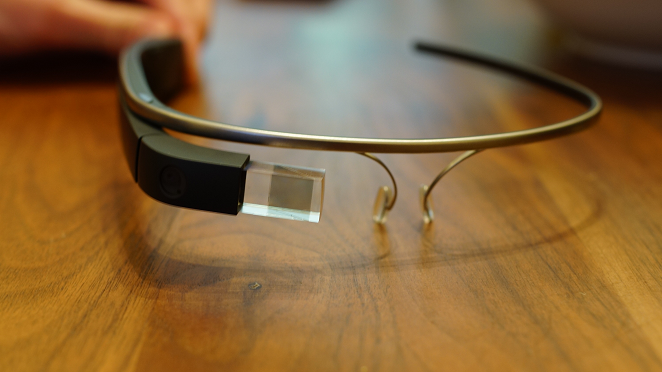
 Disclaimer: This article references Google Glass specifically, but it should be noted that there are other products out there that may arrive at RPG friendly AR more quickly. Like this one. Or this one. It seems to me that the “winner” of this race will not be the most awesome AR system, but the one that becomes ubiquitous within gaming circles first. Things like price point and marketing become big variables in this equation, more so than actual technology and features. This assumes, of course, that all players at the table need to be on the same “system” for everything to work in concert. That may not be the case.
Assumptions
First, I should state that I believe that RPGs reach their greatest potential in a social setting. In other words, RPGs are best when you and a group of friends are physically in the same place playing the game together. “Internet Games,” while a decent substitute for gamers with no time or access to a “Physical Game,” only approximate the experience of an RPG played in a social setting. As a result, I see Google Glass’ greatest potential for RPGs in enhancing the social RPG experience, not eliminating it. I do not deny that Google Glass (or other Augmented Reality [AR], or even Virtual Reality [VR] devices) will be able to greatly enhance the gameplay experience of an RPG played at a distance, but those potentialities are not the purpose of this article. In short, I’m not going to talk about how AR devices’ will make “Distance Gaming” better. I will leave that to one of my colleagues here at Stuffer Shack.
Technology tends to develop in increments. First we had giant cell phones, then we had small cell phones, and now we have small(ish) cell phones that are also miniature computers. I would expect a similar evolution of technology in AR devices. Because of this, I have divided up the article into three “evolutions” or stages within three categories; each stage represents a greater capability of the technology, and therefore greater potential for enhancing a tabletop RPG. So, as we go through my “AR RPG wish list,” you will see the enhancements get more complex (and awesome).
Your Character Sheet
Stage 1
Your AR device would interface with your phone or other mobile device, where a character sheet app resides. Most of your “Heads Up Display” (HUD) would be dedicated to tracking current hit points, current “to hit” bonus, and current AC. An initiative indicator reminds you when you’re on deck, and again when it’s your turn. When you look at the other players, an indicator appears over the player whose turn it is currently.
Stage 2
Your AR device will interface directly with the cloud, where your character sheet resides. Other players will be able to send bonuses to your character, and the program will automatically add those bonuses to your display. When it’s your turn, your HUD will display available options from your character sheet.
Stage 3
At this point, your AR device is floating a character sheet in front of you upon request, and you can “gesture” to the things you want to do or use. When you roll your dice (because that should *never* go away), the AR device reads them, adds them up with any bonuses, and displays the result. The guy who takes forever to add up his dice every turn is super happy. So is everyone else.
The Battle Mat
Stage 1
A unique QR code is printed or placed at the top left corner of the battle mat. This QR code helps your AR device orient your location at the table. It also lets your AR device directly access the campaign documents from Obsidian Portal or similar website. (Yes! I know! An actual good use for QR codes!!) The AR will be able to do certain things if you have the right tools – you can “draw” persistent areas of effect with a special pen-like device, and you can track the position of miniatures with RFID tags. These tools will be expensive, and soon be obsolete.
Stage 2
The AR device will recognize your miniature without any help from RFID tagging, and you can simply use your finger to draw things on the mat. If you point to a miniature, your HUD will display that character’s name, current hit points, AC, and other status information. If a player points to a monster mini, the program auto-rolls a knowledge check, and only displays information that the character would know.
Stage 3
The DM will be able to project fully realized digital terrain onto the table, and all miniatures will also be digital. The miniatures will be fully customizable, right down to the attack animations.
Digital Props
Stage 1
The DM can send images to players from the campaign documents stored at Obsidian Portal or a similar website. Maps, pictures of magic items, pictures of NPCs, videos of NPCs, letters, and monster images are all possibilities. A niche industry pops up to serve DMs with all sorts of digital props.
Stage 3
Players will be able to use gestures to “interact” with items projected to their AR. Solving puzzles is the major advantage to this advance. The thief PC can actually interact with an image of a door locked with runes to solve the puzzle of opening it. No one sighs and rolls their eyes when an adventure includes a puzzle anymore.
Your Turn
I’m excited by the possibilities of AR at the RPG gametable. If even a few of the wishes I’ve listed above come true, I will be a happy gamer. So, now I turn the list over to you – what would you add? How can AR make our RPGs more awesome?