Dragon Age Thrillogy: Inquisition Reviewed

Dragon Age: Inquisition has a lot riding on it, no doubt of that. As the third entry in the Dragon Age saga, continuing the story of the fan favorite Dragon Age: Origins and the underrated follow up Dragon Age 2: The Sequel (no that is not the actual title come on guys), Inquisition has a solid foundation to build on. The question is, can it live up to the expectations of fans of the series?
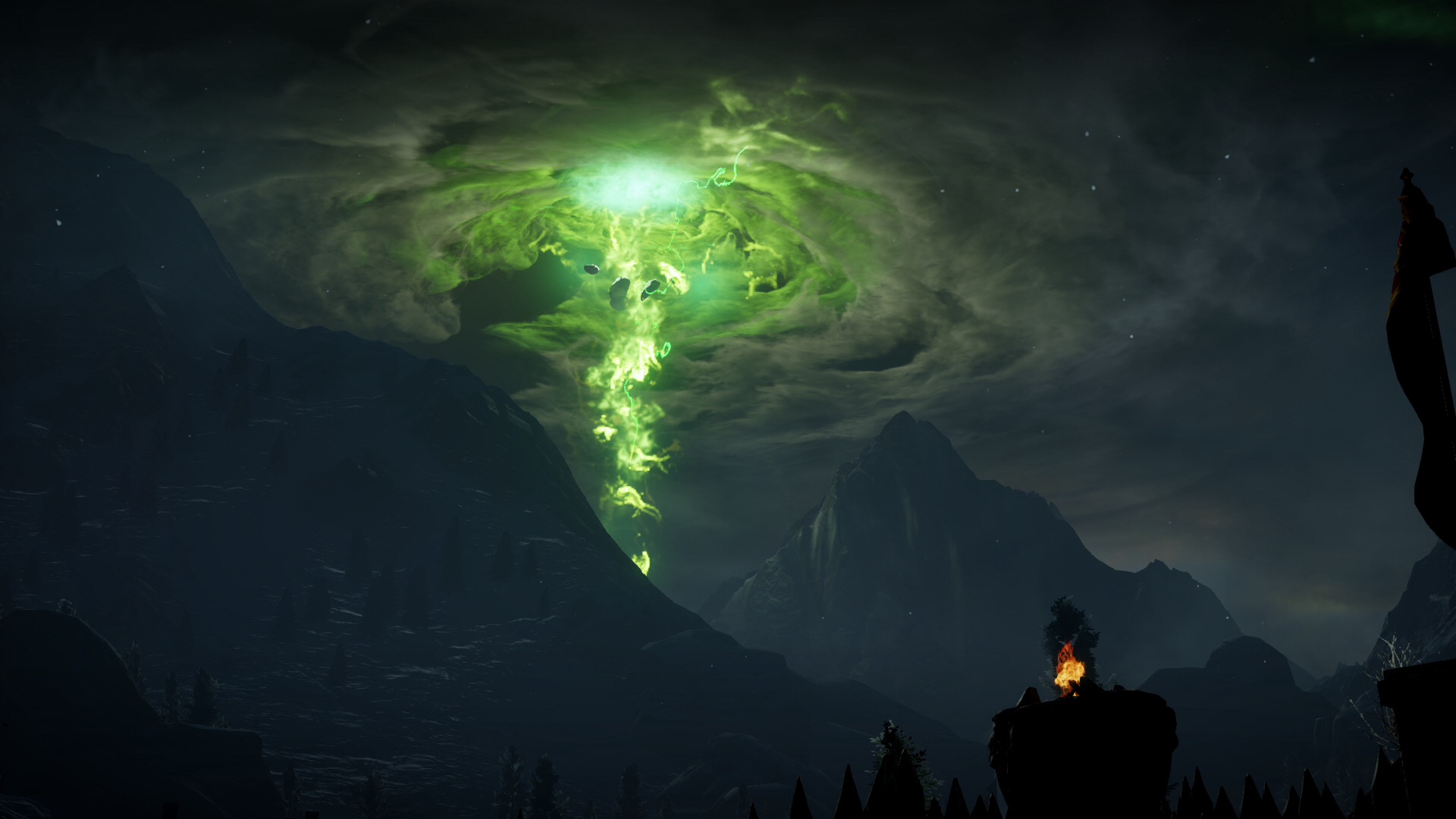
The BreachThat’s a silly question. Of course it can.

Here’s a better one: can it live up to my expectations? Because frankly BioWare has burned me once already with third entries in a saga, and I went into this half expecting it to fall short of the hype. Or I would have, had I paid any attention to the hype. See I decided to do this new thing where I pretend a game doesn’t exist until I’ve installed it. Hype bad. Games good. I knew I needed to play this one, having been hooked by its predecessor. Beyond that, I tried to know as little as possible. A few details about the engine notwithstanding.

Thus far, I am not disappointed. In fact, I am thrilled. I’d even go so far as to say this is the best BioWare game I’ve yet played.

I’ve finished it twice. I think I started about five different characters.

So let’s cover the stuff I can handle without spoiling stuff for people, yeah?

Gameplay
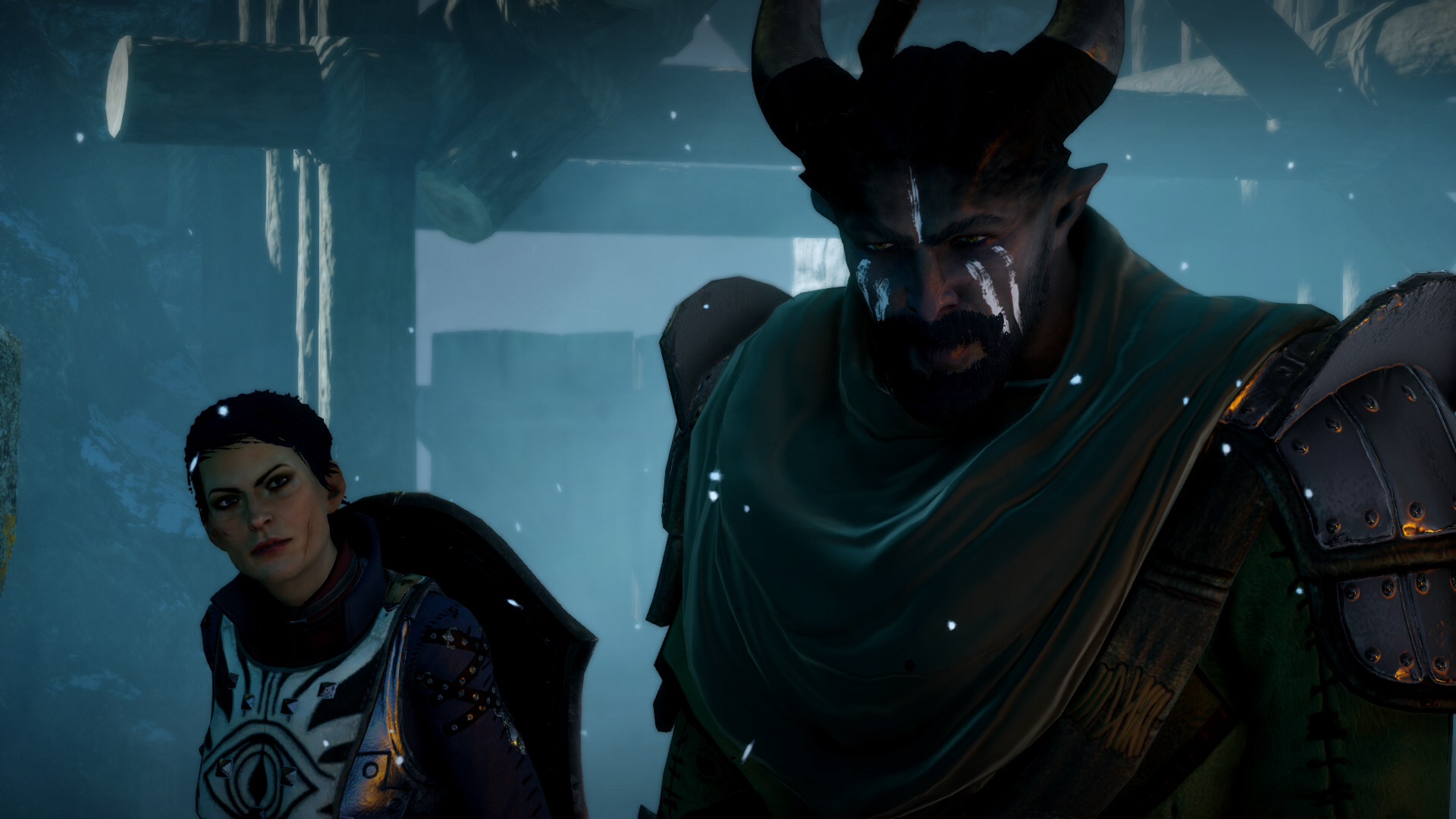
what is even the world coming toI started my first game as a mage, because a) I always start as a mage because I desperately want mages to be fun and awesome and b) mages had the most improving to do from the prior titles and I wanted to know immediately if they’d succeeded.

They had. Mages are awesome. Status conditions, massive area attacks, ability combos, and the ability to grab the amazing fade step power make mages more fun than ever, and more mobile. You’ll probably want to sink enough points into the Spirit tree to get some threat reduction though.

One disappointment though; the ability bar isn’t long enough. You can only fit eight active abilities on it, which is a bit of a downer for me – you get one free one in the process of gameplay (a “focus” power), which leaves seven to choose that you’ll be using regularly. Probably most of you will be smart enough to keep that limit in mind and plan your leveling better than I did. Either plan around your passives, or expect to rotate disused powers off the bar.

Well, okay, “eight slots” makes it sound worse than it is. The healing potion slot is set to 9 and can’t be changed, 0 and + are for potions, tonics, or grenades of your choice, and = is set to call your mount. It’s just that no custom buttons other than 1-8 are set for your class powers.

They say Inquisition was designed with a PC in mind, but not being able to use shift or other keys to hotbar more powers will probably bother at least a few people other than me.

This flaw aside, gameplay feels awe inspiring. The threats feel appropriately looming and deadly, the effects are beautiful, the facial animations are emotive, this is pretty much Bioware at its best.

Scale
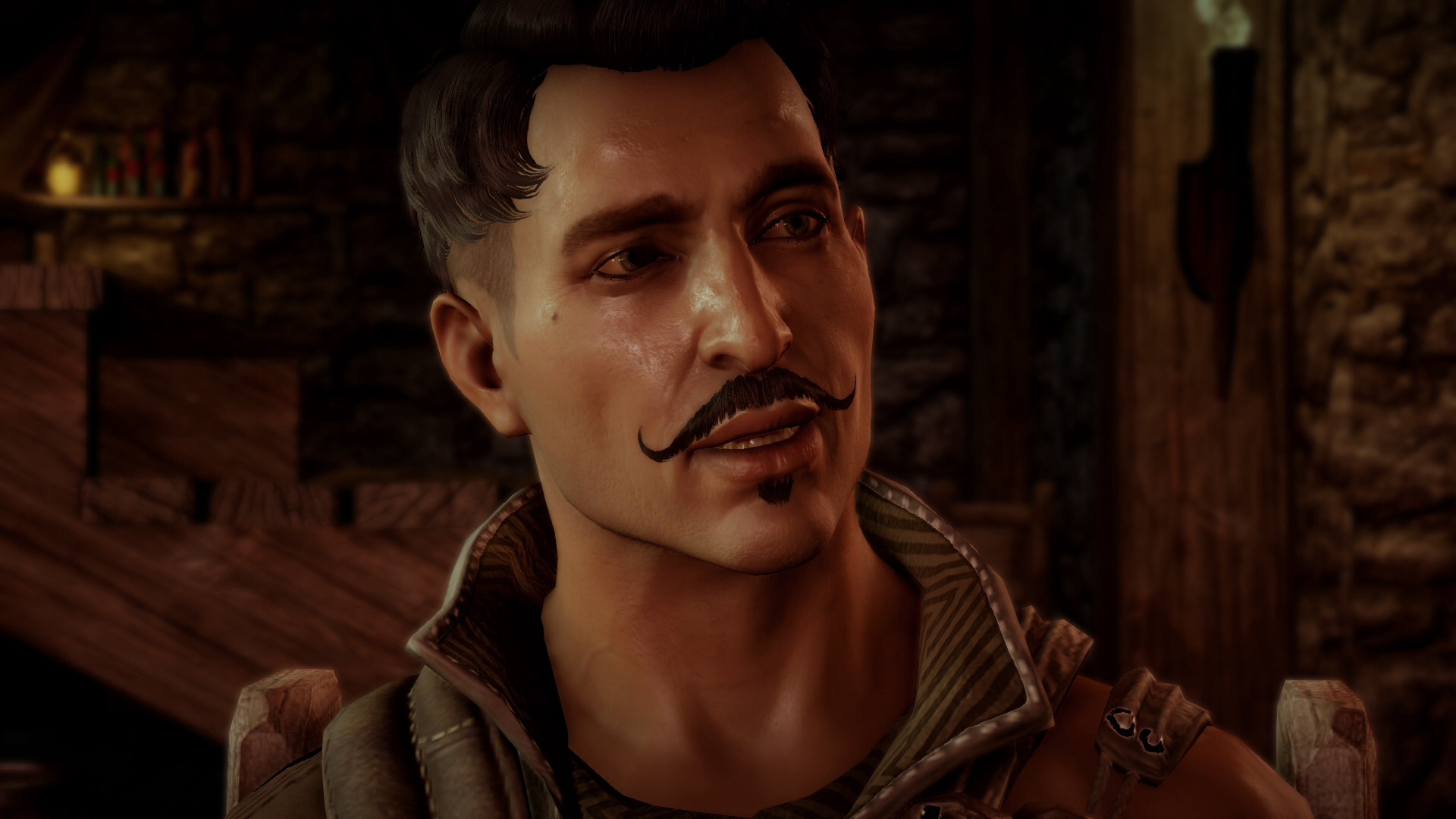
DorianEach area of the game feels MASSIVE; Skyhold, your headquarters after the first act is over, is so large that it has its own fast travel points. And that’s just YOUR FORTRESS.

More important perhaps, they feel big, important, worth exploring. And the areas are mostly ‘unleveled’ – you will run into threats early game that you’ll have to come back and address later with more power or different perks. And there are just so many things to do, characters to befriend, villains to foil, resources to collect…

Despite this, once I get past the main menu, load times are pretty okay.

Progression

I May Be Obsessed With CraftingThere are at least three kinds of progress to be aware of; character leveling is the first (and all that entails, though stat adjustments seem to be outside your area of choice except the bonuses gained from gear). There are three specializations for each class, and two weapon styles each for the rogue and the warrior. Each has a fair amount of depth and build complexity and minmaxers will have a field day with the party management and the equipment/crafting systems. You’ll be fiddling a lot, at least if you’re like me.

Then there’s the level of the Inquisition, measured in ‘influence.’ Each level gained by the inquisition gives you a new perk in one of four areas (Endurance, Secrets, Connections, or Inquisition (concerned with the infrastructure and efficiency of the group)).

As near as I can tell, the category you have the most perks in determines your reputation throughout the game and during the epilogue… though this basically boils down to responses from your ambassador when asked “what do people think of us?” The perks themselves are generally pretty neat, unlocking things like increased XP for particular actions, new dialog options, the occasional operation at the war table, and so on.

Running The Show

Inquisition is the first game I can remember that actually pulls off the “head of a big organization with its own army who still needs to handle the important stuff personally” balance fairly well. You get Operations at the war table, your advisers will occasionally ask your input on matters of state, the works. And every so often, you sit in judgement over somebody who probably pissed you off pretty bad on one of your field missions. The Inquisitor has a lot of tools to work with, from executions to exiles to conscripting former foes into your service (willingly or otherwise). And mostly the judgements feel pretty … kingly? Is that the word?
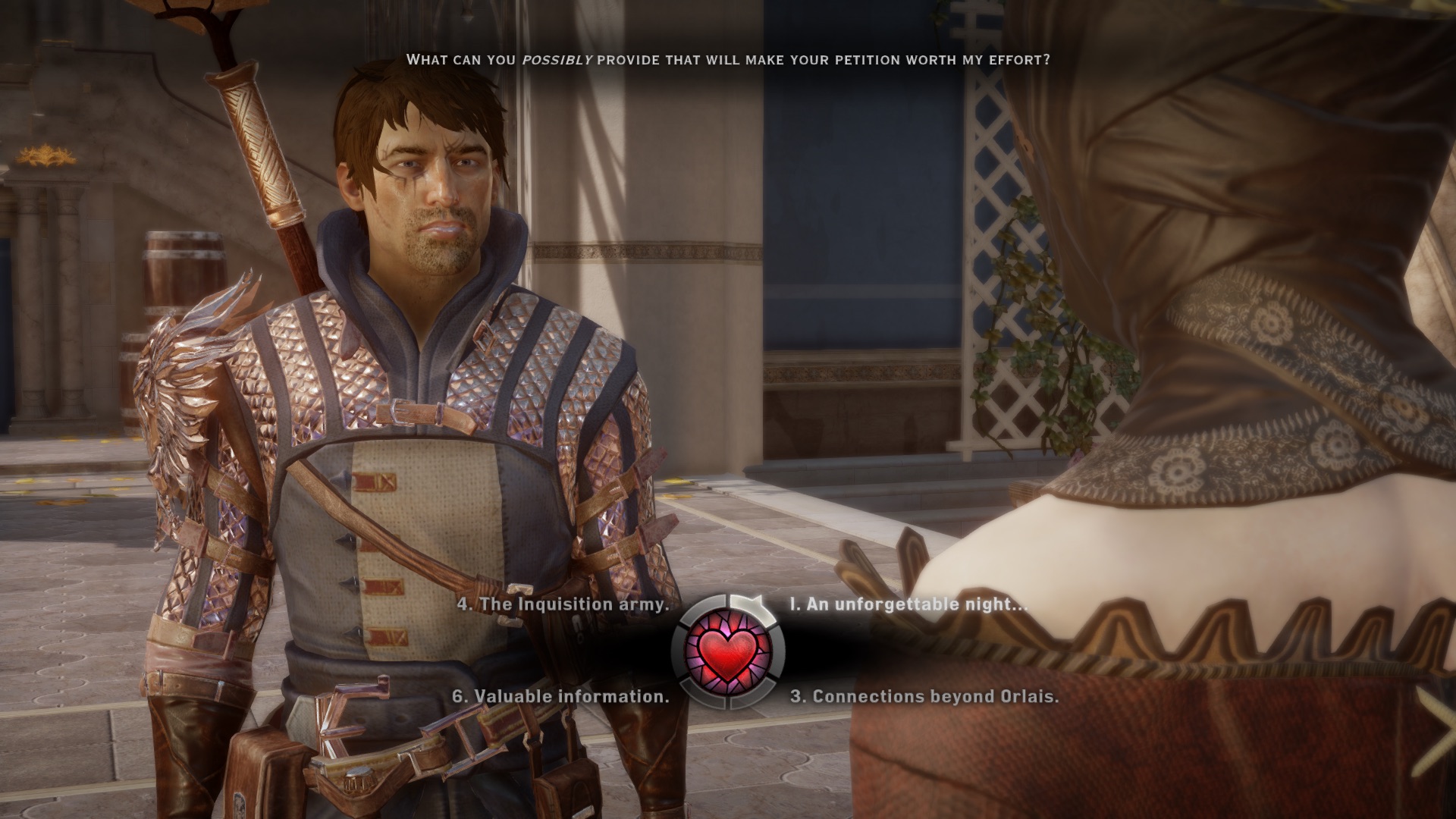
Though like Fable, some of those choices will make you feel dirty.The point is, it’s that thing Fable III promised me and utterly failed to deliver, done right. Nice job.

Missions are varied well enough, a nice mix of ‘kill all the things’, make big Bioware choices, engage in courtly intrigues (one of the main story missions involves a masquerade at a palace and trying to decide how to address the threat of an assassination), closing the Rifts, and so on. You’ll fight demons, bandits, and… well okay mostly those two things. Also a lot of apostate mages and renegade templars and twisted abominations made from wicked experiments, darkspawn, and at a certain point — should you go looking for them — dragons.

Hardware
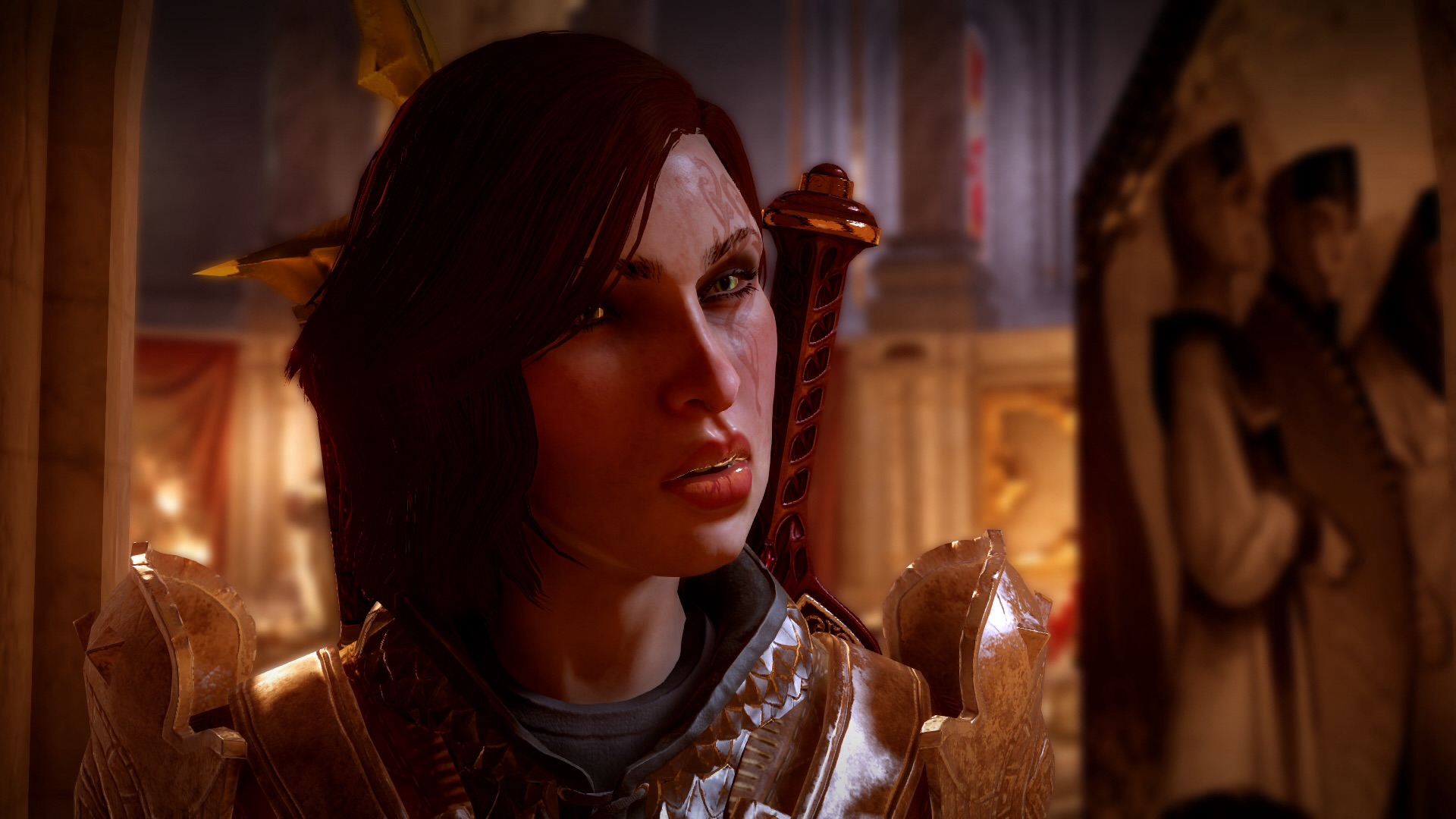
My rogueThere are a few issues on my system that I mostly blame on aging hardware. But on the whole it runs fairly well despite my GTX 4-whatever – it comes off as better optimized than some other recent titles. A few settings had to be dialed back and there’s occasional stuttering, oddly NOT during most combats (which tend to be smoother than the cutscenes, go figure). Your mileage may vary.

Multiplayer

Multiplayer … exists. There’s not much I can say about it, honestly. MP was a selling point for Mass Effect 3 and after awhile the only thing that kept me launching the game. Here it feels more like an afterthought. If you like it, more power to you. It just doesn’t appeal to me here.

Verdict

This game is a must play. Single player is not dead. Grab it, mine it for ideas, play it a couple of times with different classes and races, be prepared to sink a LOT of time. Dragon Age: Inquisition is a winner.
Three Reasons Why Dragon Age 2 is my Favorite Game in the Series

There’s a lot of hate for Dragon Age 2. Some claim it’s a step backward from the first game, with less variation in endings, fewer character choices, “lazy” level design – and some of that is true. But none of it is enough to make the game bad, by any stretch…

Dragon Age II

There’s a lot of hate for Dragon Age 2. Some claim it’s a step backward from the first game, with less variation in endings, fewer character choices, “lazy” level design – and some of that is true. But none of it is enough to make the game bad, by any stretch, and there’s a lot that can be learned from it about what it takes to make a game good and a story engaging. For some of us those reasons are enough to make it our favorite game in the series. With the upcoming release of Inquisition, it feels like a good time to examine them.

Here are a few of mine…

3. Dragon Age 2 is a Story Driven by Characters who Feel Real.

Merrill will do anything to restore her people’s heritage. Fenris burns with a hatred for the people who enslaved him. Anders seeks justice for countless mages who have been imprisoned, killed, or worse. Varric is looking to make some coin and keep his friends out of trouble. Knight Commander Meredith will push the Templars to extremes to root out the threat of blood magic. The rebel mages turn to dark powers out of desperation. Murderers and slavers stalk the alleys seeking fresh prey. A mother wants her son to live free of fear.

Everyone has their prejudices and predispositions, and you have a role in their character development. Sometimes that role is large, sometimes small, but on the whole it feels real.

These characters drive the story. Their goals and wants and needs are the ones that push everything forward. In many ways, this is what BioWare does best, and it’s something every world-builder could stand to learn from.

See, real worlds don’t hinge on the actions of just one person very often. As much as we all love the trope, the ‘fate of the world rests in your hands’ – that’s like, once in a lifetime crap. Mostly people react to outside forces. Mostly, those forces are dictated by other people’s choices. And so on.

Many tabletop games incorporate this idea to an extent. But it is worth noting that 1. The party is not one person, usually, and is likely to be made up of a number of people with varied predispositions and goals, and 2. The party is also not the only group with goals and decisions to make. If you’re a GM, you’ve got a LOT of potentially conflicting choices to juggle … of course you also have the option of rolling the dice to see who comes out ahead.

2. Dragon Age 2 is about the Dangers of Extremes.

Everywhere you look in Kirkwall, there are zealots. Templars breaking the laws of their own order to clamp down on the city’s mages; wicked (and less wicked) mages pushing the boundaries of magic seeking unnatural powers to defend themselves against the Templars; Qunari following the rigid dictates of their own social structure. And somewhere in the middle, the player is caught, trying to make sense of it all and carve out a place for themselves.

Magic exists to serve man, and never to rule over him.
Foul and corrupt are they
Who have taken His gift
And turned it against His children.
They shall be named Maleficar, accursed ones.
They shall find no rest in this world
Or beyond.
 

-Transfigurations 1:2

Extremism can turn the most innocuous idea into a source of potential antagonists and dangers. Even a paladin could be bent to evil by clinging too rigidly to a code of conduct at the expense of the virtues that inspired it.

1. Dragon Age 2 is a Game of Inevitability.

Much of what happens in the game is building up to something outside your control. For once, this really works for it. Some players might disdainfully call this ‘railroading’ but in all honestly, it makes the situation feel much more … I want to say real. The other characters in the game act according to their own goals and beliefs, and not every person is going to be willing to give those up because some dork from Fereldan said so.

The endgame is inevitable. Many of your losses are inevitable. DA2 is about how you carry yourself in the face of inevitability, what you do when things are at their worst. What values do you cling to? Do you give them up when your idealism doesn’t get you the results you’d hoped? When you’re surrounded by this many zealots, how can you be expected to survive? When the world comes crashing down, what do you reach for? How do you react when your closest friends are the ones who brought it down? Do you believe in them? Do you put justice ahead of everything? What does justice mean in these circumstances? What injustice takes priority?

There aren’t any easy answers to these questions (not unlike Skyrim’s question of Stormcloaks or Imperials), but damn do the fights over them get entertaining after awhile.

What Comes Next: The Future of D&D

It’s the moment NOBODY has been waiting for: when I finally step out from behind my PDF copy of the basic rules and tell everyone what I think of where D&D is heading…

D&D Player's HandbookIt’s the moment NOBODY has been waiting for: when I finally step out from behind my PDF copy of the basic rules and tell everyone what I think of where D&D is heading.

In short? Color me cautiously optimistic.

I have a few problems in terms of being objective about D&D Next that I’d like to get off my chest and get out of the way, just like, up front and obvious.

  1. Up to now, D&D 4th Edition has been my favorite take on D&D. Anything that replaces it is going to have a tough act to follow in my book— though I freely admit that it had its problems. One of which, lately, is somehow offering too many good choices but being oddly rigid about how those choices interact.
  2. On some level I basically give an automatic free pass to any edition of Dungeons & Dragons in which the Warlock is considered a core class.

So I might not be the best person to evaluate this because in one sense, it feels like I’m exactly not the target audience, and in another … Warlock and Tiefling are core, I’m already set.

The bad news for spell casters is, vancian spells appear to be back. The good news is, cantrips have been beefed up to fill the role occupied by at-will powers (the damaging cantrips I saw dealt a base damage of 1d8 that increased with your character level). Multiclassing doesn’t seem to gimp casters anymore, since caster level is replaced with character level for all the important math. Most of the math is simpler. Spontaneous Casting (veterans of the 3.5 Sorcerer will know what this is) seem to be the norm. There are recovery mechanics to reuse a certain number of spell slots within a given day. Redundant spells have been replaced by the ability to cast spells at a higher level.

The good news on the math front is that ability scores appear to be capped at 20, and base attack bonuses (or rather their equivalent, the multipurpose “proficiency bonus” which is a nice idea) never get higher than 6. This should simplify a lot of calculations, cut down on abuse, and at the same time make it easier to use the same monsters throughout a campaign by eliminating a lot of the mathematical arms-races.

In short, it builds on 3.5 in a lot of ways… on the surface anyway.

“Feats as an optional rule” is an idea that’s going to take me a lot of getting used to, but it’s a nice idea for helping new players grasp the game quickly— choose the level of complexity you’re comfortable with, and everyone can still operate at the same table. It’s a worthwhile goal but there’s not really a way to see how it’ll really work out until we have the player’s handbook in … well, in hand. But here’s what we know about the feat rules:

To take a feat, you give up a +2 to an ability score that you’d otherwise take at that level.

Given that your ability scores cap at 20, more often than not this will likely be a boost to an otherwise unneeded tertiary score … which should work out fairly well as a decent trade for many characters.

What the feats actually are will make or break that, but. There’s not much to go on yet. My hunch is, that’ll be where a lot of the other cool 4th edition inspired stuff people liked gets back-doored back in.

Bottom line: it looks promising, and sounds fun. I’ll know after I see the PHB whether I’ll be throwing my full support behind it or house-ruling my 4e books to suit my own preferences.

SMITE: My Current Obsession

For the last few months I’ve been delving in and out of the MOBA genre looking for something that can scratch the particular itch for online competition and recurring fun. I think I may have found it…

For the last few months I’ve been delving in and out of the MOBA genre looking for something that can scratch the particular itch for online competition and recurring fun.

I’ve tried League of Legends, Infinite Crises, a shocking number of free to play MMO titles, but nothing quite came close, nothing stood out as being truly geeky enough to satisfy my peculiar brand of geekiness. Whether because of gameplay issues, a distaste for the “play every day but not more than once” incentive systems, or just confusion over the underlying lore, nothing quite fit.

I think I may have found it.

I’m here to tell you about SMITE.

SMITE-banner

One Thing Well: Why Does This Game Exist?

I have a philosophy when it comes to evaluating games. Any game must answer one question: why was this game made? Or, phrased differently, “what is the thing that will make this game different from the most popular games in its category?” In short, why play this instead of DOTA or LoL?

SMITE, unlike some titles I could mention but won’t bother to in case some of our readers are enamored of them already, has two answers to that question: “you play a god,” and “you fight from the third person.”

Yes, shockingly, one of the two reasons I just gave you is a camera angle. Don’t run away. Let me elaborate.

Smite ThanatosDespite having many of the gameplay conventions familiar to players of the MOBA genre – towers, minions, jungles, an enemy base to destroy, ‘last hitting,’ etc, SMITE feels fundamentally different from other games in its class. Moving the camera to the third person perspective changes more about the game than you might expect!

For starters, it’s possible to sneak up on someone. Battles feel faster and more immediate, because you’re down in the action, as it were. Powers place more emphasis on player skill than on ‘clicking faster.’ And as a bonus, skills useful in other action video games do somewhat carry over. In some ways SMITE feels more like a 3rd person action-shooter with superpowers, which … honestly might have a lot to do with what I like about it.

Wait, wait, back up, did you say that you play a god in this game?

Yeah, I did. Gods, actually. All the ‘champions’/playable characters in the game are literal gods lifted straight out of real world mythologies. Zeus. Aphrodite. Ra. Kali. Nemesis. Thor. Odin. And many, many more. In game abilities and lore are, by and large, incredibly faithful to the source material, and there’s a shocking amount of potential for learning about the old pantheons by osmosis. You compete with other players to win worshipers, proving your mastery of a particular deity’s power.

I mean seriously how badass is that.

Okay but this is another free to play nightmare, right?

Well, not if you don’t want it to be.

Wut

You do have the option of playing the game much like most people play LoL, constantly feeling the tension between grinding vs. microtransactions, yes. The two currency options are Gems (purchased for real money), or Favor (won via in game matches). Unlike most other games I’ve looked at, though, most of the in game content can actually be bought with Favor, even many of the skins. And unlike most titles in the genre, SMITE gives you the choice to essentially buy the game outright, with the “Ultimate God Pack.”

Smite

$30, and you unlock all current and future gods, plus they refund any Favor you already spent on them so you can use it to buy skins. As near as I can tell, that kind of offer is unprecedented in the F2P market.

Heck, I’m impressed that they’d even make the offer. LoL is still over there trying to nickel and dime everyone to death.

So hey, give it a shot – the first hit is free.

How Playing Skyrim Can Make Your Assassins Scarier

Let’s talk about assassins. Not the idealistic ones in white (popularized by the shiny ongoing series Assassin’s Creed), lest we get into a conversation about what they were thinking when they decided to make the game about pirates. Nooooooo, the fun kind…

SkyrimLet’s talk about assassins. Not the idealistic ones in white (popularized by the shiny ongoing series Assassin’s Creed), lest we get into a conversation about what they were thinking when they decided to make the game about pirates. Nooooooo, the fun kind. The kind that one guy at your D&D table is always wanting to play, but you’ve never let him because assassins are “evil,” as if that concept has any real meaning in a game that’s literally about a group of people who go around to other people’s homes (YES ORCS AND OGRES ARE PEOPLE YOU RACIST) and murder them for their stuff. Oh, no, THAT’S perfectly fine but when somebody wants to add a little necromancy or a few contracts with dark forces or a little regicide to the mix SUDDENLY THEY’RE THE BAD GUY.

Hashtag StillBitterThatOneDMNeverLetMePlayAWarlockWhileTheyWereStillCool.

Depending on your setting, there might be any number of types who will willingly kill for coin. Bandits, sellswords, mercenary thugs, heck your typical adventuring group is like three of those things, but none of them are usually (usually) played up for the fear and awe they inspire.

Assassins are a different breed.

Used properly, assassins are spoken of in hushed tones and terrified whispers. They can go anywhere. Be anywhere. No target is safe (at least, so the masses believe). And those who don’t believe, well, their foolishness only makes them more vulnerable.

I’m hoping this discussion can be useful for anyone running an RPG, but I’m mainly going to be discussing what I learned about doing assassins right from playing the Dark Brotherhood arc in Skyrim, so here’s your one warning: the following paragraphs will almost definitely include spoilers for Skyrim. If you haven’t played Skyrim, go play Skyrim. Right now. I’ll wait.

I kid. But anyway you were warned.

Unless the players are (for one reason or another) on speaking terms with a particular assassin, they should generally never encounter them directly. All the better to keep the mystery alive. The last thing you want is to suffer from Conservation of Ninjutsu and turn your shadowy killers into cannon fodder. Maybe one of your players is finally getting to play one. Maybe you all are. Maybe that’s an entire campaign idea.

Sorry, I was going somewhere with this. Hang on. Oh, right. Assassins should be rare and mysterious even if someone is playing one.

But they might have heard things. Perhaps they might stumble on the aftermath of a particular assassin’s work. Perhaps they might, if your campaign allows for it, be targeted for recruitment.

The paradox of numbers: or, why there is a guild

Lone killers don’t tend to last long. Unless they have the strength of an organization behind them, or the aid of like-minded and similarly skilled individuals, they inevitably fall prey to law enforcement or revenge killing. A guild fills that role. But at the same time, assassins cannot afford to become too numerous. Only the most skilled are worthy, and dedication to the guild is absolutely imperative. In a way, the guild provides a sense of family and structure as well as direction.

Really it’s just like an adventuring party except with a better base of operations and cooler toys.

A particularly large group of assassins might organize into localized cells with only a few members each. Think somewhere between four and twelve highly skilled and fiercely loyal people. Going up against them isn’t something to be taken lightly, ever. The Dark Brotherhood think of their fellow assassins as family, and we all know how dangerous it is to screw with someone’s family, don’t we?

Making Contact

The single best policy any group of assassins could have is to make it clear to their potential clients that you don’t contact the assassins directly. They contact you. If you need them, they will know.

Example: if you want to contact the Dark Brotherhood, you perform the Black Sacrament, pray to the Night Mother, and should you be deemed worthy an assassin will find their way to you to arrange the contract.

This notion of a ritual is perfect for darker assassins, regardless of setting. Whether the ritual works as described or the assassins have informants who let them know when someone is trying to reach them (neighbors tend to start whispering when you perform dark rituals in your house) isn’t particularly important; what’s important is the people (and the players) should believe it works. Really, the ritual ought to demand a certain level of depravity and commitment to perform; it helps ensure that the clients are serious. After all, law enforcement is unlikely to engage in grave robbery or worse just to catch a group of shadowy killers.

It also suggests a number of alternatives. Perhaps the assassins took refuge on another plane, and the ritual breaks down the barriers enough to let them through. Perhaps they are ghosts, or even demons. Or perhaps they are simply very, very good at faking it.

The Dark Side: Assassins of Any Class

Female Human ArcherAssassins come in many shapes and sizes. Some use magic; some prefer knives, or swords, or hammers; some bows; and some seek to master exotic poisons. Some might even combine them.

Let’s talk briefly about the sorts of magic an assassin ought to embrace.

In brief; necromancy, illusion, alteration, and restoration. Perhaps even a broader focus on conjuring.

Rare indeed is the assassin who can get by “going loud” with fire, lightning, or the like. Not that it’s taboo; simply that it’s difficult to hide when a bolt of lightning gives away your position every time you use your main attack. Powers that manipulate the mind, causing fear or whispered reassurances or blinding rage? Now, that’s far more useful. A summoned demon elemental or a few skeletons can distract foes while you slip in from behind, but a well-placed illusion might do the job just as well.

Meanwhile, respected members of the Dark Brotherhood gain the ability to call the spirits of past members back into service. Spooky, and fun. If you can’t make an entire encounter out of that idea I don’t know how to help you.

Assassins, as a group, are very practical. You can argue all you want about the morality of borrowing somebody’s corpse for a job, but it’s not as if they were using it anymore.

I guess what I’m saying here is

Embrace the freaking taboo. Get yourself a shadowy organization running in the background and if you’re feeling really brave, let one of your players sign on. Just don’t cheapen them. If you’re doing it right, a few assassins can be a way-scarier enemy than any lich, and as an added bonus a super fun diversion for a player. -Well, as long as he’s not secretly planning to murder the party while they sleep, because that just isn’t fun. Or cool. Or okay. At all.

Tune in next time for a special I like to call “Paladins on Trial: Detect Evil is Inadmissible in Court.” Unless I forget to write it. Which is a real possibility these days.

Gamer Culture and Dragon Age 2: WTF Edition

Dragon Age 2 is hated by a lot of fans and they just won’t shut up about how much they dislike it. For the record, I still don’t understand why, and no, explaining it to me again will not make me care more…

Dragon Age II

I finished Dragon Age 2 recently. Yes, for the first time. Yes, I’m late to the party. I know. Where have I been all this time, etc. Now that we’ve gotten that out of the way, let me explain to you a thing.

I liked Dragon Age 2.

If this article gets any kind of wide readership, there will be a large number of people who stopped reading at that sentence and went straight to the comments to tell me I’m wrong. Keep reading.

Dragon Age 2 is hated by a lot of fans and they won’t shut up about how much they dislike it.

For the record, I still don’t understand why and no, explaining it to me again will not make me care more.

I’m an outsider to all this. I’m a huge fan of BioWare games in general, as we’ve established repeatedly. But Dragon Age was an unknown to me. A lot of fans are very passionate about it, and understandably so. Many of these fans loved Dragon Age Origins. Many of these fans loved Origins so much that they feel an uncontrollable urge to inform you of this fact and of how much “better” Origins is than DA2 any time you so much as mention the fact that you’re playing DA2.

There’s this phenomenon I’ve noticed where if you tell a certain group of gamers that you like a thing they’ll take this as an invitation to shit all over that thing. It’s almost like the part of our brains that handle empathy just shuts the hell off right then and goes SOMEONE IS WRONG ON THE INTERNET I MUST INVALIDATE THEIR SUBJECTIVE JUDGEMENT DURHURHURHURMURMURFURDUR and then the next thing you know BLAAAAAAAAAAGH I AM A GIANT SQUID OF ANGEEEEERRRRRRRRR because look I’m busy liking this thing, I don’t need you to tell me how you liked a different thing more.

stfu

This is especially true of sequels and differing editions of favorite RPGs.

In fact, if nobody has coined it yet, I’m going to go ahead and call this Baldwin’s First Law: “if you tell a geek what you like, you are wrong.”

It doesn’t matter to them that you’ve already said, repeatedly, that you never finished Origins because it stopped being fun for you. It doesn’t matter that you began your conversation with the sentence “I liked Dragon Age 2 and think it’s fun, surprisingly deep, and highly underrated,” your feelings are WRONG and you should feel THIS INSTEAD. They’ll make excuses, like, “oh yeah, mages were terrible in Origins, you should play a warrior,” and ignore that maybe you don’t want to be a warrior, maybe you like casting spells and expect a game that gives you the option of casting spells to, you know, make that a fun thing to do.

It doesn’t matter that you were too busy struggling with the clunky mechanics when you played Origins to notice the fantastic story, you’re just wrong.

I’d love to say it’s just this game, but no, this isn’t isolated. It’s universal. It applies when you tell people you like Pathfinder and someone chimes in “4th Edition/2nd Edition/GURPS is better!” It happens when I tell people that Saints Row the Third is one of my favorite games and they try to convince me that I should like Grand Theft Auto or Saints Row II more. Heck, I’ve done it myself when people told me they liked the Star Wars prequels and now I feel terrible about it.

So I promised I’d explain to you a thing. Now I’m actually going to do that. Hopefully without splitting any infinitives.

Whether you like a thing is based on feelings.

Feelings cannot be wrong.

Now some of you are about to argue with me that what you like is based on sound logical reasons and to you I have only to say listen here you little #!?&@, I’m not finished.

You THINK that what you like is based on sound logical reasoning but that’s not actually how the brain works. You like stuff because you like it. Wait. That’s tautology. You like stuff because of how it makes you feel. Better. Your brain just rationalizes it afterward. All the sound logical reasons are your brain looking to justify what you already feel.

I can give you my sound and logical reasons for liking Dragon Age 2, but they aren’t nearly as important as the fact that I liked it because I felt things when I was playing it and I enjoyed having those emotions. Even the sad ones. And feelings cannot be wrong. Reasons, sure, reasons can be nonsensical or points of argument but my feelings are mine, I own them, nobody else does.

My liking something is not an invitation for you to tell me I’m wrong and should like something else.

If a kid likes the color blue, you don’t get to tell her that she should like pink instead. If a kid likes chocolate, you don’t get to tell him he should like carob instead, you idiot. Note: Apologies to our vegan readers. —Ed.

So if it’s not okay to tell someone what color they should like, why is this kind of unsolicited negativity something I should expect or put up with?

Expect an article containing my actual Dragon Age 2 thoughts in the future. For now, I leave you with what may well be the most important question of our generation (assuming that wasn’t a thing I just made up for emphasis instead of a literal truth):

Fellow gamers,

What the heck is WRONG with us?

Gunpoint: An Overview

Gunpoint describes itself as a stealth puzzle game that centers on rewiring objects to accomplish your goals. What does this mean? I’ll break it down here…

Gunpoint

Recently I picked up an indie title called Gunpoint that I’ve been following for awhile. Gunpoint describes itself as a stealth puzzle game that centers on rewiring objects to accomplish your goals. What does this mean? I’ll break it down here.

Totalbiscuit recently said something that stood out to me; most good puzzle games are built around a single mechanic. That mechanic is how you engage with the world, and how you overcome the challenges you’re presented with. I’d actually take this a step further; most video games have a single primary mechanic, and if you’re lucky, some impressive subsystems.

For most games these days, that mechanic is called violence. In Portal, it was… um… portals. Duh. In a role-playing game like Mass Effect, the primary mechanic is dialogue. And so on.

The better and more engaging that primary mechanic is, the more enjoyable the game. This is a simplified view, maybe, but it’s a good starting point for discussion.

In Gunpoint, the primary mechanic is something called “crosslinking.” In essence, the idea is that you can quickly rewire objects to each other to make the environment serve your goals. Switches can be wired to doors, can be wired to elevators, can connect with wall sockets to knock a guard unconscious, and so forth. Put another way, the entire environment effectively becomes a Rube Goldberg machine. It’s up to you to decide how complex or simple a solution to pursue with the tools you have available.

Do you avoid detection entirely? Do you knock guards unconscious and leave them alive? Do you eliminate all witnesses of your actions? It’s largely up to you.

The campaign is relatively short (I think I powered through it in a few hours), but the game has more to offer. Specifically, the level editor is included. So with any luck, the community will be able to make and share new puzzles and challenges with each other. And the maps are, IIRC, stored as plain text; they’re tiny, and easy to share.

Gunpoint is ten bucks well-spent. I do recommend that you buy from the developer’s website. There, the game comes as both a DRM free version, and a Steam key. If you buy it directly from him, you receive both, and know that a bigger cut of your purchase goes to support an independent developer.

The Blood of Malkav: Clan in VtM Bloodlines

The choice of clan in VtM: Bloodlines is actually fairly important. In fact, it’s the entire reason I recommend playing through the game at least twice…

The choice of clan in VtM: Bloodlines is actually fairly important. In fact, it’s the entire reason I recommend playing through the game at least twice, once as a Toreador or Tremere, once as a Malkavian, and a third time Nosferatu (if the idea of playing a creature so hideous that you risk violating the Masquerade (and common sense) just by walking openly down the street is appealing to you). Or you don’t mind the idea of knowing that a mere glance at you would frighten small children.

Yes. That’s exactly what I mean.

Ventrue is also a decent choice, incidentally, if you don’t mind the complication of having to narrow your food sources. Chances are good it won’t disadvantage you much.

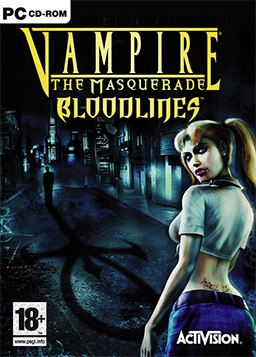
Today, though, we’re going to talk about the Malkavian, probably the most iconic of the clans in the sense that the girl on the box art is one of them. No that’s not a spoiler you find that out before you even meet her, geez.

See, the thing that’s great about Bloodlines from a replayability standpoint is that multiple versions of most of the dialog were recorded. And used. Which means other vampires actually react to your clan when it’s appropriate, and treat you differently.

This is most noticeable after playing Toreador and switching to any of the other clans I’ve named. And most of all when playing Malkavian.

The thing about Malkavians is, they’re insane. And I mean really insane, sometimes debilitatingly, almost always clinically, everything from multiple personalities to hallucinations to hearing voices… it varies widely and you encounter several of these along the way…

Which isn’t as impressive as the fact that as a Malkavian, a) all of your dialog prompts, as they’re written word for word what your character utters, come off as the rantings of the insane, which they are, and b) the other vampires actually react to this. Which is delicious.

Oh, and also? If you listen closely, sometimes when you talk to people, you actually hear whispers over their dialog, and those whispers sometimes contain spoilers. Apparently your brand of madness is the oddly prescient kind.

It’s unclear whether some Malkavians are insane prior to their transformation or if their blood makes them mad, but bloodlines seems to indicate the latter in your case. Even Heather, your ghoul—

—No, not… okay, Bloodlines uses the World of Darkness definition of ghoul, which is a mortal who drinks vampire blood and gains a limited level of vampiric power, like healing from greater injuries and so on, while also becoming increasingly devoted to the vampire.

Vampire

YES. Yes. Heather. Yes.

Sorry, was that a spoiler? I’ll keep those to a minimum, honest. I never know. The choice of what to do about Heather is of one of this game’s pivotal moments so I won’t ruin that by going into it too much. Anyway.

Heather (depending on events IIRC) is perhaps the most interesting example of this. Because while for, say, a Torreador or Tremere, her dialog becomes merely devoted, for a Malkavian it actually starts to become unhinged. That’s right; your insanity is contagious. And it is just… fascinating. Is that wrong of me? I can’t even remember the last time I felt like a choice I made in character creation had that kind of impact on a story level.

And yeah, sure, it’s still the same story arc. You hit all the same high points each time. You still reach the same pivotal choices. But the clan choice and your allegiances along the way make it feel like a very different journey. And if there’s one thing I’ve learned about RPGs, it’s this; that feeling can make all the difference in the world.

Star Wars: The Old Republic: First Impressions by a Non-MMO Player

So I’ve recently begun playing Star Wars: The Old Republic. Is this MMO strong enough of a storytelling engine to hold my interest? Let’s find out…

Star Wars The Old Republic

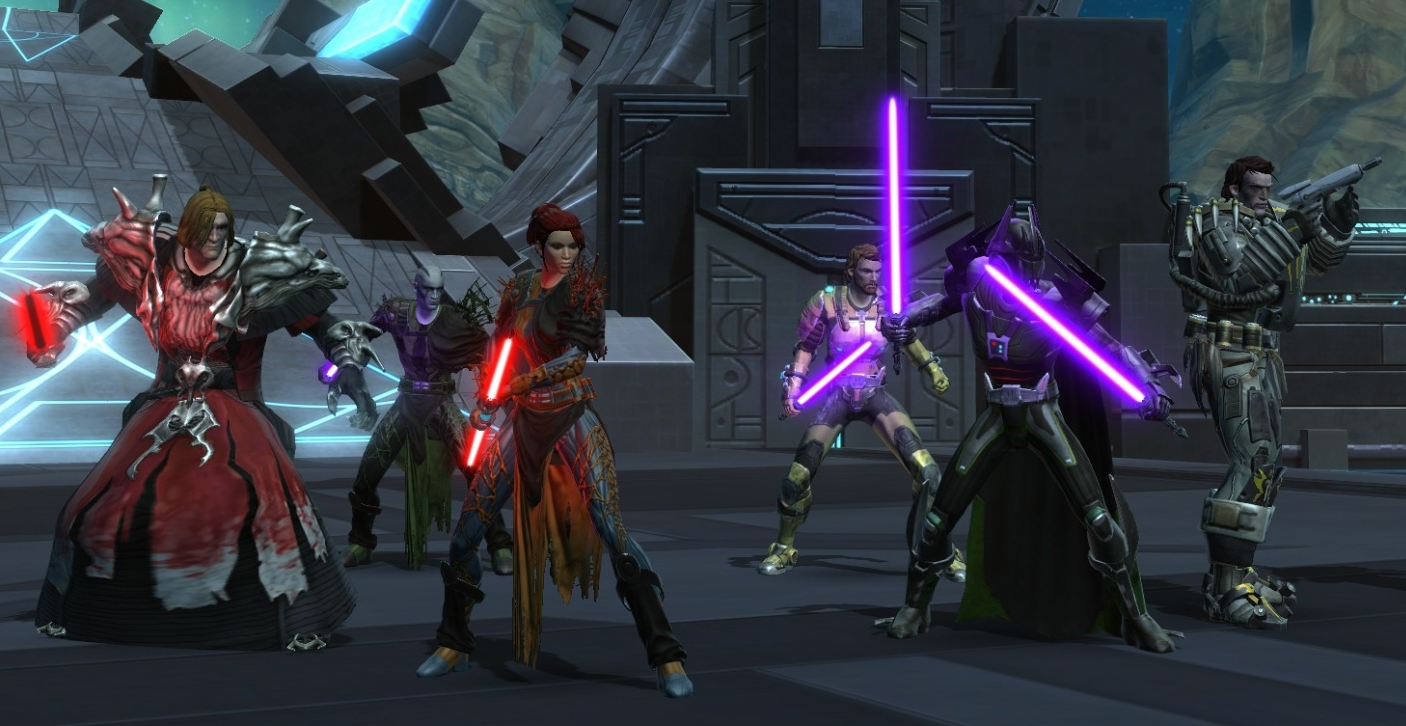
So I’ve recently begun playing Star Wars: The Old Republic, even as I replay my old favorite, Knights of the Old Republic. Is the now free-to-play MMO strong enough a storytelling engine to hold my interest? Let’s find out…

Spoiler alert: yes. Yes it is.

Well, that was easy, looks like you lot can go on home.

Oh… oh, you expect me to actually write about this, don’t you. Fiiiiiiiine.

Okay. I’m gonna go ahead and break down what I see as the good, the bad, and the annoying reality of dealing with a F2P game. Then I’m going to answer the most important question of all: is it enjoyable enough that it leaves me wanting to play it when alternatives exist?

The Good

So I started out on a PVE server running a Sith Inquisitor, because if there’s two things I like it’s primary casters and lightning. I was immediately grabbed by the story, which is something that literally has never come up in any conversation about World of Warcraft I’ve ever had. Probably because, well, it doesn’t have one. At least not one that’s visibly meaningful to the player. And certainly not one that’s different. Point is, I seriously cannot wait to find out what happens next in my apprenticeship with Lord Zash, so yeah, only good things to say. I’m often at the edge of my seat.

I run my Inquisitor with my GFs Warrior, which quickly got me intrigued by the possibility afforded for eavesdropping on someone else’s story as well. With at least 8 stories to get through, (one for each class) plus some unique twists and variations based on your species and gender, there’s a lot to like here, and there’s a solid amount of replayability. Which I like.

Combat plays much like I remembered from the beta, and it’s still surprisingly satisfying for MMO point and click + hotbar action. Maybe it’s because I just came off of KoTOR again, but it’s easier to enjoy than it was when I tried WoW.

The game also added a number of new twists since I last looked at it, like the Legacy system that lets you unlock perks and define relationships between all your characters on a server. This jumped out at me as being a really freaking cool idea; that all your characters contribute to the Legacy.

Another thing I liked? I’d planned to solo a LOT of the game, but group XP, social points, and guild XP bonuses all give you incentive to group up with people and play together without being terribly annoying. In fact, the flashpoints are some of the most fun I’ve had. I freaking LOVE the social rolls, getting a glimpse of everyone meaningfully participating in a conversation, helping to steer it to a conclusion… BioWare outdid themselves with this. And the dialog wheel here is at its best.

Companions that fill roles you don’t want to occupy and do all the otherwise boring grinding crap for you with a few mouseclicks help solidify the unique offering of this particular game over the long time behemoth in the room, WoW. I’ve often said that you can’t beat a competitor by merely imitating them; you have to offer something they don’t and aim for a niche, or do what they do so much better than they did it that their customer base flocks to you. SWTOR is smart enough to have included features that actually target annoyances that turned me away from WoW the only time I ever took a chance on playing the darn thing. Plus, companions have always been one of the best things about a BioWare game. Good job on a developer playing to their strengths.

Bonus points also go for convincing me to try the PvP modes; I normally freaking hate PvP in almost any game ever, but the war zones here are honestly pretty fun. Once you figure out what is happening. I accidentally jumped into a Huttball match without knowing how to throw the darn thing… whoops.

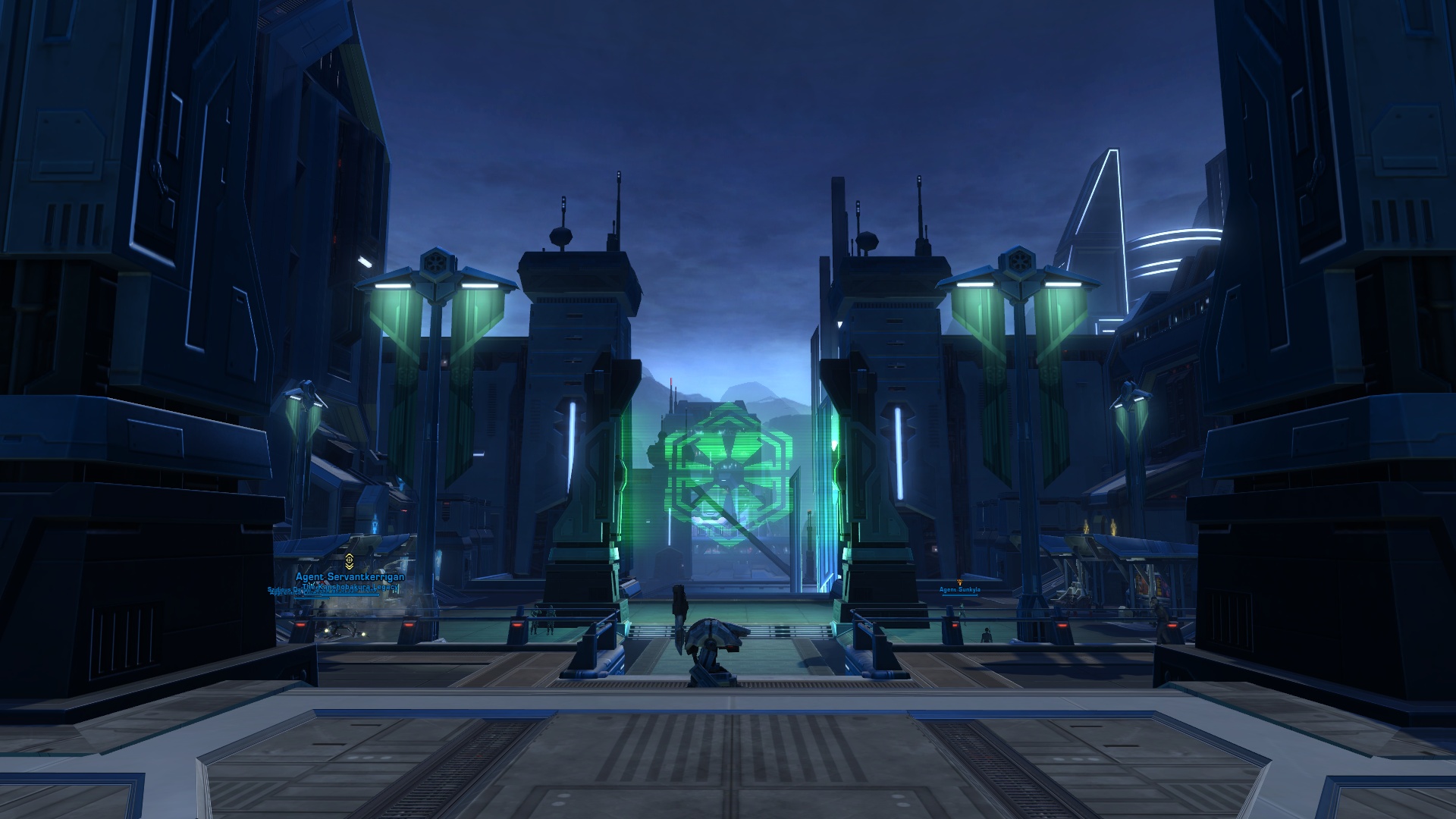
Have I mentioned that the environments are gorgeous?

The Bad

… you know, I actually don’t have anything to say here yet. I’ve played the now infamous Scarlet Blade. This game would have to fall a LONG way before anything in it qualified as genuinely BAD.

I know how much the Internet loves hyperbole, but I don’t really have any for you here. Sorry.

The Annoying

Look I’m just gonna be straight with you. There’s a lot of stuff hiding behind the pay wall. Nothing I’d call a deal breaker by any means, but there’s a good chunk of stuff in there and by far the biggest annoyances for me, so far, are the inability to use artifact level equipment out of the box and the low number of Galactic Trade Network slots. Between that and a lot of the unlocks showing the default (slightly misleading) per-character price rather than the per-account price in the cartel market, you have a recipe for annoyance.

It’s not all bad, though. You earn Cartel coins (the currency you normally buy with actual cash) as a F2P player for certain achievements and the like. This is already more than I can say for the one other F2P MMO I’ve tried. So hypothetically you can overcome a lot of those annoyances with time and effort.

Alternately, you can do what I did and resolve to throw a few bucks into the market from time to time and aim for sales and whatnot, a process I like to call “thanking the developers for opening up their game in a way that doesn’t ask me to commit to a monthly fee I don’t want to pay.” The first purchase in the market gives you four more character slots immediately (per server), so that’s a useful incentive. Lord knows with 8 stories to work through at LEAST once each, there’s plenty of reason to use a few extra slots.

And hey, the 2.1 update just landed. So now there’s even more stuff to check out. Apparently. I haven’t actually had the chance to play yet in the newly patched reality.

The Just Plain Weird Stuff I’ve Started To Notice About Every MMO Ever

So is it just me, or is the sense of scale in MMO environments almost universally off? I can’t quite put my finger on it but almost everything feels like it was designed for and by people who are bigger than the actual characters that occupy the world. Chairs feel oversized; bottles for drinks are the size of my head; hallways are massive; rooms are cavernous.

I don’t even know how to react to this but it feels that same way in every MMO I’ve so much as glanced at, and it’s definitely present here.

The Conclusion

There’s no reason left NOT to TRY this game. It’s free to start, you can explore all of the story without paying if you like, and it’s possible to solo much of PVE and to do MOST of the social missions with a mere two people. The busywork of grinding professions has been offloaded to companion characters, leaving you more time for actually playing the game and shopping or selling in the markets. This already cuts out 90% of what I hate about other MMOs. The stories are really well done and captivating, the voice acting is really excellent, the NPCs feel like people — BioWare at its finest. And it’s Star Wars. STAR WARS. FREAKING STAR WARS, MAN.

Granted, I may be a little obsessed. But I’m always going to be a little obsessed with the old republic.

KoTOR was the game of my youth, guys. It was the Star Wars that would never be ruined by midicholoroans or gungans or whatever. When SWTOR first launched, I was mad. I was upset because a subscription MMO meant the stories I wanted would never be told in a place I could reach. But that barrier is gone, now. Now the only thing between me and the stories is time.

I’ll check out Neverwinter eventually, guys, I promise. But right now, my people need my strength. The mysteries of the ancients call out to me. And so, I rise from humble origins to seize my destiny. The dark side is my ally; I fear nothing. EMPIRE FOREVER.

Vampire: the Masquerade – Bloodlines

For me, if there’s one video game that perfectly sums up what a vampire game should be, it’s Bloodlines….

I can count the number of games that ask me to make complex ethical decisions (and also portray those decisions as some shade of grey) on one hand. Mass Effect comes close, but even that still falls into the binary mentality — choices are either Paragon (noble and heroic) or Renegade (which ranges between badass and asshole). KoTOR put you on a sliding scale between Lightside and Darkside and made walking the line between extremes almost impossible.

Mass Effect differs from most of the other games I’ve played that offer some kind of ethical framework in that Paragon and Renegade are calculated separately and Shepard is fully capable of being a bit of both. In this sense, it’s a step above most RPGs, morality wise.

But there’s more than one right way to approach a moral framework.

“I could have died last night, but I heard the voice of a smaller god.”

You might remember me mentioning this game before. There’s a reason for that. I stumbled on this diamond in the rough early into my college career and I’ve never quite been able to let it go.

Vampire-the-Masquerade-BloodlinesSee, there’s this interesting thing about Vampire: the Masquerade – Bloodlines that most modern RPGs can’t really say. It doesn’t preach at you much. Sure, you have to keep up the Masquerade, you have to maintain your Humanity (in my experience it’s kinda hard to fail at this) but beyond that pretty basic idea of ‘don’t kill people who didn’t take a swing at you because that’s giving into the beast’ and a few other pointers, there isn’t really a sense of a binary morality in this game. Everything, and I mean everything and everyone you meet in Santa Monica (and the greater LA area) is a shade of grey. Its moral framework is pretty loose — maintaining Humanity is usually pretty obvious, you have to work hard to lose it — and within that restraint there’s a fair amount of leeway in terms of how you handle things. A lot of the quests (especially early on) can be solved with many different approaches — stealth, persuasion, seduction in some cases, mind control, brute force, you’ve got all sorts of tools available to you depending on the sort of vampire you’ve chosen and your own play-style. A few decisions can raise your Humanity score, a few others along the way can restore any status you’ve lost to Masquerade violations. Other than that? It’s all roleplaying. You’re a vampire. Act accordingly.

Rarely is there a clear right or wrong in this game. When there is, you’re inevitably facing something more horrifying than you. Sometimes that something is human.

And honestly? That’s… kind of brilliant. Don’t get me wrong, I love the BioWare formula, but every so often it’s nice to be reminded that it’s far from the only one that works. Bloodlines worked. There was a clear distinction between enemies in a combat zone and civilians on the street; you knew the rules and you followed them like a good vampire, and it actually impacted your way of behaving in the open world. Unlike, say, Saints Row 3 or Grand Theft Auto, where the police actions resulting from rampaging through the streets and making a very visible nuisance of yourself are a temporary inconvenience at best. Especially late game, your incentive to stay in character in the sandbox is almost nil. But the framework isn’t a leash; you’re given enough rope to hang yourself, as it were.

Really, when it comes to this game, probably the best thing about its sense of morality is that it fits the character and the setting. In this world, even the best of intentions can twist around on you (as they really should for a vampire) and… I think the highest complement I can pay this game is that the choices I made almost always left me wrestling with the most important questions of all: why did I make that choice? And do my intentions matter more than the result?

What does this choice say about me?

What am I becoming?

My personal recommendation is to play the game at least twice, once as a Malkavian. Because the Malkavian makes things very… very different, just in terms of your dialog choices and people’s reactions to them. And by different, I mean hilariously insane. Malkavians are pretty much universally batshit crazy.

Nosferatu also offers a unique approach, but personally I’m not all that big on the idea of being so hideous that stealth and violence are the only tools you’ll have left when dealing with mortals. What can I say? I like my vampires elegant. Still, if you’re more into horrifying, it’s nice that they give you the option. And that characters do react differently to the more… fringe choices. Not bad considering that Mass Effect only refers to Shepard’s class once in the entire trilogy and only offers you unique advantages for a particular class outside combat once, and it happens in a DLC mission. Bloodlines, meanwhile, was giving you unique dialog options for using your clan specific mind control powers in casual conversations, and when did this thing come out again?

Oh, right. In the dark prehistory before game developers started aiming for yearly releases of CoD.

As an added bonus, the soundtrack is really pretty darn good, most of the voice acting is solid, and the atmosphere is just indescribably gothic and oppressive. You really feel like this whole town is just waiting to tear itself apart. One or two quests in particular still give me chills when I think about them—the hotel sequence in particular is the example I point to when I say I want horror in video games to feel like this.

Bugged though it was, Troika deserves credit for trying, and there’s a lot in Bloodlines that modern developers really should be taking notes on. Sadly, they probably won’t. If a sequel to this game came out today it’d probably ship with a dozen microtransactions and a tacked-on multiplayer mode that features like a whole two distinct flavors of deathmatch. Ooo. Innovation! Who knew that it smells just like condescension?

For me, if there’s one video game that perfectly sums up what a vampire game should be, it’s Bloodlines. Not because it’s perfect; it isn’t. Because I still remember it. Because for all its flaws, I still think about it. Bloodlines made me feel like a vampire, slowly losing my humanity as I fought to hold my head high in a world far darker than I was, with characters who remain fascinating and threatening, dark and majestic and wholly unique.

I would love to see someone, a skilled development team, try to make a game like this today. Not a big budget mainstream monstrously, but something where they allowed themselves to innovate again. An open world title, single-player, maybe with a co-operative story, with cool powers and robust character building and role playing features. A world where actions have consequences, where your choices make you stop and ponder afterward.

I want, more than anything, someone to make me feel this way again.