“ROLEPLAYING: YOU’RE DOING IT WRONG”

So, you have your character… some extremely talented wizard with maxed-out Intelligence.   18 or 19 is pretty high, right?  And their name is… Grandalf (true story).  You’re boppin along with your merry band of fellow adventurers when you come across a puzzle inside a dungeon.  The gamemaster must have put a lot of effort into this thing because this puzzle looks particularly puzzling.  Hieroglyphs, numbers, and weird color patterns.  It’s not a trap, it’s a puzzle, and nobody can figure it out.  Not even you, and you’re the smartest gamer you know.

The gamemaster looks at you and says, “You know, any wizard of even a 16 Intelligence can figure this out.  If you as a player can’t do that, I’m going to have to lower your character’s Intelligence, or reward you with less experience this session.  Perhaps you should play some other character, one that isn’t supposed to be so smart?  Because you’re just not really playing to your character’s ability score.“

“But-but-but… of course I’m not as intelligent as my character; they have a 19 Intelligence!  My character is practically Einstein.  I should get a roll to figure this out, or maybe a clue!

“Sorry, this is a roleplaying game.  Do you even know what that is?

—

Gentle reader… if you find the above statement from the gamemaster to be true and fair, then this article is not for you.  If you find it ridiculous, then read on (because I have a further point to make).

So, you find it ridiculous.  Great!  Now let me flip it…

Bob is playing Gronk, a 7 Intelligence fighter.  Bob says, “I know, it’s a simple picto-puzzle.  Just turn the hieroglyphs until they match the color patterns on this side.  See?”

—

I have heard of many gamemasters turning to Bob and saying something like, “Sorry, Bob, your character is too dumb to figure something like this out.  You should play dumb.”  I may have even done this decades ago, when I first started playing.

Do you see my point?  It’s ridiculous to penalize a player because they can’t play as smart as their character actually is, so why should we penalize a player for not playing as dumb as their character seems on paper?

How intelligent is a high Intelligence?  The difference between 10 and 19 is 9.  That’s a big difference, but nobody ever berates a player for not playing like Einstein.  How dumb is low Intelligence?  The difference between 7 and 10 is a mere 3 points, but people are so quick to jump on such a player for devising a plan, or solving a puzzle.

At what point is a dumb fighter with a 7 Intelligence allowed to solve a puzzle without condemnation? Do they need an 8 in Intelligence?  or a 9?  Does it have to be a baseline 10, where there are no penalties to rolls?

On most character sheets, abilities typically provide modifiers that specifically affect ability rolls, skill rolls, and saving throws.  The intelligent wizard tries to solve the puzzle and gets a bonus, while the not-so-intelligent fighter probably gets a penalty.  That’s it.  That’s all you need.  Roleplay it however you want, but the roll is the mechanical effect only if needed.  Our characters don’t gain experience on how well we interpret what a 12 Wisdom means, they gain experience from overcoming challenges and progressing the story.

Bob may play a 7 Intelligence fighter who is bad at math, or just can’t read.  Kelly may play a 7 Intelligence fighter who is simply a bit forgetful.  However, Mike may play a 7 Intelligence fighter just like himself… a normal dude who can’t seem to think straight when under pressure (taking the penalty of -2 on Intelligence-related rolls).

It just isn’t necessary to judge anyone on how “well” they play to their character’s mental stats, as everyone has their own interpretations… for their character.

So no, you’re not roleplaying wrong; there’s practically no wrong way in this regard.

Nobody goes to the table because they want to be judged on how well they roleplay their character’s ability scores; we go to the table for a shared and enjoyable gaming experience.  Don’t try to change others; just continue to improve your own game and you’ll simply continue to have more and more fun.

 

Game Master and Player Disagree – Now What?

I’ve been into RPGs for a while now, and I’ve enjoyed both playing in and running the game. I guess I’d split running vs. playing as 50/50, so I’ve had my fair share of game masters to learn from, and plenty of time to solidify my own style.

I recently sat in a game with a brand new game master, and (like usual) had a grand time. This was his very first time running a gaming session, and I’d say he did a good job. He’d been playing in the game for a couple of years, and he’s one of those people who can read a book and remember everything—so he’s pretty knowledgeable about the rules.

We had a good time.

Well, except for one time…

You see, right in the middle of combat a player interpreted a rule one way (in their favor), and this brand new GM interpreted it another. There was some discussion back and forth between the two… including references to forums, and I could see both were getting a bit frustrated (especially the player). I really wanted to chime in with my own two cents, but I and everyone else just waited. After a couple of minutes, the player relented and the game resumed.

Now, there’s a variety of ways this could have been handled, and I guess it depends on what the people at your table prefer. Some say it’s perfectly fine for a player and GM to discuss their interpretations right then. Others say that the GM is god and should simply make an immediate and final ruling. Others say to immediately spend time looking up the rule and dissect the wording, or perhaps going online to search forums and social media groups to seek a consensus. Sometimes there’s even a group vote!

Now, I’m not talking about when a player is unsure of a rule; I’m talking about when a player and the GM have opposing views and are sticking to their guns.

Of course, after many years of gaming, I’ve seen the best solution make its way to different tables over and over again, because it’s the best…

Rule in favor of the player… immediately.

Then, research it later. Research it after the game, or even after a good night’s sleep. When you immediately rule in favor of the adamant player (even if you know they are wrong), you’re saying that their enjoyment is important to you, and you’re helping them achieve that.

We’re sitting at the table to play a game… to play a rolelaying game. Rule discussions and arguments take you out of character, interrupt the story, and kill the mood. So what if a rule is being interpreted incorrectly? Figure it out later. Figure it out when you’re not under pressure, when the player is more likely to listen to you with open ears. Who knows? Maybe you were wrong. If you were right, you can show them the correct interpretation–later.  Remember, the game master is not there to rule over the players like a god; they’re there to help everyone have fun in a fair way.

Besides, if you tend to rule in favor of the player, they’ll be more likely to trust you and accept when you actually rule against them.

I totally KILLED A PC, and it was GLORIOUS


I know what you’re thinking, “what a dick.”

The PCs were tasked with escorting a rich historian and his bodyguard into a known dungeon.  Every decade or so the dungeon gets infested with new simple monsters and every so often it gets cleared out.  This particular historian wanted to walk around the dungeon and map it out, but he needed a group or mercs/adventurers to clear it .  Really, though, he was looking for an imprisoned wizard and the wizard’s MacGuffin artifact, but that’s beside the point.

As the PCs go from room to room, level to level, the historian’s bodyguard (Helen) only occasionally helps out in the fights–she’s there to protect the historian, after all.  However, she’s helped out occasionally, and she has always fought as a rogue/fighter type, and quite capable (at least on par with the PCs).

Anyway, this dungeon crawl has taken up about eight gaming sessions, and I’ve always played up Helen as sometimes helpful, and sometimes a little short with everyone.  One PC in particular (Shastina’s rogue) took the bait and ran with it.  The two began a little bit of a rivalry, and Shastina never quite knew what to make of this secretive bodyguard.

Then, about halfway through the dungeon crawl, Shastina’s daughter came into town and sat at our gaming table for one session.  I let he play Helen because that seemed like the best fit, and boy was it!  Shastina and her daughter played the rivalry of these two characters to the extreme, throwing insults (in character) and always trying to one-up each other with combat moves against monsters.  It was fantastic.

Fast forward a couple of weeks, and the whole dungeon crawl climaxed with the entire PC group fighting a suddenly more powerful and evil Helen (like I always planned).  It was awesome.  I knew this fight was coming, and the players may have suspected a little bit, so it was a good culmination.  What made it even better was when Helen specifically went after Shastina’s character…

Sure, the big bad evil girl is fighting a bunch of PCs, and many DMs might spread the attacks around so not too much damage is done to a single character, but Helen focused on Shastina’s rogue and took her down after two rounds.  Someone then healed Shastina’s rogue, but then Helen took her down again, and with several attacks per round, she ended up killing her outright.  With her last attack, she sliced the head right off and lifted it high.  It was GLORIOUS.

I know what you’re thinking, “what a dick.”

But, I am not normally one to kill player characters.  This was the first death in six months, and it honestly felt great.  Now, I can say that because everyone at the table knows I’m not there to kill PCs, and they prefer to let the chips fall as they may.  This fight didn’t have to start at this time; the PCs could have waited and gotten stronger, but they pushed for it.  They knew I would not be pulling any punches, and everyone was satisfied with how it played out.

So, don’t be afraid to kill PCs, especially if they’re ready for it.  What I mean is, let the story progress naturally, and don’t be afraid to let your inner demon come out–your story just may get that much richer.

Recap your session THIS way…

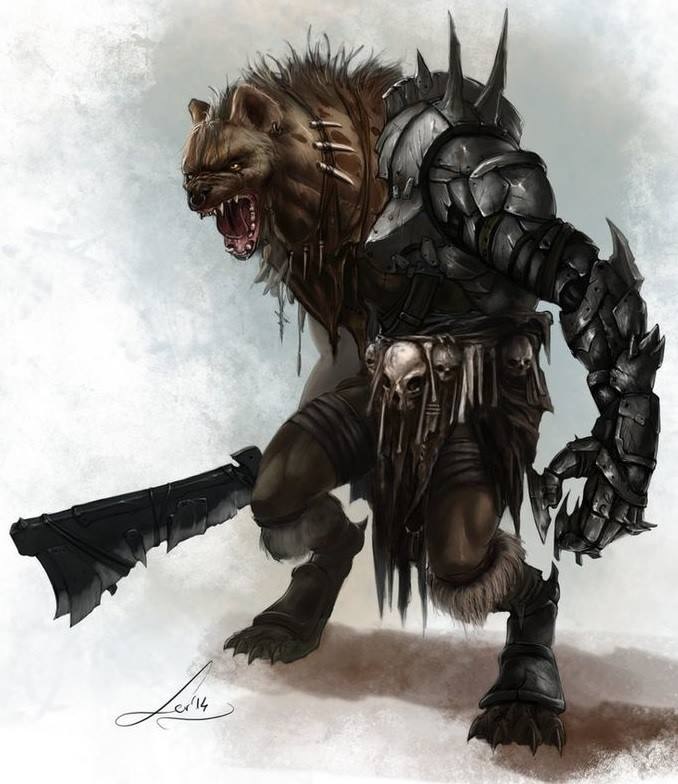
I normally recap our sessions in our own Facebook group, but decided to share this here because this time it was a different and particularly fun way to do it. Basically, I recapped the session from the viewpoint of the bad guys, letting the players get into the minds of their opponents a little bit.  For this particular session, a pack of gnolls have been taken over by a drow demon, and the PCs are invading their underground den. It works particularly well this session because it was basically a dungeon crawl, and I think it’s a good way to show them that shit’s gonna get real… real quick…

INVADERS!

[Because of Shastina’s magical obsidian dagger, she has a quick vision…]

After facing some murderous invaders at the rope bridge, HoUelp barely escapes, and finds his older brother, Brakch… “Brother, we are under attack! I think they’re here to save the humans… We must tell master!” Brakch responds, “No. Master does not want to be disturbed. We must counterattack, and kill the intruders. Kchaabrik! Take six warriors through the small passage, flank the intruders at the rope bridge! We’ll barricade the corridor!”

Kchaabrik gathers six gnolls and they all move around the side of their home to flank the intruders–who have managed to get across the rope bridge. Brakch then forms a barricade in the corridor, and waits. This will be the first real fight his younger brother (HoUelp) will face, and Brakch looks upon him proudly.

The intruders then cast some red light magic, illuminating half the warriors in the corridor. HoUelp yells, “Brother! They have magic! Should we not tell master?! We MUST tell him!” Brakch relents… “Fine, we’ll go to the master…”

Meanwhile, Kchaabrik and his six warriors make it to the rope bridge and assess the murderous intruders… It’s an ecclectic group of horrid enemies… a couple humans, a really giant human, an elf, a dark-colored elf, and even a giant freaking cat… such a weird man-pack indeed… they must all be the runts of their own races, cast out and banded together. Nevertheless, Kchaabrik and his warriors begin their counterattack, but quickly realize their mistake as brave warriors begin getting knocked off the rope bridge.

With only two warriors left, Kchaabrik takes stock in his situation. These foul intruders are lethal, and he wonders why he should stay and fight. Two things tell him to run: (1) his new pack lord is a really nasty demon. Kchaabrik is not powerful enough to take him down, so he’s never going to get the chance to be the alpha anyway. And (2) just today, Kchaabrik’s hunger got the best of him, and he ate his own pups, so he really had no more family left here. So, yeah, it was time for him to leave. He took his last two remaining warriors and retreated. Maybe they can find some henchman or something at the bottom of the mountain to feast on… adventuring murderers always leave a henchman somewhere watching their horses…

Brakch and HoUelp get to their new pack leader’s den, bursting in. As the two look upon a scared human who is about to be brutally murdered in some bizarre ritual, HoUelp speaks… “Master! We are sorry for interrupting the rituals, but we are under attack!”

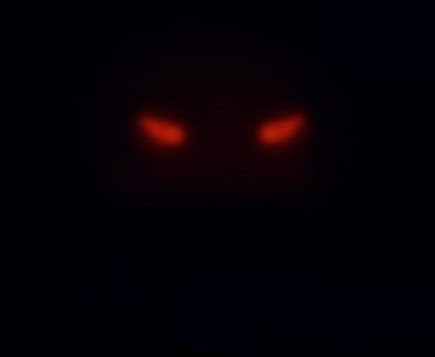
[Shastina tries, but she can not get a clear image of the Draegloth; only a looming shape and a pair of red eyes. She can, however, clearly hear his raspy whispers]

“I told you not to enter here.” With that, Shastina can clearly see the looming shape reach out with his large hand, as if to grab something, and HoUelp begins to whimper and yelp in pain. Brakch takes a step closer to HoUelp, wanting to help him, but it’s too late. HoUelp violently arches himself backward, and his heart bursts out of his chest, flying across the blood-stained room and into the Draegloth’s hand.

Brakch is motionless… covered in his brother’s blood. The Draegloth watches Brakch stand there… the large gnoll silently get angrier and angrier… foaming at the snout. For a moment, Brakch actually doesn’t know where he is, or what his own next action will be. He is paralzed in deciding if he will attack the PCs, or the Draegloth. Then he begins a slow, deeply gutteral growl.

The Draegloth finally speaks, knowing this gnoll now has no more family…

“Now, dog… get out of this room, and let no one else enter…”

So, Brakch is quite pissed that he lost his brother. Yes, it was the Draegloth who actually killed HoUelp, but in his fracturing state of mind, it’s the Draegloth’s command that focuses Brakch’s anger upon the PCs.

The PC’s will know of what has just transpired due to Shastina’s vision, and I imagine they might try to get Brakch to join them in fighting the Draegloth, but he’s now too far gone… totally rabid… I’m going to make him a badass and it’s going to be one hell of a vicious fight. Can’t wait!

Shadowrun Anarchy – Using Node Maps (the way to go)

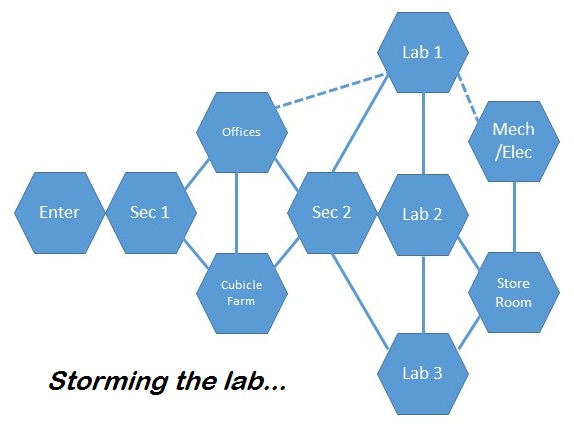
Shadowrun: Anarchy (hardcopy, PDF) is the narrative-heavy, shared-storytelling, alternate ruleset for Shadowrun. Among other differences, it has a non-traditional, abstracted movement system that lends itself to “theatre of the mind” style encounters, more-so than a lot of other RPGs. The GM and players don’t need to know how many meters/squares away a shooter is; she is either Close, Near, or Far. During a player’s Narration, they may take one Movement. Simple. Continue reading “Shadowrun Anarchy – Using Node Maps (the way to go)”

Foreshadowing through Nightmares…

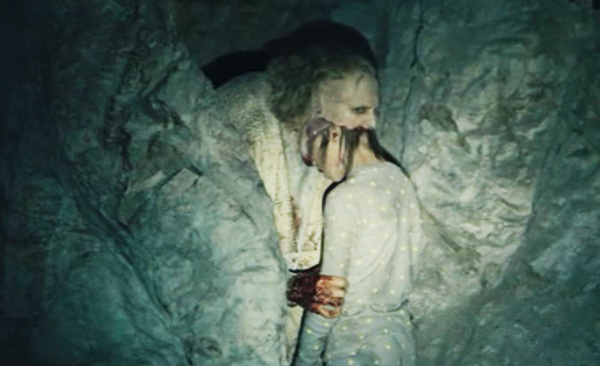
You’ve got a big boss fight lined up. You want it to be scary as hell, with the players fearing for their character’s lives, while still invested enough to take on the beast. Any player who has glanced at the Bestiary or Monster Manual probably isn’t going to be amazed when you drop a description and tell them to roll initiative. That all changes when you’ve spent time foreshadowing the evil power that seeks their demise.

An easy way to foreshadow is to include the big bad villain in earlier encounters, with it pulling its punches and fleeing the scene early. There’s certainly a place for nerfing an encounter, but what if your Big Bad could hand out a beating, gain a reputation for ruthlessness, and leave the PCs alive to stew in the sting of their humiliation?

It would be a perfectly delectable nightmare. Continue reading “Foreshadowing through Nightmares…”

A Horror Mechanic for Non-Horror RPGs

There are role-playing games (RPGs) designed to take horror as the main theme, similar to horror novels. These games are designed around the concept that there are events and things making people jump, or squirm, or go mad. Elements of horror are important in storytelling because they help in creating the mood for the people experiencing the story as it unravels to them. A problem with many RPGs is the elements of horror aren’t used, are skimmed over, or are even more commonly just missed by the players. Continue reading “A Horror Mechanic for Non-Horror RPGs”

Valerian, and how to make the same mistakes in your RPG

I was watching Luc Besson’s new movie, Valerian and the City of a Thousand Planets…

“In the 28th century, special operatives Valerian and Laureline work together to maintain order throughout the human territories. Under assignment from the minister of defense, the duo embarks on a mission to Alpha, an ever-expanding metropolis where diverse species gather to share knowledge and culture. When a dark force threatens the peaceful city, Valerian and Laureline must race against time to identify the menace that also jeopardizes the future of the universe.”

There you have it. Valerian and the [extremely long name for a movie] sounds like a decent sci-fi action flick, one that you could totally turn into a kick-ass sci-fi RPG setting. Unfortunately, Valerian-blah-blah-blah has many faults, and those same faults can end up in your game if you’re not careful.

In this article (rant), I’m going to show you those faults.  Also, there might be SPOILERS… Continue reading “Valerian, and how to make the same mistakes in your RPG”

Twist Your Encounters So Your Players Don’t Recognize It

Avid role-playing gamers are known to learn about the monsters they expect to encounter, especially players who also are game masters (GMs). This has made for a steady market of expansions for new monsters. But, then the race is on once again as the players get a hold of the expansion and soon know about the new monsters. However, there are some tricks a GM can use to bring in *new monsters their players won’t know. Here are some ideas in creating monster encounters that will keep players guessing about what they are running into. Continue reading “Twist Your Encounters So Your Players Don’t Recognize It”

Enhance your game. This time, with DOORS.

Doors. Every dungeon has them. Rules governing traps and locks have made them an essential part of every dungeon crawl. Unfortunately, the narrative influence of doors on a given game’s events is a sadly underplayed phenomenon. Ask any adventurer about what they remember most in a campaign and it will likely be an enemy, a critical fail, a cleverly role-played moment, or some other non-door related… thing. Here’s how you can fix that. The following are some fun things you can do with doors in dungeons that can bring a little unexpected character development, charm, and role play to your game. Continue reading “Enhance your game. This time, with DOORS.”