Don’t Touch My Dice!

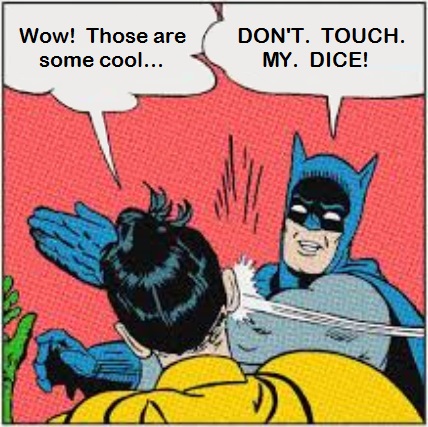
Across the folding table John tossed his d20, this was an important roll. It caught on his finger and went high into the air. The die came down, hit the edge of the Player’s Handbook open in front of him, and shot across the table towards me. Reflexively, I dropped my forearm along the edge of the table to keep it from continuing its runaway path across the room. It bounced back to the center of the table and end its path with an 18 on top.

“You touched my dice!” Continue reading “Don’t Touch My Dice!”
A Horror Mechanic for Non-Horror RPGs

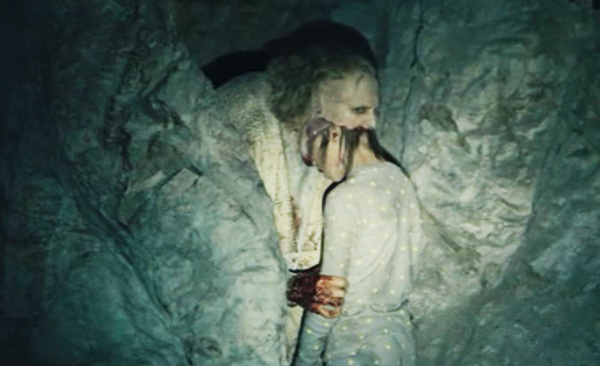
There are role-playing games (RPGs) designed to take horror as the main theme, similar to horror novels. These games are designed around the concept that there are events and things making people jump, or squirm, or go mad. Elements of horror are important in storytelling because they help in creating the mood for the people experiencing the story as it unravels to them. A problem with many RPGs is the elements of horror aren’t used, are skimmed over, or are even more commonly just missed by the players. Continue reading “A Horror Mechanic for Non-Horror RPGs”

Twist Your Encounters So Your Players Don’t Recognize It

Avid role-playing gamers are known to learn about the monsters they expect to encounter, especially players who also are game masters (GMs). This has made for a steady market of expansions for new monsters. But, then the race is on once again as the players get a hold of the expansion and soon know about the new monsters. However, there are some tricks a GM can use to bring in *new monsters their players won’t know. Here are some ideas in creating monster encounters that will keep players guessing about what they are running into. Continue reading “Twist Your Encounters So Your Players Don’t Recognize It”

The Use of Language In RPG Scenarios

Your party enters a tavern in the distant land they have spent weeks travelling to. The human fighter walks up to the innkeeper and asks about rooms. The innkeeper responds, but in a different language. The wizard steps forward and addresses the innkeeper in a number of different languages he has learned from traveling to other kingdoms. They find a common language, but because of the dialectic differences it is still hard for the two men to converse. Then the exasperated elf looks around. Off to the side is another elf that he goes and talks to. The two elves then approach the bar and by using elvish they are able to translate the needs of the party to the innkeeper. Continue reading “The Use of Language In RPG Scenarios”

More on Equipment: Following Up Conversations

I didn’t know how the tracking of a character’s equipment was affecting the roleplaying games people were playing. My article, Do You Have That On Your Character Sheet, generated a number of comments and discussions. There are different ways of handling the equipment issue: some game masters (GMs) are strict about how items are recorded while others are more fluid with their game (and, by-the-way, this covered the spectrum of wanting detailed lists to I don’t give a frack). Neither is a problem. How the game runs is part of the agreement between the GM and the rest of the players in the gaming group. Continue reading “More on Equipment: Following Up Conversations”

To equip, or not? That is the question.

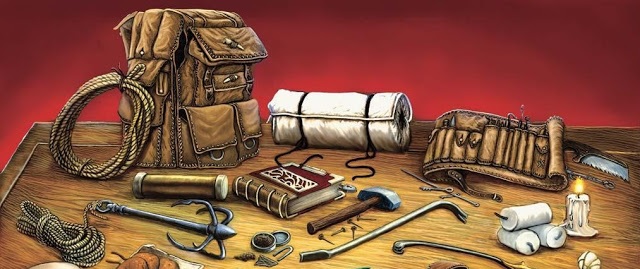
Your party has been tracking down the dragon across the wilderness. Traveling over the plains took a long time. The forest was full of minions who harassed and ambushed you. Now, mountains loom ahead as you near the location of the creature’s lair. Blocking your way is a deep gorge you need to cross and you are running short on time.

The wizard has assessed the distance and the fighter figures he can throw a grappling hook across the fissure so the thief can cross so you can make a rope bridge.

Confidently the fighter’s player states, “I secure a grappling hook on the end of my rope and throw it across into the branches of a tree on the other side.”

The game master responds, “Do you have a grappling hook written down on your character sheet?”

Everyone around the table stops, looks at each other, and then scan the sheets of paper sitting in front of them. Continue reading “To equip, or not? That is the question.”