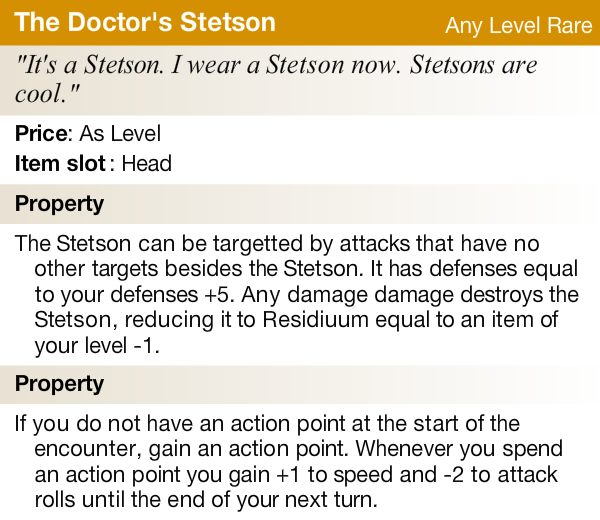
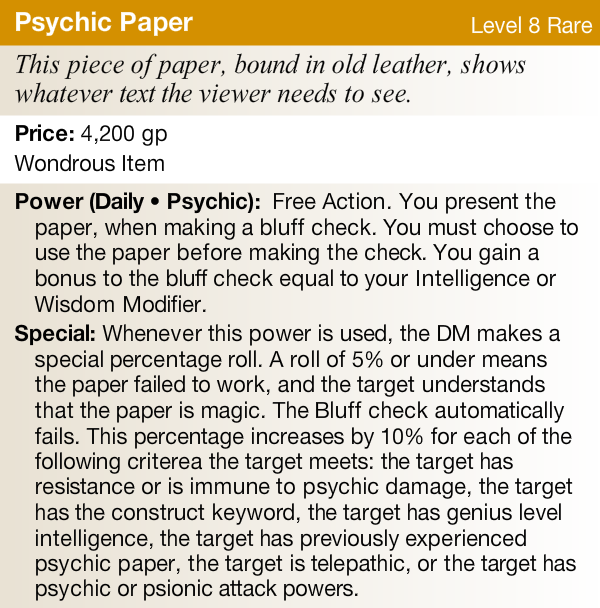
This week’s column sees me taking a slightly different tack; instead of laying down a plot seed, I’m giving you an item, and a way to drop it into your games. I hope you get some use from it, and as always, it should be possible to add this to any system/setting that makes sense.
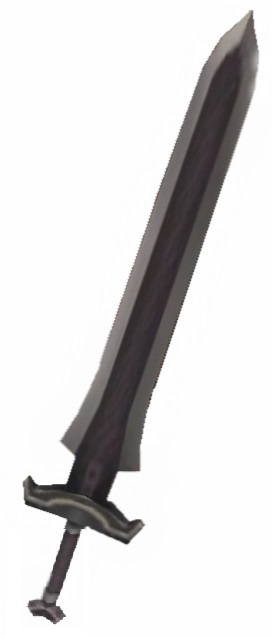 The sword of Lies is an item of legend. As tall as a man, and wide as his thigh. Whoever wields this monster of a sword attracts the attentions of not only the Gods, but of the fates themselves. It grants them supernatural strength – how else could they swing such a weight, and the skill to fell armies with the Sword. No man may stand against them, and Kings do well to court their loyalty. It has been many years since it was seen in battle, held aloft by a giant of a man named Corthum. It took a host of enemies to bring him down, and wrest the Sword from his hand, but no one knows what has become of the legendary weapon. Only rumours of its whereabouts keep the fortune seekers occupied…
Of course, very little of this is actually true. yes, it is a fine sword, and if your game system gives bonuses to weapons based upon the skill employed in their construction, by all means apply them to this glorious tool of murder. What it does not do is make them any better with a sword by magic, for the simple reason that it is not a magical sword. Stories have grown up around it because for centuries it has been hefted by some of the finest swordsmen of their age. Giants amongst men have strode into battle carrying the Sword of Lies, and their stories of their passing have grown and grown in the retelling.
It has been many years since the last man who held the blade was taken to his final reward, Corthum Grey-scale was brought down by a dozen mounted Knights, after vanquishing a dozen more before. All this over four decades past, and the legend continues. Searching for the sword has become a popular past time of adventurers and treasure hunters; even if they choose not take up the weapon, the price that it brings could afford them a city of their own.
The fact that no magic user or holy man has ever felt the touch of the arcane or the divine on it, has done nothing to dull the rumours of its prowess. After all, it is the Sword of Lies. Hoping to not lose face, and refusing to accept the truth that there is no magical or divine properties to the sword, they instead fabricate lies of their own about magics so powerful that they are unable to detect it, thus adding to the power of the rumours that surround the Sword.
These rumours can in fact give an advantage to whomever is wielding the Sword of Lies. It is distinctive enough to be recognised by almost anyone, with a black diamond pommel and cross guards that resemble the fangs of a daemon, inlaid with red metals that shimmer and seem to move like blood. The stories that are told about it are enough to give the wielder a bonus should they try to intimidate an opponent. To give it a bit more power though, there are ways to make it a fearsome weapon without enchanting it. Such as negating penalties for using the weapon if you would usually lack the strength, due to how well it is weighted, or even doubling the bonuses one would revive for having an above average strength. Feel free to use or ignore these suggestions, or make your own dependent on whichever system/setting you will be adding the Sword of Lies to.
And now, onto fitting it into said game. As mentioned, the sword vanished years ago, not long after its last champion perished in a large battle. Searching for the last resting place of Corthum Grey-scale would be an adventure in and of itself, with other factions just as eager to secure the Sword. This alone should make for an exciting adventure, with the party knowing that they’re the only ones trying to do good with the Sword, and having the impetuous to do it quickly as others are also seeking it.
And if it isn’t there, where to look next? Clues will abound in the way of rumour and tall tales about supposed sightings of the Sword, leading the party on marry jaunts, while the Sword always seems a step ahead of them. On their travels, they could find a trail of dead bodies, adventurers who have found the sword, and trusted to its supposed mystical powers in a fight, and realised just a little too late that they were grossly overestimated.
This could begin a quest for the ‘rightful bearer’ of the Sword, as more and more people take it up and die in combat. Will the rightful bearer be part of the group of adventurers, or will they join in the search for the next chosen one, organising feats of strength of dexterity to find the right person to take on the mighty level of responsibility.
Of course, if they do find it, they could be charged with finding out what gives it its actually nonexistent powers. Magic users and divine spell casters will likely pay handsomely to find out where it was forged, and how the master Smith was able to hide the enchantment so well.
They might just decide to hold onto the Sword of Lies themselves, and sell their services as the wielder of this fearsome weapon to the highest bidder. There are certainly other uses for such a noteworthy weapon, and I trust that any GMs out there reading this could easily add it to their existing campaigns.
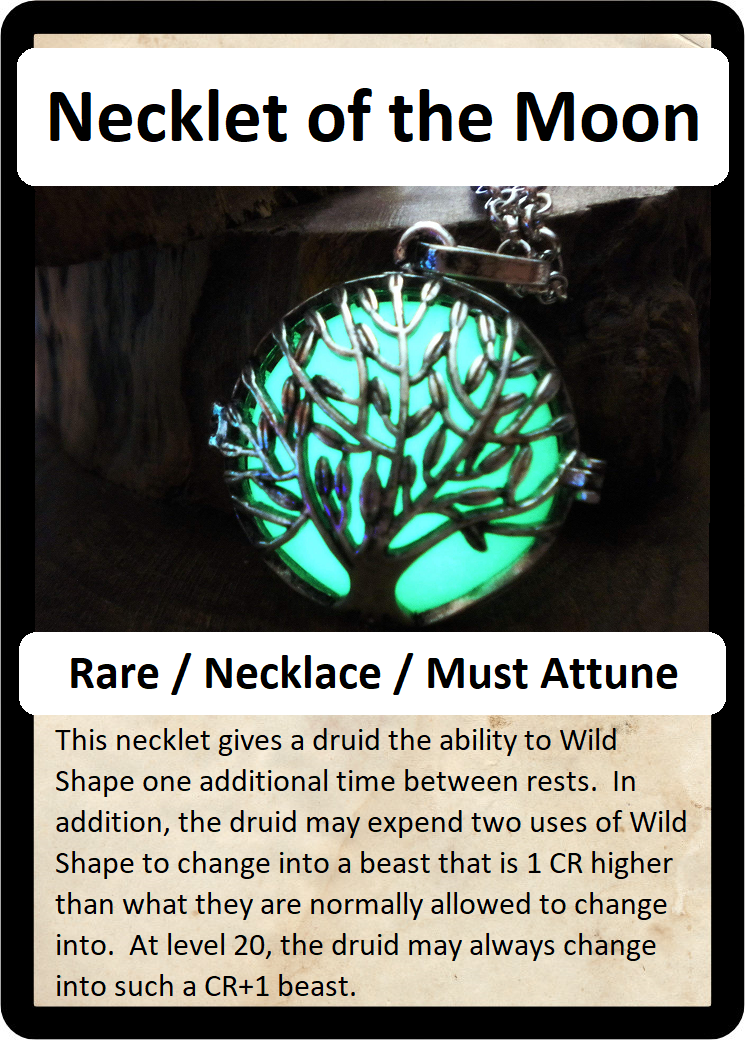
 They say the clothes make the man. This is of course, ridiculous. Imagine clothes making people! Don’t be absurd. However, sometimes a key article can make the man all the more exciting, inspiring or creative. Clothes are fun, especially when there’s magic involved. Nobody knows the value of a proper accessory more then the Doctor. With the recent season closer, we present to you a couple of his most famous chapeaus, to inject a little fun into your game.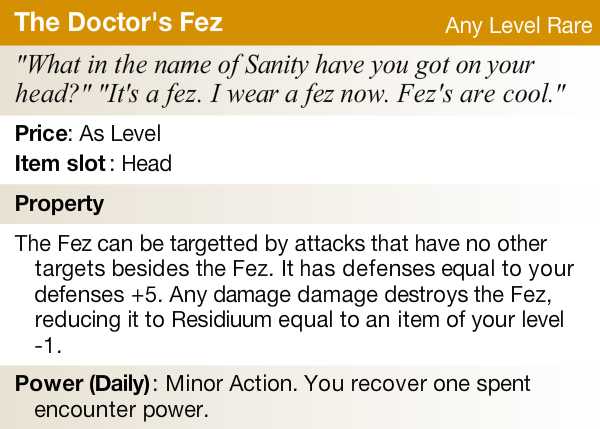
 The Doctor’s Stetson Stetson is actually a company that has made many hats over the years but they have become almost synonymous with their cowboy hats. The Doctor’s history with the hat is much shorter, but a strong one. This hat urged the Doctor forward, making power choices and taking action. That’s not to say that a man wearing a Stetson can’t have a little fun, but things might get a little rash at times.