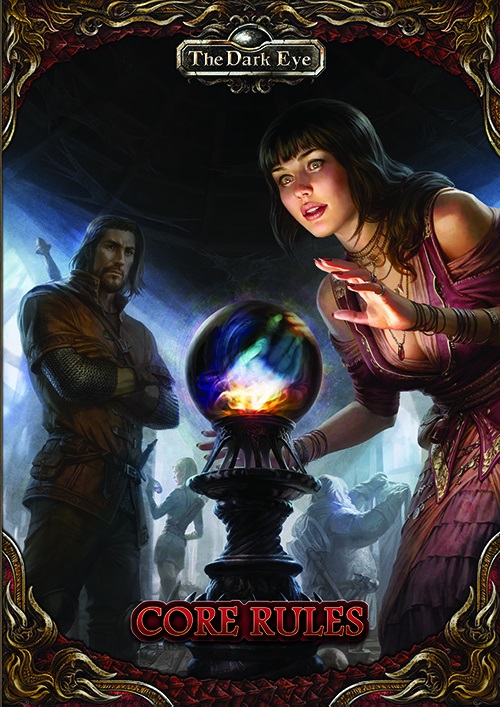
 Many refer to The Dark Eye as Germany’s Dungeons and Dragons. It is a fantasy RPG featuring elves, mages, dwarves, and all the typical things one might expect from a fantasy RPG, and until recently, it was only offered in German. In November of 2016, however, the 5th edition of the game was translated into English, allowing thousands to finally dig in to the system that has captivated the gamers of Germany. Continue reading “A Brand New 30 Year Old Franchise: The Dark Eye”
Category: Reviews
Review: Fragged Empire
 A concession of middle age, but I’m finally starting to warm up to space opera or, science fantasy themed RPGs. I’m still yet to delve into the major IPs. I haven’t read any RPG version of Star Wars, nor did Star Trek ever make it to my table. I’ve played Traveller twice. Admittedly, it’s taken awhile. While the excitement about Paizo’s recent release of Starfinder is almost tangible… And on the cusp of Wade Dyer’s third successfully funded Kickstarter, now might be a good a time as any for closer look at Fragged Empire.
Review – Deadly Trappings (77 system-neutral traps for you)
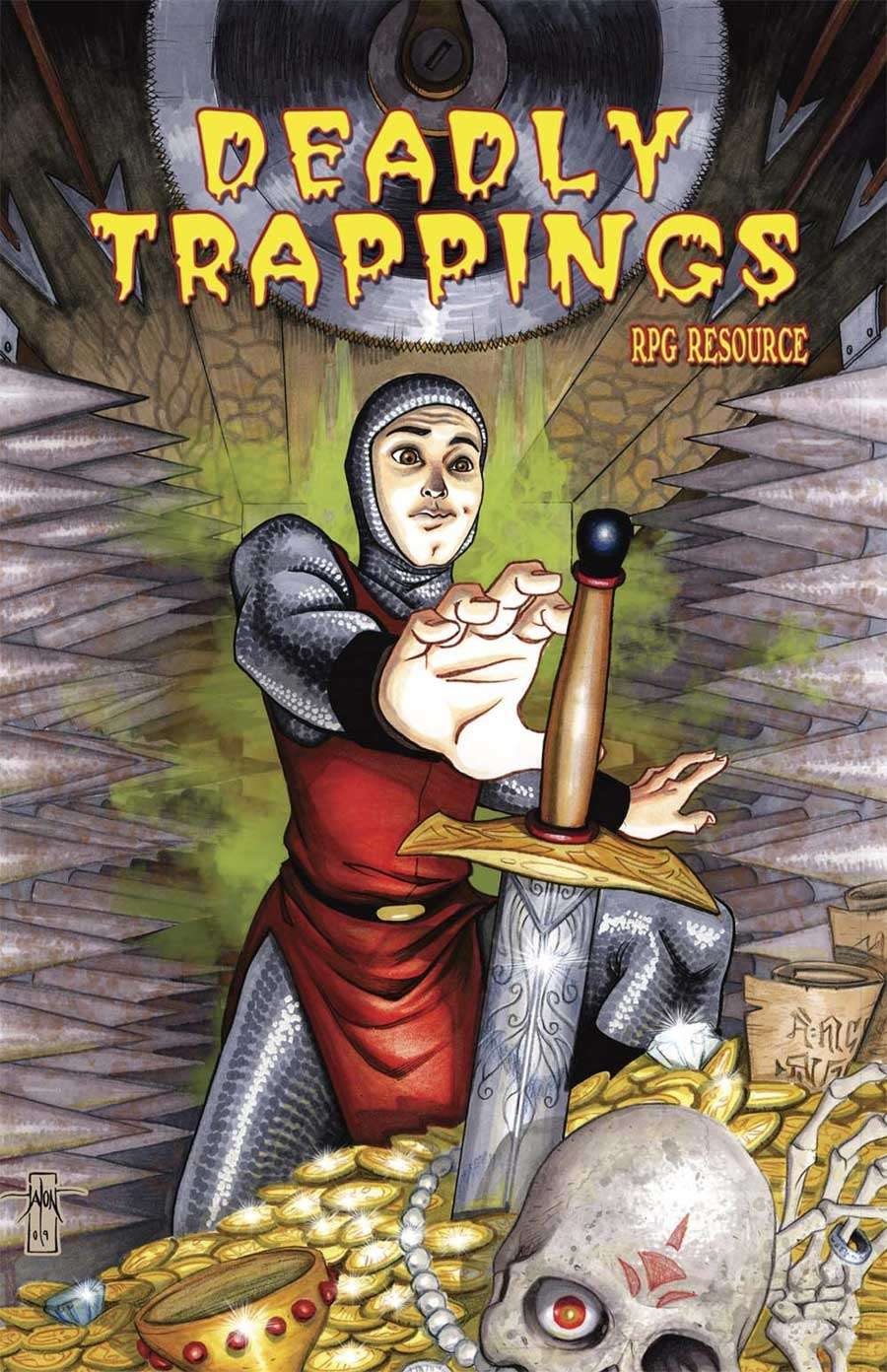 Deadly Trappings
By Kenzer & Company
82 pages (PDF)
This review starts with a gamer admission as well as a disclosure, and the gawds of the many faced dice, demand my confession. First, I have a long-standing and serious love/hate relationship in regards to dungeon trap manuals and RPG trap rules/guidelines. This is the first section of any new dungeon fantasy RPG I go to. “A rock falls everyone dies,” is my DM mantra.
Also, I write RPG reviews on a monthly schedule and contribute the occasional article, for Kenzer & Co.’s, Knights of the Dinner Table (KoDT) magazine. The Deadly Trappings in this volume published before I’d written anything with KoDT. I don’t’ think it will cause bias in the review, but I’m mentioning it.
Deadly Trappings is a collection of seventy-seven system neutral traps. Most are designed for use in a dungeon, but there are a couple of oddities (a spaceship trap & and a guy in a cowboy hat, triggering a western genre, bear trap). Each trap receives two or three panels of illustration and at minimum one half, to three-quarters of a page description. Text size varies for each, but most trap descriptions are between 300-500 words. The traps are same format of those published monthly in KoDT. Presumably, this book is a collection of the best of those traps, which (originally published 2009) were written before 2010. Continue reading “Review – Deadly Trappings (77 system-neutral traps for you)”
Review: Alpha Blue
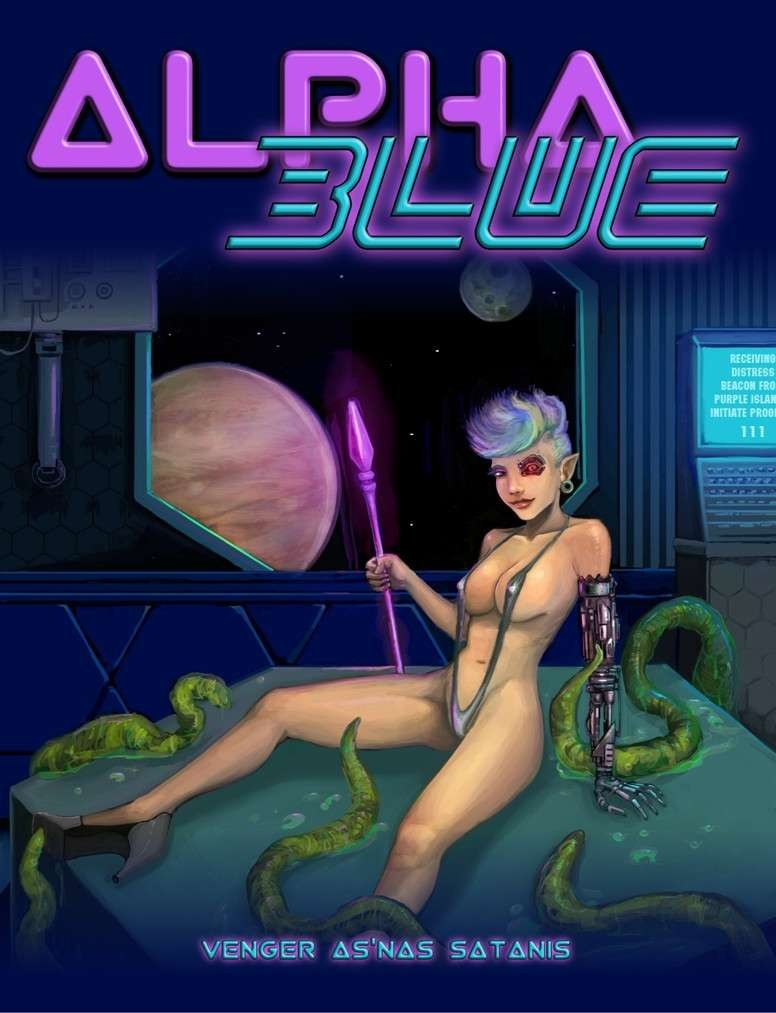 In the vast expanse of the interwebs, a roleplaying game titled Alpha Blue was successfully funded October 2015 via Kickstarter for $4.5K internet bucks. The book was up for general sale in the adult section with Onebookshelf (OBS: drivethrurpg & rpgnow) in December the same year. In March 2016, the title was pulled from OBS for “potentially offensive” content (customer complaint), but after an in-house review, the title was back up for purchase two days later.
Olympus, Inc. – Urban Fantasy with that cool Cyberpunk feel
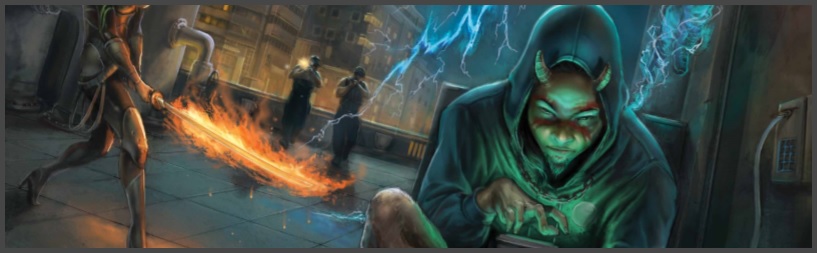
Olympus Inc., a modern day setting for Savage Worlds written by Gilbert Gallo and Charles White (produced by Fabled Environments), is a setting in which the world is controlled by shadow groups. These groups are very powerful, and exert their influence to further their own goals. Unlike most worldwide corporate conglomerates, however, this power does not simply come from significant wealth and connections. In Olympus Inc, the power comes from the deities of the Ancient Greek pantheon. Continue reading “Olympus, Inc. – Urban Fantasy with that cool Cyberpunk feel”
Shadowrun: Anarchy – an Overview
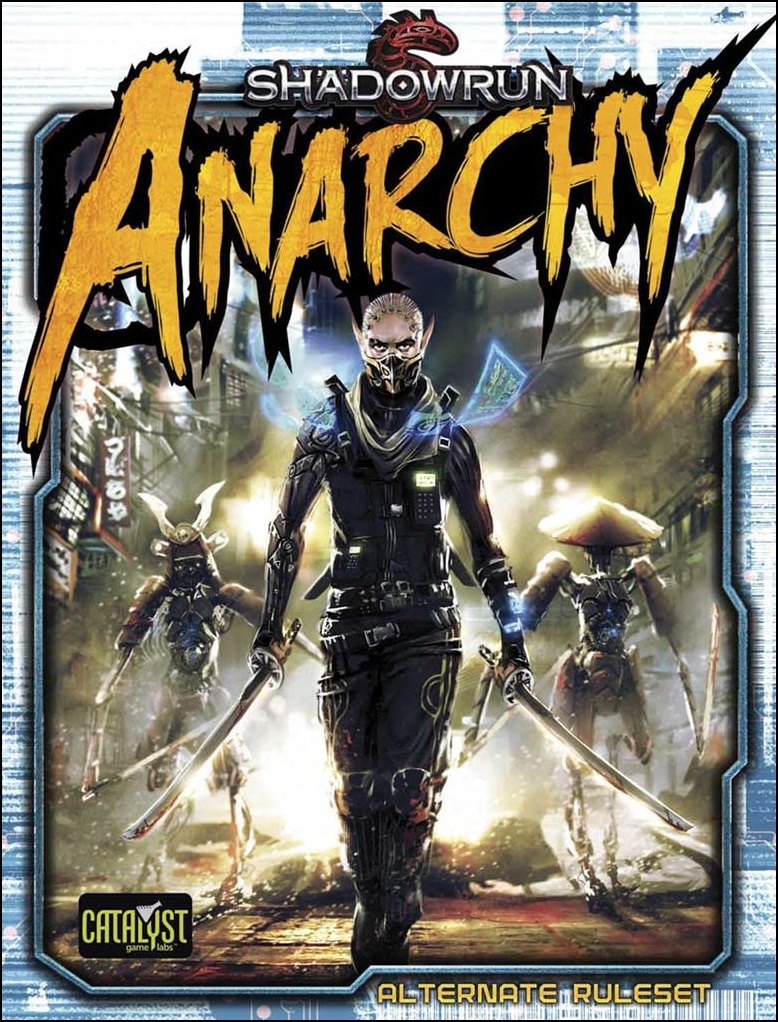 It’s been a few months since Shadowrun: Anarchy’s release and now the hard copy is available as well. I got my hands on the PDF immediately after much anticipation. The game, which is rules-light, narrative focused, and set in the same rich Shadowrun setting, was the game I had been waiting for (for 25 years).
This overview is going to be strange; it will be a scathing critique of the book whilst being a glowing recommendation of the game. Certain portions of the book are well-crafted, polished islands in a sea of unedited, mismanaged ambiguity. None of that matters. The only thing that matters is the experience at the gaming table, and the experience is exceptional… Continue reading “Shadowrun: Anarchy – an Overview”
The genius of D6 (and why you should try it)
 I have a special place in my heart for the D6 system…
To give a very brief summary, the D6 system measures attributes, skills, and equipment modifiers in a number of d6 dice. All of these dice are combined into a “Dice Pool” that is rolled for a total added value – against a set difficulty number. That’s it.
This simple system has been repeatedly modified, revised and expanded over the years. The biggest change to the basic system occurred with the second edition, and the introduction of “pips”. This allowed one to have Dice Pools with values such as 1D+1 or one 1D+2, where you roll one die and add 1 or 2 to the result. There was not a “1D+3”, however; instead, you would go up to 2D and roll two dice.
This second edition of the rules has not only been my favorite version of D6, but my favorite set of Tabletop RPG rules, period. I’m sure that part of the reason is because it was the first game that let me play Star Wars. Another reason is the many support products West End Games was able to publish before losing the license in 1998, and the influence of the game on the Expanded Universe of novels, video games, and comics. But in the interests of objectivity, I present five examples of the genius of the D6 system.
1. It uses the D6
Honestly, I may never have developed a love of the D6 system if it used a different die. The D6 is the most common die in existence. Every toy department in America sells them. So, while the copies of Monopoly and other board games in my house gradually lost their dice under mysterious circumstances, I always had a steady supply of dice for gaming (seriously, I don’t think a single board game at my parent’s house has a die left in it).
2. The Wild Die
The Wild Die is a single die from your Dice Pool that by color, size or some other way is special. When you make a roll and the Wild Die reads between 2-5, you add that value normally. If you get a 1 on the Wild Die, you lose that die and the highest valued die from your Dice Pool. If you roll a 6 on the Wild die, you count it normally, and then you get to roll it again and add the result. If you roll a 6 on the Wild die a second time, you get to roll it again, etc. As long as the Wild Die comes up 6, you can continue to roll and add it to your total result. Theoretically, a hot streak on the Wild Die could allow a starting character in their first game session to take out Vader, or even the Emperor himself.
 I have no problem with that.
This is is the genius of the Wild Die. While I was not above railroading my players in my early days of gamemastering, the Wild Die mechanic puts all plots in danger of derailment by virtue of giving even the greenest of PCs the ability to roll huge numbers. It encourages the GM to design more open games that rely less on following plots and more on the actions of the players. And that is always a good thing.
3. Character Templates
Somewhat unconventionally, the D6 system does not use a class/level progression to measure character ability or progress. What D6 has is a loose collection of “templates” that give a vague character concept, such as “Cynical Smuggler” or “Quixotic Jedi”. The templates have the starting Dice Pool for the character’s abilities filled, a handful of skills which are not, and starting money and equipment. That’s it. Each book WEG put out had a handful of templates included. Players were under no obligation to use these templates, however. One could easily make up their own – and my players took perverse pride in doing so. I’ve run games with Failed Jedi/Smugglers, Gambler/ConMan/Reverends, and nearly every variation of Force-Ability-as-Mutant-Super-Power that a rabid X-Men fan could think up.
Joking aside, the Template system gave the game a set of powerful freedoms that I was thankful for when running adventures. The most important thing is that our players could play anyone they wanted. The freedom intrinsic to the Template system is one of the reasons that D6 was the most successful of the Star Wars licensed games. Characters from movies and books rarely, if ever, fit into the narrow confines of a class-based character system. The frustration that kind of character straitjacket can cause in a Star Wars game, which is (by definition) cinematic, makes the Template system much more attractive.
4. Incremental Advancement
Part and parcel with the lack of class/level advancement in the D6 System is incremental advancement. The PCs earn a number of Experience Points at the end of each game session based on reaching specific goals, success in combat, survival, social conflicts, and role-playing. The number ranged from three to seven with an average of five per session. I usually gave out twice as much, because I instituted a tradition of “Cool Points” to reward awesomeness. The experience points were then applied directly to character advancement, in the form of x-number of points to raise a skill one pip, more points to raise an attribute by a pip, and so on. There were also rules about training time and mentors, which were mostly ignored in favor of assuming that training in your skills was what you did in Hyperspace. It worked for Luke, after all.
 The incremental advancement system offers a lot of advantages. For Players, there’s the virtue of instant gratification. You can tangibly improve your stats on a game-by-game basis. While improving attributes involved an exponential increase in points, the number of points to raise a skill stayed the same. No matter how powerful your character became, you could still raise a skill by a pip every session, if you wanted to.
For GMs, not having to track the XP value of every adversary your PCs mow down is a definite plus. But there is a more subtle, and advantageous benefit to incremental advancement. When combined with the template system’s lack of concrete organization, it is nearly impossible for power gamers to create game-breaking characters. Because there is a cap on the number of dice you can put in any one skill at Character Creation, it is difficult to min/max a starting PC.
Add to this the difficulty in increasing attributes as opposed to skills, and the fragility of munchkin-designed characters become more clear. There are no automatic increases in hit points or attributes as you gain level. If you put all your XP into raising your Blaster skill, for example, skills like Dodge and Stamina will stay as low as they were at character creation. By combining the combat skills with the regular skill list and making all skills and attributes use the same incremental advancement, min/max characters are less able to survive combat than balanced ones. This means we can all concentrate on actually playing the game, instead of beating the system.
5. The Universe Standard Skill Chart
For all of the innovations mentioned above, none are more useful than a rather obscure chart found on page 47 of the Gamemaster’s Handbook for Second Edition.
It’s the Universe Standard Chart, a comparison of skill levels from 1D (below average in a skill) to 14D+ (among the best in the galaxy). Why do I love this one chart, over all the charts in all the books published by West End Games? With this one chart, you don’t need any of those other books.
As long as you remember the basic difficulty numbers, this chart will allow you to run a game indefinitely without any other resources. Need a bad guy? How good are they? Best on a world? Check the chart. Best in a sector? Check the chart. Maybe they’re only the best in a city. It doesn’t matter – check the chart.
This level of simplicity is of incalculable value to GMs who like to run games “on the fly”. The D6 System has one metric, the Dice Pool, and the Universe Standard Chart is all you need to use it.
 Of all of the games I’ve played or run, I consider my years playing D6 Star Wars among the most memorable. In all honesty, I really wasn’t all that great of a GM – I favored my plots over my players, shamelessly used my encyclopedic knowledge of the franchise against them, and was not above accepting bribes of cigarettes and beer. But that’s my point – the system allows for the foibles of green GMs and players, of munchkins and railroaders, and (by virtue of the rules) moderates the worst excesses of whomever is at the table.
All without cracking a book.
P.S. You can find many West End Games books here for free.
Warhammer Fantasy Roleplay – The Winds of Change Adventure Review
 This winter, my gaming group is exploring adventures from the now-defunct third edition of Warhammer Fantasy Role-play series using my own custom “Warhammer World” game system. The system has been working well for us, already working on the third revision, but for this review, I will be reviewing The Winds of Change adventure from the perspective of how much fun it could be for your own table, game system aside.
Summary: This is one of my favourite urban fantasy adventures, featuring an evocative setting, engaging NPCs and a thrilling mystery.
There are spoilers below, so if you might play it, don’t ruin your fun!
Continue reading “Warhammer Fantasy Roleplay – The Winds of Change Adventure Review”
Spirit of 77 RPG – Review and Scenario
I had the chance to try out Spirit of 77, a funky 1970’s tabletop role-playing game. I had backed the kickstarter back last fall and thought it would be fun for my Victoria group of friends. As it turned out, although I already had the pdf, my hardcopy arrived in the mail the day before our game.
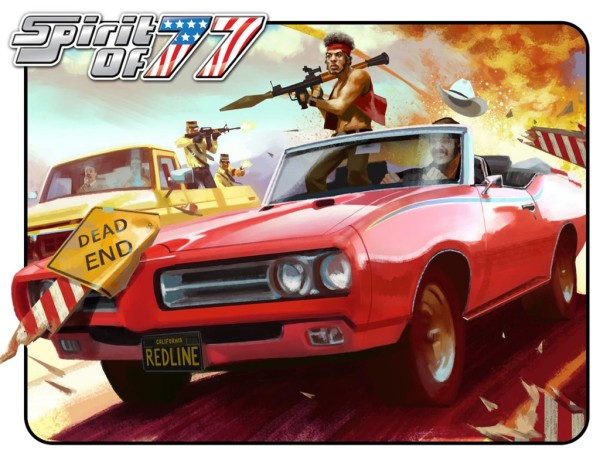
The game is described by its creators as follows:
Spirit of 77 is an over-the-top, pedal-to-the-metal, nitro-burning, action adventure role playing game about an alternate history 1977. Richard Nixon has made a deal with aliens, and is still in the White House; renegade rock gods from another galaxy have shared with us the power of Glam; kung-fu bad-asses wander the city streets righting wrongs, and everyone is trying to stick it to The Man.
Spirit of 77 is about recreating all the classic action and adventure TV shows, movies, and comic books of the 1970’s. It draws inspiration from movies like Shaft, Smokey and the Bandit, The Warriors, Barbarella, Rocky, and Enter the Dragon; TV shows like The Dukes of Hazzard, The Six Million Dollar Man, The Rockford Files, and Charlie’s Angels; and music like James Brown, KISS, David Bowie, Jerry Reed, and Isaac Hayes.
The game uses the Apocalypse Engine created by Vincent Baker for his ground-breaking game Apocalypse World and subsequently used in many, many games. The base mechanic is roll 2d6 and on a 10+, you do what you set out to, on a 7-9, you succeed but with consequences or partially and on a 6 or less, the GM says what happens. It’s a simple game system that encourages fast and more narrative play. I like to refer to it as the game system that gets out of the way of you playing the game.
Character Creation
Character creation starts with choosing a role (what you do), a story (where you did or how you do it) and a buzz (what motivates you). Then you pick your stats (Might, Hustle, Smooth, Brains and Soul), pick a talent (your “Thang”), get your gear and select some links to the other players (“Hooks”). Then you’re good to go.
As with most Apocalypse Engine games, character creation takes about 5-10 minutes. This game was not much different. My only complaint was that the normal starting gear and hooks for the various character types wasn’t on the character sheets. That required a bit of referencing the books and slowed things down a little. Normally that wouldn’t be noticeable, but it added another 5 or so minutes nearly doubling normal character creation. I prefer players being able to check off or cross off things on the character sheets if the sheets are already created for each particular role.
Our group was composed of:
- Hugh Mungus, a Good Ol’ Boy who’s One Bad Mother looking for Thrills
- Rex Cranium, a Vigilante who’s a Former Badge looking for Payback; and
- Jackie Chung, a Kung Fu Tough Guy looking for Honour.
Playing the Game
Then we jumped straight into play and our game began in Detroit City, 1977.
A well-dressed and obviously wealthy woman comes calling on Hugh’s autobody shop (where Rex helps out and Jackie has a gym upstairs). She explains friends on the force referred her to them as they are known to be discrete in helping people with problems and that her husband has gone missing for three days now and she’s worried about him. After some prodding, she lets loose that her husband is Lee Iacocca. She gives them a description of his car and a good amount of cash and they accept happily.
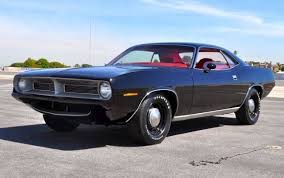
First stop, they race over to Ford’s HQ, but it’s late on Friday and closing time. A departing secretary is shaken down for some information and they find out a couple of his favourite haunts – a Chinese restaurant and an Irish pub. They also learn that Iacoka’s been seen earlier that day at the office. They decide to hit the restaurant for some food before going drinking, so they hop back into Hugh’s 1970 V8 Plymouth Barracuda muscle car.
At the restaurant, they notice the menu has page entirely in Japanese. Pulling aside the waitress, they start interrogating her right in the middle of the restaurant while Hugh heads to check out the kitchen. He sees a normal kitchen, but through a half-closed door, he can see a group of women huddled over a desk and a bunch of papers.
The waitress feigns ignorance and when they start asking about Mr. Iacoka, she flips the table, screams “Help!” in Japanese and cold cocks Jackie.
As an aside here, another important aspect of Apocalypse Engine type games is that the rolls are all made by the players. They make rolls to do things themselves and then roll to react to actions of everyone else. There are a number of what are called “moves” that they can do, but the fiction comes first (you describe what you want to happen) and then, if needed, you roll to find out what happens.
Also, this is the first Apocalypse Engine game I have seen published that uses an advantage/disadvantage system (called “rolling with something extra/less). Since you’re rolling 2d6, you roll 3d6 if you have “something extra/less” and drop the lowest or highest roll respectively. I’d incorporated it into my own Apocalypse Engine games after first seeing the mechanic in D&D 5e, so it’s interesting to see it start to crop up in published games. It’s a good mechanic and I recommend it for all your Apocalypse Engine games. It works well in this game as well.
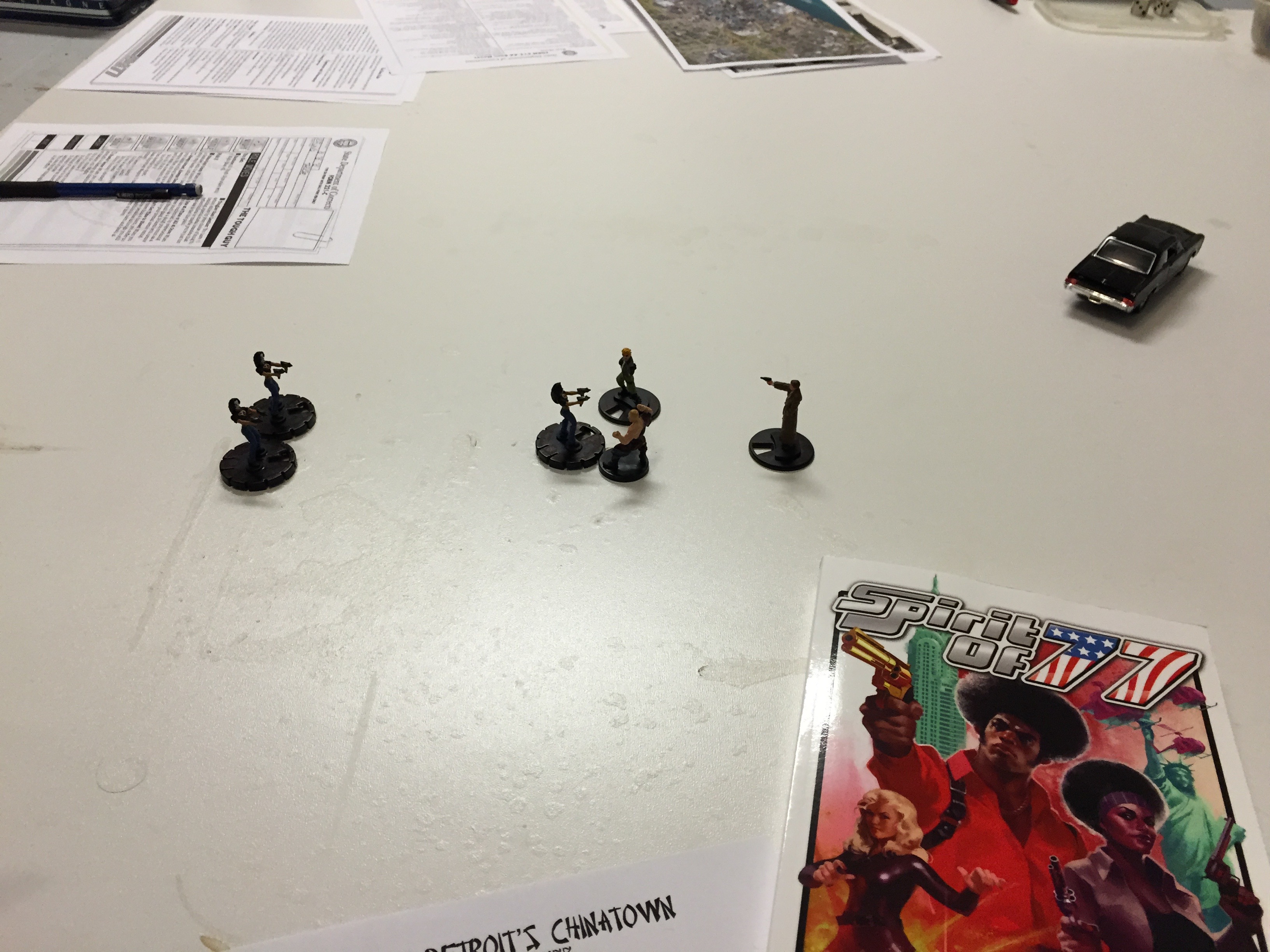
The waitress races to the kitchen where Hugh has just missed beating another waitress to grab an SMG from a nearby cupboard. She opens fire in his direction as he hits the dirt. Jackie uses his Floating Cherry Blossom training to quickly cross the busy restaurant (now full of screaming, running patrons) and drops the fleeing waitress before she can reach her friend. Meanwhile, Rex has pushed his way through the crowd and exchanges fire with the armed waitress, both of them are hit. She is stunned, dropping her gun, which Hugh gets ahold of and dispatches her. Our heroes can see the women in the backroom are fleeing out the back and by the time they reach there, they have gone and are speeding off in a car. No one even manages to catch its license plate.
The combat system is fairly simple, as is common with these types of games. You have a basic fighting move, a basic shooting move and one for getting out of the way of or blocking attacks. They’re all named to fit the theme though (Deliver a Beatdown, Smoke his Ass, Get in their Face, Scope out a Scene, etc.).
The group decides, given all the sirens approaching, that it’s time to get going, so book out of there in a hurry. Not before catching some Heat though.
One of the new mechanics for this game is the concept of “Heat” or also known as police interest in you. As you gain more Heat, the more the police start looking for you and harassing you, until they start actively hunting you with all units. This worked fairly well and was a suitable consequence of the group having been involved in a major gun battle at a restaurant. There are apparently some moves associated with particular roles that can reduce Heat, but otherwise you are left to judge how much Heat the characters gain and lose based on the story, which worked okay, but seemed a little bit of a weakness for something they have made part of their game mechanic.
Since Rex has been hit pretty hard and they don’t have any ability to heal, they look up a back alley doctor they know and get fixed up there. Meanwhile, Hugh speaks with some youths in the area and, after plying them with “goods”, finds out that their gang has been dealing with a “Chinese” woman, in fact she just gave them a fancy new car.
The group decides rather than check this lead out, to head to the Irish bar. There, they lay low as they realize it’s home to the cream of Detroit society. Rex drops in uninvited on the police chief (we’ve established he left the force on okay terms) and asks about Iacocca. He’s told that he should keep his nose out of Ford’s business, they’re too powerful in this town to mess with. Rex explains he thinks Iacocca’s in trouble and confides that he’s helping the wife out to find him. The chief lets Rex know that the last time he saw Iacocca, it was at the Detroit Opera House, where a Japanese Kabuki theatre group is in town for the week.
Meanwhile, Hugh strikes up a conversation with a very inebriated regular at the bar and finds out, after buying many drinks, that he’s seen Iacoka in here on a few occasions recently with an asian woman.
One thing that many games leave out are social mechanics. Apocalypse Engine games don’t. There are moves in Spirit of ’77 for persuading others and these worked fairly well through these scenes.
They decide to turn in, it being very late at night, heading back to the garage. The next morning, they are woken up by a knock at the door. Hugh answers it and is confronted by two plainclothes detectives. They ask him about last night and he feigns innocence, convincing them that while he might not be innocent, that they’re not going to get anything more out of him. They warn him to keep his nose out of trouble and leave. The Heat is rising.
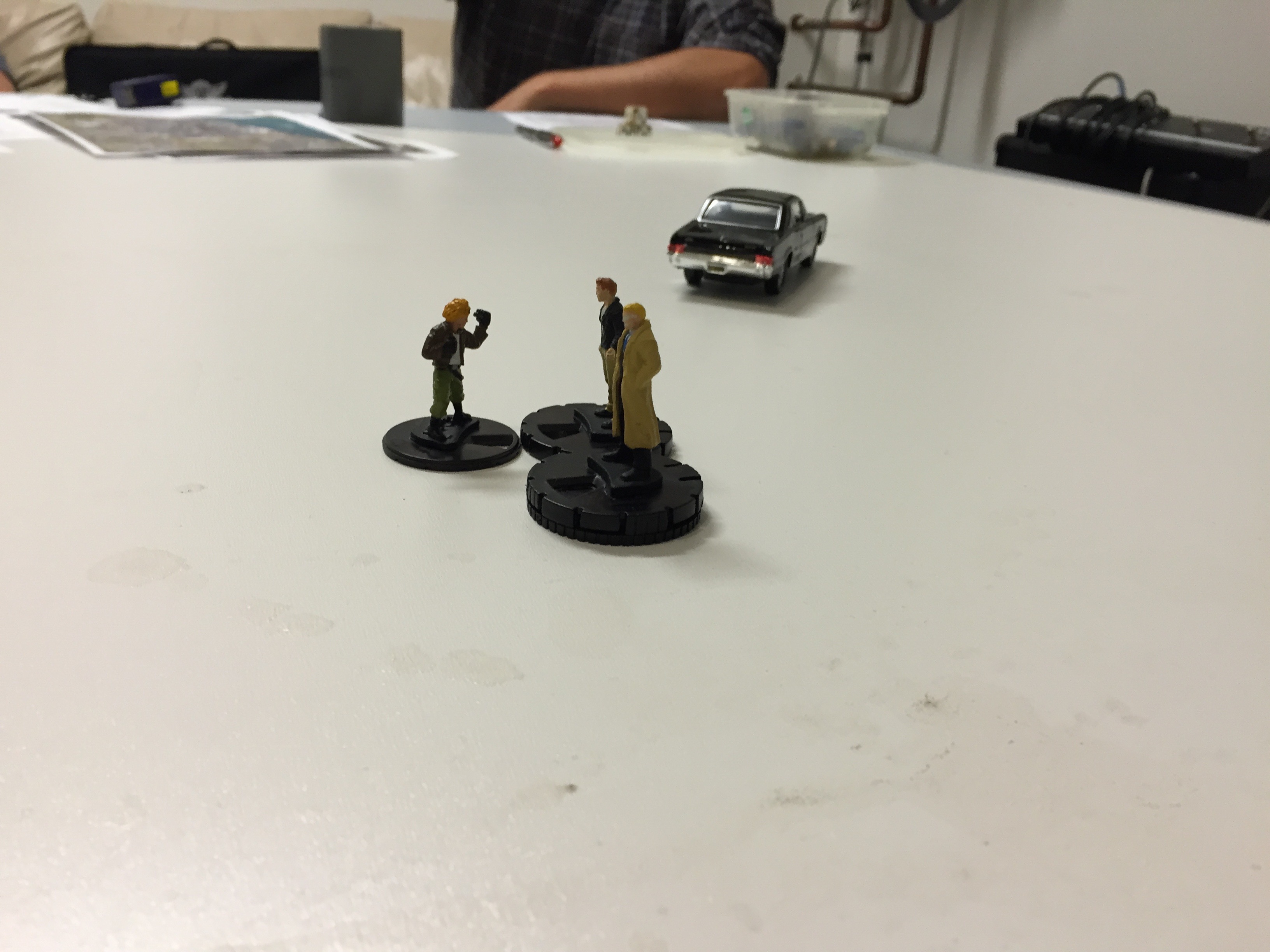
The group heads for breakfast to figure out their next steps and when they emerge, there is a group of gang members that surround them and start threatening them to stop poking their noses where they shouldn’t. Rex reaches the car and draws his pistol. He fires a warning shot at the gang members, who quickly back off and leave, making further threats. The group again speedily leaves the scene, having gained even more Heat.
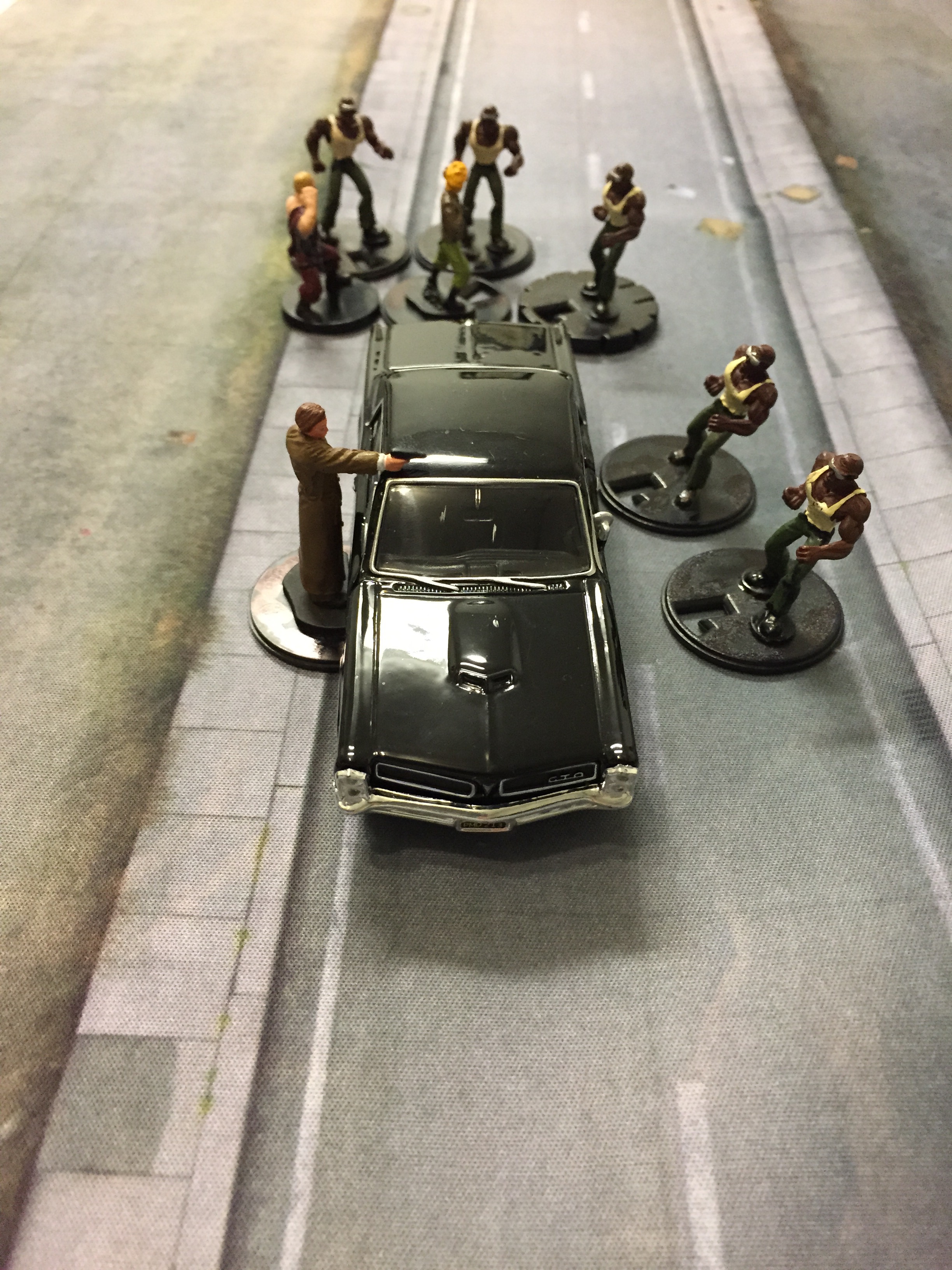
Time is running out, so they head to the Opera House, bribe a guard to let them in (it’s closed on Saturday afternoon) and inside they are confronted as they make their way through the aisles by the lead Kabuki performer, the Dragon Lady, and two of her costars (each wielding two Katanas). She tells them that they have made a grave mistake pursuing this matter and offers a huge sum of money to walk away. They agree to take it and leave, but they want proof that Iacocca is okay.

Another Kabuki performer in make-up, armed with an SMG emerges with Iacocca in tow. He’s not bound and shows no signs of distress. He simply walks forward and stops when he reaches the Dragon Lady. A suitcase of money is slid to the group, who immediately draw guns and begin firing. Two more henchmen appear from the balconies above them, raining down SMG fire. The whole scene explodes into gunfire and swordplay.

Jackie engages one of the sword maidens, but finds she is far more skilled than he even could have imagined (and consistently rolls poorly against her for the whole combat, poor guy). The other two exchange fire, eventually taking out the various gunwomen, but meanwhile the Dragon Lady leaves with Iacocca out the back. By the time the fight is over, Jackie is badly injured and they can again see a car speeding off, but this time Rex manages to hit a tire and Hugh has raced out to get his car, then picks up the rest of the team and is in hot pursuit.
The chase is on as they race through the streets of Detroit, Kabuki performers hanging out of one car shooting up Hugh’s Barracuda while Rex and Jackie return fire. Just then, bad almost goes to worse as a pick up truck races up behind the heroes with a heavy machine-toting Kabuki performer. But before she can unleash a torrent of bullets, Jackie drops her with a single lucky shot.
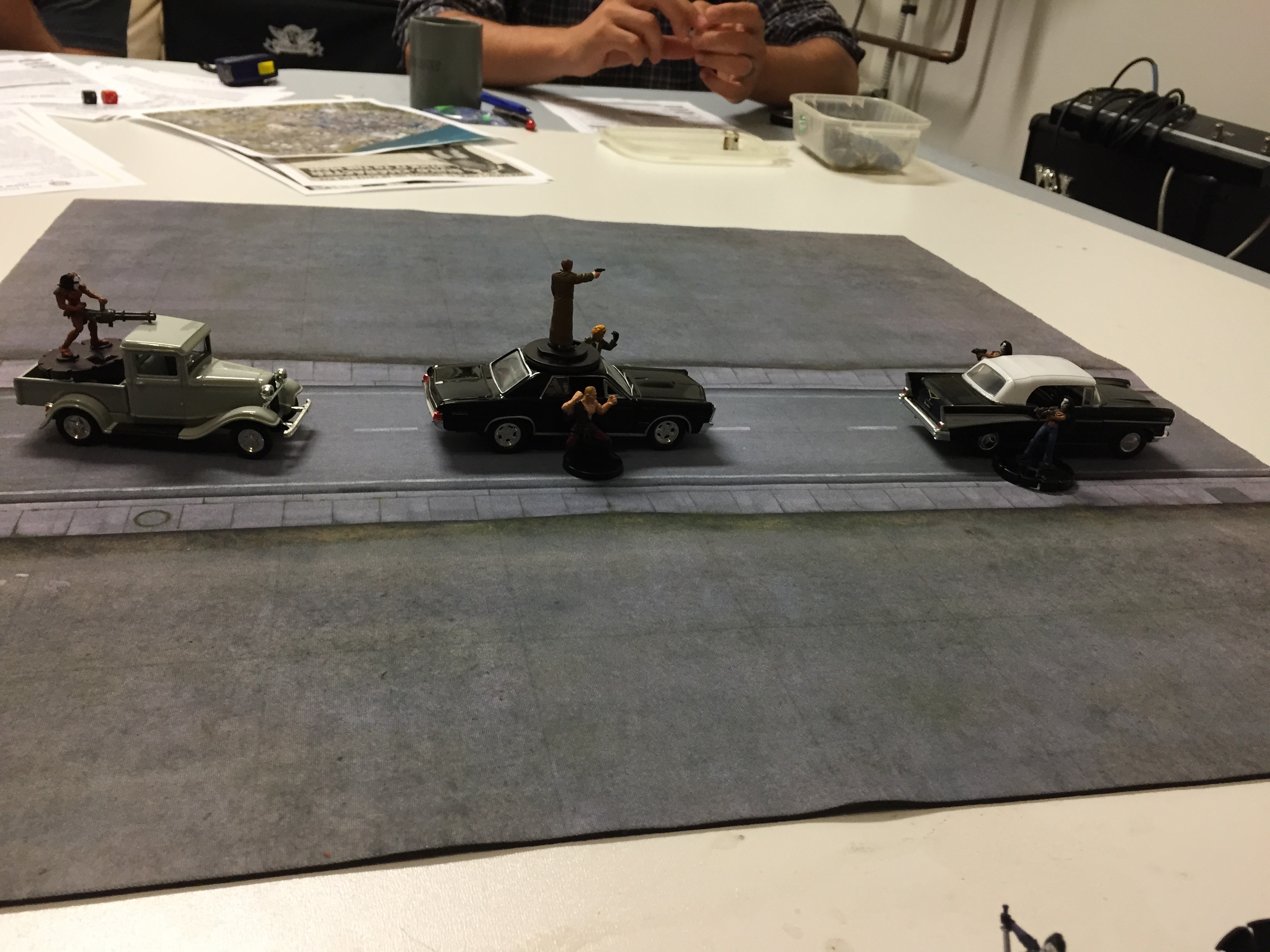
Unfortunately, there are no chase rules in the game. There are some vague vehicle rules, which worked okay, but it would be nice to have chase rules given it’s a highly used trope in such a setting. Apparently there are racing rules in the Wide World of 77 Expansion, but actual chase rules would be useful.
The Barracuda tries overtaking the car ahead of them, but just barely avoids a head-on collision from on-coming traffic. Instead, he rams their car just as Jackie leaps from one car to the other. He lands on it as sirens can be heard behind them, the police have joined the fun.
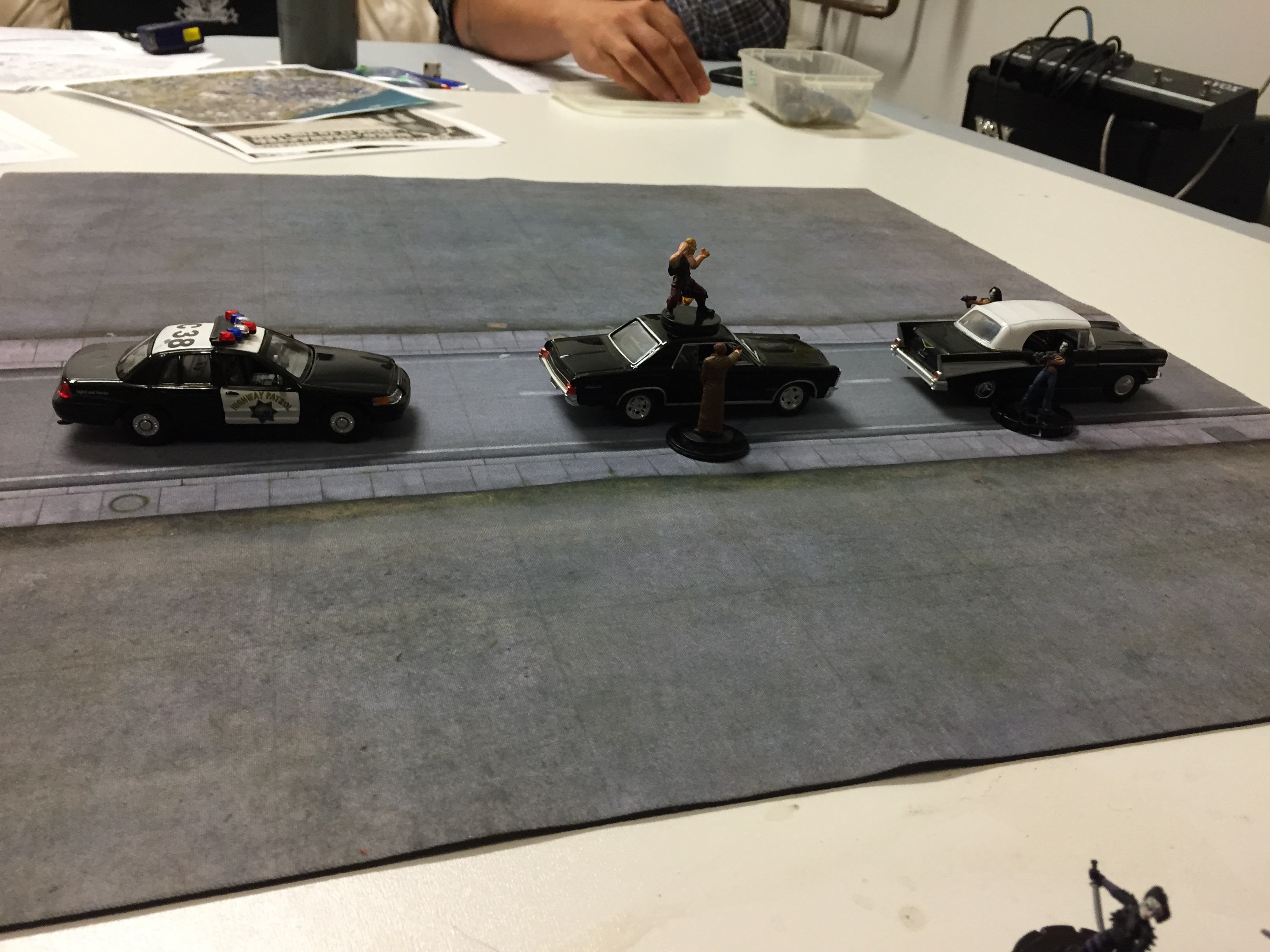
The escaping car loses control and smashes into a building, Jackie is thrown but lands on his feet, but Hugh doesn’t stop in time and slams into their car, bashing himself against the windshield and losing consciousness for a second.
The Kabuki gunwomen emerge from their car and begin shooting back at the police who have also stopped and set up a perimeter. The cover fire allows the Dragon Lady and Iacocca to escape into a nearby building.
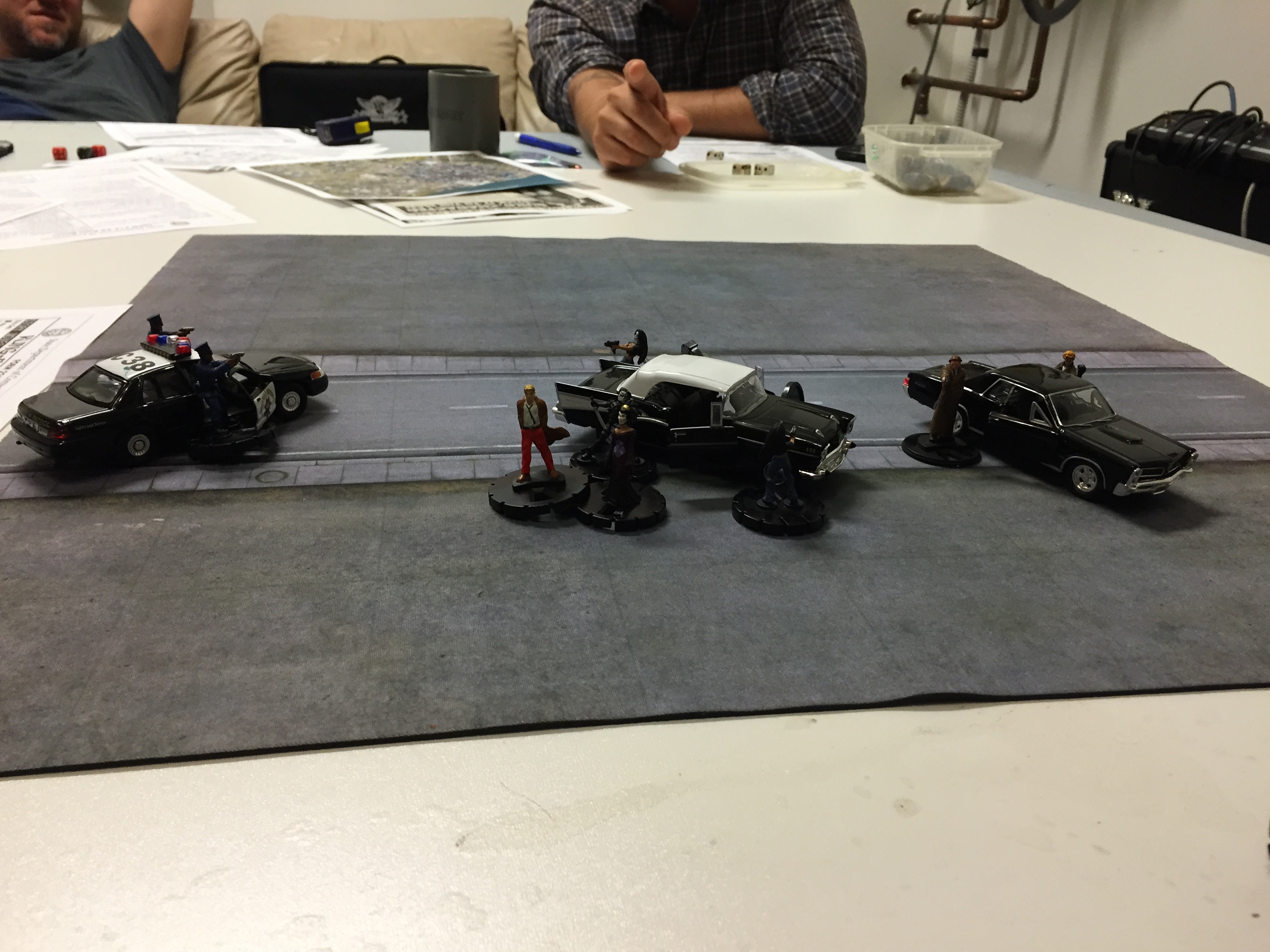
Our heroes let the gunwomen and police trade shots as they also race into the building. Searching through the rooms, they find the Dragon Lady with Iacocca. Before she can even say a word, a single shot from Rex drops her just as police fill the room. Rex and his friends are all carted off to jail and have to do some fancy explaining to get free.
They never hear from Iacocca’s wife again and Iacocca mysteriously resigns from Ford and is not heard from again. The group are eventually released, but have gained some powerful enemies.
The players had figured out that the Dragon Lady was with the Yakuza and trying to steal secrets from Ford using Iacocca, but didn’t figure out that the Iacocca they saw with her was a robot clone and she had already killed the real Iacocca earlier and stuffed his body in the stolen car’s trunk. If they had searched for the car and found it earlier, they might even have found the executive barely alive and been able to rescue him. The clone was being used to enter the Ford building and steal secrets for the Yakuza. The robot clone was uncovered after the heroes were arrested, which is why they were eventually freed, but the Powers That Be decided to keep it secret, so the public was never told and in this timeline, Iacocca simply resigns from Ford and is never heard from again.
Conclusion
Our group had an awesome time and are clamouring for another game of Spirit of 77, so I think that’s a pretty resounding success. The theme of the game is easy to use in a variety of settings and works well as an Apocalypse Engine hack.
I would have liked some things to be clearer (what happens if a PC has Armour 3 and most weapons do 3 or less harm? Can NPCs never harm that player? And how mechanically does Heat increase/decrease?), but those are minor complaints.
It’s a good game overall and we certainly enjoyed it. Check it out if it sounds like something you’d enjoy. I’m not sure it would work well for a long-standing game, but for a few one-shots, it’ll definitely fit the bill.
Here’s my notes for the adventure if you want to try it out for your group.
Spirit of 77 – Enter the Dragon Lady
There is also a free adventure – Cruise Ship of the Damned, if you want to play something official. It also has a lot of quick-start rules if you want to give it a try before buying.
RPG Review: Hero Kids
Like all gaming Dads, I want to introduce my hobby to a new generation of gamers. My daughter is nearing the age when I think she’ll be ready to play, but my nephew definitely has the skills (reading, math) to learn about role-playing. So, I scoured the web for different options (there are a number) and decided to try out Hero Kids.
 I picked up the basic game, a couple extra adventures (Escape from the Ghost Pirates and Glade of the Unicorn), as well as the Pet Cards from DriveThruRPG. I had them printed, added some dice and pencils and decorated a box to hold it all. I now had a custom-made Hero Kids boxed set for my nephew.
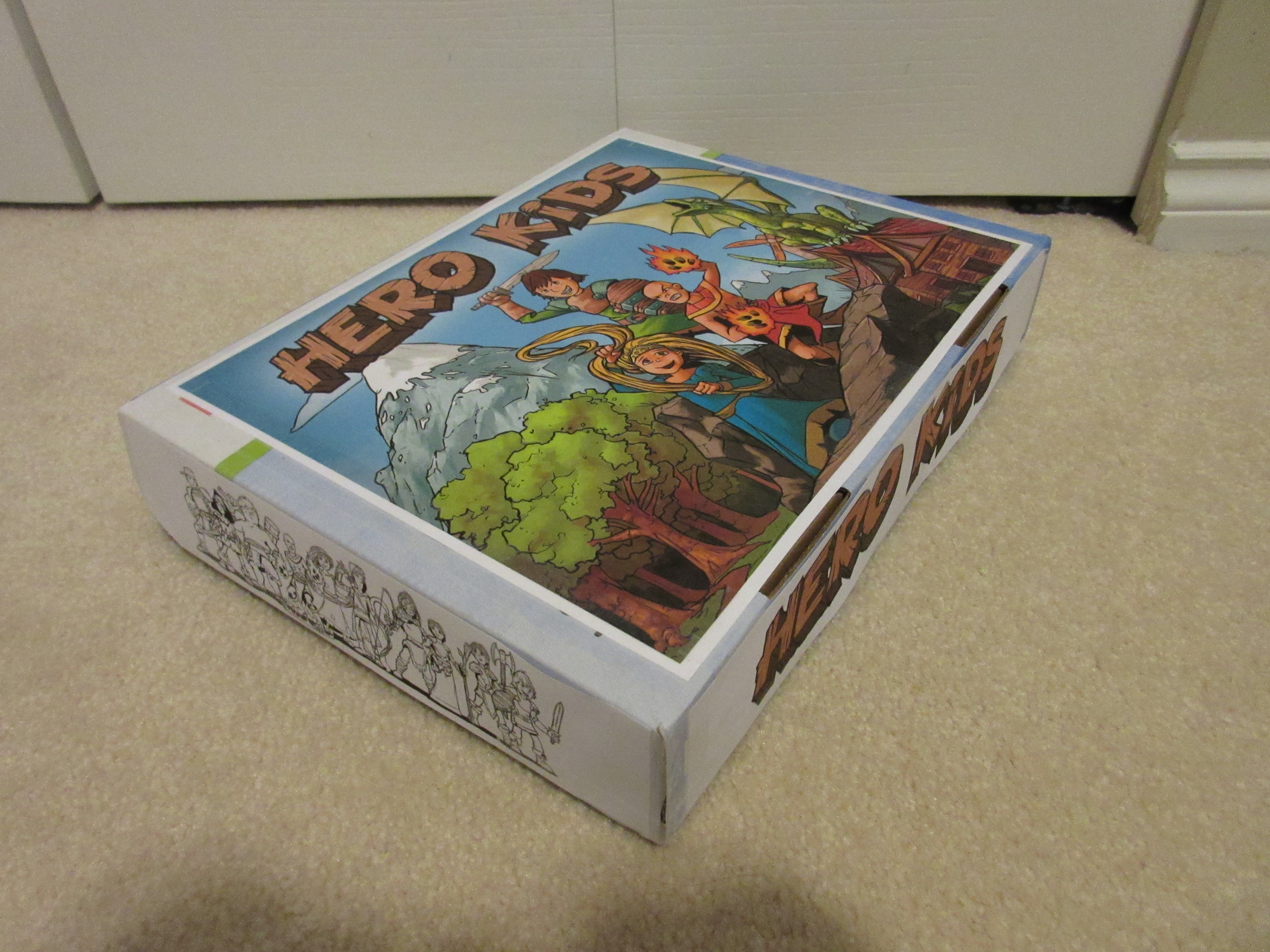
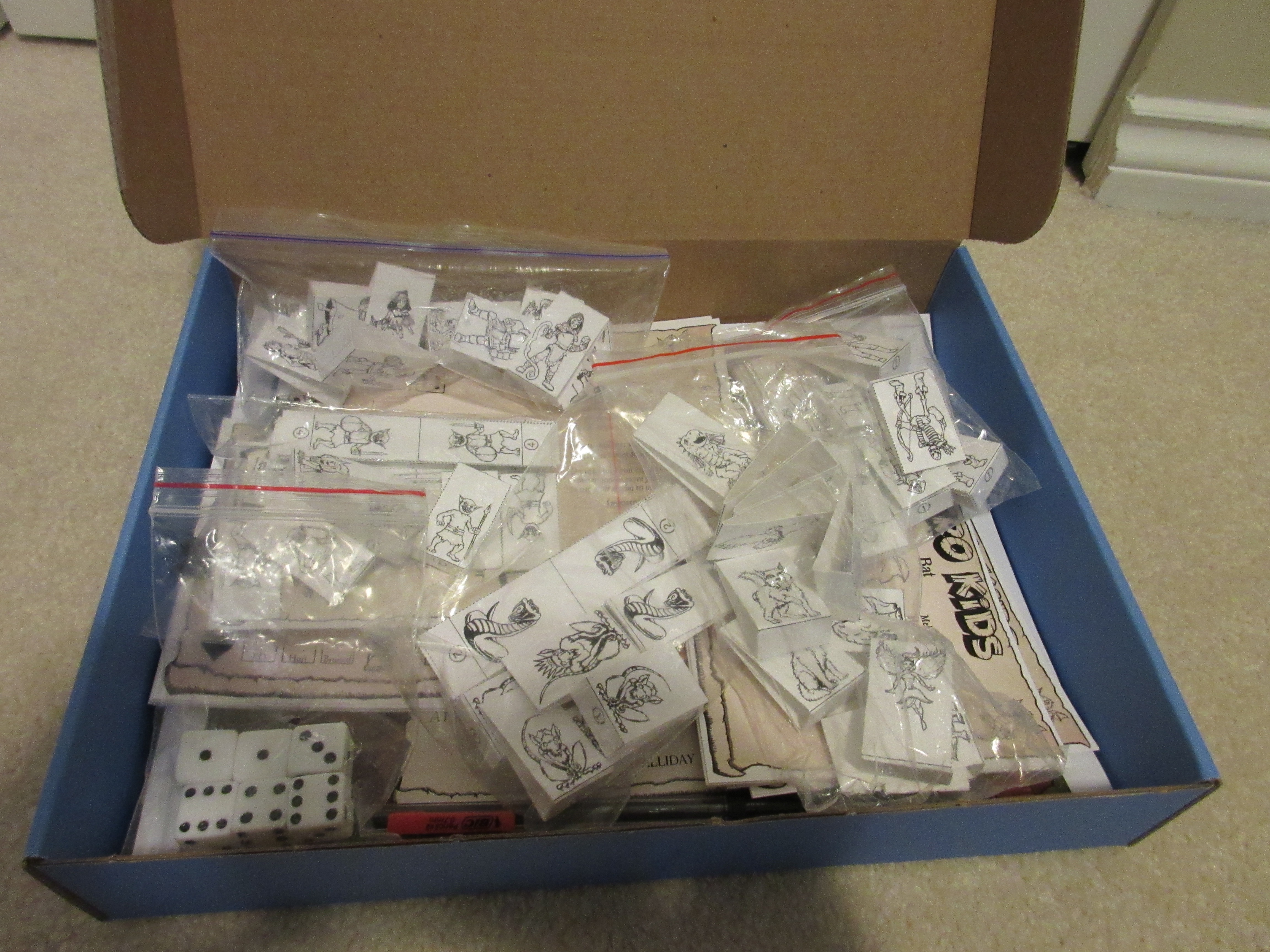
He loved the boxed set.
Immediately, he set to creating his own character (a ninja, of course). There are rules for making your own character, so he allocated his dice and we adapted the rogue’s special ability and bonus ability to the ninja. He drew his character, copied it on to his stand-up figure and was ready to go.
We tried out the Basement of Rats adventure (the introductory adventure that comes with the game) with him and his mother.
The concept of the game is a generic fantasy setting, but you’re playing kids of a village who basically protect it. I like the conceit of kids who look after the adults, as it’s something that kids really
The mechanics are pretty simple (appropriate for a kids game), essentially roll a number of d6 equal to your ability in a particular type of attack (melee, ranged or magic) and your opponent rolls their number of defense dice they have. The highest die roll wins, with ties going to the attacker. Characters can take up to three hits before they’re knocked out. Simple, but effective.
It worked very well with my nephew, but in a quick trial with my daughter, she wasn’t keen on the combat focus of the game. I’ll have to work on a more mystery-solving focus for games with her.
This game is definitely focused on combat. You have your three attacks and defense, a description of your standard attack, a special action (combat-related generally), a bonus action, which is often combat related and two healing potions.
The only non-combat parts of the game are two items or skills that a hero has and that you can use your combat abilities for non-combat skill tests. I’m glad that’s in there, but would have preferred if it was a more pronounced part of the game.
This came up unexpectedly as my nephew asked, after fighting the first batch of rats and getting beaten up, “Could I use my disguise skill to pretend to be one of the rats?” I said sure, but you need to roll to see if you can fool them. He succeeded and managed to talk his way through this encounter and then rolled well and fooled the next bunch of rats too. He learned the first rule of dungeon-crawling – don’t fight when you don’t have to.
The adventure was short, but a great introduction to the world of Hero Kids. The fights were balanced well enough that he felt nervous about getting into fights, but not overwhelming so he didn’t shy away when he faced off against the King Rat to rescue the innkeeper’s son. It’s a simple enough plot that there isn’t much decision making, but that’s fair enough for an introduction.
He’s excited about trying out the other two adventures and wants to create a custom pet (three-headed dragon) for his next adventure. I picked Escape from the Ghost Pirates because it’s, well, pirates (and now it’s ninja vs. pirates!) and Glade of the Unicorn not because I thought he would like to help unicorns, but because it features goblins and he’s heavily into Lord of the Rings. He was in fact excited by the goblin stand-ups and was already building an army of them to fight before I left.
All in all, Hero Kids was a great introduction for him (8 year old boy) and I would definitely recommend it for boys. I’ll keep working on what works best for my daughter, but I have to say, I was impressed with it.