Tabletop RPG Music by Angryfolk Band

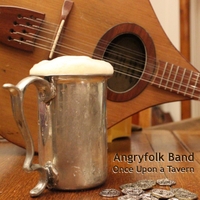
There isn’t much music out there about the hobby that we all love, so when some does come along, it deserves a shout out. The Angryfolk Band have released a new album of gaming songs, Once Upon a Tavern. Note that this isn’t isn’t background music for games, but rather songs about tabletop gaming.

angryfolkband1-1


The Band features Stu from the Happyjacks RPG podcast, giving it true gamer streetcred. Stu has put together some awesome songs and here’s some of my favourites from this new album and their previous album, Let Me Tell You About My Character:

Plan B: This is my favourite. A folksy song that tells the universal story of players who rarely make a plan B when they go into action, no matter what genre or setting, only to be wiped out and have to figure one out after the fact.

Game Con: This would be my second favourite. It’s trucker “convoy” type song, but this time, it’s guys going to a gaming convention. It’s the perfect song to play on the road to a con.

Min Maxed: A dance/techno song about having a min-maxed character. Something only a gamer would appreciate. Perfect for the munchkin in your party. Warning though, it is explicit.

I Storked It: This is a great refrain about failing a critical roll. The name comes from one of the players who is called Stork and invariably rolls terribly. So much so, that his name has become synonymous with failing a roll.

Throw Down the Crit: A reggae number about the need to get a good roll.

Check them out and enjoy! Also, please let us know if you have your own favourite tabletop RPG music, we’d love to hear about it.

Dragon Age Thrillogy: Inquisition Reviewed

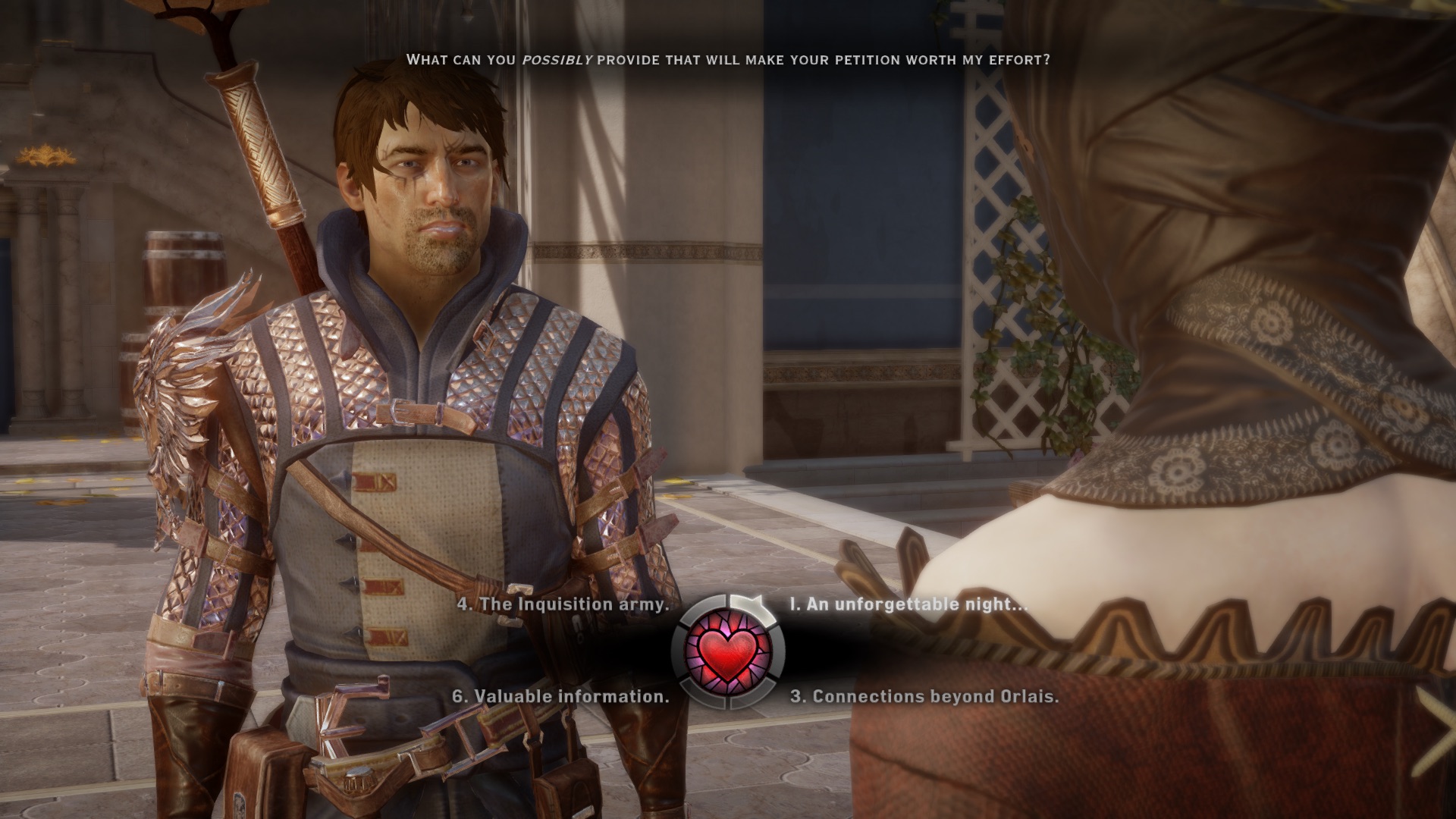
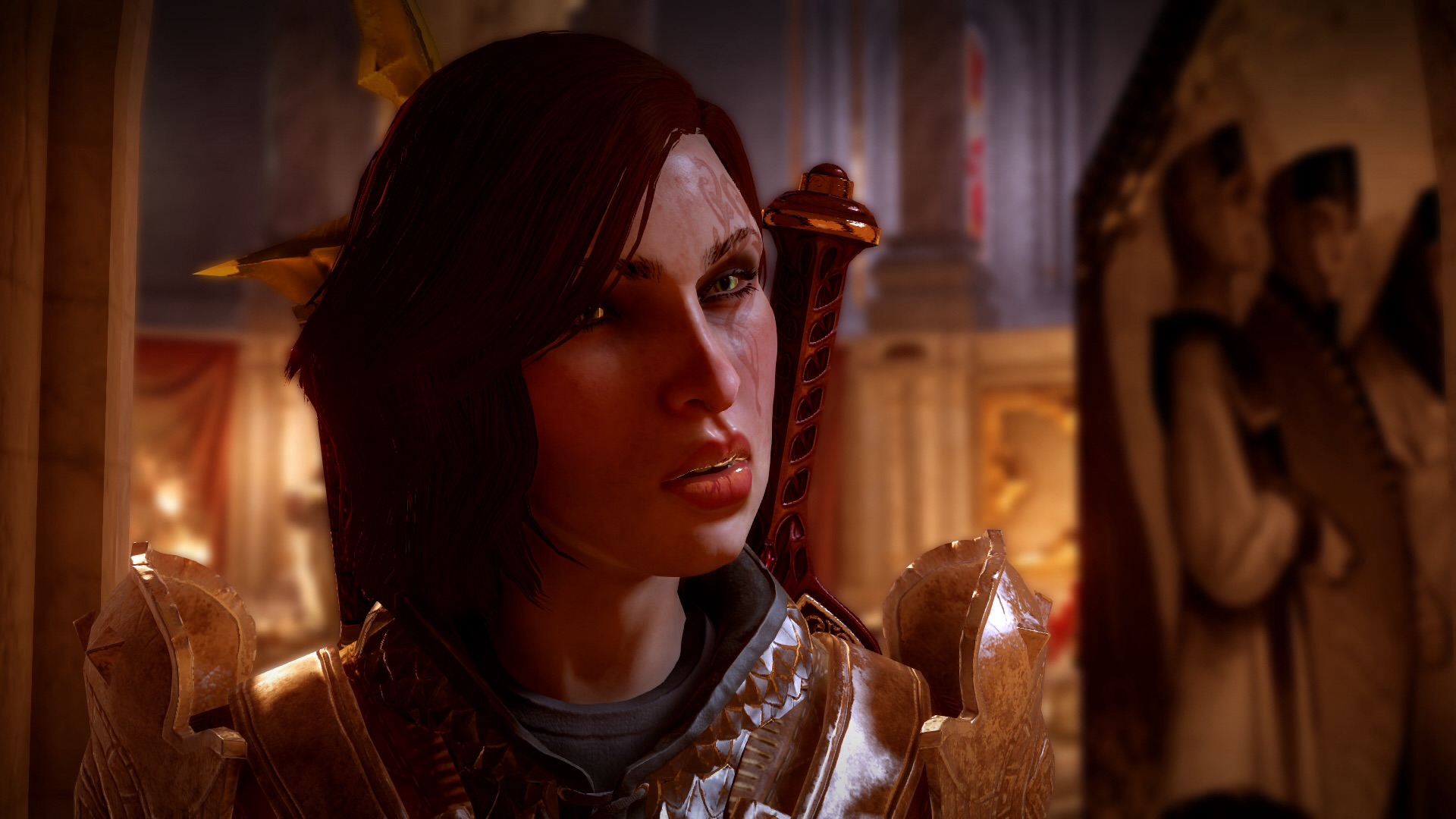
Dragon Age: Inquisition has a lot riding on it, no doubt of that. As the third entry in the Dragon Age saga, continuing the story of the fan favorite Dragon Age: Origins and the underrated follow up Dragon Age 2: The Sequel (no that is not the actual title come on guys), Inquisition has a solid foundation to build on. The question is, can it live up to the expectations of fans of the series?

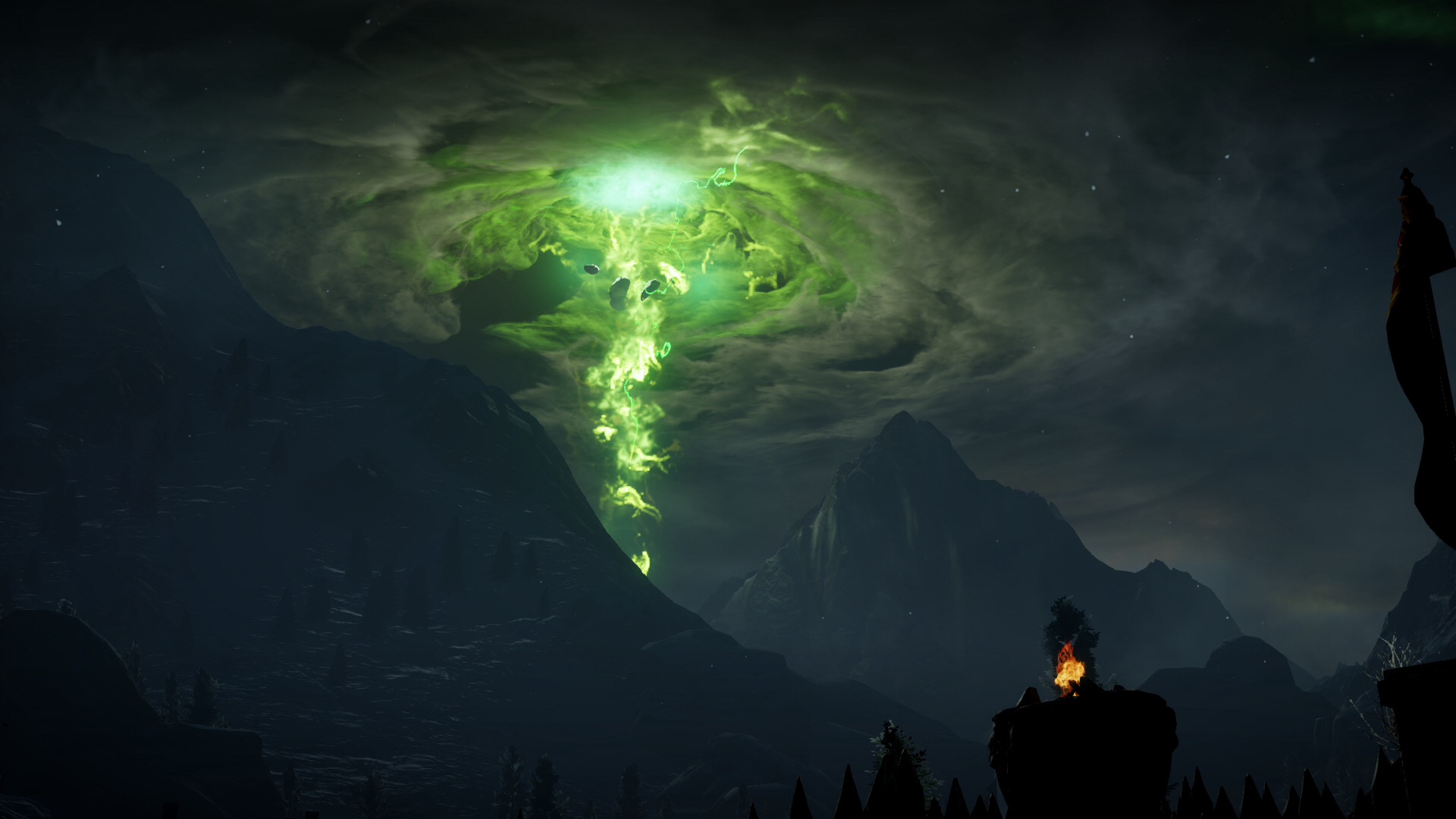
The BreachThat’s a silly question. Of course it can.

Here’s a better one: can it live up to my expectations? Because frankly BioWare has burned me once already with third entries in a saga, and I went into this half expecting it to fall short of the hype. Or I would have, had I paid any attention to the hype. See I decided to do this new thing where I pretend a game doesn’t exist until I’ve installed it. Hype bad. Games good. I knew I needed to play this one, having been hooked by its predecessor. Beyond that, I tried to know as little as possible. A few details about the engine notwithstanding.

Thus far, I am not disappointed. In fact, I am thrilled. I’d even go so far as to say this is the best BioWare game I’ve yet played.

I’ve finished it twice. I think I started about five different characters.

So let’s cover the stuff I can handle without spoiling stuff for people, yeah?

Gameplay

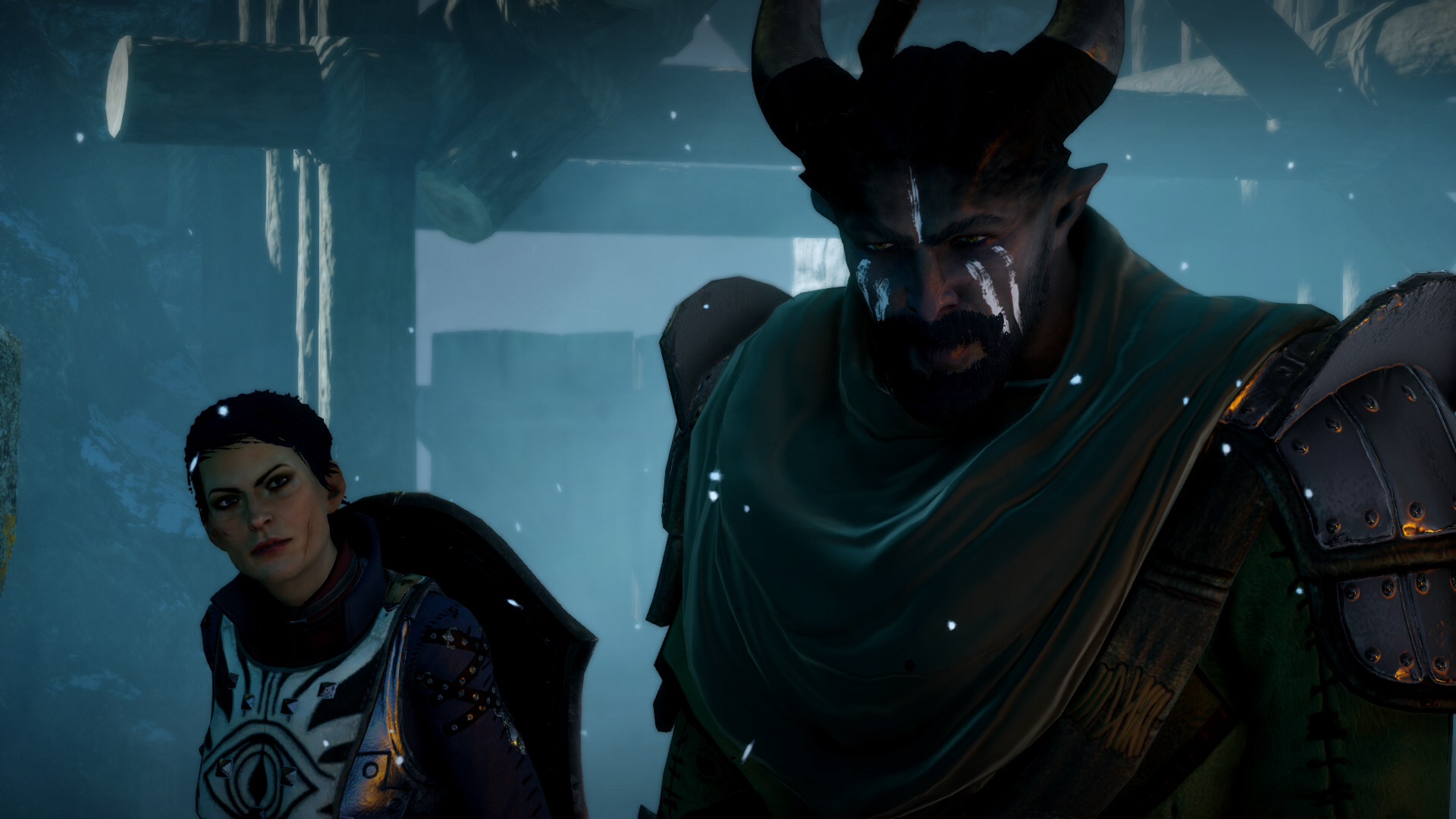
what is even the world coming toI started my first game as a mage, because a) I always start as a mage because I desperately want mages to be fun and awesome and b) mages had the most improving to do from the prior titles and I wanted to know immediately if they’d succeeded.

They had. Mages are awesome. Status conditions, massive area attacks, ability combos, and the ability to grab the amazing fade step power make mages more fun than ever, and more mobile. You’ll probably want to sink enough points into the Spirit tree to get some threat reduction though.

One disappointment though; the ability bar isn’t long enough. You can only fit eight active abilities on it, which is a bit of a downer for me – you get one free one in the process of gameplay (a “focus” power), which leaves seven to choose that you’ll be using regularly. Probably most of you will be smart enough to keep that limit in mind and plan your leveling better than I did. Either plan around your passives, or expect to rotate disused powers off the bar.

Well, okay, “eight slots” makes it sound worse than it is. The healing potion slot is set to 9 and can’t be changed, 0 and + are for potions, tonics, or grenades of your choice, and = is set to call your mount. It’s just that no custom buttons other than 1-8 are set for your class powers.

They say Inquisition was designed with a PC in mind, but not being able to use shift or other keys to hotbar more powers will probably bother at least a few people other than me.

This flaw aside, gameplay feels awe inspiring. The threats feel appropriately looming and deadly, the effects are beautiful, the facial animations are emotive, this is pretty much Bioware at its best.

Scale

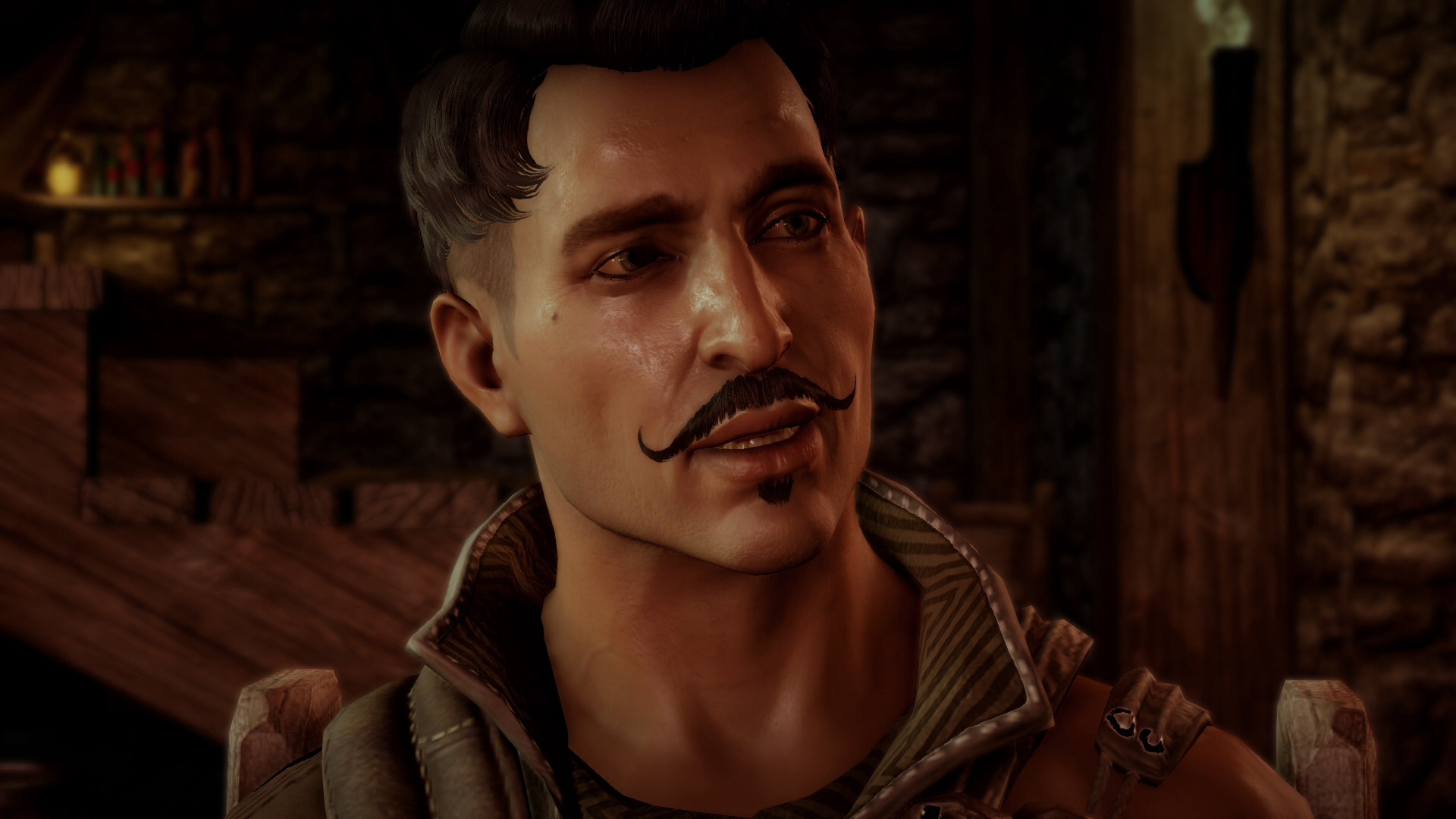
DorianEach area of the game feels MASSIVE; Skyhold, your headquarters after the first act is over, is so large that it has its own fast travel points. And that’s just YOUR FORTRESS.

More important perhaps, they feel big, important, worth exploring. And the areas are mostly ‘unleveled’ – you will run into threats early game that you’ll have to come back and address later with more power or different perks. And there are just so many things to do, characters to befriend, villains to foil, resources to collect…

Despite this, once I get past the main menu, load times are pretty okay.

Progression

I May Be Obsessed With CraftingThere are at least three kinds of progress to be aware of; character leveling is the first (and all that entails, though stat adjustments seem to be outside your area of choice except the bonuses gained from gear). There are three specializations for each class, and two weapon styles each for the rogue and the warrior. Each has a fair amount of depth and build complexity and minmaxers will have a field day with the party management and the equipment/crafting systems. You’ll be fiddling a lot, at least if you’re like me.

Then there’s the level of the Inquisition, measured in ‘influence.’ Each level gained by the inquisition gives you a new perk in one of four areas (Endurance, Secrets, Connections, or Inquisition (concerned with the infrastructure and efficiency of the group)).

As near as I can tell, the category you have the most perks in determines your reputation throughout the game and during the epilogue… though this basically boils down to responses from your ambassador when asked “what do people think of us?” The perks themselves are generally pretty neat, unlocking things like increased XP for particular actions, new dialog options, the occasional operation at the war table, and so on.

Running The Show

Inquisition is the first game I can remember that actually pulls off the “head of a big organization with its own army who still needs to handle the important stuff personally” balance fairly well. You get Operations at the war table, your advisers will occasionally ask your input on matters of state, the works. And every so often, you sit in judgement over somebody who probably pissed you off pretty bad on one of your field missions. The Inquisitor has a lot of tools to work with, from executions to exiles to conscripting former foes into your service (willingly or otherwise). And mostly the judgements feel pretty … kingly? Is that the word?

Though like Fable, some of those choices will make you feel dirty.The point is, it’s that thing Fable III promised me and utterly failed to deliver, done right. Nice job.

Missions are varied well enough, a nice mix of ‘kill all the things’, make big Bioware choices, engage in courtly intrigues (one of the main story missions involves a masquerade at a palace and trying to decide how to address the threat of an assassination), closing the Rifts, and so on. You’ll fight demons, bandits, and… well okay mostly those two things. Also a lot of apostate mages and renegade templars and twisted abominations made from wicked experiments, darkspawn, and at a certain point — should you go looking for them — dragons.

Hardware

My rogueThere are a few issues on my system that I mostly blame on aging hardware. But on the whole it runs fairly well despite my GTX 4-whatever – it comes off as better optimized than some other recent titles. A few settings had to be dialed back and there’s occasional stuttering, oddly NOT during most combats (which tend to be smoother than the cutscenes, go figure). Your mileage may vary.

Multiplayer

Multiplayer … exists. There’s not much I can say about it, honestly. MP was a selling point for Mass Effect 3 and after awhile the only thing that kept me launching the game. Here it feels more like an afterthought. If you like it, more power to you. It just doesn’t appeal to me here.

Verdict

This game is a must play. Single player is not dead. Grab it, mine it for ideas, play it a couple of times with different classes and races, be prepared to sink a LOT of time. Dragon Age: Inquisition is a winner.

Three Reasons Why Dragon Age 2 is my Favorite Game in the Series

There’s a lot of hate for Dragon Age 2. Some claim it’s a step backward from the first game, with less variation in endings, fewer character choices, “lazy” level design – and some of that is true. But none of it is enough to make the game bad, by any stretch…

Dragon Age II

There’s a lot of hate for Dragon Age 2. Some claim it’s a step backward from the first game, with less variation in endings, fewer character choices, “lazy” level design – and some of that is true. But none of it is enough to make the game bad, by any stretch, and there’s a lot that can be learned from it about what it takes to make a game good and a story engaging. For some of us those reasons are enough to make it our favorite game in the series. With the upcoming release of Inquisition, it feels like a good time to examine them.

Here are a few of mine…

3. Dragon Age 2 is a Story Driven by Characters who Feel Real.

Merrill will do anything to restore her people’s heritage. Fenris burns with a hatred for the people who enslaved him. Anders seeks justice for countless mages who have been imprisoned, killed, or worse. Varric is looking to make some coin and keep his friends out of trouble. Knight Commander Meredith will push the Templars to extremes to root out the threat of blood magic. The rebel mages turn to dark powers out of desperation. Murderers and slavers stalk the alleys seeking fresh prey. A mother wants her son to live free of fear.

Everyone has their prejudices and predispositions, and you have a role in their character development. Sometimes that role is large, sometimes small, but on the whole it feels real.

These characters drive the story. Their goals and wants and needs are the ones that push everything forward. In many ways, this is what BioWare does best, and it’s something every world-builder could stand to learn from.

See, real worlds don’t hinge on the actions of just one person very often. As much as we all love the trope, the ‘fate of the world rests in your hands’ – that’s like, once in a lifetime crap. Mostly people react to outside forces. Mostly, those forces are dictated by other people’s choices. And so on.

Many tabletop games incorporate this idea to an extent. But it is worth noting that 1. The party is not one person, usually, and is likely to be made up of a number of people with varied predispositions and goals, and 2. The party is also not the only group with goals and decisions to make. If you’re a GM, you’ve got a LOT of potentially conflicting choices to juggle … of course you also have the option of rolling the dice to see who comes out ahead.

2. Dragon Age 2 is about the Dangers of Extremes.

Everywhere you look in Kirkwall, there are zealots. Templars breaking the laws of their own order to clamp down on the city’s mages; wicked (and less wicked) mages pushing the boundaries of magic seeking unnatural powers to defend themselves against the Templars; Qunari following the rigid dictates of their own social structure. And somewhere in the middle, the player is caught, trying to make sense of it all and carve out a place for themselves.

Magic exists to serve man, and never to rule over him.
Foul and corrupt are they
Who have taken His gift
And turned it against His children.
They shall be named Maleficar, accursed ones.
They shall find no rest in this world
Or beyond.
 

-Transfigurations 1:2

Extremism can turn the most innocuous idea into a source of potential antagonists and dangers. Even a paladin could be bent to evil by clinging too rigidly to a code of conduct at the expense of the virtues that inspired it.

1. Dragon Age 2 is a Game of Inevitability.

Much of what happens in the game is building up to something outside your control. For once, this really works for it. Some players might disdainfully call this ‘railroading’ but in all honestly, it makes the situation feel much more … I want to say real. The other characters in the game act according to their own goals and beliefs, and not every person is going to be willing to give those up because some dork from Fereldan said so.

The endgame is inevitable. Many of your losses are inevitable. DA2 is about how you carry yourself in the face of inevitability, what you do when things are at their worst. What values do you cling to? Do you give them up when your idealism doesn’t get you the results you’d hoped? When you’re surrounded by this many zealots, how can you be expected to survive? When the world comes crashing down, what do you reach for? How do you react when your closest friends are the ones who brought it down? Do you believe in them? Do you put justice ahead of everything? What does justice mean in these circumstances? What injustice takes priority?

There aren’t any easy answers to these questions (not unlike Skyrim’s question of Stormcloaks or Imperials), but damn do the fights over them get entertaining after awhile.

Played: Monsters’ Den Chronicles

Look, sometimes you just want to grab your gear, head into the dungeon, and slay some monsters. And if you do, you could do worse than to make Monsters’ Den Chronicles your destination as MDC is exactly what you’re looking for…

MDC1Michael here. It’s been a while (okay, a long while) since my last post/review. A shame, yet life happens. But I’m finally back with another review and some additional news:

I’ve got my own blog featuring my previously published d20/OGL fantasy material (chiefly from my work with Ronin Arts) as well as new stuff. I’m updating it almost daily so if 3.0/3.5 and Pathfinder are your thing, check GMWorkbook out.

Alright, let’s get to the review… Continue reading “Played: Monsters’ Den Chronicles”

SMITE: My Current Obsession

For the last few months I’ve been delving in and out of the MOBA genre looking for something that can scratch the particular itch for online competition and recurring fun. I think I may have found it…

For the last few months I’ve been delving in and out of the MOBA genre looking for something that can scratch the particular itch for online competition and recurring fun.

I’ve tried League of Legends, Infinite Crises, a shocking number of free to play MMO titles, but nothing quite came close, nothing stood out as being truly geeky enough to satisfy my peculiar brand of geekiness. Whether because of gameplay issues, a distaste for the “play every day but not more than once” incentive systems, or just confusion over the underlying lore, nothing quite fit.

I think I may have found it.

I’m here to tell you about SMITE.

SMITE-banner

One Thing Well: Why Does This Game Exist?

I have a philosophy when it comes to evaluating games. Any game must answer one question: why was this game made? Or, phrased differently, “what is the thing that will make this game different from the most popular games in its category?” In short, why play this instead of DOTA or LoL?

SMITE, unlike some titles I could mention but won’t bother to in case some of our readers are enamored of them already, has two answers to that question: “you play a god,” and “you fight from the third person.”

Yes, shockingly, one of the two reasons I just gave you is a camera angle. Don’t run away. Let me elaborate.

Smite ThanatosDespite having many of the gameplay conventions familiar to players of the MOBA genre – towers, minions, jungles, an enemy base to destroy, ‘last hitting,’ etc, SMITE feels fundamentally different from other games in its class. Moving the camera to the third person perspective changes more about the game than you might expect!

For starters, it’s possible to sneak up on someone. Battles feel faster and more immediate, because you’re down in the action, as it were. Powers place more emphasis on player skill than on ‘clicking faster.’ And as a bonus, skills useful in other action video games do somewhat carry over. In some ways SMITE feels more like a 3rd person action-shooter with superpowers, which … honestly might have a lot to do with what I like about it.

Wait, wait, back up, did you say that you play a god in this game?

Yeah, I did. Gods, actually. All the ‘champions’/playable characters in the game are literal gods lifted straight out of real world mythologies. Zeus. Aphrodite. Ra. Kali. Nemesis. Thor. Odin. And many, many more. In game abilities and lore are, by and large, incredibly faithful to the source material, and there’s a shocking amount of potential for learning about the old pantheons by osmosis. You compete with other players to win worshipers, proving your mastery of a particular deity’s power.

I mean seriously how badass is that.

Okay but this is another free to play nightmare, right?

Well, not if you don’t want it to be.

Wut

You do have the option of playing the game much like most people play LoL, constantly feeling the tension between grinding vs. microtransactions, yes. The two currency options are Gems (purchased for real money), or Favor (won via in game matches). Unlike most other games I’ve looked at, though, most of the in game content can actually be bought with Favor, even many of the skins. And unlike most titles in the genre, SMITE gives you the choice to essentially buy the game outright, with the “Ultimate God Pack.”

Smite

$30, and you unlock all current and future gods, plus they refund any Favor you already spent on them so you can use it to buy skins. As near as I can tell, that kind of offer is unprecedented in the F2P market.

Heck, I’m impressed that they’d even make the offer. LoL is still over there trying to nickel and dime everyone to death.

So hey, give it a shot – the first hit is free.

Review: Wreck Age RPG

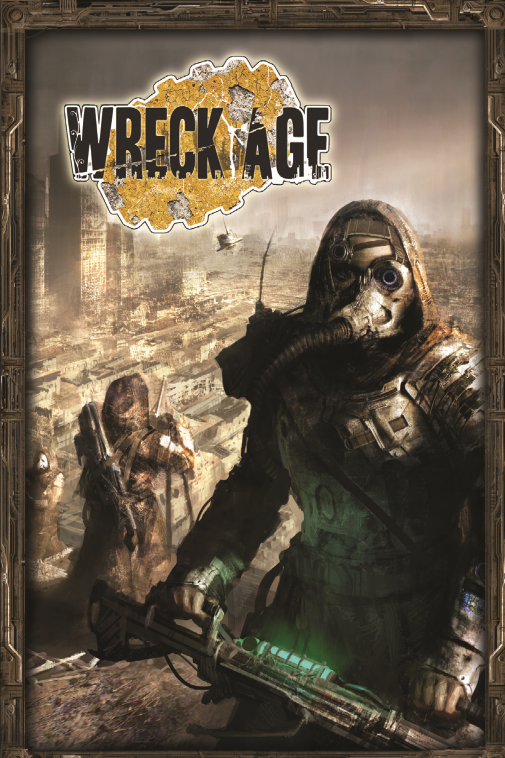
Wreck Age, released in 2013 by Hyacinth games, is a surprisingly effective hybrid of tabletop RPGs and miniature war games. Although it isn’t perfect, it should satisfy those who are fans of both, and have longed for a more story-driven wargaming experience…

Wreck AgeWreck Age, released in 2013 by Hyacinth games, is a surprisingly effective hybrid of tabletop RPGs and miniature war games. Although it isn’t perfect, it should satisfy those who are fans of both, and have longed for a more story-driven wargaming experience.

Wreck Age written by Anton Zaleski,
Softcover 247 pages

The World of Wreck Age

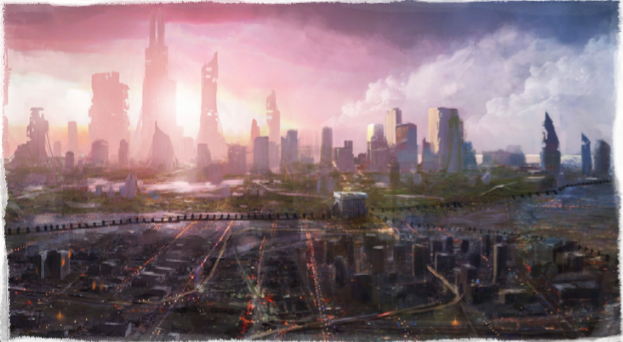
Wreck Age takes place, as you might expect, after the End of the World as We Know It. The world has been ravaged by pollution and natural disasters, and there have been centuries of ruin, misery, and failure to rebuild. However, the Resurgence is beginning, and real hope is finally at hand.

The setting uses many of the expected tropes of a post-apocalyptic environment, but that isn’t to say that there are no fresh ideas. Rather, a healthy balance between tried-and-true story elements and new ideas is struck. The bulk of the setting’s identity comes from the ten factions included in the core rules, which are used to construct the communities the player characters come from. Ranging from the survivalist Stakers to the mentally unhinged and virtually immortal Stitchers, each faction has its own history, motivations, and desires. For me, merely reading through each faction’s description set off a dozen possible plot hooks ideas in my head. The setting remains familiar enough to build scenarios and characters, but maintains a unique identity that sets it apart from other takes on the end of the world.

Characters, and the Communities They Come From

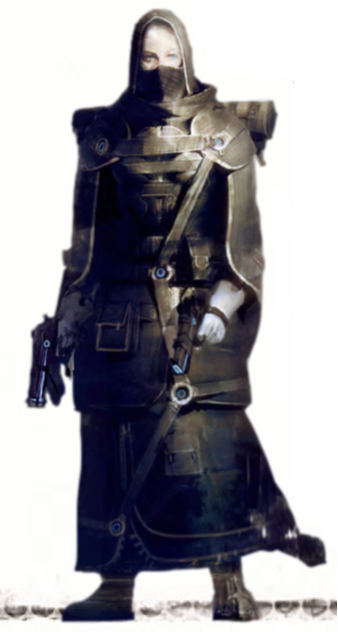
By trying to meld war games and RPGs together, Wreck Age has created a system that streamlines characters to function in large battles, but still allows for a surprising amount of customization. Character-building is something of a hybrid between a class system and a point-buy system. Archetypes provide basic information (such as limits on attributes and starting equipment), but further customization is available through selection of traits and investing points into increasing stats.

Wreck Age 1

Thanks to the incorporation of war game ideas and rules, the system provides a relatively painless way for a player to control multiple characters. Each player is limited to one player character (who gains special immunities), but it is possible for a whole group of battle-ready units to be under a player’s command. In combat, one character is “activated” at a time, which allows them to take actions. After this activation, a different player or the Narrator activates one of their characters. The cycle continues until every player and the Narrator has run out of actions for all of their characters, at which point a new turn starts. This allows for manageable mass combat scenarios between warring factions or communities (such as a siege on a small Staker settlement by Drifters). In addition, this system reinforces the importance of cooperation if one is to survive in the bleak world of Wreck Age. The number of units controlled by a player is meant to be limited by “resource units” that are spent according to how powerful an archetype is, and how much training a character has.

Wreck Age 2Resource units, however, is one of the problems of the game. Throughout most of the book, it is emphasized how important the Community is to every character. The community a character comes from and the factions within it are meant to inform ideologies, outlook, and even how powerful the character can be. Sure enough, the story of each faction is interesting enough to build a character around, and the settlements in the world are reasonably varied and compelling.

However, as far as mechanics for Communities go, Wreck Age is lacking. Although it does provide ideas for how a town may form a character’s personality, it doesn’t give any guidelines for the limits of a Community’s resources. It is difficult to estimate the resource units that a community should have based on its population, level of technology, etc. A Narrator has to merely guess how much a small town would have versus a large, militant settlement. It is possible that resource units are only meant to be used if the group is playing Wreck Age strictly as a war game, but it would have been nice to at least provide optional rules for building a community mechanically, perhaps by looking at the house-building rules in the Song of Ice and Fire RPG.

Rules of the Apocalypse

The rules for actions both in and out of combat are easy to understand. Outcomes are determined by rolling several six-sided dice and counting how many have a result above a certain threshold. It’s nothing revolutionary, but it is an effective and easy way to run the game.

When it comes to combat, it should be noted that the game seems incredibly lethal. There are only four categories of lethal damage. The first makes the injured character perform worse at nearly every combat relevant test. The rest render a character incapable of acting for varying degrees of time. The fourth means death. Wreck Age maintains a gritty, deadly feel, which is fitting for a depressing post-apocalyptic world. It also works to emphasize the game’s focus on community and teamwork. If a character is traveling alone, they better be prepared to die if they decide to try fighting.

Summary

Although Wreck Age had to make compromises in order to make war games and RPGs coexist in the same system, it still presents a functional, enjoyable ruleset for both. Characters are easy to make, but always unique, and exploring the intricacies should provide plenty of plot hooks and character backgrounds. If you are looking for an interesting take on the post-apocalyptic world, or a way to play both war games and RPGs at the same time, give Wreck Age a try. It shouldn’t disappoint.

Wreck Age is available for download at DrivethruRPG for $12.50.
Or you can get the softcover at Wreck-Age.net for $20.00.

Played: Cursed Treasure – Don’t Touch My Gems

Cursed Treasure: Don’t Touch My Gems is a tower defense game where you place towers with varying capabilities on the map to try and stop waves of enemies from stealing your gems. The atmospheric twist here is that you’re the evil Overlord using Orcs, Undead, and Demons to stop the heroes…

Michael here. This is the second in what I guess is now “officially” my ongoing series of computer game reviews I enjoy and believe you will enjoy. For the rationale and methodology behind these reviews, as well as background on tower defense games and because I’ll be referencing the game in this review, see the Kingdom Rush review.

Name: Cursed Treasure – Don’t Touch My Gems
Genre: Real Time Strategy
SubGenre: Tower Defense
Atmosphere: Fantasy
Websites: Armor Games, Kongregate
Rating: 4/5

Cursed Treasure

Gameplay

Cursed Treasure: Don’t Touch My Gems is a tower defense game like Kingdom Rush where you place towers with varying capabilities on the map to try and stop waves of enemies from stealing your gems. The atmospheric twist here is that you’re the evil Overlord using Orcs, Undead, and Demons to stop the heroes.

CT:DTMG has 15 levels, each of which consist of a map made of varying terrain (there are three terrain types corresponding to the three towers and each tower) and one or more paths the heroes follow to and from your gem cave. The overall goal of any level is to keep the heroes from carrying all your gems off the map. If they succeed, you’ve lost the level. If you manage to keep at least one gem on the map (it doesn’t have to be in the cave), you win and unlock the next level.

To keep the heroes from succeeding, you have three basic tower types: the orc Den, the undead Crypt, and the demon Temple. Each of the tower types has a different range/rate/upgrade path and can only be built on one of the three terrain types (Grass, Snow, and Rock respectively), but otherwise may be built anywhere on the map (though you may have to clear the terrain of trees first, see below). There are also special High Ground tiles that provide a large range bonus where any tower may be built.

Towers automatically shoot at any heroes that come within range, gaining experience points in the process. Once a tower has enough experience, you may upgrade it to a higher level if the map allows it.

Building and upgrading towers requires gold, and while you start of with some gold at each level (that you can increase through purchasing and upgrading skills, see below), the chief way to gain gold is to kill the heroes.

CT:DTMG wouldn’t be a fantasy game if it didn’t have magic for you to use, and in this game the magic takes the form of three spells: Cut Out (to clear the aforementioned trees), Frenzy (which increases the firing rate of all your towers for a brief period of time), and Meteor (which devastates an area you designate with, well, meteors). These spells cost mana, of course, and you gain mana over time as well as by building the appropriate tower on mana pools on levels that have them.

Completing a level, even if you lose, earns you Experience Points that help you level up. With each level you advance, you are given three Skill Points you can use to buy various Skills to do things such as buy special powers for your towers, reduce the mana cost of spells, etc. The more gems you retain, the higher your rating and XP. Interestingly enough, while keeping the heroes from even touching your gems (it’s in the title, after all) gets you the highest rating of Brilliant, it actually doesn’t provide you with any more XP than simply keeping your gems on the map. Skill Points can be reset at any time so you can try various combinations out to find the one that works best for the level you’re trying to beat.

Of course, most of the preceding information is included in the handy tutorial in the first two levels of the game along with plenty of help the rest of the way.

Levels become increasingly more difficult as you advance, especially if like me you want to get that Brilliant rating. That being said, no level is impossible though you may have to do some tweaking of your Skills/level up to get the right combo to win the level.

What Makes The Game Worth/Not Worth Playing

If you liked Kingdom Rush or are a fan of the tower defense genre, this is right there at the top of the heap. Now I don’t rate it as highly as Kingdom Rush (which I consider the gold standard of TD games) for a couple of reasons:

  1. CT:DTMG came out in mid-2010 (it’s undoubtedly a predecessor to KR) so its graphics and gameplay are not as sophisticated.
  2. There’s no real story, the sound/voice acting isn’t as quality, there are no easter eggs, it doesn’t have as many levels – it’s simply not as good of a package.

However, these things in no way make CT:DTMG not worth playing. It’s still a solid and fun tower defense game that meets all my requirements for a game I enjoy (see the Kingdom Rushreview for the full list). Chances are, if you enjoyed KR, you’ll enjoy CT:DTMG. Oh, and this game does have something KR doesn’t: a fast-forward option to move those hero waves along.

Played: Kingdom Rush

I play games for two reasons. The first is for entertainment. The second is to take my mind off my work when things just aren’t clicking creatively (for some reason my mind does great work when I’m not thinking about said work). Ideally, a game meets both of those goals at the same time.

Kingdom-RushMichael here. This is the first in what (I hope) will become a series of articles on games I’ve played that I believe you will enjoy playing as well (assuming you haven’t already discovered them on your own, of course). Now, before I launch into this initial review, I feel a little background is in order as to the method behind the madness.

I play games for two reasons. The first is for entertainment. The second is to take my mind off my work when things just aren’t clicking creatively (for some reason my mind does great work when I’m not thinking about said work). Ideally, a game meets both of those goals at the same time. So I look for games that:

  1. Are web-based (hey, I spend a lot of time on the computer – see my bio)
  2. Don’t require a lot of time to complete an objective/level/the game itself
  3. Don’t require heavy strategizing, complex controls, or anything else that would keep me from effectively jumping right in
  4. I can pick up right where I left off
  5. Are challenging without being frustrating
  6. Free (not free-to-play, which in many cases might as well be called “fee-to-play”)

In short, something a bit more involved than casual games but less involved than more complex games such as MMORPGs, RTSs, and such. If you’d like an example of the kind of game I like, check out my nostalgia piece on Spybot: The Nightfall Incident.

Alright, enough of that, let’s get on into this first review.

Name: Kingdom Rush
Genre: Real Time Strategy
SubGenre: Tower Defense
Atmosphere: Fantasy
Websites: Kingdom Rush, Armor Games, Kongregate
Rating: 5/5

Gameplay
At the risk of boring those of you already familiar with tower defense games, I’m going to give a brief explanation. Tower defense games are games where you place towers with varying capabilities on a map to try and stop waves of enemies that enter the map at one or more locations from exiting the map. It’s one of my favorite genres (oops, subgenres) because it meets my game criteria perfectly as you will see.

Among the many tower defense games, Kingdom Rush is one of my all-time favorites, a fact substantiated by the high ratings it has received on both Armor Games and Kongregate as well as the host of imitators it has spawned since its debut in late 2011.

In Kingdom Rush you are King Denas’ General tasked with defending the realm from an incursion of bad guys. You accomplish this through a series of campaigns that take you from the bucolic countryside through the mysterious elven forests and the icy mountains to the great volcanic plain until finally . . . well, I won’t spoil the ending for you.

The individual battles within a campaign consist of a series of maps where you build your towers along the road(s) the enemy will travel on in the hopes of killing your foes before they exit. Unlike in some TD games, Kingdom Rush limits where you can build your towers to specific areas, but this is not a problem at all.

To build a tower, simply click on the location, select from one of the four towers (Archer, Dwarven Bombard, Barracks, or Mages), and click to build (provided you have enough money). Then once you’ve got everything you can afford in place, send in the first wave. The towers themselves have distinctive abilities. The Archers are fast with good range, the Dwarven Bombards are slow but cause area damage, the Barracks put troops on the road that physically impede the enemy (at least the ones who can’t fly), and the Mages blast away with their magic.

As you kill enemies you will receive gold. This gold can be used to purchase more towers or, in every level but the first, to upgrade existing towers to more powerful ones. As you advance through the campaigns the level to which you can upgrade the towers increases, revealing all manner of special abilities.

You also have a couple of powers you can call on periodically to help even the odds in your favor. The first is Call Reinforcements, which allows you to put a couple of peasants anywhere on the road to impede the progress of ground-based enemies. The other is Rain of Fire, which rains down hell on an area of the road you choose. Spam the reinforcements, but take note of the long cooldown time on Rain of Fire.

You have 20 lives per battle with every enemy who exits taking one (sometimes more) of those lives with it. Depending on how well you do, you’ll earn from one to three stars for your efforts. Also, once you complete a battle you can replay that battle as a Heroic Challenge and an Iron Challenge, earning one additional star for each. These stars can be used to upgrade aspects of your towers and abilities or, if you’ve got enough of them, to buy a hero.

Note that heroes are a recent addition to the game; when Kingdom Rush first came out, there were no heroes. As a result, heroes are not necessary to win the game at all, but they can sure be fun to play as they are quite powerful and can be moved all over the map. Of course, the stars you spend on heroes are not available to upgrade your towers/abilities, so choose wisely!

Individual battles can be quite challenging and you often have to play them more than once to get the full three stars, tweaking your upgrades/heroes in the process. That being said, there are no impossible levels and even the final battle is not too hard once you figure out which towers to use.

That’s all I’m going to say about the gameplay as Kingdom Rush really takes care of teaching you the game all on its own: the first mission serves as a tutorial, any time something new is introduced there’s a pop-out from the left side of the screen that explains things to you, and if all that fails, there’s always the Encyclopedia.

What Makes The Game Worth Playing
Aside from the gameplay, Kingdom Rush is at the top of the heap for a number of reasons, not the least of which is: it’s adorable! Sorry, I just couldn’t think of a better adjective here. From the cute graphics to the towers’ catchphrases to the fact that every poor cannon fodder you put on the road has a name, there’s just so much neat detail put into the game that you’ll simply have to play it to see what I mean; I still get a kick out of upgrading the Archer tower until it’s filled with Rangers shooting out of their canopy fort while an old bearded Druid stands at the base of the trunk periodically calling forth entangling (and thorny!) vines on the advancing foe. And speaking of foes, so many classic enemies are here: orcs, goblins, ogres, hordes of skeletons, dark knights, winter wolves, elementals, giant spiders, and many more. And it’s all free! Well, not all of it. Only a couple of the heroes are available to you and while the main game is completely free, there is an additional campaign you can purchase. And I don’t see a problem with that at all. The additional campaign is completely separate from the actual game and the inaccessibility of the additional heroes in no way keeps you from wining the game or in any way makes it more difficult.

What Makes The Game Not Worth Playing
Kingdom Rush has only one glaring weakness (and it’s jarring precisely because the game is so good): a lack of a fast-forward option. Except for the ability to call waves early, there is no ability to speed up the advance of the enemy. This is an unusual omission for this kind of game and can, especially on maps with many waves, be somewhat frustrating if you have good enough defenses in place to where you really don’t need to do much to destroy the enemy. Still, this is a minor quibble in an otherwise excellent game.

So what are you waiting for? The kingdom needs you!

KR1-600x516

Review: MINDJAMMER, The Roleplaying Game

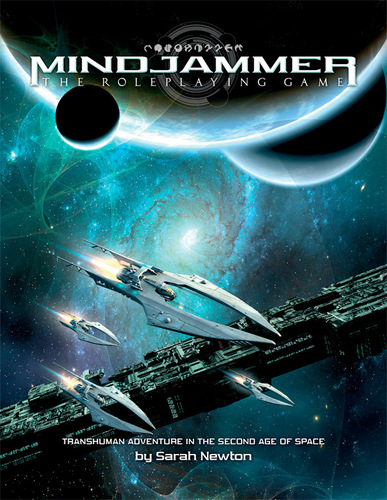
Mindjammer is many things in one. It’s a space opera game that really has rules and mechanics for pretty much everything, all powered by the Fate Core system…

MindjammerMindjammer is many things in one. It’s a space opera game that really has rules and mechanics for pretty much everything, all powered by the Fate Core system. It’s also set in an interesting and unique setting, with a lot of potential for exploration and adventures, and is well-illustrated with examples and tools for players and game-masters to experience a certain sort of adventure.

The New Commonality of Humankind is the central power player Mindjammer’s setting, in which humanity has essentially grown over ten thousand years into an openly transhuman society. The Commonality recently unlocked the secrets of FTL travel and has begun to rediscover other human colonies. This works incredibly well, integrating elements of exploration and high adventure that Fate Core begs for. Barring the unknown, there are many named places and organizations to explore in the standard setting. The Venu Empire, which is the most fleshed-out other faction, is the largest competitor to the New Commonality of Humankind. However the majority of the example setting content has nothing to do with the Venu, although references are made to a historical war between them and the Commonality, and they remain too mysterious to be a protagonist faction without modifications.

The standard setting, however, is a bit hit or miss. It has a lot of original and thought-provoking content, but it could likely be dissatisfying for players. Having the most advanced faction be an almost benevolent but often Orwellian and authoritarian entity is interesting, but its repressive undertones also mean that the Commonality can bring up some incredibly touchy and dark subjects, which are handled relatively loosely. For instance, the Commonality, until recently, implemented forced euthanasia, and engages in cultural manipulation that includes a lack of tolerance for freedom of speech and religion. I’m not sure I’d feel comfortable playing with the Commonality as protagonists.

That isn’t to say, of course, that the setting is horrible for everyone. Warhammer: 40k (whose Imperium of Man the Venu resemble) has proven that people are more than willing to play cogs in a larger, often unpleasant, machine, and Mindjammer has certainly got a degree of complexity and many potential sources deep affinity for players that can easily draw them in when possible. There’s a lot of stuff to like, and only a few adjustments have to be made to find something that will interest pretty much any group, but the setting suffers from not trying to define the role of the players. Normally, this is not a problem for a narrative game, but with many different parts of the setting never meeting each other it becomes difficult to fully appreciate the breadth of the content and remain believable. GM’s and players have to be careful to pin down the setting, which even in the examples seems to be a problem.

My disappointment with the setting can be summed up in a single example. The Mindscape gets one of twenty-six chapters devoted to it, and its ten pages are devoted rather heavily to rules and mechanical explanations. There are a lot of term definitions throughout the book, and many things are like real-world analogues with a twist, but there’s just a general lack of the human aspect. For a setting with a novel, there’s only snippets of fiction, and setting elements remain distant and vague.

Mindjammer is built on Fate Core, which uses Fudge dice. As a game that really draws from the space opera genre and takes place in a setting where the question about what is possible generally boils down to individuals’ ability rather than technology limitations, it’s a good pairing. The mechanics allow richly detailed characters and scale well to the various other game constructs, such as organizations and even whole planets. The narrative style of the game is exactly what the Fate Core system was built to handle best, and Mindjammer’s mechanics are well-constructed and generally make sense.

Unfortunately, just because Fate can handle these scales doesn’t mean that it should. At over five-hundred pages to read it’s easy to have a GM burn out, and the length is extremely intimidating even for players who won’t have to master all the rules. Fortunately, common mechanics make adaptation more simple, but there’s still a lot of bloat in Mindjammer, some of which is a natural consequence of attempting to facilitate so many different scales of play and some of which just comes from repetition and an unwillingness to focus on any one experience.

Another major problem with Mindjammer is that working with things at different scales just doesn’t feel entirely right when working with the same mechanics. There’s a scheme for determining how things on different scales interact, but it doesn’t always make a whole lot of sense in outlier contexts. While Mindjammer allows for essentially down-scaling to achieve a desired scale result (for instance, you can branch an organization down to its branch in a city to see how it deals with a local threat on the fly), this also means a lot more work and bookkeeping to the point where using a simpler discrete mechanic would perhaps be better. The marriage of Mindjammer to the Fate Core mechanic works really well on personal and vehicle scales, but past that it’s impractical unless one is working with like types.

Mindjammer also includes random generation tools for a ton of things. They seem to be heavily weighted to create things that fit well within the Mindjammer setting. All advanced societies are going to be more and more like the Commonality. Some of this can be stated to be a result of the fact that the Commonality is the most advanced society in Mindjammer’s known universe, so all the other advanced societies are branches of it, but it also means that you’ll never find a high-tech anarchic society or a low-tech collectivist society. Part of this is, I believe, complicated by the use of Fudge dice for the random generation, which introduces the complications of a probability curve and relatively low resolution outcomes. When coupled with a setting that makes creating new content incredibly easy, it seems a little redundant and a little unnecessary to have such massive focus on random generation, especially if it just generates content that is much like the example suite. The few parts of the random generation I like I have other tools that I could use to replicate, and the parts I didn’t like felt too inflexible and inorganic to provide meaningful results.

In a sense, my gripes with Mindjammer could be conveyed by saying it is functionally the opposite of Eclipse Phase. Rather than being an incredibly detailed and vivid setting with mechanics that fail to meet its requirements, Mindjammer has many mechanics but falls into the trap of having a setting that fails to delve deep into the sort of things that give flavor and texture to the universe. I couldn’t tell you what the average citizen of the Commonality does, or even what the more noteworthy ones do-the human element is severely lacking, despite the fact that a major goal of the setting is to ostensibly examine what makes one human, transhuman, or posthuman. This is not necessarily horrible, as it leaves room for expansion, but it is also somewhat disappointing.

That said, Mindjammer is top-notch production value; for being a massive book it is very well edited, and the art throughout is high-quality. Page elements get repetitive early on, and remain the same for the whole book, but this is not an unforgivable sin. It’s easy to read and everything looks well-put together with no glaring errors, though it doesn’t have any interesting or fun layout gimmicks like, say, Eclipse Phase, that would provide some awesome visual effects to break up the lengthy read.

Mindjammer attempts to present a compelling, engaging, complex universe, and it has 500 pages in which it attempts to do so. It feels unusually long in some places while glossing over sources of potential interest. There’s a ton of content, but it fails to really present stuff in a usable state; it loves having mechanical expression but fails to create authenticity and meaning behind it. Too many mechanics and too few setting details makes it feel oddly impersonal. Mechanically, it’s a gold-mine if you like the Fate System, but be prepared to fill in a lot of gaps where the setting doesn’t deliver content you’d need to run a game.

You can get a free preview of Mindjammer here…

Review: Fractured Kingdom RPG

Part cyberpunk, part post-apocalyptic, part something else, Fractured Kingdom combines the best parts of several genres into an interesting new take on futuristic role-playing…

Fractured-Kingdom-CoverGame Info

Publisher: House Dok
Writing: Dave Silva
Layout: Eloy Lasanta
Cover and Interior Art: Adam Sward
Year Published: 2013
Pages: 236
Price: $15 USD at DriveThruRPG

Introduction

Fractured Kingdom is “… a game of conspiracy and mysticism in the dark future.” Part cyberpunk, part post-apocalyptic, part something else, Fractured Kingdom combines the best parts of several genres into an interesting new take on futuristic role-playing.

I was a backer of the game’s Kickstarter campaign, but until now hadn’t carved out the time to read and review the book which released several months ago. When Dave Silva sent out a call for reviewers, I took that as my cue to devote some time to reading the book, and I’m glad I did.

Review

Fractured Kingdom is a brand new RPG by House Dok Productions. The game centers around Lucids–people with mystical powers who have had contact with one of the four Outer Realms. These four realms–the Dark, the Grave, the Verdant, and the Slumber–are connected to our world through gateways that few people are capable of accessing. People who have been to one of the realms become Lucids and receive special powers as part of their affinity for that realm.

Though it is set in the year 2202, technology isn’t as advanced as one might expect. During the century-long Great War, The Church of the Reclaimer destroyed much of the world’s infrastructure and historical records as part of an event that has come to be known as The Purge. Since then technology has rebounded and advanced, but estimates say that The Purge set the world back roughly 100 years. There is still plenty of cool tech to go around, but many old electronics and machines are uncovered in archaeological digs that confound modern scientists.

As one might expect in a cyberpunk-like setting, corporations rule megalopolitan areas and the governments of the world have largely consolidated into but a handful of alliances. The rich are powerful, the poor are indentured to The Man, and there is nothing left of a middle class. Meanwhile, Lucids aren’t looked upon favorably by most mundane people. Those who do acknowledge their existence either hunt them or wish to experiment on them, and many Lucids are forced into hiding.

Lucky for you, as a player character, you’ll get to play a Lucid. That means you’ll spend a lot of time dealing with people who don’t like you and monsters only you are capable of facing. Whether your motives are altruistic or you’re just in it for survival, playing as a Lucid comes with its perks and its drawbacks.

Character Creation

After the book lays out some basic information by way of a helpful glossary, it introduces character creation concepts. There’s a lot to this game, but if you stick it out you’ll be able to make a character with a wide range of interesting powers and abilities.

For starters, GMs will need to select which power level the game will start at . Players will be New, Expert, or Veteran Lucids. The difference between the three levels is essentially how many skill points your characters will start the game with.

After power level is selected, players will choose which of the four Outer Realms their character is bonded to. Each realm offers some unique powers and flavor for the character.

  • The Dark is a realm of nightmares and fears. Dark Lucids gain powers of fear, mental dominance, and shadows.
  • The Grave is the realm of death. Grave Lucids have died and, for whatever reason, not stayed that way. Not necessarily undead (they may just be people who’ve had near-death experiences), these characters gain powerful resilience against pain and power over the dead and dying.
  • The Slumber represents the greater consciousness of all living things. Slumbering Lucids break the very bounds of reality and are capable of flight, super speed, super strength, and crafting brilliant illusions.
  • The Verdant is the “world without man,” a place of nature and great beasts. Verdant Lucids often take on feral qualities. They have powers of healing, regeneration, and control over the primal elements of the universe.

The four Outer Realms encompass a lot of different abilities and backgrounds. Choosing one realm over another will have a big impact upon your character, both during creation and advancement throughout the game. Each player may only choose one realm to be bonded with, so it’s important to choose wisely.

After choosing an Outer Realm, characters will choose a Background and then assign each of his character creation points. There are three different types of build points available: Creation Points, Lucid Points, and Experience Points.

This is where things get a bit complicated, but the book does a pretty good job outlining what each type of build point is used for. Creation Points are for your basic character traits, Lucid Points are for your Lucid powers only, and Experience Points can be spent on anything. A trade-off system allows characters to spend unused points of one type to earn points of another type, but at a cost.

Next, players may choose to take Drawbacks to earn more creation points. Drawbacks come in three different levels and provide an increasing number of points.

Finally, players tally up their three different Life Pools: Health, Ego, and Energy. Each is a separate resource to manage and each is damaged or depleted in different ways. It adds granularity to the system, but personally I find it a bit much.

Characteristics

Chapter 2 is all about characteristics. These are the things your character will spend his creation points on, and there are loads and loads of them here. There are four main types of characteristics:

  • Attributes (A)
  • Skills (S) & Specialties (Sp)
  • Abilities (Ab) & Foci (F)
  • Boons (B)

There are 10 Attribute trees and each other characteristic in the game references them in some way. They provide the most broad overview of your character. Attributes include: History, Fortune, Constitution, Mental, Dexterity, Intelligence, Sense, Expression, Strength, and Wisdom.

I like how some of these attributes are non-standard for a game. Most games don’t consider History or Fortune to be attributes, and Expression is a mixture of charisma, personality, and appearance.

For Skills, there are a large number of general categories which encompass a wide range of abilities. For example, Acrobatics covers all manner of nimble movements. Each Skill is associated with an Attribute, and most Skills have an additional Specialty area which can add bonuses when used in certain circumstances. One thing I found confusing about this section was the constant reference to Specialties when I don’t believe they’re detailed until much later in the book. That’s one of those issues that seems to matter most upon a primary read-through of a book and becomes less important as you reference the material later though.

There are a huge number of listed Skills, Abilities, and Boons. Abilities and Boons are like feats and other special powers; they’re things your character can do that aren’t necessarily broken down into a skill group. Each is associated with an Ability and has a number of different Foci and Specialties. Basically, it’s a complex web of options.

Thankfully, there are a few helpful Boon Trees, which are lists of boons that may commonly be grouped together to form a given character concept. If you follow one of these trees you’ll be able to put together a concept in no time. If you don’t, well, good luck picking from the wealth of options available to you.

Gear

Like the other sections in this book, the chapter on Gear is extensive. Fractured Kingdom uses an abstract wealth system for purchasing goods, which is something I really like to see in games. It’s especially helpful in a game where there are already so many resources to manage.

The Gear section covers weapons, armor, vehicles, explosives, computers, survival gear, and more. Detailed statistics and variations are given for each item.

Mechanics and Combat

Chapter 4 brings us to the crunch of the game: Mechanics and Combat. This is where the book finally lays out all of the differences and intricacies of Attributes, Abilities, Skills, Specialties, Foci, and Boons. These Characteristic Trees make up the majority of what your character will do in the game.

When rolling dice, GMs let the players know what kind of Attribute the player will check against. The player may then add any number of Characteristics (Abilities, Skills, Specialties, Foci, and Boons) to add both a bonus and an extra d6 to the roll. For simple activities this may just mean rolling an ability and adding 1d6, but to really crank up the power so you can succeed at a difficult task you can add any number of characteristics you think might apply to the situation.

The system allows for a lot of flexibility but at the expense of complexity. I’ve played similar systems before and I really enjoy the options available, but adding up all of the different bonuses can slow down gameplay somewhat. Once you get the hang of it though, it’s a fun and dynamic method of rolling dice.

Back to resource management: each characteristic you use for a given roll costs 1 Energy. If you use 6 characteristics on a given roll to really make sure it succeeds, you’ll also spend 6 Energy. It’s good for game balance, but it means you’ll be recalculating energy pretty much every single round.

Several different helpful dice roll examples are given which really help illustrate how the system works.

The Mechanics chapter is only about 20 pages long, but it covers a wide range of options and rules situations. Damaging, healing, skill use, suffocation, burning, and most other situations are covered.

Running Fractured Kingdom

Chapter 5 is for Game Masters and players are encouraged not to read it. At about 70 pages or so in length, it’s one of the biggest sections in the book.

This chapter gives a much more detailed picture of the Fractured Kingdom world. All of the important history of the last 200 years is detailed, as are the 5 remaining governmental superpowers. The chapter also provides details of other major powers in the world, important NPCs, and a rather extensive list of monsters. Everything you need to know to run a game in the Fractured Kingdom setting is here in this one helpful chapter.

Song of Silence

Near the end of the book is a sample adventure to get you started. It’s a relatively short but intriguing adventure about a rock concert gone wrong, and it sees the players fighting through hordes of zombies. The adventure isn’t very long, but it does a good job illustrating what the world is like and how to interact with it.

Several example Expert-level characters are provided for the adventure, along with one-page character write-ups and a full character sheet. The characters are interesting and have been built up throughout the book in example text and short stories, so by the time you get to them here they feel very familiar.

Other Thoughts

At the end of each chapter is a bit of short fiction that tells the story of a coven (a group of Lucids) known as the Outsiders. These short stories add a lot of background and flavor to the world in a way that feels very organic. Be warned that there is some adult language in these stories, so they may not necessarily be for kids.

The book is filled with helpful examples to illustrate different game mechanics, and these examples always use one of the Outsiders. During the character creation chapter, for example, we get to watch as a player puts together the old matronly character named Margaret. Because these examples are all thematically tied together, the characters feel alive and interesting, and they really help give a feel for the setting as a whole.

Art, Layout, and Editing

Fracture Kingdoms’ art is black and white and has a sort of old-school vibe. Opinions may vary, but I wasn’t thrilled by most of it. Granted, I’m not the best person to critique art.

The book uses a standard two-column layout with tables and text boxes as needed. I felt that the thick black borders on all of the tables and sidebars was a bit too thick, but honestly that boils down to personal taste. Generally speaking, the text flows very well and there was only one occasion where I remember seeing a paragraph broken up with more than a page of sidebars in between.

I did notice a fair number of typos throughout the book, but nothing that was too distracting. The typos didn’t affect my ability to comprehend the text, which is the most important thing.

The book has a fairly extensive index, which I love. Who doesn’t love a good index?

Accessibility

Fractured Kingdom doesn’t score big points when it comes to accessibility, but it certainly doesn’t fail either.

The PDF is fully bookmarked and I had no problems reading it with my screen reader. These are two key features of any PDF, but they’re really important when we’re talking about accessibility specifically. Good job to Fractured Kingdom for this.

On the other hand, the character sheet is crowded. Everything fits onto one page, but it’s a very noisy one page. The text is small in many cases and difficult to read at a glance.

Choice of typefaces (fonts) could also have used improvement in some areas. There are a lot of different typefaces in the book and I found some of the headlines difficult to read because they appeared “fuzzy.” Thanks to my screen reader I didn’t have to worry about this too much, but when trying to reference something at a glance it was a bit difficult at times. Thankfully, the body copy used a clean and simple typeface that was easy to read, so it’s just the headers that gave me any issues.

The game mechanics are also a little tricky in places. There is quite a bit of decision-making and math involved. Part of the drawback of having a flexible system in which you get to choose when and how many characteristics you use is that it adds complexity to the game mechanics. There is also quite a bit of resource management, with 3 different types of characteristic points, three different types of energy levels, etc. Fractured Kingdom is great if you like and work well with that sort of mechanic, but it isn’t for people with severe cognitive or math impairments.

To end on a positive note, the game doesn’t use miniatures so there isn’t any real visual element during gameplay that could cause difficulties for the blind or visually impaired.

Final Thoughts

Fractured Kingdom is a great game. The world and setting are rich and flavorful, the game mechanics offer a good balance between crunch and fluff, and the system encourages role-playing and decision-making. If a little resource management (and to be sure, it’s little compared to many games on the market) doesn’t bother you and you like the idea of an open and flexible skill system, I would highly recommend this game.

Rating: 8/10

Available at DriveThruRPG