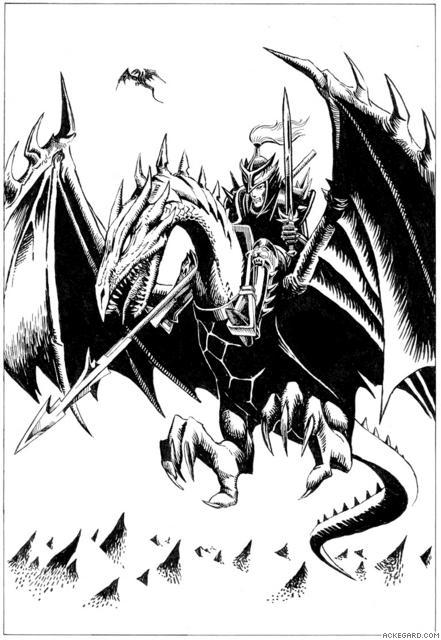
How to Tame your Dragon Mount

Riding dragons is one of those ultimate staples of fantasy, but tabletop gamers with a little experience may view it as unrealistic. Dragons are intelligent, proud and very powerful. It would be very difficult to convince one to serve as your mount for a short time, and likely require a very dire situation. To gain one as a companion seems practically impossible, not to mention game-breaking (balance wise). These creatures are some of the toughest foes in the game – how could they join your party?

Despite all this, doesn’t it just sound really cool? That’s enough for me, especially if this is what’s going to hook a new player. Media has shown us that riding dragons is possible and totally awesome – movies like ‘How to Train your Dragon’, the ‘Dragon Rider’s of Pern’ novel series, and even comic books. Luckily, the fine folks at Wizards of the Coast have given us several options for making this a reality, though it may be hard to spot under the mountain of available content.

Protector Druid

Druids who follow the Primal Guardian path got a new set of options in Heroes of the Feywild. The Protector Druid continues the trend to take the earlier classes and update them in the essentials style. One of its feature’s is Summon Natural Ally as a Daily power. For one encounter a day, Roc, Tiger, Giant Cobra and so on. Though they’re not intended as mounts, many of them are large enough to ride into battle.

At level 29, you can summon a Blue Dragon Wyrmling. Don’t let the name fool you, this beast is large-sized and hits hard. Since it’s a summoned creature it can move as a minor action once a round. It comes equipped with a breath weapon, a fly speed and an at-will attack that marks, so it should have a pretty iconic dragon feel. The most obvious downside is that you have to wait until 29 to get it, though there are cool other creatures to play with in the meantime. The other downside is that it’s attached to the Daily, and you can only use it for one encounter a day. No flying across the country side on this mount.

Cavalier
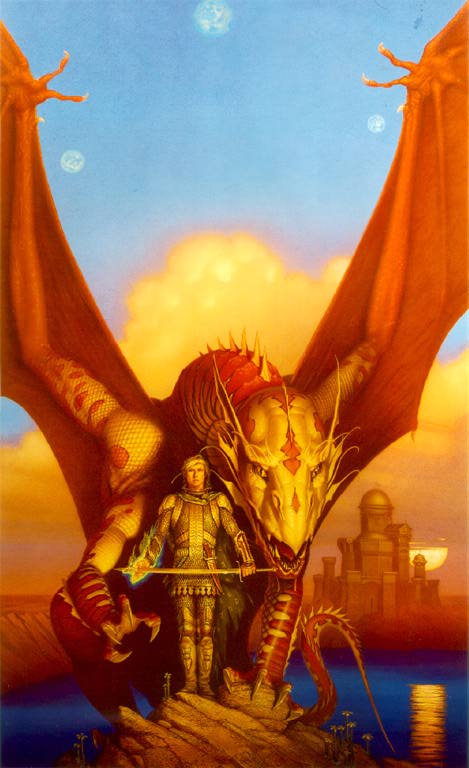
The Cavalier is the Essentials version of the Paladin. It’s a pretty cool class and Dragon 393 introduced the Summon Celestial Steed power as a replacement to Pace of the Virtuous Charger, bringing back the Paladin’s mount as a key piece of what makes this character unique. This power allows you to summon a Celestial Warhorse, but instead of lasting for an encounter, the summoned creature will stay with you until the end of your next extended rest. Feats allow you to summon celestial mounts including a tiger, behemoth and pegasus.

At level 21 you can take the Improved Steed (Silver Dragon) feat to swap that horse out for a Silver Dragon Steed. This mount doesn’t hit as hard as the Blue Dragon Wyrmling. but you can access it nearly a tier earlier. It also comes with an Immediate Reaction that lets you knock enemies prone when they come into melee.

Arcane Familiar

This one is cheating a bit, but I think it’s my favorite option. The Arcane Familiar feat can be taken at level 1 by any arcane character, you even get it for free if you play a witch. Arcane Power also introduced the Dragonling familiar, which is basically a small-sized dragon, with no attacks. It has a fly speed and hover, but is basically too small to ride. . . unless you’re a fairy! You may be reading this with raised eyebrows. Fairies can already fly, they don’t need a cool dragon mount to get around, that may be the case, but at level 1 this is still a pretty cool image. Plus, if you can fly as well as your mount, you can jump off, split directions, and come back together in mid air!

For those who don’t love the fairy route there’s another option. The Familiar Mount Ritual from Dragon 382 is available at level 4. It allows you to increase the size of your familiar to large for twelve hours with a component cost of 25 gp. That’s a pretty good deal, and now everyone can ride a dragon! Sure it doesn’t breathe fire or use its claws but its still awesome! There are a number of feats that can make your familiar even more resilient or give it nifty little abilities.

I’m a little surprised I couldn’t find a ranger option for the dragon riders, but remember anyone can multi-class into an arcane class and pick up the familiar options. Maybe there’s a ranger-specific option right around the corner.

You can even pick up a Golden Dragon Mount mini in the Stuffer Shack store!

See, I told you there’d be dragons.

Tourqen Panther (steal this mount)

You never see the Kathari elves until it’s too late. Quiet, they are, and quick as any man. Old King Draten thought to keep his men safe by only allowing mounted riders down the forest roads. That’s when the elves started training their cats. . .

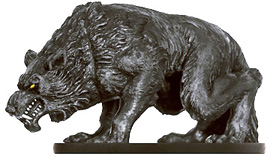
These panthers are twice as large as regular pack leaders, and dark as the moonless sky. Their claws appear to be made of obsidian, with an eerie black shine, but suffer from no brittle state. When viewed in bright light, tendrils of darkness seem to waif up from below their rippling forms.

Loyal Companions

All panthers are fierce predators that no fey would want to face down in combat. The Kathari elves have been training the beasts for generations as hunting animals. Moving stealthily, side by side with the elven warriors, they could quickly take down prey or those who might intrude on their woodland homes.

When the humans began sending teams of mounted warriors trampling through their lands, and upsetting the primal spirits there, the elves again looked to the panthers for aid. One of their shamans gave up his mortal life to the great fire spirit, Tourq, in exchange for the remarkable transformation of their cats. No longer would they hunt by the elves’ side, but were now large enough to carry their hunting partners on their backs. Their powerful legs could keep up with any human horse, and tear open their soft flesh even faster.

Curse of Shadow

The Tourqen panthers generally sleep during the day, and seem unnaturally restless if forced to hunt while the sun still shines. This may be a trait shared by other, more normal cats, but for the Tourqen Panthers, it is readily apparent.
Today, some Kathari elves believe that Tourq was not truly a spirit of fire, but an ancient dark fey lord, trapped away in the shadowfell. Some say Tourq hoped that by having agents amongst the elves he could slowly seduce them with visions of dark power, and eventually use them to enact a ritual so that he could escape the shadowfell, and again terrorize the realm of man. He supposedly planted a sliver of his presence in these great cats during the ritual, but did not account for the will of these proud creatures, or their devotion to their elven masters.

Whether the story is true seems to matter little. While these panthers may walk a dark path, they still bear a stronger connection to the natural world. Those who command creatures of shadow will find no ally among them.

Featured image of panther (top) by J Alvarrsson. Black Panther Blue Night artist unknown.

Alternative Awards – Leveling the Dire Wolf

In Dungeons & Dragons 4th edition (as with many RPGs) your expected treasure is factored in when determining difficulty. To say it another way, when designing monsters of a certain level, designers have a rough idea of what a player’s attack, damage and defenses are at this level. To reach this approximation, they factor in average equipment values. They expect for you to have that +3 sword by level 17. If you don’t, you may have a tougher time slaying the dire velociraptors coming around the corner.

Players know this, and so they’re very likely to focus their treasure wants and gold spent on items that increase their key abilities. However, a lot of cool stuff might get left ignored. Even if you keep your found treasure random, there might be a strong urge to sell these things to purchase the items they think they need.

I’ve always given some rewards outside of treasure as story points or creativity rewards. Things like titles, rank, land and the praises of a favored patron have always been ways to reward the players – things that don’t count toward the treasure for that level. They’re also difficult for the party to sell, or present a situation where players don’t feel like this is something that should be sold.

One of the other pieces of treasure that I think should fall into this group is vehicles and mounts. These two items generally have been included as treasure that has a clear price, value, and place on the treasure table. I don’t think they should be there, however. For one, their use is always limited in some respect. You can’t always take them into combat (depending on the terrain). You can’t take them with you into a city most the time. On top of that, in systems where items aren’t targetable, they are! Spend your money on this and it might get taken away the next encounter.

There’s also an issue with leveling. When you out-level your sword, you usually get a new one. When you out-level your horse, there isn’t a level 12 horse in the Monster Vault for you to buy.

However, I think these non-standard rewards are useful and fun. I want my players to have cool mounts and be able to use them, without having to play a ranger, and sacrifice half their power choices.  I’ve recently introduced a new reward system, where if you do something awesome out of game, like make a significant update to our campaign wiki, you get a reward card. There are three different mount rewards you can gain with this card (among other things): you can gain a mount of your level, you can level your current mount so they’re at your level, or your mount can gain a new ability or trait.

So let’s look at the Dire Wolf, because one of my players has a dire wolf mount. It’s normally a level 5 skirmisher. My players are 17. The new DDI Monster Builder has gotten a lot of opposition for not being a monster builder, but a monster leveler. For our purpose this is pretty useful. I can bring up the Dire Wolf in the Monster Builder and slide the bar over to level 17. This adjusts hp, defenses, to-hit and abilities. Damage doesn’t scale, at least not on this monster. So we take a look at SlyFlourish’s Master DM Sheet. I can see that the Dire Wolf’s level 5 normal damage falls roughly in the Medium column and its damage against prone enemies is between high and high limited. I can use this to pick new damage for the level 17 version.

I’ll build my new monster in www.power2ool.com so I can adjust the damage. I’ll also adjust the attributes a little bit. I don’t want the Intelligence and Wisdom to rise on the average scale that the DDI uses, because its still a mount and it would be a very different experience if he was suddenly smarter than his rider.

Now there’s only one reward left on my card: new powers. Why would I do this? Well, a lot of mounts are early level to begin with. Their powers are very simple. Even if you increase their damage in higher paragon and epic it’s still a bit plain against the foes and NPCs you’re now interacting with regularly. Since these are non-standard rewards, I can regulate things a bit and make sure no one mount gets too many options, or becomes too powerful.

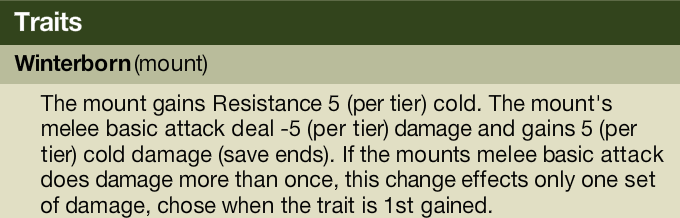
Here are some examples of abilities that may be appropriate to tack onto your high level wolf mount, as a reward:

Chimera Mount (steal this mount)

The Chimera, once thought impossible to tame, has become a challenge to a few brave souls.  Few have mastered this talent, as many others have fallen to the beast, or been horribly mauled.  However, those who are successful in dominating this beast gain a fiercely loyal companion.

Prospective riders must be present at the creature’s birth/creation, and must take part in its training (anywhere from the first three to five months of its life).  It’s imperative that the rider work with a trainer (an expensive trainer), following his every instruction.  It’s equally important that both the rider and trainer be of equal or higher level than the Chimera at all times, in order to maintain dominance over the creature.  This is made all the more difficult because of the creature’s three heads.

In the training, all three of the heads must learn obedience, and the creature and master must learn to work together. By the end of training (if successful), the rider will have bonded with a fiercely loyal mount, one that will most likely never take on a new master (it’s not the “instructions” that the mount follows, but the master who was with it for the first few months of its life).  The mount will give its life to protect its master, fighting to the death, and certainly knows no better purpose.

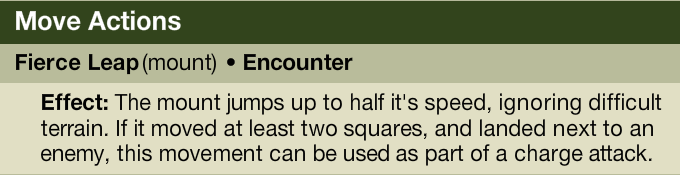
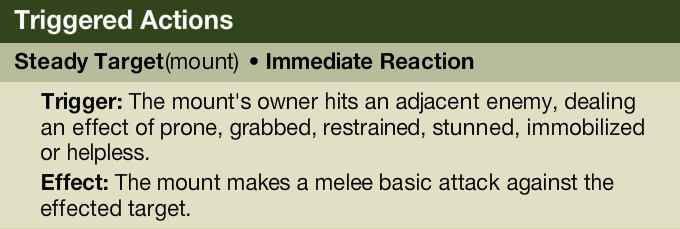
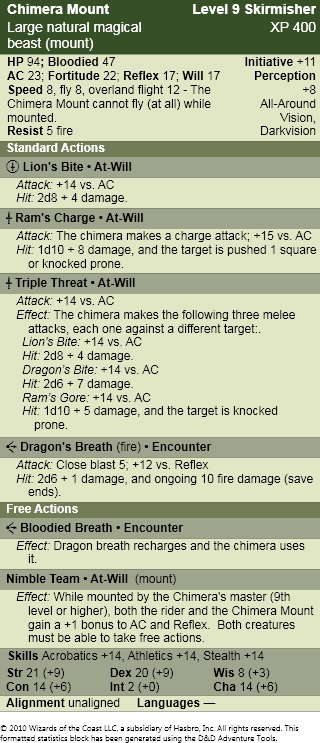
As part of its training, the creature is restricted from developing its intelligence.  It can’t speak, and only understands the commands of it’s rider.  Also, while mounted, the creature can’t fly.  Because of this, the creature has been improved in other ways.  Namely, the Chimera Mount has learned to use its wings to assist in its land-based movement (increased speed, climbing and jumping), and while mounted, it and the rider gain a small bonus to their AC and Reflex.  As the rider gains levels, so too does the Chimera Mount, though only up to level 12.

Quite simply, the devastating Chimera (brutish in nature) has been dominated and reduced to a weaker skirmisher.  It’s a very nervous creature, one that is prone to throwing fits if left apart from its rider for more than a day.  It’s a high maintenance, protective creature, because it relies on its master to make decisions.  Even when near its rider, it can still sometimes be a nervous, skittish creature (though that doesn’t diminish its effect it has on those nearby).

The creature will not accept another single rider, but will allow a second rider.  Should the creature and master ever be separated for more than two weeks, the bond between them will be forever broken, and the chimera will be forced to think and fend for itself (becoming a full-grown, 15th level, elite brute Chimera).  However, before the Chimera Mount starts to change into its more powerful, independent self, there is a small window of opportunity for someone new to dominate the creature, requiring a successful one-on-one fight with the Chimera Mount, followed by an immediate difficult Nature check.

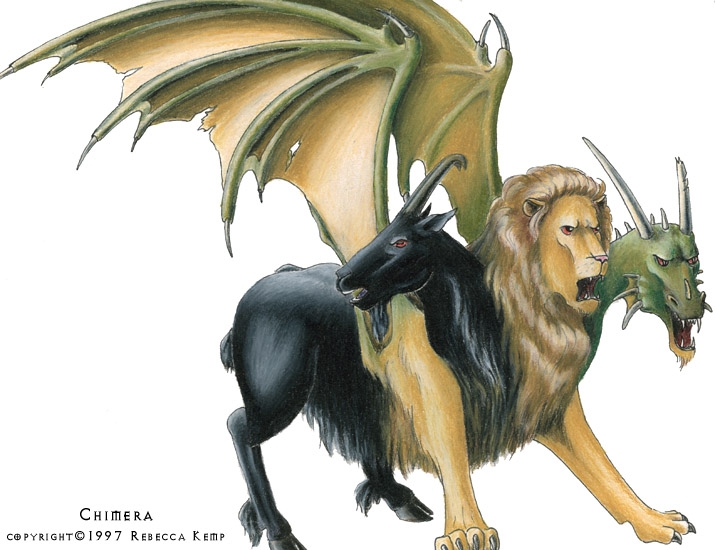
Image by Rebecca Kemp, from Becky’s Wildlife & Fantasy Art.