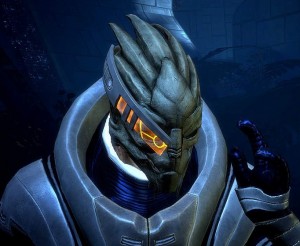
Steal This Character: Ganthet, Turian Infiltrator

Ganthet grew up as a hunter in the jungles of the turian homeworld of Palavan. Like most young turians, when he came of age he spent a tour of duty in the turian military, then opted for a career in C-Sec – Citadel Security. His abilities and instincts have proven valuable when chasing down a lead, investigating a crime, or collaring a perp.

Unsurprisingly, Ganthet has become frustrated with the sheer amount of red tape he has to work through as a C-Sec officer, at times viewing Internal Affairs as the primary obstacle to his job. As a result, he has cultivated a number of contacts outside C-Sec who he finds useful when he needs to get things done quietly. Quarian engineers, local medical offices, and more recently the biotic known as “Alexander Bourne.” 

While he remains uncertain of Bourne’s true motivations, the man’s talents have proven helpful – as has his connections among the people on the Citadel. Ganthet might not completely trust the man, but his need to keep an eye on him is better served by letting him help with C-Sec business. What’s that old human saying? Keep your friends close, and your enemies closer?

Combat Notes

Ganthet uses stealth and aiming as much as possible. When he needs to move about the battlefield or between points of cover, he will invariably do so cloaked. His sniper rifle is his favorite weapon by far, and he often uses Aim and Power Attack together to pick out his targets weakest point for devastating effect. In social situations he leans heavily on intimidation (like many turians) rather than “wasting time” on social niceties.

In a team setting, he will usually try to use cloaking to catch the enemy from another angle, covering his allies when necessary with bursts of sub-machinegun fire and providing sniper support.

Ganthet is a PL 8 character for Mutants & Masterminds 3E. His character sheet is available for download here. For those of you who would rather just see the character, it is reproduced below for ease of viewing. Enjoy!

Ganthet, Turian Infiltrator – PL 8

Strength 2, Stamina 1, Agility 4, Dexterity 4, Fighting 8, Intellect 1, Awareness 2, Presence 0

Advantages

Benefit, Security Clearance: C-Sec, Close Attack 3, Daze (Intimidation), Defensive Roll, Equipment 6, Hide in Plain Sight, Improved Aim, Move-by Action, Power Attack, Precise Attack (Ranged, Cover), Takedown 2, Teamwork

Skills

Acrobatics 2 (+6), Athletics 4 (+6), Expertise: Law Enforcement 4 (+5), Expertise: Military 4 (+5), Insight 3 (+5), Intimidation 6 (+8/+6), Investigation 4 (+5), Perception 4 (+6), Persuasion 4 (+4), Ranged Combat: Guns 7 (+11), Sleight of Hand 1 (+5), Stealth 2 (+6), Technology 5 (+6), Vehicles 2 (+6)

Powers

Advanced Omnitool Programs (Removable)

Overload: Affliction 4 (technological, 1st degree: Vulnerable, 2nd degree: Defenseless, 3rd degree: Incapacitated, Resisted by: Fortitude, DC 14; Affects Objects Only, Increased Range 2: perception; Check Required: DC 11 – Technology)

A.I. Hacking: Affliction 5 (Alternate; technological, 1st degree: Dazed, 2nd degree: Compelled, 3rd degree: Controlled, Resisted by: Will, DC 15; Increased Range 2: perception; Limited: Synthetic Targets Only)

Omniblade: Strength-based Damage 3 (Alternate; hologram, piercing, slashing, DC 20)

Infiltration Armor (Removable)

Cloaking: Concealment 2 (technological, Sense – Sight; Passive)

Composite Defenses: Protection 6 (technological, +6 Toughness, Notes: Light armor suplimented by low level force fields.)

Infiltration Visor (Removable)

Visual Array: Senses 3 (Distance Sense, Extended: Choose Sense 1: x10, Tracking: Choose Sense 1: -1 speed rank, Advantages: Improved Aim, Precise Attack (Ranged, Cover); Feature: Personal Soundtrack)

Infiltrator Training (Advantages: Defensive Roll, Hide in Plain Sight, Power Attack, Takedown 2, Teamwork)

Medigel: Healing 2

Turian Traits

Claws: Strength-based Damage 1 (alien, slashing, DC 18)

Environmental Adaptation: Immunity 1 (Environmental Condition: Choose Condition)

Fearsome Visage: Enhanced Trait 2 (Traits: Intimidation +2 (+8), Advantages: Daze (Intimidation))

Universal Translator: Comprehend 2 (Languages – Understand All, Languages – You’re Understood)

Equipment

Medigel [Medigel: Healing 2], Omnitool (Audio Recorder, Cell Phone (Smartphone), Flashlight, Multi-tool), Restraints, Universal Translator [Universal Translator: Comprehend 2, Languages – Understand All, Languages – You’re Understood], Weapons (Custom Heavy Pistol, Flash Grenade, Locust Submachine Gun, Mantis Sniper Rifle)

Offense

Initiative +4

A.I. Hacking: Affliction 5 (DC Will 15)

Claws: Strength-based Damage 1, +11 (DC 18)

Custom Heavy Pistol, +11 (DC 19)

Flash Grenade, +4 (DC Dog/Fort 14)

Grab, +11 (DC Spec 12)

Locust Submachine Gun, +11 (DC 19)

Mantis Sniper Rifle, +11 (DC 20)

Omniblade: Strength-based Damage 3, +11 (DC 20)

Overload: Affliction 4 (DC Fort 14)

Throw, +4 (DC 17)

Unarmed, +11 (DC 17)

Complications

Dextro-amino acids: Like most life forms, Turians are carbon based. However, unlike most life forms, their proteins are based on dextro-amino acids. This makes them one of two species in the galaxy to have this trait, along with the Quarians. It also means that Turians cannot eat the same foods as most other species without suffering from severe digestive problems.

Honor: Turians have a unique sense of honor that drives them to act. They are also terrible liars. Ganthet, like most Turians, has a hard time answering a direct question with anything less than truth.

Motivation: Community: Like most Turians, Ganthet served in the Turian military for several years before moving on to his current pursuits. He still believes in doing the right thing for society as a whole, and works for a sense of belonging.

Motivation: Competition: Ganthet enjoys friendly competition with his peers, but occasionally takes unnessessary risks to come out on top.

Languages

Turian

Defense

Dodge 4, Parry 8, Fortitude 7, Toughness 8/7, Will 4

Power Points

Abilities 44 + Powers 31 + Advantages 11 + Skills 26 (52 ranks) + Defenses 8 = 120

Hero Lab® and the Hero Lab logo are Registered Trademarks of LWD Technology, Inc. Free download at http://www.wolflair.com
Mutants & Masterminds, Third Edition is ©2010-2011 Green Ronin Publishing, LLC. All rights reserved.

For more articles on Mass Effect RPG, go here.

Steal this Mass Effect Character: Jared Sanderson, Human Spectre

Concept

Genetically altered super-soldier.

Background

One of a very small number of human Spectres (Special Tactics and Reconnaissance) commissioned by the counsel in the wake of Shepard’s ascent to that role, Jared Sanderson is a born soldier. Former Aliance military, Sanderson does the will of the Council quietly and efficiently. As one of only a few human Spectres, Sanderson has come to accept comparisons between himself and the near-legend Shepard as inevitable, and simply strides to ensure that they are as favorable to himself as they can be. All the human Spectres know that they will have a great deal of trouble escaping Shepard’s shadow.

Sanderson has undergone extensive genetic alterations in order to overcome humanity’s natural limitations and to make himself the best soldier he can be.

Download

Jared Sanderson is a Power Level 8 character for Mutants and Masterminds 3E. You can download his character sheet by clicking the link below.

Hero Lab – Jared Sanderson, Soldier, Spectre

For those who would rather just see what the character looks like, I’ve included his statblock below. Enjoy!

Jared Sanderson, Soldier, Spectre.

Abilities

Strength 4, Stamina 4, Agility 4, Dexterity 2, Fighting 6, Intellect 1, Awareness 2, Presence 0

Advantages

Agile Feint, All-out Attack, Benefit, Ambidexterity, Benefit, Cipher, Benefit, Security Clearance: Spectre, Chokehold, Close Attack, Daze (Intimidation), Defensive Attack, Equipment 8, Improved Critical: Omniblade, Improvised Weapon, Independent Aim, Instant Up, Leadership, Prone Fighting, Quick Draw, Ranged Attack, Ultimate Effort: Toughness Saves

Skills

Acrobatics 4 (+8), Athletics 6 (+10), Deception 2 (+2), Expertise: Military 4 (+5), Insight 4 (+6), Intimidation 6 (+8/+6), Investigation 5 (+6), Perception 4 (+6), Persuasion 9 (+9), Ranged Combat: Guns 4 (+10/+6), Technology 2 (+3), Vehicles 2 (+4)

Powers

Advanced Omnitool Programs (Removable)

Omniblade: Strength-based Damage 3 (DC 22)

Genetically Altered Physiology

Heavy Bone Weave: Enhanced Stamina 1 (+1 STA; Permanent)

Heavy Muscle Weave: Enhanced Strength 1 (+1 STR; Permanent)

Heavy Armor (Removable)

Composite Shielding: Protection 6 (+6 Toughness)

Medigel: Healing 2

Spectre Training (Advantages: Benefit, Cipher, Benefit, Security Clearance: Spectre)

Advanced Martial Arts: Enhanced Trait 8 (Advantages: Agile Feint, All-out Attack, Chokehold, Close Attack, Improved Critical, Improvised Weapon, Instant Up, Prone Fighting)

Advanced Weapons Training: Enhanced Trait 5 (Traits: Ranged Combat +4 (+10), Advantages: Benefit, Ambidexterity, Independent Aim, Quick Draw)

Ammo Types: Feature 1 (Notes: You may choose any of the following descriptors for your bullets: fire, cold, electricity. These are in addition to ballistic and are entirely optional.)

Renegade: Enhanced Trait 1 (Traits: Intimidation +2 (+8))

Translation Circuit: Comprehend 2 (Languages – Understand All, Languages – You’re Understood)

Equipment

Backup Pistol (Heavy Pistol), Medigel [Medigel: Healing 2], Omnitool (Cell Phone (Smartphone), Flashlight, GPS Receiver, Multi-tool), Universal Translator [Translation Circuit: Comprehend 2, Languages – Understand All, Languages – You’re Understood], Weapons (Custom Assault Rifle, Custom Heavy Pistol, Custom Sniper Rifle, Grenades)

Offense

Initiative +4

Backup Pistol, +11 (DC 19)

Custom Assault Rifle, +11 (DC 20)

Custom Heavy Pistol, +11 (DC 19)

Custom Sniper Rifle, +11 (DC 20)

Grab, +7 (DC Spec 14)

Grenades, +3 (DC Dog 15)

Omniblade: Strength-based Damage 3, +7 (DC 22)

Throw, +3 (DC 19)

Unarmed, +7 (DC 19)

Complications

Motivation: Patriotism: Jared Sanderson believes in the Council, but he’s always been an Aliance Soldier. It’s in his blood.

Responsibility: To the Citadel Council, to Earth, and to Humanity.

Rivalry: Shepard. Little is known about the first human Spectre, other than what they accomplished, but Sanderson sometimes feels trapped in Shepard’s shadow as a result. He is determined that if there is to be any comparison between them, it will always be favorable.

Secret: Sanderson has been approached by a pro-human splinter group called Cerberus, an avowed enemy of the Citadel Council, but one that claims knowledge of the missing Spectre, Shepard. So far he has spurned their offers, but time will tell…

Xenophobic: Jared prefers the company of humans, though he is polite enough to other species. He despises Batarians.

Languages

English

Defense

Dodge 6, Parry 6, Fortitude 9, Toughness 10, Will 6

Power Points

Abilities 42 + Powers 28 + Advantages 13 + Skills 26 (52 ranks) + Defenses 11 = 120

Hero Lab® and the Hero Lab logo are Registered Trademarks of LWD Technology, Inc. Free download at http://www.wolflair.com
Mutants & Masterminds, Third Edition is ©2010-2011 Green Ronin Publishing, LLC. All rights reserved.

 For more articles on Mass Effect RPG, go here.

Steal this Mass Effect RPG Character: Alexander Bourne, Human Adept

So just what is an Adept, anyway?

For those of you who haven’t played Mass Effect, there are two answers to that question.

The short answer: Adepts are space wizards, and one of six classes in the game.

The long answer: Adepts are individuals with Biotic potential who have spent most of their lives learning and practicing how to create and control mass effect fields using a combination of implants, conscious nerve control, and pockets of Element Zero in their bodies. In humans, this requires exposure to Element Zero in the womb, and the results are inconsistent at best – more often than not, either nothing happens or horrible debilitating diseases do.

This means that on some level, any human with biotic potential has a history rooted in tragedy. Most of them appeared after a series of terrorist attacks were executed on Element Zero reactors throughout a number of human colony worlds. About 1 in 10 of the children born afterward showed useful biotic potential, but that ignores the ones who died early – or the lucky few who were unaffected.

Element Zero creates its strange mass effects when stimulated by electric current, hence the intense training required to master biotics. All biotics are very disciplined (in their way), and tend to require a massive amount of calories compared to their peers. Most of them end up in the military for at least some stretch of time, because the military is one of the few organizations that can afford to pay for their training.

As a side effect of using their powers, biotics burn through a lot of calories – the Alliance military provides all of their biotics with a special energy drink to consume after battles, and rations their daily calorie intake about 1000 calories higher than more traditional soldiers.

Alexander Bourne

Alexander Bourne is a deliberately crafted mystery. A charming and powerful biotic, Bourne has set about befriending the locals on the Citadel and claims to be considering a career C-Sec (Citadel Security). Little is known about who he was back in the Terminus systems or what he did before his arrival, and he prefers it that way. As far as most computer systems are concerned, Alexander Bourne simply doesn’t exist – beyond the legal necessities of identification, of course.
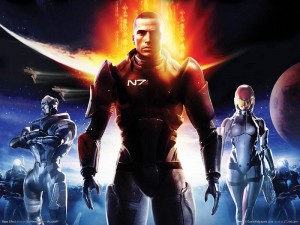
He’s trying to avoid mercenary work for the moment while he works through the C-Sec application process, but there’s no telling how long he’ll be able to keep it up. Sadly, half a lifetime in the Terminus systems doesn’t lend itself well to legitimate work.

He is charming, though his strange mechanical eyes are unnerving for some. His confidence is obvious, as is his competence. He will befriend anyone who will talk to him – human, quarian, turian, asari, salarian – but spends most of his time with “the downtrodden,” many of whom have come to look to him as a protector of sorts. And whether by his biotic powers or his twin M-6 Carnifex Hand Cannons, they are well protected indeed.

Tactics

Bourne fights using either his Biotic powers or – if a more subtle approach is needed – his twin pistols. He tends to avoid using his flight ability in battle, because doing so would require him to lower his defenses. If confronted by large numbers of foes with little chance of collateral damage, Alexander will use Shockwave to buy himself some breathing room. Against single targets where subtlety is not an issue, he prefers to use warp fields or batter his enemy with pieces of the environment (Damaging Move Object). He will not hesitate to take advantage of the terrain to drop enemies off cliffs or down shafts, either.

In a team setting, Bourne will act to protect his teammates as much as possible, shielding them with large barriers if necessary. He sometimes is a bit of a showboat, however, and enjoys showing off with his powers or his gunplay.

Alexander Bourne is a Power Level 8 character for Mutants and Masterminds 3E, built using the standard 15 points per power level. He was created using Hero Lab. You can download the character sheet below.

Hero Lab – Alexander Bourne, Human Adept

For those of you who would rather just see the stats, the statblock is below. Enjoy!

Alexander Bourne, Human Adept – PL 8

Abilities

Strength 2, Stamina 1, Agility 4, Dexterity 2, Fighting 5, Intellect 2, Awareness 2, Presence 2

Advantages

Benefit, Ambidexterity, Benefit, Cipher 2, Equipment 5, Extraordinary Effort, Independent Aim, Inspire, Power Attack, Quick Draw, Ranged Attack 5

Skills

Acrobatics 1 (+5), Athletics 2 (+4), Deception 2 (+4), Expertise: Criminal 2 (+4), Insight 6 (+8), Perception 3 (+5), Persuasion 5 (+7), Ranged Combat: Biotics 2 (+4), Ranged Combat: Guns 5 (+7), Technology 1 (+3), Vehicles 1 (+3)

Powers

Active Biotics

Large Scale Barriers: Create 8 (biotic, Volume: 250 cft., DC 18; Selective; Concentration, Diminished Range)

Mass Effects: Move Object 6 (biotic, 3200 lbs., DC 22; Damaging, Improvised Weapon; Diminished Range, Notes: Pull, Throw, Warp, Crush, Slam, Etc.)

Reave

Blast: Blast 4 (Linked; biotic, DC 19)

Block Regen: Nullify 4 (Linked; Counters: Regeneration, DC 14)

Healing: Healing 4 (Linked; Limited: Personal Range)

Shockwave

Damage: Cone Area Damage 5 (Linked; biotic, DC 20; Cone Area: 60 feet cone)

Move Object: Cone Area Move Object 6 (Linked; biotic, 3200 lbs., Advantages: Improved Trip; Cone Area: 60 feet cone; Limited Direction: Away., Reduced Range: close)

Gunplay (Advantages: Benefit, Ambidexterity, Independent Aim, Quick Draw)

Optical Upgrades: Senses 1 (Analytical: Vision)

Passive Biotics

Levitation: Flight 2 ([0 active, 8/8 PP, 2/r], biotic, Speed: 8 miles/hour, 120 feet/round)

Personal Barrier: Force Field 8 ([8 active, 8/8 PP, 1/r], biotic, +8 Toughness)

Translation Circuit: Comprehend 2 (Languages – Understand All, Languages – You’re Understood)

Equipment

M-6 Carnifex Hand Cannon (Heavy Pistol), M-6 Carnifex Hand Cannon (Heavy Pistol), Omnitool (Audio Recorder, Cell Phone (Smartphone), Flashlight, Multi-tool), Universal Translator [Translation Circuit: Comprehend 2, Languages – Understand All, Languages – You’re Understood]

Offense

Initiative +4

Blast: Blast 4, +9 (DC 19)

Block Regen: Nullify 4, +9 (DC Will 14)

Damage: Cone Area Damage 5 (DC 20)

Grab, +5 (DC Spec 12)

M-6 Carnifex Hand Cannon, +12 (DC 19)

M-6 Carnifex Hand Cannon, +12 (DC 19)

Mass Effects: Move Object 6, +9 (DC 22)

Move Object: Cone Area Move Object 6 (DC 16)

Throw, +7 (DC 17)

Unarmed, +5 (DC 17)

Complications

Enemy: The Blue Suns: Alexander ran afoul of the mercenary group called the Blue Suns awhile back, and developed a bit of a taste for giving the organization a hard time.

Motivation: Acceptance: Alexander Bourne has considered joining up with C-Sec on several occasions, if he thought they would consider his application.

Power Loss: Biotic Powers: Must be able to gesture.

Relationship: Bourne has a number of “associates,” back on Omega who one might go so far as to call friends, but has made a few real friends on the Citadel, including the C-Sec officer called Ganthet. Most of the “duct rats,” and “downtrodden,” can be counted among his friends as well.

Secret: Alexander used to work for the Shadow Broker.

Languages

English

Defense

Dodge 7, Parry 6, Fortitude 4, Toughness 9, Will 9

Power Points

Abilities 40 + Powers 36 + Advantages 15 + Skills 15 (30 ranks) + Defenses 14 = 120
Hero Lab® and the Hero Lab logo are Registered Trademarks of LWD Technology, Inc. Free download at http://www.wolflair.com
Mutants & Masterminds, Third Edition is ©2010-2011 Green Ronin Publishing, LLC. All rights reserved.

For more articles on Mass Effect RPG, go here.

Steal This Character: Alara’Zen vas Citadel nar Neema

Concept

Quarian engineer.

A bit about the quarians

Quarians are a race of interstellar nomads, long since driven from their home planet by a race of Artificial Intelligence known as the geth, originally created by the quarians as a servant race. The quarians attempted to destroy the Geth when they became fearful of their creation’s growing intelligence, and the geth responded naturally to preserve their existence. Since that time the galaxy at large has become fearful of the geth threat after an army of the A.I. units acted in support of the rogue turian Spectre known as Saren Arterius.

For more information, click any of the above links or play through Mass Effect.

Alara’Zen

Alara’Zen vas Citadel nar Neema (crew of the Citadel, child of the Neema) is one of the small population of quarians who consider the Citadel their permanent home. When asked, she tells people that she’s on an “extended pilgrimage.” She left the Migrant Fleet voluntarily and does her best to look out for other quarians who visit the Citadel on their pilgrimage, trying to ensure that they don’t have the same difficulties she did.

Unfortunately, C-Sec policy is to treat quarians as a nuisance. They often suffer from unfair treatment and are threatened with charges of vagrancy or falsly accused of theft. Without representation on the Citadel Council, this situation is likely to continue.

Luckily, though, not everyone feels that way. Alara’Zen has met Alexander Bourne on several occasions, usually after he injured himself looking out for one of the “duct rats,” and helps him out with equipment or medigel on occasion.

She keeps her combat drone (nicknamed, “G’enni”) active most of the time, using it to help her with the repairs she does at her junk shop, and has been known to speak to it on occasion. Alara has toyed with the idea of installing a V.I. in the drone’s program so it could speak back, but something has thus far stayed her hand.

Alara’Zen vas Citadel nar Neema is a power level 8 character for Mutants and Masterminds 3E. Her character sheet was created using Hero Lab.

Hero Lab – Alara’Zen vas Citadel nar Neema.

For those of you who would rather just see the character, her statblock is below. Enjoy!

Alara’Zen vas Citadel nar Neema – PL 8


Abilities

Strength 0, Stamina 0, Agility 2, Dexterity 2, Fighting 2, Intellect 3, Awareness 1, Presence 0

Advantages

Benefit, Cipher, Eidetic Memory, Equipment 6, Favored Foe: Synthetics, Improvised Tools, Inventor, Leadership, Ranged Attack 4, Second Chance: Technology Checks, Skill Mastery: Technology, Teamwork, Well-informed

Skills

Acrobatics 4 (+6), Athletics 2 (+2), Expertise: Artificial Inteligence 1 (+6/+4), Insight 6 (+7), Investigation 1 (+4), Perception 6 (+7), Persuasion 4 (+4), Ranged Combat: Guns 4 (+6), Sleight of Hand 2 (+4), Technology 7 (+12/+10), Treatment 1 (+4), Vehicles 2 (+4)
Powers

Advanced Omnitool Programs (Removable)

Combat Drone: Burst Area Summon 4 (hologram, light, technological; Active, Burst Area: 30 feet radius sphere)

Heavy Overload: Affliction 5 (1st degree: Dazed, 2nd degree: Defenseless, 3rd degree: Incapacitated, Resisted by: Fortitude, DC 15; Affects Objects Only, Increased Range 2: perception)

Advanced A.I. Hacking: Affliction 7 (Alternate; 1st degree: Dazed, 2nd degree: Compelled, 3rd degree: Controlled, Resisted by: Will, DC 17; Increased Range 2: perception; Limited: Synthetic Targets Only)

Incinerate: Burst Area Blast 4 (Alternate; fire, technological, DC 19; Burst Area: 30 feet radius sphere)

Containment Suit: Immunity 7 (Disease, Environmental Condition: Vacuum, Environmental Condition: Radiation, Environmental Condition: Cold, Poison, Suffocation (All))

Helmet (Notes: This WOULD be removable, but Quarian complications suggest that this would be a very bad idea.)

Heads up display: Senses 4 (Analytical: Sight, Danger Sense: Radio, Direction Sense, Radio)

Medigel: Healing 2

Quarian Affinities

Low-light vision: Senses 1 (Low-light Vision)

Technologist: Enhanced Trait 3 (Traits: Technology +2 (+12), Expertise +2 (+6), Advantages: Second Chance: Technology Checks; Permanent)

Shield Generator (Removable)

Force Field: Force Field 6 (technological, +6 Toughness)

Translation Circuit: Comprehend 2 (Languages – Understand All, Languages – You’re Understood)

Equipment

Containment Suit [Containment Suit: Immunity 7, Disease, Environmental Condition: Vacuum, Environmental Condition: Radiation, Environmental Condition: Cold, Poison, Suffocation (All)], Medigel [Medigel: Healing 2], Omnitool (Audio Recorder, Cell Phone (Smartphone), Flashlight, Multi-tool), Universal Translator [Translation Circuit: Comprehend 2, Languages – Understand All, Languages – You’re Understood], Weapons (Combat Knife, M-5 Phalanx Heavy Pistol)

Offense

Initiative +2

Advanced A.I. Hacking: Affliction 7 (DC Will 17)

Combat Knife, +2 (DC 16)

Grab, +2 (DC Spec 10)

Heavy Overload: Affliction 5 (DC Fort 15)

Incinerate: Burst Area Blast 4 (DC 19)

M-5 Phalanx Heavy Pistol, +12 (DC 19)

Throw, +6 (DC 15)

Unarmed, +2 (DC 15)

Complications

Dextro-amino race: Like the Turians, Quarians cannot eat the same foods as most species. They can, however, eat turian cuisine.

Disability: Quarian Immune System: Quarians wear their containment suits for a good reason; nearly ANY foreign substance or germ causes an alergic reaction, with symptoms like fever or nausia or worse, depending on the severity. Under the wrong circumstances, a containment breach can be fatal.

Hatred: Like many Quarians, Alara feels a strong hate and fear of the Geth, the synthetic race of artificial inteligence that drove the Quarians from their home world.

Prejudice: Quarians and their traditions (like Pilgrimage) are often misunderstood by the galaxy at large, and they are sometimes treated as vagrants or worse.

Languages

Quarian
Defense

Dodge 10, Parry 7, Fortitude 3, Toughness 6, Will 7

Power Points

Abilities 20 + Powers 39 + Advantages 19 + Skills 20 (40 ranks) + Defenses 22 = 120
Hero Lab® and the Hero Lab logo are Registered Trademarks of LWD Technology, Inc. Free download at http://www.wolflair.com
Mutants & Masterminds, Third Edition is ©2010-2011 Green Ronin Publishing, LLC. All rights reserved.

For more articles on Mass Effect RPG, go here.

Mass Effect: Quick and Dirty NPC Creation

One of the reasons I opted to use Mutants and Masterminds 3e for my Mass Effect conversion is that it offers a very flexible set of tools that allow for a number of approaches to GMing, and particularly to building NPCs.

Approach 1: The Detailed (“Official”) method

M&M handles NPCs pretty much the same way it handles PCs, with a couple of differences: 1) NPCs can be whatever PL you want, and 2) they aren’t required to abide by the “15 power points per PL” rule that PCs have. So basically they have whatever traits you need them to have for the story. If you have a program like Hero Lab (which I do and cannot recommend highly enough), it’s a simple matter to build the NPC you need and export it as a neat statblock. Use it as many times as you need it.

Because this method is the most time consuming method, however, I recommend it solely for “named NPCs” who are intended to appear in multiple sessions.

Approach 2: The “Lazy GM” method

This approach, by the way, works equally well for any application of the M&M game engine, whether you’re working with sci-fi, post apocalyptic, super-heroic, or low PL dungeon crawls. By way of giving credit where credit is due, my approach is due largely to the influence of Greywulf and his series on the lazy gm. Read it!

1) Establish PL. Rate offense and defense separately because they may be different. IE Offensive 7, Defensive 6. For minions especially it makes sense to have defensive PL a bit lower; tougher foes might be equal or have better defenses. This obviously varies, though, depending on what sort of fight you’re looking for.

Actually balancing an encounter in M&M is more art than science, and shouldn’t worry you too much. When you get to that point, just provide what makes sense for the story, and if you think it’ll be especially tough than just make sure your players have a chance to earn the Hero Points they’ll need to take it on.

1a) Note the key concept of the NPC – race, basic role, profession, whatever. This is just meant for fluff and provides a guideline that you can refer to later. Let’s say, “Blue Suns Mercenary.” Really, this step should be first, but as long as it happens at some point you’ll be fine.

2) Establish trade offs the same way that PCs do. Say you want to give the above NPC an assault rifle or a sniper rifle. That gives you ranged offense: Damage 5, which leaves 9 for accuracy (total: 14, twice PL). We also want the NPC to be heavily armored and not terribly agile. Let’s make it defenses: Toughness 8, Dodge 4, Parry 3. Will and Fortitude trade off as well. If the enemy is synthetic, just make them immune to Fortitude and cap Will at the defensive PL.

Technically, at this point it’s entirely possible to start using the NPC immediately and flesh out the next few details only when they actually become important to the game.

3) Pick out an effect or two. Any special movement modes? What is that attack? Add Multiattack if it’s an automatic weapon (e.g., the aforementioned assault rifle). Area attacks are capped at PL. How does it defend itself? Armor, shields, a combination of the two? Dodging? Species suggest powers too (Asari attractiveness and (potentially) biotic power, Turian radiation immunity and claws, Krogan or Vorcha regeneration), but only if it becomes important. Until then, leave it blank.

4) Grant Advantages if appropriate when it makes tactical sense to use them. Don’t bother fleshing out the sheet too much more than this.

5) Only flesh out the NPC in detail if they survive the fights and become important to the story. Don’t bother listing Abilities unless they’re needed later. Note skills that are covered by their Aspect. Give a total bonus to these checks equal to 5 if it’s directly related to their role. Most of the time minions take 10 outside of combat. Give a bonus of 8 if it’s a non-minion and their aspect covers it. Otherwise rate it a 0.

The idea is that when you’re done, the resulting NPC has all the information you need to run a fight using them with less than half of the work. Put it on a 3×5 card or a page with notes and use it for as many fights as you want. I’ve done NPCs this way for at least one game (a manga style martial arts game), and been ready to start the fight after writing down about 3 lines of text (concept, then a short line each for the tradeoffs ). I just added more notes as the fight went on and invented more details on the fly. It worked perfectly well, and the players didn’t even notice.

Approach 3: The REALLY Lazy GM method

This approach has 3 simple steps.

1) Find something in the back of the book that looks like it functions sort of like what you need for your next fight – like, say, for Mercenaries you could use the Soldier, SWAT officer, or Militant (or, alternatively, buried in the Roll Call forum on Atomic Think Tank).

2) Steal it. It is, after all, the Stuffer Shack way.

3) Add a trait or two to make it match the idea in your head closer, and refluff to taste. Modify them later if they survive.

Any of the above methods will work, and can be used interchangeably depending on your current needs.

For more articles on Mass Effect RPG, go here.

Mass Effect Style Character Design

So, you’ve got a few ideas about what makes a good encounter and how to get your players to understand the meaning of “take cover!” You’re probably asking, “Now what?”

First of all, Alejandro, don’t interrupt me when I’m talking about Mass Effect, it’s rude. Second of all, since you asked, chances are good your players will need something to play, yes?

Well, probably your players are like mine and are thus fairly unmotivated to actually learn how to make a character from scratch themselves. Even if they’re the motivated kind (read: power gamers) they’ll probably want a few guidelines. Players crave structure, just like children. And also just like children, they’ll immediately start looking for ways they can break down whatever structure you give them. Wait, that’s not what I… Look, let’s just talk about character building, okay?

Character Building: Power Level in M&M

The first step is to admit you have a problem. Wait, that’s the wrong process. The first step is actually to determine your Power Level for the campaign. This will work a little differently depending on your system of choice: for M&M, it’s fairly easy.

Green Ronin’s Mutants and Masterminds has a range of “defaults” that you can use. The normal default for the system is Power Level 10, but since that’s for super heroes, it’s probably a little high for our needs. I could go through all the gradations you get at different power levels, but for our purposes I’m just going to say “you should use either PL 6 or PL 8.” Oh, look, I just said it. Right there.

Okay, okay, a little explanation: Power Level 6 is good if you want characters who are “street level,” or closer to the norm – just slightly better than a soldier or police officer by virtue of being a protagonist. PL 8 is better if you want a more “action hero” feel with characters closer in power to the ones in the game.

Either one is valid; for my purposes, I went with PL 8. The characters offered in the upcoming “Steal This Character” articles in the series are built with this default in mind.

The Obligatory Nod to FATE

If you’re using Strands of Fate, you’ll want something with a higher tech level, and you’ll probably be using Action Hero (with powers allowed) or higher. I’d offer more detail, but FATE isn’t my area of expertise – I’m still learning how it all fits together. If you want more details about something using this system, I suggest asking Chris or John. They know what they’re doing. And again, check out John’s article on FATE conversions for some solid guidelines.

The Obligatory Nod to The 800lb Gorilla… I mean, D&D

Yeah, I know, I know, but give me a second. If your group is a huge fan of 4th Edition D&D, chances are either you’ll want a break to try something new (see the above) or you’ll want to use something you’re all familiar with. In which case, you’re in luck.

See, there’s a kind of fantastic 3rd Party PDF supplement for D&D 4th Edition (yeah, I know, who knew they made those?) called Amethyst Foundations. The guy who wrote it, Chris Dias is just a fantastic guy, and he’s worth supporting with a few bucks. There’s an excellent review of Amethyst over on The Dump Stat, and while it has it’s own setting (obviously), it also has a LOT of guns and powered armor, so it would probably lend itself well to a Mass Effect conversion if that’s what your group wants. Focus on the new Techan classes and tweak a few 4th Edition classes to fit into the new setting (basically refluffing items, powers, and races and adding proficiencies with guns and whatnot), rename the guns and armor with Mass Effect names, and you’ve got what you need. Voila, just like our Classic Fantasy series… Except the exact opposite of that.

He has a newer product out, Amethyst Evolutions, and you can find more information about that and his other products here.

Back to M&M!

Other Important Considerations

Alright, I’ve talked about the mechanical concerns. You actually shouldn’t need to change the rules for any of the above systems, so it’s probably a good place to discuss the flavorful elements. Like races. Or classes.

This appears at first to be a slightly tricky area, because while Mass Effect has a Race/Class structure in the vein of traditional tabletop RPGs, my system of choice M&M, doesn’t. Though this does make things easier in the end for purposes of our conversion. Mutants and Masterminds uses a point-buy system where one simply buys the effects they wish to have for their character, then applies descriptors to them.

Simple, right?

Well, probably. It can take some getting used to, but the system is very powerful and flexible. Since learning it I’ve caught myself assigning stats to characters in action movies before the movie is finished. It’s a sickness.

One of the benefits of this is that it’s far easier to customize a character concept in M&M than in the original source material, which is particularly advantageous here… Because frankly, most of the NPCs in the games don’t fit all that well into the established class structure. Like most fictional characters, actually.

For reference, however, the classes offered in the game are: Soldier, Adept, Engineer, Infiltrator, Vanguard, and Sentinel. Basically they can boil down to a nifty triangle diagram where everyone is somewhere on the outer edges between Combat (here meaning mostly guns), Tech (the sci-fi kind), and Biotics (which is like gravity based telekinetics with a much cooler backstory. Or “space magic.” Depending).

There are lots of different races in the Mass Effect universe, and I’m not going to get into them all here. There’s a ton of useful information about them on the Wikia and in the in-game codexes, so I’ll leave it up to you to discover some of it on your own. “Race” is just a descriptor in M&M like any other, so all you need to do is put together a short “template” – a package of traits usually tied to the characters race. That package costs points out of the total, and because of that they don’t even need to cost the same amount. Brilliant (note: this also allows for some useful capabilities when using the game for medieval fantasy. Just saying).

I tried to make my “Steal This” entries in this series racially diverse, so you’ll have a chance to see how race can affect a character built using M&M – probably starting next time. Stay tuned!

For more articles on Mass Effect RPG, go here.

Mass Effect: Encounter Design Principles

So what does it take to build an encounter for a game like this one? In short, what makes running an encounter for a game setting like Mass Effect significantly different from a D&D setting, or a superheroic milieu?
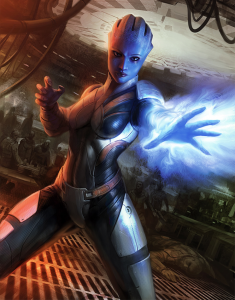
I’m glad you asked. Unless you didn’t, in which case I wish you had so that I could answer properly. I’ll wait. It’ll give me time to finish being impressed with myself for using the word “milieu” successfully.

Hm? Oh, good, you’ve asked now. Okay, then. As my DM is fond of telling me, the most important thing to think about is terrain.

Specifically, cover.

True story: the proper use of cover was the first thing I noticed when playing Mass Effect that separated it instantly in my mind from any other game with guns I’d encountered, and it’s important to notice because if your game table is anything like mine then you’re not used to using cover either. I don’t think I’ve ever been playing D&D, even as an archer type, and thought, “hey, I should get behind cover so those arrows don’t kill me.” You need to use cover in Mass Effect, or you’ll wind up dead. Fast. Partly because nearly everyone is using automatic weapons.

Now, thinking about cover is relatively easy once you’ve learned the one rule of Mutants & Masterminds 3e: namely, that pretty much every modifier in the game system that isn’t “power rank” or similar is boiled down to +/- 2/5. If something is somewhat beneficial, take a +2. If it’s very beneficial, take a +5.

Now, D&D has something similar (though in 4e it’s a 4, rather than 5) called the “DM’s best friend.” The difference is that M&M actually uses it for everything from concealment to invisibility to cover to fringe benefits provided by Advantages or Features to… well, you get the point. The point is that it’s everywhere. Very transparent.

The reason this is important is because it makes it a lot easier to focus on the rulings rather than on the rules, and I think that’s something that a lot of us can get behind in the interest of speed.

Encounters in the video game are largely about cover. Using it creatively; holding it against enemies who attempt to flank. Pulling a flanking maneuver and taking the enemy down from behind while your squadmates keep their attention. Using powers or biotics to pull enemies out from behind cover and into the line of fire. And so on.

Automatic weapon rules are built right into Mutants & Masterminds 3e, though since 2e the name was changed from Autofire to Multiattack to make it a bit more broadly applicable. They allow for covering fire, sweeping the weapon to attack multiple targets (for a minor penalty to accuracy) and grant bonus damage ranks for high attack rolls. Lovely.

This means it’s important that you, as the GM, are ready to think tactically. Have the bad guys provide covering fire for each other as they move to keep the player’s on their toes. Use readied actions. Use the Aim action. Deploy snipers. Make sure that there’s cover available, and that the bad guys use it. And (assuming that you haven’t told them ahead of time) pray that your players catch on to how the fights are going to work. Use those automatic weapons to their fullest potential to make it very very clear that there are dangers to the old run-and-gun.

Gun-fu will get you killed. Almost invariably.

Another important thing to remember about Mutants & Masterminds, and one of the reasons I’ve chosen it as the vehicle for this setting, is the Toughness save. Health is not a resource in this game; there are no “hit points”. Every hit brings with it the risk of incapacitation – though it is mitigated somewhat if the players have Hero points available. Every failed toughness save accumulates a penalty to the next save (your shields are weakened, your armor is damaged, you’re getting tired…), making it increasingly likely that a worse failure will leave you out of the fight entirely. This is good (in the dramatic sense) because it makes it entirely possible for even a powerful PC to drop after one shot with a particularly bad die-roll.

Even at the high power levels, combat is dangerous.

On the flip side of this, I should note that the default rules don’t let you die easily unless  someone is really trying to kill you. This is useful from a story perspective (protagonists shouldn’t die all that often, because they’re more important to the story) and it’s also useful because it’s kind of how things work in Mass Effect anyway. So, there’s that.

Mass Effect Tabletop: An Introduction

Some of you may remember the Steam Summer Camp Sale. Some of you, like me, may have spent far more money than you really expected to during that sale buying games that you were merely curious about.

Some of you, like me, probably bought something in the Mass Effect series. In my case, it was Mass Effect 2. I was not disappointed. Far from it – the game exceeded my expectations in just about every way, and offered me exactly the kind of immersion in a sci-fi universe I was craving. I played through the game about 5 times, and I’ve started looking at DLC. And naturally, perhaps inevitably, my thoughts turned to the tabletop.

A brief primer

For those of you who are unfamiliar, Mass Effect is an epic space opera in the best sense of the phrase. It manages to nod in the direction of just about everything good in the genre while still being its own unique entity, a wondrous blend that puts it somewhere in the realm of “CallofSereniBattleStarTrekWarsGalactiCthulhu.” In a good way. Okay, so that was obviously hyperbole, but the point stands. It’s kind of amazing. And it has everything you need for a good classic RPG. Division of roles, lots of weapon options, tons of competing organizations to populate the world with, a “magic” system (of sorts, but a pseudo-scientific sounding one that keeps it from falling into a midi-chlorian filled trap), space armor, multiple races…

The point is that there’s a lot of depth there that lends itself well to a tabletop campaign. And as a side note, yes, I would recommend it. Highly.

What this conversion is

I’m not going to talk much about gameplay except where it’s relevant to the issue of converting it. I’m more interested in converting concepts. As such, this could easily be done using something like FATE, but I’m more interested in using Mutants and Masterminds 3E from Green Ronin. It’s light enough on game-play with enough crunchy tactics to keep my d20 crowd happy… and they don’t have to put down their d20’s.

Plus, John Lewis already WROTE an excellent article on FATE conversions. No sense in getting redundant, eh?

Let’s start with the…

Key concepts

I’ve approached this with the 2 year period between Mass Effect and Mass Effect 2 in mind. There’s a lot that can happen in 2 years, after all. But there’s a lot of possible time periods that could be used without skirting so close to the cannon of the games.

First of all, I’m not especially interested in retreading Shepard’s story at the table. The games already do that well enough, and everyone’s experience with them will be a little bit different. If you’re like me, you want to tell other stories.

So for the purposes of our M&M conversion, there’s basically just one thing to remember; the first rule of Mass Effect is that Shepard is basically Space Batman. In the sense that Shepard is a near legendary human spoken of in hushed tones who has accomplished incredible and basically heroic things, but the details are a little… vague. Partly because the Citadel Council (the galaxy’s ruling body) has hushed a lot of it up.

You’re probably never going to run into Shepard in person, which is just as well, because unless you’ve created your own cannon version of Shepard, there isn’t one. See how I’m avoiding pronouns? Because I’ve already done this dance on another site.

The second truth of Mass Effect: The Reapers are coming.

The Reapers are a race of super-intelligent massive sentient machines that occupy “dark space,” (the space between galaxies) who have apparently swept through the galaxy and purged it of life roughly every 50000 years. And the galaxy is due. The first game (I have gathered) concerns the actions of Saren (a rogue Spectre; more on them later) and a Reaper called Sovereign. And, naturally, Shepard’s valiant fight to stop them.

Oh, and if you spend too much time near Reaper technology, you get strange dreams and visions and eventually become “indoctrinated,” gradually starting to believe that the Reapers should destroy all life, and that you should help them. In other words, the Reapers are basically a high tech version of Cthulhu.

The third truth of Mass Effect: The galaxy is in denial.

The Citadel council, rather than mobilize the galaxy to defend itself against the coming threat, has chosen to deny the involvement of Sovereign and believe that Saren alone was responsible for the events that nearly destroyed the Citadel. Few know the truth. Shepard is one of them. Naturally, Shepard is missing.

In the meantime, there are plenty of other threats to worry about; crime in the Terminus systems, crime on the Citadel, large scale gang wars on Earth, the Geth, the Krogans, the Batarians, Cerberus…

I started this project thinking that I’d run a one-shot session to introduce some people to the game system, and decided to flesh out my thinking and turn it loose in the wild. However, I ended up with several great articles, making this a series.

So, that’s what’s on the table. Stay tuned, and don’t touch that dial!
… well, actually, you probably should, because if you have a dial, then your TV is probably ancient, and if this is what’s on TV right now… you have bigger problems.