The Store is Open – Again!

Ok, fun HTML.

For those of you who made orders through email because the Store wasn’t working properly, I apologize.  I also apologize to those who skipped making an order altogether.  In a way, the Store page getting messed up was kind of a blessing – because it forced me to redo it (and I like it better this way).  Now witness the firepower of this fully ARMED and OPERATIONAL battle shack!

Plear Floriant, the Troubled Archer – Steal this Background

The night-sky was overcast, with lightning striking the surrounding hills. The elves of the White Owls had closed their village gate and pulled up their rope-ladders. There was no rain that night, but the thunder was still enough to keep most inside.

After the thundering storm died down, Mother Pearl stepped out of her tree hut to breathe in some fresh air and listen to the wisdom of the wind. Instead, she was greeted by a newborn, wrapped snugly at her door. Mother Pearl realized this baby did not cry once while outside in the thunderstorm. She also realized that this baby did not belong to anyone in the village. Someone must have snuck into the village to abandon him.

Of course, the baby was adopted by the village, and given the name of Thunder. As the years counted on, Thunder was passed around as a foster child, never once settling with one family for more than a season. As a child, this began to wear on him, and he began causing trouble (as only a child can). With no real parents or family, he started to feel contempt for those in the village, since he felt that he would always be alone.

By the time that he could build his own tree hut, he did. With that, he began referring to himself as Plear, wishing to leave the name of Thunder behind. Most in the village assumed he was just trying to find an identity for himself. In reality, he wished to forget his upbringing, only looking toward the future.

The older he got, the more he avoided the other villagers. He took several trips away from the White Owls, and soon his trips took hem farther and farther. He was searching for his parents, looking for an identity, or looking for direction and purpose, but mostly just to get away from the village. He felt claustrophobic there. With few friends to come back to, Plear simply came back less and less.

If he ever came close to having a friend in the village, it was Mother Pearl. She didn’t try to befriend him – or push him away. She left him alone when he wanted, answered his questions with honesty, and rarely asked questions herself. He appreciated that.

During one of his treks he was ambushed by a small pack of orcs – orcs of the Iron Fang. Immediately, he noticed the leader carrying an intricate bow. Being something of an archer himself, Plear could clearly and immediately see that it was special. He had to have it. This bow did not belong to the claws of a filthy orc. Without thinking, he offered to sneak the pack of orcs into his village in exchange for the bow. Skog (the leader with the bow) agreed, and they sent off so as to increase their numbers.

Plear came through as he promised, unlocking the gates during nightfall, and then hiding in the bush. The village was overrun, and most of the villagers were rounded up for slavery. Plear had no trouble justifying his actions. Afterall, he didn’t owe the White Owls anything.

After the raid, Plear and Skog met for the exchange. Interestingly enough, Skog went to the meeting alone, and easily handed off the bow to Plear. The weapon was actually a Thunderburst bow, so when Skog (in his broken common) mentioned the word “thunder,” Plear thought the orc was referring to the bow. It wasn’t until a couple of hours later that that he realized the orc actually said, “Here Thunder, take your bow.” Plear never told the dirty orc that his childhood name was Thunder.

Disturbed by this, Plear went back to the razed village, gathered up some supplies, and set off to find Skog. Even though he now held the weapon that felt like home in his hands, he couldn’t help feeling that he was somehow part of something bigger, for good or ill. Whether he finds Skog, whether he atones for his crime against the village, whether he finds out what his real destiny is, depends on you…

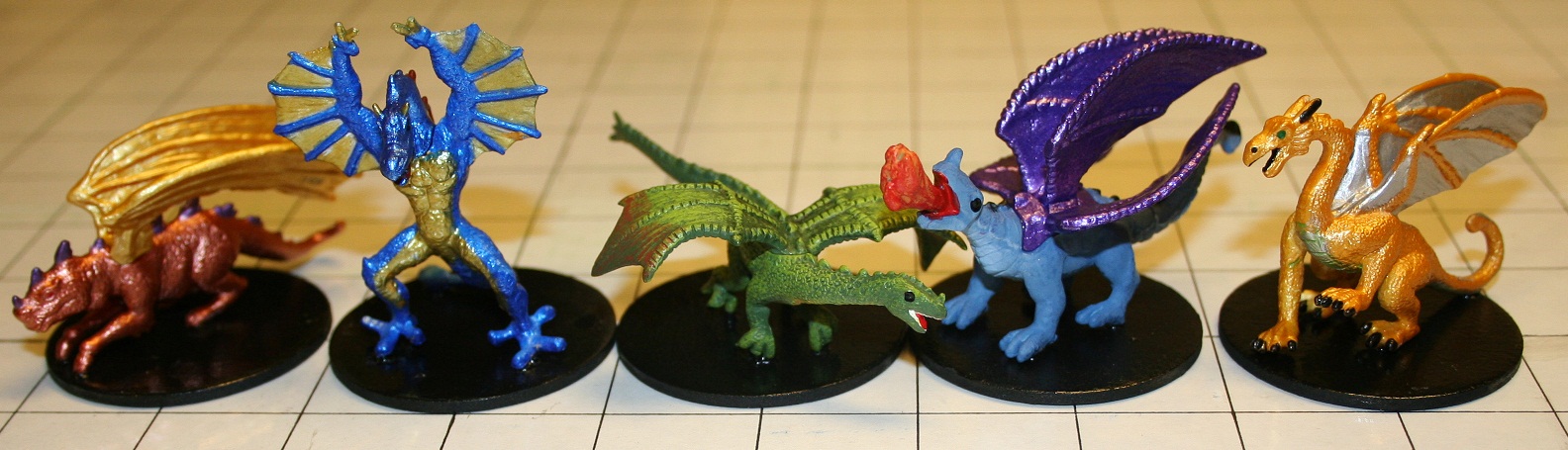
Win these Drakes! – Contest #2

Click to Enlarge

*UPDATE* This contest is closed.

I’ve said it before – I love contests, especially when they’re free.  Win these large-sized drakes, either as monsters to fight or beasts to ride.  All you have to do is leave a comment of your best idea for a character concept, adventure, encounter, NPC, enemy or monster.  It’s just like the last contest, except this time you only need a couple of sentences in a comment on this page.

  • Your comment pitch must be 2, 3, or 4 sentences.
  • Enter as often as you like.
  • All entries must be original, and may eventually be expanded for latest posts.
  • The contest will last for two weeks or 20 comments (whichever takes longer).
  • It will be judged by Stuffer Shack staff members: Charisma, Max, Colin, the Red Knight, as well as the winner of the last contest, Thomas Charlton (sorry bud, you can’t enter this one).

That’s it. It’s that simple.

Good luck everyone!

Classic Fantasy – Character Concepts and 4e Magic items

Tired of characters lugging around magic items as if they were mundane pieces of gear?  This article will fix that, assuming you adopt the Classic Fantasy setting and apply it to your campaign.  In this article, you’ll see how different types of characters gain the benefits of a normally 4e magic-equipped character, without actually carrying around all those magic items.  Now, magic items are truly powerful tools that help define your character, as opposed to numerous pieces of mundane gear.

Your character concept defines your character in a more broad way than simply by race and class.  It is especially important for this project because it determines how the character gains the benefits that normal 4e magic items instill.

In D&D 4e, PCs gain magic items almost every level, and are constantly swapping them for new and better ones.  With Classic Fantasy, those magic items are few and far between (or non-existent), but the PCs still need the benefits that 4e magic items provide in order to maintain the power level matching the encounters, as well as the “larger-than-life” feel.

Here is a list of possible character concepts, and the explanations as to why your character gains the benefits of magic items, even if he doesn’t have any items.  Take whatever fits your version of Classic Fantasy, use it, modify it, or come up with your own.  Further down the page, you’ll find out how your character gains magic item benefits as he gains levels.

  • The Everyman – The everyman is normal in every way, except for the single magic item that is bestowed upon him.  Think Excalibur, or the ring from Lord of the Rings.  This one item is responsible for all of the the PC’s magical item benefits.  It could be a magical necklace, but instill the benefits of a magical weapon, Boots of Speed, Belt of Giant Strength, and so on.  This is the family heirloom, the shield handed down by the gods, or the cursed crown.  Yes, it’s a magical item, and it can be stolen, but most people would be afraid to touch something of so much power.  Should your character somehow be separated from it for a short time, go with it.  It should make for a better story.  Seeing as this is a major part of your character, your DM will not screw your character over.  For the greatest impact with this character, make a backstory for this item.  After all, it is a rare and powerful, literally priceless, real magic item.
  • The Destined – The individual has been destined since before birth to become something great. Think Conan, or Aragorn. His fate has been laid out in legends, prophesies, and scriptures, and the common man may or may not know of him.  The deeds of this character will be told for centuries to come, perhaps even thousands of years.  This individual does not benefit from magic items, since fate has already made him special.  For the greatest impact with this character concept, choose magic item benefits that are not flashy or too mystical, ones that could simply be explained as natural abilities.  That way it’s fate, destiny, and his inner character making him great, not ‘magical’ powers.
  • The Offspring – Gods, deities, demons, and devils can’t seem to leave mortals alone.  This is the character with one normal parent, while the other is somehow supernatural.  For reasons left to the player and/or DM, this PC is born out of lust, greed, boredom, or design.  His reasons for being could be numerous, or non-existent.  Does his supernatural parent have plans for him, is he considered an abomination, or do they even know he exists?  Most likely, he does not have any magic items, rather, his magic item benefits are natural powers that he is born with, or granted.
  • The Lucky – This character is simply lucky.  He has no innate magical talent, just blind luck.  Make sure that all of the magic item benefits are as non-flashy as possible (remember, aside from his extreme luck, he is completely normal).
  • The Mystic – The mystic is easy to integrate into this game, as he is already flowing with magic.  The wizard, cleric, druid, psion, warlock (and so on) all have mystical powers to begin with, so magic item benefits are simply additions to his natural powers.  He might have a “magical wand, staff, or focus,” but really, it doesn’t matter.
  • The Chosen – Some powerful being, church, cult, item, or place has chosen this character to champion their cause, however broad or specific it is.  Perhaps he has been brought back from the dead, resurrected with new unnatural powers?  Perhaps he has been cursed?  Who knows?  The character’s magic item benefits can come from within, or perhaps some token item, like an amulet, or perhaps a tatoo.
  • The Champion – This character is so much larger than life, he naturally has talents that carry him to excellence.  He doesn’t have any magical items, he’s just that damn good.  Any powers/abilities granted by his magic item benefits are simply attributed to skill.  Yes, he has a far-reaching reputation, and may even be considered a celebrity, but by no means is he destined for anything.  Again, try to make his magic item benefits as non-magical as possible, to better account for his ‘natural skills.’

Below is the method for which magic item benefits are attained in this Classic Fantasy setting, regardless of the character concept.

  • At 2nd level, every PC gains one benefit as if he had just gained a magic item with a level of between 1 and 5.  The magic item must be something that the character is normally allowed to benefit from in a normal 4e game.  For all game mechanical purposes, and as far as the character builder is concerned, the PC is equipped with that item.  However, depending on your character concept, the actual item might be something entirely different, or perhaps there’s no item at all (see the character concepts above).
  • At 3rd level, every PC gains another magic item benefit, again as if they are actually (legally) equipping that item.  The item may have a level of between 1 and 6.  In other words, at this point the PC is allowed to have two magic item benefits “equipped,” one of them may be 3 levels higher than the PC.  If the player wishes, his first magic item may be switched to something entirely different, or he may keep it.
  • At 4th level, the process continues.  Now the PC has three magic item benefits.  One of them may be 7th level, another 6th level, and the third may be 5th level.  Or, his magic item benefit levels may be less, of course.
  • This process continues every new level until all of the character’s magic item slots are legally filled (head, neck, waist, hand, etc.).
  • Now, at any point in time, he may only ever have three different magic item benefits of a level higher than his character level (level +1, level +2, and level +3).  All other items must be equal to his level, or less.
  • To sum it up: at the beginning of every new level (starting at 2nd level), you get to add one new magic item (up to your full allotment of legally allowed magic items).  You can also change around all of the magic items as you like, as long as you are legally allowed to use them, and you follow the level rules: all of the “magic items” may be equal to your level, or less.  -Or, three of those items may be of higher level (level +1, level +2, and level +3).
  • As an example, let’s say that your 2nd level character is bestowed a magic ring, and that magic ring will soon start to unlock benefits for your character.  Let’s say you choose a magical item “slot” of 5th level that requires a light blade.  The benefit will only apply when you attack with a light blade.  Next level, should you choose a magical item slot of 6th level that normally requires a wand, you gain the benefits of the wand only when your hand is free (when it would normally be wielding the wand – and of course, you could actually wield a wand for visual effect).  Also, you must be able to use a wand.  At 4th level, should you choose a magical item slot of 7th level that normally requires heavy armor, you only gain the benefits while wearing heavy armor.  Get it?  You can’t use these rules to cheat the system; equip your character legally and then reflavor the magical items how you like.

Remember, while your character sheet may have several different magic items listed and equipped, they are all not really separate items.  All of their bonuses, powers, benefits, etc. are all lumped into your character concept.  These benefits come from either a single powerful magic item, a curse, a blessing, his own personal magic ability, or simply his place with fate and destiny – making him larger-than-life.  Really, it’s up to you to decide.  This is in no way a method to limit the character; it is simply a way to explain how your character is larger-than-life, without having all PCs lug around 10 different magic items as if they were mundane gear.

On paper (and according to the character builder),  your character carries magic items like any other 4e game – it’s just that we are reflavoring all those magic items into a single item or power.  We are changing the flavor of the game, not the mechanics.

Minotaur Contest Winners!

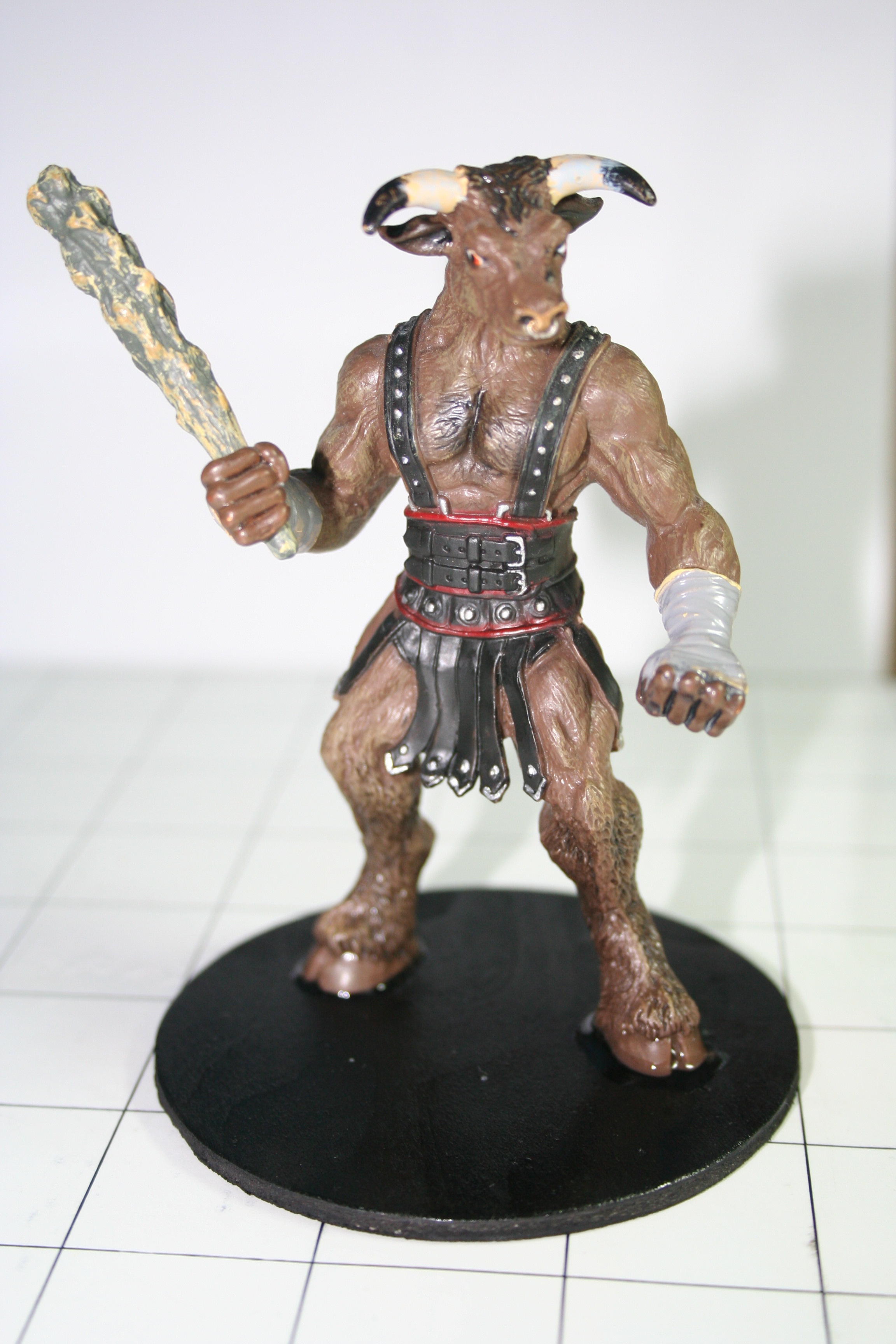
It’s time to announce the winners for the Minotaur contest!

Before we begin, let me throw a couple of things out there.  First, none of the Steal This… entries from the authors of Stuffer Shack were considered; only readers.  Secondly, none of the pictures accompanying the entries had any influence; only content was considered.   Now, with that being said, here they are:

3rd place wins the Adventurer’s Bundle:

  • “Fire in the Black,” the story of Teig Makusy – Great setup for someone to play the brooding loner with one glimmering reason for hope.  Not many people can pull off this type of character, so this should help.  I especially like the amount of detail in describing how he’s gotten to his current state.

2nd place also wins the Adventurer’s Bundle:

  • Rescuing Racel – It’s a great setup for an adventure with a pretty original take on the damsel in distress, but a strong damsel.  I think it’s a great player’s aid and adventure hook, immediately calling the party to action.  It could very easily be what it seems – the wife imprisoned by her lycan husband – or it could be something entirely different – is the whole village in on it?  I would love to run this adventure.

1st place wins the huge-sized minotaur, and also the Adventurer’s Bundle:

  • Anchor, the Aquatic Warforged – Great NPC idea, and well-characterized.  It speaks volumes to me because of its originality, opening doors for PCs not usually opened in a fantasy setting (venturing underwater).  On top of that, there are a few different ways of integrating this NPC into a campaign.  Really, a great NPC.

Thank you everyone for your contributions.  I’m happy with the turnout, and look forward to the next contest.  Winners have been notified via email.

Classic Fantasy, Make Your Fantasy Setting Fantastic

I once introduced a magic item to the group, gave it a name, gave it a backstory, impressed how the item was somehow important, and then gave it to a player character.  Before the end of the session, the player was trying to get rid of it so that he could get two other magical items.

So, magic in 4E is plentiful.  I can dig it.  I do dig it.  It makes for cool customization, bonuses, and benefits.  4e’s magic items allotment has added something to the game, but it has also taken something away.  Now, magic items are practically everyday tools.  In your typical 4e game, every Tom, Dick, and Harry has a magical item.  No, he has several.

“Anybody need a magic sword? No?  Ok, I throw it in the Bag of Holding with the magical bow and wizard’s staff.”

Ok.  Moving on.

In the last three campaigns that I was involved in, we had:

  • one gnome
  • one shifter
  • one half-orc
  • one tiefling
  • two dwarves
  • two elves
  • two eladrin
  • four dragonborn
  • annnnnnd one human

Where are my humans?  Sure, most of the towns we enter are filled with humans.  Most of the NPCs we talk to are human.  They’re the most abundant race in the game world, yet practically non-existent in the gaming group.

“Oh look, we’ve come across a group of travelers – two shifters, a deva, a dwarf, and another half-orc.”

Ok.  Moving on, still…

I can’t tell you how many times I’ve run into a tribe of goblins, a band of hobgoblins, or a pack of orcs.  Not only are they all over the place, but they have their own societies, cultures, traditions, and laws.  And, they all have children!  Oooh, scary. They just don’t really seem like monsters.  They may as well be races for us to play.  Wait, they are.

“Well, let’s go talk to that minotaur and see if he has what we need.”

What it boils down to…

I’m sorry, but all of these magic items, all of these non-human races, and all of these non-monster monsters just don’t seem like my preferred fantasy setting.  When I think of the fantasy genre, I think of:

  • Excalibur
  • Willow
  • The Hobbit
  • Lord of the Rings
  • Conan
  • Beastmaster
  • Hercules
  • Sinbad
  • Clash of the Titans
  • Dragonheart
  • The Dragon Slayer
  • Red Sonja
  • The Sword and the Sorceress
  • and on and on and on…

All of the above movies belong to what I call “Classic Fantasy.”  Are there some magic items?  Yeah, a few, and they’re powerful.  Are there some non-human races? Yeah, a few, and they’re mysterious.  Are there some orcs? Yeah, a few, and they’re nasty.

I want my fantasy to be powerful, mysterious, and nasty.  I want my character to be a nobody in a vast world where home is relatively safe, and everything outside of that is unknown, wild, and dangerous.  I want my fantasy to be fantastic.

What now?

Classic Fantasy is going to be the first project here at Stuffer Shack.  I’ll be adding ways to turn your fantasy game into a classic fantasy game.

  • Many races are going to be converted into different types of humans, elves, dwarves, and halflings (with backstories and histories).
  • I’ll explain how to converge magic items into one powerful item, or how to make characters of equal strength without magic items.
  • And I’ll rewrite some of today’s watered down enemies into old school monsters – all mean and nasty-like.

I hope you find it all useful!

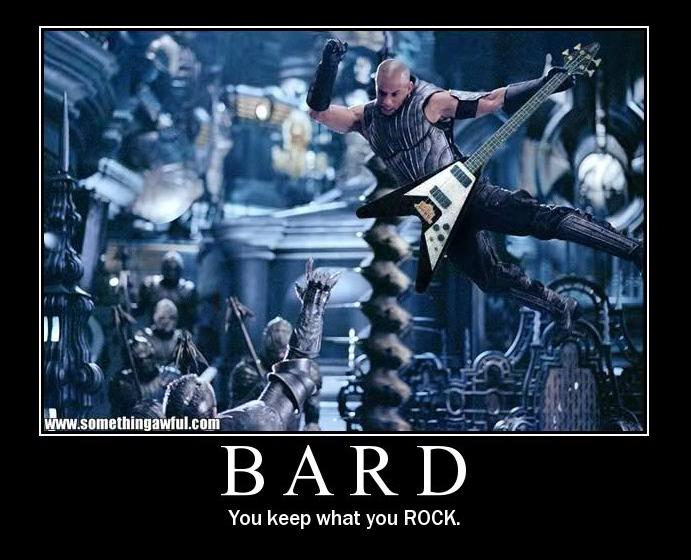
Adding Flavor to the Bard

I’ve always liked the idea of the bard, not because of what he can do in terms of game mechanics, but because of what he can do in the game.  Simply expanding the perception of the bard just a little bit can greatly expand the gamer’s experience.  Let’s take a look at the two most traditional roles a bard can assume in any fantasy setting:

The Entertainer

The most often used type of bard would be the entertainer.  This is the guy (or gal) who usually works for himself.  He’s in every major town, and can be seen on any major street.  The lucky get a few gigs in taverns, while the talented can book major events.  As an entertainer, this bard is always looking to make people laugh, swoon, or close their eyes to enjoy his music.  This guy doesn’t have to be versed in literature, or have any knowledge of history (though all that helps).  What’s important is that he knows how to give the people what they want.  And hey, in an age without TVs or ATVs, that can sometimes be hard to come by.

This guy is very easy to insert into a fantasy game.  He simply tags along an adventuring party to gain material for his songs, stories, and poems, so that he may make some coin off them at the next town.   As a plus, he might also get to include himself in the adventures.

Since a bard among a group of adventurers is already a cut above the rest, it can be assumed that he has, or will soon gain, a reputation.  After a bard gains a few levels, it can even be said that he has become a celebrity.  Just imagine the bustle that happens when a bard of renown walks into town.  He will soon be asked to perform at events and gatherings – and in fact it is assumed that he will.  Invitations to dinners and parties are readily offered.  He’ll even be offered money just to make an appearence at events.

The Voice

As the voice, a bard is responsible for praising his patron, and insulting his patron’s enemies.  This position almost always requires formal training in literature, history, and poetry, as well as an excellent knowledge of current events.  Such bards are employed by rich merchants, noblemen, or even royalty, and remain in service for years.  At any gathering or event, they either speak for, or alongside their masters, to make for a better presentation.   Not really suited for singing, dancing, or playing music, their specialty lies in what they say, as opposed to how they say it.  For sure, being able to gain attention through commanding presence and charisma is a must, it’s just that they are not necessarily entertainers.

It’s very easy to integrate this type of character in a fantasy game.  The simplest way is for the bard to be employed by the adventuring party.  At the very least, he is simply part of the group and speaks up for them every chance he gets.  When an introduction is called for, he does it grandly.  The deeds and exploits of the group (what they fought, who they rescued), is spoken at every tavern and recited at most other gatherings.  His position as a bard becomes quite apparent to others right away, and that often improves how the adventuring party is perceived.  Anytime the adventuring group is addressed, the bard is almost always included in the conversation, if not talked to directly.

If you’ve ever wanted to play a bard, but were unsure about how to take it on, use one of the two examples above.   Hopefully, by choosing either the entertainer or the voice, you’ll have an easier time.  I think you’ll find that role playing a bard, while challenging at times, can be very rewarding.

P.S. – Why don’t you try to add the bard to your sci-fi game, like Star Wars or Traveller?  I’m sure it could work just as well, maybe even more so.

Free Contest! Time to Sweeten the Deal…

This Contest has ended.  See the results!

Last month I put up a contest allowing for readers to win a free huge-sized minotaur.  All you have to do is submit either a character background, adventure or encounter idea, NPC, monster, or enemy (see the Steal This… page for examples).

Well, so far I’ve gotten a lot of compliments on the site, but few contest entries.  I know that Stuffer Shack is relatively brand new, and that I shouldn’t expect a lot, but it seems that the entries have stopped coming in.

So, I figure it’s time to sweeten the deal.  The rules of the contest remain the same, but the rewards are being increased.

  • 1st place: Huge-sized minotaur, and Adventurer’s Bundle
  • 2nd place: Adventurer’s Bundle
  • 3rd place: Also the Adventurer’s Bundle
  • Everyone that enters: For every entry that gets posted, you’ll earn $1.00 credit toward any purchase from the Store.  Submit several entries and you could get stuff from the Store for free (all credit earned, up to the purchase price, will be refunded after your purchase).

Call me crazy, cause I just might be.  I simply want to get the shelves stocked up with “steal this” material, and I can’t do it alone.

So join in. All it takes is for you to submit your current character, your favorite character, maybe an encounter you just went through, or an adventure you just ran.  NPCs and enemies are a dime a dozen, too.  Just make sure your entries are about 500 words each (a few paragraphs). That’s it – it’s easy!

Quetsen Sisten, the Loyal Slave – Steal this Background

Quetsen Sisten, like most hunter Ferrenai, clings to the traditions of old.  He makes his own clothing, his own weapons, and hunts for his his own meals.  Even though he is a slave that has risen to the status of Head Trustee, he still prefers to be waited on by no one.  Though he is a grateful, humble slave, he is still a hunter at heart.

Several times almost run over by competing farmers, the Stern Marsh has endured many setbacks.  With so few slaves remaining, and only a third of the original land still protected, the Stern Marsh has had to go from being a passive farming business, to an aggressive opportunist.

During the early days, when the Marsh Wars first began, the Stern Marsh was prosperous, but not well protected.  For competing farms, the Stern was ripe for the picking.  With its slave numbers dwindling (from either being killed or captured), and the lands being gobbled up by neighboring farms, it appeared that the Stern would vanish.  Yet, out of the chaos rose a hard-working slave-boy, Quetsen Sisten.

Quetsen Sisten was born unto the Stern Marsh, and that is all he has ever known.  Seeing so many family and friends killed or captured has erupted in him a savage beast.  As a boy, he made his first weapon and began to fight.  Steadily, he led the slaves through battle after battle in defense of his master’s marsh.  His master took notice, and quickly rose Quetsen to the status of trustee, then Head Trustee.  Now, with control over the other trustees and their slaves, the Stern Marsh has fortified its land and repelled all forthcoming attacks.  Neighboring marshes no longer attack the Stern, and his master could not be prouder.

As a slave, Quetsen can not attain a higher position than that of Head Trustee.  Everyone in his marsh knows him on sight, and respects his position.  Even if he could be granted ownership over his own body, he would prefer not to, as the perks and status in the Stern are too great.

When his master’s son left abruptly on a trade ship, Quetsen was tasked to find him, protect him, and bring him back home if possible.  Quetsen was hesitant with this request at first, as he was not comfortable leaving the Stern Marsh, his home.  However, wanting to serve his master faithfully, he agreed.  After saying goodbye, he left the Stern Marsh on the next scheduled  trade ship.

He’s pretty sure that he will not like what life is like outside of the marshlands, but plans on making the best of it.  He is loyal to his master, and is glad to serve him.  No other slave or trustee of the Stern has been granted permission to leave the Stern for such an extended length of time, so he appreciates the honor, and his quest.

This character background was created for a Star Wars campaign, though it should work in fantasy as well.  As a PC, Quetsen could be forever looking for his master’s son, taking on whatever adventure moved him closer to that end.  Or, another player could be the master’s son, who refuses to go back home (leaving Quetsen to be his bodyguard).  As a Star Wars character, Quetsen prefers to use only weapons that marsh slaves are allowed to carry (melee weapons) – to use anything else would defy his slave status.