A little less Drizz’t and a lot more Conan

So, we’ve discussed the reskinning of the many races of 4th Edition D&D. We’ve talked about making monsters unique and monstrous, and we’ve talked about ways to alter the way Magic Items are used in the game. What’s left? The fun part. Actually writing a setting – thinking about what makes up “Classic Fantasy” as a genre, and extrapolating outward from there.

Let’s start with a run-through of the assumptions on which our new fantasy world will be based, using a process similar to that which D&D’s existing settings are based on. We’ll examine the assumptions used to construct “Points of Light,” and see what needs to be changed.

A Dark World

This assumption can be toyed with. D&D’s “Points of Light” setting assumes that there are no great empires left in the world; Tolkien’s “Middle Earth,” has at least one, the land of Mordor. Minor realms (like Gondor and Rohan) certainly qualify for this, and the idea that no settlement is exactly “safe,” is certainly a valid assumption. The world of Classic Fantasy, then, is A Dark World. It is Fantastic – magic is very real, monsters are very real (if sometimes rarer than other settings), and most decent fantasy settings have plenty of Ancient Mysteries lurking in the background, just waiting to be explored.

Monsters are Rare

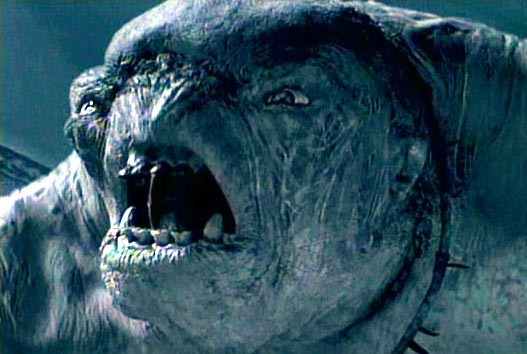
This is the first point on which we begin our departure from the Points of Light setting. Monsters are scarce, but terrifying. They are alien, powerful, and deadly. The briefest encounter with a monster like a Dragon (Mog), a Minotaur (Jason and the Argonauts) or even a Troll (Grendel of Beowulf fame) is enough to spawn legends. Proper nomenclature for monsters might not even exist; each monster may well have its own name, and the locals might be unaware that it’s part of an entire race (the, “Grendel’s Mother” phenomenon).

The exception are the monstrous races, like Dark Elves, Orcs, Ogres, Goblinoids, and so on – pick out a selection of them and populate a few barbaric tribes or wicked civilizations beneath the earth. There are enough of these to offer a decent selection of cannon fodder, but there will typically be only be one monstrous race in a given campaign. They might use larger monsters in place of siege engines or tanks (Tolkien’s Oelephants and Cave Trolls).

A really great Classic Fantasy style setting should probably be run as a Sandbox game – the players are free to explore, and free to run away from a fight. Not everything the players will meet in this type of game will be weak enough to beat the first time.

Adventurers are Exceptional

This one stands pretty well as is, but it can be easily varied. I’d say the default assumption – that Adventurers are a hardy stock, a cut above average, and with an unfortunate tendency to have bards writing songs about them – holds up well under pressure. On the other hand, some of the defaults of the game can be adjusted for a grittier feel.

The Civilized Races Band Together

This one also survives largely unchanged; the civilized races being Dwarves, Elves, Humans, and Hobb– I mean, Halflings. While there may be some distrust between them (Humans cannot be trusted! They’re greedy and weak!), they still know who to call to get things done; each other.

Magic is Not Every Day, But …

Here’s another one that may get played with. There are two possibilities here. …

  1. But it IS Natural: People generally don’t have a problem with magic. They aren’t superstitious about it, but it’s still rare enough that it doesn’t often impact the lives of the everyday person in any but the smallest ways. Tolkien’s Middle Earth is a fair example of this kind of world, as is – in theory – the Points of Light setting. …
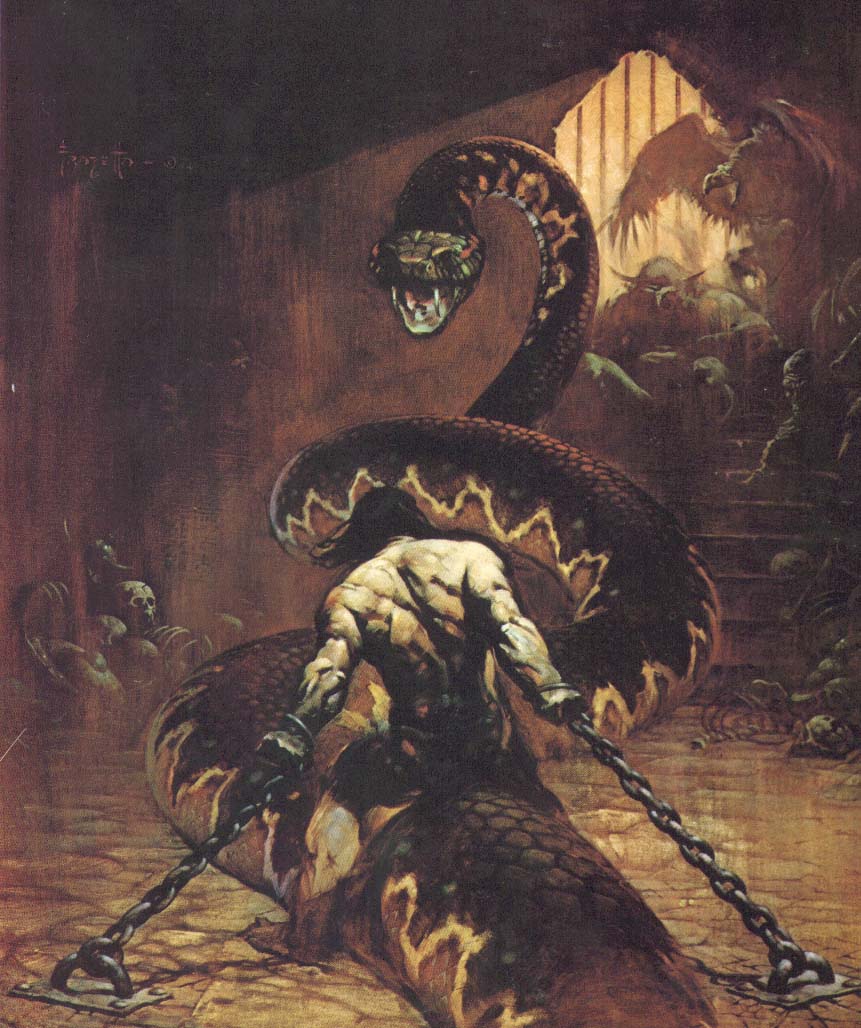
  2. But it ISN’T Natural, Either: If you look at most of the original Conan the Barbarian stories as written by Howard, you’ll find that magic is most often in the hands of the antagonist. Magic might corrupt the land around the caster the way it does in Dark Sun, or worse, it might corrupt the mind or body of the caster. This is “Swords and Sorcery,” and I would say that it’s important to consider as part of the Classic Fantasy genre – they’re closely related. Arcanist PCs in a world like this might have to hide their nature from townsfolk, and carefully control the way they cast their spells to avoid corrupting the land around them.

For ideas on how to treat magic, or attitudes toward casters, read Howard’s original Conan works, some of the newer Red Sonja comics, and the Dark Sun Campaign Setting – only without Psionics as a side-step of the issue. In fact, Dark Sun’s combination of boons and inherent bonuses provide a decent alternative to the magic item rules as well, so read them over if you’re looking for more options.

It should be noted that divine casters won’t have the same problems – miracles, while less common than in a more typical fantasy setting, don’t tend to carry the same kind of stigma as arcane magic. Party conflicts could provide excellent role-playing fodder! Of course, religious conflicts might be more pronounced, as well – people may not wish for healing from the cleric of a rival deity.

The rest of the standard assumptions (Gods vs. Primordials, and so on) vary wildly from setting to setting. Classic Fantasy worlds will often have their own very unique cosmology that isn’t necessarily related to the D&D standard at all – see Tolkien’s The Silmarillon. It might use real-world mythologies, or none at all. Or, it might use the standard set of ideas that accompanies D&D 4th Edition – it’s all up to you, the world builder.

High Fantasy vs. Heroic Fantasy

Fantasy, as a genre, is defined pretty loosely as, “stuff with magic in it,” so really, there’s a LOT of wiggle room for how you might tell stories within the boundaries of Classic Fantasy. I split Classic Fantasy into “High” and “Heroic,” but there’s plenty of room to quibble about these labels. The chief difference is what kind of stories might be told. Since High Fantasy is the most different from how D&D is normally played, I’ll talk about that first.

High Fantasy usually centers on a major struggle between Good and Evil (as absolutes, and as real-world forces); between Light and Darkness. Between Mordor, and … everyone else.

A High Fantasy Villain will probably be the closest thing to the embodiment of evil available, but usually NOT an actual devil. Sauron. The Lich King. Voldemort. Darth Vader (okay, not really, but picture a medieval fantasy version of Darth Vader and ignore everything that isn’t Star Wars: A New Hope, and you’re close to what I’m talking about). That kind of thing. They will typically have titles, like, “The Dark Lord,” or “Queen of Evil.” He will be seemingly unbeatable. Possibly even actually unbeatable.
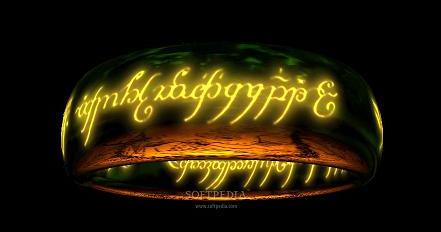
His undoing? The One Ring. The Sword of Truth. The Hammer of Morradin; The Deathly Hallows. A Horcrux to destroy. The MacGuffin, or possibly even a proper Artifact of Doom.

The vast majority of High Fantasy villains either:

  1. Can’t be defeated without a specific weapon,
  2. Can only be killed by the subject of the prophecy (or even obvious loopholes like, “No Man can Kill Me!”), or
  3. Can be disposed of via some seemingly easy method like, “destroy the phylactory!” or, “Take the Ring to the Fires of Mount Doom, where it was Forged; only there may it be destroyed.” That kind of thing. Something that sounds easy until you remember that Mount Doom is in the heart of Mordor, and surrounded by armies of orcs and goblinoids, and that you have to get through an entirely different army of orcs and goblinoids in order to get there – oh, and did I mention that it’s going to try to turn you into a villain on the way?

Yeah. It’s kind of like that.

High Fantasy is very “Big Picture,” with lots of “End of the World as We Know It,” plots.  That sort of focus lends itself well to Paragon tier play (under normal circumstances). But this is a Classic Fantasy game. You’ll likely be focussed on the main goal from the moment you set out on your first adventure – you’ll just have to be more careful about getting there (unless the player’s do something stupid and get themselves killed right away).

Also? You’ll want a map. Your best bet is to leave large portions of it blank and let the players fill in new details as you, “discover” them – or as you, the DM, make them up.

By contrast, Heroic Fantasy is more about the struggle of the heroes as individuals toward whatever their particular goals are – revenge, power, overthrowing an evil dictator of a more mundane stripe, that sort of thing. It’s less about absolute good against evil, and more about the personal problems of the people in the party and those they encounter. Politics may be a feature, and of course Evil Wizards are stock-and-trade. You may spend a lot of time in a tavern…

Let’s be real, here: Heroic Fantasy, as a genre, was codified by quite a few things: Conan was one. Dungeons and Dragons was another. Yes, that’s right. Heroic Fantasy is basically just saying, “Hey, let’s just play some D&D – and maybe in about 10 levels, when we find out what was driving all those seemingly unrelated plot elements, we can save the world.”

Of course, there are still good sources of inspiration if you want a more heroic-fantasy feel to your Classic Fantasy setting. See Conan, Xena: Warrior Princess (and to a lesser extent, Hercules: The Legendary Journeys) the previously mentioned Red Sonja, and many others – I highly recommend The Crimson Shadow and The Highwayman, both series by R.A. Salvatore, as excellent variations on the Heroic Fantasy ideal.

Getting Things Started.  What Happens BEFORE We Get to the Tavern?

Let’s take another look at Lord of the Rings for a moment. The Fellowship of the Ring is made up of:

  • Aragorn, Ranger, master swordsman, descendant of kings and bearer of destiny
  • Boramir, another great warrior
  • Legolas, Expert archer and twin-sword style master; all around elf
  • Gimli, Axe wielding gruff dwarf
  • Gandalf the Grey/White, master of magic
  • and Mary, Pippin, Frodo and Sam, four basically ordinary hobbits fresh out of the shire.

One of these things is not like the others… but in all seriousness, which are more likely to be starting characters in a Classic Fantasy game? That’s right: all of them. It just depends.

Luke Skywalker provides a similar example: naive farm-boy fresh off the farm strikes fierce blow against Evil Empire! Put him next to Han Solo, who’s been adventuring for years, Leia, Obi-Wan . . . yeah, I know, the Five Man Band is rarely balanced in film, but there’s something odd going on here.

This is about 2 parts hand waving (except in the case of the fairly incompetent hobbits) and 1 part investment into the world. Here’s a Classic Fantasy opening:

Start the heroes out in their home town, where everything is great, peaceful, idyllic. At like, level 0. Bad things happen, an artifact is discovered, or destiny revealed, and next thing you know the villains have shown up and the place is burning down around their ears.

This is also kind of how Star Wars opens, lending credence to my personal theory that the original Star Wars trilogy wasn’t actually a Science Fiction story, but rather a Fantasy story set against a Science Fiction backdrop. But that’s a discussion for another time.

On the flip side, we have the opening of every Conan the Barbarian story ever, which basically features an extremely competent adventurer who’s happened to have a run of bad luck. Again. I have yet to read a story that doesn’t start out with something like this: Conan was on top of the world, and then bad things happened and now we have something dramatic to tell a story about!

This illustrates another style of play: give your players everything (king of the castle, lords and ladies of the realm, start them at a higher level, the works). Then take it all away from them and make them fight to get it back.

We’ve all seen Classic Fantasy done. All you really need is inspiration and players who want to make it work. The very best advice I can give you is to immerse yourself in the literature that inspires you, become familiar with the tropes, and use it all to your advantage. If you love it, your players will probably love it, too.

Happy gaming!
Reflavoring the Races for Classic Fantasy – Halflings

In the final of 4 articles that deal with races in the Classic Fantasy setting, we look at taking certain D&D 4e races and reflavoring them into halflings. We’ve already talked about making monsters more memorable and monstrous, and up next we’ll give some ideas on the setting itself.

For each of the following racial or subracial choices, all of the actual mechanical stats, powers, and traits are unchanged. It’s the flavor and descriptions that have been altered to describe a halfling. Some of the traits or powers might need to be interpreted… creatively, but for the most part, mechanics are not affected. Again, take any of the following descriptions as a subrace, or rewrite one of your own design.

HALFLINGS

  • COMMON HALFLING (Halfling): The common halfling uses the entry for Halfling. He or she can be found in any settlement or region, living among any of the halfling subraces.
  • NIGHT HALFLING (Gnome): Quick-witted and stealthier than even the typical halfling, these halflings are most often found living near elves, from whom they “borrow” magical secrets. Some go on to become true arcanists, if they can find proper instruction in what they’ve learned; others use the small bits of trickery they’ve mastered to indulge more stealth focused careers.
  • LIGHTFOOT HALFLING (Goblin): The nimble Lightfoot Halflings hail from the southern planes. They have a natural knack for slipping out of reach in the most annoying manner possible, and they find battle to be almost a joy, laughing as they fight and delivering clever quips to their opponent. Replace Goblin with a single language of your choice.
  • TALLFELLOW HALFLING (Kenku): Like many halflings, those born and raised within the boundaries of cities are often predisposed to a life of trickery, but some quickly learn tricks best suited for teaming up, surrounding, and taking down larger foes. They are also skilled vocal mimics.
  • BITTERLEAF TRIBE (Kobold): Born and raised in the barbaric reaches of the world, these quick, tough, and savage halflings embrace the primal spirits with an enthusiasm unmatched by their more civilized kin. Replace draconic with one language of your choice.

Making Monsters Monstrous

Monster Truisms

In classic fantasy, the following holds true almost universally: monsters are rare, monsters are either evil or instinctual (that is, operating on instincts humans cannot understand), and monsters are dangerous. Monsters do not think like humans. They have their own, alien kind of logic, or worse, no logic at all beyond the question of where their next meal is coming from. In short, monsters follow the kill or be killed (and possibly eaten) paradigm. Put simply – they should be scarce, but terrifying.

The reason for this is simple: monsters suffer from a severe case of Conservation of Ninjitsu. ONE monster is a terrifying and deadly threat; an army of them are cannon fodder. Extend this slightly, remember that familiarity breeds contempt, and the more monsters your PCs see, the more likely they are to see them as mere cannon fodder, regardless of their “phenomenal cosmic power.”

Familiarity Breeds Contempt

Monsters in classic fantasy should be rarer than monsters in other settings, depending on whether you’re leaning more toward Tolkien or Howard in your interpretation of the world. If not especially rarer, there should be fewer types with greater variation among them. See Tolkien’s army of orcs. In fact, let’s go ahead and count the number of ‘monsters’ in the Lord of the Rings. A few trolls and a dragon in The Hobbit; Hordes of Orcs and Uruk-Hai, and the Cave Trolls; a Balrog (which is basically a plot device, since only Gandalf is suited to fight it), the giant spiders, the Nazgul (Wyverns?), the Ring-Wraiths, Treents (albeit not evil, so these fall under NPCs), the ghosts from the mountain – okay, there are a few, but the point here is that while a given campaign might cover some ground, it will certainly not cover the entire Monster Manual.

More importantly, still speaking of LoTR, how many of these monsters do the PCs–I mean, Frodo and Company–even fight? They wind up running away from most of them, suggesting a more Sandbox-like feel to the game – players should be aware that not every encounter is going to be perfectly balanced to their level, and that running away is not only an option, but at times a very, very good idea.

Cherry-pick the monsters you’ll need for the world you’re creating, and spend the time necessary to polish them out to more than a stat block. If you have a horde, use them for what they’re meant to be – cannon fodder. Everything else, keep rare so that the PCs don’t get used to it. Remember the following formula: Perceived Threat = 1/F, where F is the frequency a given monster has been encountered in the current campaign or story.

In a more Conan-like setting, you might well be fighting humans for most of the game, with genuine ‘monsters’ being a truly rare event. Conveniently, this isn’t any more complicated mechanically in 4th Edition – just use anything from the monster manual that has tactics similar to those you want from your human NPCs, and refluff them accordingly. For that matter, there are entries for the human in the monster manual, so one way or another you should be able to find what you need.

The Devil in the Details

If there are fewer types of monsters, then varying their tactics and other details becomes more important. This is especially true for the rarer monsters (solos and elites), but even the more common monstrous races (if any) should receive some customization as well.  Your horde of orcs, for instance, might include goblinoids to mix things up a little, perhaps even refluffed to blend into the larger horde in some way, and different groups might develop different tactics.

While there’s only so much you can do to describe the variation in individual members of a “horde,” solo monsters and elites should be individualized as much as is sensible. A good touch of melodrama never hurts, either.

Part of this should include monstrous description as well as detail – having read a White Wolf product or two I’d suggest that there are things to learn from the way they do things. Monsters should be scary, right? And I don’t mean the way White Wolf characters are; I mean the way that the monsters are scarier than the main characters. If you haven’t picked one up, read some of the flavor text sometime (I highly recommend the OWoD book Demon: The Fallen). Remember, the players can’t read your mind, and they can’t see anything that you don’t describe to them. You’re the DM – you have an infinite special effects budget, so use it.

If you feature something really big in a classic fantasy game, like say, a demon, or a proper dragon, or a devil, then that should be a huge event. Something that malevolent cannot / should not / must not be trivialized in a classic fantasy setting.

Show, don’t tell.

I don’t mean show them a picture; that’s too easy. I mean show them with your words, like you would in a book. You’re the storyteller, the dungeon master, the whatever-your-favorite-label-is,  showing is a major part of your job.

This becomes even more important when your players have read the monster manual. Never, ever, ever – unless it’s blatantly obvious or absolutely necessary – refer to the monster by its name. Describe it instead, in as much detail as you can. Describe how the dragon’s wings blot out the sun as it rears backward, claws outstretched, white-hot flame sending ripples of heat through the surrounding air. Describe the slime that coats the many-eyed creature with the massive toothy grin. Give them legends, hints, and clues before you put them anywhere near anything that epic – if monsters are rare, then the existence of one should be a big thing worth writing about. Make it so!

A little bit makes a big difference. Examine the difference between these two scenarios:

DM: “You are attacked by a troll. Roll initiative.” Players: “Oh, gee, another troll. Cut it apart and burn the pieces.”

DM: “You find yourself confronted by a massive humanoid with pockmarked green skin, a wide, toothy grin revealing sharp and yellowed fangs. Acidic drool leaks from its mouth, the ground smoking where it falls, and it lurches toward you, its massive dirt-covered claws outstretched. The stench of swamp gas and mold assails your senses, and a hideous shriek issues forth from deep within the creature.” Players: “What the freak?!”

Now, obviously, this isn’t something you want to do over and over again for the same monster every time it shows up… so you don’t. This creature, whatever it happens to be, never shows up again. It gives the party a challenge, dies off, and the party probably doesn’t see another one. Unless of course it’s a named creature, then you might have to deal with its mother (See Beowulf for details. Actually, read the description of Grendel and his mother in just about any version of Beowulf – and please don’t settle for the Hollywood version. Read well, it’s an excellent piece of source material).

But this rolls into the previous point, monster rarity – you only have to describe a monster like this once, because the players probably won’t encounter another one ever again. Save your energy for describing a new creature, which will be much less ridiculous than trying to repeat the same flavor text and expecting your players to have forgotten. Unless your PCs are something like Vampire Hunters, you don’t really want them fighting the same thing often enough to learn tactics for fighting it.

There is one critical exception, and that is when the monster is something like the Ring-Wraiths – a recurring villain, or group of them. But in that case, by the second time the party meets the monster, they will have learned its name (hopefully several legends will exist and they’ll have done their research) and be able to recognize it on sight, which in this case is a good thing. Of course, its abilities may well have changed somewhat… or not. If you remember the Ring-Wraiths, the first time they were encountered was singularly bad for the heroes, and only Aragorn’s quick thinking and remembering that they were scared of fire saved the hobbits from a TPK.

Mechanical changes are far, far less important than sensory details. Sensory words, descriptors, adjectives – those are what make the game here. Mixing up your tactics a little doesn’t hurt, either – use the monster role templates to your advantage, if you need mechanical customization to back it up.

In summary:

Threat = 1/N, where N = the number of monsters in a group. This is why armies of orcs are used as cannon fodder when a single orc champion can be strong.

Perceived Threat = 1/F, where F = the frequency that the given creature is encountered. The more often the PCs have seen a creature, the less frightening it will be to them.

Describe, show – don’t tell – and use vivid language to introduce a monster. Then make sure that it doesn’t show up often enough to become old hat, unless it’s part of an army. Tolkien gets away with a lot by setting his story in a war.

Reflavoring the Races for Classic Fantasy – Dwarves

In part 3 of the 4 articles that deal with races in the Classic Fantasy setting, we look at taking certain D&D 4e races and reflavoring them into dwarves.  After this, we’ll be converting halflings.  Still to come are articles dealing with monsters and the setting.

For each of the following racial or subracial choices, all of the actual mechanical stats, powers, and traits are unchanged. It’s the flavor and descriptions that have been altered to describe a dwarf. Some of the traits or powers might need to be interpreted… creatively, but for the most part, mechanics are not affected. Again, take any of the following descriptions as a subrace, or rewrite one of your own design.

DWARF

  • COMMON DWARF (Dwarf) – The common dwarf uses the entry for Dwarf. He or she can be found in any dwarven settlement or region, living among any of the dwarven subraces.
  • BLOODRAGE CLAN (Longtooth Shifter) – These dwarves are part of a long line of warriors bred for the rage and glory of war, and it is rumored that they are descended from the dwarven god of war and wrath. They are found on the front lines of any battle, axes in hand.
  • BATTLEHAMMER CLAN (Bugbear) – This family of dwarves is surprisingly skilled at gaining an edge with their oversized weapons. They are known for forging massive war-hammers, and for wielding them in battle. Replace Goblin with Giant on the list of languages known.
  • DARK DWARVES (Duergar) – a faction of dwarves who forsook the honor of their kin to follow evil gods, these grey skinned dwarves live deep beneath the surface of the ground, far deeper than most dwarven mines. When the dwarves dig too deep, they find their evil kin waiting for them.
  • IRONGUT CLAN (Hobgoblin) – Working long hours in the most hostile regions of the dwarven forges, these dwarves are able to shrug off the worst effects of the distressing atmosphere.
  • THUNDERFIST CLAN (Half-Orc): These hard-hitting dwarves from the barbaric great planes of the world are best known for their martial tradition, emphasizing the discipline and loyalty so valued by dwarven society as a whole, and are welcome additions to any dwarven community they find themselves in. Their speed in battle is shocking to witness for their size.
  • STONEBLOOD CLAN (Fire or Earthsoul Genasi): These dwarves are so in tune with the elements they work with daily that the magic of the mines has worked its will upon them further than most. They are most commonly found in areas near volcanic activity, or any dwarven mine that runs deep enough to encounter the molten earth below.
  • DWARVEN MAGISTER (Dragonborn): Those few dwarves who embrace the arcane arts never do anything halfway. Their spells focus heavily on evocations and transmutations, both of which can be practically applied in the forge.

Making Monsters Memorable

Welcome Worldbuilder! I’m told that you want to make your monsters stand out from those of other crafters, that you want your fell creatures to still be known for what they are, yet also distinctive and refreshingly new. You also want them to be challenging and full of surprises for those who’ve studied them from other realms, yes? You have set a large task for yourself, but I can help you in this, listen carefully. I will take one monster and show you what to do, the rest lies in your hands.

Subject Matters

Before you can begin to reshape your monster, you need to have one. Pick a denizen of your world and I will show you what could be! The Hobgoblin? Hmmm… a complex one, that. Now, you must know who Hobgoblins are in order to envision what they can become.

  • What are they like?
  • What base inclinations colour their thoughts and behaviours?
  • What is their history, both in and out of the game?
  • What information and inspirations are available for them?

My studies tell of an intelligent race with a natural bent for strategic warfare, and a natural observance of hierarchy, yet not without their weaknesses too. They are born racists, universally believing themselves superior to all other races, even other Goblinoids. This imparts to them a lack of empathy towards other cultures and greatly affects how they treat prisoners and slaves. They respect power, gravitating towards those who prove themselves in battle and leadership. They are violent and not above cruelty. They are more dexterous and tougher than Humans, but no wiser, smarter or stronger than Man. They are gifted with the ability to see in the dark, and are naturally stealthy, better able to silence their movements when necessary. While technically capable of living into their sixties, they rarely do so due to their war-filled lifestyle. Not as prolific as their Goblin cousins, they do breed quickly and bear small litters of young who attain adulthood in little more than a decade. They make war on all other races and sometimes even fight among themselves, although their tribal leaders tend to stop interracial fighting whenever they can.

The Destination Sets The Journey

Now that you know who they are, you need a goal in mind for what you want to achieve with your monster. What role will they play?

  • Do you want them to be more dangerous in battle?
  • More cunning before battle is joined?
  • Do you want them to have a larger effect on the ecology of your world?
  • Do you want them to have a more involved role in your world’s societies?

Where do you want to take them? Decide this and you are half done. To illustrate my technique, I will select two contrasting goals so that you may learn more of the methods behind the results.

For my first goal, I will make them a dangerous horde, threatening to leap from the shadows of the civilized world and overwhelm the cultured races with chaos and death. For my second goal, I will shape them to be more long-term in their strategies. They still wish to rule supreme, but they need not burn the world in the process. I will call the first ones the Savage Hobgoblins and the second ones the Empire Hobgoblins. While it is possible to have both types in the same setting, it is not often done unless you are severely limiting the numbers of different monsters in your world, and wish to have multiple types of each that you do retain.

Pimping Your Ride Isn’t Everything

There are many things that can be done physically to a monster to surprise your players. Indeed, many books have been written on this very subject and doubtless many more will continue to be published in the future. While such methods are useful and have their place, they are not the only solution. Regardless of what changes you do or don’t make in their abilities, be mindful of two things:

  1. Maintain a consistent theme, and
  2. A few carefully chosen changes can be more impressive than a host of blatant ones.

The minute your players see a 12-foot tall, winged Hobgoblin with chitinous armoured skin and flames shooting from its eyes they’ll know you’ve upped the ante. They may be more challenged when fighting it, but they won’t be terribly surprised after the initial sighting – it’s too obvious and cheesy. That is the overcompensation tactic they are expecting. Instead, use subtlety, and sneak up on them with the changes you’ve made. Also, remember that physical changes are not the most dangerous ones in the long term. Altering how a monster thinks and acts is far more devious as it can not be immediately detected.

A Savage Mind, And A Will To Match

For our Savage Hobgoblins, we will make only slight stat changes, removing the racial +4 bonus to Move Silently and replacing it with the Toughness feat to represent their lack of focus on being sneaky and a greater focus on being tough Barbarians. Moving beyond the Monster Manual stats, we can consider how they may behave differently than a standard Hobgoblin.

First, lets make them act more savagely. They don’t care about what’s left after they destroy an enemy, so their battle tactics will be more destructive than would be expected. With no concern for prisoners or treasure, they won’t hesitate to do things like set fire to a village in the dead of night (burning all within), or cause a mud or rock slide to crush a town at the bottom of a hill. Only after softening up their foes, will they attack.

In actual combat, they will focus on maneuvers that quickly maim their opponents, allowing them to move on to the next opponent. A group of Savage Hobgoblins will deliberately sweep through an opposing force, delivering maiming attacks as they pass and then returning to attack again. This behaviour will be quite different from what most players will expect. Most times a monster will rush up to a PC and exchange blows until one side is dead – not so with these guts. Players hoping to get a bead on them for area of attack spells will be faced with moving targets.

Beyond distinguishing them through their battle methods, there are many other ways to make them stand out from the page. No matter how advanced or primitive a race is, they will have a culture with specific features both shaped by and serving to reinforce their actions. Perhaps these Hobgoblins live a very austere life with their only decorations being tattered remains from their victims – a scorched painting tied to a pole and placed outside a leather tent, body parts of their victims hung from tree limbs around their village, etc. Since they live to create as much destruction as possible, they won’t stay long in any one place. They won’t build permanent structures, preferring tents that can be taken with them as they migrate across the land. They will worship the most destructive forces of nature, such as lightning, tornadoes ,or fire, seeking to emulate them as much as possible.

A Winning Strategy Forged in Blood

For the Empire Hobgoblins, we need make no stats-oriented changes, concentrating instead on their equipment, tactics and cultural mindset. These Hobgoblins have a long-term goal in mind. They wish nothing less than total domination of the world, subjugating all other races, bending them to their will. They are very calculating in their territorial expansions, only choosing to fight when the odds are most favourable. Leaving as little to chance as possible, they will employ overwhelming numbers of heavily armed & armored, well-trained troops fighting in strict formations, backed up with mobile siege engines.

Their empire is very well organized and designed for both maximum defense and ease of troop transport through their lands. In addition to being expert fighters and superb tacticians, they are also quite skilled at mining and road building. Lastly, the Empire Hobgoblins are very accomplished slave masters, utilizing the various races to their most effective uses. Dwarven slaves make their weaponry and serve as the empire’s civil engineers, designing the cities, highways and fortifications. Elven slaves make for the best mages and diplomats to as-of-yet unconquered lands, while Humans can fill out the ranks wherever more bodies are needed.

Even the other Goblinoids and Humanoids do not escape servitude. Goblins make excellent tunnellers and front line fodder, Bugbears and Orcs are well suited as the mainstay of their infantry, while Ogres, Trolls and Hill Giants are reserved as heavy-hitting shock troops. Despite the comparatively shorter lifespans of the Hobgoblins to races such as Elves, Dwarves, Goblins or even Humans, their rigorous adherence to a military hierarchy in all aspects of their society and their severity in dealing with any rebellion has served them well in maintaining a firm hand on their slaves.

Meanwhile, their precise, almost surgical strikes upon select locations at the borders of their ever-expanding empire are rarely met with resistance that is able to be sustained indefinitely. So singlemindedly obsessed is their entire culture upon the goal of one day ruling the world from the seat of a globe-spanning empire that they do not fret any setback or delay in their expansion, simply regrouping and planning a greater battle at a later time to ensure victory. Even if this victory comes several generations later, it is of no concern to the Hobgoblin warmongers as they are secure in their belief in their inherent birthright of being innately superior to all other races. They know that Hobgoblins are destined to be the masters of all, and thus do not care how long it takes to reach this inevitable and inescapable goal.

When the PC adventurers encounter Empire Hobgoblins who hold the above to be true, their interactions with them will be very different than if the GM’s Hobgoblins were nothing more than the stats copied from the book. Their attitudes, history and beliefs will colour everything they say and do in ways that will have the players remembering them for a long time to come!

Applying The Lessons Learned

These two samples of what a simple Hobgoblin can be expanded into (when refocused through the lens of a goal and the robes of a theme) are but the leading edge of the creative blade. Any combination of monster, motivation, goals, cultures, settings and circumstances can be used as the creative seeds for adding volumes of racial character to a generic stat block. With practice, a prospective Worldbuilder will reach the point where the biggest challenge will be reining in their leaps of creativity so as to allow other aspects of the setting to equally sparkle for the attention of the treasure and XP-seeking hearts of your players.

Reflavoring the Races for Classic Fantasy – Elves

When dealing with races in the Classic Fantasy setting, we look at taking certain D&D 4e races and reflavoring them into elves.  After this, we’ll be converting dwarves, and then halflings.  When that part of the series is finished, we’ll look into making certain monsters more monstrous, and then give some ideas on the setting itself.

For each of the following racial or subracial choices, all of the actual mechanical stats, powers, and traits are unchanged. It’s the flavor and descriptions that have been altered to describe an elf. Some of the traits or powers might need to be interpreted… creatively, but for the most part, mechanics are not affected. Again, take any of the following descriptions as a subrace, or rewrite one of your own design.

ELF

  • COMMON ELF (Elf) – The common elf uses the entry for Elf. He or she can be found in any elven settlement or region, living among any of the elven sub-races.
  • GREY ELF (Deva) – Grey elves are extremely long-lived. Most other elves regularly reach ages over 200 years, but grey elves are so long-lived they refer to their ages in decades. So, a grey elf who looks to be about thirty years old will say that he is thirty, but in reality he is really thirty decades old. Most elves can tell when they are speaking with a grey elf, non-elves cannot. It is rare for grey elves to venture away from their homeland, usually only doing so if they are greatly motivated.
  • DARK ELF (Drow) – As a whole, dark elves are shunned by the rest of elven society, purportedly because the dark elves have turned their backs on their brethren, seeking to become a wholly new race. According to the dark elves, evil gods and practicing the dark arts are entirely acceptable.
  • WARRIORS OF EVANTRELL (Gnoll) – After the beasts of the Darkwood attacked the South Corridor of the Great Elven Range, a contingent of warriors was formed to combat future attacks of those beasts. As these elven warriors continued to train, they eventually gained enough confidence to seek out the beasts and eradicate them first. Today, the pack of warriors continues to exist by way of tradition as opposed to need. Other elven communities don’t often talk about these embarrassing warriors (they’re aggressive to a fault), but don’t dismiss them because they know of their usefulness. According to most elves, these warriors are rude, crude, and rash, though to most humans they appear more tolerable than most elves. Swap out the languages to Elven and Common.
  • HUMAN-RAISED OR HALF-ELF (Half-Elf) – Play either a half-elf that somehow had differing parents, or an elf that was raised in a human community.
  • HIGH ELF (Eladrin) – High elves see themselves as being the most “good” of all the elves, and tend to live in stone cities carved out of mountains (not in the mountains). They prefer the more arcane and scholarly pursuits over the physical and artistic, though they see the importance in all schools. High elves tend to shun contact with human settlements, since humans have so much growing to do.
  • ELVES OF SET (Shadar-kai) – Not being content with the progress that the dark elves have made, these fanatics have branched away from their dark elf brothers, seeking to destroy elven society at its source (the high elves).  elves of Set seek to undermine high elves at every opportunity.
  • ASHEN ELF (Tiefling) – A select few elves from various walks of life are endowed with the ashen mark – a symbol denoting their connection to fire. This is a relatively new occurrence in elven society, so no one really knows what it means. As such, ashen elves are (many times) feared by others, or at least viewed with suspicion.

Reflavoring the Races for Classic Fantasy: Humans

In many fantasy games (especially D&D 4e), the setting includes a wide array of races for players to choose from. By limiting the race selection to only a few base races (human, elf, dwarf, and halfling), you can bring back a more traditional and realistic feeling to the setting. Now, understanding that variety is the spice of life, we don’t want to limit the racial bonuses and special abilities from any of the races normally allowed. Therefore, all of the 4E race selections are still available to players, though with a twist.

There are a lot of races in 4e that offer really cool racial traits, like the Shifter, Deva, and Half-orc. Classic Fantasy does not restrict these traits, only the races that they belong to. Instead, each of these off-beat races has been reflavored into either a human, elf, dwarf, or halfling. This makes for several different types of the same race, which can be accounted for because of geographical locations, environmental conditions, and cultural differences. Think of humans on Earth, and how different and varied we are. The same is true of races in Classic Fantasy.

Humans are the most abundant race in the game, so they have the most variations. Even though the online Character Builder might print on your character sheet “Goliath,” you know that you’re actually just a tough, athletic human from the Northern Wood. If none of the choices appeal to you, by all means make up your own.

For each of the following racial or subracial choices, all of the actual mechanical stats, powers, and traits are unchanged. It’s the flavor and descriptions that have been altered to describe a human. Some of the traits or powers might need to be interpreted… creatively, but for the most part, mechanics are not affected. Again, take any of the following descriptions as a subrace, or rewrite one of your own design.

HUMANS

  • COMMON HUMAN (Human) – The common human uses the entry for Humans. He or she can be found in any human settlement or region, living among any of the human sub-races.
  • SHANJO WARRIORS (Bladeling) – Far to the East live the Shanjo people. In this region, volcanic activity continues to release toxins into the air, creating many acid rainstorms. However, over time, the Shanjo people, vegetation, and wildlife have grown accustomed to the cursed rains (developing a resistance to acid). The Shanjo Warriors have also developed a technique for picking up and throwing small objects (such as small pebbles, rocks, darts, daggers, etc.), also known as Razor Storm.
  • FILTH-MONGER (Bullywug) – You’re a disgusting, diseased degenerate. No, you don’t speak Primordial. Change the language to something else.
  • IMPERSONATOR (Changeling) – The impersonator is a master of disguise, pure and simple. For this character, the player must agree to call his shape changing ability “disguise,” realistically limiting it to appearances that he has set up ahead of time.
  • NORTHERN WOODSMEN (Goliath) – The Northern Wood is a lightly forested range of vast proportions. Most of the area is populated by nomadic tribes, forced to relocate frequently due to weather and range animals. All this moving and hunting has developed these humans into strong, athletic hunters. Most of the tribes are seen as barbaric, and indeed many of them are. They normally hold no allegiance to any kingdom, empire, or nation, and may war frequently amongst themselves.
  • TELEKKINETIC (Githyanki) – Swap out Deep Speech for a different, more appropriate language. You’re then left with a telekinetic psion.
  • DISCIPLES OF ASTEN (Githzerai) – Deep in the mountains of Asten live a people dedicated to defending against the Underdark. Asten was a man long dead, but forever remembered as a great hero, one who led several victories against the Drow (even the mountain range has been named after him). The majority of the humans living here are referred to as “Children of Asten,” while the warriors are called “Disciples of Asten.” All children are taught of the threat that the Underdark poses, the histories of war with those from the Underdark, how to speak Deep Speech (the language of the enemy), and how to stay focused on the task at hand. This is all in preparation for the next war with those from the Underdark, as untold millions of under-dwellers are still living under the Asten Mountains, waiting…
  • GIFTED (Kalashtar) – Some call you gifted, others call you cursed. You’re simply a rare and unusual human. It’s up to you to decide how (growing up) your family and community viewed your telepathic ability. Did they see it as a gift from the gods, or a curse from the devil? Even more importantly, how do you see yourself?
  • BANDIT BRUTE (Minotaur) – The Bandit Brute is, well, a brute. He charges head-strong into fights and generally loves the thrill of combat. Since a lot of his escapades take him into the wilderness, he’s picked up the Nature skill.
  • NIGHTFALL BEASTMEN (Orc) – Far to the North, deep in mountainous caves live several warring tribes. Food and wood is scarce, leading to fierce battles over territories. Also, the general area is mostly cut off from the more southern regions, making trade difficult at best, and deadly otherwise. Largely being cut off from the rest of society, the people of the North are less advanced in science and the arcane arts. Most warriors follow martial, primal, or shamanic pursuits. These people (as a whole) are referred to as Nightfall Beastmen because (1) much of the territory is under darkness for half of the year (giving them low-light vision), and (2) they are regarded as beasts by much of the rest of the southerly societies.
  • NIGHTRAIDER (Razorclaw Shifter) – The Nightraiders are a nomad pack of people who roam the western territories, performing night raids on villages and other communities almost nonstop. They stay on the move constantly, avoiding detection and eradication. Why has your character left the nomad pack?
  • REVENANT (Revenant) – You are a human revenant.
  • WHITE ROSE MONK (Shardmind) – High in the hills of the Seledian Range sits a rather large monastery of a very secretive and fiercely protective group of monks. It is rumored that these monks attempt to master their bodies and minds, with the sole purpose of extending life. What tricks and black magic they practice is unknown by others, but still of suspect. Why have you gone against the wishes of your leaders and left the monastery, before your training is complete?
  • WHITE ROSE WARRIORS (Warforged) – Having mastered the ways of the White Rose Monks, you’ve been pushed toward the more physical aspects of your training. Certain that your intended role in the temple is more than what you’ve been told (more than merely a monastic defender), you’ve left the temple in search of a life that includes less deception. You are your own master.
  • ELVEN ADOPTED (Wilden) – For whatever reason (decided by you), you lived with elves for at least twenty years, possibly from birth. Has your communal family largely rejected you, only hoping for you to move on, or have they adopted you with open arms? Are they wary of your desire to leave their lands, taking with you whatever elven secrets you have gleamed, or are they helpful and hopeful you will find your way?

Classic Fantasy – Character Concepts and 4e Magic items

Tired of characters lugging around magic items as if they were mundane pieces of gear?  This article will fix that, assuming you adopt the Classic Fantasy setting and apply it to your campaign.  In this article, you’ll see how different types of characters gain the benefits of a normally 4e magic-equipped character, without actually carrying around all those magic items.  Now, magic items are truly powerful tools that help define your character, as opposed to numerous pieces of mundane gear.

Your character concept defines your character in a more broad way than simply by race and class.  It is especially important for this project because it determines how the character gains the benefits that normal 4e magic items instill.

In D&D 4e, PCs gain magic items almost every level, and are constantly swapping them for new and better ones.  With Classic Fantasy, those magic items are few and far between (or non-existent), but the PCs still need the benefits that 4e magic items provide in order to maintain the power level matching the encounters, as well as the “larger-than-life” feel.

Here is a list of possible character concepts, and the explanations as to why your character gains the benefits of magic items, even if he doesn’t have any items.  Take whatever fits your version of Classic Fantasy, use it, modify it, or come up with your own.  Further down the page, you’ll find out how your character gains magic item benefits as he gains levels.

  • The Everyman – The everyman is normal in every way, except for the single magic item that is bestowed upon him.  Think Excalibur, or the ring from Lord of the Rings.  This one item is responsible for all of the the PC’s magical item benefits.  It could be a magical necklace, but instill the benefits of a magical weapon, Boots of Speed, Belt of Giant Strength, and so on.  This is the family heirloom, the shield handed down by the gods, or the cursed crown.  Yes, it’s a magical item, and it can be stolen, but most people would be afraid to touch something of so much power.  Should your character somehow be separated from it for a short time, go with it.  It should make for a better story.  Seeing as this is a major part of your character, your DM will not screw your character over.  For the greatest impact with this character, make a backstory for this item.  After all, it is a rare and powerful, literally priceless, real magic item.
  • The Destined – The individual has been destined since before birth to become something great. Think Conan, or Aragorn. His fate has been laid out in legends, prophesies, and scriptures, and the common man may or may not know of him.  The deeds of this character will be told for centuries to come, perhaps even thousands of years.  This individual does not benefit from magic items, since fate has already made him special.  For the greatest impact with this character concept, choose magic item benefits that are not flashy or too mystical, ones that could simply be explained as natural abilities.  That way it’s fate, destiny, and his inner character making him great, not ‘magical’ powers.
  • The Offspring – Gods, deities, demons, and devils can’t seem to leave mortals alone.  This is the character with one normal parent, while the other is somehow supernatural.  For reasons left to the player and/or DM, this PC is born out of lust, greed, boredom, or design.  His reasons for being could be numerous, or non-existent.  Does his supernatural parent have plans for him, is he considered an abomination, or do they even know he exists?  Most likely, he does not have any magic items, rather, his magic item benefits are natural powers that he is born with, or granted.
  • The Lucky – This character is simply lucky.  He has no innate magical talent, just blind luck.  Make sure that all of the magic item benefits are as non-flashy as possible (remember, aside from his extreme luck, he is completely normal).
  • The Mystic – The mystic is easy to integrate into this game, as he is already flowing with magic.  The wizard, cleric, druid, psion, warlock (and so on) all have mystical powers to begin with, so magic item benefits are simply additions to his natural powers.  He might have a “magical wand, staff, or focus,” but really, it doesn’t matter.
  • The Chosen – Some powerful being, church, cult, item, or place has chosen this character to champion their cause, however broad or specific it is.  Perhaps he has been brought back from the dead, resurrected with new unnatural powers?  Perhaps he has been cursed?  Who knows?  The character’s magic item benefits can come from within, or perhaps some token item, like an amulet, or perhaps a tatoo.
  • The Champion – This character is so much larger than life, he naturally has talents that carry him to excellence.  He doesn’t have any magical items, he’s just that damn good.  Any powers/abilities granted by his magic item benefits are simply attributed to skill.  Yes, he has a far-reaching reputation, and may even be considered a celebrity, but by no means is he destined for anything.  Again, try to make his magic item benefits as non-magical as possible, to better account for his ‘natural skills.’

Below is the method for which magic item benefits are attained in this Classic Fantasy setting, regardless of the character concept.

  • At 2nd level, every PC gains one benefit as if he had just gained a magic item with a level of between 1 and 5.  The magic item must be something that the character is normally allowed to benefit from in a normal 4e game.  For all game mechanical purposes, and as far as the character builder is concerned, the PC is equipped with that item.  However, depending on your character concept, the actual item might be something entirely different, or perhaps there’s no item at all (see the character concepts above).
  • At 3rd level, every PC gains another magic item benefit, again as if they are actually (legally) equipping that item.  The item may have a level of between 1 and 6.  In other words, at this point the PC is allowed to have two magic item benefits “equipped,” one of them may be 3 levels higher than the PC.  If the player wishes, his first magic item may be switched to something entirely different, or he may keep it.
  • At 4th level, the process continues.  Now the PC has three magic item benefits.  One of them may be 7th level, another 6th level, and the third may be 5th level.  Or, his magic item benefit levels may be less, of course.
  • This process continues every new level until all of the character’s magic item slots are legally filled (head, neck, waist, hand, etc.).
  • Now, at any point in time, he may only ever have three different magic item benefits of a level higher than his character level (level +1, level +2, and level +3).  All other items must be equal to his level, or less.
  • To sum it up: at the beginning of every new level (starting at 2nd level), you get to add one new magic item (up to your full allotment of legally allowed magic items).  You can also change around all of the magic items as you like, as long as you are legally allowed to use them, and you follow the level rules: all of the “magic items” may be equal to your level, or less.  -Or, three of those items may be of higher level (level +1, level +2, and level +3).
  • As an example, let’s say that your 2nd level character is bestowed a magic ring, and that magic ring will soon start to unlock benefits for your character.  Let’s say you choose a magical item “slot” of 5th level that requires a light blade.  The benefit will only apply when you attack with a light blade.  Next level, should you choose a magical item slot of 6th level that normally requires a wand, you gain the benefits of the wand only when your hand is free (when it would normally be wielding the wand – and of course, you could actually wield a wand for visual effect).  Also, you must be able to use a wand.  At 4th level, should you choose a magical item slot of 7th level that normally requires heavy armor, you only gain the benefits while wearing heavy armor.  Get it?  You can’t use these rules to cheat the system; equip your character legally and then reflavor the magical items how you like.

Remember, while your character sheet may have several different magic items listed and equipped, they are all not really separate items.  All of their bonuses, powers, benefits, etc. are all lumped into your character concept.  These benefits come from either a single powerful magic item, a curse, a blessing, his own personal magic ability, or simply his place with fate and destiny – making him larger-than-life.  Really, it’s up to you to decide.  This is in no way a method to limit the character; it is simply a way to explain how your character is larger-than-life, without having all PCs lug around 10 different magic items as if they were mundane gear.

On paper (and according to the character builder),  your character carries magic items like any other 4e game – it’s just that we are reflavoring all those magic items into a single item or power.  We are changing the flavor of the game, not the mechanics.

Classic Fantasy, Make Your Fantasy Setting Fantastic

I once introduced a magic item to the group, gave it a name, gave it a backstory, impressed how the item was somehow important, and then gave it to a player character.  Before the end of the session, the player was trying to get rid of it so that he could get two other magical items.

So, magic in 4E is plentiful.  I can dig it.  I do dig it.  It makes for cool customization, bonuses, and benefits.  4e’s magic items allotment has added something to the game, but it has also taken something away.  Now, magic items are practically everyday tools.  In your typical 4e game, every Tom, Dick, and Harry has a magical item.  No, he has several.

“Anybody need a magic sword? No?  Ok, I throw it in the Bag of Holding with the magical bow and wizard’s staff.”

Ok.  Moving on.

In the last three campaigns that I was involved in, we had:

  • one gnome
  • one shifter
  • one half-orc
  • one tiefling
  • two dwarves
  • two elves
  • two eladrin
  • four dragonborn
  • annnnnnd one human

Where are my humans?  Sure, most of the towns we enter are filled with humans.  Most of the NPCs we talk to are human.  They’re the most abundant race in the game world, yet practically non-existent in the gaming group.

“Oh look, we’ve come across a group of travelers – two shifters, a deva, a dwarf, and another half-orc.”

Ok.  Moving on, still…

I can’t tell you how many times I’ve run into a tribe of goblins, a band of hobgoblins, or a pack of orcs.  Not only are they all over the place, but they have their own societies, cultures, traditions, and laws.  And, they all have children!  Oooh, scary. They just don’t really seem like monsters.  They may as well be races for us to play.  Wait, they are.

“Well, let’s go talk to that minotaur and see if he has what we need.”

What it boils down to…

I’m sorry, but all of these magic items, all of these non-human races, and all of these non-monster monsters just don’t seem like my preferred fantasy setting.  When I think of the fantasy genre, I think of:

  • Excalibur
  • Willow
  • The Hobbit
  • Lord of the Rings
  • Conan
  • Beastmaster
  • Hercules
  • Sinbad
  • Clash of the Titans
  • Dragonheart
  • The Dragon Slayer
  • Red Sonja
  • The Sword and the Sorceress
  • and on and on and on…

All of the above movies belong to what I call “Classic Fantasy.”  Are there some magic items?  Yeah, a few, and they’re powerful.  Are there some non-human races? Yeah, a few, and they’re mysterious.  Are there some orcs? Yeah, a few, and they’re nasty.

I want my fantasy to be powerful, mysterious, and nasty.  I want my character to be a nobody in a vast world where home is relatively safe, and everything outside of that is unknown, wild, and dangerous.  I want my fantasy to be fantastic.

What now?

Classic Fantasy is going to be the first project here at Stuffer Shack.  I’ll be adding ways to turn your fantasy game into a classic fantasy game.

  • Many races are going to be converted into different types of humans, elves, dwarves, and halflings (with backstories and histories).
  • I’ll explain how to converge magic items into one powerful item, or how to make characters of equal strength without magic items.
  • And I’ll rewrite some of today’s watered down enemies into old school monsters – all mean and nasty-like.

I hope you find it all useful!