Cities in Conflict – creating a kick-ass setting for your game…

“How do you design awesome RPG cities? You know, the kind that feeds your session with ideas, that comes alive in player’s minds and that is uniquely memorable. A city that players never forget.” Continue reading “Cities in Conflict – creating a kick-ass setting for your game…”

Fantasy Without THE Fantasy Races

Throwing out all the usual fantasy roleplaying setting races, choosing completely different races, and then exploring what different cultures and adventure scenarios evolve from it…

Elf“Let me tell you about my new fantasy roleplaying setting, it has a nation of artistic and noble Elves that live in hidden fortresses deep in old growth forests, to the north are the ancient Dwarven strongholds carved deep into the mountains, along the coast are the 20 human kingdoms, built upon the ruins of an empire that fell thousands of years before recorded history began…” blah, blah, blah…

Continue reading “Fantasy Without THE Fantasy Races”

Flaws in the Universe: How Interesting Settings Push the Boundaries of Disbelief

The “concept of cool” does not necessarily have to cheapen our game worlds, but enrich them…

Assassin

I read an article by Andy Kelly on PC Gamer the other day that said the pursuit of the ‘concept of cool’ causes problems with games’ settings, and is why games aren’t as memorable or as popularly respected as other media. Basically, the argument made is that decisions that favor popular or flashy elements over realism are bad because “they’re indicative of a larger problem in game design: style over function.”

Yet this poses some serious issues for games. In both tabletop and digital media, games represent a method of conveying an interactive narrative, and certain issues will have to come up as a result. The answer is not always as simple as it seems. Andy Kelly uses the example of Stanley Kubrick’s wonderful film-making as an example of attention to detail and realism resulting in great narratives, but I beg to differ; Stanley Kubrick’s stories work because they are written with the quality and skill of Stanley Kubrick, and his focus on realism is merely a single way to create a meaningful tale.

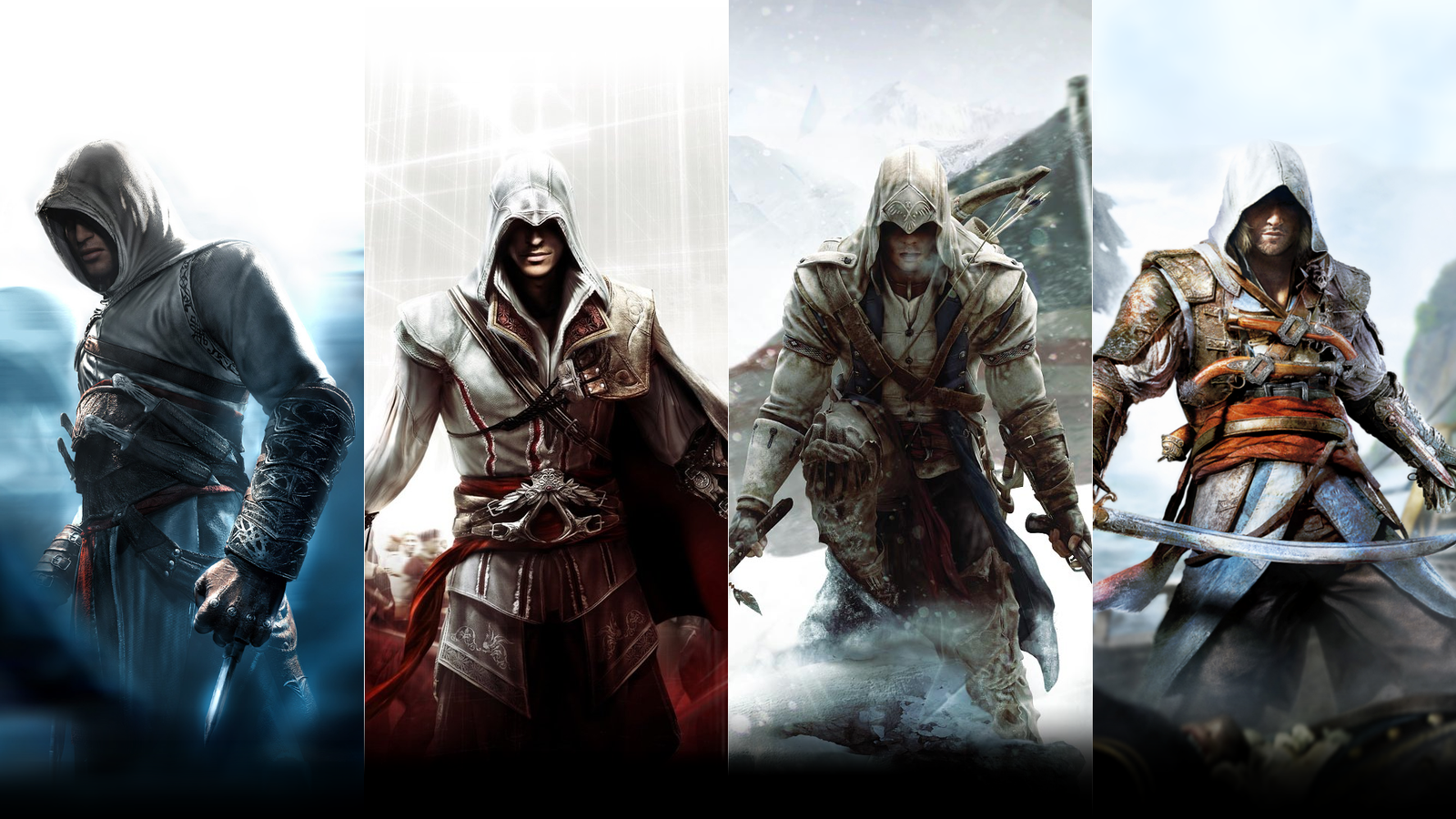
Part of the problem with this mindset is that it encourages a deconstruction of otherwise good games just because they don’t make sense or they have some flaws; it doesn’t matter that characters dress improbably, because that is part of the art. We want, expect, and need our characters to stand out visually. It allows us as gamers, game masters, and game designers to produce instant connections between tropes and archetypes and the individual characters and events that dot our narratives. Ezio’s layered garb and walking arsenal set him apart as a character who is important; despite the impracticality of his outfit, it is immediately apparent that he is an Assassin, which is the entire point of all the Assassins in the Assassin’s Creed series wearing the Assassins’ emblem overtly; it tells the player who their friends are and who is initiated into the inner circle of the secret society.

I agree with Kelly in some regards; attempts to inject these symbols and motifs into games often result in ham-handed or unintelligible outcomes, but part of the fun of games falls between the suspension of disbelief and credulity. It is crucial to remember that things that we bring into our games should remain engaging and push players onward, and sometimes the experience of an event outweighs the breaks in a setting it can bring; the Tunnel Snakes from Fallout 3, for instance, which were one of the things that Kelly cited as an inappropriate element, are ways to remind players that the world of Fallout is not simply set in America after a nuclear war, but rather a world where the future America embraces the values and lifestyles of an earlier America.

To deny a symbol that so clearly foreshadows the future elements of the setting on account of it being a little out of place—the Tunnel Snakes’ leather jackets are the element that Kelly finds most problematic, along with their adoption of greaser culture—overlooks the role of those elements in establishing the setting. Fallout as a setting is only successful because it brings its player into another world, as most good games will whether they are digital or analogue in nature. Without these things games would be far less memorable—it’s part of the reason why Two Worlds isn’t as engaging and memorable as Oblivion.

In Oblivion, the second the plot starts off, the emperor is entering the cell of a prisoner (who happens to be the player’s character) to escape an attempt on his life aimed at extinguishing his bloodline entirely. The lowly cultists that attempt to kill him should not, in the setting, have even an ounce of a chance of killing him or his bodyguards, yet they manage to eventually assassinate him in plain view of the player. This establishes the player on a journey through the dark but often wondrous and fantastical world of Tamriel, yet it’s also something that would never actually happen. Despite being nothing more than a lowly former prisoner, the player is set on a path to adventure.

In Two Worlds, by comparison, the player starts off cleaning out a tomb with a couple of monsters in it. While it’s a feasible enough tutorial, there’s no introduction, no back-story up front, and it’s very hard to sympathize with the player character, even though they have much more of a background than the player character in Oblivion. Issues with the player’s ability to engage with their avatar aside, Two Worlds fails because it avoids these tropes and conventions; it has a deep and rich setting, but in an attempt to avoid an illogical introduction, it diminishes the player to the roll of trash collector.

It is not skill that determines the accuracy of the setting, but the quality. In his example of Aliens: Colonial Marines, Kelly scourges the use of logos and symbols throughout the game (and is likely right to do so) as a gap in the logic of the universe. However, one thing to point out comes from a quote from one of Alien’s artists, Ron Cobb, who complains about the shallowness of science-fiction films that depend on cool imagery over substance. The symbols in Aliens: Colonial Marines are shallow. A good game, however, utilizes these symbols in a deep and interactive context, where they take on the role of more than a homage and metamorphose into a functional part of an engaging and meaningful universe, even if their presence does not necessarily make logical sense when thoroughly analyzed.

So how can we apply this in our games and settings? Simple; when something works well, use it. I’ve found that in my games, players are less willing to nit-pick and get caught up on the minor inconsistencies that might result when they are having a good time, and part of the way to do that is to satisfy their desire to have things in the setting that they would actually be interested in. This doesn’t mean that realism has to be entirely disregarded, but having a character who is capable of breaking the rules of the setting or who has actually done something “impossible” means that there’s a mystery to explore and a new flavor to the world. It does not punch a hole in the game that makes it “less memorable” and prevent it from approaching the likes of 2001 and Alien, but it adds a new undertone and complexity to the setting.

There’s a single question that can be used to ensure that things make enough sense in a setting, and it’s something that every designer and game master should ask: “Does this make sense by itself?” It’s not exactly a profound question, but it’s important—when we see a character who is wearing eight layers of armor for a walk around town, we know that they’re adventurers. Players who see them will know that they’re either there to help or hinder the efforts of the party, and they allow us to direct attention and interest where it needs to go in order to further the narratives and plots we show our players, which makes them more memorable than an undirected exploration of an entirely “realistic” world.

If you’re interested in seeing a setting that applies the rule of cool very well, I’d suggest checking out 13th Age, which has a ton of interesting fantasy elements, and explicitly encourages characters with unique and interesting powers that don’t have to agree with the existing universe. The end result causes the universe to change and become more memorable (not less) on account of the interesting figures and imagery, rather than causing problems.

How impractical has currency become in fantasy RPGs?

“We only keep track of money so we can buy better magic items.” I understand that it can be tedious to spend 5 cp on a meal when you’re saving up for a 20,000 gp item. I get that. But all that means is that money is indeed there just for purchasing magic items, and I guess that is what my problem is…

TreasureHow much are coins worth by today’s standards? How much does a bag of silver weigh? What about gold? A magical sword costs how many thousands of gold coins? The local wizard shop has enough money to buy my 50,000 gp +3 Vorpal Blade, right? Is my character really carrying around enough money to fund a small kingdom?!

I have long been confused with how currency works in most fantasy games… “A round of beer costs 1 gold piece?! Really?! What would I buy for 1 copper, then?” “How much did I get for that magical sword?!” “Wait wait wait… I’m level 5, and I’m now in the top 1% wealth bracket?”

If I were to ever make a full-fledged Fantasy setting, I’d offer the following: Copper, Silver, Gold, and Gold Bars. Copper would be the most commonly used currency (12 cp for a day’s worth of cheap manual labor / or 1 cp per hour). In this fashion, one could say that a copper piece is worth about $1. So, the poorest of the poor might expect to make about 12 cp per day.

12 cp is very little, but I got that number from a historical text that I once read, so it’s not unbelievable. This would represent pay for the poorest of the poor who are still able to find work (of the lowest paying kind).

Want to go buy a tasty hot meal from a vendor at the market or tavern? Expect to pay 5-6 cp. Of course, if you have a family, you’re going to need to stretch that 12 cp as far as you can (food, supplies to make clothes, taxes, etc.). A lot of poor families in a fantasy setting (town) would expect to eat grits and thin soup.

Also, I don’t expect them to have the money to buy that loot you’re trying to offload. That’s one reason most games let characters sell off loot at around 25-50% of its value out-of-game.

To make everything easy and smooth, I’d increase the value of the metals by 10:

10 Copper = 1 Silver
10 Silver = 1 Gold
(100 Copper = 10 Silver = 1 Gold)

Adding other metals (like Aluminium, Platinum, or Palladium) just isn’t practical. It’s not that they’re too difficult to process; it’s that they would too often get confused with lesser-valued coins.

However, I understand that magic items can be expensive. That is why I would include Gold Bars (actually, Bars and Bricks).

10 Gold Coin = 1 Gold Bar
10 Gold Bars = 1 Gold Brick
(10,000 Copper = 1,000 Silver = 100 Gold =10 Bars = 1 Brick)

And now, for the rest of the story…

Assuming that 1 gp is like a $100 bill, not too many people will be walking around with those in their pockets. So, for a player character to tip the stable boy or innkeeper one or more gold pieces, well, that would be a big deal (especially if you do it often). Everyone in the area would hit you up for services or free hand-outs, and you would quickly get recognized by several, several people in the village or town.

“Hey, did you hear? Kahn the Bard just paid 10,000 gp for a magical cloak, then he tipped Matthias over at the stables 10 gp just for feeding his horse. I know that I only made 5 gp for all of last month’s work in the mine, but let’s go say Hi. I just know he and I could be friends.”

Kahn the Bard: “Hey there innkeeper, I’ll have an ale.”
Innkeeper: “Sure thing! That’s 3 copper pieces.”
Kahn the Bard: “Here, take 3 gold pieces.”
Innkeeper: “Uhhh… you know that’s like 300 copper, right? For a cup of ale?”

How soon in your game before copper and silver currency becomes obsolete?

TreasureIt seems to me that currency in fantasy settings has been relegated to magic-item-use-only. I have actually been told that by several gamers over the course of two decades. “We only keep track of money so we can buy better magic items.” I understand that it can be tedious to spend 5 cp on a meal when you’re saving up for a 20,000 gp item. I get that. But all that means is that money is indeed there just for purchasing magic items, and I guess that is what my problem is.

I get it. Finding, spending, and selling loot worth thousands of gold is fun and exciting. But it just doesn’t work for me. Needing thousands and thousands of gold pieces to buy and sell magic items is an all-too-often unrealistic and overlooked burden. Who can carry that much weight? I’m just not ok with the whole concept. And seriously, why even have copper and silver in the game?

I imagine that at its fundamental nature, most people aren’t ok with it, either, which is why many games provide these convenient little magical bags and sacks that can carry a dragon’s hoard of coin. That just seems like a band-aid to the problem.

Why is it that fantasy movies and novels (not novels based on RPGs) never depict characters running around on their quests and adventures carrying thousands and thousands of coin in preparation of buying a magic helm, magic armor, magic weapon, a magic belt, a magic cloak, and two magic rings? Because the audience just wouldn’t buy into that. As a gamer at the table, I don’t I buy into it either.

Why not just fix the issue of currency, so that we don’t have to use magic items to try to make it work? Let’s put the currency at more reasonable rates so all of the characters in fantasy games aren’t always carrying around 50,000 gold coins wherever they go. Even in a fantasy roleplaying game, I find the alternative hard to believe.

So, let’s bring this ramble to a close… I have a problem with currency – there doesn’t seem to have been a realistic way to approach it thus far. Copper and silver are pointless. Thousands of coins are needed to equip characters of their “needed” magical equipment. And magical, bottomless bags and sacks are the answer to it all, apparently.

Can someone please put me in my place?

My name is Chris Stevens, and I approve this message.

The Invincible Enemy – spicing it up with the environment

One of the most omnipresent – and most dangerous – opponents your PCs can face isn’t found in any bestiary and is often overlooked by GMs: the environment.

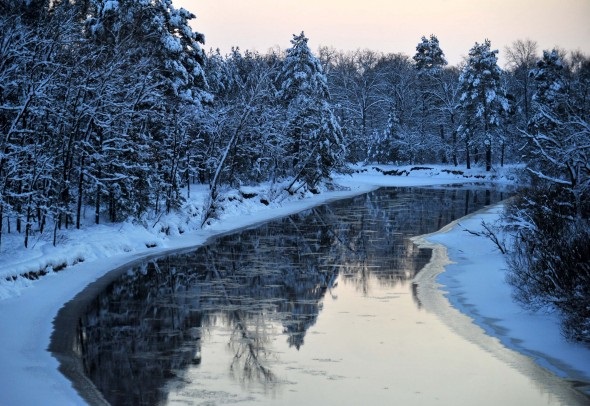
Icy-RiverOne of the classic staples of fantasy role-playing games is their diverse ecology of monstrous enemies. Even the basic bestiaries for most games have hundreds of outlandish opponents for enterprising GMs to choose from, and most have supplementary books filled with additional enemies waiting to be unleashed.

However, one of the most omnipresent – and most dangerous – opponents your PCs can face isn’t found in any bestiary, and is often overlooked by GMs: the environment.

Environmental hazards are often brought out at two distinct levels of game-play. The first is when the PCs are low-level, and are usually unable to muster magic enough to defeat whatever hazards local conditions impose on them. The second is during high-level play, when adventures to alien worlds and distant dimensions present difficult terrain that catches the PCs off-guard.

In most cases, these environmental hazards tend to be fairly mild, and are often temporary conditions such as a snowstorm or a monsoon. Usually they impose some sort of movement penalty, along with perhaps a penalty to sight and, in extreme cases, mild but recurring damage. For the most part, they tend to present a mild inconvenience, but nothing that makes the PCs too concerned.

The reason that environmental effects are usually kept being nuisances, rather than major dangers, is because they possess a characteristic that sets them apart from all other obstacles the PCs face: invincibility. Unlike traps, the environment cannot be bypassed, short of leaving the area altogether. Unlike foes, the environment cannot be killed. The best the PCs can hope for is to generate an effect that ameliorates the penalties that the environment poses; otherwise their choices are reduced to leaving the area, or trying to succeed while taking recurring damage and/or persistent penalties.

Another reason that the environment is an under-utilized threat is that, more so than with monsters or traps, the environment needs to be justified against the context of the game world. Monsters tend to be itinerant, after all, and traps can remain for a very long time after being set, but you’re going to have a much harder time explaining why the gravity inside a particular dungeon is triple what it is everywhere else in the world.

However, just because environmental situations require a more thorough explanation doesn’t mean that they should be shied away from. Indeed, using a hostile environment to increase the challenge of a given adventure can make it all the more memorable when the PCs succeed (and, of course, they should be given greater rewards for their victory, since they accomplished it under unusually adverse conditions). Let’s take a look at some environmental factors and how they can be applied in your game world.

Temperature: Ambient temperature is one of the easiest ways to tweak the local environment. This can be as easy as saying that there’s an unusual, but perfectly natural, instance of freakishly warm or cold weather for a day or two. It can also be that you’re in an area where an extreme temperature is normal, such as in an arctic setting or a blasted desert. PCs in such settings will likely become fatigued much sooner than they would normally, and may even take damage if the temperature is exceptionally above or below the norm.

Pressure: Pressure is usually thought of in terms of deep-sea adventures, though it can apply if an airborne adventurer flies too high. Instances of extreme ambient pressure needn’t be limited to deep sea diving or high altitudes, though. Very low open-air areas (akin to Death Valley), for instance, will have high atmospheric pressure, whereas climbing a mountain – such as what Gandalf and the Fellowship tried to do when heading to Mordor, will bring low pressure-dangers into play.

The immediate dangers of high pressure are the crushing effect it can exert on characters, though in practice it’s rare to find such an environment without going underwater or to a place with a radically different atmosphere. Less extreme instances of high pressure are that it can trap heat, creating an area of high temperatures (see above). Low pressure, on the other hand, affects the atmospheric content, causing characters to receive less breathable air despite normal respiration, which in turn can affect cognition and stamina.

Atmosphere: Likewise, what’s in the air may be dangerous regardless of the local pressure. Many caves and sealed chambers – such as dungeons – have sealed pockets where poisonous, or flammable, gases can build up over time. When breached such chambers can make breathing difficult, to say nothing of what can happen when a fireball is thrown into such an environment.

Sudden influxes of gases may be immediately obvious if characters begin to cough and choke, but slow changes to the content of the air are much more insidious, as characters may begin to asphyxiate without realizing it. Even if the changes aren’t enough to be lethal, they can still be dangerous, as colorless and odorless toxins can have all kinds of effects on unwary characters.

Radioactivity: Radioactive dangers are often thought of as having no place in a fantasy setting. However, even in the real world there have been natural nuclear fission reactors, and high creatures that come from outer space or other planes can bring radioactive dangers with them. These are extremely dangerous simply because most characters won’t have a reliable way of detecting radioactivity, which can break down their biology, or treating it when it becomes apparent something’s wrong.

Gravity: Possibly the most obvious environmental aspect, save for temperature, is ambient gravity. Since gravity is generally uniform across a given world, PCs will generally search for a reason why it’s different in a given area. Magic will usually be the culprit here, unless they’ve accidentally wandered very far from home indeed.

Unlike pressure, changes in gravity will impact characters much more directly, as they’ll find their strength and speed increased or decreased proportionally to the change. For a good rule of thumb, increase characters’ carrying capacity by the inverse of the change in gravity (e.g. an area where gravity was three times what it normally is would result in a character only being able to carry one-third as much as normal). Likewise, characters endurance will be increased or decreased with lower or higher gravity, respectively, as their muscles have to exert lesser or greater influence to move.

It’s often said that heroes are only as great as the villains they face. That may be true, but the environment that they face them in certainly helps. The next time you’re designing an adventure for your characters, consider ways that you can tweak the environment to tweak the challenges your heroes will face. After all, which is more exciting? Facing down the Dark Lord of Evil, or facing him down on the edge of a radioactive volcano, spewing poisonous smoke as it threatens to erupt?

Do Castles Have A Purpose In FRPGs?

It strikes me as odd that castles existed in a world where dragons, griffons, manticores, and all manner of large, dangerous flying things ruled the air…

Bodiam-castle

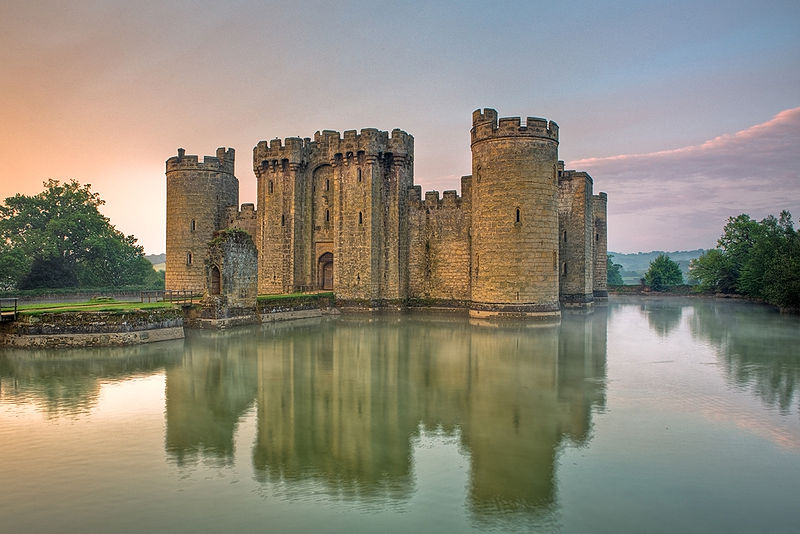
One of the things that struck me as odd even back when I first started playing D&D lo these many years ago was the assumption that castles existed in a world where dragons, griffons, manticores, and all manner of large, dangerous flying things ruled the air. Not to mention the fact that any adventuring party with a few scalps under its belt had access to levitate, fly, and dimension door and at least one member who was really good at climbing walls. The fact is, against the former a castle would provide no real protection and against the latter it would hardly be an obstacle.

Now don’t get me wrong. I understand the assumption is that such monsters are rare (although surprisingly common once you reach requisite level . . .) and that higher-level individuals are far from the norm (although, again, surprisingly common at times . . .). In other words, it’s bunk. To my mind castles, at least in the real-world sense, would not exist in a fantasy world because they simply cannot serve the same purpose in a fantasy world as they would in the real world. At least not built as they are. After all, real-world castles and fortresses developed, were refined, and finally fell out of use based on real-world concerns. So how would a castle – and by this I really mean fortified structure sitting on the ground – be built in a fantasy world?

Obviously if it’s a low fantasy/classic Tolkien fantasy game where powers and creatures able to circumvent a castle’s defenses are rare or non-existent then castles can be as they are, climb walls notwithstanding. But if it is your standard D&D/Pathfinder type game then some changes would need to be made.

Chief among these would be increased protection from aerial assaults. That means no wooden/slate shingles as roof-protection – we’re talking solid roofs here. It also means the end of an open courtyard, at least without some means of preventing flying creatures from landing in it. This could take the form of anything from nets and cables strung across open areas to some form of magical protection (more on that later) to not having any open spaces at all (and if there is an open space, you can be certain it is a trap). Another option would be to build the entire thing, or at least a large part of it, below ground (think Maginot Line); the castle has effectively become a dungeon.

Having dealt with aerial threats the design of a castle would now concern itself with magical threats. One such spell is of course guards and wards, but that is mainly for dealing with intruders already inside. What about defenses for the outside? How about a spell that senses someone climbing the walls and turns the stone to glass or causes the stone to turn to mud and then turn back to stone, trapping the climber? How about a dimensional shield/wall effect that prevents passing through the walls? You can rest assured that in “action/equal opposite reaction” style spellcasters would work around the clock to create spells to counteract these threats.

So in the end there would probably still be castles in FRPGs, but they’d look more like modern-day bunkers designed to deal with big guns and aircraft than the classic medieval designs. Furthermore, they’d be protected by an array of magic designed to counteract those wonderful spells and abilities the adventurers find so handy.

Where To Go? A Quick Reference Tavern Directory For Any Fantasy Setting (Part 2)

DM: “So you walk into the bar and see a table in the back of the room.  The room is somber and filled with smoke.  Sitting at the table is a Dragonborn, a Tiefling, and an Eladrin.”

Player: “This must be the odd group of adventurers the Mayor was talking about!  By the way, what is the name of this bar…”

DM: “Ummmm… (Looks at “Where To Go? A Quick Reference Tavern Directory For Any Fantasy Setting (Part 1)”) The Bloated Beholder”

Player: “Really? That’s an awesome…”

I was really lucky growing up.  I had a great DM with a great imagination, and he was never at a loss for a tavern name when he was put on the spot.  Albeit, some of them were so far out in left field, that when we heard them we would become hysterical with laughter. It didn’t matter; we were in high school and we were young.  Sigh!

Now that most of us are all grown up now and no longer dim-witted and silly (yeah, right), some of still come up with the most horrible names for anything pertaining to our game.  Be a little creative; use that schooling to make names that are interesting and punny!  Have fun with them!

Taverns, in my opinion, happen to be one of the most memorable parts of my gaming.  You get good names, and you get bad ones.  You get funny ones and offensive ones.  Most times though, the tavern is memorable for a few reasons: either the name of the tavern, the NPC associated with the establishment, or the memorable role-playing moment in these joints.

Regardless of how we remember them, in the course of the two parts of this article, I will be giving you a description of twenty-three 23 possible tavern names that can be integrated and used for your current or future campaigns.  In the first part I included eleven (11) tavern names for you to use at your leisure.  I now present the second part of this two part article with the remaining twelve (12) tavern names.

Each name will have three parts to it: the name of the tavern, an explanation of how the tavern got its name and a possible NPC associated with these taverns. (click on each tavern sign to see a larger image)

The Weary Traveller

If your adventurers are weary and are in need of an extended rest – Presto! you have a tavern at your fingertips, ready with all the amenities the adventurers may need on their road to defeating all evil in the world.  This inn can be placed on the road to the adventurers’ goal.  This tavern could be used for an encounter as a side trek or even just a base of operations for the characters during their current adventure.  This tavern is not only equipped for eating and sleeping, but the innkeeper has all the basics needed for adventuring.  Sorry, no magic items – unless you (the DM) wants to add them.

The tavern is owned and operated by the Ridel family.  It has been in their family for three generations now.  The inn has a solid reputation, good food and comfortable beds for the adventurers and their horses.  Therid keeps the inn in working order while Anna (wife), Belinda and Amanda run the hotel and restaurant.  Timmy keeps the horse fed and the stable clean.

House of Princesses

Might be found in a well established city.  “If there are any girls there I want to do them!!” – and you can.  The building is three stories tall and contain who knows how many rooms. This establishment offers high class “escorts”.  Women of all shapes and sizes are available here.  From halflings to dragonborn women, this place offers anything imaginable…for a price – and the price is steep.  Adventurers can blow some of their gold here and R&R after a tough adventure.  You can indulge in anything from a simple massage to a full domination session(up to the DM to figure out details).  This establishment can be used as a starting point for any new adventure whether it is political defamation, to spies in the cat house.  In actuality, all the women who work here are changelings, an advantage to satisfy any client.

The House of Princess is owned and operated by Lady Aratranna Shadowskin.  Her name has a double meaning.  She is named shadowskin for her dark dominatrix side, and her natural skin colour and she is currently spying for whatever government your town is against.  A great place to do some role-playing or to use some general trickery against your party.

Creeping Brambles Pub

The tavern is gorgeous.  It is a circular edifice with a courtyard in the middle of the establishment.  This tavern boasts the most beautiful and oldest willow tree in the whole continent.  Once a year the willow blooms beautiful flowers that are cultivated and brewed into potions for the local healing guild, providing healing for a minor fee (locals only) and healing for a steep fee (for strangers).  The fruit is cultivated and made into some of the best wine you could find anywhere. Creeping Brambles is the name of the wine.  The wine is expensive, but worth it.  Only around for about 2 months of the year.

The tavern and winery is owned and operated by Cruthinen the Shaman (for his “magic” with the fruits of the tree).  He is a heartbroken gnome, with a tale to tell.  His mood is elegant yet somber, just like the willow tree.  The mood in the tavern however, tend to be jovial and upbeat, with many bards, jesters, and actors active throughout most evenings.

The Coat Hanger

This popular inn is well known for its multitude of coat hangers pretty much placed all over the tavern.  on a busy night patrons can expect to see a hundred or more coats, cloaks, shields etc. hung all over the bar.  The coat hanger always has an “open mike” competition every night and the person who performs the best story, wins their consumed items for free that  evening.  Players going into the place can try their luck and win an evening of drunkenness from the patron of the tavern.  Many rooms are available for the night.  The rooms are cozy, fairly large and have all amenities.

The inn is owned and operated by Thersaadi Songsteel, a human (no one knows what gender).  Think Albert Goldman from the movie “The Birdcage”.  No one has bee able to figure out the person’s origins.  No one really cares; the atmosphere of the establishment is jovial and feel good.  Thersaadi has Halfling “shoppers” in the bar all evening to prevent pick-pocketing.

The Chamber Pot

Known for its extreme cleanliness, the Chamber Pot offers the cleanest ‘facilities’ in town.  The chamber pots in every room and the outhouses in the  courtyard are emptied and cleaned three times per day.  Walking into the kitchen is extreme, you would think you are walking into a newly fitted restaurant.  Everything in here is sparkling.  The floors are spic-and-span and linens are done after every client.  For those who have an extended stay at this tavern, linens are changed every three days.  Baths ore offered and even encouraged. The owners of this tavern are picky about their clientele and so the patrons are somewhat clean and respectful.  The tavern part of the establishment is usually frequented by the business types of people, known for their cleanliness.

The inn is owned and operated by Raemmarr the ‘Pigkeeper’, a very neurotic dwarven female.  Her need for cleanliness is known throughout the town, which makes her establishment extremely popular place to stay.

The Keg Stekehouse

This inn smell of cooking meat all day everyday.  The Keg Stekehouse(pronounced stek-ee), know for the freshness of its meats, boasts the best beef in town.  Located on the outskirts of the city or town, the livestock where they get their meats from is literally in their backyard.

Curgar Bittergrim, a tiefling male, owns and operates this family business.  Sick of having to worship a demon, he is one of the only tieflings to break his pact without being snuffed.  He is so confident in his product that he thinks his business will be around for thousands of years(and he is right)

The Past Pub

The inn boasts many “theme” rooms of varying time periods of the current world you are playing in.  The decor can be a desert, a cave of Mezzoberranzan, a grand royal room of times past, an Asian setting or even a famous dungeon.  The sky is the limit for this one.   This hotel is owned and operated by a sophisticated hobgoblin named Rawk Aramil.  Having been thrown out of his tribe for his pacifist ways, traveled long and far looking for acceptance in some other society, experiencing adventures that most would never see in their lives.

In the main foyer, Rawk has set up some displays of the evolution of certain species.  Showing some of the changes of the elves and eladrin bloodline, the goblinoid race evolving from pure savagery, to organized bands etc.

The Clockwork Orange

Located in the less desirable parts of town, this establishment is a cesspool of addicts and ruffians.  The bar is known for its plethora of available drugs, especially the highball mead, a concoction of “insert potion here”.  The bar is actually owned by a noble by the name of Alex Drac. This establishment makes a lot of profit by luring the dredges of society, getting them addicted to the drugs.  Once they are addicted, the noble has easy hands for hire, to do his bidding for that next hit.  They would commit and “ultra-violence” without connecting anything to the noble.

This bar could be a good adventure spin off where characters could become addicted to one of the many drugs available.  The noble could have his eye on the characters and have his ‘barkeep’ drug the ale of one of the adventurers with an unknown substance, which instantly causes addiction.  Then the noble attempt to hire him in exchange for more of the drug, or the character does a small favour for the noble in the future.  The possibilities are endless with the seedy establishment.

The Oath Breaker

Passed up for many positions and quests for her deity, this cleric eventually lost her faith. She always tried hard to please the clergy, yet, despite her wisdom before her time and her stong-arm with a blade, the males of the faith did not want to send her out to do the work of her God, fearing that she would embarass the Church.  Later, she was instrumental in uncovering a plot within her organization to assassinate someone of importance to her personally.  This act of treason left her out in the rain.

having saved enough money in the years of service with the church she was able to purchase this quaint establishment.  This establishment is located on a crossroads of some type and Elayna Sunstride likes nothing more than to sit with adventurers during the evening and chat with them about their exploits.  One thing she is adamant about, is that there is no riff-raff, or evil looking people allowed in her bar.

The Bakers Dozen

Bakery by day, tavern owner by night, Dravis Woe understand the need for diversity.  He is famous for the bread he makes fresh daily, and for the drink he serves nightly.  Having grown up somewhat nomadic, it has given him the ingredients to make his place one of the most visited in the realm.  His travels have given him time to collect various recipes to satisfy any race you can image.  The same thing goes for any drink you could imagine.

Dravis also owns a farm where he grows all the necessary ingredients for his clientèle.  Using magic and elbow grease, this man is able to grow anything in his field using weather changing magic.  The rest of his family actively helps him keep his high level of standards, which allows him to be the best.  Any tampering with his crop could mean the end of this hard working individual.

The Sewer Rat

Lycanthropes are not your common free roaming folk in the city, but for some reason, this were-rat has flourished…well, done well for a monster anyways.  His tavern lies on the outskirts of town, in one of the seediest areas.  He is also located in the sewer.  Even though the area he located is filthy and undesirable, his establishment is relatively clean and inviting.

Serrat the ‘tailess’ Ardune is not the most accommodating individual.  He is gruff and aloof, but stays “strait and narrow” because he know his livelihood is precarious at best.  Not everyone is comfortable with his presence in the city, but he has not caused any disturbances and is only tolerated in the city.  This tavern could be a good source of information to the underdark or to the sewers of some large city.  He does give some information…for a price.

The Shield Maiden

Avid followers of Pelor the Kerily family could not have been more proud of their daughter when she aspired to the rank of knighthood within the ranks of the Church of Pelor.  This family grew up with little more than the shirts on their back, and with hard work and a dedication seldom seen to the God, he managed to buy a little niche in the town and build themselves a little haven for travelers and adventurers alike.

There is no cozier inn for miles, the food is good and the company is even better.  Constant entertainment provided by travelers make this a nice place to relax after having defeated the Lich-king.

That’s it!

Hope this list has provided you with some much-needed creative juice.

Take these names!  Use them, abuse them, modify them, enjoy them, and then tell me what you think of them, I would like to know.

Have a blast!!

Related Reading – Where To Go? A Quick Reference Tavern Directory For Any Fantasy Setting (Part 1)
Getting more out of your Orcs (Honor & Customs)

So how does a society hold together, if everybody is beating up everybody else?  How do races known for thuggery keep any kind of order, do any kind of trade?  This article addresses the way I handle such communities in my own RPG campaigns.  It doesn’t have to be orcs – it could be any fairly brutal population.  But I use this in particular for the orc communities in my Savage Worlds: Sundered Skies campaign.

Orcish Honor & Customs

Orcs don’t claim to have a system of law.  They simply react as duty tells them to.  What is orcish duty?  Basically, it’s anything they’ve been punished for not doing in the past.  The clan chief sets the unspoken rules.  His senior thugs, the bar-shar (see below), enforce those rules.

Not all orcs live up to an honorable code and some don’t even try.  But even the most treacherous orc knows the rules are enforced with everything from punches to execution.  If they don’t believe in honor, they learn to act as if they do.

The Bar-Shar

In orcish communities there isn’t any regular, full-time law enforcement.  Instead, there are bar-shar.  This rank is granted by chiefs to favored warriors who are known for enforcing the chief’s will accurately and effectively.  Bar-shar often have considerable power, acting as sheriff, magistrate, and executioner for their clan.  There is no office or jail or assigned duty post for these thugs:  Their “office” is wherever they happen to be standing, sitting, or carousing.  They are never on duty and always on duty.

It’s a bar-shar’s business to confront and correct anybody who is doing something that, in the bar-shar’s opinion, the clan chief wouldn’t approve of.   For example, one particular chief doesn’t like long arguments or any kind of debate.  So his bar-shar, overhearing an argument between two tables at a bar, demands they fight to resolve their differences, instead of just talking about it.

Because this code can vary from chief to chief, actual standards of conduct can vary in different districts, based on which chief is considered to hold power there.  The rank of Bar-shar is granted to favored warriors who are known for dispensing justice effectively.  These bar-shar can have considerable power locally, becoming sheriff, magistrate, and executioner for their chief.

Common Codes

Most clan territories have some behavior codes in common.  The chiefs are thoroughly versed in tradition, and most follow the ways of past orcish heroes and leaders.  Here’s a couple of examples of “laws” that are likely to be found in any orcish community:

Might makes Right:  Martial strength carries a lot of influence among the orcs.  It is acceptable to use threats of violence against other people, and to enforce those threats as long as you don’t kill or maim them.  It is very common for a merchant’s thugs to stand outside the store, chasing off all other customers until their master (leader, employer) has finished his business.  Likewise, one group of orcs will happily stop a deal in progress and eject the previous customer, if they think they can get away with it.  If you can’t intimidate the orc standing in line ahead of you, stay away until they are gone.

Theft is dishonorable, but demanding to buy something from another party is not.  If you can pay market rate for an item and back up your offer with sufficient threat, you can buy an item right off someone’s person, even against their will.  Just tell them you like that earring, toss some coins at them, and pull it off their ear.  If an orc wants something you have, you can either accept a reasonable offer or get ready to fight them.  If they are with a gang and you are not, better accept their offer.  This includes anything – their home, their slave, their weapon, or whatever.  It must be done face-to-face, wherever the item is.  You can’t take someone’s home behind their back and leave a pile of gold outside the locked door.  That would be cowardly.

A personal insult is the same as a challenge to a fight.  Note that boasting is not an insult.  You can say, “My blade is better than yours,” and that doesn’t justify being attacked.  Orcs frequently go back and forth with boasts as a social contest.  It can be something done in good spirit between friends, with the loser buying the next round of drinks.  On the other hand, if you tell an orc, “You smell pretty, like an elf,” that is definitely a challenge.  A nearby bar-shar might have a problem with you if you fail to defend your own honor.  Orcs are very cagey with insults.  Here’s a variation on the elf insult that invites conflict without demanding it:  “I once saw an elf who had an earring like that.”  This is a light slap.  It isn’t a direct comment at the person with the earring and doesn’t require a defending comment.  It’s a way of asking, “Do you want to fight?  We could take this a step further if you wanted to.”

Disputes

What if the value of an item that one orc wants to take can’t be determined?  What if a comment is overheard that may or may not be an insult?  That’s when someone runs for the bar-shar, usually a youth or other non-combatant.  There is usually somebody around who wants to see the bar-shar intervene.  The bar-shar will “teach” custom and honor to his clan.

The bar-shar’s word is final.  Nobody will openly disagree with his judgment.  A bar-shar who makes bad judgments will find himself having a “friendly chat” with his clan chief before long.  There are only a few penalties the bar-shar can inflict, but they serve well enough:  Fighting, combat, and death:

  • Fighting:  Non-lethal, one-on-one conflict between the disputing parties.  Anybody present is more or less required to gather around and act as a living arena wall for the people involved.  Missile weapons and magic are not allowed.  Thrown weapons and holy magic from the god(s) worshiped by orcs is okay.
    • The fighting judgment is used for any kind of minor dispute where the truth is unclear.  If there is obvious evidence that one party has already been victimized, a bar-shar can injure the other party before combat begins using a blunt weapon.  Killing your opponent in this kind of fight usually results in a death sentence for you.  The idea is to disable them as much as possible so that, in addition to being proven wrong, they are unable to do anything for hours or days.  For this reason, the fighter with the advantage will often make called shots on his opponent, inflicting maximum damage before the judge (usually the local bar-shar) announces a winner.
    • If there is only one party involved (there is no victim, but someone was found acting dishonorably), the bar-shar himself fights for the theoretical “other side”.
    • If one party cannot be expected to fight, they can take a few minutes to try and find someone to represent them.  If they can’t find someone, or if they refuse to try, they automatically lose the dispute.
  • Combat:  This is similar to Fighting but allows the use of weapons.  The bout can be immediate or as late as the next morning – no later than that.  This punishment is used to resolve serious disputes, such as accusations of murder, dishonor, or grand theft.
    • Killing one’s opponent is acceptable, but sometimes an orc gains honor or additional concessions by sparing the opponent.  It is acceptable to hold the defeated opponent at sword point asking for an apology and one of his donkeys, in exchange for his life.  Any such deal must be announced openly.  If the loser accepts, his life is protected.  The judge of the fight can also declare a winner and an end, if neither side seems fit to make a determination (for example, if they are both too weakened or too drunk to speak).  In this case, the declared winner has the right to execute the loser or to have the bar-shar perform the execution.
    • As with fighting, the bar-shar is sometimes obliged to become the opponent.  An unjustified murder is a good example of this.
  • Death:  This is reserved for cases where the accused has fled a previous legal combat, has been declared a disgrace, is a known cheater, argues too much with the bar-shar, or otherwise is not suitable for combat.  A peaceful priest or very feeble person would also fall into this category.  In this case, the bar-shar or his subordinate will simply drive a dagger through the chest or neck of the accused.  If the accused is somehow able to escape or avoid death, they become a fugitive and anyone can kill them for a reward.

About doubles:  Doubles (champions, a second, a bodyguard, or whatever) can freely be used in judicial combats.  The exception is that bar-shard and chiefs may challenge an accused individual directly.  In that case, the accused must fight for themselves personally.  However, the chief or bar-shar must be careful to avoid the appearance of cowardice here.  If the accused has a very strong bodyguard, the best action is to fight the bodyguard.  The purpose of the direct challenge privilege is to resolve situations that can’t, for some reason, be resolved by the normal rules.  An example would be a wrongdoer who keeps returning with different hired seconds and committing more offenses.

In most cases, a bar-shar will accept a fight with a double.  Of course, they will do their best to kill the double, so as to send a message to the master.  Honor is at serious risk if a chief or bar-shar makes a direct challenge to someone obviously weaker.  Sometimes a bar-shar will insist that a double be found, maybe even calling on a subordinate orc to take up the cause, in order to avoid having to slay an inferior opponent.

Clan Rivalry

Insulting someone else’s chief is a very dangerous act, and you are likely to be severely punished by your own chief for doing so, even if the insulted chief is an enemy.  This is because such behavior can cause open vendetta between clans.

Rather than risk chaos, the preferred method of ruffling feathers is simply to claim that your clan is better than theirs.  This works like boasting, mentioned above, except the target is an entire clan, not an individual.  As long as you keep your language in the positive (“My clan is stronger and bigger”) and away from the negative (“Your clan is weak like goblins”), you are safe.  Safe from your own chief, that is.  Sometimes influence over a street or shop will be in dispute, or there is simply very bad feeling between two clans.  In this case, such rivalry is likely to occur until one side withdraws.  Deaths must be kept to a minimum, to avoid drawing the attention of other chiefs or even an overlord.  A chief is free to expand his holdings in any honorable way, so long as it does not threaten overall stability.

If you are in trouble in one part of an orcish city, head down the street to another part.  Look for imposing warriors with different markings from the ones you insulted.  They might protect you by challenging any other clan who comes near.  Oh, but don’t let them think you are using them that way, or they might escort you straight back to your enemies.

Designing Fantasy Cities: Location

We’ve already delved into how the size of the city, and the city’s residents, can help establish its importance and make it all the more engaging for your players. Remember, a city that makes sense adds that touch of reality to your fantasy world that can help immerse your players in your world.

What about where the city is? This is often my first step when designing new cities for my campaign world. I draw my map. I have a rough idea of the geography already, and I place the important sites I know I’ll need for my campaign. Then I end up with all this white space, so I start placing dots.

This practice can be good and bad. It’s bad because as a designer and a fan of history, I’d like to think that every civilization has a grand backstory of choices and migrations that came together to ultimately settle a spot with really good reasons. The designer in me would almost like to leave that area blank in the absence of grand inspiration.

It’s good because I want to fill the area with dots for a reason. I expect a certain amount of the map to be settled, and unless it’s a plot or setting feature, my players will expect the same. Placing dots forces me to work creatively to add that purpose. A great starting point is where the dot is.

Geography

What physical features are near it on the map? If a city is in a valley, near a forest, then this becomes part of the resident’s reality. Do they lumber the forest or leave it alone? This tells us what the buildings are made from and might also inform their main source of income. Maybe the purpose was to gather lumber for the capital, or it could have been founded by ancient guardians of the grove.

More extreme geography might put people on top of a mountain or built into the side of a ravine. This gives us clear mental pictures of what the city might look like architecturally and might inform us of their culture. People who choose to live in such harsh conditions have strong motivations. Maybe they were seeking a rich mining vein or were hiding from persecutions.

A common place for a settlement is on a river, lake or ocean. Water is an easy source of food and travel. Is the water safe to travel on, or have the people come to fear it? If people are traveling, where are they traveling to? They likely have some kind of relationship to their nearest neighbors on this body of water, even if it’s primarily through traders.

Social Relativity

Another huge part of a city’s location is who they’re close to. Do they trade with the nearest cities, war with them, or are they reclusive? How they treat their neighbors is probably reflective on how they treat outsiders like the PCs. Do they share the same culture with their neighbors, or are they part of the same nation? Maybe they’re right near the border. The purpose may have been for trade, protection, or might have changed over time.

If they don’t border another civilized village, but a rampaging orc tribe, that’s very different. They could be very war-like, with defensive walls and mandatory defense training, but welcome the PCs instead of question them.

Thinking Fantastic

If you’re dealing with a setting that can get truly fantastic, such as in D&D, then you can take geography even further. Perhaps your city is built into the rim of a volcano, with all structures made of rock. Anyone born in the city could naturally be resistant to the heat, giving them a unique opportunity for metal working.

A city built on a river might be known for travel or trade, but a city built on the River Styx would be quite different. Do they travel the river or are just made up of lost souls? Perhaps they worship death, or follow a hierarchy based off the devils. Maybe its not a river of liquid at all, but a village literally built on the shores of the time stream. That community would have a very different set of lost souls, but likely wouldn’t be just a dot on your map.

The planes can be on your map of the material plane though, if you think creatively. Many areas in the world of man crosses casually into other worlds. The darkest crevasses might dip into the Shadowfell and a clearing in the woods might lead into the Feywild. Places of extreme climate are also natural pathways to the Elemental Chaos. That same volcano city might have regular trade with djinn or serve as a home for genasi. That would make for a very different scenario.

Where To Go? A Quick Reference Tavern Directory For Any Fantasy Setting (Part 1)
DM: “So you walk into the bar and see a table in the back of the room.  The room is sombre and filled with smoke.  Sitting at the table is a Dragonborn, a Tiefling, and an Eladrin.”

Player: “This must be the odd group of adventurers the Mayor was talking about!  By the way, what is the name of this bar…”

DM: “Ummmm… The d20 Inn”

Player: “Really? That’s a stupid name…”

I was really lucky growing up.  I had a great DM with a great imagination, and he was never at a loss for a tavern name when he was put on the spot.  Albeit, some of them were so far out in left field, that when we heard them we would become hysterical with laughter. It didn’t matter; we were in high school and we were young.  Sigh!

Now that most of us are all grown up now and no longer dim-witted and silly (yeah, right), some of still come up with the most horrible names for anything pertaining to our game.  Be a little creative; use that schooling to make names that are interesting and punny!  Have fun with them!

Taverns, in my opinion, happen to be one of the most memorable parts of my gaming.  You get good names, and you get bad ones.  You get funny ones and offensive ones.  Most times though, the tavern is memorable for a few reasons: either the name of the tavern, the NPC associated with the establishment, or the memorable role-playing moment in these joints.

Regardless of how we remember them, in the course of the two parts of this article, I will be giving you a description of twenty-three 23 possible tavern names that can be integrated and used for your current or future campaigns.  This first part will include eleven (11) tavern names.

Each name will have three parts to it: the name of the tavern, an explanation of how the tavern got its name and a possible NPC associated with these taverns.(click on tavern sign to see larger image)

The Bloated Beholder

The establishment gets its name for the medium sized stuffed beholder.  The owner did not kill this creature himself (though he would never say it in front of his patrons), he actually found this creature freshly killed on one of his patrols of the sewers and claimed it as his own kill.

This tavern upon entering is decorated with swords hung high on the wall, some suits of armour lay about in different stance in the tavern.  The most prominent feature of the tavern is the stuffed beholder over the fireplace mantelpiece in the center of the room.

Otivan Daleborn is or can be a retired guard from whatever militia or form of military control is present in your campaign setting.

The Dirty Bird

This tavern is more of an eatery, famous for its fried chicken and wings. People come from around the continent to eat this delicious concoction. This tavern could possibly be the first prototype of the modern day KFC.  It is a small eatery with a take out window.

A gnome artificer named Stosaadi, came up with the idea of the deep fryer when she heard someone talk about how the orcs from (insert name here) boiled humanoids in oil.  She thought if oil could cook flesh, then chicken is well within the means.

The Whispering Willow

This establishment comes very highly recommended, highly decorated, with the prices to match.  Fine dining, comfortable rooms and live entertainment in the evenings.  This tavern is usually a place where people of importance would stay when they are visiting.  This place would offer a variety of suites and services; a classy place indeed.

Wandaatris, a female half-orc bard owns the establishment.  She was raised by Halflings and learned the mannerisms to become an adventuring bard of some renown.  She then settled and decided to start her own brand new adventure of hostess, with great success.

The Cock-a-Maimy

This establishment does not exist.  It is a diversion.  When your characters are on a path to someone who may have information, and they want to misdirect the adventurers, the informant would give them the name of this tavern with directions and all (false directions and all).  You may want your NPC to roll a check to see if they can “pull one over” the eyes of the PCs

The Watering Hole

Just your run of the mill tavern.  It name comes from the fountain in front of the establishment.  It is an older place, a place where the town guard may hang out after their shifts are done. If the PCs are smart enough to know how to get it, this place could become a great spot for information.

The tavern is owned by Tiev Rustring, an older gentleman; just a local, born and raised in this town.  In actuality, Tiev is no longer with the living.  The owner actually died in his sleep one night which gave “Dareth the dish-boy”, the opportunity to literally jump into the shoes of his employer.  In actuality, Tiev was replaced by a changeling named Hordak.  This down on his luck changeling is now the owner of the bar.  He has worked for Tiev long enough to have picked up his routines and mingled with his friends that no one suspects he is not Tiev.

The Magician’s Wife

If you want great home-style cooking, this is the place to be…only if you do not cast magic.  This tavern boasts the best lamb stew in the whole region, if not the whole world.  At night, the place is usually alive with local talent, ranging from comedians to actors, from acrobats to bards.

A natural singer and bard by trade, Wandalove Waveharp settled here when she fell in love with a powerful Mage.  They commenced a passionate romance that lasted for many years.  The romance eventually faded for the mage and he left Wandalove in the middle of one night to pursue his magic.  She has not seen him since.  She is a bitter woman and despises magic to this day. She is so bitter that she no longer has to heart to sing anymore.  She will not allow anyone of any magical talent to enter her establishment.  She has even hired two half-orc enforcers, who are extremely loyal to her.

This tavern can be used as a point for a skill challenge on why the magical characters of the party should be let into the tavern.

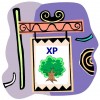
The XP Tree

This tavern can be a central location, where the PCs could come and get a drink, listen to some rumours, and look for some work.  Upon entering the tavern, there is a wall with parchment hung all over the place announcing jobs for those adventurers who want to work.

Owned and operated by either one of the current leaders’ (of the town you are in) offspring, or at least a relative of the immediate family, PCs can find all sorts of work listed on the walls.  PCs can find anything from mercenary work to full expeditions.

The Fallen Priest

For any type of religious information you would like to convey to your party, you can send them to the Fallen Priest, where upon entering the tavern you would be greeted by a plethora of religious items from a specific deity (you choose the appropriate deity for you adventurers)

Panrry the faithless (can be of any race), has lost his way.  Once a man of the cloth, and now is a man of the bar towel.  He spent 20 year of his life as a scholar and a devoted servant of his deity.  After years of hearing his colleague’s tales of divine interventions, Panrry’s faith wavered as he wondered why his God would not grant him such an audience.

This tavern could be used as a starting point for a side trek to bring Panrry back to his faithful ways by your PCs.  Some miracle happens and Panrry goes back to his faith.  Otherwise, he is a good source of religious information specific to you adventure.

The Lame Unicorn

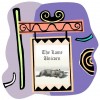
The Lame Unicorn sports a hanging sign outside with a picture of a donkey on it, lying on the ground, without a horn.  Hold that though, because if you mention the “lameness” of the joke, you are likely to get something broken.

This tavern boasts itself as the melting pot of the town, where people of all races and classes come together for drinks.  Sometimes, the bar can be a rough-and-tumble place (due to the disagreements between races), but a nice place to hang out nonetheless. Order in the establishment is kept by the Minotaur and goliath enforcers here every night.

The bar is owned by a none-too-witty Minotaur nicknamed “Greataxe”.  This barbarian came into some money while adventuring and decided to open up his own place, where everyone could feel at ease.  Quick to anger, Greataxe is quick to confront anyone if they mention the obvious “lameness” of his sign.  He thinks it is quite clever (good place for a PC bar brawl).

 The Tiny Portal

This tavern boasts a very unique entertainment experience.  The doorway is set in an alleyway and is scaled to the size of a small child.  It is actually a tavern that is particularly frequented by Halflings.  Everything is small in this place.  Even the ceilings are only 6ft high.  People of all races are welcome and they even have seats in the back that are sized for the larger humanoid races.  Entertainment is the driving force behind the success of this place.  Set into the back of the room, is a large entertainment area, a small amphitheatre where class acts from around the world come and play.

Owned and operated by a Halfling named Hurley Tallfellow, he manages somehow to bring in the best entertainment from around the world.

This setting could be used to bring a little (no pun intended) flavour into the tavern scene.

The Rebel House

As you walk into this tavern, you know you are in someplace that is very different.  In the courtyard sits a platform for hanging people (which is actually the main bar), cells line the walls on two separate levels.  Tables and chairs occupy the courtyard.  Each cell has been converted to be able to sit 4 persons.  The interesting part about this establishment is that everything in here is original.

Ex prison guard Mikael Yoursty opened the tavern when he lost guard job due to closing of the prison.  Having meticulously saved over his many years, Mikael was able to purchase his old workplace and turn it into a fascinating place to spend an evening.

What’s Next?

Take these names!  Use them, abuse them, modify them, enjoy them, because twelve more will be coming your way soon!  Tell me what you think of them, I would like to know.

You can check out Part 2 here!