My Battle Map Wish List

As you may have noticed, I really like to use visuals in my games and aside from the 3D terrain (which is great!), I love great-looking colour maps, particularly battle maps (maps with the 1″ squares marked out.)

It’s not that I’m a big wargamer or D&D 4e aficionado. I’m not stuck to the grid, but it helps me and my players figure out distances easily. I’ve tried the theatre of the mind and even the abstracted distance game systems and they work to a point, but then misunderstandings and confusion keep creeping in. It also gives players an idea of how to use their environment in a way that a blank grid marked out showing the room doesn’t allow. It’s also a great visual for players to get a sense of where they are.

My favourite companies (in no particular order) for pdf maps would be Dramascape, Heroic Maps, Lord Zsezse Works and 0one Games.

For already printed maps, I like the Paizo Flip-Mats and Map Packs and the D&D Map Tile sets (now out of print sadly), as well as many of the combat maps from D&D adventures.

Generally, I am looking for maps that fit into two categories – ones that are generic enough that I’ll be able to use them for a variety of game sessions and then ones that fit a specific setting that I would like to run in the future.

There are a handful of maps that I haven’t seen yet done to my satisfaction, but I keep hoping to see them one day, here is my wish list:
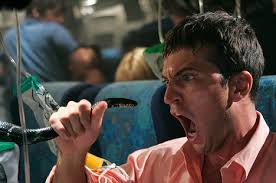
Unknown1. A Modern Passenger Jet – Something like a Boeing 787 and/or a Bombardier CRJ100 would be great for any modern game, allowing some serious action on board. Maybe even some snakes? It’s a staple of hijacker films. I realize there’s a black and white one available through Fabled Environments, but it’s black and white and the scale, although probably accurate isn’t great for games. I’ve found that about 1:43 works best for vehicles compared to minis. A little bigger would make a bigger map, but also a better play space for a game. Sometimes reality needs to be bent a little to accommodate effective game play.
frankensteins-lab-1931-590x427

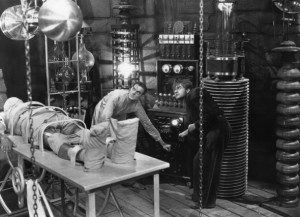
2. A Mad Scientist’s Laboratory – There is this one by Encompass, which is colour and map tiles, but it’s fantasy (ruined castle above). If I’m having a mad scientist, it’ll likely be in a modern/western game and it could be under a castle (I’m good with that) or a house, but not ruins and it won’t be an alchemist’s lab. Ideally, it should be drawn heavily from the Frankenstein movies.
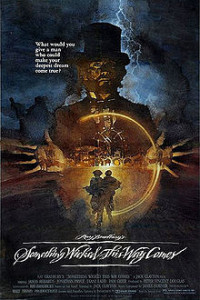
220px-Something_Wicked_This_Way_Comes_(1983_movie_poster)3. A 1930’s Carnival – There is this one by Dramascape, which I really like and own, but it’s too clean and orderly for a creepy 1930s carnival. I’m looking for the kind that evokes the setting of Something Wicked This Way Comes or the TV series Carnivale that I’d love to bring to a game (or several games!). Ideally, it would be a series of set-pieces that could be combined in different configurations including a fortune teller’s booth, a freak show, a merry-go-round, carnie wagons and anything else weird you can think of. Preferably with a Fall backdrop (leaves on the ground, crumpled papers, etc.), since the creepiest carnival always comes to town in the fall.ar11770146153638
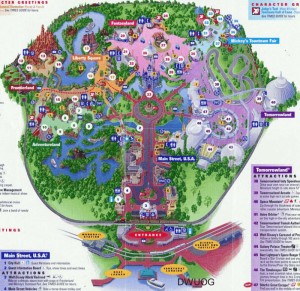
4. Disneyland – Okay, not specifically Disneyland, but a modern (1980s or later) amusement/theme park complete with rides, walkways, restaurants, etc. It would be a huge map, but what a great setting for a sandbox spy thriller! Maybe an overview map and close-ups of the actual attractions (it would have to include employee only hallways and rooms)? I’ll admit that this is so that I can run a twisted version of Wacko World (Dragon Magazine #79 – Google it!) using Night’s Black Agents, but you have to admit it has a certain appeal.

maxresdefault5. A Cruise Ship – Not some little dinky one, but a full-sized cruise ship. Again, it would be huge maps, perhaps broken down into main sections like the amusement park, but any gamer who has taken a cruise will have to admit they have wanted to run a game set on one. It’s again an ideal sandbox environment and ripe for so many modern games, I can’t even begin to list them.
SONY DSC

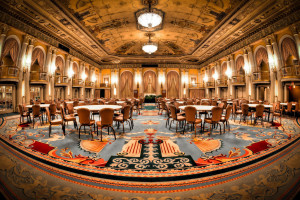
6. Complete Hotel – Christian Hollnbuchner has this lobby and rooms, which are okay, but I’d love something a little more 1920s/30s and grander, fancier. For the rooms, we also need a set of smaller ones (standard rooms) with a hallway, preferably rooms on either side of the hallway ending in an elevator and stairs. Then, we need the penthouse suite with elevator and finally the basement with laundry/back exit and the rooftop. That would be a complete hotel, again allowing a wide range of activity throughout the place. Again, a bunch of separate maps added together would work well. Something out of The Shining would be awesome!

That’s all I can think of for now. My wish list is all modern since most maps created are for fantasy games, so pretty much anything I could want in a fantasy game is already covered (please stop creating tavern maps, it’s been done to death!). I’ve also seen most wild west locations covered off, same with those for my pirate games. Sci fi is another setting which has a surplus of maps. So, the modern era is one that’s really lacking and which you could break some ground in.

My best advice to map makers is to watch the best action movies in the genre you’re making maps of and take note of the places where the coolest fights go down and make maps of those places. Make your map distinctive and highly attractive, but avoid details that tie the map entirely to one scenario (like the mines in this map) or if you do, make it an overlay that can be selected as an option. If you can, work in overlays that include objects or details that could be used in a fight.

Finally, the more the map looks like something out of Autocad, the less I’m interested in it. Conversely, the more it looks like a real part of the world, the more likely I’ll go for it even if it’s not entirely right. For example, Lord Zsezse Work’s maps are all so beautiful and fantastic that I’ve reused many of them multiple times in different settings just because they’re so gorgeous.
Modern Morale-ity

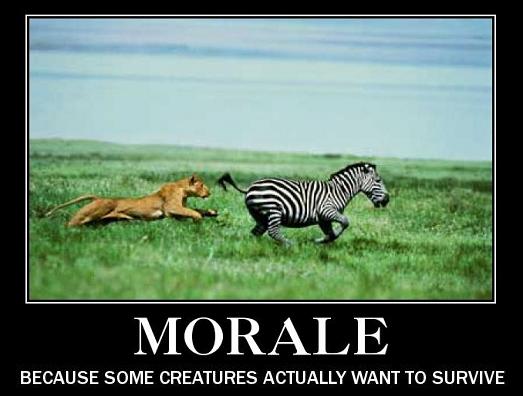
It wasn’t too surprising that, by the time Third Edition D&D rolled around, morale had been left by the wayside. And that’s a shame…

Morale

It has long since become popular sentiment that, in role-playing games, the story trumps the rules. That is, it’s more important to put together a compelling and interesting narrative than it is to slavishly adhere to the mechanics of the game system; to put it another way, it’s more important to have fun than to make sure you’re doing it “right.”

What’s interesting, however, is to see just how far this particular philosophy has taken hold of D&D through its various editions. There are multiple mechanics, in older editions, which determined the actions of an NPC – remember the old “% Lair” listing for monsters? – that have been discarded in newer iterations of the rules. Nowadays, a monster is in their lair if that’s where the GM wants them to be, or if it’s where the pre-published adventure has written them as being, not because of a die roll.

One of the big offenders in this regard is morale. For those who don’t remember, in older editions of the game monsters and NPCs in a fight would, when certain things happened, need to make a “morale check” to see if their courage failed them. If the check failed, they’d quit the fight and try to flee, otherwise they’d hang on in hopes of turning things around. PCs, of course, never needed to check morale; their actions were dictated solely by the players.

It’s fairly easy to see why this mechanic was discarded as the game reinvented itself. The idea that NPCs would make a life-or-death decision – and perhaps more relevantly, a decision that would affect the flow of a combat encounter – essentially randomly was quite unpalatable to a lot of narrative-minded GMs. Moreover, since morale was easily ignored it quickly became superfluous, something that could be overlooked entirely without the game suffering at all for it. Given that, it wasn’t too surprising that, by the time Third Edition rolled around, morale had been left by the wayside.

That’s a shame, since Third Edition’s mantra of “options, not restrictions” seems to lend itself to the idea of keeping morale on as a sub-system that can be used by those GMs that want it, and ignored by those that don’t. As such, we’ll design one here that GMs can use.

Before doing so, it’s worth noting again in the most explicit terms possible that the morale rules – unlike most, if not all, other kinds of rules – are applied by GM fiat. They are only used in a situation if the GM wants to use them, and the results are suggestions and guidelines rather than imperatives. Because this entire process is invisible to the players, and because it only affects NPCs and monsters, GMs should feel free to modify their rolls and results at will; doing so is not fudging so much as it is making a necessary ad hoc adjustment to make the system better fit a particular scenario in the game.

For 3.5/Pathfinder, we’re going to say that a morale check is a Will save, rather than coming up with a new type of check. This makes sense since Will saves are already used for related checks, such as resisting fear effects, and is simpler than creating a new value or check.

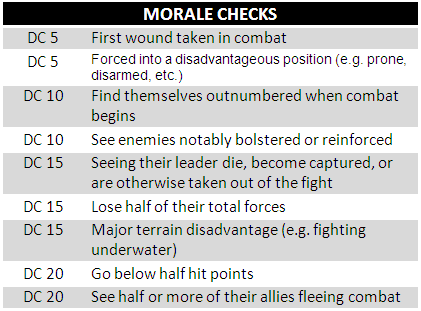
The next thing to do is break morale down into two parts: instances that would require a check, and measure how high the DC would be. In this case, we can simply create a list of events that would plausibly shake a creature’s will to keep fighting, and assign a DC value based on how severe that event seems. For example, the first time a creature is wounded in combat, it may find its courage failing…but that seems like something that would only cause the seriously cowardly to quit a fight, so we’ll assign that a DC of 5. On the other hand, bring brought below half of their hit points would be a much bigger check, since the character would now be seriously injured, to the point where death seems like a distinct possibility. As such, we’ll say that calls for a DC 20 check.

The following is a list of possible events that could cause a morale check, and how severe that check could be. Of course, GMs should feel free to tailor this list and adjust the DCs as they see fit, both in general and for a given situation (alongside the more general caveat that morale need not be used at all if the GM finds it inappropriate to do so):

MORALE-CHECKS

It should be noted that failing a morale check doesn’t mean that the creature immediately flees combat, though that’s a distinct possibility. Rather, a failed morale check is indicative of the creature no longer having the will to keep fighting, and taking action based on that. This may result in it quitting the battlefield, surrendering, attempting to negotiate, or otherwise trying to no longer engage in armed conflict.

One oddity that can come up when a morale check is failed is that it can make calculating XP awkward. The situation here is usually some variant of the following – the PCs battle the monster for several rounds, taking and dealing some not-insignificant damage. At some point, the monster fails a morale check and runs away, concluding the combat. Since the PCs did fight it for several rounds, and the GM isn’t sure if they’ll meet it again, XP is awarded. Later on, they do meet the creature again, and this time battle it to the death…do they get XP for fighting the same creature a second time?

There are arguments to be made either way, but I’m of the opinion that the best way to make this particular decision is by considering the following question: Would you (the GM) consider the monster to have been fought over a single combat encounter that perhaps had a brief interruption? Or would you call it two separate encounters? In the latter case, presumably enough time had passed that the consequences of the first encounter (e.g. hit points lost, spells expended, etc.) had been largely ameliorated. Naturally, if you’d say that the fight was one encounter with only a brief hiatus, then the PCs should only earn XP once. Otherwise, they deserve to gain experience for each fight separately.

Ultimately, the GM is the final arbiter of what an NPC does in combat; players should never be able to try and metagame a situation to force a morale check. With that said, hopefully these rules should give enterprising GMs a handy guideline for determining the morale of the enemies their PCs face.

The Invincible Enemy – spicing it up with the environment

One of the most omnipresent – and most dangerous – opponents your PCs can face isn’t found in any bestiary and is often overlooked by GMs: the environment.

Icy-RiverOne of the classic staples of fantasy role-playing games is their diverse ecology of monstrous enemies. Even the basic bestiaries for most games have hundreds of outlandish opponents for enterprising GMs to choose from, and most have supplementary books filled with additional enemies waiting to be unleashed.

However, one of the most omnipresent – and most dangerous – opponents your PCs can face isn’t found in any bestiary, and is often overlooked by GMs: the environment.

Environmental hazards are often brought out at two distinct levels of game-play. The first is when the PCs are low-level, and are usually unable to muster magic enough to defeat whatever hazards local conditions impose on them. The second is during high-level play, when adventures to alien worlds and distant dimensions present difficult terrain that catches the PCs off-guard.

In most cases, these environmental hazards tend to be fairly mild, and are often temporary conditions such as a snowstorm or a monsoon. Usually they impose some sort of movement penalty, along with perhaps a penalty to sight and, in extreme cases, mild but recurring damage. For the most part, they tend to present a mild inconvenience, but nothing that makes the PCs too concerned.

The reason that environmental effects are usually kept being nuisances, rather than major dangers, is because they possess a characteristic that sets them apart from all other obstacles the PCs face: invincibility. Unlike traps, the environment cannot be bypassed, short of leaving the area altogether. Unlike foes, the environment cannot be killed. The best the PCs can hope for is to generate an effect that ameliorates the penalties that the environment poses; otherwise their choices are reduced to leaving the area, or trying to succeed while taking recurring damage and/or persistent penalties.

Another reason that the environment is an under-utilized threat is that, more so than with monsters or traps, the environment needs to be justified against the context of the game world. Monsters tend to be itinerant, after all, and traps can remain for a very long time after being set, but you’re going to have a much harder time explaining why the gravity inside a particular dungeon is triple what it is everywhere else in the world.

However, just because environmental situations require a more thorough explanation doesn’t mean that they should be shied away from. Indeed, using a hostile environment to increase the challenge of a given adventure can make it all the more memorable when the PCs succeed (and, of course, they should be given greater rewards for their victory, since they accomplished it under unusually adverse conditions). Let’s take a look at some environmental factors and how they can be applied in your game world.

Temperature: Ambient temperature is one of the easiest ways to tweak the local environment. This can be as easy as saying that there’s an unusual, but perfectly natural, instance of freakishly warm or cold weather for a day or two. It can also be that you’re in an area where an extreme temperature is normal, such as in an arctic setting or a blasted desert. PCs in such settings will likely become fatigued much sooner than they would normally, and may even take damage if the temperature is exceptionally above or below the norm.

Pressure: Pressure is usually thought of in terms of deep-sea adventures, though it can apply if an airborne adventurer flies too high. Instances of extreme ambient pressure needn’t be limited to deep sea diving or high altitudes, though. Very low open-air areas (akin to Death Valley), for instance, will have high atmospheric pressure, whereas climbing a mountain – such as what Gandalf and the Fellowship tried to do when heading to Mordor, will bring low pressure-dangers into play.

The immediate dangers of high pressure are the crushing effect it can exert on characters, though in practice it’s rare to find such an environment without going underwater or to a place with a radically different atmosphere. Less extreme instances of high pressure are that it can trap heat, creating an area of high temperatures (see above). Low pressure, on the other hand, affects the atmospheric content, causing characters to receive less breathable air despite normal respiration, which in turn can affect cognition and stamina.

Atmosphere: Likewise, what’s in the air may be dangerous regardless of the local pressure. Many caves and sealed chambers – such as dungeons – have sealed pockets where poisonous, or flammable, gases can build up over time. When breached such chambers can make breathing difficult, to say nothing of what can happen when a fireball is thrown into such an environment.

Sudden influxes of gases may be immediately obvious if characters begin to cough and choke, but slow changes to the content of the air are much more insidious, as characters may begin to asphyxiate without realizing it. Even if the changes aren’t enough to be lethal, they can still be dangerous, as colorless and odorless toxins can have all kinds of effects on unwary characters.

Radioactivity: Radioactive dangers are often thought of as having no place in a fantasy setting. However, even in the real world there have been natural nuclear fission reactors, and high creatures that come from outer space or other planes can bring radioactive dangers with them. These are extremely dangerous simply because most characters won’t have a reliable way of detecting radioactivity, which can break down their biology, or treating it when it becomes apparent something’s wrong.

Gravity: Possibly the most obvious environmental aspect, save for temperature, is ambient gravity. Since gravity is generally uniform across a given world, PCs will generally search for a reason why it’s different in a given area. Magic will usually be the culprit here, unless they’ve accidentally wandered very far from home indeed.

Unlike pressure, changes in gravity will impact characters much more directly, as they’ll find their strength and speed increased or decreased proportionally to the change. For a good rule of thumb, increase characters’ carrying capacity by the inverse of the change in gravity (e.g. an area where gravity was three times what it normally is would result in a character only being able to carry one-third as much as normal). Likewise, characters endurance will be increased or decreased with lower or higher gravity, respectively, as their muscles have to exert lesser or greater influence to move.

It’s often said that heroes are only as great as the villains they face. That may be true, but the environment that they face them in certainly helps. The next time you’re designing an adventure for your characters, consider ways that you can tweak the environment to tweak the challenges your heroes will face. After all, which is more exciting? Facing down the Dark Lord of Evil, or facing him down on the edge of a radioactive volcano, spewing poisonous smoke as it threatens to erupt?

What’s on the floor? Let’s improve the dungeon…

The dungeon floor is usually just there, trodden on and forgotten. It doesn’t have to be that way, of course…

Sand-in-my-boots1The one part of the dungeon your heroes are most in contact with (unless they are blessed with permanent levitation or wings) is the floor, yet all too often it is given barely a mention during the game. It’s just there, trodden on and forgotten.

It doesn’t have to be that way, of course. The floor of a dungeon can (and indeed should) be just as important a feature as any other element that makes up the adventure. Here’s a few ideas to spark your own creative juices.

Difficult and dangerous terrain
The easiest way to make the floor something more than just ground to walk upon is to turn it into a tactical consideration. Patches of rubble and detritus make for uneven footing, especially in the midst of battle. In D&D Next terms this could mean Speed is halved and Disadvantage to attacks, making it an ideal place to force your foes to onto. Imagine a room with a small patch of clear ground surrounded by uneven rubble around the walls. Whoever holds the ground has a distinct tactical edge.

Taking it a step further and the floor can be a downright dangerous place on which to stand. Whether it is grasping skeletal claws rising out of the earth tearing at limbs, a bubbling acid pool, the sheer burning cold of Frostburn Ice or worse, the game effect will be much the same – in addition to the area counting as Difficult Terrain, if you enter the area (and each round spent within) make an Attribute Save or take damage. The type of save depends on the nature of the terrain; a DEX save would be appropriate for most types of Dangerous Terrain, but a CON save would be more suitable for something like Frostburn Ice or similar, and perhaps even a WIS Save against the sanity-threatening cries of a floor covered in Screaming Maws.

Glass ceilings, glass floors
Few places are more frightening than the future. Imagine a dungeon where every single room, corridor and area has floors of glass allowing the party to see what awaits them in the lower levels. Demons could look up licking their lips at the prospect of fresh souls on which to feed while the heroes gaze back knowing full well that what awaits them knows they are coming.

Now picture a 50 level dungeon with glass ceilings and floors throughout. It’s a deadly Inverse Skyscraper Of Doom where the denizens of each level look up with hunger and down with fear. Replace “glass” with a fantastical equivalent (sheets of pure invisible magic, stained or volcanic glass or even diamond!) and you have an epic setting for a campaign-length dungeon crawl.

If that’s too much glass for your taste imagine a room containing a single circle of glass embedded into the floor. At first glance this looks like a scrying pool but it’s really a view directly into the room below through which our heroes can see an ongoing ceremony to some vile deity. It is also the only way down to the level below. If the party wishes to descend to the next dungeon level (and they will) they will need to somehow break the glass and literally crash the ceremony. Nothing starts a fresh dungeon level better than heroes leaping into battle!

Tracks in the sand
Sand is wonderful stuff. It shifts and curls with the passage of air and time, hiding the past but also revealing recent events. A sand-coated dungeon floor can reveal much about whether a particular corridor has been recently travelled and by what. A skilled tracker or Ranger should be able to discern from the swirls in the sands the number and type of foes along with what direction they travelled. Sand is also great for leaving false tracks so a wise groups (the party or particularly smart monsters) could brush away their own trails or even wear oversized boots to make it look like the dungeon has been invaded by giants.

Sand can also count as difficult terrain (see above) as high dunes are difficult to find purchase upon, and even be dangerous terrain if the sand is deep and there is a risk of it pulling a hero in. Woe betide a party who discovers that a dungeon with 10′ high ceilings is really a 20′ high dungeon covered in a 10′ layer of sand. Every step could well be their last and the entire dungeon floor is effectively one huge pit trap. Good luck with that.

One particularly useful spell in a sand-filled dungeon is Create Water. Given sand of sufficient depth this simple spell effectively becomes Create Quicksand and the cunning spell-caster can set Quicksand Traps to ensnare wandering monsters. Just make sure you don’t forget where they are.

Groundfog Day
(with apologies for that pun) Groundfog, the staple of Ravenloft adventures everywhere, is a great way to add atmosphere and mystery to a dungeon. Low-lying swirling mist and fog can hide a myriad of secrets in its shallow depths including pit traps, levers, scurrying giant rats and dead (or undead) corpses of part adventurers.

If can also be a hazard in its own right with the noxious or enchanted gasses forcing anyone who is knocked prone to make a CON save or suffer the effects of the fumes. This could mean succumbing to the effects of a Sleep spell, taking damage, suffering a coughing fit that grants Advantage to all attacks against you, or whatever else the GM can come up with. A particularly wicked GM could say the groundfog is the Mists of Paranoia and any who breathe in the fumes see their friends as foes until they make a CON save. I couldn’t possibly condone such tricks, of course.

History, mystery and clues
Finally, even the simplest of dungeon floors can tell the best tales. The whole area could be composes of an intricate and beautifully coloured mosaic that tells the story of the original purpose of the dungeon, perhaps giving the adventurers some clues along the way. Age and vandalism may have obscured the meaning, but even those could reveal something about the state of the dungeon in recent times. An ancient temple dedicated to the God of Peace that has been desecrated by followers of the Vile Goddess of Destruction may have once contained a floor mosaic showing whole nations laying down their arms, but now this has been altered to show them burying their weapons in their foes (and each other). This could be a clue as to how the heroes could summon the aid of the God of Peace himself………

Talking of clues, mosaics make terrific centrepieces for locked room challenges. Your heroes could enter a room only to have all means of exit suddenly close. On the floor is a mosaic, but it’s missing a piece and appears jumbled. Statues around the room come to life and start attacking. Can the heroes defeat the statues and fix the sliding puzzle mosaic to open the doors at the same time? A cunning DM could pull out a real sliding puzzle for the players to try to complete during the battle. Have fun with this one.

I hope this gives you a few ideas and food for thought. Till next time!