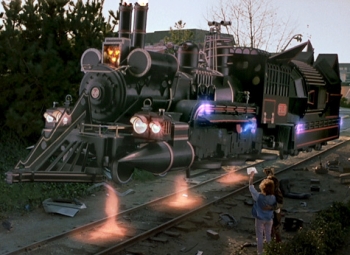
All aboard the Dungeons and Dragons Express

Thinking about it (as I have, lately) the current D&D Next playtest project is much like a train ride…

I really should travel by train more often. There’s something deeply satisfying about being able to sit back and watch the world fly by, basking in the illusion that you are immobile and the world is shifting to accommodate your desire to be someplace else. You sit, and the world moves.

Thinking about it (as I have, lately) the current D&D Next playtest project is much like a train ride. We began by all hurrying to the station to climb on board the first playtest packet, excited to see where this train would take us and even more eager to get to reach the destination and see the finished product.

Time passed and, as happens, some people got off the train; that’s fine, as no doubt they had other places to be and had decided this particular train ride wasn’t for them. I and my merry group of wayward souls stayed on board, and continue to enjoy the ride – even despite the kids in the seat behind bawling “are we there yet?” at the top of their lungs. You know who you are.

At the same time this is unlike any other trainride as we have the ability to decide which route the train should take. Don’t want to stop at Dual-Class Junction? Tell the driver. Unhappy about the incline up Grindy Combat Hill? You can have a quiet word with the ticket inspector. As the tracks are still being laid up ahead, the route is (quite literally, if you print out the pdfs) in your hands.

Of course, if all the playtesters have a say then the risk is that the D&D Express just ends up going round in circles. Dungeons & Dragons is a huge hobby with players and DMs who all (quite rightly) believe that their particular playstyle is the best – and it is, for them. We have immersive gamers who revel in backstories and subplots alongside harried players who just want to grab a pregen and kill some orcs. We have DMs who weave complex story-driven arcs of their own making and DMs who would much prefer to use published adventures with ready-made battlemats and a stock of minis. We have everything in between and beyond, with many players and DMs being a bit of everything in varying degree. Identifying quite what we want out of a game is a minefield, and I’m pretty sure that driving a train over a minefield is a really bad idea.

This is why of all the ideas mooted for D&D Next, the one I’m most excited about seeing is Modules. Pushing the train analogy a little further, Modules are the carriages that make the train. You get to pick the class of seat, the buffet car and number and type of carriages. Which Modules you pick (or not at all, if you’re happy playing vanilla core D&D) dictate whether your particular D&D Express train is a fast-as-lightning bullet train with ultra quick combat, rapid healing and a cinematic action feel, or a slow-burning heavy stoker loaded up with crunchy game options and detail. D&D becomes your game, according to your particular whims and needs.

This is a Module. Probably.

This is where it’s my turn to be the annoying kid who kicks the seat and says “ARE WE THERE YET??“. I know we have seen some modules in D&D Next already (the various healing rules, Backgrounds, etc) but they’ve not been explicitly called out and standardized in their approach. I want to see a Module as a module with a fixed template and structure so we know it as such. I want Modules by the bucketload with Mass Combat being high on my list. Much as I’m sitting back and enjoying the ride, that is one piece of the journey I’m most eager to see.

So I hope you’re still along for the trainride. If you aren’t, or left the train at an earlier station, grab the latest playtest packet and hop on board. You might just like where we’re going, and how far we have travelled already.

Till next time!

What’s on the floor? Let’s improve the dungeon…

The dungeon floor is usually just there, trodden on and forgotten. It doesn’t have to be that way, of course…

Sand-in-my-boots1The one part of the dungeon your heroes are most in contact with (unless they are blessed with permanent levitation or wings) is the floor, yet all too often it is given barely a mention during the game. It’s just there, trodden on and forgotten.

It doesn’t have to be that way, of course. The floor of a dungeon can (and indeed should) be just as important a feature as any other element that makes up the adventure. Here’s a few ideas to spark your own creative juices.

Difficult and dangerous terrain
The easiest way to make the floor something more than just ground to walk upon is to turn it into a tactical consideration. Patches of rubble and detritus make for uneven footing, especially in the midst of battle. In D&D Next terms this could mean Speed is halved and Disadvantage to attacks, making it an ideal place to force your foes to onto. Imagine a room with a small patch of clear ground surrounded by uneven rubble around the walls. Whoever holds the ground has a distinct tactical edge.

Taking it a step further and the floor can be a downright dangerous place on which to stand. Whether it is grasping skeletal claws rising out of the earth tearing at limbs, a bubbling acid pool, the sheer burning cold of Frostburn Ice or worse, the game effect will be much the same – in addition to the area counting as Difficult Terrain, if you enter the area (and each round spent within) make an Attribute Save or take damage. The type of save depends on the nature of the terrain; a DEX save would be appropriate for most types of Dangerous Terrain, but a CON save would be more suitable for something like Frostburn Ice or similar, and perhaps even a WIS Save against the sanity-threatening cries of a floor covered in Screaming Maws.

Glass ceilings, glass floors
Few places are more frightening than the future. Imagine a dungeon where every single room, corridor and area has floors of glass allowing the party to see what awaits them in the lower levels. Demons could look up licking their lips at the prospect of fresh souls on which to feed while the heroes gaze back knowing full well that what awaits them knows they are coming.

Now picture a 50 level dungeon with glass ceilings and floors throughout. It’s a deadly Inverse Skyscraper Of Doom where the denizens of each level look up with hunger and down with fear. Replace “glass” with a fantastical equivalent (sheets of pure invisible magic, stained or volcanic glass or even diamond!) and you have an epic setting for a campaign-length dungeon crawl.

If that’s too much glass for your taste imagine a room containing a single circle of glass embedded into the floor. At first glance this looks like a scrying pool but it’s really a view directly into the room below through which our heroes can see an ongoing ceremony to some vile deity. It is also the only way down to the level below. If the party wishes to descend to the next dungeon level (and they will) they will need to somehow break the glass and literally crash the ceremony. Nothing starts a fresh dungeon level better than heroes leaping into battle!

Tracks in the sand
Sand is wonderful stuff. It shifts and curls with the passage of air and time, hiding the past but also revealing recent events. A sand-coated dungeon floor can reveal much about whether a particular corridor has been recently travelled and by what. A skilled tracker or Ranger should be able to discern from the swirls in the sands the number and type of foes along with what direction they travelled. Sand is also great for leaving false tracks so a wise groups (the party or particularly smart monsters) could brush away their own trails or even wear oversized boots to make it look like the dungeon has been invaded by giants.

Sand can also count as difficult terrain (see above) as high dunes are difficult to find purchase upon, and even be dangerous terrain if the sand is deep and there is a risk of it pulling a hero in. Woe betide a party who discovers that a dungeon with 10′ high ceilings is really a 20′ high dungeon covered in a 10′ layer of sand. Every step could well be their last and the entire dungeon floor is effectively one huge pit trap. Good luck with that.

One particularly useful spell in a sand-filled dungeon is Create Water. Given sand of sufficient depth this simple spell effectively becomes Create Quicksand and the cunning spell-caster can set Quicksand Traps to ensnare wandering monsters. Just make sure you don’t forget where they are.

Groundfog Day
(with apologies for that pun) Groundfog, the staple of Ravenloft adventures everywhere, is a great way to add atmosphere and mystery to a dungeon. Low-lying swirling mist and fog can hide a myriad of secrets in its shallow depths including pit traps, levers, scurrying giant rats and dead (or undead) corpses of part adventurers.

If can also be a hazard in its own right with the noxious or enchanted gasses forcing anyone who is knocked prone to make a CON save or suffer the effects of the fumes. This could mean succumbing to the effects of a Sleep spell, taking damage, suffering a coughing fit that grants Advantage to all attacks against you, or whatever else the GM can come up with. A particularly wicked GM could say the groundfog is the Mists of Paranoia and any who breathe in the fumes see their friends as foes until they make a CON save. I couldn’t possibly condone such tricks, of course.

History, mystery and clues
Finally, even the simplest of dungeon floors can tell the best tales. The whole area could be composes of an intricate and beautifully coloured mosaic that tells the story of the original purpose of the dungeon, perhaps giving the adventurers some clues along the way. Age and vandalism may have obscured the meaning, but even those could reveal something about the state of the dungeon in recent times. An ancient temple dedicated to the God of Peace that has been desecrated by followers of the Vile Goddess of Destruction may have once contained a floor mosaic showing whole nations laying down their arms, but now this has been altered to show them burying their weapons in their foes (and each other). This could be a clue as to how the heroes could summon the aid of the God of Peace himself………

Talking of clues, mosaics make terrific centrepieces for locked room challenges. Your heroes could enter a room only to have all means of exit suddenly close. On the floor is a mosaic, but it’s missing a piece and appears jumbled. Statues around the room come to life and start attacking. Can the heroes defeat the statues and fix the sliding puzzle mosaic to open the doors at the same time? A cunning DM could pull out a real sliding puzzle for the players to try to complete during the battle. Have fun with this one.

I hope this gives you a few ideas and food for thought. Till next time!

Spotlight on… The Wizard

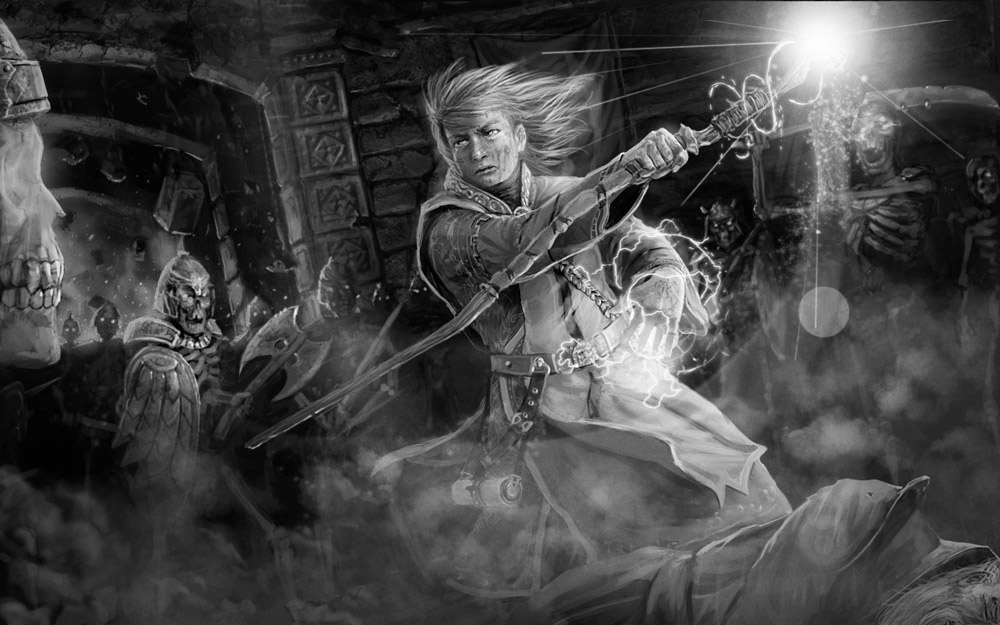
Mage WizardAs the old saying (which I just made up) goes – anyone can play a Wizard, but it takes a certain kind of person to play a Wizard well.

Of course, the same might be said about any class, but this post isn’t about the other guys. We’ll save those for another time.

The Wizard class does, however, differ from the other mainstream classes in its sheer out-of-gametime tinkerability. Even when you’re not sitting at the table (real or virtual), the Wizard player can be inventing new spells or pouring over published books looking for the perfect Cantrip or Evocation for their spell-caster. I doubt many Fighter players will spend much time inventing new melee weapons, or Rogues new types of lockpick (I’ll grant you, there are probably a few out there raising your hand right now), but the Wizard is the premier class when it comes to giving players the tools to make permanent and long-lasting changes to the game world.

I remember a Wizard player in one of my campaigns inventing Jellob’s Bouncing Fireball, and we still use it to this day. The spell has been revised (not to mention nerfed) over time and across editions, but the memory of that caster and his legacy lives on through the ages. What other class can do that? Fighters might be able to build their castles and Clerics their temples, but they will eventually be nothing but dust and the knowledge of that spell will live on.

It’s easy to think that the defining characteristic of the Wizard class is their spells and that’s largely true, though far from the whole story. The true defining characteristic of a well-played Wizard is a different thing entirely.

It’s preparation.

The Wizard is (usually) the smartest character in the party. They let fools (and Barbarians) rush in while they plan, prepare and make sure they know their enemy in advance. A wise Wizard player says they are going to research the history of the dungeon before entering it, and knows the threats and monsters they are likely to encounter once they are inside. If short on time or lacking vital information, they will suggest that the Rogue and Ranger scout ahead and the Cleric cast whatever Divination spells they have available. To a Wizard, knowledge is their plate armour and shield. Only when they have the preparation done and knowledge gained do they crack open their spell books and memorize just the right spells for the quest.

The same preparation extends to the first round of an encounter as well. Unless they have exactly the right spell to shape the battlefield to the benefit of the rest of the party, the worst place for the Wizard to be is at the top of the initiative list. Let the fools (and Barbarians, and Fighters, and…..) rush in so that you can discern which enemies to target and which ones the rest of your party can handle. If that means delaying your action until later in the round so you can size up your foes, so be it. You may well earn a name for allowing your fellow heroes to take the blows they could have otherwise avoided, but it’s a small price to pay for being able to end the encounter sooner. Wizards do have a reputation for aloofness, after all.

In summary, the Wizard is far more than a walking Magic Missile launcher. It is the class which plans and prepares. It is the class that can create new and game-changing spells and (once they forgive you) is everyone else’s best friend. If you want to play him well (and I hope you do), don’t just pick the highest damage spells in the list and never adapt to situations.

Be prepared, and kick ass. Because you’re the Wizard.

Till next time!

  • This article originally posted at The Gamer Effect on April 17th, 2013.
  • Image by Hokunin.  Used with permission.

First Impressions of Nova Praxis, a Preview!

Wherein Greywulf tells us about Nova Praxis from Voidstar Games, the sci-fi setting using Strands of Fate…

When asked if I could preview Nova Praxis, I thought this would be an easy task; spend a couple of days skim-reading it, then throw a few words on the page. How hard could it be?

I was wrong. Nova Praxis is not something to be skim-read. It sucks you in, demands to be read and enjoyed word-for-word. This is a thing to be savored, not rushed. So much for deadlines. 

Novas Praxis is a beautifully illustrated, self-contained hard science fiction role-playing game built using the FATE role-playing engine. It’s around 200 pages long (I am previewing the Beta, so the actual page count will change) with an art style and layout that reminds me of (and clearly draws from) the large-scale science fiction strategy genre. As this is an area which hasn’t been fully explored in role-playing games previously, that makes Nova Praxis very much a good thing.

The game postulates a believable timeline from 2030 to 2140 which sees the discovery of nanotechnology, the creation of the first Artificial General Intelligence (and subsequent banning of them), and the destruction of Earth. That’s before the game even begins! I don’t want to spoil too much of the story behind the game setting; suffice to say it is extremely evocative, with plenty of scope for role-playing opportunities. It neither feels too broadly sketched nor too tightly drawn to give the players and GM room to create their own tales. It has managed to hit that sweet spot, and that’s no mean feat.

[Editor’s note: I just opened the book – I found the setting’s timeline incredibly engaging, and that’s only in the first chapter! -Chris]

The campaign “world” is our very own solar system, with a few notable exoplanets thrown in for good measure. This helps make the setting more familiar than the usual sci-fi game, but at the same time brings the differences into sharp relief; The future has shaped the worlds around our Sun in many different ways. The setting is “ruled” by Coalition Houses, each having their own special focus and interests, and this corporate conflict acts as a major driving force in the game.

The rules of the game themselves are FATE-based and use only six-sided dice (and poker chips or similar for Fate Points) for skill resolution. The lightness of the game engine meshes well with the hardness of the setting to create something where the focus is very much on the story being told, rather than on the mechanics of the game. Usually, hard sci-fi systems have similarly hard and complex rules, and end up creating something too doughy to be playable. Nova Praxis, again, gets the blend just right.

Players are encouraged to create Aspects (facets of their character which are used in play) that are rich and evocative (in their terms, Nova!) – don’t just be “Smart”, but instead have a “Mind Like a Bio-Steel Trap” – to help bring the story-telling and setting forwards. Aspects can come from many sources (Characters, Consequences, Maneuvers, Scenes, Zones and Equipment) and they all combine to allow the player to spend Fate Points to influence the direction of the scene.

Character creation is both fast and detailed. Your hero has six Aspects covering six different areas, and begins play in one of three states – Pure (human, possibly with genetic modification), SIM (you have uploaded your mind to become an entirely digital entity) or Sleeved (your digital mind has been downloaded into an artificial body). Intriguingly, it’s possible that your character will change from one state to another during play with your human character using an Apotheosis Augmentation to become software, then being downloaded to a biosleeve body to walk the world once more.

Generation is rounded out by choosing Skills, Advantages and Gear, and the calculation of your Rep-Rating (your reputation among the Coalition). I would rate character generation as roughly on par with Savage Worlds in terms of complexity, and significantly less complex than some FATE-based systems I have seen.

I could go on, and probably will. This is a great system and setting  that shows so much promise and doesn’t disappoint at any step of the way. When it comes out of Beta, I will be the first in line for a copy, that’s for sure.

You can find Nova Praxis here.

A Beginner’s Guide to Superhero Gaming, Part Two

Last time we looked at what makes superhero gaming different (some would say superior, but that’s fightin’ talk) to other genres of role-playing. This turn around, it’s time to get down & dirty and take a close look at how Mutants & Masterminds Third Edition might just be the ideal system for your first foray into the world of the spandex’d hero.

For those of you that have played previous editions of M&M, I suggest you stick around, too. You’ll learn a little of what makes this edition even better than what came before. Steve Kenson has achieved the impossible, improving an already fantastic (nay, perfect) game. I’ll show you how, and what to look out for, as you turn the page.

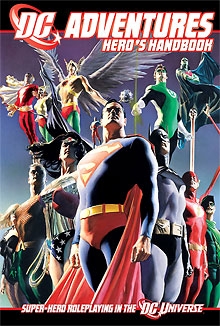
In order to play M&M3e (an unwieldy acronym, but less tiring than typing Mutants & Masterminds Third Edition repeatedly) you need just one book: the core rules. This comes in a choice of two flavours – DC Adventures, which contains the entire rules system coated in wonderful DC Comics campaign setting fluff and artwork, or the vanilla all-you-can-eat Mutants & Masterminds Hero’s Handbook, which doesn’t. Both are available as either print (DC Adventures is hardcover, the Hero’s Handbook is softcover, and coming soon) or pdf. Of the two, DC Adventures is better value overall. The pdf is $20 (just $2.50 more than the Hero’s Handbook) and the Hardcover $40 ($7 more than the softcover Hero’s Handbook), but has better artwork (which is to be expected) as well as full stats for Batman, Superman & co. What’s not to love?

Compared to the World’s Most (or Least, depending on who you ask) Popular Role-Playing Game, M&M3e is an absolute bargain. There are other, simpler, cheaper superhero systems out there (ICONS is a terrific game, and at only $2 should be on every gamer’s hard drive) but M&M3e, like D&D, is The Daddy. It is the game to which all others aspire, the one which has (in our group, at least) overtaken all of the other superhero systems out there (and there’s no shortage of great ones right now) and we turn to time and again.

Where M&M3e differs from Second Edition is that it has taken a step away from the core d20 system as laid down by the D&D System Reference Document, and become more of a unique game in its own right. This is a Good Thing as it means the emphasis is placed more on elements that need pushing to the fore in the superhero genre.

For example, instead of just a single Dexterity stat, there are three: Agility (speed, grace and overall body control), Dexterity (manual dexterity and fine motor skills) and Fighting (the raw ability to hit or avoid a blow). This lets you create a character who is highly dextrous, but lacks combat talent (a Stage Magician, for example), a clumsy pugilist or acrobat (who lacks both fighting and manual dexterity skills). In previous editions, as with D&D itself, you would either have to create a character with high DEX and hand-wave their shortcomings, or use Feats and Skill Training to represent what should be natural talent (ie, Attribute-based).

The other changes to the system are likewise evolutionally rather than revolutionary in nature, and each one is an improvement over what has gone before. Feats are renamed Advantages and cover much the same ground, the Skills list is more tightly focused toward modern-day gaming and terminology, many of the Powers have reworked costs and mechanics, and all characters gain two Complications during character generation (which can act as plot-fodder for the GM). None of these are particularly earth-shaking, unless you’ve got Earth-Shaking as a Power, of course.

The biggest conceptual change is back with the attributes. In D&D terms, M&M3e just uses the Attribute Bonus as the stat. For example, STR 4 in M&M3e terms is the same as STR 18 (a +4 bonus) in D&D and previous editions of M&M. This change works especially well in the superhero genre where heroes (and villains) can have attributes far beyond human limitations.

This is the edition of Mutants & Masterminds where it grew up and learned to stand on its own two feet. Bless.

Enough of the mini-review. This is meant to be a beginner’s guide, so let’s start at the beginning. Again.

As with every RPG under the sun, your M&M3e experience is likely to begin with character generation. Mutants & Masterminds contains no classes, no races and none of the coat-hooks your typical D&D gamer will expect to be able to hang his hat on. That blank character sheet and pool of Points you spend to create your character from scratch can look awfully intimidating, so that’s why M&M offers up Archetypes. These are entirely optional pre-built character templates that the player can use as-is, adapt or draw from as inspiration. There’s no mechanical benefit to using an archetype (their points cost is calculated the same), but they do provide a quick and simple way of getting into the game. Imagine if the D&D Player’s Handbook included pre-generated character stats for an Elf Ranger, Human Wizard, Dwarf Fighter and Halfling Rogue, all ready to add a name to and play. That’s what Archetypes are in M&M. The ones provided are:

  • Battlesuit – Because everyone wants to play Iron Man, right?
  • Construct – You were made, not born. That means no birthday presents. Boo you.
  • Crime Fighter – You are a member of Batman Incorporated and want to be Nightwing or Batgirl when you grow up
  • Energy Controller – Covers everything from the Human Torch to Cloak & Dagger or Lightning from the JSA
  • Gadgeteer – I got your steampunk mixed in my superheroes
  • Martial Artist – I got your Bruce Lee mixed in my superheroes
  • Mimic – Anything they can do you can do, too
  • Mystic – Doctor StrangeFate!
  • Paragon – The iconic Superman who can fly faster than a speeding ticket and punch through walls
  • Powerhouse – Big, strong and ugly
  • Psionic – I know what you’re thinking. Stop that
  • Speedster – Can run at 64,000mph, thus making battlemat-using GMs cry
  • Shapeshifter – Proving that one size doesn’t fit all
  • Warrior – You are Aquaman, Ravager, or Conan

Phew! The Archetypes cover a huge number of superhero types and there’s bound to be at least one that appeals. As this is a Beginner’s Guide, I recommend picking an Archetype, then (if you’re feeling brave) customizing it a touch. Juggle the skill points around, switch out a Power or two, or change the Advantages. Add your own personal Complications, and you’re done.

Full blown start-with-a-blank-character-sheet generation is beyond the scope of this post, but it’s great fun to craft your own unique one-of-a-kind superhero. If you prefer pixels over pencil and paper, I heartily recommend Hero Lab. It is one of the best (if not the best) character generation applications around, and will create characters for M&M2e, M&M3e, Savage Worlds, Pathfinder and more. Well worth a look.

The most important part of character generation (whether you go the Archetype route or no) is to consider the team. Superhero gaming is, more than any other genre, about being a member of a group. You are a vital member of a superhero team who relies on each other to save lives, protect the innocent, and mash nasty villains into pulp. Think about how your powers and personality contribute to the team as a whole. Every one wants to be Batman, but no one wants to be the rest of the team that Batman is on. It might be cool to play the moody solo hero stuck in a team situation, but don’t be That Guy. At least, not for the first few sessions where you are all learning the game, ‘kay?

I’ll end with a quick example of character generation at work.

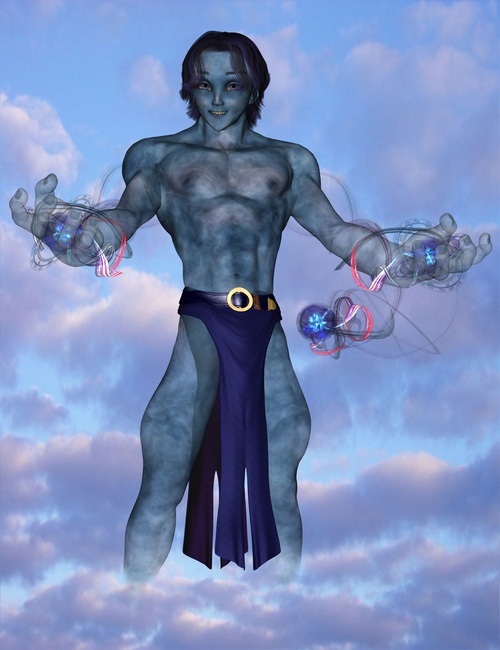
Meet Imagenie, a genuine honest-to-goodness Genie exiled from the Djinn City of Brass for questioning the authority of the High Council. In human terms, he is a teenager (albeit a 200 year old one) and would fit right in to a group such as the Teen Titans.

His main strength is his keen insight into other people – he has a high Awareness and terrific Deception and Insight skills that mean it’s almost impossible to pull the wool over his eyes. In a team, he is the guy in whom all the others confide – even when he is secretly pulling the strings behind their backs.

His powers are all wind-based. He can create tornadoes that he can fix in place or move around, let loose blasts of air, have it swirl around him or create “platforms” of air to carry himself and others. The wind-creations all seem to shimmer like half-created illusions, often of desert scenes and minarets. As he advances, he will gradually gain Illusion-based powers and truly come into his own as an adult Genie.

= Imagenie, PL8 120pp =
Str 2, Sta 3, Agl 4, Dex 6, Fgt 4, Int 4, Awe 8, Pre 6
Dodge 5, Parry 5, Fort 4, Tough 3, Will 12, Init +4

Close Combat 6, Deception 14, Insight 12, Persuasion 8, Ranged Combat 8, Sleight of Hand 8

Create 8 (200′, 250cu’, DC 18, Innate, Mobile, Stationary)
– AP: Blast 8 (200′ DC23, Area 60′)
– AP: Protection 8
– AP: Flight 8 (500mph, Platform, Affects Others)

Complications: Questions authority, Motivation: Find a way to return home

A Beginners Guide to Superhero Gaming, Part One

So you want to be a superhero gamer. You want to run, punch and fly faster, harder and further than ever before. You tire of being constrained by mere dungeons and battlemats, and want to create a character that is entirely the product of your own imagination, not the product of race plus class. You want a system that doesn’t skimp on the details yet is fast and fun to play, a game that really does make you feel like you are the hero.

In short, you want to play Mutants & Masterminds Third Edition. You just don’t know it yet.

Perhaps you have played in a superhero role-playing game before – maybe even Second Edition Mutants & Masterminds – and are tempted to take a look at Third Edition Mutants & Masterminds or DC Adventures. Both are exactly the same system but the latter contains information and details about the DC Universe as a complete ready-made campaign setting. Rules-wise, they’re identical.

What we’re going to do is take a look at Superhero Gaming as a whole – what makes it special and things to watch out for if you’re more accustomed to fantasy role-playing – then move on to how to get started with M&M 3e itself.

So strap on your rocket boots, shout Kimota, or run to the nearest telephone box to change. We’re about to enter the world of the Superhero Gamer!

If you are accustomed to fantasy role-playing games, one of the biggest shifts when you step into the superhero genre is one of scale. You’re going from a genre where everyone has roughly the same speed, and the strongest (STR 20) hero in your group can lift about 400 pounds, to one where some heroes will be able to run (or fly) around the world in a single round, or lift thousands of tons. This is a genre where anything goes – reanimated WWII soldiers can rub shoulders with immortal cavemen and shapeshifting aliens. Your hero may well have normal human strength, but he might be able to shoot laser beams from his eyes, teleport, or go intangible with but a thought.

This means that battles can be larger than will fit on a mere battlemat, and your superheroes will have to watch out for collateral damage. Punching a villain through a skyscraper might be fun, but make sure it is vacant first. Remember that lawyers are everyone’s kryptonite.

One of the unspoken tenets of superhero hero role-playing is this: No one can do everything. More than any other genre, superhero gaming is all about being a part of a team. It is about having a team name and a secret (or not so secret) headquarters. It is about wearing your spandex uniform with pride. Even if your hero can fly faster than a speeding bullet, take a direct hit from a rocket and punch like a freight train, you’re still going to need someone who can attack at range, wield magic or possess cool ninja tech.

Some supergroups work best when they’re built as a team from the ground up. If you can, have all the players create their heroes at the same time, all based around a common origin or concept. This gives you a ready-made reason for them working together as well as a chance to run their origin as your first scenario!

The Fantastic Four are a great example of a shared origin and group dynamics. The superheroes are based around the four elements (Earth, Air, Fire and Water for those at the back) and all gained their powers at the same time due to exposure to cosmic rays. Collectively, their powers neatly cover all the bases, though individually the heroes are weak in one or more areas.

The other type of group is the superhero mash-up. This throws heroes together because they all share some common power source (The X-Men), are roughly the same age (Teen Titans), are a family (The Incredibles), all live in the same area (East Coast Avengers), or are simply the best at what they do (Justice League). In your own campaign setting the superheroes could be the only ones of their kind, be reformed supervillains, or anything else you can come up with. It’s worth coming up with a reason for the group’s existence as soon as possible, as this helps reinforce the team spirit that is so central to a good multi-player superhero game.

The flipside of the coin is solo gaming, and here superhero gaming also excels. Who doesn’t want to play the lone avenger once in a while? Running a superhero game with just one player and GM puts that one superhero entirely in the spotlight and gives him a chance to really shine. This could either be a character designed for a solo game from the start, or a hero from a group given a little airtime. Unlike fantasy gaming where it’s rare for one of the party to have a solo side-trek (it screws up the XP allocation, for one), when it comes to superhero RPGs, you can run a solitaire adventure at the drop of a hat. Maybe your hero is on patrol duty around Super City, or is pursuing their own goals. This is a common enough trope in the comics where members of the Justice League have their own stand-alone comic title, so why not use it in your game too?

Then there’s the Superhero who always works alone. If you have only one other gamer in your vicinity or want to introduce the game to a new player without all that peer pressure, this is an ideal way to play. Remember that unlike building a hero for a superteam, your built-for-solo Superhero will need to be capable in many areas, but don’t sweat the details too much. A wise DM will build the adventure around the superhero’s strengths and style. It’s rare, for example, for Batman to face off against magical villains or Superman to go busting gangsters by Pier Thirteen.

Which leads us, in a roundabout way, to Mutants & Masterminds Third Edition. And that’s what we’ll talk about – next time.

Image by Greywulf, over at Greywulf’s Lair.

I bet you can’t name a famous Shadar-Kai

Quick! Name a famous Shadar-Kai. Tricky, eh? This new poster-child race from 4e D&D lacks the same iconic identity as our familiar Dwarves, Elves and Halflings for that one simple reason: they’re new.

How about if we took a small step back and paraphrase the racial details for the Shadar-Kai from the Monster Manual:

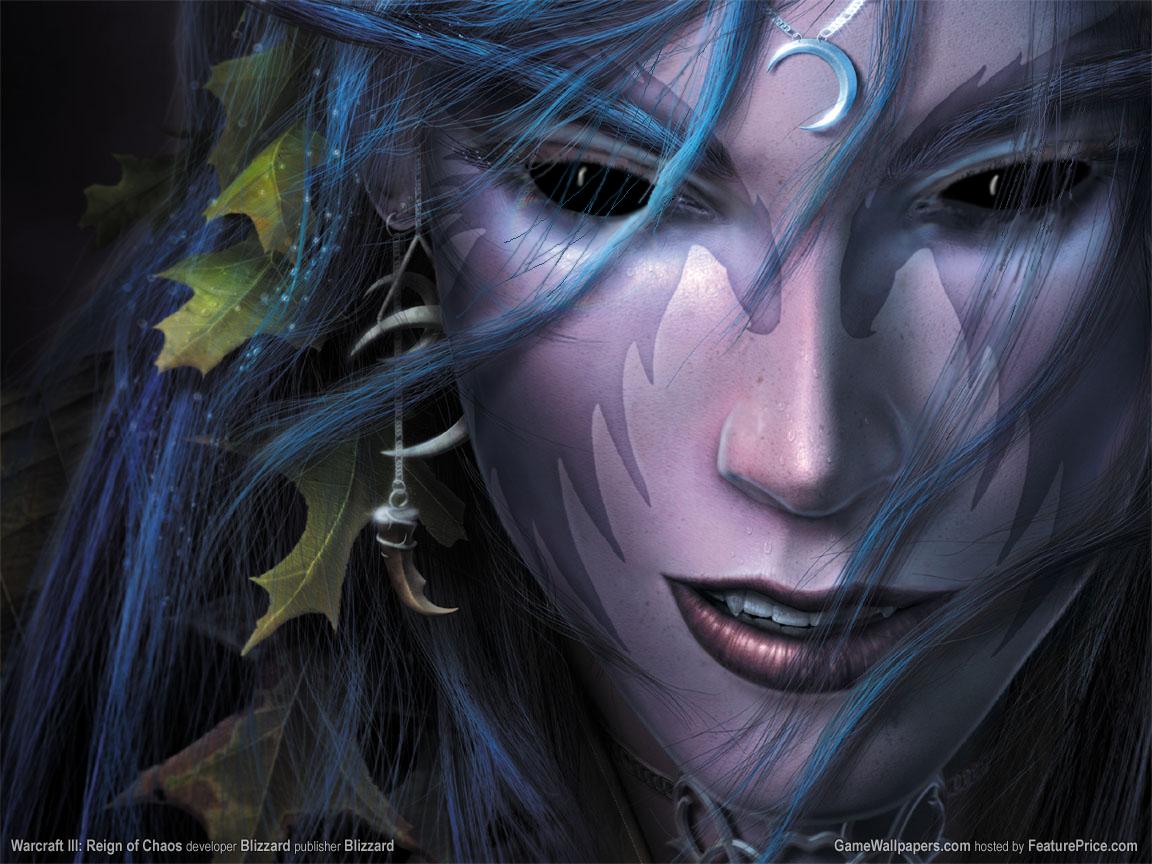
“They are a bleak and sinister human-like people who move secretly to accomplish ruinous ends. They have gray skin and eyes like a raven’s. The shadows around them seem to deepen as they move. They prefer loose, dark garments. Hair is worn long and their skin always has patterns of tattoos and many piercings. They prefer light, exotically shaped weapons.”

Shadar-Kai are pale skinned, dark clothed moody heirs to an ancient branch of humanity who wield unusual weapons and their single-minded pursuit of whatever it is they are single-minded about.

So, let’s ask the question again: Can you name any famous Shadar-Kai?

Here are a few contenders:

Elric of Melnibone

Beyond any shadow of a doubt, Elric is the quintessential Shadar-Kai Fighter/Dark Pact Warlock. This pale-skinned albino with the kewl sword is the last heir to the decadent Melnibone empire, an outcast and wanderer who brings gloom, destruction (and just occasionally love and hope) wherever he goes.

As an albino Shadar-Kai, he must take herbs (which may or may not be Controlled Substances) to survive, and is by nature a loner who is at his best when standing atop storm-tossed cliffs, fighting demons.

Batman

Batman? Yes, Batman. Pitch him as a Shadar-Kai Urban Ranger/Artificer and you’ve got one awesome crime-fighter who uses his innate ability to Shadow Jaunt (teleport between shadows – how Batman is that???!!!), awesome Streetwise and Stealth skills and unique equipment to take down foes. He roams the alleyways and makes the points of light just a little lighter by sticking to the darkness.  Add an Arcane Familiar, which is a large tattoo of a Bat on his chest when it’s in Passive Mode, and you’re there.

James Bond

Not all Shadar-Kai are as brutal as Elric and Bats. This Shadar-Kai Wizard (bear with me on this one) is as suave and sophisticated as they come. His dark elegance and charming demeanour belies the heart of a stone-cold killer bored with life and continually craving yet more reckless excitement to fill his days. With his pistol shaped wand he is a deadly aim, and his mind holds volumes of esoteric knowledge, though he rarely reveals this side of his personality. Most villains underestimate Mr Bond, that is their downfall.

Professor Snape

Another wand-wielding Shadar-Kai Wizard, though this one couldn’t be any more different. Severus Snape is a tragic figure, a mere half-breed Shadar-Kai who hides the shame of his birth along with all the other secrets that make up his fractured personality.

Not that all Pureblood Wizards are Shadar-Kai, of course – but both Snape and the Malfoy family almost certainly come from that particular bloodline.

Incidentally, 4e D&D would make a terrific Harry Potter role-playing game. The PCs are all Wizards with the Wand implement. Take Brew Potion by 3rd level or you fail the course. Good luck!

There’s my group of famous Shadar-Kai.  Can you add any more to the list?

The Best Table-Top RPG You’re Not Playing: Rifts

Every role-player has games that just sit there on the bookshelf. They lurk, their spines staring accusingly at you as you pass. “Why won’t you play me?” they mutely inquire. You know you want to.

But still you don’t, and apart from their annual lift off the shelf for one more guilty read-through, they remain alone and unloved. Perhaps it’s because of an inability to enthuse the other players in your gaming group, other commitments, or because you simply don’t know where to start when it comes to running a whole ‘nuther system. There’s a whole host of reasons why these games just don’t get the love they deserve.

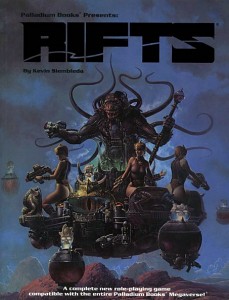
For me, the accusing spine that glares at me more than most is Rifts, that venerable tome from Palladium Books.  It’s difficult these days to talk about Rifts without at least glossing over the legal idiocy that has plagued it throughout its long life, so let’s do that first just to get it out of the way.

Rifts is, first and foremost, a system derivative of everything. We have Nazi Cyborgs, Mech Warriors and Giant Manga Robots rubbing shoulders with tropes of classic fantasy (cheekily called Tolkeen). This is a system which, from a legal standpoint, deserves to be sued to Hell and back by everyone from Tolkien Estates to Phillip K Dick and Studio Ghibli. Yet it hasn’t been, and the world (quite frankly) is a better place for it. The ability to patent ideas, concepts and imagination will be the death of civilization, I swear.

This makes Kevin Siembieda’s legal battles over “rights” regarding Rifts all the more ridiculous. In his time, he has ordered fan sites be taken down and claimed that he somehow owns the concept of a “Rift” (despite the fact the word and definition has been around for, oh, hundreds of years). It’s my opinion that, despite the fact that he writes awesome role-playing games, he doesn’t make the best business decisions, and that’s all there is to it.

There. Gloss done. On to the good stuff.

The world of Rifts is near-future modern day Earth, with one minor twist. Well, when I say minor…. The Golden Age of humanity ended when Rifts in time and reality itself opened up, spewing forth other-dimensional beings and worse. The shape of the land changed as magic re-awoke (not that it was ever truly asleep in the first place) and dinosaurs once again roamed the earth. Thankfully though, that’s all in the past.

What we have now is a world shaped by chaos where a Coalition State keeps an iron grip on what remains of the old Earth human Empire and tries to hold back the tide against pretty much anyone else, and there’s no such thing as good guys any more.

Rifts is perhaps best described as “Survivalist horror in the Warhammer 40k world of Judge Dredd.” Except it’s more than that. Rifts, more than any other non-generic system I’ve encountered, can be pretty much anything you want it to be. Want to play a group of heroes fighting against the Coalition for their rights to a Free State? Psionic cops rooting out mutant scum in Chi-Town? Glitter Boys fighting radioactive dinosaurs in the outback? You’ve got all that, and more.

The rules system itself is common to all those in the Palladium line. It’s best described as functional rather than elegant in that it gets the job done without too much fuss, and doesn’t get in the way. The system for handling huge-scale damage (called Mega-Damage – each point is roughly equal to 100 normal damage points) works well enough in-play, and I’m beginning to yearn for a similar system in 4e D&D where it’s easy for high-level monsters to have thousands of hit points. Ick.

We have a plentiful supply of Occupational Character Classes ranging from streetwise City Rats to Coalition Grunts and Glitter Boys. There’s Cyber Knights (high-tech Paladins) and all manner of Borgs, Crazies, Scholars and Scientists. If that’s not enough, there’s wizardly Line Walkers, Techno-Wizards, Mystics, pyrokinetic Bursters and much more.

The character classes themselves are gloriously unbalanced. At one end of the scale there’s OCCs such as the Cyber-Doc who gains moderate skill bonuses and not much else. At the other there’s the Glitter Boy in his faux Mech Warrior power armour. To my mind that’s a huge strength of the system as the GM is free to permit different character classes based on the preferred campaign style. Whether you want high-explosive large scale warfare or street-level action, there’s OCCs that provide. In Rifts, as in any RPG, only the foolish GM would open up all the options.

In a way though, there’s too much, and that’s one of the reasons why Rifts still sits on my shelf. It’s overwhelming as a system. It’s like every idea, ever, has found a place in the core book’s 256 pages, and it’s difficult to even know where to begin. Add in the (randomly laid out but excellently written) Word Book supplements and it’s easy to face Information Overload head-on.

Whenever I suggest running a short Rifts campaign, I get the reply, “We’d rather play TMNT instead.” This is much the same rules system as Rifts but lets the players create mutant animals using one of the best semi-random character generation engines ever made.

One of these days I’ll let them generate critters in TMNT, them dump them into the Rifts universe.

Ha! I’ll have my way yet!

Race, Class, Role, Build, Background and Theme

One of the biggest innovations in D&D 4e has been the broadening of character generation. Your character is no longer a simple Race and Class combo (though he can be just that, if that’s what you want) but a multi-faceted being complete with backstory, previous occupation, career path and social class, all in as much (or as little) detail as you choose.

And they’ve managed to do it without turning it into a stewing pile of power-gamery mess too. Way to go, WoTC!  Let’s take a look as each facet of your potential multi-dimensional character to see how it all fits together.

Race

Your character’s Race denotes the core of his (or her) being; it’s who they are when stripped of everything else. Their race says most about your hero’s appearance, and much about their culture, social upbringing and outlook on life. Unless they are shaped differently by the campaign setting or something particular to your hero’s background, it’s fair to expect that their overall attitude will be much the same as any member of their race. For example, the vast majority of Elves possess an affinity for the Natural world (forests in particular), but the campaign setting (such as Dark Sun) might change that radically, or this particular Elf have been brought up in an Urban environment.

That’s not to say that all Elves are nature-loving, bow-wielding hippies (though Dwarves may say that’s exactly what they all are), but that this cultural implication is present in their racial makeup. How that upbringing shapes the PC though, is entirely up to you. Maybe this particular Elf is thoroughly sick of the colour green, and never wants to see another living tree as long as she breathes. Hey, it could happen.

Class

In 4e, a PC’s Class is less about who they are and more about how they fight. Class describes where your character gets his combat training/kewl spells/prayers/psionic potential, but also how they use it when facing opposition. Both the Fighter and Rogue are Martial characters, though their fighting  styles are very different. One charges forward, while the other runs and hides. Draw your own conclusions there.

But Class is more than that. It helps explain how your character responds to a challenge both on and off the battlefield. Each Class opens up a list of Trained Skills from which your PC selects several, and these Skills say more about a character than their Class selection. For example, a Human Rogue is more likely to feel kinship with an Elven Ranger if they both have the Streetwise Skill than with another Human Rogue who lacks it; both the Ranger and the Rogue share a knowledge of urban life and respect for the more seedy side of towns.

Class might also explain a hero’s motivation. It’s easy (if more than a little stereotypical) to create a sneaky Halfling Rogue or stoic Dwarven Cleric of Moradin, and no further explanation of their motivation is needed. I encourage players to move away from that and instead use Background Options to help explain your hero’s motives. More on those in a mo’.

The selection of Class also chooses your hero’s Power source. 4e D&D has taken a leaf out of the much loved Rolemaster’s book with the implementation of Powers. Just as Rolemaster had the Realms of Essence, Channelling, Mentalism and Arms (non-combat), 4e has Arcane, Divine, Psionic and Martial, and add to that with Primal, Shadow and doubtless more to come. These control where the PC draws his powers from – Arcane gain power from the magical world around them, Divine from the Gods, Psionic from within themselves, Martial from their physical abilities, Primal from the untamed chaos of nature and Shadow from freakin’ Batman. I’m looking forward to the 4e take on the Rolemaster Archmage who recognises that all Power sources are essentially the same and draws from all of them. Wicked!

Note to self: Write more contrasting Rolemaster with 4e D&D. Comparisons abound!

In some ways though, your 4E’s hero choice of Class is the least important choice he has to make, even though it’s the most mechanically complex. Choose Eladrin as Race and  the Background Options Noble & Criminal and you’ve already got a compelling character. Making him a Paladin, Wizard or Warlord just adds another wrinkle to the pie. Do pies get wrinkled?

Role

Wait-a-minute. Isn’t a character’s Role tied to his Class? I mean, all Wizards are Controllers, right?

Well yeah, but I’ve argued before that the two shouldn’t be tied together, and it looks (with D&D Essentials) that this hard-and-fast rule is being loosened, and that’s a great thing for the game.

Right now, if you want to play a Martial Defender (for example), you’re playing a Fighter. But what if you want to play a Fighter who is more of a Striker (fewer hit points, more damage) or even a bow-wielding Controller (even fewer hit points, more foes)? How about a Wizard who specializes in Force Fields (Defender) or one who singles out individual enemies with fearsome emotion-controlling spells (Striker)? You could conceivably argue that Gandalf was an Arcane Leader rather than a Controller, and you wouldn’t be wrong.

I foresee this as a direction 4e will increasingly take, and it’s an exciting one. Separating Role from Class opens up a whole new vista for character generation, and I’m stoked!

Build

Builds are a simple, shorthand way of saying “if you take this, this, this and this, you will end up with this kind of character.” They’re entirely optional and provide a good newbie-friendly way to guide them through character generation. Want to play a Tactical Warlord or a Great Weapon Fighter? Just follow this build advice, and you’re good to go.

Despite their primary function as a guiding tool, the Builds can also serve as a role-playing jumping point. Your Tactical Warlord is likely to have a very different personality than an Inspiring Warlord, both in and out of combat. That’s partially represented by the priority of the attributes (a higher Charisma usually denotes a more outgoing personality) but also with their outlook on life; in this example, a Tactical Warlord is more likely to be coldly clinical in their assessments, whereas an Inspiring Warlord knows that it’s the hearts of men (or dwarves, or elves …) that can truly win the day.

Unlike the other optional elements of character generation (Background Options and Themes) your hero gains absolutely no mechanical bonus for following a Build other than the satisfaction of having put together a nice, well-optimised character. Conversely, there’s nothing to lose for not following a Build neither; you’re entirely free to choose between the Class Features, Feats and Powers however you wish. While you might not end up with a character with the same single-path focused optimisation as one of the Build, your hero will be (and here’s the important part) much more fun to play.

That’s not to say that Builds don’t have their place. They give us much more of an insight into the game designers’ minds. The Build represent how they expect the Classes to be played and a solid foundation for your own tinkering with Class element and Feat selection. For example, you could take Great Weapon Fighter, but replace Power Attack with Potent Challenge. Minor changes to the Build like this help make your character that more unique.

So Builds are a great way to help get a handle on the Classes, and on the game as a whole. They’re a great starting point for new players and oldies alike who are trying out a new class for the first time. It pays to know when to follow a Build, when to tweak them and when to ignore them altogether. Let’s save that for a blogpost fsome other time, ok?

Background Options

Now we’re talking! Background Options are my favouritest optional rule in 4e D&D – to the point where I don’t consider it optional at all. Background Options are an Essential part of character generation as they serve to provide your PC with that all-important backstory. And that’s pure gold for this GM.

Background Options also confer a minor (though significant) benefit in the form of a +2 to one skill, adding a Skill to your potential list of Trained Skills, granting a bonus language or some other special boon. That’s a choice of five benefits. No, not four. Clearly you can’t count.

See, here’s how the choices break down:

1. Add a +2 to an Untrained skill. This gives a small bonus to a skill which you wouldn’t normally have access to, or one which you don’t want to spend Training on. This is a good choice if you choose a Background Option that offers Associated Skills that overlap with and Skill Bonuses from your Race. For example, an Elf with the Background Option Geography:Forest could be at +4 to either Nature or Perception without Training at all! That’s perfect if you want to play a Class that lacks the Perception skill and is short on Training points. How about a keen eyed Elf Fighter who specializes in the Greataxe?!

2. Add +2 to a Trained skill. Back to that Elf. Make him a Ranger and (thanks to being an Elf and the Geography:Forest Background Option) he can be at +9 Perception even before stat bonus. That’s one eagle-eyed Ranger! Choosing a Background Option that synergizes nicely with your Trained skills is a smart move though taking a Background Option which just emphasises something we already know (Elf + Geography:Forest) is laaaaaaame ! Think about the more esoteric Background Options to make your character much more interesting. An Elf with Occupation:Mariner can still take that +2 Perception, but is a much more engaging character to play. Imagine an Elf with an ornately carved wooden leg……

3. Add another skill to your list of Trained skills. Each Background Option offers two skills. Pick one to either gain a +2 (as above) or add it to your list of available Trained Skills choices. That’s a +5 bonus, but the cost is that you have one less choice to spend on something else.  This is a great choice if you want to create a character who has access to knowledge outside their Class’ normal field of interest. A Fighter who is an Arcane Refugee would make a terrific character as his village was destroyed by magic (rather than orcs – unless they were Orc Wizards) and he could take Skill Training in Arcana, making for one highly knowledgeable warrior who hates spellcasters. This also gives him access to the Ritual Caster Feat, too, meaning he could sometimes be forced to use the very thing he hates. See what I mean about Background Options being GM gold?

4. Gain a bonus language. Boooring, unless you really want to play a character who can speak both Goblin and Giant. For these kind of multi-lingual characters, it’s better (imho) to use the Background Option to gain a Skill-related bonus and burn a Feat on the Linguist Feat.

5. Any other Boon. Some Background Options (particularly those from the Scales of War adventure path) offer more unusual benefits to the character. These tend to be more powerful and Feat-like in nature (such as the Assassin background which adds both Arcana and Stealth to your class list, and gives a +1 bonus in both). I try to steer my players away from these options, but allow them on a case-by-case basis, depending on just how much of a hard time I can give the hero in-game 😀

Background Options cover a whole range of choices – from mysterious happenings during their birth to the geography of their homeland; from their pre-adventuring occupation to wealth level; from Early Life and Parentage to Recent Events. It’s all there and more, in spades. You’ll need the PH2 or a D&D Insider account to access them, but for my money, Background Options alone make it worth the price of entry.

Your hero isn’t limited to a single Background Option, though he only gains the mechanical benefit from one of them. If you want your hero to be a Former Gladiator Scorned Noble Magic Scholar who is a Fugitive from a Vengeful Rival with a Missing Master, that’s very all right by me!

Note to self: Use multiple Background Options and Risus notation? The character above could be Former Gladiator (3), Scorned Noble (2), Magic Scholar(1), Fugitive from a Vengeful Rival (4), Missing Master (5). Hmmm. Food for thought.

Themes

So far, Themes are only present in the Dark Sun campaign setting as they provide just a little more oomph to your character. That’s firmly in keeping with the setting as characters in prior editions were generated at a higher level than 1st from the start. Each theme grants an additional Encounter Power to the character, putting them kinda-almost at the same power level as a 3rd level character (only without the hit points, surges, utility power, feats or equipment – so really not like 3rd level at all). Every character takes one Theme, and only one. Extra goodies (feats, paragon paths and optional Powers) are unlocked at later levels, if you choose to follow the Theme’s natural course.

Each Theme is a natural fit for one or more character classes (such as the Gladiator Theme for a Fighter), but the real fun comes from mixing things up.  How about a Gladiator Monk, or a Dune Trader Warlord? More on that shortly…

I like Themes. They can tie the adventuring party together (“You’re all Gladiators!”), but still give them plenty of flexibility (thanks to freedom of choice over Race, Class and Background Options)  to make each character unique and memorable. Themes also help to tie the characters more closely to the campaign setting – you’ll only find Dune Traders on Athas – in a way we’ve not seen before. That’s definitely a win in my books! Despite the power creep, I expect to see setting-unique Themes to find their way across all the campaign settings in due course (perhaps requiring a Feat to gain them). That won’t be a bad thing.

Mixing it up

What’s more fun? An Eladrin Paladin, or an Eladrin Paladin Merchant Prince Dune Trader? How about a Halfling Star Pact Warlock Monster Hunter Travelling Missionary? Or a Dwarf Gladiator Rogue who was Born on Another Plane?

Background Options and Themes come into their own when you play against expectations. As Elf with Geography:Forest might as well just be an Elf, whereas one with Geography:Wetlands has an interesting twist. Likewise, a Fighter with Occupation:Military isn’t going to win any prizes, but make him a Wizard……

There’s no shortage of Background Options both in the books (regrettably, not in PHI though) and in the Character Builder, so make good use of them.

Your GM will thank you for it, I swear!
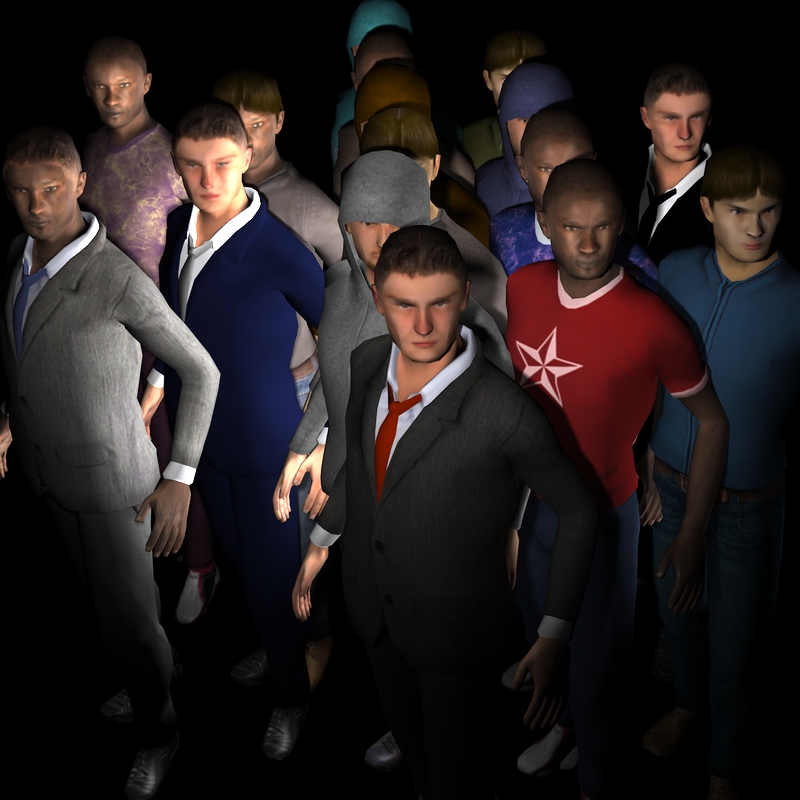
Identity, the Super Villian – Steal this Enemy

Redhawk gazed down at the rain-soaked crowd far below. “He could be anywhere,” he muttered under his breath. “Or everywhere.”

The entire crowd halted mid-step and turned their faces to him, the same expression of arrogant confidence marring their features.

“Team, weapon up,” he whispered into his comlink, “Identity has found me.”

At first, it was believed that a single man controlled the crime syndicate around Southside. In a way, that’s right – but it’s also far from the truth. One man, 2,500 bodies, and an infinite number of faces.

Identity is a single consciousness able to create bodies at will, each able to alter their appearance and operate in complete isolation of the rest. Where one gang leader gets caught, all too often another duplicate appears disguised as a cop to release him. How do you hold a person who can be in 2,500 different places at once?  Right.

Dirty little secret: Who (or what) is Identity? I ain’t tellin’ – but I know, and it’s a work of brilliance, even if I say so myself.

Notes: Morph is the ability to alter your character’s appearance. Duplication is the ability to…. well…. duplicate. Combine the two and you’ve got someone who can create multiple versions of himself that look different. That’s another example of trying to make something game-breaking in Mutants & Masterminds and you just end up with something insanely cool because the rules can take it. Oh yeah.

In this case, Identity can create up to 2,500 duplicates, each of which can alter their appearance (and clothes, thanks to the Quick Change feat) at will. They’re all in telepathic communication (Mental Link), and Horde means Identity can summon the whole cast as a Standard Action, should he wish. The Survival extra means our heroes will have to take out all of the duplicates to bring down Identity; there’s no single central controller. Yuck.