This is an entry for a contest – tell us about one of your traps…!
Some players and GM’s may feel that this trap encounter is “dirty pool”. I prefer to think of it as teaching the party a lesson in teamwork and dependence…
 This is an entry for a contest – tell us about one of your traps…!
Some players and GM’s may feel that this trap encounter is “dirty pool”. I prefer to think of it as teaching the party a lesson in teamwork and dependence. This works best when playing with miniatures so there can be no argument as to character’s locations. The encounter itself goes something like this. . .
The party has just defeated a monstrous foe in the dungeon of doom. They begin to scour the room for treasure and at the back of the room, sitting on the floor in the corner, there is a large chest. The party’s thief/rogue/trap-and-lock expert moves to the forefront to look things over. After a careful investigation of THE CHEST, they find that it’s an iron-bound wooden box 4 feet wide, 3 feet deep, and 2 feet tall. The chest is locked, but not trapped. It is well-constructed. PLEASE NOTE: If the thief successfully detects traps on THE ROOM and not THE CHEST, then they will figure out the trap BEFORE it springs
Now, one assumes that the thief goes to work on the chest. The lock is a very complex mechanism that requires three rolls to defeat. After the first successful roll tell the thief, “That took a little longer than you expected. The mechanisms of the lock are so heavy-duty that you’re fearing that you might break your picks, so you took your time.” Make a FAKE wandering monster roll and tell the party that they hear nothing. Allow the players to react – note their stated actions and locations.
The thief goes back to work for the second roll. Upon success tell the thief, “That really took a while, maybe half an hour, but you feel like you are really close to opening it now.” Make another wandering monster check (maybe a real one this time) and ask the party to adjust their minis, as it is unlikely that they are all standing around the thief anymore.
As soon as the thief rolls the 3rd success, the floor in front of the chest, where the thief has been crouching/kneeling to work on the lock snaps silently open for 1.5 seconds and then snaps closed again. It opens just long enough for the thief to fall through and then it closes again. The true reason the lock was so difficult to pick was that it was not unlocking the chest, but instead the floor. Party members that were within 10 feet of the chest will know what happened. Unless someone else can pick the lock (or perform a knock spell on the trap door), then the thief will sit in the dungeon’s cesspool some 30′ lower than the party’s current location. There is a silence 10′ radius cast at the water level below the trapdoor entrance to the cesspool making normal communication between the thief and the party impossible. If no PC’s were near the thief, then NO ONE KNOWS WHAT HAPPENED TO HIM.
Personally, I like to torture the thief with all manner of splashes in the dark and creepy-crawlies while he is trapped in the cesspool away from the party, but you may do as you wish.
 Bards that join the College of the Tree Singers [PDF] have an affinity for both music and nature. They seek to learn the ancient and sacred stories and songs of the forests, as well as to preserve these tales and melodies for future generations. Most of the bards who are drawn to this college are elves and half-elves, but the college discriminates against no one and will allow any interested bard to join.
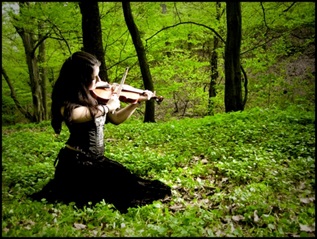 Also, unlike many other sorts of bards, Tree Singers do not commonly perform in taverns for drunken revelers. They are often circumspect about their songs and stories, choosing NOT to share them with any except other Tree Singers, druids, and elves. This is not to say that they cannot perform other songs, just that the special songs of the forest that they can hear and draw inspiration from are sacred to them, and they do NOT waste sacred music on the unenlightened. Continue reading “College of the Tree Singers, for the D&D 5e Bard Class”