Crafting Your Origin Story, Part 1

  • A wall-crawling superhero with the proportionate strength of a spider…
  • A former Vietnam vet who has become a vigilante after his family was killed in a mob shootout…
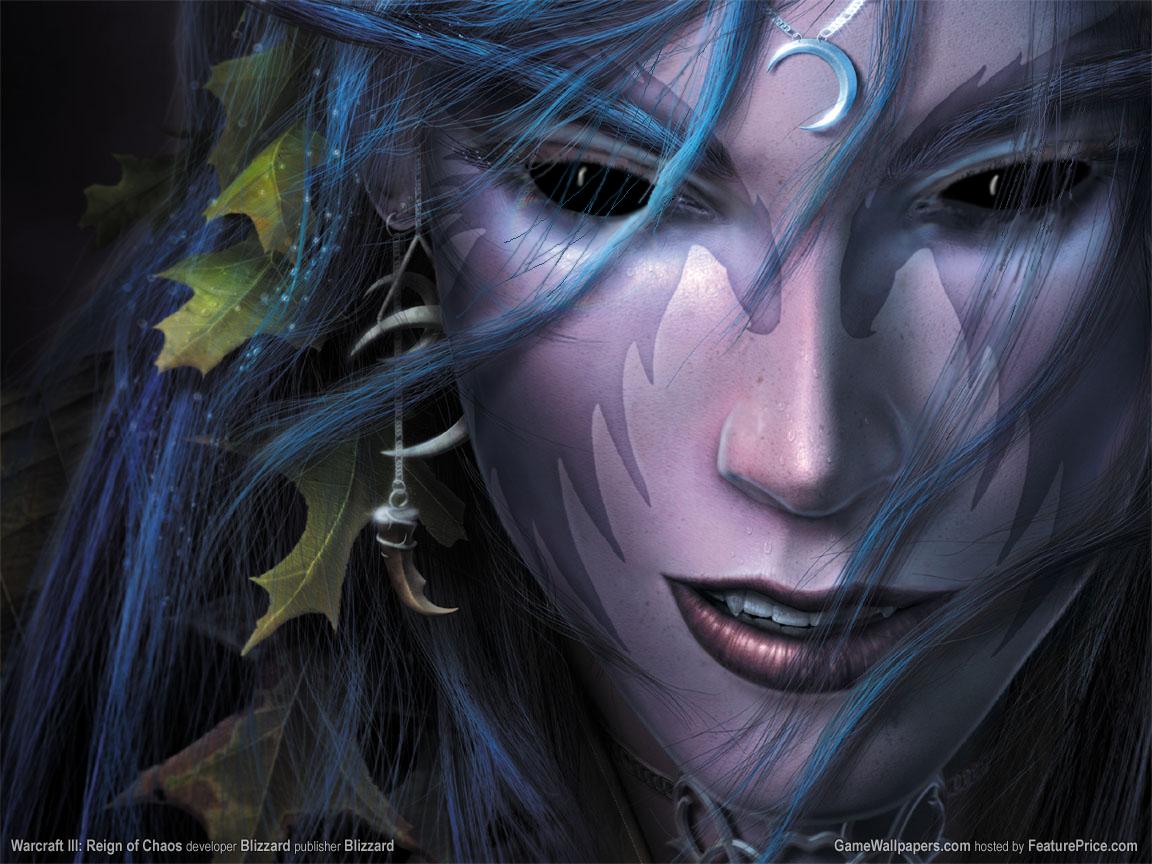
  • A drow ranger who fights for approval from the surface world, although some cannot see beyond the sins of his race…
  • An alien, sent to our world by his parents before they were killed as their planet crumbled around them…
  • A boy whose initial experiences with magic cause him to live with a disapproving aunt and uncle in a cupboard under the stairs…
  • The only wizard in the Chicago yellow pages who can’t stand seeing a damsel in distress or some supernatural baddie making life miserable for mortals…

Chances are you can name at least one character from this list.  They are iconic heroes and anti-heroes that have identifiable traits, quirks, mannerisms, abilities, etc.  What brings them to life for people is their daily struggle, their “trouble” as it were. For most characters, you need look no further than their origin story to see how that defining moment forever imprinted itself on their personality and shapes their decisions.

Many of us role players relish the opportunity to create and breathe life into a character and would love to create one as iconic as a popular super hero or character with his own line of novels.  There’s plenty of advice out there for adopting quirks and mannerisms, different accents, one-liners, etc. for your character.  We even have articles related to backgrounds to help inspire you.  What I want to encourage is to have you answer the Whys.

Why can the character do the things he does? (superpowers, 4E powers, exceptional skills)

Why does the character choose this profession (adventurer, soldier, superhero, etc.)?

Why will this character continue to follow this path?

Answering the whys behind your question will allow you to always have a grasp on your character’s motivations and make changing those motivations (if necessary) have more impact and meaning.  You will know when to stay in-character (and more importantly what it means to be “in-character” for this character) and when to break from that.  If you can break from the character established with everyone at the table while being true to the character’s origin, you’ve added another dimension to the character and to your storytelling.

For instance, in the first half of the movie Spider-Man, we see Peter Parker’s origin story. His trials and troubles that help shape him into accepting the mantle of hero and why he feels he has to be the one to deal with criminals. Even after several defeats at the hands of the Green Goblin, he still returns for more. Why?  It‘s not for kewl lewt, or experience points, or because “this is the GM’s story and I’m doing my part to be a part of it.” Spidey does these things because of who he is.  This is why 37 years after he first hit comics, he is still an interesting and compelling character that feels like he has some freshness left in him, yet has never had to change his core archetype.  Instances of Peter Parker breaking from his expected behavior drove the plot of movies 2 and 3.  Regardless of how you feel about those movies, they are still good examples of character-driven story.

For maximum impact at the table, you should discuss your origin with your fellow players.  If you want to leave that cloaked in mystery, at least discuss it with your GM.  At the very least, it will allow him/her to help you defend any choices that fit your character if the party objects, and will ultimately help advance the story.  At best, it will give the DM inspiration and hooks to directly involve your character in the greater story.

Come back next time for an example of one Hiro’s rise to character greatness…

Reflavoring the Races for Classic Fantasy – Elves

When dealing with races in the Classic Fantasy setting, we look at taking certain D&D 4e races and reflavoring them into elves.  After this, we’ll be converting dwarves, and then halflings.  When that part of the series is finished, we’ll look into making certain monsters more monstrous, and then give some ideas on the setting itself.

For each of the following racial or subracial choices, all of the actual mechanical stats, powers, and traits are unchanged. It’s the flavor and descriptions that have been altered to describe an elf. Some of the traits or powers might need to be interpreted… creatively, but for the most part, mechanics are not affected. Again, take any of the following descriptions as a subrace, or rewrite one of your own design.

ELF

  • COMMON ELF (Elf) – The common elf uses the entry for Elf. He or she can be found in any elven settlement or region, living among any of the elven sub-races.
  • GREY ELF (Deva) – Grey elves are extremely long-lived. Most other elves regularly reach ages over 200 years, but grey elves are so long-lived they refer to their ages in decades. So, a grey elf who looks to be about thirty years old will say that he is thirty, but in reality he is really thirty decades old. Most elves can tell when they are speaking with a grey elf, non-elves cannot. It is rare for grey elves to venture away from their homeland, usually only doing so if they are greatly motivated.
  • DARK ELF (Drow) – As a whole, dark elves are shunned by the rest of elven society, purportedly because the dark elves have turned their backs on their brethren, seeking to become a wholly new race. According to the dark elves, evil gods and practicing the dark arts are entirely acceptable.
  • WARRIORS OF EVANTRELL (Gnoll) – After the beasts of the Darkwood attacked the South Corridor of the Great Elven Range, a contingent of warriors was formed to combat future attacks of those beasts. As these elven warriors continued to train, they eventually gained enough confidence to seek out the beasts and eradicate them first. Today, the pack of warriors continues to exist by way of tradition as opposed to need. Other elven communities don’t often talk about these embarrassing warriors (they’re aggressive to a fault), but don’t dismiss them because they know of their usefulness. According to most elves, these warriors are rude, crude, and rash, though to most humans they appear more tolerable than most elves. Swap out the languages to Elven and Common.
  • HUMAN-RAISED OR HALF-ELF (Half-Elf) – Play either a half-elf that somehow had differing parents, or an elf that was raised in a human community.
  • HIGH ELF (Eladrin) – High elves see themselves as being the most “good” of all the elves, and tend to live in stone cities carved out of mountains (not in the mountains). They prefer the more arcane and scholarly pursuits over the physical and artistic, though they see the importance in all schools. High elves tend to shun contact with human settlements, since humans have so much growing to do.
  • ELVES OF SET (Shadar-kai) – Not being content with the progress that the dark elves have made, these fanatics have branched away from their dark elf brothers, seeking to destroy elven society at its source (the high elves).  elves of Set seek to undermine high elves at every opportunity.
  • ASHEN ELF (Tiefling) – A select few elves from various walks of life are endowed with the ashen mark – a symbol denoting their connection to fire. This is a relatively new occurrence in elven society, so no one really knows what it means. As such, ashen elves are (many times) feared by others, or at least viewed with suspicion.

Reflavoring the Races for Classic Fantasy: Humans

In many fantasy games (especially D&D 4e), the setting includes a wide array of races for players to choose from. By limiting the race selection to only a few base races (human, elf, dwarf, and halfling), you can bring back a more traditional and realistic feeling to the setting. Now, understanding that variety is the spice of life, we don’t want to limit the racial bonuses and special abilities from any of the races normally allowed. Therefore, all of the 4E race selections are still available to players, though with a twist.

There are a lot of races in 4e that offer really cool racial traits, like the Shifter, Deva, and Half-orc. Classic Fantasy does not restrict these traits, only the races that they belong to. Instead, each of these off-beat races has been reflavored into either a human, elf, dwarf, or halfling. This makes for several different types of the same race, which can be accounted for because of geographical locations, environmental conditions, and cultural differences. Think of humans on Earth, and how different and varied we are. The same is true of races in Classic Fantasy.

Humans are the most abundant race in the game, so they have the most variations. Even though the online Character Builder might print on your character sheet “Goliath,” you know that you’re actually just a tough, athletic human from the Northern Wood. If none of the choices appeal to you, by all means make up your own.

For each of the following racial or subracial choices, all of the actual mechanical stats, powers, and traits are unchanged. It’s the flavor and descriptions that have been altered to describe a human. Some of the traits or powers might need to be interpreted… creatively, but for the most part, mechanics are not affected. Again, take any of the following descriptions as a subrace, or rewrite one of your own design.

HUMANS

  • COMMON HUMAN (Human) – The common human uses the entry for Humans. He or she can be found in any human settlement or region, living among any of the human sub-races.
  • SHANJO WARRIORS (Bladeling) – Far to the East live the Shanjo people. In this region, volcanic activity continues to release toxins into the air, creating many acid rainstorms. However, over time, the Shanjo people, vegetation, and wildlife have grown accustomed to the cursed rains (developing a resistance to acid). The Shanjo Warriors have also developed a technique for picking up and throwing small objects (such as small pebbles, rocks, darts, daggers, etc.), also known as Razor Storm.
  • FILTH-MONGER (Bullywug) – You’re a disgusting, diseased degenerate. No, you don’t speak Primordial. Change the language to something else.
  • IMPERSONATOR (Changeling) – The impersonator is a master of disguise, pure and simple. For this character, the player must agree to call his shape changing ability “disguise,” realistically limiting it to appearances that he has set up ahead of time.
  • NORTHERN WOODSMEN (Goliath) – The Northern Wood is a lightly forested range of vast proportions. Most of the area is populated by nomadic tribes, forced to relocate frequently due to weather and range animals. All this moving and hunting has developed these humans into strong, athletic hunters. Most of the tribes are seen as barbaric, and indeed many of them are. They normally hold no allegiance to any kingdom, empire, or nation, and may war frequently amongst themselves.
  • TELEKKINETIC (Githyanki) – Swap out Deep Speech for a different, more appropriate language. You’re then left with a telekinetic psion.
  • DISCIPLES OF ASTEN (Githzerai) – Deep in the mountains of Asten live a people dedicated to defending against the Underdark. Asten was a man long dead, but forever remembered as a great hero, one who led several victories against the Drow (even the mountain range has been named after him). The majority of the humans living here are referred to as “Children of Asten,” while the warriors are called “Disciples of Asten.” All children are taught of the threat that the Underdark poses, the histories of war with those from the Underdark, how to speak Deep Speech (the language of the enemy), and how to stay focused on the task at hand. This is all in preparation for the next war with those from the Underdark, as untold millions of under-dwellers are still living under the Asten Mountains, waiting…
  • GIFTED (Kalashtar) – Some call you gifted, others call you cursed. You’re simply a rare and unusual human. It’s up to you to decide how (growing up) your family and community viewed your telepathic ability. Did they see it as a gift from the gods, or a curse from the devil? Even more importantly, how do you see yourself?
  • BANDIT BRUTE (Minotaur) – The Bandit Brute is, well, a brute. He charges head-strong into fights and generally loves the thrill of combat. Since a lot of his escapades take him into the wilderness, he’s picked up the Nature skill.
  • NIGHTFALL BEASTMEN (Orc) – Far to the North, deep in mountainous caves live several warring tribes. Food and wood is scarce, leading to fierce battles over territories. Also, the general area is mostly cut off from the more southern regions, making trade difficult at best, and deadly otherwise. Largely being cut off from the rest of society, the people of the North are less advanced in science and the arcane arts. Most warriors follow martial, primal, or shamanic pursuits. These people (as a whole) are referred to as Nightfall Beastmen because (1) much of the territory is under darkness for half of the year (giving them low-light vision), and (2) they are regarded as beasts by much of the rest of the southerly societies.
  • NIGHTRAIDER (Razorclaw Shifter) – The Nightraiders are a nomad pack of people who roam the western territories, performing night raids on villages and other communities almost nonstop. They stay on the move constantly, avoiding detection and eradication. Why has your character left the nomad pack?
  • REVENANT (Revenant) – You are a human revenant.
  • WHITE ROSE MONK (Shardmind) – High in the hills of the Seledian Range sits a rather large monastery of a very secretive and fiercely protective group of monks. It is rumored that these monks attempt to master their bodies and minds, with the sole purpose of extending life. What tricks and black magic they practice is unknown by others, but still of suspect. Why have you gone against the wishes of your leaders and left the monastery, before your training is complete?
  • WHITE ROSE WARRIORS (Warforged) – Having mastered the ways of the White Rose Monks, you’ve been pushed toward the more physical aspects of your training. Certain that your intended role in the temple is more than what you’ve been told (more than merely a monastic defender), you’ve left the temple in search of a life that includes less deception. You are your own master.
  • ELVEN ADOPTED (Wilden) – For whatever reason (decided by you), you lived with elves for at least twenty years, possibly from birth. Has your communal family largely rejected you, only hoping for you to move on, or have they adopted you with open arms? Are they wary of your desire to leave their lands, taking with you whatever elven secrets you have gleamed, or are they helpful and hopeful you will find your way?

Bauhaus NPC Design

Form Follows Function

Often, you don’t need to develop a whole, well-rounded NPC for your games. Most NPCs can get by with a minimal amount of information—just enough to do their job in the campaign. Gauge how much effort you need to put into creating an NPC by estimating how much contact the PCs will have with him. If all you need an NPC to do is deliver some tidbit of information to the PCs, you don’t need to spend an hour detailing that NPC’s goals, history, and dark secrets.

Step By Step

1. Why do you need this NPC? What is she there to do? Every NPC in your game should have a purpose, even if it’s just to help round out a town’s population. Write down the character’s purpose—usually just a sentence (two at max) is more than enough.

2. What abilities does your NPC need in order to fulfill that purpose? If your NPC is to be the king’s bodyguard, then he’s going to need fighting skills and probably some etiquette, as well. A high strength or dexterity skill would also help. List any stats, feats, skills, advantages/disadvantages, etc., that the NPC would need to successfully perform their function. In the interests of streamlining NPC creation, list only the abilities required; you can always go back and add more as your time and interest permits.

3. How will the PCs interact with this NPC? Are they just going to receive a message from her or will she actually accompany them, perhaps as a vehicle mechanic or some other support position? Is she the PCs’ boss, or someone they’ll pass in the street. Writing down what relation the NPC has to the PCs will also suggest abilities she may need.

4. How much “screen time” will this NPC have? Do the characters only speak to him once, or is he going to be a recurring character? The more time the PCs are going to encounter the NPC, the more developed he should be. Add something each time the PCs encounter him, but make sure these details fit together. Maybe the first time the PCs meet him, you point out that he has long fingernails; the second time they meet him, you can mention that he tends to look slightly over their heads when he talks to them. Both of these start to give the impression that this NPC may consider himself a gentleman, someone who feels he’s above people who perform more manual labor (such as adventurers). This way, the more the PCs interact with this character, the more fully developed he’ll become.

4. What are the NPC’s quirks? What makes him distinct? Jot down a quick quirk or two. It doesn’t have to be big or even terribly noticeable. Just something that gives the PCs a sense that they’re actually talking to real person. Maybe he bounces his knee up and down when sitting at a table, or maybe he tends to look at his hands rather than to the person he’s talking to. Something small. You could even make a list of quirks to have on hand and choose one when you need to create an NPC on the fly.

That’s all it takes. Save your fully-crafted, well-developed NPCs for your main characters. You can create a seemingly unique person with only a minimal amount of time and effort.

I bet you can’t name a famous Shadar-Kai

Quick! Name a famous Shadar-Kai. Tricky, eh? This new poster-child race from 4e D&D lacks the same iconic identity as our familiar Dwarves, Elves and Halflings for that one simple reason: they’re new.

How about if we took a small step back and paraphrase the racial details for the Shadar-Kai from the Monster Manual:

“They are a bleak and sinister human-like people who move secretly to accomplish ruinous ends. They have gray skin and eyes like a raven’s. The shadows around them seem to deepen as they move. They prefer loose, dark garments. Hair is worn long and their skin always has patterns of tattoos and many piercings. They prefer light, exotically shaped weapons.”

Shadar-Kai are pale skinned, dark clothed moody heirs to an ancient branch of humanity who wield unusual weapons and their single-minded pursuit of whatever it is they are single-minded about.

So, let’s ask the question again: Can you name any famous Shadar-Kai?

Here are a few contenders:

Elric of Melnibone

Beyond any shadow of a doubt, Elric is the quintessential Shadar-Kai Fighter/Dark Pact Warlock. This pale-skinned albino with the kewl sword is the last heir to the decadent Melnibone empire, an outcast and wanderer who brings gloom, destruction (and just occasionally love and hope) wherever he goes.

As an albino Shadar-Kai, he must take herbs (which may or may not be Controlled Substances) to survive, and is by nature a loner who is at his best when standing atop storm-tossed cliffs, fighting demons.

Batman

Batman? Yes, Batman. Pitch him as a Shadar-Kai Urban Ranger/Artificer and you’ve got one awesome crime-fighter who uses his innate ability to Shadow Jaunt (teleport between shadows – how Batman is that???!!!), awesome Streetwise and Stealth skills and unique equipment to take down foes. He roams the alleyways and makes the points of light just a little lighter by sticking to the darkness.  Add an Arcane Familiar, which is a large tattoo of a Bat on his chest when it’s in Passive Mode, and you’re there.

James Bond

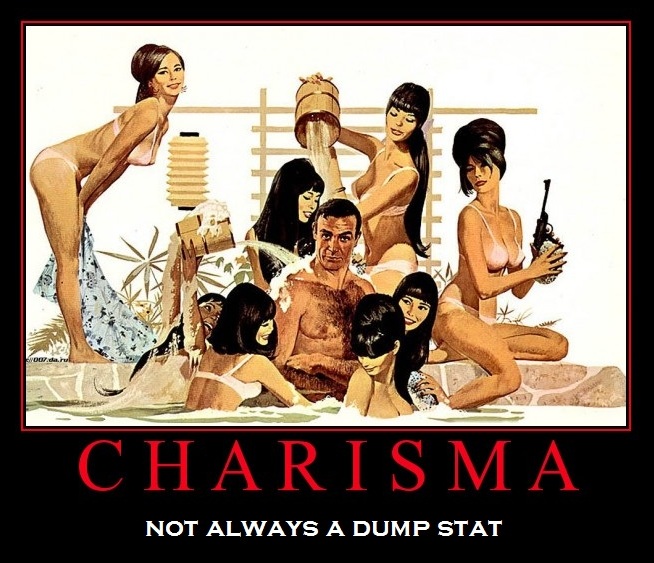
Not all Shadar-Kai are as brutal as Elric and Bats. This Shadar-Kai Wizard (bear with me on this one) is as suave and sophisticated as they come. His dark elegance and charming demeanour belies the heart of a stone-cold killer bored with life and continually craving yet more reckless excitement to fill his days. With his pistol shaped wand he is a deadly aim, and his mind holds volumes of esoteric knowledge, though he rarely reveals this side of his personality. Most villains underestimate Mr Bond, that is their downfall.

Professor Snape

Another wand-wielding Shadar-Kai Wizard, though this one couldn’t be any more different. Severus Snape is a tragic figure, a mere half-breed Shadar-Kai who hides the shame of his birth along with all the other secrets that make up his fractured personality.

Not that all Pureblood Wizards are Shadar-Kai, of course – but both Snape and the Malfoy family almost certainly come from that particular bloodline.

Incidentally, 4e D&D would make a terrific Harry Potter role-playing game. The PCs are all Wizards with the Wand implement. Take Brew Potion by 3rd level or you fail the course. Good luck!

There’s my group of famous Shadar-Kai.  Can you add any more to the list?

Charisma – What is it Good For?

Written by Charisma Keller and Dixon Trimline.

Click me, cause I’m better bigger

To quote an article by Dixon Trimline that I love very much (the article, not Dixon Trimline… ok, and Dixon Trimline), “The power gamer is earnest in his approach to the game, in the same way that an evangelical is earnest about saving souls.”

Such a player will look at the stat for Charisma and ask, “What good is it to me?  If this stat isn’t going to help me win the fight, it’s hello dump truck.”  I mentioned power gamers above, but really, this isn’t exclusive to power gamers.  It applies to anyone who doesn’t want to be restricted in their roleplaying effort because of a number score.

I mean, really, what good is it for?  How does the Charisma stat help the game?  I have a ton of role-playing ability – I don’t need a high Charisma score to help me in social situations.  Besides, who is going to judge if I’m true to my Charisma score?  On what scale is that person basing that judgment on – a number scale of 3-18?  I don’t think so.  With so many gamers having so many varying degrees of role-playing ability/comfort, who is going to say that my character would or wouldn’t act that way?

And don’t forget about filters.  “Hey GM, disregard anything I say until the other players can filter it.  My character has a high Charisma score, but we all know that I’m a social stink bug, so that’s why everyone else will be my filters.” I don’t think so.  If you want to play a charismatic character, then role-play the charismatic character.  Don’t hide behind the dice and your filters.

In my opinion, the dice are there for everything that can’t be determined at a table – because we’re sitting at a table.  Yes, I can do the splits, and I can do a back flip, but I’m not going to do that at the table to show that my character’s acrobatic stunt should be successful (well, not again anyway).  That’s what dice are for.  What I can do at the table is role-play, and I don’t need dice or stat scores for that.

Now, Mr. Dixon Trimline, what say you to that?

Click me, cause I’m Bond baby

Yeow, what a great idea for an article!  I love your point about the double standard between physical skills and social skills, where a player doesn’t have to demonstrate his acrobatic skills to verify he deserves a 21 Dexterity.

Believe it or not, the difficult roleplaying decisions you have to make in a game don’t actually impact your real life in any way.  If you’re willing to believe this, why not start stretching your roleplaying muscles, step outside your comfort zone, and act up like a big old salty ham?  Sure, we can all agree that you, personally, don’t wield anything close to an 18 Charisma, but inside the game, your raging insecurities, awkward phrasing, and machinegun stammering all translate into one articulate, sexy, and irresistible bag of pure hotness.

This really is a great opportunity for you to act like the person you’ve always wanted to be, and it’s a situation that can only be bolstered by your character’s ability score when it comes to actually rolling the silly dice.  I feel like all the successful and multi-dimensional games have to include some amount of social interaction, and hopefully it’s quite a lot of it.  Games that are wall-to-wall combat can be thrilling, but ultimately a little flat.

What’s the point of slaying the dragon if you don’t get to ride back to town to comfort all those terrified townspeople?

Sitting at the table, you may wind up sounding like this: “Um, hey, um, guys… um.  I was going… it’s like this… there was this dragon… hey, you know that dragon?  It’s like, totally dead.”  But in-game, your character with her 18 Charisma gets to sound like this: “Good people of Verbobonc, hear my voice!  Your dark days are at an end.  The dragon, the scourge of life and light, is no more! Rejoice!”

–sigh– Alright, alright.  You make a good point.  When you put it that way, I have to concede.  Thanks for being the pro to my con!

By the way, bonus points for Verbobonc.

Thanks for the opportunity to play along, Charisma!  And I love the name  🙂

Race, Class, Role, Build, Background and Theme

One of the biggest innovations in D&D 4e has been the broadening of character generation. Your character is no longer a simple Race and Class combo (though he can be just that, if that’s what you want) but a multi-faceted being complete with backstory, previous occupation, career path and social class, all in as much (or as little) detail as you choose.

And they’ve managed to do it without turning it into a stewing pile of power-gamery mess too. Way to go, WoTC!  Let’s take a look as each facet of your potential multi-dimensional character to see how it all fits together.

Race

Your character’s Race denotes the core of his (or her) being; it’s who they are when stripped of everything else. Their race says most about your hero’s appearance, and much about their culture, social upbringing and outlook on life. Unless they are shaped differently by the campaign setting or something particular to your hero’s background, it’s fair to expect that their overall attitude will be much the same as any member of their race. For example, the vast majority of Elves possess an affinity for the Natural world (forests in particular), but the campaign setting (such as Dark Sun) might change that radically, or this particular Elf have been brought up in an Urban environment.

That’s not to say that all Elves are nature-loving, bow-wielding hippies (though Dwarves may say that’s exactly what they all are), but that this cultural implication is present in their racial makeup. How that upbringing shapes the PC though, is entirely up to you. Maybe this particular Elf is thoroughly sick of the colour green, and never wants to see another living tree as long as she breathes. Hey, it could happen.

Class

In 4e, a PC’s Class is less about who they are and more about how they fight. Class describes where your character gets his combat training/kewl spells/prayers/psionic potential, but also how they use it when facing opposition. Both the Fighter and Rogue are Martial characters, though their fighting  styles are very different. One charges forward, while the other runs and hides. Draw your own conclusions there.

But Class is more than that. It helps explain how your character responds to a challenge both on and off the battlefield. Each Class opens up a list of Trained Skills from which your PC selects several, and these Skills say more about a character than their Class selection. For example, a Human Rogue is more likely to feel kinship with an Elven Ranger if they both have the Streetwise Skill than with another Human Rogue who lacks it; both the Ranger and the Rogue share a knowledge of urban life and respect for the more seedy side of towns.

Class might also explain a hero’s motivation. It’s easy (if more than a little stereotypical) to create a sneaky Halfling Rogue or stoic Dwarven Cleric of Moradin, and no further explanation of their motivation is needed. I encourage players to move away from that and instead use Background Options to help explain your hero’s motives. More on those in a mo’.

The selection of Class also chooses your hero’s Power source. 4e D&D has taken a leaf out of the much loved Rolemaster’s book with the implementation of Powers. Just as Rolemaster had the Realms of Essence, Channelling, Mentalism and Arms (non-combat), 4e has Arcane, Divine, Psionic and Martial, and add to that with Primal, Shadow and doubtless more to come. These control where the PC draws his powers from – Arcane gain power from the magical world around them, Divine from the Gods, Psionic from within themselves, Martial from their physical abilities, Primal from the untamed chaos of nature and Shadow from freakin’ Batman. I’m looking forward to the 4e take on the Rolemaster Archmage who recognises that all Power sources are essentially the same and draws from all of them. Wicked!

Note to self: Write more contrasting Rolemaster with 4e D&D. Comparisons abound!

In some ways though, your 4E’s hero choice of Class is the least important choice he has to make, even though it’s the most mechanically complex. Choose Eladrin as Race and  the Background Options Noble & Criminal and you’ve already got a compelling character. Making him a Paladin, Wizard or Warlord just adds another wrinkle to the pie. Do pies get wrinkled?

Role

Wait-a-minute. Isn’t a character’s Role tied to his Class? I mean, all Wizards are Controllers, right?

Well yeah, but I’ve argued before that the two shouldn’t be tied together, and it looks (with D&D Essentials) that this hard-and-fast rule is being loosened, and that’s a great thing for the game.

Right now, if you want to play a Martial Defender (for example), you’re playing a Fighter. But what if you want to play a Fighter who is more of a Striker (fewer hit points, more damage) or even a bow-wielding Controller (even fewer hit points, more foes)? How about a Wizard who specializes in Force Fields (Defender) or one who singles out individual enemies with fearsome emotion-controlling spells (Striker)? You could conceivably argue that Gandalf was an Arcane Leader rather than a Controller, and you wouldn’t be wrong.

I foresee this as a direction 4e will increasingly take, and it’s an exciting one. Separating Role from Class opens up a whole new vista for character generation, and I’m stoked!

Build

Builds are a simple, shorthand way of saying “if you take this, this, this and this, you will end up with this kind of character.” They’re entirely optional and provide a good newbie-friendly way to guide them through character generation. Want to play a Tactical Warlord or a Great Weapon Fighter? Just follow this build advice, and you’re good to go.

Despite their primary function as a guiding tool, the Builds can also serve as a role-playing jumping point. Your Tactical Warlord is likely to have a very different personality than an Inspiring Warlord, both in and out of combat. That’s partially represented by the priority of the attributes (a higher Charisma usually denotes a more outgoing personality) but also with their outlook on life; in this example, a Tactical Warlord is more likely to be coldly clinical in their assessments, whereas an Inspiring Warlord knows that it’s the hearts of men (or dwarves, or elves …) that can truly win the day.

Unlike the other optional elements of character generation (Background Options and Themes) your hero gains absolutely no mechanical bonus for following a Build other than the satisfaction of having put together a nice, well-optimised character. Conversely, there’s nothing to lose for not following a Build neither; you’re entirely free to choose between the Class Features, Feats and Powers however you wish. While you might not end up with a character with the same single-path focused optimisation as one of the Build, your hero will be (and here’s the important part) much more fun to play.

That’s not to say that Builds don’t have their place. They give us much more of an insight into the game designers’ minds. The Build represent how they expect the Classes to be played and a solid foundation for your own tinkering with Class element and Feat selection. For example, you could take Great Weapon Fighter, but replace Power Attack with Potent Challenge. Minor changes to the Build like this help make your character that more unique.

So Builds are a great way to help get a handle on the Classes, and on the game as a whole. They’re a great starting point for new players and oldies alike who are trying out a new class for the first time. It pays to know when to follow a Build, when to tweak them and when to ignore them altogether. Let’s save that for a blogpost fsome other time, ok?

Background Options

Now we’re talking! Background Options are my favouritest optional rule in 4e D&D – to the point where I don’t consider it optional at all. Background Options are an Essential part of character generation as they serve to provide your PC with that all-important backstory. And that’s pure gold for this GM.

Background Options also confer a minor (though significant) benefit in the form of a +2 to one skill, adding a Skill to your potential list of Trained Skills, granting a bonus language or some other special boon. That’s a choice of five benefits. No, not four. Clearly you can’t count.

See, here’s how the choices break down:

1. Add a +2 to an Untrained skill. This gives a small bonus to a skill which you wouldn’t normally have access to, or one which you don’t want to spend Training on. This is a good choice if you choose a Background Option that offers Associated Skills that overlap with and Skill Bonuses from your Race. For example, an Elf with the Background Option Geography:Forest could be at +4 to either Nature or Perception without Training at all! That’s perfect if you want to play a Class that lacks the Perception skill and is short on Training points. How about a keen eyed Elf Fighter who specializes in the Greataxe?!

2. Add +2 to a Trained skill. Back to that Elf. Make him a Ranger and (thanks to being an Elf and the Geography:Forest Background Option) he can be at +9 Perception even before stat bonus. That’s one eagle-eyed Ranger! Choosing a Background Option that synergizes nicely with your Trained skills is a smart move though taking a Background Option which just emphasises something we already know (Elf + Geography:Forest) is laaaaaaame ! Think about the more esoteric Background Options to make your character much more interesting. An Elf with Occupation:Mariner can still take that +2 Perception, but is a much more engaging character to play. Imagine an Elf with an ornately carved wooden leg……

3. Add another skill to your list of Trained skills. Each Background Option offers two skills. Pick one to either gain a +2 (as above) or add it to your list of available Trained Skills choices. That’s a +5 bonus, but the cost is that you have one less choice to spend on something else.  This is a great choice if you want to create a character who has access to knowledge outside their Class’ normal field of interest. A Fighter who is an Arcane Refugee would make a terrific character as his village was destroyed by magic (rather than orcs – unless they were Orc Wizards) and he could take Skill Training in Arcana, making for one highly knowledgeable warrior who hates spellcasters. This also gives him access to the Ritual Caster Feat, too, meaning he could sometimes be forced to use the very thing he hates. See what I mean about Background Options being GM gold?

4. Gain a bonus language. Boooring, unless you really want to play a character who can speak both Goblin and Giant. For these kind of multi-lingual characters, it’s better (imho) to use the Background Option to gain a Skill-related bonus and burn a Feat on the Linguist Feat.

5. Any other Boon. Some Background Options (particularly those from the Scales of War adventure path) offer more unusual benefits to the character. These tend to be more powerful and Feat-like in nature (such as the Assassin background which adds both Arcana and Stealth to your class list, and gives a +1 bonus in both). I try to steer my players away from these options, but allow them on a case-by-case basis, depending on just how much of a hard time I can give the hero in-game 😀

Background Options cover a whole range of choices – from mysterious happenings during their birth to the geography of their homeland; from their pre-adventuring occupation to wealth level; from Early Life and Parentage to Recent Events. It’s all there and more, in spades. You’ll need the PH2 or a D&D Insider account to access them, but for my money, Background Options alone make it worth the price of entry.

Your hero isn’t limited to a single Background Option, though he only gains the mechanical benefit from one of them. If you want your hero to be a Former Gladiator Scorned Noble Magic Scholar who is a Fugitive from a Vengeful Rival with a Missing Master, that’s very all right by me!

Note to self: Use multiple Background Options and Risus notation? The character above could be Former Gladiator (3), Scorned Noble (2), Magic Scholar(1), Fugitive from a Vengeful Rival (4), Missing Master (5). Hmmm. Food for thought.

Themes

So far, Themes are only present in the Dark Sun campaign setting as they provide just a little more oomph to your character. That’s firmly in keeping with the setting as characters in prior editions were generated at a higher level than 1st from the start. Each theme grants an additional Encounter Power to the character, putting them kinda-almost at the same power level as a 3rd level character (only without the hit points, surges, utility power, feats or equipment – so really not like 3rd level at all). Every character takes one Theme, and only one. Extra goodies (feats, paragon paths and optional Powers) are unlocked at later levels, if you choose to follow the Theme’s natural course.

Each Theme is a natural fit for one or more character classes (such as the Gladiator Theme for a Fighter), but the real fun comes from mixing things up.  How about a Gladiator Monk, or a Dune Trader Warlord? More on that shortly…

I like Themes. They can tie the adventuring party together (“You’re all Gladiators!”), but still give them plenty of flexibility (thanks to freedom of choice over Race, Class and Background Options)  to make each character unique and memorable. Themes also help to tie the characters more closely to the campaign setting – you’ll only find Dune Traders on Athas – in a way we’ve not seen before. That’s definitely a win in my books! Despite the power creep, I expect to see setting-unique Themes to find their way across all the campaign settings in due course (perhaps requiring a Feat to gain them). That won’t be a bad thing.

Mixing it up

What’s more fun? An Eladrin Paladin, or an Eladrin Paladin Merchant Prince Dune Trader? How about a Halfling Star Pact Warlock Monster Hunter Travelling Missionary? Or a Dwarf Gladiator Rogue who was Born on Another Plane?

Background Options and Themes come into their own when you play against expectations. As Elf with Geography:Forest might as well just be an Elf, whereas one with Geography:Wetlands has an interesting twist. Likewise, a Fighter with Occupation:Military isn’t going to win any prizes, but make him a Wizard……

There’s no shortage of Background Options both in the books (regrettably, not in PHI though) and in the Character Builder, so make good use of them.

Your GM will thank you for it, I swear!
Classic Fantasy – Character Concepts and 4e Magic items

Tired of characters lugging around magic items as if they were mundane pieces of gear?  This article will fix that, assuming you adopt the Classic Fantasy setting and apply it to your campaign.  In this article, you’ll see how different types of characters gain the benefits of a normally 4e magic-equipped character, without actually carrying around all those magic items.  Now, magic items are truly powerful tools that help define your character, as opposed to numerous pieces of mundane gear.

Your character concept defines your character in a more broad way than simply by race and class.  It is especially important for this project because it determines how the character gains the benefits that normal 4e magic items instill.

In D&D 4e, PCs gain magic items almost every level, and are constantly swapping them for new and better ones.  With Classic Fantasy, those magic items are few and far between (or non-existent), but the PCs still need the benefits that 4e magic items provide in order to maintain the power level matching the encounters, as well as the “larger-than-life” feel.

Here is a list of possible character concepts, and the explanations as to why your character gains the benefits of magic items, even if he doesn’t have any items.  Take whatever fits your version of Classic Fantasy, use it, modify it, or come up with your own.  Further down the page, you’ll find out how your character gains magic item benefits as he gains levels.

  • The Everyman – The everyman is normal in every way, except for the single magic item that is bestowed upon him.  Think Excalibur, or the ring from Lord of the Rings.  This one item is responsible for all of the the PC’s magical item benefits.  It could be a magical necklace, but instill the benefits of a magical weapon, Boots of Speed, Belt of Giant Strength, and so on.  This is the family heirloom, the shield handed down by the gods, or the cursed crown.  Yes, it’s a magical item, and it can be stolen, but most people would be afraid to touch something of so much power.  Should your character somehow be separated from it for a short time, go with it.  It should make for a better story.  Seeing as this is a major part of your character, your DM will not screw your character over.  For the greatest impact with this character, make a backstory for this item.  After all, it is a rare and powerful, literally priceless, real magic item.
  • The Destined – The individual has been destined since before birth to become something great. Think Conan, or Aragorn. His fate has been laid out in legends, prophesies, and scriptures, and the common man may or may not know of him.  The deeds of this character will be told for centuries to come, perhaps even thousands of years.  This individual does not benefit from magic items, since fate has already made him special.  For the greatest impact with this character concept, choose magic item benefits that are not flashy or too mystical, ones that could simply be explained as natural abilities.  That way it’s fate, destiny, and his inner character making him great, not ‘magical’ powers.
  • The Offspring – Gods, deities, demons, and devils can’t seem to leave mortals alone.  This is the character with one normal parent, while the other is somehow supernatural.  For reasons left to the player and/or DM, this PC is born out of lust, greed, boredom, or design.  His reasons for being could be numerous, or non-existent.  Does his supernatural parent have plans for him, is he considered an abomination, or do they even know he exists?  Most likely, he does not have any magic items, rather, his magic item benefits are natural powers that he is born with, or granted.
  • The Lucky – This character is simply lucky.  He has no innate magical talent, just blind luck.  Make sure that all of the magic item benefits are as non-flashy as possible (remember, aside from his extreme luck, he is completely normal).
  • The Mystic – The mystic is easy to integrate into this game, as he is already flowing with magic.  The wizard, cleric, druid, psion, warlock (and so on) all have mystical powers to begin with, so magic item benefits are simply additions to his natural powers.  He might have a “magical wand, staff, or focus,” but really, it doesn’t matter.
  • The Chosen – Some powerful being, church, cult, item, or place has chosen this character to champion their cause, however broad or specific it is.  Perhaps he has been brought back from the dead, resurrected with new unnatural powers?  Perhaps he has been cursed?  Who knows?  The character’s magic item benefits can come from within, or perhaps some token item, like an amulet, or perhaps a tatoo.
  • The Champion – This character is so much larger than life, he naturally has talents that carry him to excellence.  He doesn’t have any magical items, he’s just that damn good.  Any powers/abilities granted by his magic item benefits are simply attributed to skill.  Yes, he has a far-reaching reputation, and may even be considered a celebrity, but by no means is he destined for anything.  Again, try to make his magic item benefits as non-magical as possible, to better account for his ‘natural skills.’

Below is the method for which magic item benefits are attained in this Classic Fantasy setting, regardless of the character concept.

  • At 2nd level, every PC gains one benefit as if he had just gained a magic item with a level of between 1 and 5.  The magic item must be something that the character is normally allowed to benefit from in a normal 4e game.  For all game mechanical purposes, and as far as the character builder is concerned, the PC is equipped with that item.  However, depending on your character concept, the actual item might be something entirely different, or perhaps there’s no item at all (see the character concepts above).
  • At 3rd level, every PC gains another magic item benefit, again as if they are actually (legally) equipping that item.  The item may have a level of between 1 and 6.  In other words, at this point the PC is allowed to have two magic item benefits “equipped,” one of them may be 3 levels higher than the PC.  If the player wishes, his first magic item may be switched to something entirely different, or he may keep it.
  • At 4th level, the process continues.  Now the PC has three magic item benefits.  One of them may be 7th level, another 6th level, and the third may be 5th level.  Or, his magic item benefit levels may be less, of course.
  • This process continues every new level until all of the character’s magic item slots are legally filled (head, neck, waist, hand, etc.).
  • Now, at any point in time, he may only ever have three different magic item benefits of a level higher than his character level (level +1, level +2, and level +3).  All other items must be equal to his level, or less.
  • To sum it up: at the beginning of every new level (starting at 2nd level), you get to add one new magic item (up to your full allotment of legally allowed magic items).  You can also change around all of the magic items as you like, as long as you are legally allowed to use them, and you follow the level rules: all of the “magic items” may be equal to your level, or less.  -Or, three of those items may be of higher level (level +1, level +2, and level +3).
  • As an example, let’s say that your 2nd level character is bestowed a magic ring, and that magic ring will soon start to unlock benefits for your character.  Let’s say you choose a magical item “slot” of 5th level that requires a light blade.  The benefit will only apply when you attack with a light blade.  Next level, should you choose a magical item slot of 6th level that normally requires a wand, you gain the benefits of the wand only when your hand is free (when it would normally be wielding the wand – and of course, you could actually wield a wand for visual effect).  Also, you must be able to use a wand.  At 4th level, should you choose a magical item slot of 7th level that normally requires heavy armor, you only gain the benefits while wearing heavy armor.  Get it?  You can’t use these rules to cheat the system; equip your character legally and then reflavor the magical items how you like.

Remember, while your character sheet may have several different magic items listed and equipped, they are all not really separate items.  All of their bonuses, powers, benefits, etc. are all lumped into your character concept.  These benefits come from either a single powerful magic item, a curse, a blessing, his own personal magic ability, or simply his place with fate and destiny – making him larger-than-life.  Really, it’s up to you to decide.  This is in no way a method to limit the character; it is simply a way to explain how your character is larger-than-life, without having all PCs lug around 10 different magic items as if they were mundane gear.

On paper (and according to the character builder),  your character carries magic items like any other 4e game – it’s just that we are reflavoring all those magic items into a single item or power.  We are changing the flavor of the game, not the mechanics.

I wanna be bad! Playing in an evil PC game.

I am a huge “Breaking Bad” fan. For those of you who haven’t heard of the show, it follows Walter White, a high school chemistry teacher who contracts cancer.  In order to try to take care of his family and his own medical bills, Walter turns to cooking crystal meth.  The show intimately follows his decent from humble family man to a drug kingpin. And, do you know what? I’ve been rooting for him the entire time.  Even though Walter has become a pretty bad guy by this point in the story, I still want him to “win.” Why would that be?

The same thing happened with my parents when “The Sopranos” was on the air.  Tony Soprano was always an incredibly evil character, but we still loved him.  I think that at some level people understand evil a little bit more than we understand good.  We can understand why people fall. We can empathize with guilt more than we can selflessness. Now, don’t get me wrong, I’m not saying that people can’t be good or whatever, but I just think that in literary terms, the concept of the villain is very powerful and compelling.  So, why is it then that we don’t see more evil player character games? Probably because players find it uncomfortable, or they don’t want to be in a game where everyone is just playing a ridiculous “I set it on fire” all the time character.  However, I personally believe that a good evil character can be more fulfilling and fun than many would suspect.

My first year in college marked the first campaign I had played in that went beyond a few sessions. It was fun, and forever influenced the way I viewed and played RPGs.  It was also an evil player character campaign. It wasn’t meant to be like that from the beginning, it simply evolved into that. The player characters themselves were simply despicable people, but they were compelling despicable people.

My character was named Zachariah, and he worshiped a god named Jolem (who was a god of the hunt). Jolem’s religion had exactly one tenant, “kill whomever and whatever you wish, but kill only for sustenance.” In short, Zachariah was a cannibal – he would hunt animals and people, kill them, and then eat them. In fact, whenever he killed anyone, he would have to spend a round eating part of their body.  Now, Zachariah may sound cartoonishly evil and grim, but let me assure you that he wasn’t. Zachariah was an incredibly optimistic and upbeat character. He was just so fun to play. He had charisma and a unique outlook on life. That alone made him closer to a real person than any other character I had ever played until then. I still find it difficult to call him evil, even though he did horrible things.  He simply believed  in a strange religion.  His religion gave him hope and helped him make sense of his world. Without it, who knows what would’ve happened to him. It was his faith in a greater power, an easily understandable motivation, that compelled him to do evil things.

That’s really the key about evil characters; proper motivation. Yes they do evil things, but why do they do evil things? Sure, the evil wizard wants to make bizarre owlbears and beholders, but why? If you can come up with a good motivation that makes sense, your character can really come alive.  Again,  lets talk about “Breaking Bad”.  Walter justifies his evil deeds with the fact that he is trying to support his family.  Tony Soprano has similar justifications.  Zachariah does evil things for his god. What’s your justification?

Adding Flavor to the Bard

I’ve always liked the idea of the bard, not because of what he can do in terms of game mechanics, but because of what he can do in the game.  Simply expanding the perception of the bard just a little bit can greatly expand the gamer’s experience.  Let’s take a look at the two most traditional roles a bard can assume in any fantasy setting:

The Entertainer

The most often used type of bard would be the entertainer.  This is the guy (or gal) who usually works for himself.  He’s in every major town, and can be seen on any major street.  The lucky get a few gigs in taverns, while the talented can book major events.  As an entertainer, this bard is always looking to make people laugh, swoon, or close their eyes to enjoy his music.  This guy doesn’t have to be versed in literature, or have any knowledge of history (though all that helps).  What’s important is that he knows how to give the people what they want.  And hey, in an age without TVs or ATVs, that can sometimes be hard to come by.

This guy is very easy to insert into a fantasy game.  He simply tags along an adventuring party to gain material for his songs, stories, and poems, so that he may make some coin off them at the next town.   As a plus, he might also get to include himself in the adventures.

Since a bard among a group of adventurers is already a cut above the rest, it can be assumed that he has, or will soon gain, a reputation.  After a bard gains a few levels, it can even be said that he has become a celebrity.  Just imagine the bustle that happens when a bard of renown walks into town.  He will soon be asked to perform at events and gatherings – and in fact it is assumed that he will.  Invitations to dinners and parties are readily offered.  He’ll even be offered money just to make an appearence at events.

The Voice

As the voice, a bard is responsible for praising his patron, and insulting his patron’s enemies.  This position almost always requires formal training in literature, history, and poetry, as well as an excellent knowledge of current events.  Such bards are employed by rich merchants, noblemen, or even royalty, and remain in service for years.  At any gathering or event, they either speak for, or alongside their masters, to make for a better presentation.   Not really suited for singing, dancing, or playing music, their specialty lies in what they say, as opposed to how they say it.  For sure, being able to gain attention through commanding presence and charisma is a must, it’s just that they are not necessarily entertainers.

It’s very easy to integrate this type of character in a fantasy game.  The simplest way is for the bard to be employed by the adventuring party.  At the very least, he is simply part of the group and speaks up for them every chance he gets.  When an introduction is called for, he does it grandly.  The deeds and exploits of the group (what they fought, who they rescued), is spoken at every tavern and recited at most other gatherings.  His position as a bard becomes quite apparent to others right away, and that often improves how the adventuring party is perceived.  Anytime the adventuring group is addressed, the bard is almost always included in the conversation, if not talked to directly.

If you’ve ever wanted to play a bard, but were unsure about how to take it on, use one of the two examples above.   Hopefully, by choosing either the entertainer or the voice, you’ll have an easier time.  I think you’ll find that role playing a bard, while challenging at times, can be very rewarding.

P.S. – Why don’t you try to add the bard to your sci-fi game, like Star Wars or Traveller?  I’m sure it could work just as well, maybe even more so.