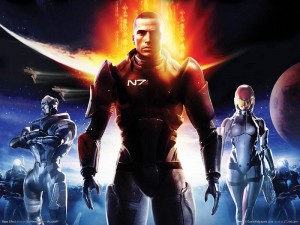
Mass Effect Style Character Design

So, you’ve got a few ideas about what makes a good encounter and how to get your players to understand the meaning of “take cover!” You’re probably asking, “Now what?”

First of all, Alejandro, don’t interrupt me when I’m talking about Mass Effect, it’s rude. Second of all, since you asked, chances are good your players will need something to play, yes?

Well, probably your players are like mine and are thus fairly unmotivated to actually learn how to make a character from scratch themselves. Even if they’re the motivated kind (read: power gamers) they’ll probably want a few guidelines. Players crave structure, just like children. And also just like children, they’ll immediately start looking for ways they can break down whatever structure you give them. Wait, that’s not what I… Look, let’s just talk about character building, okay?

Character Building: Power Level in M&M

The first step is to admit you have a problem. Wait, that’s the wrong process. The first step is actually to determine your Power Level for the campaign. This will work a little differently depending on your system of choice: for M&M, it’s fairly easy.

Green Ronin’s Mutants and Masterminds has a range of “defaults” that you can use. The normal default for the system is Power Level 10, but since that’s for super heroes, it’s probably a little high for our needs. I could go through all the gradations you get at different power levels, but for our purposes I’m just going to say “you should use either PL 6 or PL 8.” Oh, look, I just said it. Right there.

Okay, okay, a little explanation: Power Level 6 is good if you want characters who are “street level,” or closer to the norm – just slightly better than a soldier or police officer by virtue of being a protagonist. PL 8 is better if you want a more “action hero” feel with characters closer in power to the ones in the game.

Either one is valid; for my purposes, I went with PL 8. The characters offered in the upcoming “Steal This Character” articles in the series are built with this default in mind.

The Obligatory Nod to FATE

If you’re using Strands of Fate, you’ll want something with a higher tech level, and you’ll probably be using Action Hero (with powers allowed) or higher. I’d offer more detail, but FATE isn’t my area of expertise – I’m still learning how it all fits together. If you want more details about something using this system, I suggest asking Chris or John. They know what they’re doing. And again, check out John’s article on FATE conversions for some solid guidelines.

The Obligatory Nod to The 800lb Gorilla… I mean, D&D

Yeah, I know, I know, but give me a second. If your group is a huge fan of 4th Edition D&D, chances are either you’ll want a break to try something new (see the above) or you’ll want to use something you’re all familiar with. In which case, you’re in luck.

See, there’s a kind of fantastic 3rd Party PDF supplement for D&D 4th Edition (yeah, I know, who knew they made those?) called Amethyst Foundations. The guy who wrote it, Chris Dias is just a fantastic guy, and he’s worth supporting with a few bucks. There’s an excellent review of Amethyst over on The Dump Stat, and while it has it’s own setting (obviously), it also has a LOT of guns and powered armor, so it would probably lend itself well to a Mass Effect conversion if that’s what your group wants. Focus on the new Techan classes and tweak a few 4th Edition classes to fit into the new setting (basically refluffing items, powers, and races and adding proficiencies with guns and whatnot), rename the guns and armor with Mass Effect names, and you’ve got what you need. Voila, just like our Classic Fantasy series… Except the exact opposite of that.

He has a newer product out, Amethyst Evolutions, and you can find more information about that and his other products here.

Back to M&M!

Other Important Considerations

Alright, I’ve talked about the mechanical concerns. You actually shouldn’t need to change the rules for any of the above systems, so it’s probably a good place to discuss the flavorful elements. Like races. Or classes.

This appears at first to be a slightly tricky area, because while Mass Effect has a Race/Class structure in the vein of traditional tabletop RPGs, my system of choice M&M, doesn’t. Though this does make things easier in the end for purposes of our conversion. Mutants and Masterminds uses a point-buy system where one simply buys the effects they wish to have for their character, then applies descriptors to them.

Simple, right?

Well, probably. It can take some getting used to, but the system is very powerful and flexible. Since learning it I’ve caught myself assigning stats to characters in action movies before the movie is finished. It’s a sickness.

One of the benefits of this is that it’s far easier to customize a character concept in M&M than in the original source material, which is particularly advantageous here… Because frankly, most of the NPCs in the games don’t fit all that well into the established class structure. Like most fictional characters, actually.

For reference, however, the classes offered in the game are: Soldier, Adept, Engineer, Infiltrator, Vanguard, and Sentinel. Basically they can boil down to a nifty triangle diagram where everyone is somewhere on the outer edges between Combat (here meaning mostly guns), Tech (the sci-fi kind), and Biotics (which is like gravity based telekinetics with a much cooler backstory. Or “space magic.” Depending).

There are lots of different races in the Mass Effect universe, and I’m not going to get into them all here. There’s a ton of useful information about them on the Wikia and in the in-game codexes, so I’ll leave it up to you to discover some of it on your own. “Race” is just a descriptor in M&M like any other, so all you need to do is put together a short “template” – a package of traits usually tied to the characters race. That package costs points out of the total, and because of that they don’t even need to cost the same amount. Brilliant (note: this also allows for some useful capabilities when using the game for medieval fantasy. Just saying).

I tried to make my “Steal This” entries in this series racially diverse, so you’ll have a chance to see how race can affect a character built using M&M – probably starting next time. Stay tuned!

For more articles on Mass Effect RPG, go here.
Putting Different Ninja into your Role-Playing Game

Yeah, that’s right. We’re talking about ninja today…

Ninja

Yeah, that’s right. We’re talking about ninja today. What’s that you say? Why not ninjas? Well, because much like deer, the plural of ninja is ninja (in all seriousness, Japanese generally doesn’t concern itself with singular/plural). Now, anyone who is into the hobby, enjoys anime, or just likes watching action movies is going to run into ninjas at some point or another. The only problem with this is, depending on your source, there are dozens of kinds of ninja. So, let’s take a look to see which ninja will fit the kind of game you want to run.

Ninja in Real Life

Before we look at the fantasy ninja, let’s take a look at the real ones. Now, there isn’t much to go on here – at least not in the time we have – so we’ll take a shortcut here and just go to the dictionary definition. If you want more information, you can always hit up Wikipedia on your own and do some reading there.

That said, dictionary.com defines ninja as such: a member of a feudal Japanese society of mercenary agents, highly trained in martial arts and stealth (ninjutsu), who were hired for covert purposes ranging from espionage to sabotage and assassination.

There is a lot of crossover with shinobi, and most places use the terms interchangeably. Others, however, make distinctions. One of the more common I’ve seen is sort of like the equivalent between a soldier that works for a Private Military Corporation and one that works for a country. As I said though, such distinctions are varied and really depend on where you look.

The Deadly Shadow

Let’s get into the types of ninja. The first and most common type is that of the deadly shadow. This is, essentially, the type of ninja that has a supernatural ability when it comes to stealth. Now, when I say supernatural, I mean super. Batman couldn’t pull off some of the stuff that these types of ninja do. This type plays into the spies and assassins story that follows the ninja term around.

These make great additions to campaigns for taking out big NPCs, and to give PCs a reason to watch their six. The method of operation is simple here. If there is a shadow, it could be hiding a ninja. Then, when the time is right, the ninja pops out and murders the heck out of the target. Sometimes they even do multiple targets. For those playing the D20 games, think a lot of levels of rogue for what you’re doing here.

The Mystical Warrior

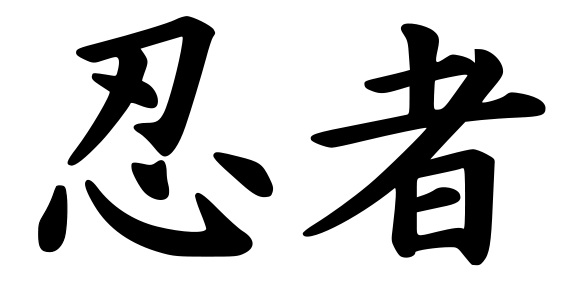
The word “ninja” in kanji script

You know what comes in handy when your stealth mission gets botched? The ability to throw fireballs, that’s what. This type of ninja has you covered on that. Not only are they a bad ass fighter or stealth monkey, but they can also call upon ancient shadow, arcane, or ninja magic when things get out of hand. The non-magical abilities are usually more mundane here – aside from, of course, when they are augmented by the magical spells that they sling around.

This type of ninja makes for a good villain or other prominent NPC. Generally, the combination of fighting and magical abilities is hard to stat out, but can work out well enough in a big bad boss where people are expecting the rules to be a bit bent. If you’re trying to make one as a PC, be prepared for a hard haul. After all, you need fighter, rogue, and mage abilities all wrapped into one. You can drop mage if you’re willing – and able – to acquire a whole ton of scrolls, and your GM allows “use magic item” to work for them.

The Super Soldier

The third of the key types of ninja is one of the favorites to use when the ninja is the protagonist. After all, it isn’t always that much fun to have your hero skulk around in the shadows and take everyone out without them even having a chance. However, having them brazingly walk into a room full of goons and taking them all down? That’s bad ass. That is also just what this type of ninja is. When stealth fails (and they are still usually somewhat stealthy), these ninja open up a can of whoop-ass the size of Texas and go at it.

Unsurprisingly, this is also one of the best type of ninja to have as a PC. You’re still multi-classing in D&D type games for fighter abilities and rogue abilities. These also make wonderful enforcers for villains – think Storm Shadow in the early G.I. Joe years – and someone who can be a scary recurring character that shows up to give the PCs a good fight every few plot arcs.

Wonderful Combinations

Most more recent depictions of ninja use a combination of sorts. The movie “Ninja Warrior” seemed to like the “Deadly Shadow” and the “Super Soldier” combination. Meanwhile, the Ninja Gaiden and Shinobi game series seem to go the “Super Soldier” and “Mystical Warrior” paths. I’ve seen a few “Mystical Warrior” and “Deadly Shadow” combos, but at the moment I can’t think of where. Still, don’t be afraid to combo up for a more bad-ass or unique ninja.

Modern Technology

Some places will tell you that a true ninja – and thus, a protagonist ninja – does not rely upon things like modern technology and guns, because all they need is their ninja training and the traditional weapons of the ninja. Others, show a more pragmatic ninja that is perfectly capable with sword and bow, but also not afraid to use guns. In at least one case, this is actually one of the things that makes the character a huge fan favorite (yes, I’m talking about Snake Eyes from G.I. Joe). So, really, don’t be afraid to go either way with your ninja.

So, I guess the only question here is, what kind of ninja are you going to put into your game?

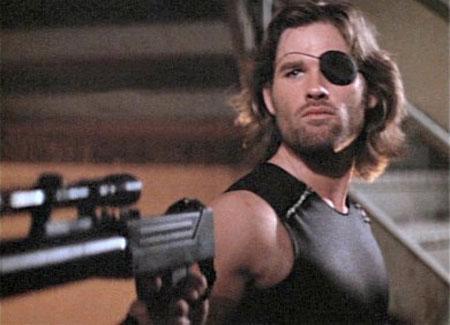
Snake Plissken – The Role Model

Where Charisma Keller goes into what makes Snake Plissken such an iconic character, giving ideas for your own Mr. Badass.

If you know me, you know that I am all about playing the character.  I like my characters like I like my muscle cars – lean, mean, and simply totally AWESOME.  Today I’m going to take one of my favorite characters of all time, and break him down into what makes him the perfect role model (RPG role model, that is).  I know it’s been a while since you’ve seen Snake Plissken escape from New York.  He did it several years ago, after World War III.  After reading this article, I just know that you’re going to click on Netflix, and flix it (I think I will, too).

For those of you who have never gotten the pleasure of watching the early John Carpenter film, let’s do a quick review.

  1. The entire island of Manhattan has been sealed off and turned into a giant, inmate-run prison.  “Once you go in, you don’t come out.”
  2. Snake Plissken is a former U.S. Army Lieutenant, serving under Special Forces Unit Black Light, with two Purple Hearts, and the youngest soldier to be decorated by the U.S. President for bravery during campaigns in World War III.  Snake then takes up a life of crime due to the government’s betrayal of some operation.
  3. Among his many illegal jobs, one of Snake’s partners gets captured, tortured, and killed, leading the rest of the criminal community thinking Snake has also been killed.
  4. World War III is coming to a close, and the President is heading to a summit in Air Force One.  His plane is hijacked by terrorists and flown into a large skyscraper in Manhattan.  The president manages to get into a survival/escape pod just before, and survives the crash.  Unfortunately, he quickly gets captured by the island’s prisoners.
  5. Just before this time, Snake gets caught and sentenced to life in prison in Manhattan.  However, he is offered a full pardon if he can get into the prison, and rescue the president and the president’s sensitive summit information.  As insurance, Snake is injected with tiny capsules that will explode within 24 hours, ensuring that he must make it back with the president and information.  Only then will the capsules be neutralized.
  6. Throughout the movie, Snakes makes friends, enemies, and dead people.  Some of the prisoners help him get the president out in the hopes that they will be allowed to leave the prison.  In the end, only Snake and the president make it out alive.
  7. When Snake asks the president how he feels about those people who died getting him out of the prison, the president gives a distracted, half-assed, insufficient response.  Snake then embarrasses the president by giving him the wrong cassette, then destroying the important summit information.

All right, now that you know the basics of the campaign that this character is taking part in, let’s start breaking down this villain into the pieces that make him a great player character.

  1. First of all, let’s define him.  Snake is the main character, and although he is a bad guy, we see him experience events that ultimately show us his good side.  Call him an anarchist, if you like, but understand that he still has his principles, maybe even a little bit of heart.
  2. Not every player character starts the game with a peachy, rosy group of acquaintances.  Snake begins the game with not one, but two major enemies.  ENEMIES.  Enemies create immediate conflict, which creates immediate story – good story.  That right there makes your character more rich, and gives the gamemaster plenty of fuel for his fire of a campaign.  Next time you make a character, consider giving him an enemy.
  3. Not just enemies, but Snake will (throughout the movie) run into people he knows.  Not necessarily friends, but not enemies, either.  These are people that he doesn’t exactly get along with, but still finds a way to get along.  Again, this little bit of conflict makes for a great story.
  4. Snake wears an eyepatch.  Annnnd that covers that.
  5. Snake has a tatoo of a snake, on his stomach, which presumably trails down…
  6. Snake doesn’t talk much – a little bit of the brooding, tough guy image goes a long way.
  7. He has a great backstory that helps explain his badassness.  He’s an ex-commando special forces hero.  That explains a lot about how he got his skills at the start of the campaign/story.
  8. Snake is a bad guy, forced into a situation that serves a greater good.
  9. Snake has a great quote… well, there is a great quote said about Snake as people meet him,  “You’re Snake Plissken?  I’ve heard of you… I heard you were dead.”
  10. Snake actually cares about good, decent people – people who are willing to put their lives on the line for what they believe in.  The inmates that help him and the president escape – he wants to see them live to the end.  Unfortunately, they don’t, but that is ultimately what forces him to put the president on the spot, to see if the president is worthy of the summit information.

The last point I’m going to mention is Transition.   A major theme in any story, one that makes most stories more interesting to watch or read, is that of a character’s transition.  What I mean by that is that the main character starts off in the story with some set of ideals, but then learns and grows as a result of the conflicts placed before him.  Snake begins our story as a bad guy forced into a situation he doesn’t want to be in, supposedly for the greater good.  Either Snake makes a clean transition and actually learns to be a good guy, or simply because of the story we see the good in him that was always there – it doesn’t really matter.  What matters is that at the end of the campaign, we have gotten to know the real Snake Plissken, and he’s a character you’ve grown to love.

Male Character? Female Character? What’s The Difference?

How do you make a ‘good’ female character? No matter the medium, creators who reportedly make ‘good’ female characters get asked this question a whole lot…

Before I begin, let me just say: Hi, I’m Anthony, the owner and proprietor (can I even use that word?) of Reality Refracted. For those not in the know (you’re all in the know, right? Right?), Reality Refracted is a gaming blog much like this one, where I go on and on about whatever bit of gaming trivia catches my fancy on any given day. Today though, I’ve decided to come on over here to Stuffer Shack and rant at you to come read my blog. Actually, I want to talk to you about your characters, and how you go about making them. So, without any further ado, let’s begin.

How do you make a ‘good’ female character?
No matter the medium, creators who reportedly make ‘good’ female characters get asked this question a whole lot. Some creators, particularly female authors, have walked out of the interview the second that question was asked. The reason? Well, I hate to break it to everyone, but women are not a magical enigma sent to befuddle the great sages of the world. They are, at their core, just people like everyone else, and by treating them as special – or thinking they need special rules to be done well – you are only doing yourself and them a great disservice.

You want to keep this fact in mind whenever you’re making a character, no matter what the gender, race, or other differences may be. People are just people, so treat them like people and you’ve suddenly got a much better character on your hands. In other words? A strong character will always be strong, regardless of the gender or race of the character. For those of you that don’t believe me, look at Mass Effect’s Commander Shepard, a strong character no matter the gender. (Though, for the record, I think canon Shepard should be female, not male).

But they wear pink!
Yes, and boys wear blue, Orcs are green, and Dragons all have different colored scales. What is your point? If you are looking to point out that there are differences, then I can’t argue with you. A man and a woman are simply not the same thing. They have different strengths, different weaknesses, and get a different colored diaper at birth. However, the fundamental core aspects of being a human are still there. The psychological rules that work on men, work on women, and vice versa. Behaviors may be different, but once again, the core is the same.

So why are we different then?
I’m glad you asked. The reason for those differences is… society. Humans are fundamentally social creatures – yep, even us gaming geeks – and the impact society can have on us is absolutely huge. Even people who say they don’t care what others think of them, fall prey to societal standards. Even worse, we’re not even out of the womb for five minutes before society starts hitting us with these things.

Think about it for a second. As a child what images were you presented with? What ads did you see? What people did you meet? This is where a lot of gender differences come from. At an early age, boys are exposed to imagery and experiences that introduce and reinforce what a boy is supposed to be (traditionally, loud, boisterous, adventurous, brave, protecting, wears pants, etc., etc.).  At the same time, girls are exposed to similar imagery, only it reinforces very different things for them to be (again, traditionally: caring, mothering, nurturing, focus on fashion, dresses are ok, emotionality, etc., etc.).  As we grow up, these images are expanded on and added to every step of the way.

Inherently, this isn’t a bad thing. After all, things like this are how a society socializes their children into knowing the rules and expectations of their society. It teaches a normal state for the child to see the world through. However, it also applies pressures. Boys, for example, are pressured into going out for sports and being outdoorsy. Girls on the other hand, are pressured into focusing on appearances, and training to be a mother later on in their life. By the time this boy and girl reach high school, their upbringing has been so different on such a fundamental level that they can’t help but look at the world from different angles. This, in turn, leads to the frustration of men and women seeing things in completely different lights, and wondering just where the heck the other came up with their view point.

Ok, Mr. Sociology, but how does that help me?
Well, quite simply, I’ve given you one of the big pieces of the puzzle. The trick to making a good character, one that acts consistently and is believable within their world, is to look at the world from their perspective and not yours. If you are a guy looking to make a female character, go back through the character’s life and try to envision the stresses that were put on the character as she lived her life.  The roles society expected of her, versus the roles that she wanted for herself – how did they interact? How did they form the person she became as she found the balance point between what she wanted to be, and what she needed in order to fit in? If you can find it – and it takes practice to do so – you’ll find all of your characters growing stronger and deeper. For girls trying to do the same with guys – and face it, you have as much problem with this as we do – do the same thing. Envision the stresses put on your guy, or how society would push/support/hinder him in achieving his goals.

Shaping a character this way is more about making the psychology for the character, rather than just a backstory for them. Like I said, it takes work, but if you can pull it off, you start getting some very interesting characters. Characters who the other players keep pointing at and going “yeah, they’re consistent…but what the heck are they doing?” It can be a great feeling to get that out of your fellow players too.

Oh, and as a last note. If you are having problems with making a character of a different gender, but aren’t comfortable doing all that imagining I just recommended, try to simply cut gender out of the picture and just make the person. A strong individual, as said, will stand on their own regardless of gender, and this could be just the starting point needed for further exploration of characters of every type of race, gender, and species.

Have fun with it, and Happy Gaming!

Playing with Fate: Your “Specialty Aspects”

This part of character creation (in my opinion), is the fun part.  It’s where I get to personalize my character and really make him stand out.  I know, we thought we did that with both of the last two articles (here and here), but that just shows how cool Strands of Fate really is.  In this article, we continue with the second half of our character’s ten aspects.  Last time we talked about our five Character Aspects, today we discover our five Specialty Aspects.

Remember, this is totally optional – you could make five more Character (or generic) Aspects if you wanted, but to really get a diverse and dynamic character, I’m going to follow the recommended Aspect Alphabet as best as I can.  Also, Specialty Aspects are usually tied to particular Ability, where Character Aspects are more broadly interpreted.

Let’s take a look at our Aspect Alphabet again.  We’ve already looked into our first five, now we’ll move on to our last five:

  1. Defining Aspect
  2. A = Ambition
  3. B = Background
  4. C = Conviction
  5. D = Disadvantage
  6. E = Exceptional Skill
  7. F = Foe(s)
  8. G = Gear
  9. H = Help
  10. I = Inferior Skill

6. Exceptional Skill

What skill or talent has “Desolation” Amearus Omaron excelled in?

That’s easy (and simple).  He’s a great warrior, but it’s his skill with a long blade that his enemies fear.  I will most often tie this aspect to my Strength ability.

Master Swordsman

7. Foe(s)

Who out there has it in for Desolation?  Who despises him?  Or, who does Desolation want to do in?

Well, as a General in the 100 Years War, Desolation and his soldiers have certainly wracked up some enemies.  But who is it that I want to make an appearance in his story from time to time?  Enemies are important, so I don’t want his to be some Joe Schmoe from a random nation; I want them to have significance in his current situation.

So, in Desolation’s story, he died in the war and was somehow resurrected as a revenant (unknown by who or why).  I know that Death brought back his ashes because it still has plans for him, but the character doesn’t know that.  His people, leery of his return, sent him to the land of their ancestors, Aerenal.  There, the Undying Court might have the answers that he seeks.  Is he alive, is he dead, is he in a state of “deathlessness” like his distant ancestors?  Is he destined to join the Undying Court?  He doesn’t know, and he isn’t sure if the Undying Court knows either.  However, they have instructed him that his mysterious resurrection has something to do with an unraveling, but equally mysterious Draconic Prophesy, and he needs to investigate this prophesy on behalf of the Undying Court.  Only then will they know how to help him.  Desolation can’t help but feel that he’s being used, but he has no other choice.  So, for the time being, he is forced to follow the direction of the Undying Court, and investigate this Draconic Prophesy.

This makes the Undying Court his “Enemy,” because of his unwanted association with them.  They’re using him for their own purpose, and he knows it, but he has no other choice.  Foes are always associated with your Persuasion ability.

Forced to follow the Undying Court

8. Gear

When I first thought of Desolation, I didn’t have any specific gear in mind for him because he was resurrected out of the Mournland.  No one was there to greet him, and no one was there to answer his questions.  So, I was about to skip this aspect in favor of some other random aspect when I thought, “No, I want to try to get as much out of the game as I can.” So, I figured Desolation was resurrected naked, in the Mournland, with nothing but his signature sword. He is a master swordsman, after all.  So, Desolation has a signature sword, and it came back to him with his resurrection.  What is it about this sword that makes it special? What is it about this sword that is going to have an impact on Desolation’s overall story?

Well… it used to belong to a king or duke (someone of importance).  This was a sword that was a symbol of power or prestige among their people, and (in a fierce battle) Desolation took the sword from its owner (a powerful Hobgoblin king) and killed him with it.  Now he uses that sword proudly in battle as a show of what he has accomplished (and goblinoids of all kind loathe him for it).  If this sword has any special properties other than its craftsmanship and reputation, Desolation isn’t keenly aware of it yet.  He’ll benefit from using the sword in a variety of ways, but he has yet to unlock it’s true potential and significance.  I’m sure the sword’s re-emergence with his resurrection has something to do with Death, and Death’s plans for Desolation.

Sword of Ozroc ‘Uhl

9. Help

Who out there can Desolation call upon for help?  What can he use to help him out of a pinch?

I specifically created Desolation to be out there all on his own, with no one to turn to.  The only help he’s getting is going to come from himself.  His people, his tribe, even his own family have turned their backs on him.  His whole life has been turned upside down by being resurrected as a revenant, and no one he knew wants anything to do with that.  So, if he ever needs any help, he’s going to need to find it in himself.  I think I’ll use “Revenant” as his Help Aspect.

Certainly there are instances where being neither alive or dead can help him.  Later on in character creation, I could purchase a “Racial Package – Revenant,” as an Advantage, but I think I won’t, and instead go with a simple aspect for his race that also satisfies my need for a Help Aspect.  Perhaps later in Desolation’s story I might buy that Racial Package, and even later on I might buy the full-on Undead package.  We’ll see.

Revenant

10. Inferior Skill

I always thought of Desolation as a normal soldier, though one who could inspire his troops.  So right off the bat I couldn’t think of an inferior skill.  Then I remembered his new race as a revenant, and figured that being an “almost undead” character, he’s losing touch with people in general.  I think that a simple, fun aspect would work great here.

Overly blunt

How Can I Invoke My Specialty Aspects?

(Remember, you invoke an aspect when you (the player), want a part of your character to influence the story, scene, or action.  Spend a Fate Point to get a +2 bonus to a single action, perform a re-roll, or to invoke an effect)

  1. Defining Aspect – Resurrected Valenar Warrior of Legend
  2. Ambition – I will regain my glory
  3. Background – Death’s right hand
  4. Conviction – Honor is my middle name
  5. Disadvantage – The end justifies the means
  6. Exceptional Skill – Master Swordsman – This is very simple and straightforward for me to invoke.  My character is a Resurrected Valenar Warrior of Legend (which I can invoke in just about any melee combat), but when wielding a sword, I become an even greater warrior (I am, after all, a Master Swordsman).
    • [Bonus] For just about any attack or parry I make while wielding a sword, I can take a +2 bonus or reroll.
    • [Bonus] After fighting and injuring a tough combatant, I could make an Intimidate attempt to get him to surrender.  I could invoke Master Swordsman to help in this intimidation attempt because he just saw a demonstration of my mastery over the long blade.
    • [Effect] It’s possible that the person standing before my character is one of his old sparring partners, one who can take at least partial credit for Desolation’s skill with a blade.  This is totally subject to GM approval, of course.
  7. Foe – Forced to follow the Undying Court– As my enemy, this aspect will most likely be compelled more often than invoked.
    • [Effect] The shire reeve, who I’m speaking to over dinner, shares in my distaste for the Undying Court.
    • [Bonus] When speaking to any of the elves from Aerenal, I can bring up my association with the Undying Court to gain either their sympathy or trust.
  8. Gear – Sword of Ozroc ‘Uhl– This is a very easy aspect to invoke.  This famous sword belonged to a hobgoblin king (famous among the hobgoblins, anyway).  The sword also has special, yet undiscovered qualities. When I want to use the sword, I must bring it into the scene by spending a Fate Point.  The trade off is that I don’t have to spend any money or resources to buy this item, it will probably be a part of my character’s story for a long time, and I can use it to help me in a variety of ways.
    • [Effect] When combat starts, I can spend a Fate Point to declare that my sword is in my hand, automatically (flair it up however you like).  This brings it into the scene, and allows further invoking by me.
    • [Effect] After our party has been captured, and all our gear taken from us, I can declare that my sword has been claimed by a particular guard, and that said guard is posted right outside our cell.  Remember that this sword is important to my character’s story, which is why it is my Gear Specialty Aspect.  Therefore, unless there’s a very good reason, my character won’t be parted with it for too long.
    • [Effect] Anytime I want to get the attention of a hobgoblin, or group of goblinoids, I can display the sword.
    • [Bonus] I could gain a bonus/reroll when trying to inspire soldiers, because they will then  probably know who I am, and how I got the sword.
    • [Bonus] I could gain a bonus/reroll when trying to intimidate other soldiers, especially goblinoids.
    • [Bonus] And lastly, in a dangerous battle, after I have invoked my Resurrected Valenar Warrior of Legend aspect, and after I have invoked my Master Swordsman aspect, I might be able to call upon the Sword of Ozroc ‘Uhl for one last bonus (it’s a finely crafted, possibly magical weapon of a king, after all).
  9. Help – Revenant – Desolation is now a revenant (not alive, not dead, but somewhere in between).  That could help him out in several situations.
    • [Effect] I need to get to the other side of the crypt (the crypt filled with zombies, skeletons, and ghouls).  Perhaps the GM will let my character simply stumble through them all, as they possibly accept me as an undead?
    • [Bonus] A succubus is attempting to seduce me, perhaps even to dominate me in combat.  As a revenant, I am not as in-touch with my mortal desires as I once was.
    • [Bonus/Effect] As my comrades are retching over, throwing up their rations due to the dismembered, rotting corpses laying about in the dungeon, I am largely unaffected.
    • [Bonus] Me: “Was that poison?  My heart barely beats as it is.”
  10. Inferior Skill – Overly Blunt –My character sometimes loses touch with proper social etiquette.  More often than not, this aspect will be compelled.
    • [Bonus] When trying to fit in with a rowdy bunch of scumbags, I might get a bonus to blend in or befriend these riffraff.

How Can My Specialty Aspects Be Compelled?

(Remember that you, the GM, and even other players compel an aspect to create conflict for your character, instilling complications into his story.  Gain a Fate Point to take a -2 penalty, be forced to re-roll, or make something bad happen)

  1. Defining Aspect – Resurrected Valenar Warrior of Legend
  2. Ambition – I will regain my glory
  3. Background – Death’s right hand
  4. Conviction – Honor is my middle name
  5. Disadvantage – The end justifies the means
  6. Exceptional Skill – Master Swordsman – I imagine that this aspect will not be compelled too often.  It might take some work to consistently compel Master Swordsman.
    • [Penalty] Me: “This opponent is nimble on his feet, and he’s wielding a long whip.  Damn, while I love the sword, it might not be the best defensive weapon in this fight.  This will give me a penalty to parry.”
    • [Effect] It’s possible that the man standing before me has heard of my skill with a blade, and he challenges me to a high-stakes duel.
  7. Foe – Forced to follow the Undying Court– Damn those ancient, undead elves of Aerenal.
    • [Effect] GM: “You know that these elves you’re fighting are from Aerenal, home to the Undying Court.  You probably shouldn’t kill them.”
    • [Effect] GM: “Yeah, your character has fought the horrors of the Sundered Caverns before, and you know that there is treasure still to be found there, but that really has nothing to do with the Prophesy, the one that the Undying Court has directed you to investigate.  You have a solid lead to investigate in the tower.”
  8. Gear – Sword of Ozroc ‘Uhl– Wielding proudly the famed sword of a hobgoblin king (who I’ve killed) is a huge insult to any goblinoid.  Trouble is just around the corner.
    • [Effect] Me: “Hey GM, these street thugs trying to harass us, can they all be hobgoblins?” Why yes, yes they can.
    • [Effect/Penalty] Me: “Hey GM, this sheriff, the one we’re trying to get help from, can he be a hobgoblin?” Why yes, yes he can (as the other players groan).
    • [Effect] Anytime I want to get the attention of a hobgoblin, or group of goblinoids, I can display the sword.
    • [Penalty] Sometimes I might be able to invoke this aspect to help me intimidate hobgoblins.  And sometimes, this could backfire as a compel instead.
    • [Penalty] Perhaps the sword, at times, doesn’t want to hurt hobgoblins, and I thus gain a penalty?
  9. Help – Revenant – Just as I can benefit from my Help aspect, so too can I be penalized by it.
    • [Effect] Anytime I need to interact with an animal (such as a mount), I might have trouble.
    • [Penalty] When sneaking through a village, some of the village animals (chickens, dogs, horses, etc.) might start making a bit of noise because of my presence, affecting my Sneak roll.
    • [Penalty] Perhaps as someone who is not exactly alive, I sometimes receive a penalty to attack undead creatures, or a specific undead creature.
    • [Penalty/Effect] I could receive a penalty (or straight up failure) anytime I try to inspire my comrades or townsfolk (I’m simply losing touch with mortals).
  10. Inferior Skill – Overly Blunt –I plan on compelling this aspect a lot, simply because of the fun to be gained from it.
    • [Penalty] Me: “Thank you, my lord, for seeing us.  You have a lovely palace, and wonderful food, but I think your children eat too much.”
    • [Effect] Me: “My lady, these are H’assassins trying to kill you, very deadly.  We will try our best to protect you, but by morning, you’ll probably be dead.” I might not get a Fate Point for that one, but it sure would be funny.
    • [Special!] Our group might need to convince the townsfolk to calmly pack their things and head out into the hills for their safety, and that by week’s end, the threat will have passed.  The GM could try to compel me to be overly blunt, to get me to tell the townsfolk that they’re going to die if they don’t move their asses.  However, I decline the compel (and the Fate Point that comes with it).  So, the GM (really wanting to create panic in the streets) offers me two Fate Points for this compel.  Now I have to wonder, should I take the compel for two Fate Points, or stick to my guns about keeping the townsfolk at ease?

In Conclusion

We have just finished developing my character’s ten aspects, as suggested by the Strands of Fate “Aspect Alphabet.”  In just ten little phrases, we have come up with everything we need to know about my character’s background, the people he knows, his attitudes, morals, and goals.  Of course, I’ve committed a lot of digital words describing these aspects, but nowhere on our character sheet are we expected to explain our aspects; it’s quite enough to simply list them.  After this, all we have to do is assign our Ability Points, figure out our Advantages (talents and powers), and equipment.  It’s all simple and straightforward, and not intensive at all.

For more articles on Playing with Fate, go here.

Playing with Fate: Your “Character Aspects”

In Strands of Fate, most player characters are created with ten aspects.

Wait a sec… Let me back up… If you aren’t familiar with Fate, here’s the 38-word rundown: Aspects are simple phrases that sum up everything that is important about your character. These phrases come into play quite often as a simple, major component of the game mechanic, while simultaneously explaining your character’s concept and background.

“Yeah, but how do I come up with those 10 little phrases?”

Easy. Just follow the Aspect Alphabet. The Aspect Alphabet is a nice little package that helps you invent your aspects one at a time, with each one leaning a certain direction. Using this alphabet is entirely optional, but even many veteran Fate gamers will use all or most of this tool, as it simply helps to make a well-rounded, rich character.

The Aspect Alphabet is divided into two parts: Character Aspects and Specialty Aspects. Today we’re going to talk about Character Aspects. As the name implies, these aspects describe who your character really is:

  1. Defining Aspect
  2. A = Ambition
  3. B = Background
  4. C = Conviction
  5. D = Disadvantage

We’ve already talked about our Defining Aspect (Resurrected Valenar Warrior of Legend), so let’s jump right into our other Character Aspects, starting with Ambition.  After we figure out what they are, we’ll look into how we can use them in the game.

2. Ambition

What is it that my character, “Desolation” Amearus Omaron, seeks? What is he trying to do? What is his goal?

Well, I know that as a Resurrected Valenar Warrior of Legend, he once attained immortality (figuratively speaking). Others revered him as a great warrior, chanting war cries about him after his death. That’s quite an honor in Valenar society, and made his family proud. However, now that he has been resurrected (especially as a revenant), he has lost that distinction. The Valenar elves revere their greatest dead warriors, not their undead. Granted, Amearus isn’t undead, but as a revenant, he’s not alive, either. This has isolated him from his people, who don’t really know what to think of him. They certainly don’t respect him like they used to, and in truth, they now just barely tolerate him. This is all more than he can bear, and wants nothing more than to regain his glory. He must regain his glory. That’s it, I’ve found my Ambition:

I will regain my glory

3. Background

What is there about my character’s background that will influence his future? What, from his past, is going to have an effect on this character’s story?

In the 100 Years War, Amearus had fought in over 100 battles. As a soldier, he was certainly skilled enough, but it was an unnatural power that followed him into battle. Almost all of his opponents have died from their injuries, even those opponents who surrendered or retreated – they still died from their injuries inflicted by Amearus. His fellow soldiers eventually noticed this, and used it to help drive fear into their enemies. He quickly earned the fitting moniker “Desolation,” which in turn furthered his reputation, status, and rank. Few (if any) questioned this rumored “cloud of death” that followed Desolation into battle, because (in a time of war) he and his men produced continuous, solid results. Until recently, even Desolation didn’t question his place as death’s right hand. That’s it, I’ve found my Background:

Death’s right hand

4. Conviction

What does Desolation believe in? When is he going to stand his ground? When he has something important to say, what is it about?

Elsewhere I mentioned that I wanted this character to be (at times) at odds with his morals and convictions.  I wanted him to have strong ideals about honor, loyalty, and duty to country, though because of his taint with “Death” (Death’s right hand), he’s starting to lose touch with his former, ideal self.  Death’s right hand has an effect on him that will be subtle at first, then more pronounced as he continues to do Death’s work.  So, for his Conviction Aspect, I think that Honor is my middle name will work great.

Honor is my middle name

5. Disadvantage

To give my character some great inner conflict, I’m going to make my Disadvantage pretty much go directly against my Conviction.  I think The end justifies the means will do just fine. This aspect is not exactly dishonorable or evil, but it’s going to be useful in balancing out his Conviction.  It’s a great way to justify doing things that he might not normally do.  It’s more or less a sneaky tool that Death is using to corrupt Desolation, to help him cause more death and destruction.  In Desolation’s story, there is now potential for a tug-of-war between Desolation’s Conviction and Disadvantage.  He’s naturally an honorable person, but his Disadvantage will slowly start to blur the lines between right and wrong, order and chaos, and maybe even destroy his sanity.

The end justifies the means.

How Can I Invoke My Character Aspects?

(Remember, you invoke an aspect when you (the player), want a part of your character to influence the story, scene, or action.  Spend a Fate Point to get a +2 bonus to a single action, perform a re-roll, or to invoke an effect)

  1. Defining Aspect – Resurrected Valenar Warrior of Legend
  2. Ambition – I will regain my glory– I will most often invoke this aspect any time that my character is going to do something flamboyant, difficult, or very challenging – especially if others are present to witness.  This is my “show off” aspect.  This is my character trying to “be the man” so that others will revel my awesomeness.  Only as a glorious warrior will I once again achieve immortality among my people.
    • [Bonus] Should we get ambushed by orcs, I’ll take on three at a time.
    • [Effect] I could bait the biggest, toughest foe to attack me (or all enemies).
    • [Bonus] Should I try to intimidate the orc chieftain in front of his men, I’ll do so with style.
  3. Background – Death’s right hand – Death is hanging over me, following me wherever I go.  I’m a great warrior, but even more so because I have the touch of death, and can call upon it to aid my blade.  This is an aspect that I would invoke in combat, but only under certain conditions.  I think this fits well when facing living opponents.  It doesn’t usually work against constructs, demons, devils, objects, or elementals (or any chaos monsters that are hell-bent on death and destruction), and it probably doesn’t work using ranged attacks (it’s an up close and personalkind of thing).
    • [Bonus] Any soldier worth his weight in dirt should know not to face me (or so I feel).  Death will certainly back me up on this with a +2 bonus.
    • [Effect] I could invoke Death’s right hand on an injured opponent (who I wounded) who runs away.  Perhaps rolls to heal him take a -2 penalty, or he doesn’t heal at all, and ends up dying?
  4. Conviction – Honor is my middle name– What can I say?  I’m an old-fashioned, honorable kind of guy.
    • [Bonus] Should some spell effect me to do something dishonorable, I can use this aspect to fight that spell.
    • [Effect] Should I ask the Duke to help us in our quest, he might be more inclined to help an obviously honorable man.
  5. Disadvantage – The end justifies the means – As this is my Disadvantage (and because of how it is worded), I’ll be invoking this rarely.  This aspect will come into play more often when compelled by either me or the GM. Later on in Desolation’s story, I might start invoking it more often to reflect him becoming more of an agent of Death and destruction (if that’s how his story plays out).  For now, I’ll invoke this aspect any time I’m working toward a goal, but my method is not exactly honorable.
    • [Bonus] Should we ever need to get information out of an unwilling subject, this will work quite nicely as I “encourage” him to talk.
    • Really, any action I take that can progress me to my goal (and is not exactly an honorable action) can benefit from this aspect.

How Can My Character Aspects Be Compelled?

(Remember, you and the GM compel an aspect to create conflict for your character, instilling complications into his story.  Gain a Fate Point to take a -2 penalty, be forced to re-roll, or make something bad happen)

  1. Defining Aspect – Resurrected Valenar Warrior of Legend
  2. Ambition – I will regain my glory– I imagine that this will be compelled when my character is trying to do something on the down-low.   My character is trying to accomplish great things to regain his immortality, not subtle things to just “get by.”
    • [Effect] I’ve been tasked by the party leader to sit tight and watch our back.  However, the GM can compel me to go off on my own and search that other room instead.
    • [Effect] My character could be badly injured and retreating, but the GM can compel me to go after more enemies (or the toughest enemy).
  3. Background – Death’s right hand – Death IS hanging over me, following me wherever I go.
    • [Effect] Any enemy that I fight, that I’m trying to capture, might get hit with a killing blow accidentally.  Or, he simply might die from his injuries after the fight ended.
    • [Penalty] Perhaps I take an action in an attempt to save an ally.  Now I have a penalty to that action.
  4. Conviction – Honor is my middle name– Sometimes honor can get in the way of things.
    • [Effect] When the situation calls for it, strong arm tactics are the only way to go.  I could be compelled to not let that happen.
    • [Effect] The GM could pull this one whenever I try to tell a much-needed lie.  “Ok, it was us who killed your brother.”
    • [Penalty] Sometimes intimidation is not in my nature.
  5. Disadvantage – The end justifies the means– This is simply great because it can easily represent my past coming back to bite me in the ass.
    • [Effect] “Damn.  In one of my previous battles in the war, my men and I set up an ambush in a village to trap an advancing enemy.  The enemy was beaten, but the village was leveled.  These people are those displaced villagers, and they do remember me.”

Coming soon: Your “Specialty Aspects”

Playing with Fate: Your “Defining Aspect”

Even though all aspects have the same base definition, and mechanically act in the same way, your Defining Aspect really encompasses the meat of your character.

  • Who is this?
  • What do they do?
  • What is their profession?
  • Where does he come from?
  • How is he different from others like him?
  • What is it about this character that will make me immediately aware of who I’m really playing?

Sum it up with a single phrase.  Here’s an example:

Elven Fighter

Ok, that’s a start.  Let’s expand upon that.  Well, I know he’s been in over 100 battles in the 100 Years War, so let’s give him a reputation (he’s a great warrior after all).  A soldier, legendary even.

Elven Fighter of Legend

This guy is legendary.  He’s not a mere fighter or grunt soldier.  He was a Warlord or General.  Actually, his legendary status comes more from his personal accomplishments on the battlefield, not his leadership ability.  A Warrior.

Elven Warrior of Legend

Wait a minute.  He’s bred for war.  Who’s bred for war…?  The Valenar elves.  Even after the war has ended, they’re still looking for ways to start it back up.  That’s all they really care about.  Yeah, Valenar.  Besides, the Valenar all aim to become glorious warrious, legendary.  Yeah that fits.

Valenar Warrior of Legend

And why is he legendary, exactly?  …Because, in all those battles he took part in, just about all of his face-to-face opponents have died from their injuries.  Even if they were able to surrender or retreat, most of them still died anyway.  This gave him the nickname, “Desolation.”  Nice.  Perhaps this touch of death, or Death, has plans for him.  However, I think that sounds like a different (separate) aspect, so I’ll save that for later.

Valenar Warrior of Legend

That’s cool.  Seems about right.  But how can I punch it up a little bit more?  I know… he died and has been resurrected.  Yeah, that’s perfect.  The Valenar elves revere their dead ancestors, so when he died, that’s when his legacy became immortal.  Many Valenar would go on to revere him in their stories and war-cries.  However, he’s been resurrected, perhaps as a revenant.  Yeah, those Valenar aren’t going to like that. Not dead or alive, but somewhere in between.  They aren’t going to like that at all.   Especially Desolation, because that’s stripping him of his “immortal” status (no more campfire songs and war-cries about him – he’s tainted).  He had attained “immortality” through his reputation and deeds, now that he’s alive again (kind of), that distinction is gone.  I think I’ll keep revenant for another aspect, though, and go with:

Resurrected Valenar Warrior of Legend

THAT, is my Defining Aspect.  That is who I am playing.  Not merely a simple “Elven Fighter,”  but a Resurrected Valenar Warrior of Legend.  When I need to be reminded of who he is and what he does, this is the phrase I’ll come back to.  When someone asks what kind of character I’m playing, this Defining Aspect is what I’m going to say, and they’re going to know exactly what I mean.

Resurrected Valenar Warrior of Legend

So, how can I use this aspect in the game?  I imagine, because it’s my defining aspect, that it’ll come into play often.  As with all aspects, the best ones are those that can be used both for and against you.

How Can I Invoke My Defining Aspect?

In Strands of Fate (your version of Fate may differ slightly), I will spend one Fate Point (FP) to invoke my Defining Aspect.  I’ll do this anytime I think that my Defining Aspect is relevant to the action, scene, or story, and I want to get a +2 bonus or effect.

In combat, it’s very easy for me to say, “I attacked the orc and got a 6.  Since I’m a Resurrected Valenar Warrior of Legend, I easily have the training and experience to cut this mongrel to shreds.” I spend my FP and thus get a +2 bonus to my attack roll, making my total a mighty 8.  Conversely, had I rolled poorly to begin with, I could have spent the FP to get a reroll instead.  Of course, this works the same way when the tables are turned – I could invoke my Defining Aspect when being attacked by the orc, and I want a bonus to parry.

By spending the FP, I’m saying, “My character is a bad-ass, and at this moment, his skill, talent, and experience are really shining through.”

Social Conflicts are, of course, a viable time for me to invoke this aspect.  “Hey GM, we need to get these soldiers to quit hassling us so we can continue along this road.  I invoke my Defining Aspect, Resurrected Valenar Warrior of Legend, when I talk with them.  I want them to understand that I’m used to giving orders to hundreds of soldiers, and they should think twice about trying to push us around.” For this, I would get a +2 bonus when trying to intimidate these soldiers, or get past them diplomatically (also spending that FP).

Also, I could invoke this aspect when talking with other Valenar warriors, to show a sort of camaraderie of old soldiers who fought on the same side of the war.

As a declaration, I could say to the GM that “because I’m a Resurrected Valenar Warrior of Legend, I actually fought a battle in this particular valley.  There is, in fact, a stronghold around the bend where we can take refuge from the advancing pack of gnolls.” Of course, this is ultimately subject to the GM’s approval, but you get the idea.

One more example: The party is being attacked by four wraiths.  I could spend the FP and say, “because I’m a Resurrected Valenar Warrior of Legend (resurrected being the key word), all of the wraiths will attack me in the first round.  I have tasted death (and should, in fact, be dead).  The wraiths simply don’t like the fact that I’ve cheated that fate.” Yeah, I’m the heroic bad-ass.  This is all part of my plan to regain my glory.  Now, I could spend the FP for this declaration (and the GM could certainly accept it), but if he was feeling especially generous, the GM might even give me this declaration for free, because ultimately, it’s my character who’s paying the price.

Turning the Tables, How can my Defining Aspect be Compelled?

At first you may think that it’s bad for the GM to compel your aspects.  And really, how can he compel your Defining Aspect?  That’s who you are.  Easy (and for good reason).  First of all, his compelling of your aspects provides you with Fate Points – points with which you power your aspects for your advantage, as well as using many of your other special abilities.  Not only that (and more importantly, in my opinion), the GM compelling your aspects makes for greater conflict and thus, greater story.  I mean, really, do great heroes spend their time overcoming sunny days and tea parties?  No, they are great because they overcome conflict.  And that is where “compelling your aspects” comes in.  Remember, just because the GM is compelling one of your aspects (offering you a FP for it), you don’t have to accept the compel; you can choose not to take the FP and negate the compel.

In combat, it might be tricky for the GM to compel your Defining Aspect (I mean, I am a Resurrected Valenar Warrior of Legend, after all), so in this case the GM would have to get inventive.  He could say, “You’re a Valenar Soldier, used to going after the killing blow.  Honorable, friendly duels are not exactly your forte.  So, in this friendly duel with the Baron (this round), I’m compelling your Defining Aspect to take a -2 penalty to your roll.  If you take the penalty, you’ll get one Fate Point.”

You could take the penalty and gain the FP, or you could refuse them both, saying, “You’re right, I’ve never been in a duel, but a duel is much like sparring with a training partner, and I’ve done that many a time, so I’ll do just fine.”

The GM could also say, “As a Valenar Warrior, you’ve fought the Valenar way for over 50 years – direct, hard, and brutal.  And, most of your opponents have been opposing soldiers.  These swarms of  rot beetles are not your typical foe, so they get a +2 bonus to attack you this round.  Do you accept the FP and the compel?”

Remember the four wraiths that I wanted to attack me?  That was me invoking my aspect so that I could save my friends.  Let’s say that I wasn’t feeling especially so brave, and at that moment I felt that it was every man for himself.  The GM could simply compel my Defining Aspect and have all of the wraiths attack me (those wraiths hate the resurrected).  At least I got a FP for it, and the story got that much better.

Social conflicts are easy to handle with this particular Defining Aspect.  The GM could compel the Valenar part of the aspect anytime the character is talking with someone who hates the Valenar (or elves, even).  Or perhaps, as an ex-soldier, the PC is talking with someone who has been repeatedly harassed by soldiers.

Getting even more bang for your buck, “You would think that because you’re a Valenar Warrior of Legend, these other Valenar warriors would respect you.  It’s just that you’ve been resurrected, and in their eyes, all that glory has been reversed.  These Valenar actually pity you.  You’re almost a disgrace.”

As a declaration, the GM can also pull this one:  “Here’s a Fate Point.  You can’t deny this declaration.  The man standing before you is the soldier who killed you in your last battle of the 100 Years War.  He’s hunted you down, and quite apparently aims to finish what he started.  Roll Initiative.”

And my favorite: “I’m a warrior, bred for war.  This Noble’s ball is not exactly my scene, and I’m totally out of my element.  Sorry guys, but I stick out like a sore thumb here.  Hey GM, I declare that too many people are taking notice of me, and I’ll take that Fate Point for it.”  See that?  The GM is not the only one who can compel an aspect; you can too (it makes a better story, and you get more Fate Points).

In Conclusion

In each of the above examples, the Defining Aspect of the character has affected the plot and story of the game, or at least shown clear motivations for certain actions (by both the player and GM).  In each instance, the story became more rich, and the character more memorable.  Everything was centered around who the character is, how he affects the game, and where the story goes.

That, is a Defining Aspect.

For more articles on Playing with Fate, go here.

Reflavoring the Races for Classic Fantasy – Halflings

In the final of 4 articles that deal with races in the Classic Fantasy setting, we look at taking certain D&D 4e races and reflavoring them into halflings. We’ve already talked about making monsters more memorable and monstrous, and up next we’ll give some ideas on the setting itself.

For each of the following racial or subracial choices, all of the actual mechanical stats, powers, and traits are unchanged. It’s the flavor and descriptions that have been altered to describe a halfling. Some of the traits or powers might need to be interpreted… creatively, but for the most part, mechanics are not affected. Again, take any of the following descriptions as a subrace, or rewrite one of your own design.

HALFLINGS

  • COMMON HALFLING (Halfling): The common halfling uses the entry for Halfling. He or she can be found in any settlement or region, living among any of the halfling subraces.
  • NIGHT HALFLING (Gnome): Quick-witted and stealthier than even the typical halfling, these halflings are most often found living near elves, from whom they “borrow” magical secrets. Some go on to become true arcanists, if they can find proper instruction in what they’ve learned; others use the small bits of trickery they’ve mastered to indulge more stealth focused careers.
  • LIGHTFOOT HALFLING (Goblin): The nimble Lightfoot Halflings hail from the southern planes. They have a natural knack for slipping out of reach in the most annoying manner possible, and they find battle to be almost a joy, laughing as they fight and delivering clever quips to their opponent. Replace Goblin with a single language of your choice.
  • TALLFELLOW HALFLING (Kenku): Like many halflings, those born and raised within the boundaries of cities are often predisposed to a life of trickery, but some quickly learn tricks best suited for teaming up, surrounding, and taking down larger foes. They are also skilled vocal mimics.
  • BITTERLEAF TRIBE (Kobold): Born and raised in the barbaric reaches of the world, these quick, tough, and savage halflings embrace the primal spirits with an enthusiasm unmatched by their more civilized kin. Replace draconic with one language of your choice.

Reflavoring the Races for Classic Fantasy – Dwarves

In part 3 of the 4 articles that deal with races in the Classic Fantasy setting, we look at taking certain D&D 4e races and reflavoring them into dwarves.  After this, we’ll be converting halflings.  Still to come are articles dealing with monsters and the setting.

For each of the following racial or subracial choices, all of the actual mechanical stats, powers, and traits are unchanged. It’s the flavor and descriptions that have been altered to describe a dwarf. Some of the traits or powers might need to be interpreted… creatively, but for the most part, mechanics are not affected. Again, take any of the following descriptions as a subrace, or rewrite one of your own design.

DWARF

  • COMMON DWARF (Dwarf) – The common dwarf uses the entry for Dwarf. He or she can be found in any dwarven settlement or region, living among any of the dwarven subraces.
  • BLOODRAGE CLAN (Longtooth Shifter) – These dwarves are part of a long line of warriors bred for the rage and glory of war, and it is rumored that they are descended from the dwarven god of war and wrath. They are found on the front lines of any battle, axes in hand.
  • BATTLEHAMMER CLAN (Bugbear) – This family of dwarves is surprisingly skilled at gaining an edge with their oversized weapons. They are known for forging massive war-hammers, and for wielding them in battle. Replace Goblin with Giant on the list of languages known.
  • DARK DWARVES (Duergar) – a faction of dwarves who forsook the honor of their kin to follow evil gods, these grey skinned dwarves live deep beneath the surface of the ground, far deeper than most dwarven mines. When the dwarves dig too deep, they find their evil kin waiting for them.
  • IRONGUT CLAN (Hobgoblin) – Working long hours in the most hostile regions of the dwarven forges, these dwarves are able to shrug off the worst effects of the distressing atmosphere.
  • THUNDERFIST CLAN (Half-Orc): These hard-hitting dwarves from the barbaric great planes of the world are best known for their martial tradition, emphasizing the discipline and loyalty so valued by dwarven society as a whole, and are welcome additions to any dwarven community they find themselves in. Their speed in battle is shocking to witness for their size.
  • STONEBLOOD CLAN (Fire or Earthsoul Genasi): These dwarves are so in tune with the elements they work with daily that the magic of the mines has worked its will upon them further than most. They are most commonly found in areas near volcanic activity, or any dwarven mine that runs deep enough to encounter the molten earth below.
  • DWARVEN MAGISTER (Dragonborn): Those few dwarves who embrace the arcane arts never do anything halfway. Their spells focus heavily on evocations and transmutations, both of which can be practically applied in the forge.

Crafting Your Origin Story, Part 2

Origin StoryThanks for joining us! In the last installment, we discussed why an origin story is important for every soon-to-be-memorable character to have.  It can be two sentences or ten pages, that’s up to you. It defines the character in a way that guides the player through all manner of difficult choices.   Some people believe that that is best handled on-screen / in game.  If you don’t have the time you want in game to do this (or if you aren’t comfortable doing this on the fly), a little preparation before the game can go a long way.

Before, I mentioned several iconic heroes as examples.  My examples were all fine indicators of solo-heroes that are usually the only protagonist in their individual stories.  However, you are likely to be starring in an ensemble cast numbering from three to seven or more. If that is the case, you are likely to be sharing a lot of screen time with your fellow players.  While there is always room for character development on screen, a little bit of preparation can help inform you of your character’s personality enough to springboard those really awesome quotes, stunts or shenanigans…

If this sounds like too much work for your monthly “I just gotta kill me some zombies/goblins/Necrons” game, it probably is, and I wouldn’t want to see you waste your time.  If, however, you are planning on participating in a long running campaign and want to get the most out of your character, he has to be interesting enough to stand the test of time.

Speaking of time, I wanted to show an example of building an origin story between a player and DM for an upcoming super hero game.  The DM hasn’t decided on a setting or antagonists yet, he’s waiting to see what his players want from the game… (By the way, working closely with your DM allows you to make sure your character is connected to the group’s story (and that he connects that story to your character), something that our group believes is very important.

John: “Colin, I want to play a guy that can move through time and space.  He can time-travel, teleport and freeze time.”

Colin: “Okay, why?”

John: “Well, he’s actually acquired it because of his fixation on time and specifically how his time is being wasted in a place he doesn’t want to be.  He feels out of control, like someone else is spending his time for him.”

Colin: “Okay, why doesn’t he just leave the situation and do something else?”

John: “Hhhmm…  Oh, that’s it.  It’s the family business and he feels like he’s destined for more.”

Colin: “Again, what is keeping him from leaving, it’s just family – why?”

John: “Family… family pride… family honor… Ah ha, he’s a Japanese sarariman working at his father’s corporation.  He’s a cubicle wage slave who feels stuck in this dead-end job as the seconds tick by.  His father has decided his fate for him.”

Colin: “That’s good… So he just develops these powers through his will alone. With that kind of willpower, why didn’t he just stand up to his father?”

John: “He never knew he had it in him. To this hero, his father was always this domineering figure – stopping time would be easier than defying Father.  It was always easier for him to wish that something would happen to him to make him special – a freak lab accident, a radioactive meteor, a hidden genetic potential.  Only if he became special would he have the power to decide his own destiny.  He focused on time and space to get back what his father took without having to ever confront him.”

Colin: “Very nice.  Why is he a hero and not a villain?”

John: “Even though he is 22 years old, he has a child-like innocence to him.  An intense belief in right versus wrong fostered by years of love/obsession with comic book super heroes.  After developing his powers, he quickly develops a strict ‘Hero’s Code’ that’s similar to a paladin’s or a samurai’s code.  Wait a minute, I like that.  It’s Hiro’s Code; that’s his name, Hiro…”

Colin: “Great.  His youthful innocence and code of ethics is definitely something that I can have fun with…”

Now at this point, we haven’t yet said why Hiro joins the ensemble (adventuring party) or why he’s ended up in the group’s story. What we have done is helped the player start with a foundation to help inform those decisions and have a personality to conform to or deviate from. To me, seeing Hiro face tough decisions is interesting. Knowing about Hiro’s Code and seeing him put in situations where he has to break from his code and the ensuing struggles of conscious is EPIC. I want to see how this cubicle-dwelling, humble sarariman becomes master of Kensei’s sword (not to mention time and space…) That only means something if I know about his beginnings…