Creating a Memorable Villain – philosophy behind the work…

Hello again Stuffer Shack. I’m back with my regular dosage of irregular philosophical waxing…

Hello again Stuffer Shack. I’m back with my regular dosage of irregular philosophical waxing. See, Tourq was a nice man recently and ran a contest that I was allowed to help judge. The contest, as you may have heard, was about your most memorable villains. I figured with the contest done I’d chime in on what I think makes for a good villain for a table top role playing game. As usual, this is more the philosophy behind the workthat I think gets the most mileage. It may also, in a way, help to explain the thought process I used when I – I can’t speak for the other judges – sent in my voting for the most memorable villain.

The Villain Is An Antagonist
One of the first pieces of advice someone gave me when I started to get serious about both storytelling and GMing was that a good villain should be an antagonist. As an antagonist, the character has one real job: to force the protagonist (read: the PCs) to change. Keep this in mind as you are plotting the story out and working on the encounters. The Villain should be challenging the PCs on a number of fronts. Yes, maybe there will be physical challenge – we all love a little action – but the truly great villains also challenge the protagonists in other areas, as well. To use Batman as a reference (he is generally a good place to look for good villains), look to the Joker. Would the Joker be anywhere near as engaging as a villain if he didn’t constantly force the question of just how far Batman will have to go to stop him? Joker isn’t a physical challenge for Batman, nor do we love Joker for his physical prowess. He is a psychological villain that challenges the hero in his soul, his mind, and his sanity. He has forced Batman to change – which is saying something considering how comic books work – and that is why he gets the respect he does.

The Villain Is Actually The Hero
Another bit of good storytelling advice is to approach the villain as if they were the hero from their own point of view. Maybe they are going to extreme measures, but very few characters that aren’t cardboard cutouts do evil or sew chaos for no reason. From the villain’s perspective, they are the hero. They are trying to accomplish something for some reason and the PCs/Heroes are the antagonists that are trying to prevent them from reaching this goal. By doing this, you give your villain motivations, and those motivations may even be things that the player/PC could agree with, even if they dislike the means that the villain is using. Most importantly, it gives the villain depth and humanizes them in a very real way. A well-humanized villain can make a very lasting impression.

A good example of this is the Empire from the Star Wars films. While we are shown that they are the villains (dark side of the force, super weapon known as a death star, ruling via fear) ultimately all of this information is presented to us with the intention of us rooting for the heroes who are rebels. Look at it more objectively and the “heroes” are a violent resistant group to the established government who, among other things, destroy two very large military installations (obligatory Clerks contractor reference) and in one case use their position as a member of the Senate to cover up their acts of treason. It would be very easy to run a game in the Star Wars universe with the Empire as the good guys and the rebels as the bad guys. Someone who truly believed in the Empire would think themselves the hero trying to put down a rebellion and restore order and peace to the galaxy.

Player Experience Is King
Enough about storytelling tactics, let’s talk about GM style. When it comes to a truly good villain you need to remember that the players’ experience with the villain is going to be key. This is why good storytelling technique can be fundamental to a good villain, because the storytelling technique should – if done right – increase the player experience. This is also why I dislike villain write ups that come across as “look how clever I am for developing this monster!” and love villains where the monster/villain itself may not be so special but the player experience would be much stronger.Don’t get me wrong, a cleverly made villain is great and can be fun, but when your villain has the players staring at you with mouths agape in horror, realization, awe, or some combination of the above… yeah, that’s one of the best feelings in the world. A villain tied in to the world, tied in to the character’s history – especially if it was something they did in game – can be an amazing experience.

No matter what though, if you want your players to remember the villain, then do something to make the experience from the players’ side, memorable. The villain that was all battle rolls and beaten by dice mechanics alone is easily forgotten. The villain who kills the barbarian’s people, sacrifices the elf mage’s wife to a demon, and then is beaten after the bard manages to convince them that they’ve been led down the wrong path and reminds the villain of their humanity?  That one is a lot more memorable.

Repeated Conflict Is Good
So now we know that player experience is king. Want to know one of the best ways to make that experience more worth it? Repeated conflict. This can be done a couple of ways. The two favorite ways I have for it are “the three-fight conflict” and “the one who got away.”

In the ‘three fight conflict’ there are three encounters between the PCs and the villain. The first time, the PCs get schooled by the villain. You need to do this carefully to keep it fun, but the villain should win it handily. Some fun ways to do it can be the villain not using a weapon they have on them or something of that nature. The second fight should be a much closer fight, maybe even a fight where the PCs and villain are on equal footing. This fight gets interrupted before any real resolution can happen, but the point is that the PCs get a chance to see how far they’ve grown (maybe they make the villain pull that weapon this time). The third fight is the one the PCs win. At this point it has been built up, and when the PCs win they get the feeling they’ve been looking for.

In “the one who got away” the villain is generally not a match for the PCs as a group, at least not physically. This works great with schemer/cerebral villains. How it works is this: the PCs stumble across some plot that is going on. The PCs shut down the plot, but the ring leader gets away. Later – a story or two down the road – the person pops up again with more going-ons. The point is that over multiple stories this villain keeps getting away. It will start to harass the players that they can’t catch him/her and that gives you the hook. This one is a lot trickier though for a very simple reason: if the PCs keep shutting down the villain’s plots, they may start to think of the villain as a joke. To counter this I recommend heavily employing Xanatos Gambits. Let the players win the day, but make it clear that the villain still got what they were after, too. Things like large sums of money going to fund “something” can work well for this. As can hidden excavation sites that have already been emptied. You need to show that the villain is a threat, constantly, even while letting the players’ win. Otherwise, the villain becomes a joke, and no one wants that. Right?

Just As Capable
The last thing that I want to go over, and this is both a GM technique and storytelling technique is that often the best villains are just as capable as the hero. They are equals, and in that equality they are dangerous and lethal to behold. This is the Moriarty to Holmes situation here. A villain with all the capabilities of the hero and, perhaps, none of the restrictions. This can be fun because it gives the players something hard to go against that is beatable, but in working for that victory they also have to expose how vulnerable they themselves are. Often times I’ve found that making the villain just as powerful as the PC has a much larger impact than when the villain is in fact stronger. Strong things are surmounted by heroes all the time. Someone who is their equal and just as capable? That is someone to fear.

Because It’s Fun!

Hello again Stuffer Shack. How are you? Good? That’s awesome. Really. I love to hear that. Now now, I can see that look on your face. Uncle Anthony is here and he probably wants to rant long and hard about some grand theory to GMing or take another sociological look at the game table. You’re right, I do want to do that, but I also want to talk about something else. Namely, why do we play these games?

Don’t give me that look. It’s a simple question, y’know. Why do we play these games? More to the point, why do you play these games? Are you looking for an escape from the mundanities of reality? Do you get a thrill out of empowering yourself through the mind and your imagination? Do you just love playing with numbers and crunching mechanics? Maybe you like the social aspect of it all? Whatever the answer, the part that a lot of people fail to mention when talking about why they play our hobby of choice is this: it’s fun.

Take a second and think about that. Think about what it means. We play these games because they are fun. We tell these stories because in doing so we have fun. It’s a simple concept really, but that very simplicity also makes it so very easy to forget about. How many times have you stopped and just taken a moment to realize that this thing you do is fun? How often have you gotten so caught up in crafting that epic encounter, that befuddling puzzle, or preparing notes for that crazed arch villain that you forgot to have fun?

If you’re a regular GM, I’d be willing to wager that it has happened at least a few times. Not to say we GMs have it bad, just that our position – the custodians of the games we are in – often makes us think about everyone else’s fun as a priority and thus we put our own on hold. This is an admirable trait, but ultimately not one that I think we need to uphold with such fervor. This is a game, yes? Games are supposed to be fun. We are supposed to have fun when playing the games. For the GM that means you should also have fun when preparing the game. Trust me on this one.

If you are not having fun when you are preparing your game, your players will know. They’ll feel it when you are running the game. If you aren’t having fun when you put the pieces together, you likely will not have fun when the pieces need to be presented. That lingering feeling of “this is work” will come out, and it will have an impact. This can work for you, sure. Sometimes. But it won’t work all the time, and over time the feeling will grow and grow until the game itself is not fun. At that time, what is the point?

On the other hand if you are having fun while you prepare for game. If statting out that monster and planning the next encounter has a grin on your face from ear to ear as you imagine and wonder at how the players will handle this session, that will come out as well. It will come across when you play. Your excitement will carry the game, and things that could have been mechanical hiccups, or other small issues, will simply vanish and be smoothed over.

That is, ultimately, all I wanted to say today. Have fun with your game. Have fun while playing your game. Have fun while planning your game. Have fun while talking about your game. Gaming is fun. It is one of the most amazing hobbies I’ve ever seen and it has a lot of power. But it is still fun, and that’s really all that matters in the end. Right?

Where To Find Advice

Hello Stuffer Shack, it’s been a while hasn’t it? No, I don’t have any excuses. Life got hectic, and I just kind of curled up in a ball and cried. Oh sure… you called, you wrote, you even invited me out to dinner last Tuesday night. But I didn’t show, did I? So now I’m back, and looking for your forgiveness. You’ll take me back, right?

Alright, with that out of the way, let’s get down to business. I’m Anthony, and it’s been a while since my last post here. Nothing personal, but life is life. Anyhow, I wanted to get back into the swing of things here, and I figured what better way to do that than to talk about where you can find advice. Crazy, I know, right? See, lots of places give advice (hint, the Shack gives awesome advice) but do you know where to find more? Very few places really do that, and there are mediums out there that many of us have yet to actually try. So, let’s talk about that today, shall we?

The Shack, and Sites Like It
First off, you’ve already found a great resource. The Stuffer Shack is an awesome example of a site with a lot of different blog authors coming at you with different bits of advice. There are other sites like this too, but the key point here is the variety of authors. Why? Because everyone games differently, and everyone has a different view point on gaming itself. Something that I might think is impossible is very likely something that Tourq does every other game with the greatest of ease. How? I dunno, you’d have to ask him. However, the inverse is also true, which means that I have some words of wisdom to help do things I can pull off that some others can’t. You don’t get that at a blog with only one author, because they can’t teach you how to do what they don’t know.

So, first and foremost, find some sites you like that are like the Shack here. They have lots of good stuff for you.

Other Blogs
After the sites with lots of authors, you have the dedicated author. Some blogs, like Reality Refracted (disclosure: this is my gaming blog) are more focused on the theory behind how you do things, and looking a bit deeper into mechanics. Others, like “Life and Times of a Philippine Gamer” will delve a bit more into system specifics, examples of play, and other topics. Yes, everyone will cover more than one type of thing over time, but having a variety in primary topics will help to keep you well-grounded. It can also be fun to find the blogs of a few of your favorite designers. Often they’ll give you tips and insight into how things should work (vs how they do work) that can blow your mind.

Podcasts
Podcasts are a growing medium, and one that has gotten big enough that you’ll likely be seeing several podcast sites in the Shack’s Site Of The Year contest (SOTY!). These are kind of like blogs, only you listen to them and they often are a bit more focused in each episode. Bonus points here because you can hear a conversation, sometimes they have guest speakers, and you’ll get multiple sides of an argument in a quick and easily understood chunk. Podcasts are one of the areas I’m hoping to find more on, and start listening to. The ones I have heard have been amazing, and are often very insightful into the topics at hand.

Gaming Books
That’s right, the books you use for playing your game can teach you a whole lot about how to run a game. Look at the system and ask yourself why things are presented the way they are. The game wants to be played a certain way, and the mechanics are set up to encourage that method of play. Find that, and you can find out a lot about how the designer and project leads feel about gaming and what works or doesn’t work. D&D can teach you a lot about going with a tactical RPG, while a game like Burning Wheel can teach a lot about making a spanning epic master piece. The advice is there in the books, you just have to find it.

The Point?
The point of all this is to keep you interested in learning. Odds are if you’re reading this website, you are interested in improving as a GM and/or a player. Never stop doing that. There is always something more you can learn, more you can do, and you won’t find out how – or what – if you don’t go looking for it. Keep those eyes open, and find advice where you can take it. It just might be easier to start in the places I’ve listed here.

New Editions: Great Starting Point or Treacherous Terrain?

I hate to be the nay sayer here, especially since I love shiny new books as much as the next gamer. However, some experiences in my Friday night L5R game has brought to light a few issues that can come up with switching to a new edition in your game.

Now, from the company’s stand point, a new edition is great. Odds are that most of the people who play/buy the product for the old edition will buy in, they have a pre-established community and track record to build trust, and they have a shiny new book on the shelves to draw new people in. For the most part, everyone is happy when a new edition hits, especially when it does so at a convention – like the recently past GenCon. However, it isn’t all sugar and lollipops.

See, a new edition is – by its very definition – different from the old edition. If it wasn’t different, and significantly different in some ways, it wouldn’t be a new edition; it would be a revised edition or a re-release. That very newness, designed to help bring in new people, can cause issues for the established game if you’re not careful.

Where does this problem come in? It comes in where the new and old editions clash. This may work better with an anecdote, so let me give one: In Legend of the Five Rings there is a mechanic called the Honor Roll. How it basically works is this: when a player fails a roll, they can rely on their honor to pull them through, and they get a reroll. Now, in old editions, they would replace either their skill or their stat with the character’s honor and re-roll. In the new edition, you only roll your honor. Now, at high honor, the new mechanic is more powerful. However, at low honor it is weak to the point of uselessness.

Now, while this isn’t a super huge issue – and is easily fixed with a simple GM ruling – it does cause confusion and issues. Most of the players don’t like the change, and even I am only intrigued by it on an intellectual level. However, the problem is the confusion that it brings up in game. Small or large, the change is a deliberate change and it affects the lay of power in the mechanics. The group makes decisions based on history with the system, and then runs into the wall that the new rules erect. It causes confusion, and breaks people out of the game. This problem has extended to some of the newer players in the game as well, who have become confused by the mixed signals they get. The rules tell them one thing, the other players play like it is something else, and the GM ends up having to rule somewhere in the middle.

These points of confusion are where edition wars tend to begin, and those can be an issue in and of themselves. Sadly, there isn’t really a way to fix it either, aside from for everyone to approach the new edition as if it was a new game that was just very similar to their old one. This is also why you may want to wait until a big break in your game’s action before transitioning to the new edition. Take that extra time to make sure you know the differences; your group will need you to point them out.

Aside from that, have fun, and be ready to carve out the path between the two options you’ve been given. And, of course, enjoy your new game.

Putting Different Ninja into your Role-Playing Game

Yeah, that’s right. We’re talking about ninja today…

Ninja

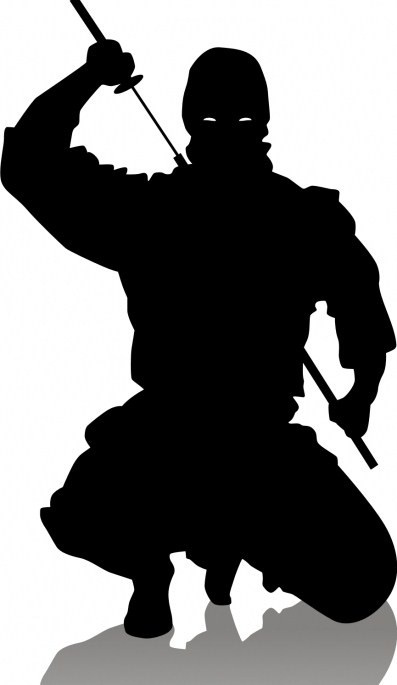
Yeah, that’s right. We’re talking about ninja today. What’s that you say? Why not ninjas? Well, because much like deer, the plural of ninja is ninja (in all seriousness, Japanese generally doesn’t concern itself with singular/plural). Now, anyone who is into the hobby, enjoys anime, or just likes watching action movies is going to run into ninjas at some point or another. The only problem with this is, depending on your source, there are dozens of kinds of ninja. So, let’s take a look to see which ninja will fit the kind of game you want to run.

Ninja in Real Life

Before we look at the fantasy ninja, let’s take a look at the real ones. Now, there isn’t much to go on here – at least not in the time we have – so we’ll take a shortcut here and just go to the dictionary definition. If you want more information, you can always hit up Wikipedia on your own and do some reading there.

That said, dictionary.com defines ninja as such: a member of a feudal Japanese society of mercenary agents, highly trained in martial arts and stealth (ninjutsu), who were hired for covert purposes ranging from espionage to sabotage and assassination.

There is a lot of crossover with shinobi, and most places use the terms interchangeably. Others, however, make distinctions. One of the more common I’ve seen is sort of like the equivalent between a soldier that works for a Private Military Corporation and one that works for a country. As I said though, such distinctions are varied and really depend on where you look.

The Deadly Shadow

Let’s get into the types of ninja. The first and most common type is that of the deadly shadow. This is, essentially, the type of ninja that has a supernatural ability when it comes to stealth. Now, when I say supernatural, I mean super. Batman couldn’t pull off some of the stuff that these types of ninja do. This type plays into the spies and assassins story that follows the ninja term around.

These make great additions to campaigns for taking out big NPCs, and to give PCs a reason to watch their six. The method of operation is simple here. If there is a shadow, it could be hiding a ninja. Then, when the time is right, the ninja pops out and murders the heck out of the target. Sometimes they even do multiple targets. For those playing the D20 games, think a lot of levels of rogue for what you’re doing here.

The Mystical Warrior

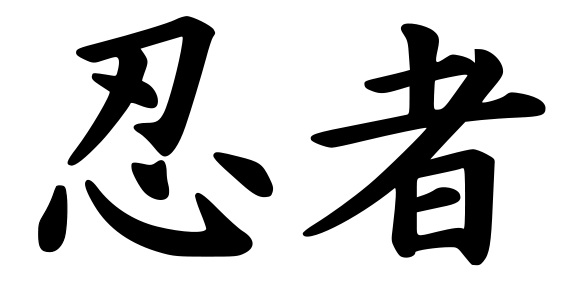
The word “ninja” in kanji script

You know what comes in handy when your stealth mission gets botched? The ability to throw fireballs, that’s what. This type of ninja has you covered on that. Not only are they a bad ass fighter or stealth monkey, but they can also call upon ancient shadow, arcane, or ninja magic when things get out of hand. The non-magical abilities are usually more mundane here – aside from, of course, when they are augmented by the magical spells that they sling around.

This type of ninja makes for a good villain or other prominent NPC. Generally, the combination of fighting and magical abilities is hard to stat out, but can work out well enough in a big bad boss where people are expecting the rules to be a bit bent. If you’re trying to make one as a PC, be prepared for a hard haul. After all, you need fighter, rogue, and mage abilities all wrapped into one. You can drop mage if you’re willing – and able – to acquire a whole ton of scrolls, and your GM allows “use magic item” to work for them.

The Super Soldier

The third of the key types of ninja is one of the favorites to use when the ninja is the protagonist. After all, it isn’t always that much fun to have your hero skulk around in the shadows and take everyone out without them even having a chance. However, having them brazingly walk into a room full of goons and taking them all down? That’s bad ass. That is also just what this type of ninja is. When stealth fails (and they are still usually somewhat stealthy), these ninja open up a can of whoop-ass the size of Texas and go at it.

Unsurprisingly, this is also one of the best type of ninja to have as a PC. You’re still multi-classing in D&D type games for fighter abilities and rogue abilities. These also make wonderful enforcers for villains – think Storm Shadow in the early G.I. Joe years – and someone who can be a scary recurring character that shows up to give the PCs a good fight every few plot arcs.

Wonderful Combinations

Most more recent depictions of ninja use a combination of sorts. The movie “Ninja Warrior” seemed to like the “Deadly Shadow” and the “Super Soldier” combination. Meanwhile, the Ninja Gaiden and Shinobi game series seem to go the “Super Soldier” and “Mystical Warrior” paths. I’ve seen a few “Mystical Warrior” and “Deadly Shadow” combos, but at the moment I can’t think of where. Still, don’t be afraid to combo up for a more bad-ass or unique ninja.

Modern Technology

Some places will tell you that a true ninja – and thus, a protagonist ninja – does not rely upon things like modern technology and guns, because all they need is their ninja training and the traditional weapons of the ninja. Others, show a more pragmatic ninja that is perfectly capable with sword and bow, but also not afraid to use guns. In at least one case, this is actually one of the things that makes the character a huge fan favorite (yes, I’m talking about Snake Eyes from G.I. Joe). So, really, don’t be afraid to go either way with your ninja.

So, I guess the only question here is, what kind of ninja are you going to put into your game?

A Sense of Agency

Do you want to know what one of the key differences is between a bad campaign and a good one? It’s not a particularly well-kept secret, mind you. In fact, there are dozens of gaming blogs that will tell you about it in a dozen of different ways. In technical terms though, the difference between a good campaign and a bad one, is that in a good campaign the players will feel that they have a sense of agency. This ‘sense of agency’ makes the players feel more important, and allows them to have fun. So, just what is it? Well, I’m glad you asked.

What is Agency?

A person’s sense of agency is essentially how much control they feel they have over their lives. Do you feel that you are able to decide your own path in life? Or do you feel that you aren’t allowed to decide anything, or that nothing you do actually matters? In a lot of ways, growing up and assuming responsibility is the act of taking more and more agency on oneself, and several studies have shown that students with a greater sense of agency in high school make the transition to college a lot better than those who don’t. Not surprising, when you consider the fact that those without a sense of agency aren’t used to the level of freedom that colleges give to their students.

How is that Important in my Game?

So, how is that important in your game? Well, think about it for a second. If your players feel like they have agency in your game, then that means that they feel that their decisions matter. It means that the story is as much theirs as it is yours. They can do things, they can change things, and their fate is ultimately in their hands.

This is the core principle behind most GMing advice for interacting with players. Make them matter, make their decisions matter, and let them do things. Say “Yes” when a character asks if they can do something and run with it. Say “yes, but”, “Yes, if”, “yes, when”, but say “yes!” Or, in other words, “Don’t say no, assign a difficulty.” If your players don’t feel like they matter in the game, then they’re probably not going to stick around. If they don’t stick around, then you don’t have a game, now do you?

But…my plot!

What about your plot? Yes, I get it, you probably worked really hard on it. However, if you didn’t work in ways for your players to toy with it, then you probably should have written a novel; not a campaign for an RPG. A story where the characters can’t change anything, and have to follow a prescribed path is not a game, it is a sequence of cut scenes and battles.

If you want your players to go left at the next junction, then give them a reason to. However, if they choose to go straight, then let them. Run with it, assign consequences, but let them be the master of their own domain. Give them that sense of agency, and show that you will react accordingly to their actions. You’ll be surprised how quickly they start to gel with it, especially once they realize that their decisions hold weight and can shape the game around them.

What Kind of Game Are You Running?

This is the big question to ask yourself with your campaign. Are you trying to tell a story, or are you running a game? Neither is a wrong answer. I’ve run a lot of RPGs that were telling a story.  The trick is to tell the players ahead of time so they know what they’re getting into, and then still working to preserve their sense of agency. Still, if you want to tell a plot, then you need to tell your players. You want them going in knowing what is trying to be accomplished.  How else can they help you out with it?

If, on the other hand, you are just running a big campaign for the adventures your players are making, then a lot of your work is already done for you. After all, the game is focused on those adventurers, where they go, and what they do. Give them that sense of agency and let them weave their own legends. If you’re running a story, you need to work it a bit more, but you can still do it.

But They Keep Burning The Bar Down!

If all your players do with their agency is to sit around town, or destroy public property, then you have two choices. One, point it out to them, and if you’re not having fun, call the game. Find out why they are doing that, and if that is what they really want to do. Who knows, you may be able to find a way to make it more fun. The other way, is to run with it. Make things happen in the bar, have people come to them for help, engage them individually, or have the guard come to arrest the arsonists. A big part about giving a sense of agency, is letting the consequences of actions hit the person. The good ones, and the bad ones.

So, try to have fun with it. Let them have fun with it. And for the gods’ sake, lay off on the reigns a bit. You’ll thank me for it later.

The Cult of Eternity’s Path – Steal this Snake Cult

The idea behind this is to give you a subversive group to add to some city, kingdom, or other location in your game, and to potentially tempt your players with. In the interest of usability, I’m going to try to stick to the basics, and keep time-sensitive material (i.e. swords, lasers) out of the picture. Feel free to use this in a game set in any time period.

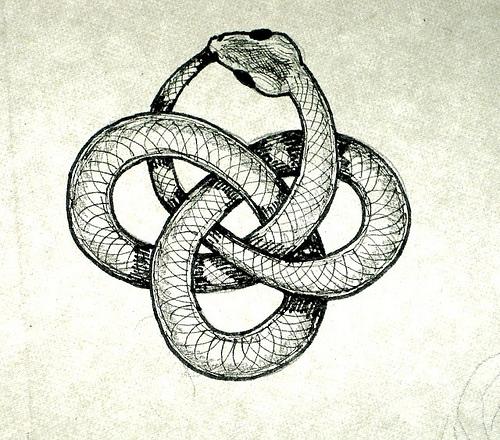
Ouroboros
The Ouroboros is a depiction of a serpent – and sometimes a dragon – eating its own tail, and in doing so making a cycle. It is a symbol of eternity, of the cyclical nature of life, and of something that lasts forever because at its end is its own beginning.

Ouroboros is the symbol of the Cult of Eternity’s Path, and all members must wear its mark on some part of their body. Some choose to do this with jewelery, rings and medallions (being the most common and popular). Some choose to do it with tattoos, permanently marking their body with the symbol of their devotion. Others, from the more extreme camp, ritually burn and scar the symbol into their flesh, marking themselves with their devotion through a sacrifice of pain. The cult itself truly does not care which way any particular member chooses to show their membership, provided that they do in fact show their membership.

The Beliefs
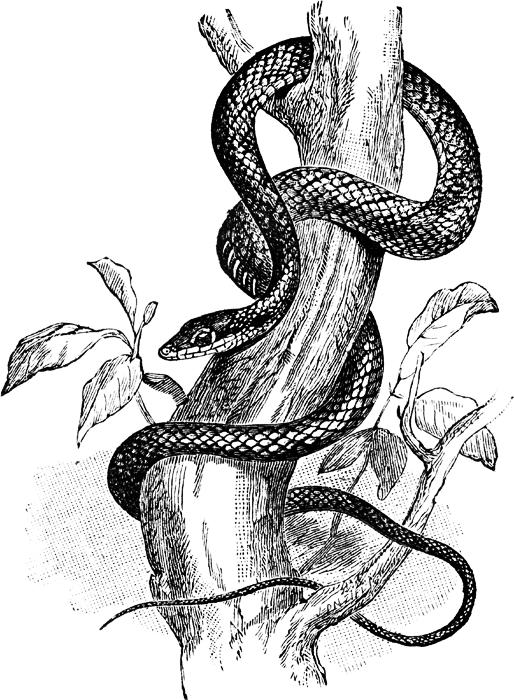
It should come as little surprise that the Cult of Eternity’s Path are snake worshippers. Snakes have long been symbols of fertility, eternity, creation, and wisdom. They are associated with water, life giving and pure; and with the underground, shelter from the harsh elements that would do us all in.

The Cult believes that it is only when shrouded in night’s gentle cloak that we are truly free to be ourselves, free from shame and the judgement of others. They take as proof of this that man has always felt more free to indulge his baser nature at night, and that many of the things that make us, as humans, feel the most alive are best suited to the night.

The Cult believes that it is the subjugation and the oppression of those in power, those who would shackle humanity as slaves, that have dragged man out into the unforgiving heat and light of the sun. That it is because of those people, that man is shackled to his, or her, work and made to only feel value through toil and struggle on another’s behalf, and not from the exultation and experience of all that life has to offer.

The Cult believes that it is the repression of those who would enslave mankind that is responsible for the most abhorrent crimes in human history. That it is repression of the self, that makes the repressed become more and more debased, and less and less human. They believe that it is through enjoying life, exulting in its activities, and feeding one’s dark and more base cravings that will bring about understanding and true peace to the world. That it is only when people are not afraid to be themselves, that they will truly be able to feel accepted and loved, and through that love they will be healed.

Finally, the Cult believes that they are merely harbingers for the change to come. Their job is to recruit all those who would listen, to join them in the dark of night and live life as it was meant to be lived. When the world is ready, when they have spread the word far enough, then the Great Serpent’s chosen will walk the earth and free humanity from the tyranny and oppression that it has suffered under for millennium, and on that day, the gift of eternal life will be given to us all.

The Practice
The temples, shrines, and gathering places for the cult are all underground, where the oppressive gaze of the sun can not find them. Rituals and devotions are led at night, but they are not the strictly organized and orderly ceremonies of other religions. Instead, the Cult exults in chaos, randomness, and impulse. They express their spirituality and beliefs through temptation and giving in to the desires of the flesh. In short, they are hedonists and as such believe that pleasure is the highest calling in life. It is a calling they intend to answer as well.

To the uninitiated, it would not be hard to misconstrue what was going on at a cult meeting as a simple orgy of sex, drugs, and violence, and yet there is more going on than just that. While there is sex, there is no rejection among the members and all are accepted. While there is drug use, without the pressures from society to escape from, and the acceptance of the other members, there is very little in the way of overdosing and other members of the cult watch over to ensure that doesn’t happen. Finally, while there is violence, it is never armed combat and there is rarely anything worse than bruises and scratches to show.

It is in these ways that the cult reaffirms its beliefs that the removal of repression will set humanity free. After all, they have allowed their members to indulge, and have had nearly no problems with over-indulgence.

All of this isn’t to say that the Cult is just an excuse for hedonism. There is still a strong spiritual nature amongst their membership, and devotional services are performed and led by higher ranking members of the cult. Such services often denounce the oppressive regimes that humanity finds itself under, and the need for acceptance of not just each other, but of life and the pleasures it has to give.

Structure
While there is a mixture in the higher rankings of the cult, at the very top the cult is matriarchal. It is in the mother’s embrace, and only in a mother’s love, that true acceptance can be found after all, and the cult uses this to ground their beliefs in the oldest and most primal of humanity’s religions.
Promotion within is based on performance for the cult. Those who take on a role of helping their fellow members, and of leading others to the path that will save humanity, find themselves raised up by their peers to the higher status. It is only after a person has been unofficially elevated by those equal to them, that they are officially elevated to further help guide those whom they are already helping.

Recruitment
Despite the ‘all accepting’ nature of the beliefs, membership is still a selective process. One can not ask to join the cult, they must be invited inside. Often, this will happen when a member of the cult opens a friend, relative, or other social connection’s eyes to the truth of the world and how so much of existence is denying what it is that makes us human. Afterwards, the recruiter will speak to a higher member in the local chapter of the cult, and bring their recruit to meet with this member. From there, the person will either be invited to join, or deemed unready to receive the full revelation. No one is ever turned away forever, but the cult claims it will not accept those who are not yet ready to have their eyes fully opened.

Enemies
The cult claims it is a good thing, and so far everything has been from their perspective. However, it should be unsurprising that the cult has enemies. Their actions are decried as subversive and corrupting. Members of the cult often pedal wares (sex, drugs, etc) that society has deemed unacceptable and undesirable. Their recruitment processes are considered little more than a seduction of the innocent.

All of these claims  are even easier to claim when you also account that the Cult are snake worshippers (often seen as a deceiver and manipulator) who hide from the sun (light is good, remember?), and feel that people should explore their baser nature to be who they really are. Compared to those, the drugs, sex, and violence are almost paltry side affairs.

Use
I leave it up to you to decide if the cult is up to something more sinister (setting up a power base for a revolution of some sort perhaps, or just making tons of money for drug cartels and prostitution rings), or truly believes and act as laid out here. Don’t be afraid to twist it up and use them as a wholesome group that is truly just trying to help. Odds are, your players will never see it coming.

Male Character? Female Character? What’s The Difference?

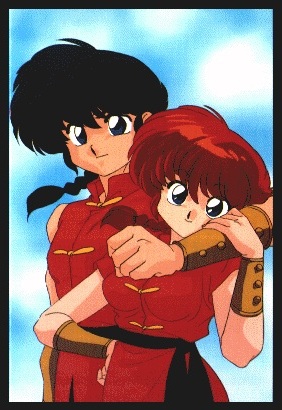
How do you make a ‘good’ female character? No matter the medium, creators who reportedly make ‘good’ female characters get asked this question a whole lot…

Before I begin, let me just say: Hi, I’m Anthony, the owner and proprietor (can I even use that word?) of Reality Refracted. For those not in the know (you’re all in the know, right? Right?), Reality Refracted is a gaming blog much like this one, where I go on and on about whatever bit of gaming trivia catches my fancy on any given day. Today though, I’ve decided to come on over here to Stuffer Shack and rant at you to come read my blog. Actually, I want to talk to you about your characters, and how you go about making them. So, without any further ado, let’s begin.

How do you make a ‘good’ female character?
No matter the medium, creators who reportedly make ‘good’ female characters get asked this question a whole lot. Some creators, particularly female authors, have walked out of the interview the second that question was asked. The reason? Well, I hate to break it to everyone, but women are not a magical enigma sent to befuddle the great sages of the world. They are, at their core, just people like everyone else, and by treating them as special – or thinking they need special rules to be done well – you are only doing yourself and them a great disservice.

You want to keep this fact in mind whenever you’re making a character, no matter what the gender, race, or other differences may be. People are just people, so treat them like people and you’ve suddenly got a much better character on your hands. In other words? A strong character will always be strong, regardless of the gender or race of the character. For those of you that don’t believe me, look at Mass Effect’s Commander Shepard, a strong character no matter the gender. (Though, for the record, I think canon Shepard should be female, not male).

But they wear pink!
Yes, and boys wear blue, Orcs are green, and Dragons all have different colored scales. What is your point? If you are looking to point out that there are differences, then I can’t argue with you. A man and a woman are simply not the same thing. They have different strengths, different weaknesses, and get a different colored diaper at birth. However, the fundamental core aspects of being a human are still there. The psychological rules that work on men, work on women, and vice versa. Behaviors may be different, but once again, the core is the same.

So why are we different then?
I’m glad you asked. The reason for those differences is… society. Humans are fundamentally social creatures – yep, even us gaming geeks – and the impact society can have on us is absolutely huge. Even people who say they don’t care what others think of them, fall prey to societal standards. Even worse, we’re not even out of the womb for five minutes before society starts hitting us with these things.

Think about it for a second. As a child what images were you presented with? What ads did you see? What people did you meet? This is where a lot of gender differences come from. At an early age, boys are exposed to imagery and experiences that introduce and reinforce what a boy is supposed to be (traditionally, loud, boisterous, adventurous, brave, protecting, wears pants, etc., etc.).  At the same time, girls are exposed to similar imagery, only it reinforces very different things for them to be (again, traditionally: caring, mothering, nurturing, focus on fashion, dresses are ok, emotionality, etc., etc.).  As we grow up, these images are expanded on and added to every step of the way.

Inherently, this isn’t a bad thing. After all, things like this are how a society socializes their children into knowing the rules and expectations of their society. It teaches a normal state for the child to see the world through. However, it also applies pressures. Boys, for example, are pressured into going out for sports and being outdoorsy. Girls on the other hand, are pressured into focusing on appearances, and training to be a mother later on in their life. By the time this boy and girl reach high school, their upbringing has been so different on such a fundamental level that they can’t help but look at the world from different angles. This, in turn, leads to the frustration of men and women seeing things in completely different lights, and wondering just where the heck the other came up with their view point.

Ok, Mr. Sociology, but how does that help me?
Well, quite simply, I’ve given you one of the big pieces of the puzzle. The trick to making a good character, one that acts consistently and is believable within their world, is to look at the world from their perspective and not yours. If you are a guy looking to make a female character, go back through the character’s life and try to envision the stresses that were put on the character as she lived her life.  The roles society expected of her, versus the roles that she wanted for herself – how did they interact? How did they form the person she became as she found the balance point between what she wanted to be, and what she needed in order to fit in? If you can find it – and it takes practice to do so – you’ll find all of your characters growing stronger and deeper. For girls trying to do the same with guys – and face it, you have as much problem with this as we do – do the same thing. Envision the stresses put on your guy, or how society would push/support/hinder him in achieving his goals.

Shaping a character this way is more about making the psychology for the character, rather than just a backstory for them. Like I said, it takes work, but if you can pull it off, you start getting some very interesting characters. Characters who the other players keep pointing at and going “yeah, they’re consistent…but what the heck are they doing?” It can be a great feeling to get that out of your fellow players too.

Oh, and as a last note. If you are having problems with making a character of a different gender, but aren’t comfortable doing all that imagining I just recommended, try to simply cut gender out of the picture and just make the person. A strong individual, as said, will stand on their own regardless of gender, and this could be just the starting point needed for further exploration of characters of every type of race, gender, and species.

Have fun with it, and Happy Gaming!