GM Burnout – What to do?!

I love running games.  Fantasy, Sci-fi, Retro, Space, Modern… you name it, I love it.  I love it when you’ve got those players sitting there, leaning forward, waiting to hear what you’re about to say, waiting to see what you’re about to hand out, and waiting to attack whatever it is you’re about to throw at them.  In a nutshell, I love the challenge of creating an adventure that my players are going to want to talk about when they’re away from the table.

I’m talking about that campaign that you created from scratch – full of mystery, intrigue, danger, rewards, plot twists – and it’s all tied to the player characters in a meaningful and rewarding way.

Those moments when your players  feel that you’re the BEST GM they’ve ever gamed with, it’s like you’ve won the game.  It doesn’t get any better than that, right?

But what about those times when you start struggling to deliver, when you start running out of ideas, when you burnout so bad that those tires deflate?

That sucks.  It sucks when your players say that they’d rather spend time with their girlfriends than sit through another lackluster, mundane session.  Sigh.   I’m talking specifically about when you can’t write, create, and design your own adventure or campaign anymore.  Every so often I keep running into this problem.  I get a little GM Burnout and those tires get deflated.  It’s frustrating.

So what to do?  How do you rejuvenate yourself?  How do you start making an adventure or campaign that your players will love?

The fix:

Just go to a prewritten module.  Shell out those bucks and buy some published adventures.  Most of them are pretty good, so you have nothing to lose.

I know what you’re thinking: “Me?  Use a premade published adventure?”

Yeah.  Use a premade adventure.  It takes you back to the old days, to the days of endless hours of gaming fun.

It doesn’t take much to run one of these, as most of the work has already been done for you.  All of the NPCs, enemies, and monsters are designed from someone else’s point of view, so your players get a fresh, widened variety.  They usually have maps, and those maps are usually designed with interesting detail.  Even if the module uses a horrendously clichéd conflict (save the princess, help the village, or kill the necromancer), it’s still more fun than if you wrote and ran a similar home-brewed adventure.  It’s nostalgia.

“But my players like our adventures to involve the PCs personally, involving their PCs’ backgrounds.”

Ok, so add it in.  Running a premade module doesn’t mean the PCs can’t run into known allies and enemies from previous adventures.  By all means, include them.  It ties the adventure to the player characters, bringing them closer into the story.  Pretty soon that premade module stops seeming so bland, instead developing into a pretty interesting and rewarding story.

So that’s it.  It’s not intricate and we’re not reinventing the wheel.  When you start feeling the burnout from a game that you just don’t want to run anymore, jazz it up by throwing a premade adventure in there, and tailoring it to fit your PCs’ story hooks.  You’ll fix that burnout with fresh new tires.

Thanks for reading!

The 10 Commandments of Writing an RPG

Some pitfalls and roadblocks to avoid, and tips to heed, when writing your own RPG…

I’ve said it before, “We all have our own RPG, right?”  Well, I assume that’s the case, because I’ve written several, and some of them have several editions.  No, I’ve never published any of my RPGs – they were always written for my enjoyment, my players’ enjoyment, and my need to vent creative brain vapor build-up.  Most often, I wrote them simply because I wanted to play or run a game (genre) that wasn’t really out yet or readily available.  Sometimes I even thought I could make a better version of an existing game.

In this article, I’m going to talk about some of the pitfalls of writing your own RPG, and how to overcome them.  Actually publishing a role-playing game for profit is a whole other ball of hot magma, one that I’m certainly not qualified to talk about.

 *I am not a professional writer, and I’ve never tried to sell a game.*

I’ve written several RPGs.  Unfortunately, most of them were 10-30 pages destined for a fiery death in the recycle bin.  I did, however, have a few juggernauts that saw some serious game-time, so I’m very happy about that…

  1. Back in high school (when my love / hate relationship with Heroes Unlimited began), I felt that I could make a better supers game than anything else out there.  Using Wordperfect, I put together 100+ pages of pure super material (titled “Supers“).  Unfortunately, it ended up being nowhere near original, so I rewrote it – only to find it still wasn’t very original.  So I just dumped the entire thing.
  2. I then created two editions of Militech, which was a brilliant combination of Aliens and Robotech.  Space Marine combat and Versatile Fighter combat provided our group many hours of entertainment, complete with military rank, tons of options, and some cool (ripped) artwork.  I even had six books printed, complete with a cool front cover.  Unfortunately, I eventually killed the game because I kept tinkering with it.  I’d get inspired by a movie or book and then try to add those new concepts to the game.  I should have just left it alone, since a lot of time went into that RPG.
  3. My last major endeavor was Nighthaven.  A Blade/Buffy/Underworld kind of a game.  This game had all the bells and whistles.  150+ pages, great options, and great (ripped) artwork.  Of course, I had to have it printed in book form.  We played this game through many, many sessions, and I simply liked it so very much.  I liked this game so much that it went through three editions.  <sigh> And that is what ultimately shelved it.  I kept tinkering with it, changing things, making the game “supposedly better” – and it simply ran away from me.  I really should have focused more on fluff than stuff.

So, where did I go wrong with all of my games?  And why am I even writing this article?

Well, I’m getting the itch to start developing Nighthaven again, but I don’t want to run into the same old problems.  So, I thought about it, and then came up with some of the roadblocks and pitfalls that I’ve faced in the past with the hope that I don’t make the same mistakes again.  If you’re looking to write your own RPG for fun, hopefully you’ll find this useful as well.

The 10 Commandments of RPG Writing

  1. Create a “to do” list.  Create a list of things that need to be explained in the game.  This is most often a list of chapters and subchapters.  I always look through other RPGs to see what kinds of things get explained in those games, to help ensure that my game will be complete.  Really, in creating a list, you’re creating a plan of attack, one that will help you stay on track.
  2. Don’t stall.  If you get an idea, go with it.  Don’t worry about your idea not being original or perfectly figured out – you simply have to get the ball rolling.  Don’t sit there trying to flesh it all out in your head.  I’ve sat for hours in front of my computer just waiting for the right words to mystically flow through my fingertips onto that keyboard.  And you know what?  Those were hours well-wasted. Once you get that initial idea, just go with it.  Write, write, write.
  3. Setting, Setting, Setting.  This is important.  A great system mechanic or character options tree might be cool, but it won’t last when paired with a poor, uninspired, or under-developed setting.  A setting connects the player characters to the story, and that’s mucho important in keeping players interested in the game.
  4. Only focus on what is on your mind. You don’t have to write your game from front to back (this is why you created your “to do” list).  If you’re working on a specific section – like PC  Races, but then get inspired about your PC Classes, work on your PC Classes.  You’ll get so much more done writing about what’s on your mind than if you try to finish one section before moving on to the next.  Trust me.
  5. Steal what works from your competitors. Hey, if you like how Wizards formats their D&D Powers section, copy it.  Or, copy and alter it.  Whatever.  It’s ok to study what’s out there, because it just might work for your game (and you may even be able to improve it).  On the flipside, you can also check out things from games that don’t seem to work, and avoid making those mistakes.
  6. Keep it simple.  Several of my failures occured in part because I thought I could make grapple rules more realistic, or ranged combat, or falling damage… whatever.  All that did was add more rules to an untested RPG system.  Using my “obviously superior intelligence” to make certain parts of the game more realistic only makes the game less playable.  It makes the game clunky, and opens your system mechanic to a vast set of inconsistent rules.  Just keep it simple.  Again, trust me.
  7. Consider using an existing game system.  In line with keeping it simple, why not make your game using an established generic system, like Savage Worlds or Stands of FATE?  This is soooo much less work and (more importantly) less stress.  Of course, if your idea of a game is based off a unique system mechanic of your own design, then by all means, go for it – just remember that desiging your own system can be a daunting, time-consuming, tedious task.  Using an existing generic game system can easily cut out tons and tons of age-inducing playtest hours.
  8. Playtest with one-shots on occasion.  This will help you adjust numbers, balance powers, and show you what simply doesn’t work (and anything that takes a lot of explanation certainly doesn’t work).  Players are not going to want to play the game if they can’t remember the eight-step process for determining initiative.
  9. Make the rules consistent.  When you design your own system, a common error occurs – it’s very easy to focus on combat resolution while disregarding conflict resolution.  Then, later you’ll realize that you need to figure out how to handle ability checks, skill checks, casting spells, and social interractions.  Pretty soon you could end up with several different ways of handling such conflicts (sub-systems), when you should have devised a single mechanic that applies to just about every situation.
  10. Stop making changes.  After you’ve finished your game and distributed it to your players, resist the urge to make changes.  This is the time to play the game, not work on it.  Unless you find something that is seriously breaking your RPG, leave it alone.  Just go with what you have and let it be. Sure, you’re going to find errors, inconsistencies, and power imbalance, but your players will forgive that.  They won’t forgive you for interrupting the campaign when you start making changes.  My two most successful games were ultimately killed because I kept trying to improve them.

That’s it, I think.  Hopefully this list will help you with your homebrew RPG project – I know it’ll help me.  Here’s a few more ideas to help make your original role-playing game a success:

  1. Include artwork.  I always rip images off the web for my personal RPG projects.  I’ll even doctor those images to suit my needs.  Imagery adds a great element – it helps give the game flavor, and helps your players envision the game’s concepts.  Just remember, don’t post your game online with ripped images, and I know you’re not going to try to sell it that way.
  2. Make a character sheet.  There are all sorts of ways to create a character sheet.  Microsoft Word or Excel is usually fine for a homebrew RPG, though there are many other (better suited) graphics programs out there.  Really, having players write their characters down on some binder paper is a no-no.  Doing so will irritate your players.  Make a character sheet, even if it’s a very simple one.
  3. Make your game easily available to your players.  If I’m going the cheap route, I’ll print my game on my home printer (or at work) and put it into binders for my players.  However, I prefer to have it printed in a printshop.  I’ve done it for as little as $15 per spool-binded book in color, with front and back covers.  Whether you print it or not, give your players a Word document or PDF of the game (you can save as a PDF in Word if you want).

  – – – – – –

I’m assuming you’re writing your own homebrew RPG because you have a cool setting, genre, or mechanic that you’d like to play, or because you’re dissatisfied with the output of the current industry games.  Writing an RPG takes a lot of work, and can easily lead to a lot of wasted hours.  I really do first suggest looking at other games to see if you can modify one of them to suit your needs.  That could very easily get you the game you want (and much sooner), instead of starting from scratch.

Of course, if you’ve read this article down to this point, then you’re probably like me – you probably get enjoyment not just from playing the game, but in creating it.

John Armor, “Old School Tough Guy” – an Interface Zero + Strands of FATE character

John Armor, “Old School Tough Guy,” is a character for the fantastic cyberpunk game of Interface Zero, made up using the awesome Strands of FATE system.

Sigma Six, an “off the books” corporate black ops team, was recently dismissed when its parent company was bought out. This suited John Armor just fine, because now he was free to pursue the missions that interested him, and decline those that didn’t – at least, that’s what he tells himself.
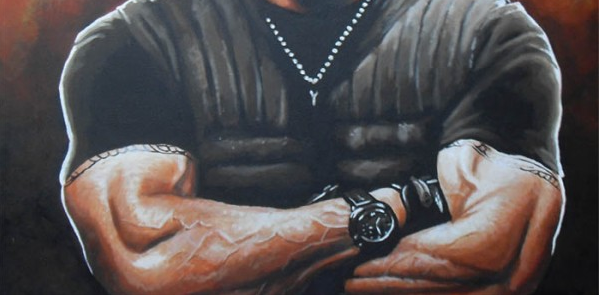
John Armor, “Old School Tough Guy,” is a character for the fantastic cyberpunk game of Interface Zero, made up using the awesome Strands of FATE system.

Defining Aspect: Old School Tough Guy

John “Crowbar” Armor grew up living the hard life.  In his early years, he was a knockaround guy and an enforcer.  Eventually taking a deal to avoid prison, he chose to enlist and serve in the North American Water Wars.  Being a first-generation Human 2.0 meant that he had all the physical traits the military was looking for in a soldier, and then some.  Fortunately for him, his dead-end attitude was reshaped through the rigors of two back-to-back tours.

After his duty was over, he tried to go back to the criminal life, but just couldn’t.  Those years in the war taught him discipline, respect, and loyalty, so he opted for a simple, legitimate security guard position instead.

Because of his physical presence, skills, and new-found loyalty to the company, he was soon recruited to the division’s elite security detail.  And from there he was finally recruited to the company’s secret black ops team (Sigma Six).  After many years on the team (and at the nice age of 55), his company was bought out, forcing the company to cut ties with the team.

In all of his years, regardless of what he was doing, he always preferred to take care of problems with the simplest of solutions, because those were the ones that usually worked.  He wasn’t much of a negotiator, opting instead to let his size and strength be his words.  Forceful and direct was the way to go, because that simply got the job done.

He’s always had the attitude that you should say what you mean, say it with dignity and respect, and remain loyal to friends and family.  He doesn’t like to play games, he doesn’t like to beat around the bush, and he doesn’t waste his time worrying about the little things.

After getting disbanded from the company, he sold his pad and moved into a street-level, run-down garage.  There, he lives a modest life working on his bike, and occasionally donates money to help out the locals.  He quickly gained a reputation in his neighborhood for this, but it’s more likely you’ve heard a different story…

“Let me tell you why you shouldn’t fuck with that old dude down at the garage.  A few months ago some punks stole his bike and then sold it.  After tracking the thieves down, he broke into their place, beat the shit out of two of them with a crowbar, and left the third cowering in the bathroom.  So, he goes into the bathroom, takes a shit, and then leaves – and he never said a word.  The dude’s bike was back at his garage the next day.  THAT’s old-school.”

Racial Aspect: Genetically Enhanced

Being 55 years old, John is a first generation Human 2.0.  Because of that, he doesn’t look a day past 40.  With his parents’ access to resources, he received the best genetic treatments money could buy.

Racial Specialty Aspect: Attractive

The genetically enhanced get all the perks.  That’s just the way it is, so stop bitching about your bad luck.

Character Aspect (Ambition): Someday I’ll do some good

Growing up in the criminal life, then fighting on the wrong side of the war, and then operating as a Sigma Six Black Ops team member, John Armor hasn’t really made the world a better place.  In fact, he’s done just the opposite.  He’s vowed that he will one day atone for his sins; the problem is that he just doesn’t exactly know how to yet.

Character Aspect (Background): Veteran of the Water War

Life as a soldier really whipped John into shape (mentally), and fixed his attitude problem.  It’s also responsible for most of his skills as a street ronin.  Ranged combat, hand-to-hand combat, power armor combat, first aid, demolitions, survival, mechanics, and so on, he learned while in the military.  Even though he knows now that he was on the wrong side of the war, he still looks back at that time period as his turning point in life.

Character Aspect (Conviction): Loyal to the last

As an only child, and one who lost his parents at an early age, John felt it was crucial that family and friends were the most important things in life.  He felt that way towards his criminal pals, his war buddies, and his Sigma Six team members.  “If you don’t have friends and family, you don’t have anything” is a motto of his.  This is something that he’s known for.

Character Aspect (Disadvantage): These old bones

At 55 years of age (and years of combat abuse), father time is starting to catch up with John.  He’s still buff as hell and ready to throw down with anyone, but he’s starting to notice that he has less pep in his step.

Specialty Aspect (Exceptional Skill): Experience matters

John aint some young punk just off the street; he’s been around the block and knows a thing or two.  Listen to him, because it’ll save your life.

Specialty Aspect (Foe): The shadows are full of friends and enemies

With his sordid, lengthy past, John has racked up a surprisingly large number of friends and enemies (perhaps even people you would think couldn’t be).

Specialty Aspect (Foe, swapped in for Gear): Estranged son

Somewhere along the way John fathered a son.  Not always there as a father figure, John and his son don’t exactly have the “Leave it to Beaver” relationship.  In fact, some might say they’ve become rivals.  Does John hate it that he doesn’t have a good relationship with his son?  Yes.  Will he try to fix this problem?  Someday.

Specialty Aspect (Help): Doc Op

Back in the war, John became fast enemies with a fellow soldier.  Their hate for each other was reckless, and bordered on insanity, if not stupidity.  Now that both are no longer in the military, they get along like old buddies – the best of old buddies.  On the street, “Doc Op” has patched up John more than once, and has even tended to some of the old members of Sigma Six. He can often be seen drinking a beer in John’s garage, just hanging out like one of the guys.

Specialty Aspect (Inferior Skill): Why isn’t this working?

Even though John has been around for a while, he doesn’t know everything, especially when it comes to high tech stuff.  “Why isn’t this working?  It’s supposed to work, damn it.”  Specifically, he has a bit of trouble when dealing with high tech gadgets and computers.  Sure, everything nowadays is computer-related, and that just pisses him off.

Favorite Site of the Month: Nov/2011

I’m excited to tell you about our favorite site for November because it’s one of those gaming sites that I go to often. I don’t go there because I like the owner, because the site is pretty and shiny, or because they are an authority on a specific gaming topic. I go there because the site has concrete, useful gaming information that directly improves my game.

What is Chaotic Shiny, exactly? In the words of Swordgleam (Hannah)…

Chaotic Shiny is a generator site aimed at people who write, game, or live in fantasy worlds of their own creation. Grappling with writer’s block? Need a character on the fly? Party just walked into a tavern and you want it to be a little more exciting than normal? Want to flesh out a setting with some detailed religions? Chaotic Shiny is the site for you.

Generators are divided into rough categories based on what they come up with. Some of them, such as the drink and name generators, are simple, whereas others, such as the civilization and pantheon gens, are much more detailed. If you want a generator that you can’t find here, you can make your own with the custom gen builder, or feel free to drop me a line with suggestions or feedback.

Enjoy!

I enjoy the results of the generators, because they put in overtime. What I mean is, I clicked on the “Law” generator to give me a random law for a region in my game…

  1. “The penalty for a member of a lower class offending a nobleman is execution.”
  2. Another law came up as, “The penalty for a free woman smuggling artifacts is whipping.”

How cool is that? Not only did it give two different laws, but I can also make up entire adventures or encounters based off of these laws.

And that’s only one generator out of what must be a hundred. Here is the result for a single merchant, using the Merchant generator:

Merchant Gen v0.4.1  

Specializes In: spell components
Also Provides: enchanted items, protective magic itemsQuality: cheap knock-off
Price: a steal
Variety: very goodHaggling: is treated with contempt
Haggling Effectiveness: very goodDaily Special: 20% off of a relatively cheap item
ShopkeeperName: Magath
Gender: female
Race: elfMood: miserable
Currently: snoozingPhysical Trait: very masculine
Behavioral Trait: no sense of personal spaceAffiliation: political
ShopSize: very large
Interior: poorly decorated, dark, cool color scheme
Occupants Include: a group of young women, several half-orcs, a city officialSecurity: obvious guard(s)Reputation: honorable

Seriously, I could design an entire world with this stuff. Scratch that… I’m sure the Chaotic Shiny generators would do all of that for me. Prophesies, Poisons, Taverns, Adventures, Names, Insignias… you name it, it’s there.

This is the type of stuff that I like. I like getting all kinds of role-playing game material, either to use directly, or to draw inspiration from.

Thanks Hannah!

Incidentally, Hannah will be posting a Steal this Adventure article here at the Shack on Thursday. Make sure you come back and check it out!

A Stuffer Shack Apology

I’m sitting here at my work desk, trying to come up with something witty to say. I’ve deleted paragraph after paragraph because they kept making me sound like a complete tool. Maybe that’s the case anyway, but at least at this very moment I’m just typing whatever comes to me.

Quick sidenote: Pour Some Sugar On Me is on the radio right now, and it’s totally pumping me up, putting me in a better, more aggressive, less defeated mood. And if you don’t know the song of which I speak, well then, you’re not as cool as me. You’re probably younger, but not as cool.

I’m not going to get into a huge post about why I started Stuffer Shack (not again, anyway), but I will give you the 50-word rundown: Two things: (1) I had a bunch of gaming ideas piling up in my head, and (2) I had made some gaming accessories that I thought I could sell. Was that 50 words? Probably not.

Writing character backgrounds, adventure ideas, enemies, and so on has been really fun. I’m not the best writer, but I’m not the worst, either. Then why do it? Because I’m a creative kind of person, and I like it. Am I the most creative? Nope – Not by a long shot, but I still enjoy it. Does such a type of article get many comments? Nope. Does that bother me? Yep. I see all these other blogs with all their comments and I realize that I want that. I want people commenting about the things I write. I want people coming to the site when they need ideas for an encounter, or a cool enemy for their adventure. Heck, I want people coming here for ideas of starting that adventure. It took a little while, but I realized that people just don’t leave a lot of comments for that type of post. Heck, it makes me wonder if people even read them, to be honest.

And what about our Next Level Gaming column? Why did I start that? Well, I guess it’s because I had some opinions. I’ve been gaming for two and a half decades, so I should be some sort of expert, right? Besides, Editorials, Reviews and Advice articles get more comments, right?

And what about those accessories we sell? I’m not going to lie… I like selling them. I like seeing that email: Notification of Payment. I like seeing my Paypal balance increase by $20, $30, or $40+ every few days or weeks. I aint gonna lie, I like making that money. Sure, my wife takes it from me, but it’s cool just the same. Should I be talking about making money from the website? I don’t know, but since this is an apology post, I might as well.

Our Store has been part of my problem, though. The Shack makes a good amount of money (for a gaming blog). I’m not going to lie: that excites me – not because I feel I’m “winning,” but because it makes me feel I’ve accomplished something. I’m not the go-getter type, not the popular guy, not the guy voted Most Likely to Succeed. I’m just not that guy. I am the guy who says, “Hey look, I created a little corner of the gaming verse, and it’s at least mildly successful.” So being at least partially successful with our Store makes me feel good. I got lucky, and that is all. Sure, it took a good chunk of work to make our counters and mounts sellable, but it was still luck to begin with.

To be completely honest, though, I REALLY like hearing from customers about how much they like the products. Mini Counters and Horse Minis have been very helpful in our games, so I knew they would be very helpful in other peoples’ games. I go out of my way to make sure customers get good service and a great product. It makes me feel good.

So what’s my problem, then?

Well, I keep wanting more. I keep wanting the site to get bigger and better. I keep finding myself wanting more – more articles, more writers, more products, more customers, more comments, more page rank, and more visitors.

Am I really apologizing for that? No. I’m apologizing for losing focus.

I keep biting off more than I can chew. Instead of focusing on the simple aspect of gaming – blogging about gaming, I’m trying to make Stuffer Shack this great big gaming website. That crap is either going to get there or it isn’t – I need to stop dreaming and start doing. One of my big problems is that I keep tweaking things to make the site “better,” when the only real way to make the site better is to have good, more consistent content. We have some great articles and some great writers, so I need to just let that take center stage.

What I need to stop doing is F’ing with the damn website. I’m always tinkering with this or that to make it look or function better. The Shack blew up a few months ago because I started “upgrading” the theme to make us bigger and more professional. Yeah, that fiasco was my fault. So then we went to our current theme, the second premium theme I had to shell out several Andrew Jacksons for.

You like our current theme? It looks cool, right? Well, it’s a piece of shit. It doesn’t really function like the demo, and is missing several components of a normal blog, some of which I’ve had to pay to have modified in. I’m telling you, it’s so frustrating to buy a premium theme, then find out later it doesn’t have all of the regular features of a free theme. Having those regular features modified in also makes it a bitch to update the theme. But, I made peace with it all because the site had other features not common among free website themes. Which brings me to the whole point of this apology…

I have run into yet another roadblock with this damn theme, this premium theme. I’m not going to get into what the problem is, but just know that it’s not a “I don’t know what I’m doing” issue; it’s a “I’m not going to the support forum to fix another bug yet again” issue. Seriously, I don’t know what’s more lame, this website theme, or me for trying to make it work. I’m done fighting with it. If I didn’t love blogging so much, I’d almost consider hanging up my hat entirely.

So, here’s my apology: I apologize for losing focus. I apologize for biting off more than I can chew. I apologize for thinking bigger and wanting more, instead of focusing on what we have and what we do. I’ve decided to go back to our previous free theme, and focus on the things and people that have made this site great.

I hate having to say this, but we’ll be going through some changes over the next couple of weeks, taking us back to where we were several months ago. Nothing fancy, just clean and functional. I very sincerely apologize for the oncoming mess, especially to those of you who suffered through our first implosion. Hopefully, a back-to-basics trek will help me feel better, instead of defeated, and get this site back on track.

Thank you for reading.

*Edit* We’re back to our old theme now, and it’s working very well.

Killing a fellow PC: Bad Form? Or Bad Ass?

My, how the tables turn…

I’ve been gaming for awhile now, and I’ve seen plenty of different situations at the table: different gamers, different points of view, different likes and dislikes, and on and on. If you’ve been gaming for any decent length of time, you’ve seen it all, too. And then, of course, after we’re sure that we’ve seen it all, we get hit with something new.

Charisma had a good article, PVP is cool. …I mean, NOT cool. Here’s a quick quote:

“No, you can’t make an attack roll against another player character. We’re fighting monsters; not players. The moment we start rolling against each other, the fun ends and the unfun competition begins. There is no PVP at this table.”

I remember that as a beginning gamer, the thought of attacking another PC never even hit the radar. The thought of PVP combat simply never entered my mind as a possibility. That wasn’t part of the game – after all, it was the GM against us.

Then, as my group got more comfortable with the notion of roleplaying (and because we thought we were so smart), we ‘realized’ that there was no reason that the combat rules wouldn’t apply to our characters, and in allowing player vs. player we were actually growing and maturing as gamers.

Unfortunately, this stage of our gaming careers was fraught with problems at the table. While we allowed for inter-party actions that were… aggressive, our quality of gaming started to suffer. I began to feel the exact same way as Charisma with her aversion to PVP. It just wasn’t working, and continued to create problems at the table.

Moving on, I began gaming with a new group, and for the most part there was no PVP (in any form). It was clear that this group was really focused on campaign story and the stories that were woven around the player characters. We were all there at the table to enjoy a good game, without drumming up any negative actions or energy, and it was pretty rewarding. None of our player characters ever despised, hated, or even wanted to (god forbid) kill each other. Normally, you’ll hear that such conflict is just bad form at the gaming table. And why not? I play a game to face challenges brought on by the Game Master, right?

Wronnnng.

In a previous article, I talked about adding PC vs. PC tension to your game for everyone’s benefit. Sure, that’s not everyone’s cup of tea, but it has made such an impact on our game’s story (increasing our fun factor) that I feel it’s worth recommending. The challenges that are brought into the game when tension among the party builds add a new element to the experience. You don’t have to burden the GM with all the story-telling; players can shoulder some of that weight just as easily. I say bring on the tension! But what about inter-party conflict that ultimately leads to one PC killing another?

I’ve been playing a Priest of Sigmar, in the challenging and unforgiving world of Warhammer Fantasy. As are many young Priests of Sigmar, he has a very black and white view of the world, and will charge into any battle without fear. There is no negotiating with evil or chaos, and those even slightly tainted by it are either brought to trial or killed outright.

Enter another PC (Willhelm), one who has a very troubled past and has once been associated with Chaos. As time rolls on, the tension between these two character builds. It builds even further when Willhelm develops a Chaos mutation, furthering the conflict and tension in the group (especially with the priest). Only because the threat that our characters face requires our PCs’ continued cooperation do we not kill each other. In fact, it is suspected among the player characters that regardless of how the threat is finally dealt with, there will soon be some lethal PC vs. PC combat. The campaign’s story and conflict was eventually overshadowed by the conflict among the party members. It took a lot of work for our characters to continue to stay together, let alone not kill each other.

And you know what? It was the absolute best campaign that I’ve been a part of.

The campaign just wrapped up, and (unfortunately) I didn’t get to kill Willhelm. Unfortunately? Yeah, unfortunately. It’s all right, though, because everything ended so perfectly in quintessential Warhammer Fantasy style.

So my question is, have you ever witnessed a player vs player death, and how did your group take it?

Take a Break Sunday- Dragon Age: Redemption (Felicia Day)

I haven’t been too keen on the web series movement, and it’s been a while since I clicked on Hulu, but I caught wind of a new 6-part series and it seems right up my alley. Sure, it’s a lot of bad acting and campy lines, but I still like watching it.

And no, I don’t mind the gratuitous female leather armor. There, I said it.

I Challenge Your Thieves Guild (Assassins, Too!)

Rarely have I seen a Thieves Guild that I could believe in. I know that we’re talking about a game – in a fictional world – in a fictional setting, and I know that a lot of concepts in the game come from real-life origins, but something about the Thieves Guild just rubs me the wrong way. Count the Assassins Guild in there for good measure, too. So, in this article, I’m going to talk about an alternate way of representing a Thieves Guild.

What IS a Thieves Guild?

A Thieves Guild is a collection of assassins, thieves, and other criminals who must pay an operating fee to a local (usually clandestine) criminal organization, in order to gain permission to ply their craft. The fee may either be paid in regular dues, or as a cut for individual jobs. Failure to pay the guild (and getting caught) results in punishment “up to and including death.”

One might say that a Thieves Guild is like any other guild in that its purpose is to spread the work fairly among those in the trade. In reality, though, it’s more akin to a crime syndicate seeking money and power.

~~~ Rewinding time down memory lane… ~~~

“No Tourq, you can’t cut his purse and expect to get away with it – you’re only level 1.”

“But I have this Pick Pocket ability, and my bonus is +10%.”

“Look, you can do it, and you might take his purse, but the Thieves Guild is more than likely to take notice and hunt you down.”

Say Wha…?! Perhaps you’re unlike me and have had a better time dealing with this part of the game. Back in the early days I swear this was the one issue that made me hate the idea of playing a thief, rogue, or assassin. Why would my character have to be part of a guild, or at least be on the run from a guild? I don’t remember my character class description ever really warning me of this issue, so why make it a big deal in the game?

Some possible rules of a Thieves Guild:

  • You must pay a fee to become a member of a guild.
  • The guild has a hierarchy of bosses that must be obeyed.
  • 10% (or 20%) of everything you steal must be paid to the guild.
  • You may never steal from a guild member.
  • You may never steal from beggars or the poor.
  • You may never steal from merchants or nobles who have paid a guild exemption fee.

~~~ annnd 26 years of gaming gives way to the hissing coming from my brain…~~~

The other day I was reading the news about how it is now illegal to pay blackmail, ransom, and extortion money to the Yakuza. Forget about the fact that the victim can now be taken to jail, and focus on the term Yakuza. The instant I read the word Yakuza was the exact moment I realized my problem with Thieves Guilds.

Yakuza, Triads, Mafia, cartels, even street gangs are the modern equivalents of Thieves Guilds. Thinking of a crime syndicate in such a manner reaffirmed my problem with Thieves Guilds, while simultaneously helping me believe in the possibility of a Thieves Guild.

My problem is that I think of a Thieves Guild as the absolute most basic, undefined, vanilla crime syndicate, interested only in money. When I think of the Yakuza or Mafia, I instantly have a vision of a well-defined criminal organization, one that has identity and purpose. Of course, that well-defined vision of modern criminal organizations comes easy, if not from the vast media portraying the subject, then the centuries of documented history. Real Thieves Guilds, on the other hand, are few and far between – there’s only speculative documentation of actual Thieves Guilds in late medieval France, and not much else…

~~~ and that is why I challenge the common notion of a Thieves Guild ~~~

Yes, I know this is a game with dragons and fireballs and voluptuous, promiscuous barmaids, but that isn’t enough for me to believe that a vast criminal empire is out to make sure I don’t steal from some visiting merchant, traveler, or tourist. I simply can’t believe in a setting where I have to pay to steal.

Thievery is a crime of opportunity, not a privilege. Will the Thieves Guild be there…

  • when little Timmy steals a piece of jerky from his brother?
  • when the beggar pockets a trinket while in the back corner of the market?
  • when the thug holds up a drunk merchant in a dark alley?
  • Hell, will they be there when the rogue sneaks into the manor and lifts the stack of gold from the master’s coffer?

I would certainly lose immersion in the game if they did. I doubt that members of the Guild would (or could) maintain control of all, most, half, or even 10% of all thefts in their town or city. I severely doubt they would expend the man hours needed to investigate such crimes.

I find it far more likely that a Thieves Guild would operate more like a common street gang or modern criminal syndicate. Take a few pointers from the Yakuza, Triads, Mafia, and Cartels. For instance:

  • First and foremost, the Thieves Guild is interested in money and power. When it comes to gaining more of either, the Guild does not discriminate; it will employ whatever illegal means that have proven to get results. Stealing, gambling, blackmail, prostitution, contract killing, extortion, and even the old standby “protection racket” are all fair game.
  • The highest members get paid dues by those that are directly underneath them, who are paid in dues by those directly underneath them (and so on), all the way down to the lowest members. This is like a group of guys who, together or not, commit crimes and give a cut of the score to their boss. It’s your typical pyramid scheme.
  • Typical members include bosses, money-makers, and enforcers. Since the bosses make the most money, members typically strive for upward movement. Generally, those that are good at both making money and enforcing make the strongest, most successful bosses.
  • Members typically have a special dialect or cant that is difficult to detect and/or decipher by common folk. Marshals and inquisitors who specifically target the guild have an easier time following or noticing the language.
  • Many times the Guild is largely left alone by nobles and politicians. Such people usually have a use for the guild, or are themselves targets of the Guild.
  • The Thieves Guild does not worry about local thieves and low-profile dealings, as that can never be truly regulated. It’s the certain members who have their small territory or niche infringed upon that get antsy. That becomes less of a Guild issue and more of a personal attack or war.
  • The Thieves Guild might have an actual name (like Yakuza, Triads, or the El Cortez Cartel), or it simply may just be known as “The Guild.” Membership is usually exclusive, as opposed to simply allowing just any thief to gain membership.
  • The Guild (or individual members of the Guild) aren’t going to go after every petty crook that’s trying to make a living; they’re going to go after those big time movers and shakers who make a splash in their town.

In conclusion,

You can see obvious differences between Thieves Guilds and crime syndicates, and similarities. I simply can’t believe in a group of thugs who have to pay membership fees in order to steal or commit crimes in their town or city, with the repercussions of not doing so being injury or death. Sure, members would pay dues to their superiors, but it’s to a specific person (one boss higher), not the Guild as a whole. Your “boss” is someone you know, have known, and spend time with on a daily or weekly basis. Having to gain permission and pay dues to begin a “safe” life of crime is what drives me nuts.

I’m not saying that a Thieves Guild is not exactly believable; I’m saying that to make it believable, I need to inject some realism into it. Thieves Guilds are largely works of fiction, whereas crime syndicates are largely works of history. Telling me that I have to deal with the Thieves Guild is one thing, telling me that I have to deal with the damn Yakuza is something else entirely. I think that if you blend the two, you’ll add a much more plausible and potent element to your game’s story.

State of the Shack: #3!

Hey my fellow gamers, I thought I’d take this opportunity to say a few things about what’s going on around here. We hit a couple of milestones, have a few things coming up, and have a thank you or two to throw out there…

This is My Game is our current Favorite Site of the Month, and our post about it received the most number of hits (compared to other posts about our site of the month feature). So, clearly a great many gamers agree with us on that one.

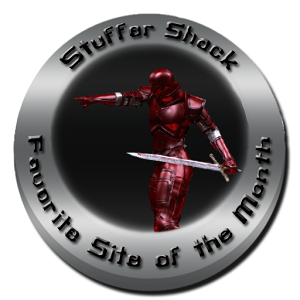
This brings us to the point of our new Favorite Site of the Month Badge. This is My Game was the first to receive it, and I apologize that we didn’t have one sooner. Jonathan Baldwin is responsible for its design and creation, and I think he did a fantastic job working his digital magic (that’s our mascot there, The Red Knight – courtesy of Greywulf). If your site is one of our past favorites, go ahead and post it if you like!

This also brings up another new graphic, our RPG Site of the Year Shield (Soty). Adam Bragg (Spiralbound) is responsible for this image, and I gotta say that I feel blessed to have Adam as part of our triple-threat of graphic wizards (and he’s a great writer, too).

For 2011, Critical Hits won our Soty award (and $225+ in prizes), and our next one is fast approaching. Who will take the Soty Shield for 2012?

This past weekend we received 100 Spam Comments in a single day. Ha! I don’t know if that’s good or if it’s bad, but it’s a milestone of some sort. So thanks(?) dirtbags! (not you, the spammers).

Also, we just topped 200,000 hits, but I’m looking forward to getting that every month. Is that a stretch? Maybe. Can I do a better job at applying more effort and implementing more SEO strategy? For sure. My goal is not a challenge; it’s merely a matter of time…

John Lewis is firing up Forsaken Destiny, a site dedicated to the Warhammer 40k RPGs. John is a talented writer and has a nice set of followers here at the Shack (and from RoleplayingPro). I know Forsaken Destiny will be top-notch, and I’m looking forward to reading it (as I’m gearing up for playing in the 40K universe).

I’ve never played it, but I often hear that the Mass Effect video game is the shiznit. Wouldn’t it be cool if someone would make a tabletop RPG out of it, or at least post a conversion using a popular d20 system? I’d be totally into that special project…

Stay tuned as we continue to update writer portfolios and profiles. We have a lot of crew members and guest writers, and we’re making it easier for aspiring writers to set up their own gaming column. So thanks for reading, and stick around, ’cause the Shack is only going to get better!

Favorite Site of the Month: Oct/2011

Sometimes I wish I could split myself in two, just so that I would have more time to visit and read up on all of the various gaming blogs. Well, until I gain that superpower, I’ll just have to find other ways to find the time (like no more napping?).

Seriously, imagine my happy surprise when I revisited This is My Game and found all of the cool stuff they have there. Thadeous runs the site, and I have to say that the articles there are just as much fun as his attitude. Another site in my favorites… check √ !

Here’s Thadeous:

This is My Game rides on the back of giants! Any success the site has had is almost completely due to the ever expanding list of contributors. Featuring downloadable game aids, product reviews, Killer editorials, and some amazing ideas by some great people. Without such a great team it wouldn’t even be an 8th of what it is now.

I started This is My Game a year and a half ago as a place to share my thoughts and experiences from my home games. It soon grew into design, theory, product reviews and on and on. But it wasn’t until amazing people like Geek Ken, Randall Walker (Dead Orcs), Jerry Leneave (Dread Gazebo), Dean Gilbert (Arcane Springboard), Mathew Cicci, and so many more joined forces that the site really became what it is today (pure win). If the site didn’t have such an amazing staff the site would be nothing more than me taking pictures of Orcus eating Raisin Bran.

The future of This is My Game is what we make of it, and I’m pretty sure that is nothing but pure awesome!

Thadeous S. Cooper

Thanks to Thadeous for This is My Game. Keep up the good work!