Who will take the shield in 2012?
A ROLE PLAYING GAMES RESOURCE
I’m all about fun (that’s why we play the game, right?). So, let me talk about how adding one little house-rule can will add so much fun to your game. Ok, sure. Not everything appeals to everyone, but I’m going to add this house-rule to every game I run from now on…
In the past, I’ve cut up so many games and then put them back together according to “my vision,” all so that I could make the “perfect” game. Yes, had I been a pupil of Dr. Frankenstein, I would have made him proud. And no, my creations never delivered as expected, really. Actually, they usually ended up a bloody mess.
So, I vowed never to mess with games again. Until now…
We have a Playing with FATE series here at the Shack where we talk about and explore Mike McConnell’s “any setting” Strands of FATE (SoF). Aspects are such a large component of the game, yet are so easy to explain and implement into your own game, that I think it’s imperative for you to consider adding it.
I’m NOT talking about converting your game to FATE; I’m talking about adding one little part of it to your current game. Hey, if an aspect is so cool, if aspects are the mechanic of FATE, and if aspects make FATE incredibly fun, then why not take a small slice of that and add it to your game? It’s super easy to do, especially since we’re only giving your character one aspect.
We’ve talked about FATE and Aspects several times here, so this part is for those of you who are new to the concept. An aspect is a single phrase that says something significant about your character. This phrase is something that you (the player) would like to see come up in the game (usually often). Strong as an ox and Bound by the Jedi Counsel are two such aspects (I just made them up).
When a situation comes up in the game, and you think your aspect is relevant, spend a Fate Point to gain a bonus to whatever roll is appropriate. If you’re Strong as an ox, you might gain a bonus to melee attacks, withstand charge attacks, break down doors, etc. You could also get an occasional bonus to endurance or to resist poison. All you have to do is say why you think the aspect applies to the situation, and spend your Fate Point.
To replenish your Fate Points (or bank new ones), you need your aspect to work against you. For example, Strong as an ox implies strength and endurance, but it also implies slow and not very agile. So if you are making some sort of acrobatic stunt, you (or the GM, or even another player) can suggest that because you’re sometimes not very agile, you might get a penalty to certain checks (even if your stats say you’re very agile). Remember, taking a penalty gets you Fate Points, which are used to gain bonuses for your aspect.
To read further about how aspects work, check out this very informative article.
Ok, so you have the basic idea of what an aspect is and how it works, but why include it in your game? Because it’s one part of your character that may never make it into the story otherwise. An aspect adds more depth to your character. It makes your character unique in what could otherwise be a sea of cookie-cutter vanilla PCs. It helps you bring out the intricacies of your character, not because you’ve written down a piece of descriptive text, but because that descriptive text is now part of the mechanic of the game (Fate Points, bonuses, and penalties).
As aspect enhances your character with regard to making him more real, simply because the Fate Point mechanic encourages it to be brought into the story. I can put an 18 into my character’s Strength stat, but saying that he’s Strong as an ox (and having that come up in the game in creative ways) just says something so much more about him. It brings him so much more alive.
Under the Strands of FATE rules, using an aspect normally grants either a +2 or -2 modifier (which is a big modifier considering how FATE dice are rolled). And, since you would normally have at least 10 aspects, they would be coming into play constantly. This makes aspects a huge part of the system’s mechanic, and necessitates that the modifier be big.
I suggest you incorporate only a single aspect for your character, and that the modifier remain relatively small. As a house-rule, it’s important to not rock the boat too much. At this point, adding several aspects and/or large modifiers can simply be too heavy for games that don’t normally carry this concept.
For games like Shadowrun and Dungeons & Dragons (any edition), I’d say that a modifier of +2/-2 would do just fine. I also think that starting the session with one Fate Point is appropriate. One aspect, and one Fate Point – I think that is perfect as a house-rule. After you get comfortable with the house-rule (and if your group likes it), I’d say make two aspects for your character, and start the session with two Fate Points. And remember, you can get extra Fate Points by having your aspect used against you (a tactic that the smart player will utilize often).
If the GM wants to take it a step further, he can assign his major NPCs, major villains, and major monsters an aspect also (and yes, they can be used against monsters in the same way that a player’s aspect can be used against him).
That’s it. It’s that easy. Talk it over with your group and try it out. I really don’t think it will break your game, and will actually add loads of fun to it.
If you have any questions, read up on our Playing with FATE series for inspiration, or ask us questions below.
Good luck! (not that you need it).
All right…we had a giveaway for two Tourqen Panther Exotic Mounts, and then we upped the prize pool (an additional $15 worth of stuff from our Store, total of $22 worth of stuff, x2 winners). All you had to do was leave a comment, and you got extra chances by following us on Twitter @stuffershack, becoming a Tourq Stevens Facebook Friend, or a Tourq Stevens Google+… person.
Sean Holland runs Sea of Stars RPG Design Journal, and Capn Frank is… well, an avid gamer! They both win a Tourqen Panther, plus $15 each worth of stuff from our Store.
Congratulations to both of you!
I’m not really an app kind of guy (I’m pretty sure app is short for application). I’m simply way behind the curve when it comes to iphones and apps, that there’s no hope for me to catch up. My son, however, got an Ipad a few months ago, and I’ve since developed an unhealthy obsession with Litebike 2, so at least I’m not completely oblivious.
Recently I had the chance to try out an app called FantasyMuse. I had to have my wife help me download it, not because it was hard to download, but because I usually have to ask her for help with such things. She showed me what to do, and it was actually a cinch. Hey, I have a deficiency in Technology (-5), so this was a milestone.
Not knowing what to expect, I found FantasyMuse super easy to use, and pretty darn convenient – well worth the $1.99 that I didn’t pay for, but would have.
“This universal iOS app generates three types of content specifically for writers of fantasy fiction and roleplaying game material. The app can generate millions of different character outlines, factions and quest seeds, and the app allows you to save your favorites via email or simply using the clipboard on your iPhone or iPad.”
Basically, if you need a quick idea for a character or an NPC, a group or faction, or even a quest, one push of a button is all you need. For example:
 To me, this is something that I could definitely benefit from. As a player, it could give me ideas for not only my character, but my character’s friends, family, acquaintances, and enemies. I might use the Faction generator as something that I belong to (or once did), and the Quest generator as something that I’ve attempted in the past.
Of course, a game master would get MUCH more mileage out of this program than a player. Quests can be fun little sidesteps that distract the PCs from the over-arching adventure, or be inspiration for an entire campaign. As for Characters and Factions, well, I can’t tell you how many times that I (as the GM) have produced the same cookie-cutter NPCs and enemies – this stops that rut in its tracks, pronto. Your NPCs and villains will certainly be different and fresh, making them much more memorable.
I’ve seen other random generators before, but this one rarely (if ever) produced silly results. For me, the meat of it would be the Character generator, as I would use that on-the-fly in practically every session I ran (the world is filled with NPCs, after all).
This app is designed for both iPhone and iPad
Requirements: Compatible with iPhone, iPod touch, and iPad. Requires iOS 4.0 or later.
I wholeheartedly recommend this app. And the fact that it costs only $1.99 is icing on the cake (I don’t really know what other apps cost, though). I apologize for not having more examples of it’s random results, but I guess the free code I got was only temporary. Bummer. I’ll have to ask my wife how to buy it!
This contest has closed. See the winners!
I have two favorite exotic mounts, the Bison and the Tourqen Panther. They’re both so freaking cool, and I can’t wait to use them.
Well, the Tourqen Panther is brand new, and tomorrow we’re giving two of them away. All you have to do for a chance to win is leave a comment below. If you want to a greater chance of winning, all you have to do is pledge your life-long friendship to us via Facebook, Google+, and/or Twitter!
Sure. why not?
Instead of coming up with combinations of prizes, I figured I’d leave it to the winners. So, if you win, you get the Tourqen Panther +$15 bucks worth of stuff from our Store. That’s $22 bucks worth of stuff! Plus, we’re going to have two winners!
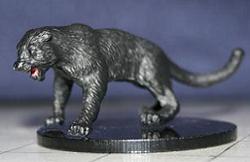
Good luck! And don’t forget to come back tomorrow to see who our winners are!!
You never see the Kathari elves until it’s too late. Quiet, they are, and quick as any man. Old King Draten thought to keep his men safe by only allowing mounted riders down the forest roads. That’s when the elves started training their cats. . .
These panthers are twice as large as regular pack leaders, and dark as the moonless sky. Their claws appear to be made of obsidian, with an eerie black shine, but suffer from no brittle state. When viewed in bright light, tendrils of darkness seem to waif up from below their rippling forms.
Loyal Companions
 All panthers are fierce predators that no fey would want to face down in combat. The Kathari elves have been training the beasts for generations as hunting animals. Moving stealthily, side by side with the elven warriors, they could quickly take down prey or those who might intrude on their woodland homes.
When the humans began sending teams of mounted warriors trampling through their lands, and upsetting the primal spirits there, the elves again looked to the panthers for aid. One of their shamans gave up his mortal life to the great fire spirit, Tourq, in exchange for the remarkable transformation of their cats. No longer would they hunt by the elves’ side, but were now large enough to carry their hunting partners on their backs. Their powerful legs could keep up with any human horse, and tear open their soft flesh even faster.
Curse of Shadow
 The Tourqen panthers generally sleep during the day, and seem unnaturally restless if forced to hunt while the sun still shines. This may be a trait shared by other, more normal cats, but for the Tourqen Panthers, it is readily apparent.
Today, some Kathari elves believe that Tourq was not truly a spirit of fire, but an ancient dark fey lord, trapped away in the shadowfell. Some say Tourq hoped that by having agents amongst the elves he could slowly seduce them with visions of dark power, and eventually use them to enact a ritual so that he could escape the shadowfell, and again terrorize the realm of man. He supposedly planted a sliver of his presence in these great cats during the ritual, but did not account for the will of these proud creatures, or their devotion to their elven masters.
 Whether the story is true seems to matter little. While these panthers may walk a dark path, they still bear a stronger connection to the natural world. Those who command creatures of shadow will find no ally among them.
Featured image of panther (top) by J Alvarrsson. Black Panther Blue Night artist unknown.
I’ve been gaming for years, and in that time my characters or enemies have gotten into many, many fights while riding a mount of some kind (usually a horse). For most gamers, I think that when the fight starts, most of us either forget or gloss over our mounts. This really changed when D&D 4e came out, as we suddenly had several mounts to choose from, and they had actual, usable combat stats (and rules to support mounted combat). Hey, at the very least, a mount lets your character move faster and farther in combat.
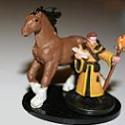 So, a couple of years ago I found a way to add mounts to our combat encounters by putting together Horse Minis. They worked out extremely well as they immediately added a new element to the game, enhancing combat and adding tactics (plus, they’re cool-looking). And (of course) I started selling them on Stuffer Shack, because they’re just too awesome not to share.
After a little while I was able to start providing Exotic Mounts, which complimented the Horse Minis perfectly. They cost a little bit more for me to acquire than the horses, but they fill a cool niche that really brings out that high-fantasy feel. I mean, how cool would it be to ride into battle on a griffon, unicorn, drake, great wolf, or even a freaking bison?!
I just made available in our Store a new Exotic Mount, the Tourqen Panther (large-sized, 2-inch base). Brian Liberge thought up the name (I swear), and wrote up a “Steal this Mount” article for tomorrow. This panther is simply too freaking cool. I want to make a new, darker character just so that he can ride into town on a freaking great cat. Personally, my top two favorites are the bison, and this cat.
I have a few other exotic mounts sitting around the office, but I don’t think they’re cool enough to sell on Stuffer Shack (who wants to ride into combat on the back of a giant goat?
The Tourqen Panther Mount is $6.99 (like the other exotic mounts), and shipping in the U.S. is always free. It comes with sticky tack so that your character will stick to the mount’s base securely, and don’t forget that tomorrow Brian will post a “Steal this Mount” article for it (including a stat block). It’s actually kind of cool.
Good luck! And don’t forget to come back tomorrow for Brian’s article!
It’s a new month, which means it’s time once again to showcase one of our favorite gaming blogs…
Roving Band of Misfits is a blog dedicated to all things D&D 4e. Benoit, the main contributor and founder of the site has a certain bent towards the arts & crafts side of things, so many of the articles focus on miniatures, Hirst Arts, and making accessories for your game table. That doesn’t mean that there’s a lack of other DM inspiration on the site, though. From large scale naval combat rules to how to describe a scene for your players to the new Two Page Mini Delves series, there is no shortage of stuff to steal for your game. And of course, how could anyone miss the 18 part series on Gamma World miniatures?
In the past six months, there have also been two major expansions to the site’s content. The first is the addition of the podcast “Level Up.” In the podcast, Benoit and Hamblin discuss 4e characters – options, choices, and creation. It is aimed squarely at D&D players instead of DMs, filling a niche that most D&D podcasts don’t address. As a result, the podcast has grown very quickly in popularity. The second content expansion was the founding of the Game Night Blog Carnival. In this carnival, a group of RPG bloggers take the last Tuesday of every month to go “off topic” and review some of their favorite non-RPG board and card games. Any and all RPG blogs are welcome to join the carnival, and submissions are always open.
For a blog that’s been around less than a year, Roving Band of Misfits has accomplished quite a bit. We hope to see them continue their great content for more years to come!
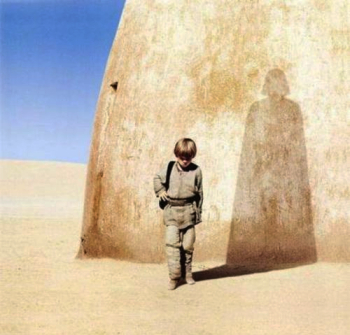 Telling stories is an art that has been with us as far back as cavemen drawing on cavern walls with mud and blood. Since that time, the art has expanded through different mediums – from cave paintings to verbal orations, ballads, poems, sculptures and hieroglyphs, plays, books, movies and yes, role-playing games. It has also evolved through the use of several different literary tools – alliteration, back-story, cliffhangers, first person narrative, flashbacks, red herrings, and foreshadowing (to name just a few). This article aims to help you improve the story of your adventure or campaign by effective use of foreshadowing.
First, what is foreshadowing, really?
Huh?!
When an element is introduced that doesn’t appear to be the focus of the story, it has the potential to be a foreshadowed event, or realization of things to come later on.
In your role-playing game, foreshadowing can be utilized in two ways. The first is to plan for major events, plots, or people that will have a significant impact on the story later on, and hint or briefly show those things earlier in the story. These are elements that are placed deliberately and with purpose. You’re hoping that the players, at some point, make the connection between the foreshadowed event and the actual event.
The other way we can utilize foreshadowing is by way of the “loose noose” (that’s my term, I made it). What I mean is when you introduce, or your players discover a (usually random) story element, and then you zero-in on that element as an opportunity to enhance the story – that’s the loose noose technique. The unplanned (better-than-I-had-planned) events that pop up can make you a star in the eyes of your players, and they actually require less work.
Stale stories are a dime-a-dozen. That’s why we have dozens and dozens of literary techniques to make stories more and more fulfilling and rewarding. Don’t think of a role-playing game’s adventure as a series of events; think of it as a fantastic and compelling story waiting to be told, and the use of foreshadowing is a great way to help make that happen.
Klaus Eagle is a proud warrior priest, devout and unrelenting. He charges fiercely into combat with every intention of smiting the enemy, or die trying. He’s young, eager to prove his worth (perhaps a little too eager), and has a very black and white view of the world. As a warrior priest of Sigmar, he favors the great hammer, heavy armor, his prayer book, and the polished skull of his first fallen enemy – not much else is needed. With these prominent affectations, his commanding demeanor, and the amount of maintenance and cleaning that he gives to his equipment, his presence never goes unnoticed. When he travels into a town or village, soldiers and guardsmen readily welcome his blessings, and commoners sleep better knowing a Sigmarite is in the area.
His official title is that of Initiate of Sigmar, though he proudly announces himself as a priest (this is to be accepted by most). It’s unusual for such a young and inexperienced Initiate to be assigned duties away from the temple, but a prominent Witch Hunter (Kade) must see something in him of value. To Klaus, it’s clearly his strength, devotion, and talent that Kade has witnessed, but to others it must be something different. Klaus sees becoming an Initiate as a giant step in restoring his family’s honor, and the fact that he has been pulled for a special assignment makes him feel that Sigmar himself is blessing him.
Where is he from?
What is his family like?
What did he do before he started working for a Witch Hunter?
How religious is he?
Who are his friends and enemies?
Who does he love/hate?
What is his prized possession?
Who is he loyal to?