On letting heroes be heroic…

A figure clad in heavy full plate overlooks a cliff. Below, the plague of orcs swarms toward yet another defenseless city. The figure’s companion, a thin young man sporting a bow on his back, walks up to the knight. “We should probably find a secluded way down. Don’t want the whole army to see us.”

Legends of Troy

The figure remains fixed on the army. “You’re wrong. That’s exactly what we want.” He then proceeds to leap off the cliff, leaving a crater where he lands. A few unfortunate orcs below are crushed by the knight’s weight. The remaining orcs in the vicinity let out cries of surprise as a streak of metal rushes from the spot their friends used to be…

About an hour later, the figure is taking off his helmet, walking towards the city he just saved from the orc onslaught. His friend finally catches up to him. The hunter smirks, “Showoff.”

The knight merely shrugs “Hey. If you’re going to be a hero, why not be heroic?”

Continue reading “On letting heroes be heroic…”

The All-Star Player – bringing more to the game than just your character

Best DiceIn Misty’s last post, she talked about making all-star player characters. I’m going to talk about being an all-star player. I know, a lot of bloggers have posted their opinions on this topic many times over, but I’m not talking about simply being a better player in the game; I’m talking about bringing your A-Game – I’m talking about being that one player that everyone wants to game with. Continue reading “The All-Star Player – bringing more to the game than just your character”

An Adventure Template

Venger Satanis[This template will be included in Universal Exploits, an upcoming supplement for Alpha Blue. Kickstarter happening now]

Few Space Dungeon Masters out there are as free-wheeling as myself. I like to have a general idea of what’s going to happen or maybe a few key random tables at my fingertips, but that’s pretty much it. I don’t do much planning – especially for a “space sandbox” RPG like Alpha Blue.

And despite that – or possibly because of it – I frequently find myself adhering to a particular formula. I mean, I’ve only watched, like, a trillion hours of sci-fi movies in my lifetime. When I was 5, I had pretty much every word of Star Wars memorized. Eventually, certain concepts absorbed into my weird geek brain, becoming second nature.

Is a formula absolutely necessary? Hell no. Is it a good idea to be familiar with a formula that works, you know, just in case? Absolutely. Even stream-of-consciousness can benefit from having structure. Besides, this formula has a lot of play. By that, I mean it’s open-ended enough to accommodate thousands of ideas… millions! Continue reading “An Adventure Template”

Don’t just stand there — GM Something!

Stand ThereAre you frustrated with a lack of active games to join? I see a lot of players around the Internet in the same boat. I’ve been there too, and I’ll bet most roleplayers go through the same thing at some point in their lives. But the nice thing about roleplaying is the amount of power we have as a community and the tomes of resources available to new GMs. So if you really can’t find a game, run one! Continue reading “Don’t just stand there — GM Something!”

Game Design – Wrestling with the Concept of Grappling

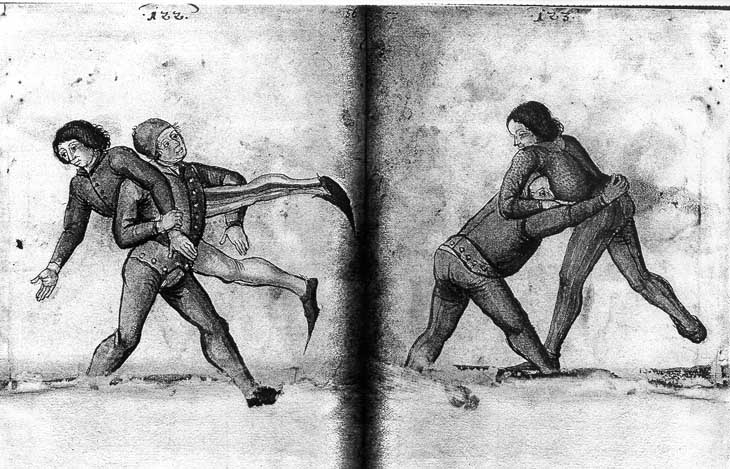
GrapplingLet’s talk about the rules of Fight Club. Or rather, since we’re not supposed to talk about Fight Club, let’s talk about grappling rules in RPGs.

Every game covers unarmed combat, which is often stated as the base damage you can inflict without adding weapon damage, but how to quantify and adjudicate grappling in games is either glossed over completely or wrapped up in a confusing morass of rules. Let’s try to find a way to make grappling rules that are fun and fast. Continue reading “Game Design – Wrestling with the Concept of Grappling”

The Danger of “Everything You Know is Wrong”

Threw me for a loopYou’re GMing when you’re struck with an awesome idea for a new setting or campaign.  This is so cool you simply can’t wait for the current campaign to end.  Instead, you throw the player characters into this new reality.  I call such sudden shifts Everything You Know Is Wrong (EYKIW), wherein everything both players’ and characters’ assumed about the universe and how it functions is now null and void.

While this is a powerful plot device for a novel or movie, it has several choke points for player adoption.  Revealing a campaign to have been a dream or false reality is likely to violently jar the players out of their shared suspension of disbelief, making them unwilling to continue.  I have been a player in three such campaigns and only once did it continue past the EYKIW event, and even then it ended 4-5 sessions later.

Why does this happen?  I have identified two reasons: Enforced Character Disassociation and Terminal Momentum Derailment.

Enforced Character Dissociation (ECD) occurs when the GM suddenly changes something which yanks the player out of character.  This can happen independent of an EYKIW event.  Suddenly declaring a character had previously murdered their parents when this hadn’t been in the characters back-story would likely force player to rethink their characters personality and portrayal.  Usually the player will prefer to abandon the character, assuming they don’t simply turn on the GM instead.

The core conflict is the player started play under certain assumptions which became the foundation for how their character responded to situations.  Rewriting this foundation removes player certainty of how the character is supposed to behave.  It also becomes difficult for the player to consider the character “theirs” anymore as the GM’s plot has extended into rewriting player characters, making player involvement optional.  Inducing ECD in all players simultaneously through an EYKIW event compounds this exponentially.

For example, revealing that the characters of a pseudo-medieval setting are actually different characters in a sci-fi setting is an enormous ECD inducing event.  Only the most understanding and flexible of players would be enthusiastic about such a change.  For the GM, this isn’t an EYKIW event since he planned it.  This is not the case for the unsuspecting players though.  Everything invested into the portrayal and development of their characters has now been invalidated.

The Dwarven Fighter who fought hordes of Goblins to regain his clans Mithril Hammer of Smiting and spent years improving himself to be worthy of such a weapon is now an 18 year old human boy living in a far-flung future with no Dwarves, no Goblins, no reclaimed clan relics, and mundane stats again.  It’s like reaching the last chapter of the Lord of The Rings and having chapter 6 of a Star Trek novel pasted in.  This leads to the second reason for player abandonment.

Terminal Momentum Derailment (TMD) occurs when the plot is so damaged that no one can sustain the mental and emotional energies to continue pushing it forward.  Usually this is brought about by external factors such as poor player attendance or inordinately long breaks between sessions.  It can also be caused by internal factors such as boring plot lines, overly frequent side treks, or excessive interruptions.  When triggered by an EYKIW event, it usually expresses itself in two ways.

One, the players lose so much will to play due to ECD they don’t feel like or even know how to continue acting their characters.  They’re trying to reintroduce themselves to their own characters as well as simultaneously learn about and understand an entirely new setting, understandably they don’t know what they would or should be doing next.

Even if you change the setting, but leave characters unchanged, it can still trigger an EYKIW event.  If D&D characters step through a Dimension Door spell and end up in 1950’s New York instead of the Wizards keep, the characters may be the same, but the players ability to use most of their PCs abilities has been voided, at this point you may as well have switched characters.  ECD and TPD will still occur.

Two, the GM isn’t exempt from TMD either.  He planned the EYKIW event and might even have a new plot-line ready, however his plans rarely will anticipate player ECD too.  When they don’t move with the shift, he’s left prodding players onto responding which easily degenerates into railroading them, provoking player abandonment entirely.

With all these risks, what’s a GM to do?  The easiest response is to avoid EYKIW events altogether.  This is highly recommended as a successful mid-campaign change of this nature is difficult for even the most experienced GMs.  However, we’ll assume this is undesirable.

One strategy which should be obvious, but is often overlooked, is to involve the players in the transition, thereby transforming it from an EYKIW into an event anticipated by everyone, not just the GM.  Ones first inclination is to reject this as it removes the element of shock and surprise players experience from having it sprung on them without warning.   To this I say, leave such stage tricks on the stage where the audience is expected to passively observe.  You wouldn’t drastically alter the script of a live stage play and expect the cast to seamlessly continue on stage as though nothing had gone wrong, so why expect the equivalent of your players?

This has many advantages.  Instead of becoming drive-by victims of your campaign change, players are now partners, contributing to the planning.  They may even have better ideas than you alone had scripted.  Their participation ensures the event is free of ECD or TMD.  They’ll be prepared – not only will they have new characters’ ready, but they’ll be prepared as players and performers to continue on through the event and directly into post-event plans, thus preventing the second aspect of TMD as well.

Another strategy is to thrust the characters into action the millisecond the EYKIW event occurs.  This is critical as even if the players are pre-involved with the event it’s still jarring for the characters.  Immediate action prevents a “well, now what?” character response.  Here’s an example of the immediacy I mean:

The party flee the evil Overlord’s collapsing stronghold.  The Dwarven fighter turns to congratulate the Elven wizard when a klaxon sounds and a loud voice calmly proclaims, “Hull breach.  Decompression imminent.  Orbit destabilized.”  The PCs look around, wondering what spell this is.  Did the Overlord have an unknown ally?  The PCs lose all sense of their surroundings as well as their sense of self.

The characters then awaken in a hot, coffin-like chamber, not knowing where or even WHO they are!  The coffin opens of its own accord with a hissing sound revealing a small metal room lit by a blinking red light.  Their minds finally clear enough for them to remember who they are.  Their relief is short-lived however as they realize the Sim Chamber shouldn’t be lit with the emergency lights and there DEFINITELY shouldn’t be the smell of burning plastic and electronics!  The automated warnings of “hull breach”, “decompression”, and “orbit destabilization” are now terrifyingly comprehensible to these young residents of the orbital city above the surface of 22nd century Mars!

Marty, no longer “Krungan the 12th level Dwarven Clan Defender”, rushes to the computer display and frantically types a query.  “System Offline: error C14-J5KL009.”, responds the computer.

“What’s happening?” wails Cecilia, who fervently wishes she were still Elendonael, the 300 year old Elven Archmage, HE would never be helpless if the world crashed into a planet!  He would just teleport to safety!

The door to the Sim Chamber opens and a badly burned man wearing a scorched ‘Mind Over Matter Inc.’ uniform shouts, “You kids gotta get outta here! Tranquillis is falling! Head to the Evac Pods now!”  He lurches left down the hall towards the lobby.  An explosion harshly lights the hallway as pieces of paneling and shreds of a Sim Chamber Attendant uniform fly past.  As black smoke curls in from what used to be the lobby, Marty stares into Cecilia’s eyes, “I guess we head right then?” as shock starts to settle in…

A scene like that would immediately thrust the players and their characters into the new plot in mid stride, deliberately not giving them a chance to lose momentum or become lost in being disassociated with who they no longer are as a character.  Rediscovering themselves gets shelved in favour of immediate survival and you’re able to put them into the thick of things right away with no momentum-stealing contemplation.  Figuring out who they are and what to do happens in between avoiding falling debris and escaping the crashing orbital city (or possibly saving it – whatever the plot provides).

This two-pronged approach of player involvement and post-transition turmoil removes the underlying cause of the risks by preventing anything from disrupting the players capacity to continue performing within the game.  Creating a reality-disrupting occurrence affecting the setting and characters is fine, so long as it doesn’t simultaneously disrupt the game and the players.

Adding a Second Track to One Sheets in Your Game

For the second time, I had to run a game last minute and used a Deadlands Reloaded One Sheet from the Pinnacle website. The advantage to these short adventures is that they are free, they work well for a short session (3-4 hours), there are dozens of them for a variety of Pinnacle’s games, they are self-contained and contain pretty much everything you need to run the adventure (plot and stats for major characters). The downside to them though is that sometimes they don’t have enough content to either fill the full night or the plot it too straightforward for any serious investigations.

I ran into this problem with the Lynched! one sheet. It’s a great little adventure featuring a Hanging Tree that is terrorizing a small town with its victims coming back as zombies that are now finding new victims for the tree. I like the set up and the creature, but knowing my players, as soon as they enter town and find out people are being hanged in a tree, they would investigate the tree and likely cut it down or burn it immediately. It’s just too obvious a target.

When I set out to run it, I realized I would need a “second track” to distract the players and give enough hooks so that they wouldn’t just cut down the tree in the first scene. This is sometimes necessary with a One Sheet and not a bad thing, as this second track is where you can really adapt the adventure to your own campaign or game’s flavour.

In this case, the second track needed would be another possible explanation for the lynchings.

Using my group’s decision to be a group of enforcers for the railroad to help identify a good second track, I relocated the ranching town to be a logging camp that provides wood for the railroad. It then fell into place, there would be a secret union organizing drive, the victims would be the foreman of the site and a couple of his supporters and finally, a new protagonist, a Pinkerton (private detective) brought in from the outside to break it up whom the PCs were directed to escort and assist. Finally, the Tree was adapted to be the guardian of a Sioux burial ground in the area and the homes of the victims were also the closest to the tree.

The only thing left was a review of the adventure outline, which now included this new plot element. They would meet their new charge, go to the camp, learn about the murders, investigate them, the Pinkerton would accuse the union organizer, a chase involving him trying to escape would ensue and then that night (as per the original adventure), the tree and zombies would strike again.

I liked it, but I also like jumping into action. With this adventure, the action doesn’t begin until the union organizer flees, much later in the evening. So, I needed one last piece – an assassination attempt at the beginning of the adventure to start with excitement and to give the players a sense of who they were dealing with in the Pinkerton.

This added three new NPCs to the adventure (Pinkerton, Assassin & Union Organizer) and that I create a map of the town that showed the locations of the victim’s homes and the tree’s location. The map was easily drawn up after a quick search of the internet failed to show good maps of logging camps. As for the NPCs, I grabbed stats for these from the Deadlands Reloaded book (Guardian Angel, Outlaw, Townsfolk respectively).

It took a little more work than normal, but I felt good that I had a strong adventure with enough depth for the evening’s play.

Here’s how it went:


Our group of railroad enforcers were contacted by their boss, Mordecai, with a new job. They were to escort and assist a Mr. Black up a mountain trail to a logging camp. They were told he was a Pinkerton who did special assignments for their boss, the rail baron. They had also heard of him, that he was the kind of guy who always got his man, even if it wasn’t the right man.

They met him in a saloon nearby, but just as they were sitting down to share a drink with him a man burst in the doorway shouting, “Burn in hell Black, you bastard!” and threw in a pack of dynamite, fuse burning. I dealt cards to the shocked faces of the players.

Black drew Ace of Spades and calmly picked up the dynamite and pulled out the fuse, then turned back to have his drink. To the still shaking players he said, “Well, are you just going to sit there? Get him!”

The posse quickly caught the would-be assassin and he was taken away to be hung for his attempted murder, all the while crying out that Black had ruined his life and destroyed his family. The players didn’t inquire further and instead went back for drinks. Black got up and told them not to drink on the employer’s time. It was time to head out.

They had to hike up to the logging camp in the nearby hills, following the winding river that logs were sent down. A couple survival checks later, everyone was exhausted. The priest sang a hymn which revived everyone else but him. Unfortunately, the scout got the group a little lost and they arrived later than expected after dark in a torrential downpour. The camp was locked up tight with its residents peering from windows at the new arrivals banging on the door of the local drinking hole.

They learned from the barkeep that there had been a number of lynchings, but no one knew who (or what) was doing it. Doors were broken down and men hung from a tree. Black stated that was a very interesting development, which made the players wonder just what he knew, not that he was telling.

The next day they checked out the homes of the dead, the mill and the hanging tree. Black wasn’t so much interested in the tree as who was killed. He quickly assessed that the dead were the foreman and his supporters. Meanwhile, the posse checked out the tree, which had Sioux markings on it. They determined there was a curse on the tree and it was some kind of burial place (not a good sign!). Also, the gunslinger stabbed the tree to see if it made any reaction. There was none.

IMG_20150212_194243

Black returned to the mill and called out for one of the men, “Joe, come here right now.” Joe ran. He jumped into the stream onto one of the logs and began floating away in the fast moving water. The posse gave chase and managed to wing him, wounding him badly enough that he surrendered. They brought him back to Black who had them empty Joe’s satchel. Inside, union organizing pamphlets.

IMG_20150212_192657

“Clearly, this is a union agitator. Unable to win over the men through his lies, he turned to murder, killing those who opposed him. Lock him up. We’ll take him back to town and hang him,” Black explained.

The posse complied, but weren’t so sure.

After Black retired for the evening, they returned to investigate further. The door to the foreman’s home was broken down by several men, not just one. The other homes, only the locks broken. The tree, still strange but no other clues. What they did notice though was that the homes of the dead were all the closest to the tree. They decided to stake out the next closest house, which happened to be vacant.

That night, they took shifts. The scout almost fell asleep during his shift (chipped it), but failed to notice some noise until it was too late. He woke up his compatriots and they all headed out to see what was up. Drag marks in the direction of the tree didn’t bode well.

At the tree, they found three “men” with their heads hanging back, necks stretched (zombies) who had just strung up the barkeep (bar was next closest building to the tree) to the hanging tree. As the heroes moved in, the tree came to life and shot out nooses catching the scout and pulling him up. It was a tough battle and nearly everyone was killed, the priest overcome by the zombies and the scout repeatedly hung and thrashed by the branches. The gunslinger did fairly well, but he is a grim servant o’ death and in trying to rescue the barkeep, he wound up shooting him to death. They realized plan A was not working, so quickly devised plan B.

IMG_20150212_200735

All three broke free and managed to lure the tree to the mill and tricked it into falling onto the saws and was cut apart by them, the zombies dropping down once the tree was dead. They returned to the saloon and explained to Mr. Black what had happened. They convinced him the union organizer was innocent and everyone agreed to just walk away and not speak of this event (especially the barkeep who was shot to death and not lynched!).

Last Minute Cancellations of One Player – What Do you Do?

The other night was supposed to be the next chapter in our War of the Dead campaign, but sickness prevented one of our players from making it. He let me know that morning and I spent a while debating whether to go ahead without him or run something different. The next chapter starts out with a bang and I didn’t want him to miss out or have his character behave in ways that he might not agree with since there are some very tough choices that will have to be made.

So then, having made that decision, I needed to figure out what I would run. I realized I would have about 30 minutes to prep a new game for that night. Which strangely enough is the topic of the week for this Johnn Four’s Role-playing Tips list serve: “I only have 30 minutes to prepare for a game.”

Johnn provides good advice, but it’s largely geared toward a fantasy setting and involves building from scratch. It’s similar advice to the Lazy Dungeon Master, which is a great read and resource. I recommend both if you’re running a fantasy campaign and starting from scratch. I wasn’t keen on either, knowing I had lots of existing adventures and resources.

In thinking about what I wanted to do, I also considered that this comes up fairly frequently that one out of our four regular players can’t make a session.

I had originally increased our group to four members so that we could still play effectively with three if one missed a game, but the other problem is that I often run on-going and very intense campaigns where someone missing a game is a problem. Their character doesn’t really participate and may be temporarily sidelined in some way as a result.

As a result of these frequent occurrences, I decided I need something not only for tonight, but I could use whenever this happens in the future. It would also need to be provide 3 hour self-contained adventures with an ever-changing mix of the player’s characters, but have the same pool of PCs so that they can enjoy overall story development and not just have one-shots that don’t have any connection to one another.

I reviewed a few of options that first came to mind (focusing on games that I had a good amount of material already for):

  • D&D 5e or DungeonWorld: Both excellent options, but fantasy games typically involve dungeons. Having heroes delve into small dungeon after small dungeon seems ridiculous and having them in one big dungeon where they keep changing out who is there doesn’t make any sense either. The genre just isn’t conducive to one-night episodes with constantly changing protagonists. I could always run it in a town as per Johnn Four’s suggestion, but aside from Village of Hommlet, I don’t have any other town adventures pre-made.
  • Star Wars: This could work as some sort of series involving Jedi during the Old Republic, but right now I don’t have the full FFG Star Wars rules, so couldn’t get this up and running quickly. Also, I don’t have adventures pre-made for that style of play.
  • Chill/Cryptworld/Monster of the Week: A game where you work for an organization that sends you to hunt different monsters each session works very well. My main problem here is that I’m planning to run Masks of Nyarlathotep this year as our main campaign and don’t want to have just horror, horror, horror all year long. Plus, the mixing of campy horror and dark horror might undermine the campaign.
  • Paranoia: Good option for this type of play, it is generally focused on short missions for troubleshooters. It’s an excellent option in fact, but I’ve home-brewed my own game system for it and I haven’t quite finished character creation yet (I used pre-gens for my last game). Something to consider though and good reason for finishing character creation rules. In any case, I wouldn’t be able to get this up and running in 30 minutes for the game that night.
  • Deadlands Reloaded: I have a ton of old Deadlands material, Pinnacle publishes dozens of One Sheets, short adventures that can be run on the drop of a hat and my players know the Savage Worlds game system well. The setting works well for a group of heroes who travel from town to town helping people against various foes. It’s horror, but Wild West is sufficiently different and pulpy enough to differentiate it. The heavy gun use also makes for a far different feel to the game. I also have a good library of maps, minis and reference material for the Wild West. This will work!
And so, I was left with 30 minutes between getting home from work and heading out to my game to prep for my adventure. I searched at lunch the Pinnacle One Sheets site and picked one of the first ones I saw: The Taxidermist’s Tail by Owen Lean.

In the 30 minutes that I had, I printed off the adventure and made notes about who the key characters/creatures are (to identify which miniatures I will need) and key locations (to identify what maps I will need).

Then, I printed some character sheets and found a map of a Wild West town to be the main town for the adventure, taking it from my copy of the Deadlands Classic, Boomtowns, as well as previously printed building maps from that book that I had on file.

I then pulled out my Deadlands book, GM’s Screen and Savage Worlds kit (deck of cards, bennies, pencils, dice and markers for wounded/shaken/etc.), packed it, pulled out my Wild West miniatures and a few other miniatures that I could use for the various key players in the adventure.

Finally, I pulled up my pdfs of the main books and cut and pasted stats for the key encounters on to a sheet for quick reference.

And, I was done. Ready for a night of gaming in about 30 minutes.


We started with character creation. If they would be playing these characters for a while, they should be invested in them, so no pre-gens for this purpose. They decided they would be detectives for the railroad (I later picked the Iron Dragon railway since they’re in the North), solving problems for the rail baron and his customers. We had a preacher, a gun slinger and a deserter (from the Union Army).

With their new backgrounds, I decided to start the mission with them called in to see their boss, one of the rail baron’s lieutenants. They named him Mordecai and decreed him to be a real bastard. So, he reamed them out as they arrived late and berated them for all their failings as he gave them their next assignment. One of their customers who ships stuff on the trains had his goods stolen from one of the trains. They need to recover it. This altered the game set-up a little, but worked well to incorporate their posse’s identity and was a simple improvisation.

The posse tracked down the train robbers to an abandoned mine, where they found all the criminals already and torn apart. Not a good scene, but they took down the strange coyote that was in the mine only to find it was filled with stuffing. A scary exploration of the mine ensued (also added on to give them a bit more exploration).

A visit to the taxidermist’s shop turned violent as his creations came to life and began attacking them. They were quickly dispatched and the taxidermist didn’t fare too well either.

Following this, there was a quick encounter where I added a Union Army lieutenant searching for deserters in the town, handing out posters. This tipped the rest of the posse off to their comrade’s secret past, but they decided to protect him and distracted the soldiers.

Unfortunately, in the saloon, where he went to hide out, a couple of the locals drinking noticed he looked like one of the guys in the poster and tried to grab him. He fled out the back and the rest of them barely escaped the town. The Major Hindrance of Enemy was definitely causing him headaches. This was again another improvisation that brought the story out.

Finally, at the “creators” house, they found the rest of his “creations” and almost had a TPK battling them.

We ended with the mystery of who made these creations? Due to time limits, this final encounter had to be dropped, but worked out well as they were left with the mystery and I have a new recurring villain for the game. In addition to this mysterious villain, they established their boss at the rail company and the army lieutenant who is pursuing the deserter, so we have something that can be developed on in the future.

It was a great game and didn’t look or feel too different from games that I spend many hours preparing for. It worked and I’m happy with the results.

As for the adventure itself, it worked out perfectly and was easy to adapt to an unknown mix of Deadlands PCs, so I can recommend it highly for a one-shot if you’re looking for something on the fly.

All this isn’t to say that I don’t enjoy pulling a game together on the fly, I have done so many times in the past, but this approach led to a more organized approach that not only dealt with the temporary crisis, but will help me in the future when this inevitably happens again. I hope it helps you too.

Gaming Life: Return to War of the Dead Campaign Session 1- Out of the Frying Pan

The Walking Dead is returning to the screen, and my Savage Worlds War of the Dead campaign has returned to the gaming table.

81544-thumb140

War of the Dead is a Savage Worlds campaign by Daring Entertainment that now spans over four Chapters or seasons, each featuring a dozen or so adventures, as well as a follow up plot point campaign called World of the Dead.

It’s a great campaign and I am using a lot of material from it, but have changed a number of parts to expedite the game. While I love each Week’s adventure from it, my own group can only play 2 1/2 to 3 hours at a time, so we can’t get through one of their full adventures in a night.

As such, I’m taking the highlights and focusing on those in my own campaign and it has now gone quite far off the rails, using the War of the Dead campaign more as reference material for characters, events and settings rather than following the set adventures.

My own game has also taken a sharp turn in exploring the relationship aspect of zombie games. I instituted the following house rules for the game at the very start:

Dependents: Every PC starts with one or more Dependent(s). If a Dependent dies during a session, the PC must forfeit a Benny (if they have any left) and starts the next session with one less Benny. At the end of that next session, they must assign that Benny to an existing Dependent or create a new Dependent. If a Dependent has more than one Benny assigned to it, those are all lost when that Dependent dies and the PC starts with that many less Bennies the next session. 

New PCs: A killed PC may forfeit one benny to start next session with one of his Dependents as his PC with full XP transferred. Otherwise, a new PC starts with 1/2 XP accumulated to date.

The concept behind this was to tie each PC to one or more dependents and have an in-game reason for them to want to keep them alive. Furthermore, as in War of the Dead, they all start on a cruise ship. Since most people travel with others on cruise ships, it made sense for them to have loved ones with them at the start of the game.

From past experience, only the most role-playing focused players didn’t either ignore or abandon “loved ones”, leaving those who actually role-played the affection at a disadvantage. This house rule was meant to overcome that situation and create some real tension as loved ones were put in the dangerous situation of a world filled with the living dead.

It worked. Players took it hard when their loved ones perished and did what they could to keep them alive. For the most part. There have been a few slip ups, but for the most part, it has worked.

My most recent session has also played with the Dependents idea even further. When we last left the campaign (over a year ago), the main characters had left their loved ones stranded on a derelict boat in the Atlantic and set out for a nearby island to find fuel/food/water. They encountered mercenaries on the island and fought desperately against them and the zombies there, one dying and the rest barely surviving. That’s where we left off.

For the resumption of the campaign, we picked up with the Dependents on the stranded boat. Left starving, dehydrated, out of fuel and power on the boat, the group struggles to survive with other former passengers of the cruise ship they had originally set out on.

A fight soon breaks out as one of the passengers tries to seize control of the ship, and a major fight soon ensues, ending finally with him being taken down, but not without inflicting some injuries on the PCs. 

This event to start the game session was really to see how the players would settle into running their Dependent PCs. It didn’t take long for them to start asserting themselves in these new roles, which was very good.

The next major event came as a helicopter was sighted in the distance, a Coast Guard helicopter. Everyone nervously watched its approach. Then, a couple figures descend from the hovering helicopter: a Coast Guard officer, heavily armed in a biowarfare suit ordering them to drop all weapons and prepare to be searched and a woman in a biowarfare suit, but she’s not armed and is instead asking a lot of strange questions, seemingly knowing they came from the cruise ship and what had happened to them.

This set off all kinds of questions about what had happened to their loved ones (main PCs) and tied the game once again in session to the past campaign.

The two federal agents separated out the surviving family members of the surviving former PCs and say they’re leaving.

I was curious here how the players would react, whether there’d be any solidarity with the rest, but no, everyone being taken was happy to leave and the rest just sat back and let them go.

The grandson of one of the PCs who died was being left behind and he managed to cry/persuade the crew to take him, but not his dying father, who he left behind. The final PC being left behind jumped onto the rope and managed to climb up and they let her in.

Then, as we reached the end of the session, they had a quick flight to the mainland, and there were many questions from the PCs, but few answers. They made an attempted landing at a Coast Guard station, but only to find it was being overrun by zombies. So, they tried for a further off base, only to run out of fuel over Augusta, Georgia, descending over an industrial area, hoping for a soft landing. And that’s where we left off until the next session.

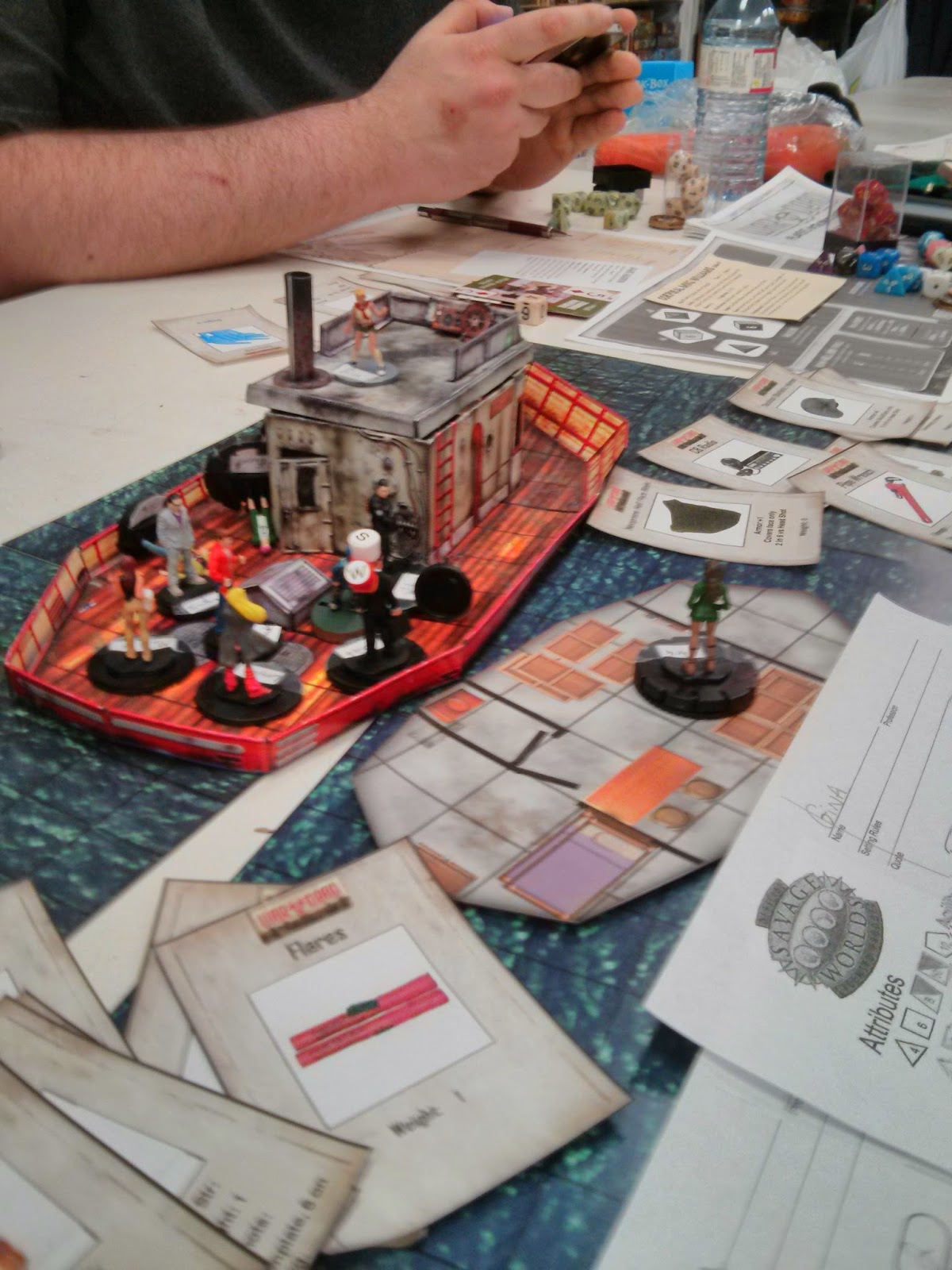
As you can see from the pictures, I tend to run very visual games. I use a mix of minis from a variety of sources, but for War of the Dead, mostly Heroclix of generic modern type characters. I have also found that 1:43 scale vehicles are a perfect scale for these miniatures, as in the case of the Coast Guard helicopter.

The boat and water is from Mayhem Marina by WorldWorks Games and is one of our favourite props.

Finally of course, I use the markers from Stuffer Shack for noting shaken, wounds and multiples of characters.

Finding Mansion Maps for your Game

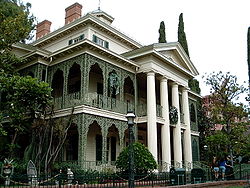
Mansions are a great staple of horror and noir games. When you want to use a mansion for your role-playing game session, you need a good map. When I think of a mansion, I think of a monstrous, sprawling edifice, with dozens of rooms, spread over multiple wings and at least two stories high with a basement. It should be huge and labyrinthine.

250px-Haunted_Mansion_Exterior

There’s two types of maps that I like to have available, location maps (just showing what’s where) and map tiles (with 1″ squares for combat).

Location Maps

Especially in horror games, I often don’t bother with map tiles because I rarely can find exactly what I need and for the players, not knowing exactly where your character is in a building can add to the terror.

In these cases, location maps help me as the GM to understand where the PCs are and how far they are from the place they want to go. Sometimes I share them with the players, but more often they’re reference guides for myself.

Here are some of my favourites from the web:

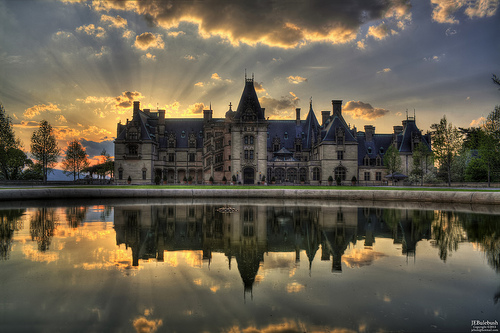
Biltmore Estate. This is the biggest mansion (178,926 square feet!) and this page features beautiful photographs of it and most importantly, maps showing all the various rooms and sections and floors of the mansion. This is my favourite mansion, not only because it is huge, but because you could easily get lost in it’s monstrous maze of corridors. It will definitely feature in a future horror adventure. It even has it’s own Halloween room!

7042462707_3cb98f11e3

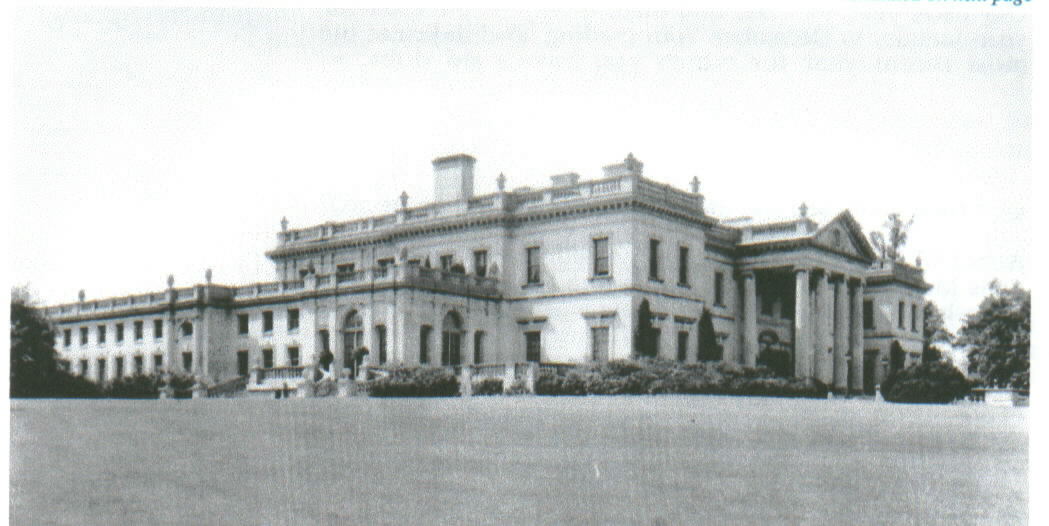
Whitemarsh Hall. Another huge mansion (100,000 square feet), it is perfect for a ballroom dance, with a massive ballroom and huge terrace overlooking the gardens. I decided to use this as the setting for my latest Trail of Cthulhu adventure, adapting the Tatterdemalion adventure from the Call of Cthulhu adventure book Fatal Experiments. It is elegant and large enough that you can still get lost in it’s rooms.

cfs.stotesbury

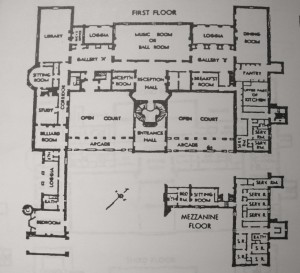
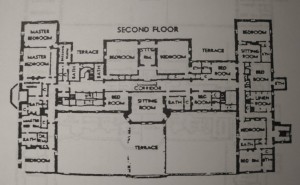
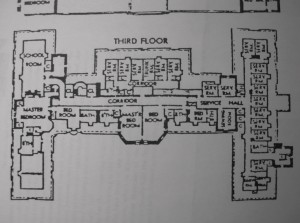
Oheka Castle. This is your classic mansion out of a horror movie and it’s huge as well at 109,000 square feet! I like it’s look and the link has the ground floor plan. I had to search a bit for maps of the remaining floors and include them here.

Oheka_Castle_0818b_crop

1fc622481f7a060e8dd689e6a3af67ed

fe5c3282ea88d20a822a25696b75d674

f77cd8a510b5a60932e6b34d18cfb757


Map Tiles

When it comes to map tiles,  there are a number of good options available that work as map tiles, notably:

The Deadlands Noir Manor battle map (admittedly not a mansion, but close). This map covers the entirety of the building and although very large (covering the entire battle map), it is only about 15 or so rooms and only shows the first floor. It’s a decent manor, but I would not use for a mansion.

The Gamemastery Map Pack: Haunted Mansion features a number of key rooms in a mansion, which makes more sense if you’re trying to cover a very large mansion (which is what I want). The biggest downside is that because it’s a “haunted” mansion, everything is in disrepair and falling apart. Not a problem if that’s what you’re looking for, but limiting its use if you want to use it for a non-haunted mansion. Still, it’s very nice.

Urban Fantasies 1: Modular Mansion 1 is pretty good. It has a number of rooms to make a big mansion like I’m looking for, and is attractive enough, but it is entirely fantasy oriented. I bought it for fantasy use, so that shouldn’t be a strike against it, but in any modern or horror game it will feel out of place.  I really like the range of rooms and the modular nature of it. If there were a modern version of it, I think this would pretty much be a go-to product for me for mansions.

Heroic Maps – Storeys: Haunted Mansion is another great product, I love the atmosphere to it, but it’s definitely fantasy oriented. Other problems include that it is small for a mansion and it is “haunted”, so otherwise doesn’t work for unhaunted situations. But, it looks great and if you need a haunted mansion for a fantasy adventure (like if you wanted a different lay-out for the Secret of Saltmarsh adventure), I would recommend it.

Finally, the Modern Floorplans: Victorian Style Mansion is pretty good and closest to what I’m looking for, but still not as big as I’d like. It is, being a 20,000 square foot mansion, big and being map tiles, excellent. Unfortunately, it is black and white, which I’ve tried to move away from as much as possible (just for aesthetic reasons, nothing functionally wrong with it).

If I were to imagine my ideal map tiles for a mansion, they would include an overall map showing an immense mansion (over  75,000 square feet ) with large and luxurious map tiles of key rooms. The kind of rooms/areas I could see some action happening in, including the entrance, ball room, theatre, study, gardens, guest rooms wing, master bedroom, servant’s quarters, dining room and, of course, the library.

The closest I have come to this is finding individual rooms that work, such as the Library and the Hedge Mazes. But, that’s a long ways off from having a truly magnificent mansion for my game.

I hope though that some of these resources can be helpful to you and help you find the best mansion for your game.