Classic Fantasy – Character Concepts and 4e Magic items

Tired of characters lugging around magic items as if they were mundane pieces of gear?  This article will fix that, assuming you adopt the Classic Fantasy setting and apply it to your campaign.  In this article, you’ll see how different types of characters gain the benefits of a normally 4e magic-equipped character, without actually carrying around all those magic items.  Now, magic items are truly powerful tools that help define your character, as opposed to numerous pieces of mundane gear.

Your character concept defines your character in a more broad way than simply by race and class.  It is especially important for this project because it determines how the character gains the benefits that normal 4e magic items instill.

In D&D 4e, PCs gain magic items almost every level, and are constantly swapping them for new and better ones.  With Classic Fantasy, those magic items are few and far between (or non-existent), but the PCs still need the benefits that 4e magic items provide in order to maintain the power level matching the encounters, as well as the “larger-than-life” feel.

Here is a list of possible character concepts, and the explanations as to why your character gains the benefits of magic items, even if he doesn’t have any items.  Take whatever fits your version of Classic Fantasy, use it, modify it, or come up with your own.  Further down the page, you’ll find out how your character gains magic item benefits as he gains levels.

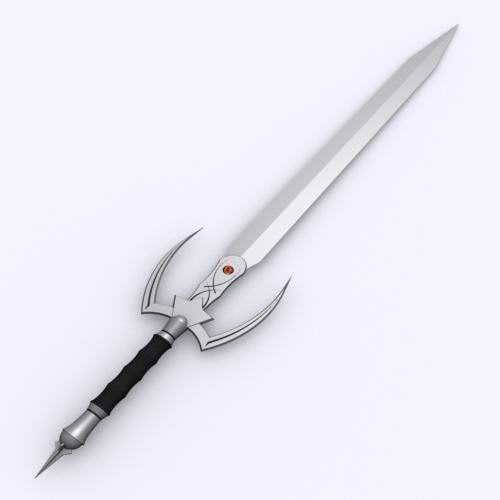
  • The Everyman – The everyman is normal in every way, except for the single magic item that is bestowed upon him.  Think Excalibur, or the ring from Lord of the Rings.  This one item is responsible for all of the the PC’s magical item benefits.  It could be a magical necklace, but instill the benefits of a magical weapon, Boots of Speed, Belt of Giant Strength, and so on.  This is the family heirloom, the shield handed down by the gods, or the cursed crown.  Yes, it’s a magical item, and it can be stolen, but most people would be afraid to touch something of so much power.  Should your character somehow be separated from it for a short time, go with it.  It should make for a better story.  Seeing as this is a major part of your character, your DM will not screw your character over.  For the greatest impact with this character, make a backstory for this item.  After all, it is a rare and powerful, literally priceless, real magic item.
  • The Destined – The individual has been destined since before birth to become something great. Think Conan, or Aragorn. His fate has been laid out in legends, prophesies, and scriptures, and the common man may or may not know of him.  The deeds of this character will be told for centuries to come, perhaps even thousands of years.  This individual does not benefit from magic items, since fate has already made him special.  For the greatest impact with this character concept, choose magic item benefits that are not flashy or too mystical, ones that could simply be explained as natural abilities.  That way it’s fate, destiny, and his inner character making him great, not ‘magical’ powers.
  • The Offspring – Gods, deities, demons, and devils can’t seem to leave mortals alone.  This is the character with one normal parent, while the other is somehow supernatural.  For reasons left to the player and/or DM, this PC is born out of lust, greed, boredom, or design.  His reasons for being could be numerous, or non-existent.  Does his supernatural parent have plans for him, is he considered an abomination, or do they even know he exists?  Most likely, he does not have any magic items, rather, his magic item benefits are natural powers that he is born with, or granted.
  • The Lucky – This character is simply lucky.  He has no innate magical talent, just blind luck.  Make sure that all of the magic item benefits are as non-flashy as possible (remember, aside from his extreme luck, he is completely normal).
  • The Mystic – The mystic is easy to integrate into this game, as he is already flowing with magic.  The wizard, cleric, druid, psion, warlock (and so on) all have mystical powers to begin with, so magic item benefits are simply additions to his natural powers.  He might have a “magical wand, staff, or focus,” but really, it doesn’t matter.
  • The Chosen – Some powerful being, church, cult, item, or place has chosen this character to champion their cause, however broad or specific it is.  Perhaps he has been brought back from the dead, resurrected with new unnatural powers?  Perhaps he has been cursed?  Who knows?  The character’s magic item benefits can come from within, or perhaps some token item, like an amulet, or perhaps a tatoo.
  • The Champion – This character is so much larger than life, he naturally has talents that carry him to excellence.  He doesn’t have any magical items, he’s just that damn good.  Any powers/abilities granted by his magic item benefits are simply attributed to skill.  Yes, he has a far-reaching reputation, and may even be considered a celebrity, but by no means is he destined for anything.  Again, try to make his magic item benefits as non-magical as possible, to better account for his ‘natural skills.’

Below is the method for which magic item benefits are attained in this Classic Fantasy setting, regardless of the character concept.

  • At 2nd level, every PC gains one benefit as if he had just gained a magic item with a level of between 1 and 5.  The magic item must be something that the character is normally allowed to benefit from in a normal 4e game.  For all game mechanical purposes, and as far as the character builder is concerned, the PC is equipped with that item.  However, depending on your character concept, the actual item might be something entirely different, or perhaps there’s no item at all (see the character concepts above).
  • At 3rd level, every PC gains another magic item benefit, again as if they are actually (legally) equipping that item.  The item may have a level of between 1 and 6.  In other words, at this point the PC is allowed to have two magic item benefits “equipped,” one of them may be 3 levels higher than the PC.  If the player wishes, his first magic item may be switched to something entirely different, or he may keep it.
  • At 4th level, the process continues.  Now the PC has three magic item benefits.  One of them may be 7th level, another 6th level, and the third may be 5th level.  Or, his magic item benefit levels may be less, of course.
  • This process continues every new level until all of the character’s magic item slots are legally filled (head, neck, waist, hand, etc.).
  • Now, at any point in time, he may only ever have three different magic item benefits of a level higher than his character level (level +1, level +2, and level +3).  All other items must be equal to his level, or less.
  • To sum it up: at the beginning of every new level (starting at 2nd level), you get to add one new magic item (up to your full allotment of legally allowed magic items).  You can also change around all of the magic items as you like, as long as you are legally allowed to use them, and you follow the level rules: all of the “magic items” may be equal to your level, or less.  -Or, three of those items may be of higher level (level +1, level +2, and level +3).
  • As an example, let’s say that your 2nd level character is bestowed a magic ring, and that magic ring will soon start to unlock benefits for your character.  Let’s say you choose a magical item “slot” of 5th level that requires a light blade.  The benefit will only apply when you attack with a light blade.  Next level, should you choose a magical item slot of 6th level that normally requires a wand, you gain the benefits of the wand only when your hand is free (when it would normally be wielding the wand – and of course, you could actually wield a wand for visual effect).  Also, you must be able to use a wand.  At 4th level, should you choose a magical item slot of 7th level that normally requires heavy armor, you only gain the benefits while wearing heavy armor.  Get it?  You can’t use these rules to cheat the system; equip your character legally and then reflavor the magical items how you like.

Remember, while your character sheet may have several different magic items listed and equipped, they are all not really separate items.  All of their bonuses, powers, benefits, etc. are all lumped into your character concept.  These benefits come from either a single powerful magic item, a curse, a blessing, his own personal magic ability, or simply his place with fate and destiny – making him larger-than-life.  Really, it’s up to you to decide.  This is in no way a method to limit the character; it is simply a way to explain how your character is larger-than-life, without having all PCs lug around 10 different magic items as if they were mundane gear.

On paper (and according to the character builder),  your character carries magic items like any other 4e game – it’s just that we are reflavoring all those magic items into a single item or power.  We are changing the flavor of the game, not the mechanics.

I wanna be bad! Playing in an evil PC game.

I am a huge “Breaking Bad” fan. For those of you who haven’t heard of the show, it follows Walter White, a high school chemistry teacher who contracts cancer.  In order to try to take care of his family and his own medical bills, Walter turns to cooking crystal meth.  The show intimately follows his decent from humble family man to a drug kingpin. And, do you know what? I’ve been rooting for him the entire time.  Even though Walter has become a pretty bad guy by this point in the story, I still want him to “win.” Why would that be?

The same thing happened with my parents when “The Sopranos” was on the air.  Tony Soprano was always an incredibly evil character, but we still loved him.  I think that at some level people understand evil a little bit more than we understand good.  We can understand why people fall. We can empathize with guilt more than we can selflessness. Now, don’t get me wrong, I’m not saying that people can’t be good or whatever, but I just think that in literary terms, the concept of the villain is very powerful and compelling.  So, why is it then that we don’t see more evil player character games? Probably because players find it uncomfortable, or they don’t want to be in a game where everyone is just playing a ridiculous “I set it on fire” all the time character.  However, I personally believe that a good evil character can be more fulfilling and fun than many would suspect.

My first year in college marked the first campaign I had played in that went beyond a few sessions. It was fun, and forever influenced the way I viewed and played RPGs.  It was also an evil player character campaign. It wasn’t meant to be like that from the beginning, it simply evolved into that. The player characters themselves were simply despicable people, but they were compelling despicable people.

My character was named Zachariah, and he worshiped a god named Jolem (who was a god of the hunt). Jolem’s religion had exactly one tenant, “kill whomever and whatever you wish, but kill only for sustenance.” In short, Zachariah was a cannibal – he would hunt animals and people, kill them, and then eat them. In fact, whenever he killed anyone, he would have to spend a round eating part of their body.  Now, Zachariah may sound cartoonishly evil and grim, but let me assure you that he wasn’t. Zachariah was an incredibly optimistic and upbeat character. He was just so fun to play. He had charisma and a unique outlook on life. That alone made him closer to a real person than any other character I had ever played until then. I still find it difficult to call him evil, even though he did horrible things.  He simply believed  in a strange religion.  His religion gave him hope and helped him make sense of his world. Without it, who knows what would’ve happened to him. It was his faith in a greater power, an easily understandable motivation, that compelled him to do evil things.

That’s really the key about evil characters; proper motivation. Yes they do evil things, but why do they do evil things? Sure, the evil wizard wants to make bizarre owlbears and beholders, but why? If you can come up with a good motivation that makes sense, your character can really come alive.  Again,  lets talk about “Breaking Bad”.  Walter justifies his evil deeds with the fact that he is trying to support his family.  Tony Soprano has similar justifications.  Zachariah does evil things for his god. What’s your justification?

Minotaur Contest Winners!

It’s time to announce the winners for the Minotaur contest!

Before we begin, let me throw a couple of things out there.  First, none of the Steal This… entries from the authors of Stuffer Shack were considered; only readers.  Secondly, none of the pictures accompanying the entries had any influence; only content was considered.   Now, with that being said, here they are:

3rd place wins the Adventurer’s Bundle:

  • “Fire in the Black,” the story of Teig Makusy – Great setup for someone to play the brooding loner with one glimmering reason for hope.  Not many people can pull off this type of character, so this should help.  I especially like the amount of detail in describing how he’s gotten to his current state.

2nd place also wins the Adventurer’s Bundle:

  • Rescuing Racel – It’s a great setup for an adventure with a pretty original take on the damsel in distress, but a strong damsel.  I think it’s a great player’s aid and adventure hook, immediately calling the party to action.  It could very easily be what it seems – the wife imprisoned by her lycan husband – or it could be something entirely different – is the whole village in on it?  I would love to run this adventure.

1st place wins the huge-sized minotaur, and also the Adventurer’s Bundle:

  • Anchor, the Aquatic Warforged – Great NPC idea, and well-characterized.  It speaks volumes to me because of its originality, opening doors for PCs not usually opened in a fantasy setting (venturing underwater).  On top of that, there are a few different ways of integrating this NPC into a campaign.  Really, a great NPC.

Thank you everyone for your contributions.  I’m happy with the turnout, and look forward to the next contest.  Winners have been notified via email.

Party on the Run – Steal This Party Background

Many times, we gamers will come up with nice detailed backgrounds for our personal PC’s that may or may not work with either the DM’s vision or the desires of the rest of the party. Sometimes coming up with a background for the party before finalizing characters can make some of the choices for roleplaying more intuitive, and allow for greater party cohesion. At the very least, it answers that question, “Why are these eclectic individuals with different goals adventuring together?” A better understanding of who the party is can help everyone better understand who the characters are.

This background is based on one I wrote for a party in the Warhammer Fantasy Roleplaying game. It’s been edited to be more accessible for a wide-variety of games, including fantasy, modern, horror or even some futuristic settings.  Please steal this, edit it, do what you want with it, and have fun. Let us know your thoughts on party identity.

Party on the Run

The PC’s at one point were all involved with a man by the name of Tarkus Rex. He was a natural-born leader who inspired fierce loyalty in the men under his command. One day he was given an order to destroy a small village for alleged heretical corruption. Rex believed the danger was exaggerated and saw no sign of these charges. He refused his orders and was declared a traitor, punishable by death. Such was Tarkus’ popularity, military distinctions, personal charisma and connections that he avoided this fate and was dishonorably discharged instead.

Forced into the civilian life, Tarkus turned his personal wealth into the beginnings of a network of businesses and contacts that would soon rival those of the wealthiest mercantile families. Tarkus was realizing great success, even though the wealthy elite of the city made business hard because of his dishonorable status. Noting this, he allowed his interests to spread to illegal activities. He quickly opened a slew of dicing parlors, whorehouses and other dens of illicit vices. Somewhat ironically, some of the services offered were so expensive and elite that the only clients (and there were many) were part of those wealthy few who would tarnish his name.

Tarkus’ network evolved into a criminal syndicate known as Tarkus’ Trust, so named because he surrounded himself with people whose trust he earned and, who in turn, were trusted by him. Included were former soldiers from his command, criminals of varied talents, and his support staff, such as a butler, driver, personal physician, etc. This last group (from which the player characters hail) were his most trusted and served dual roles, that of their surface profession and that of spy/informant/confidant/crime planners, etc., the brains not just brawn of his syndicate (although nothing stops a player from being one of his trusted former soldiers, either). Tarkus also maintained partnership in many legitimate businesses to account for his wealth and standing in high-society.

At last, the opportunity came for Tarkus to make a fool of one of his loudest detractors, Judge Magister Karl Strond. Strond was throwing a party for his daughter’s coming-of-age and many were the wealthy suitors in attendance. Tarkus had planned a caper that would involve stealing the dowry set aside for her nuptials and planting (actually legitimate) evidence of the Judge’s peculiar tastes. Pivotal to the plan was Strond’s wife, Judgess Vanessa who Tarkanian had turned (with the help of the damning evidence) and subsequently seduced (or so he thought…)

Vanessa’s role was to provide Tarkus access to the family vaults where the evidence could be left and the Judge’s wealth obtained, two crimes in one. Tarkus unwittingly walked right into her trap. Unbeknownst to him, Vanessa was the leader of a diabolical cult that was close to being uncovered by The Church. She needed patsies, and that’s where you come in…

Long story short, Vanessa’s cult murdered her daughter, killed Tarkus (a very public figure), and implicated you and your friends. Now, (1) the authorities (civil and religious) believe that you are a group of  murdering cultists, (2) a powerful and wealthy Judge has an extremely personal grudge against you, and (3) a criminal syndicate (that is falling apart and resenting it) blames you for murdering their beloved leader, bringing to life the phrase, “There’s no honor among thieves.”

Putting your past behind you, you have faked your deaths and fled the only city you ever lived in for a hard life on the run. Good luck, it’s a tough world in the backwoods of the empire where there is not always the benevolence and glory of the Church to keep the evil at bay…

Rules Lawyers – Raising the Bar

Rules LawyerThe rules lawyer knows the ins and outs of the game system like I know the curves of every turn in Gran Tourismo. It’s their specialty, their baby, their forte. Give them the opportunity to throttle into the turn… er, I mean spout out a rule infraction, and they take it. Meaning, the referee is not always the gamemaster.

On my first session with a new gaming group (my current group), I was shocked to see a player tell another player that his character couldn’t perform an action because of rule X,Y,Z.

Excuse me? Why was this player throwing a rule at another player? Isn’t that the GM’s job? I mean, if my character is about to do something and another player tells me I can’t “per the rules,” I think I’d get a little peeved.

Later that same night, a different player interrupted the gamemaster to tell him that a monster should get a +4 to hit instead of the +2 that the GM figured. Whuh??? What was up with this group?

I asked the first player about this later. I wanted to know why he was stunting the other player’s action, since I didn’t feel that was very team-like. I also wanted to know why the other player was giving extra bonuses to the GM. I was so righteous and sure of myself, that this veteran gamer had no idea what it meant to be part of a team.

This is where I got schooled-

He told me that everyone at the table took on the role of “rules lawyer.” That way

  • everyone had a terrific grasp of the rules
  • everyone always played with consistent rules
  • no one ever felt cheated
  • no one was ever shown favoritism
  • the GM was less burdened
  • and everything that applied to us also applied to the monsters

He finished his lesson by saying that because of all the teamwork, the GM was more apt to rule in our favor when not sure of something. And, because the GM knew we weren’t the type to cheat him or the system, he was very generous with throwing bonuses our way.

Oh.

That pretty much summed up my first experience with a grown-up gaming group.   These guys were the real deal, and I felt kind of humbled…

Still, at least I can kick their butts in Gran Tourismo. So there.

Now, I know that a rules lawyer can sometimes upset the game. Tell the GM that he can’t do something, and you’ll get on his nerves. Tell the GM that you CAN do something, and you’d get on everyone’s nerves. There has to be a universal way to handle interpreting rules and bringing them up in-game. I know my current group does it very easily, and in truth my gaming experience has never been better.

I’m curious, though. How does your group handle the role of rules lawyer?

Classic Fantasy, Make Your Fantasy Setting Fantastic

I once introduced a magic item to the group, gave it a name, gave it a backstory, impressed how the item was somehow important, and then gave it to a player character.  Before the end of the session, the player was trying to get rid of it so that he could get two other magical items.

So, magic in 4E is plentiful.  I can dig it.  I do dig it.  It makes for cool customization, bonuses, and benefits.  4e’s magic items allotment has added something to the game, but it has also taken something away.  Now, magic items are practically everyday tools.  In your typical 4e game, every Tom, Dick, and Harry has a magical item.  No, he has several.

“Anybody need a magic sword? No?  Ok, I throw it in the Bag of Holding with the magical bow and wizard’s staff.”

Ok.  Moving on.

In the last three campaigns that I was involved in, we had:

  • one gnome
  • one shifter
  • one half-orc
  • one tiefling
  • two dwarves
  • two elves
  • two eladrin
  • four dragonborn
  • annnnnnd one human

Where are my humans?  Sure, most of the towns we enter are filled with humans.  Most of the NPCs we talk to are human.  They’re the most abundant race in the game world, yet practically non-existent in the gaming group.

“Oh look, we’ve come across a group of travelers – two shifters, a deva, a dwarf, and another half-orc.”

Ok.  Moving on, still…

I can’t tell you how many times I’ve run into a tribe of goblins, a band of hobgoblins, or a pack of orcs.  Not only are they all over the place, but they have their own societies, cultures, traditions, and laws.  And, they all have children!  Oooh, scary. They just don’t really seem like monsters.  They may as well be races for us to play.  Wait, they are.

“Well, let’s go talk to that minotaur and see if he has what we need.”

What it boils down to…

I’m sorry, but all of these magic items, all of these non-human races, and all of these non-monster monsters just don’t seem like my preferred fantasy setting.  When I think of the fantasy genre, I think of:

  • Excalibur
  • Willow
  • The Hobbit
  • Lord of the Rings
  • Conan
  • Beastmaster
  • Hercules
  • Sinbad
  • Clash of the Titans
  • Dragonheart
  • The Dragon Slayer
  • Red Sonja
  • The Sword and the Sorceress
  • and on and on and on…

All of the above movies belong to what I call “Classic Fantasy.”  Are there some magic items?  Yeah, a few, and they’re powerful.  Are there some non-human races? Yeah, a few, and they’re mysterious.  Are there some orcs? Yeah, a few, and they’re nasty.

I want my fantasy to be powerful, mysterious, and nasty.  I want my character to be a nobody in a vast world where home is relatively safe, and everything outside of that is unknown, wild, and dangerous.  I want my fantasy to be fantastic.

What now?

Classic Fantasy is going to be the first project here at Stuffer Shack.  I’ll be adding ways to turn your fantasy game into a classic fantasy game.

  • Many races are going to be converted into different types of humans, elves, dwarves, and halflings (with backstories and histories).
  • I’ll explain how to converge magic items into one powerful item, or how to make characters of equal strength without magic items.
  • And I’ll rewrite some of today’s watered down enemies into old school monsters – all mean and nasty-like.

I hope you find it all useful!

Xanthippe, the Minotauress Bodyguard – Steal this NPC

“Stop right there. I have killed twenty eight people who have threatened my charge.  Do not force me to make it twenty nine. My eyes are up here.”

Description: Standing 3 meters (9’10”) tall and heavily built, her fur and underlying skin are a dark tan and decorated by a wide variety of scars.  Her eyes are a brown so dark they appear black.  Her horns are polished to a honey sheen and tipped with brass.

While Xanthippe prefers to wear her heavy mail armor along with heavy sandals, she dresses as required depending on where her employer is going (though with the maximum amount of armor she can conceal underneath).  She has a fair collection of jewelry, though she rarely wears it.

Background: Xanthippe was raised among the warrior minotaurs of Thalis.  Though not raised directly to be a warrior, she trained casually alongside her brothers.  She had the unfortunate luck to be on a ship captured by pirates, from which she was sold into slavery.  She ended up as an agricultural worker, which she did not find so bad.

Xanthippe was on hand when the daughter of her owner was attacked by bandits.  Wielding a hoe, she dispatched herself and chased them off, killing one.  Because of that, she served as the daughter’s bodyguard for the next three years.  And when the daughter married, Xanthippe was granted her freedom.  At that point she became a freelance bodyguard, usually (but not always) guarding women.

Presenting this Character: Xanthippe is direct and efficient.  She understands the need for formality and etiquette, but prefers to ignore them whenever possible.  She enjoys the minor rebellion of slightly embarrassing her employers by tromping over politeness, but she will not do so if it will cause major trouble.  She is very good in her role as a bodyguard and will selflessly protect her employer from physical threats.

Xanthippe is not well read, but she is a good listener and has a surprisingly wide range of interests, especially philosophy and music.

What can she do? Xanthippe is a skilled and effective combatant, capable of using a variety of weapons or unarmed combat as needed.  Her focus is protecting her employer, imposing herself most effectively between them and any threat.

She has an innate grasp of social dynamics (a very useful talent for a bodyguard).  She is able to note shifts in the patterns of behavior that indicate when an attack is likely to materialize.  For those wise enough to form a friendship with Xanthippe, she can provide an unique perspective on the group dynamics of those she observes.

Xanthippe has a rich voice and is a superb singer, but she rarely does so in public unless there are only children around.

Who might know her and why: Xanthippe is quite well known among the nobility as an extremely competent bodyguard – in some circles, hiring her is considered a bit of a status symbol. Those who are among the nobility, or who work with them, could easily have encountered her (she is hard to miss, after all).

Someone from Thalis could have known her as a young woman, though recognizing her now could be difficult.  A freed slave or other member of the household she was enslaved into could encounter her again.

Plot Hooks: Xanthippe could be a bodyguard to someone that is traveling with the party.  As her focus is protecting her employer, there could be some conflict.

She could have found that some of her fellow countrymen have been captured in a pirate raid and are going to be sold into slavery.  Xanthippe wishes to buy them if possible, or directly free them if not.  She will need help in finding where they have been taken and possibly for more backup.

Adding Flavor to the Bard

I’ve always liked the idea of the bard, not because of what he can do in terms of game mechanics, but because of what he can do in the game.  Simply expanding the perception of the bard just a little bit can greatly expand the gamer’s experience.  Let’s take a look at the two most traditional roles a bard can assume in any fantasy setting:

The Entertainer

The most often used type of bard would be the entertainer.  This is the guy (or gal) who usually works for himself.  He’s in every major town, and can be seen on any major street.  The lucky get a few gigs in taverns, while the talented can book major events.  As an entertainer, this bard is always looking to make people laugh, swoon, or close their eyes to enjoy his music.  This guy doesn’t have to be versed in literature, or have any knowledge of history (though all that helps).  What’s important is that he knows how to give the people what they want.  And hey, in an age without TVs or ATVs, that can sometimes be hard to come by.

This guy is very easy to insert into a fantasy game.  He simply tags along an adventuring party to gain material for his songs, stories, and poems, so that he may make some coin off them at the next town.   As a plus, he might also get to include himself in the adventures.

Since a bard among a group of adventurers is already a cut above the rest, it can be assumed that he has, or will soon gain, a reputation.  After a bard gains a few levels, it can even be said that he has become a celebrity.  Just imagine the bustle that happens when a bard of renown walks into town.  He will soon be asked to perform at events and gatherings – and in fact it is assumed that he will.  Invitations to dinners and parties are readily offered.  He’ll even be offered money just to make an appearence at events.

The Voice

As the voice, a bard is responsible for praising his patron, and insulting his patron’s enemies.  This position almost always requires formal training in literature, history, and poetry, as well as an excellent knowledge of current events.  Such bards are employed by rich merchants, noblemen, or even royalty, and remain in service for years.  At any gathering or event, they either speak for, or alongside their masters, to make for a better presentation.   Not really suited for singing, dancing, or playing music, their specialty lies in what they say, as opposed to how they say it.  For sure, being able to gain attention through commanding presence and charisma is a must, it’s just that they are not necessarily entertainers.

It’s very easy to integrate this type of character in a fantasy game.  The simplest way is for the bard to be employed by the adventuring party.  At the very least, he is simply part of the group and speaks up for them every chance he gets.  When an introduction is called for, he does it grandly.  The deeds and exploits of the group (what they fought, who they rescued), is spoken at every tavern and recited at most other gatherings.  His position as a bard becomes quite apparent to others right away, and that often improves how the adventuring party is perceived.  Anytime the adventuring group is addressed, the bard is almost always included in the conversation, if not talked to directly.

If you’ve ever wanted to play a bard, but were unsure about how to take it on, use one of the two examples above.   Hopefully, by choosing either the entertainer or the voice, you’ll have an easier time.  I think you’ll find that role playing a bard, while challenging at times, can be very rewarding.

P.S. – Why don’t you try to add the bard to your sci-fi game, like Star Wars or Traveller?  I’m sure it could work just as well, maybe even more so.

Moonhaven Encounter – Steal this Adventure

As the party stepped off the ship, their attention was diverted from the small port city they’d just arrived in to the sheer, black obsidian face of the mountain that formed the eastern and southern boundary of the city proper.  The massive stone walls on the northern and western side of the city were nearly as intimidating, as were the huge stone gates that granted access to the city square.

The gates stood open as they entered, the hearty “Welcome to Moonhaven!” offered by the guards drowned by the sounds of festivity.  The adventurers stepped through into a square filled with carts, ribbons, music and dancing.  On the square proper were musicians, dancers, and performers of all ilk, seemingly rehearsing amidst the hubbub surrounding them, oblivious to the captivated faces of onlookers.  The Moonhaven Challenge was in full swing, and townsfolk and traveler alike were looking to make a name for themselves.

“It seems the entire city has come out for this,” said the scoundrel, his eyes glinting. “There are pockets just ripe for the picking!”

“Please,” said the arcanist, “there are much greater prizes than a coin purse can offer.”

“Indeed,” said the mentalist, “and perhaps we can help ourselves to both coin and bauble!”

The party arrives in a port town called Moonhaven, seeking information on their current quest (or the metaquest, as the GM determines).  They arrive in the midst of the Challenge, an annual Moonhaven event that brings travelers even across the sea to participate.  It is a challenge of performance (a party containing a Bard or other performance-enabled character can even enter the contest, if he/she desires).  The party are informed through their conversations that shops close during the performances, and that the entirety of the city populace takes a rest in order to enjoy the festivities.  This leaves two major decisions/pathways the adventure can/should take:

  1. The party participates in the Challenge, with winning granting them material rewards and an audience with the city’s overseer.  Losing the challenge means no material reward, but the overseer is so intrigued by the performance(s) that he or she asks to meet with the party, at which point they can attempt to gain information through interaction with the NPC.
  2. The party attempts to gain information/wealth through subterfuge.  The shops and library within the city are unguarded (to the PCs knowledge), and stealthily-minded party members can (and probably will) help themselves.

The downside of option 2 is that the shops and library ARE guarded, by disembodied, invisible, arcane eyes.  They are the product of the local alchemist/enchanter, and are placed up SPECIFICALLY due to the influx of outsiders who come to Moonhaven for the Challenge.  If the PCs rob the city, they will be confronted by a horde of disgruntled townspeople the following morning, who will be waiting outside the PCs inn.  Moonhaven’s overseer doesn’t take kindly to theft, so even if the PCs return the stolen property, other punishments will be set forth, at the discretion of the GM.

Will diplomacy rule the day, or will the PCs have to fight their way out of the walled city?  Only you can decide.

Tarick Flameborne, the Deva Dragonborn – Steal this NPC

Tarick Flameborne
Deva Dragonborn Hybrid Wizard/Monk-2

Tarick’s first memories were of flying, riding the winds on vast wings of bone, sinew and flesh. When the memories came he was 2 years old, and wingless.

Throughout his life, Tarick has had dreams of a life as a dragon – not a mere land-bound Dragonborn, but a full, fire-breathing awe-inspiring master of all, a mighty Red Dragon Lord!

These dreams have driven Tarick to become what he believes he once was. Through dedicated study of all aspects of draconic nature he is striving for both physical and arcane perfection. He travels the lands seeking tutors. He studies at the feet of Wizards and meditates with Monks, walking a delicate path which mimics the duality of destruction and control which marks a true Dragon Lord.

He will reclaim his heritage, step by painful step. Of that, he is certain.

Dirty little secret: His dreams are a lie implanted by a captive Ancient Red Dragon, which seeks to lure Tarick to freeing him from his cage on the Plane of Ice. He waits, slowly and patiently feeding the false memories…..

Notes: Hybrid Wizard/Monks are AWESOME! For a start, no one expects an acrobatic Wizard, and nothing says “I know Wuxia Kung Fu!” more than a Monk who can fire a jet of flame from his fingertips. Add in the Deva/Dragonborn backstory (which is a lie) and this is a character on one hefty long-term quest. In close combat he’s an unarmed dervish and from a distance his spells focus on the highly flammable. Out of combat he’s a terrific source of information on History and all things Arcane – he has studied well indeed.

Tarick Flameborne
Male Deva Dragonborn Hybrid Wizard/Monk-2

Str 14, Con 11, Dex 13, Int 16, Cha 12
AC 14, HP 26, Surges 6×6/day
Fort 13, Ref 14, Will 14, Init +2

Acrobatics +7, Arcana +11, History +11, Intimidate +4
Dragonborn Fury, Draconic Heritage, Deva Heritage, Hybrid Talent (Unarmed Combatant)

Free: Feather Fall
At-will: Ghost Sound, Light, Mage Hand, Prestidigitation, Dragon’s Tail, Stone Fist Flurry of Blows
Encounter: Dragon Breath, Scorching Burst, Burning Hands
Daily: Astral Splendor, Harmonious Thunder

Monk Unarmed Strike, Flame Wand +1