BioWare set the standard for a supporting cast that I could actually care about and get invested in, NPCs that felt like people I could love or hate and generally want the best for. And ever since those first few hits I just kept craving a stronger and stronger fix…
This article originally posted at The Gamer Effect on April 17th, 2013.
Hi, my name is Jonathan, and I … I am a BioWareAHolic. Gods, it feels good to get that off my chest. Whew!
My first taste of the BioWareformula came when I was still fairly young in the form of Neverwinter Nights. The first BioWare game I actually finished and replayed was Knights of the Old Republic. I ground my way through Jade Empire in a mere two days. I loved all of these games in their own way, but the one constant remained: BioWare set the standard for a supporting cast that I could actually care about and get invested in, NPCs that felt like people I could love or hate and generally want the best for. And ever since those first few hits I just kept craving a stronger and stronger fix until DEAR GOD JUST LET ME GAME ALREADY AHSJOSLIAOINDOIJS—
Ahem. Right. Sorry about that.
Then I met a series called Mass Effect, and everything changed.
Let me tell you about my first time…
How to Hook Me on a Story in Ten Minutes or Less
Like … surprisingly few other people I’ve talked to, my first experience with the Mass Effect saga or trilogy or what-have-you came during the second act, Mass Effect 2. Believe it or not, I have no regrets on this point. More on that later.
The opening to Mass Effect 2 looks, at first, like pretty standard sci-fi fare. First we meet two exposition characters who tell us basically that this is just another routine mission: the SSV Normandy is hunting for something called ‘geth’ but these two are convinced that it’s a wild goose chase. The politicians are apparently using the geth as a scapegoat for the real threat, something Shepard calls The Reapers. At this point I had only the vaguest sense of what any of these words meant, but it didn’t matter— this was how I’d been introduced to nearly every sci-fi series I’d ever loved, and I was more than happy to learn as I went.
Then everything went to hell and I was on the edge of my seat.
Suddenly, the Normandy was attacked by a mysterious ship, a massive cruiser of unknown origin carrying weapons of unparalleled destruction. Crewmen were dying in explosions; people were running to escape pods; fires everywhere; a woman running through the halls, and then…
Then I got my first glimpse of the Commander they seemed to treat with such reverence. My proxy. Commander Shepard. And my first dialog wheel. And my first RPG with a voiced protagonist who I still controlled fully.
I didn’t realize yet that I could never go back.
So the ship is coming apart, I order this woman, Ashley Williams, to get the crew to the escape pods — our pilot has refused to leave his post, and it’s up to me to get him out. Shepard is a marine, you see. He doesn’t believe in leaving anyone behind. Nobody says this of course, but I’m already starting to get a sense of who this commander is and isn’t — actions speak louder than words. So to the cockpit I go.
I make my way through the devastated remains of the ship to the command center (the CIC) and find that it’s been torn apart. At least one hit from the enemy ship has torn straight through the hull and opened us up to the vacuum of space. Further, the artificial gravity is offline, but apparently Shepard has some kind of magnetic boots built into his armor, so none of this is a problem.
What it is, for me, is the moment I remember most vividly from that entire first playthrough.
I’m standing here in the shattered remains of my ship, a ship I’ve only just been introduced to, looking up into space. A planet hangs over my head, massive, reminding me of my insignificance. And somehow despite the threat, despite the urgency of this moment, I find it incredibly beautiful. It takes my breath away. For the first time, I really feel like I’m part of one of the sci-fi worlds I’ve loved for so long, since Star Trek and Star Wars and StarGate and all the rest.
In that moment, perhaps more than any other, I am Commander Shepard.
Right, so Joker (the pilot is called Joker) is in the cockpit still and I need to get him out, soon. So I head the rest of the way there, trying not to think about how amazingly cool it is that the chairs float away when I bump into them (SPAAAAAAAAAAAAAAAAAAAACE!) and make it though the mass effect field that’s keeping air in the cockpit. I assume.
Joker has a helmet on but that’s not really the point right now.
So I convince him that the Normandy is done for, and the only thing left to do is make sure we aren’t dead with her. He reluctantly concedes and GREAT SCOTT REALLY THE ALIENS ARE COMING AROUND FOR ANOTHER ATTACK. Talk about kicking a man while he’s down. Whoever these guys are they don’t mess around.
Next thing I know another beam is hitting the ship, and Joker is watching helplessly as Shepard floats off into the vacuum of space. Aaaaaaand well, crap, my helmet is leaking air. That can’t be good.
Cue Title Card, Opening Theme Music, and Character Creation (No Seriously That Just Happened)
Next thing I know Shepard is waking up on a table somewhere, two years later (!), in the middle of ANOTHER attack, surrounded by people who are as unknown to Shepard as they are to me. Only this time I get to fight for my life.
And it only gets better from there.
I’ll likely be writing more on the series as time goes on— what I loved, what I didn’t, key moments from throughout the saga, how the experience has impacted me, “what does all this mean anyway”— but suffice it to say that I remain deeply in love with the series, and the entire trilogy sits firmly near the top of my (actually unordered) list of Games Everyone Should Play At Least Once.
…Which will probably be the subject of a future article.
The history of financing independent films is certainly an interesting one. To finance his first feature, El Mariachi, Robert Rodrigez signed up for a series of medical experiments, some of which he still bears the scars from. Kevin Smith financed Clerks by signing up for a slew of credit cards, all maxed out during the production of the film. Presumably, they were later paid off in full…
This article originally posted at The Gamer Effect on April 17th, 2013.
The history of financing independent films is certainly an interesting one. To finance his first feature, El Mariachi, Robert Rodrigez signed up for a series of medical experiments, some of which he still bears the scars from. Kevin Smith financed Clerks by signing up for a slew of credit cards, all maxed out during the production of the film. Presumably, they were later paid off in full.
So while the buzz surrounding the incredibly successful Kickstarter campaign for a Veronica Marsseems, at least to me, less interesting than some of the tall tales from independent film history, it certainly speaks volumes about the passion many fans have for their favourite characters. Which, naturally, leads many to wonder if their favourite long-lost franchise could be revived through similar campaigns.
Much has already been written about Veronica Mars being a unique case, but I’d still argue that it proves crowdsourcing can be a viable funding method for certain types of projects. Which types? I’m glad you asked! Let’s look at an upcoming example.
Joss Whedon’s Much Ado About Nothing adaptation is due to hit theatres in the coming months (and here it is), and was shot at Whedon’s home with friends and past collaborators. Pitching “a movie I shot over the weekend with my friends” is generally not something studios will go for, even if your last name is Soderbergh and you own several Oscars. Financing such projects is difficult even among top-level talent, but giving fans of these filmmakers a chance to be a backer is enticing. There are limits to this, however. It’s unlikely you’ll see something with a budget past seven figures (other than Veronica Mars) crowdsourced unless a major name or property is involved, but not all projects need that much capital to get off the ground. Such as documentaries.
With only a few exceptions, documentaries usually sell themselves on their topic. Similar to fans backing a Director they’re passionate about, the topic of a documentary alone can bring in a crowd to, well, source. Passionate about, say, the surprisingly high overlap between veganism and endurance running? Maybe on the portrayal of women in comic books? Chances are, you’re not alone, and there’s someone willing to make a documentary about it. Documentaries are also, with rare exceptions, much less budget-intensive. Rights for archive footage and speaking fees for talking heads can go a long way in documentary filmmaking, and special effects are a rarity. Even an incredibly polished and slick documentary likeBart Layton’s The Imposter could be produced for less than the average feature.
Cross-platform projects are also in the running. Say you’d love to hear a song written and performed by your favourite author. Odds are, their publisher couldn’t do much about it, and record companies aren’t really that interested in such projects. But if it only costs $1000 for, say, Neil Gaiman, to book some studio time to get it done, crowdsourcing seems like the most viable option. Crossing platforms used to be a sign of celebrity excess. Now, it’s just smart business. And it certainly seems to be working for YouTube personality Hannah Hart, known for her My Drunk Kitchen series, which successfully crowdsourced a tour across the United States and Canada. But for total non-celebrities? I decided to ask around.
Local playwright, actor and friend of the author Ryan M. Sero was willing to discuss his experience with his attempt to get a play he wrote financed with a crowdsourcing site. “For me, it didn’t really work,” he explained. “I raised a little money, but not a lot. I covered my poster budget.” But he didn’t dismiss crowdsourcing entirely. “I think in order for those campaigns to succeed, you need a strong social media presence. I would consider using it in the future, but I would have to become much more savvy with things like twitter, instagram, reddit, facebook, etc.”
So for creators deeply in touch with their audience, there is hope. While a lot of these examples have to do with name recognition, they perhaps have more to do with connection. Social media, at it’s best, is just that. Social. Crowdsourcing requires a crowd, and because of that, the creator with the best crowd often wins.
Creative Commons and the Open Game License were supposed to herald a new, open, era of gaming in which we see games being released to a broader audience for enjoyment and consumption but also for creation of content. However, one often overlooked fact is that many of these licenses wrongly provide a sense of protection that is not available within certain works, and also cause confusion both about the degree and extent to which content is freely licensed as well as the legal uses for content outside of an explicit general license.
Copyright law explicitly does not protect the means or rules by which a game is played. This does not necessarily mean that the play itself is protected; video games are protected in part because they are software and in part because they are a means for parsing rules, but tabletop games and board games have never really enjoyed this same protection. This does not mean that it is safe to merely copy other peoples’ works, but the idea that a d20-driven system should automatically be placed under Wizards of the Coast’s OGL is fallacious and absurd. Of course, Dungeons and Dragons and its derivatives under the umbrella of the “d20 System” are protected textually, but a clean-room reverse engineered game that is compatible with the play concepts of Dungeons and Dragons as well as the character sheets would likely be entirely legal, barring trademark issues with terms such as “Armor Class”, which isn’t a terribly huge concern in the grand scheme of things.
In addition, these games often have third-party content created for them without any official licensing existing in the first place. This does not necessarily mean that there is a solid legal precedent for doing this, but a case could be made that troves of amateur third-party content is freely available for most games, and in cases where no original content is duplicated there is no case under copyright, patent, or trademark law precedent that would actually count as infringing. Compatible “stat blocks” for games are likely protected only in the most dubious cases, and there is a blank form doctrine that likely applies. On the other hand, this does mean that third-party content is expressly forbidden from even mentioning copyright protected elements (places, things, or events) and has to avoid the use of trademarked terms, but even then the precedent for a lawsuit is not there, especially if the attempt is to supplement rather than supplant the original work. Third party adventures and supplements have existed without official legal recognition for a long time, and we have rarely seen instances where they hurt the original game or bothered the publishers enough for them to take action, especially given the legally dubious nature of suing someone who has created entirely original content that doesn’t actually replicate any copyright protected elements of the work.
As a footnote, means of play can theoretically be patented. I know of one case of this, and one case only, and I’m not sure it was ever invoked. It was likely a defensive action to prevent external legal action, and even then it would be only dubiously useful in the case of infringement; you’d have to do something that clearly violates something someone at the patent office thought was a truly revolutionary method of play and could never have happened before. In short, patent law being applied to shut down games is dubious.
The OGL is a complex, complicated legal framework likely established in order to make Hasbro’s shareholders happy as they divested some of the components of an outdated version of Dungeons and Dragons. Mind you, that’s not to be mean to 3.5, Pathfinder, or any OGL licensed work, but the OGL has several key flaws. First, it’s not human legible. The OGL is about as long as this article, and it’s written in Lawyer’s Cant. It likely applies, ironically, to the dubiously copyrighted parts of text, the rules and mechanics. While the one upside of the OGL is that it does distinguish between individual facets of a roleplaying game (unlike CC licenses, which I’ll get to in a bit), and does allow for a good chunk of the text to be used, including such elements such as a Dwarf with a -2 Charisma and +2 Constitution (accuracy be darned), which would at least have a plausible chance of having a copyright lawsuit filed that doesn’t get laughed out by the judge. However, the fact that Product Identity is included and protected in a non-free manner may be a stumbling block, especially since the line between whether or not certain things constitute your product’s identity can be somewhat blurry. It’s not a very free license in the long run, though third-parties can apply it in a more open manner. Also of interest is the GSL, which allows people to make 4th Edition compatible material, showing that the point of this licensing is more likely to prevent unofficial D&D-setting sequels rather than third-party additions or alternative rulesets, such as [edit…] stuff like what Pathfinder and Spycraft did for the 3.5 ruleset; obviously under the GSL it’s not possible to create stuff that integrates under the old rules, but it’s still possible to integrate third-party content into the 4th Edition system.
Creative Commons is a good license, and a good license, and several bad licenses. The main issue with CC is that it encompasses a dozen or so different license “packages”. Most of these “chain”, meaning that the most restrictive thing morally applies, though legally something without the “share-alike” clause can be licensed under whatever scheme the holder wants. The Attribution clause is really the only true open clause, anything with the non-commercial or non-derivative clauses is far from open in a realistic interpretation of the license. Share-Alike is tricky, since it leads to what’s called viral licensing, where it means that anyone who makes a derivative is forced to license likewise, which is not terribly free. The Creative Commons public domain license likely should be rebranded (Perhaps Public Domain by Creative Commons rather than CC-0) to mitigate the implied relationship between CC and the public domain, though it is a nice tool for such a release.
In short, in order to actually have “Open” tabletop gaming, we need to consider multiple facets, something along the lines of the more open CC licenses with the differentiation provided by the OGL to produce a truly nuanced and unambiguous license that allows for differentiated licensing within individual projects.
Attending a Renaissance festival can be a great time, but if you’ve never been to one before, it can be daunting at a glance. What are some of the things you can expect? What’s the best way to plan a day? What should you remember to bring? Well, here’s a quick reference guide to get you started.
The Prep
Most guides will remind you to bring bug spray, sunscreen, or a jacket, depending on the weather, but what might they not mention? Cash. While most shops and many of the vendors will accept credit or debit cards, in more cases than not the food and beverage vendors will only accept cash. If you’re planning on getting your sustenance on the grounds, it’s best to expect to have to pay quite a bit, usually $5 to $10 a meal. It’s best to aim high to give yourself a bit of a buffer zone.
In addition to paying for meals, if you stop to watch any of the shows for entertainment, they’ll without fail ask for tips at the end. They are by no means mandatory, but usually those shows are the performers’ sole source of income. So if you enjoyed it, why not throw a buck in their basket at the end?
Just as importantly, remember to wear comfortable shoes. You’re going to be doing a lot of walking. Often on uneven ground. Being in the middle of nowhere with sore feet is a very special kind of hell. Add a runny nose and itchy eyes to that just makes it worse, so if you suffer from allergies, you can expect a full frontal assault while on the grounds.
Lastly, be sure to take a bottle of water. It’s very important to stay hydrated, especially on really hot days. Most places will have water fountains strategically placed around for refilling, so you don’t have to drop the cash every time you need to drink something. If you’re worried about your water bottle clashing with your outfit, pick up a flask, waterskin, or horn to hold your drink and you can still be period-appropriate!
The Plan
There is a lot of shopping to be done at a Renaissance festival. It’s basically a Renaissance-themed shopping mall, amplified by about ten. But we’ll get to that later. If you’re the type to get your entertainment from a comfortably seated-position, you may prefer the shows. Everything from jousting to music to comedy to fire-juggling can be found on the various stages at most Renaissance festivals.
Before you leave for your tour of medieval merriment, it might be best to get online and look up your festival of choice. Usually on ye olde website you can find a schedule of all the shows and all their locations for the entire duration of the faire. Get together with your party and decide what might look interesting. Alternatively, you could just wander, and if something catches your eye, have a seat and watch.
Either method works, so do whatever fits your group the best. If you have a particularly large party though, you’re bound to get split up. Cellphone reception is usually spotty at best in those out-of-the-way locations. And even if you can get a call through, what are the chances your friends will hear their phones? Even if you don’t plan your day to the last half hour, it might be a good idea to pick a few key shows and times so you can regroup with all your wandering friends.
The Costumes
Who doesn’t love getting all decked out in wild outfits? And while it’s technically a “Renaissance” festival, there’s not really a dress code. They won’t throw you out just for being in an outfit that isn’t theme-appropriate. However, there are some other things to keep in mind when deciding what to wear. Most importantly is probably what the weather is going to be like. You don’t want to be fully weighed down in noble or even royalty’s clothing if it’s going to be more than a hundred degrees there. Likewise, you don’t want to be dressed in little more than fur underwear if it’s going to be cold and raining the whole time. Obviously it’s not possible to know exactly what the weather’s going to be like for your trip, but you can get a general idea. And maybe have a back-up outfit, costume or otherwise, in the event of inclement weather.
Those uncontrollable variables aren’t all to consider though. If you’re likely to be sitting down to catch a show for the majority of the time, large skirts are not easy to sit in. And something with a full helmet isn’t easy to eat in. Think carefully about what you’re willing to subject yourself to before you settle on an unwieldy get-up. Speaking of inconveniences for dressing…
Lodging and Transportation
If you’re lucky enough to live close to a festival, you have the added benefit of not needing to find closer lodgings. Unfortunately, driving to the grounds that morning generally results in a pretty serious traffic situation for about an hour before opening to a couple hours after. That goes for people staying in nearby hotels as well. Unless you’re close enough to walk, expect delays.
Because most festivals run for the entire weekend, some of them will have on-site campgrounds. There’s usually a per-vehicle fee and they require you to show your festival passes in order to camp, but there aren’t any other expenses involved. Unless you include the price of your tent, sleeping bags, bedding, any possible camping materials, snacks, and beverages. Be sure to check to rules to see if consuming alcohol or having a campfire is permitted.
At Last, The Faire!
So, what can you expect when you’re there? Of course, there will be people in costumes. As mentioned before, people don’t always stick to the Renaissance theme. You’ll see people dressed as Storm Troopers, undead abominations, anime and video game characters, plus anything and everything out of every fantasy setting you’ve seen. And not just the traditional versions of these things either. Many people will approach a Renaissance festival like a real life fan-fiction, so for every Space Marine you see, you’ll probably see a “sexy” counterpart. For being a furred creature, I’ve never seen Pikachu show as much skin as at a Renaissance festival. So be prepared. Be sure to do some research on your faire of choice before agreeing to take your kids there. While most are family-friendly, every now and then you’ll see a chainmail bikini with nothing underneath.
Food at the faire, while a bit on the pricy side, is usually amazingly delicious. Rather than the $10 hot dogs you’d find at any other theme park, a Renaissance festival will have courses you don’t usually get anywhere else… beef ribs, steak on a stick, Scotch eggs. So many fine choices it might be hard to decide! No Renaissance festival is complete, however, without a turkey leg. Roasted and richly-seasoned, turkey legs are about eight times larger than a chicken drumstick.
In most cases, beer and wine will be in abundance at the faire. Of course, you can also get soda, bottled water, lemonade, sometimes interesting slushy concoctions, alcoholic or not. If you do prefer something with a proof though, try the mead. Nothing you can get in stores is quite like the faire-specific RenFaire brew of honey wine. It’s sweet, light, and refreshing. Be careful on those hot days though. It can sneak up on you.
The Shops
Before you leave for the Renaissance festival, set a budget for yourself. There are going to be so many things there tempting you, but if you’re not careful, you could easily drain your savings buying some of the coolest stuff you’ll ever have, but rarely get to use. Shops can carry things ranging from $2 to $20,000, so don’t get too attached to anything until you know what you’re getting yourself into.
If you’re planning on getting a new outfit, you should probably plan to wear it as soon as you buy it. The shopping around is fun, but carrying large bags of stuff everywhere is very tiring. Many people don’t think about that until they’re handed a bag and wished a pleasant day. Before you buy something heavy or clumsy, ask if they’ll hold it for you at the shop so you can pick it up on your way out.
Now to the fun stuff. What do they sell? Let’s start with the clothes. Everything from peasant to royalty. Squire to knight. Elf to satyr. Even if you’re not in the market for new duds, many shops encourage a hands-on approach to window shopping. Trying things on is a great time for everyone involved, even if you’re not going to buy it. If you are going to buy it though, ask the shop owners where they recommend going to accessorize. No one knows their merchandise like they do, and they know what looks good with it.
Speaking of accessories, just the clothes are fun, but you can’t fully deck yourself out with *just* the clothes. A belt, hat, maybe even some jewelry. Use your imagination. When you browse the stalls, keep your mind open. You can really flesh out a costume with whatever you choose to wear with it. In fact, you can get away with loose fitting pants and a breezy shirt, and as long as you put the right stuff with it, you can be anything! Why be a townsperson when you can be a minstrel!
Going along with the accessory theme, you can arm yourself with a flashy new dagger, or a vicious scythe. Or pretty much anything else. If you are going to get a piece though, keep in mind the peace-tie rules most Renaissance festivals have. If your weapon can easily be drawn, it’s not going to be allowed. Something as simple as a leather strap tying it into its scabbard is generally acceptable. Occasionally, you can find unsharpened weaponry too, giving you the look of a battle-ready warrior, but not turning you into, well, a battle-ready warrior. When playing with swords, even all in fun, accidents can happen. Not being able to draw your weapon is the best way to prevent that.
Now that you’ve gotten yourself looking amazing, let’s do something for the home. How about a new wind-chime? Perhaps a table lamp made out of antlers? Oh I know! A bed frame made of driftwood! All kinds of things are available to make your living space comfortable *and* gorgeous. Why stop at just the house though? Wouldn’t Fluffy look adorable in a little dragon costume?!
This is a very limited list. I’m just trying to give you some idea of what to expect. Actual vendors vary by location, but many of the major players will try to have a presence at as many festivals as possible. Again, the website can tell you a lot more specifics than I can, so be sure to check that out.
The Shows
‘You keep mentioning shows and performances,’ I hear you cry. ‘Which ones should I be sure to check out?’ We’ll get to that in a minute. First, we need to talk about some etiquette, only some of which seems like common sense. In the regular world, it’s pretty much expected that if you go to a play or a concert, you shouldn’t talk during the performance. You shouldn’t talk to the actors or musicians. At a Renaissance festival, that’s not always true. A general rule of thumb is, if they’re talking to you and asking for participation, clearly they want you to answer. Don’t be afraid to join in. That’s one of the major joys of a festival. Be sure to look for cues though; I’m sure the harpists get tired of hearing “Play some Skynyrd!”
This shouldn’t need to be said, but I’m constantly baffled by some people. If your phone rings in the middle of the performance, you should silence it as fast as possible. To be perfectly honest, you should silence it before the performance even starts, but most people are understanding when someone forgets every now and then. Under NO circumstances should you answer it and start talking while still sitting in the audience. If it’s a call that you really need to take, stay quiet until you get out of the seating area and away from the show.
Okay, now, what should you see? By no means is this a complete list of all the best shows. I’m just giving my advice based on what I have seen personally.
The Ded Bob Show – Because who doesn’t love dead-pan humor coming from a womanizing puppet? Potentially inappropriate for children.
Adam Crack, Fire Whip Show – Adam Crack has won world records with his whipping skills.
Cast in Bronze – The world’s only traveling carillon player. A cheesy performance, but hauntingly beautiful music
Iris and Rose – Rowdy pub music by two shameless women. Definitely inappropriate for children.
Sound and Fury – Fakespearean actors. Also not appropriate for children. Probably not appropriate for some adults too.
Don Juan and Miguel – Spaniard duo who specialize in whips and comedy.
Christophe the Insulter – Pay him money, point to your friend. He’ll give you your money’s worth.
Sadly, many of these performers won’t be available in your area, but if they are, you should definitely stop by.
Themed weekends
Many Renaissance festivals will have themed weeks throughout the season. By no means is it necessary to dress based on that theme, but it will give you an idea what to expect. If you want a more fantastical experience, check the listings to see if and when they have a fantasy-themed weekend. If you can’t get enough bagpipe, watch for a Scottish theme. Sometimes there will even be performances that you can only find on specific weekends, so be on the lookout for that too.
I hope you’re ready to go now! This is a very general overview, and no article on the internet can ever fully prepare you for what you’ll find at a Renaissance festival. And no article will ever take the place of actually visiting one yourself. I can’t tell you every shop and every show you need to check out. You’ll just have to find that out on your own. So off you go! Prepare thyself for merriment!
I’ve never been one to take anything and run it exactly as written. I liked the Great Wheel cosmology. I like some of the changes that came with 4th edition. What I really want though, is a toolset.
My ideal 5e multi-verse would contain example planes, with some means of travel between them, and maybe some Academic theory on the way the universe works. Our own understanding of the real universe is a lot of theory waiting to be disproved. They kept making new discoveries on the future epic Star Trek. Why would a fantasy setting have it all worked out?
Take the Great Wheel as an example. Maybe this is how dwarven scholars explain the multi-verse. The wheel is a key component in mining and engineering. They’d like that. Elves on the other hand would take a more 4e like approach, with planes mirroring and overlapping on one another.
Even with this ‘use what you need’ approach, there are a few things I’d want it to have.
Transitive Planes
By this I mean a plane whose main purpose is to connect planes. It gives you a way to physically travel from one plane to another. This allows for space like adventures or even high fantasy pirate-like action. The Astral Plane serves this purpose well. I also like the Phlogiston, ala Spelljammer. The Phlogiston is the stuff that separates whole worlds. If you were to travel from the Forgotten Realms to Dark Sun in a vessel, you’d go through the Phlogiston.
The problem with the Phlogiston then is, where is the Far Realm? Is it just one world within the Phlogiston? Is it like Marvel’s negative zone with both multi-verses slowly incurring on the other.
Demi Planes
I had a DM run us through a couple sessions in the Elemental Plane of Wheat. Yes, it was silly, and yes, he probably could have set it somewhere else but it was fun. It was nice to have a small plane that a million parties weren’t already invested in, that we could burn down with out it being the end of all things. Whatever happens I want to be able to have small, obscure planes. Bonus if our epic wizards could make their own.
Planar Travel
I want cool ways to get from one plane to another, without it being as simple as a teleportation spell. Shadow roads, fey circles, sailing the River Styx and flying through the Astral Sea. When it comes to the Planes, the journey is have the fun.
Sigil
I still want Sigil. You can’t have it, it’s mine. It shall always be!
Dread, the RPG. Dungeons and Dragons 4e (Midgard). Modern Assembly. And Project Ninja Panda Taco!
One of the things I always want to do at conventions is to try games that I’ve never played before. This doesn’t always happen, though, as I do love GMing and teaching games (and I’m prone to volunteer for such things – see GenCon Report 2). However, at GenCon I managed to pull this off even with my excessive Marvel Heroic running.
Dread
Thanks to the fabulous D20 Blonde, I got to play in an incredible game of Dread. For those not following the latest story in D20 Monkey, Dread is a horror game with no dice. Whenever you want to do something outside of your normal skill set or notice something out of the ordinary, you pull a block out of Jenga Tower. The same is true if two characters are competing with each other. Each players pulls a block one after the other until someone backs down or the tower falls. If you knock the tower over your character is dead. Maybe not right away, but the GM may kill you off at any moment.
It’s a story-driven game. In our case, that meant an upbeat, rather comical first half that felt very much like I was playing Fiasco. The second half was a lot more serious, with every pull being watched with horror. It probably helped that I had an amazing group to play with, including Philippe Menard, Kate Kirby, Brian Patterson, Anna Walker and Jason Slingerland.
The mechanic that I really liked is the way character creation worked. There are pregenerated roles that people can pick from as the base of the character that are already linked to the story. In this case, it was circus-themed, so there were characters like the Ringmaster, the Dog Faced Boy and the Daredevil. Once your character was selected, you were give a questionnaire (created specifically for this character in this story) that you would answer to flesh out who you were playing. That way each character is tied to the story in specific ways, but also your own. It was very cool.
Dungeons & Dragons 4e (Midgard)
Now this might not seem like a new game. Anyone who reads Stuffer Shack knows I’ve played D&D 4e a fair amount. However, I did get to do something new with it at GenCon. I ran a game for one of the patrons of the Midgard Bestiary, which is now available, but was not at the time. I had created a lower paragon scenario just for this session. It was a bit of a dungeon crawl with a little mystery tied to it, in an area of Midgard that hasn’t really been explored by the adventures yet (by the way, The Midgard Campaign Setting is now available).
This was my Saturday Night activity that I had scheduled for four hours until Midnight. About an hour and a half in we started our first combat. It was awesome. Everybody games differently and I can assure that it never takes my players that long to stab something at home. It wasn’t that the players were dragging their feet either; they were just having a ton of fun interacting with the world and each other. It was highly entertaining and a great example of how 4th edition is not a tactical minis combat game, unless you want it to be. I ended up running three extra hours over and still had to cut some things to get to the final fight.
Modern Assembly
My Modern Assembly playtest went less well. I must be getting better at pitching because a set of beta rules that allows 4e fans to play in a modern fantasy setting pulled in four people who had never played D&D 4e before. I don’t generally mind teaching 4e to people, but that wasn’t really the point of the playtest. I wanted to test the new rules. There was also a big difference between the maturity levels of the players involved, which happens sometimes with con/pick-up groups. Still, I think people had fun, but it just wasn’t what I wanted. I was disappointed.
Project Ninja Panda Taco
I was very fortunate to meet the very nice Jennifer Steen at GenCon this year. You probably know her as the host of Jennisodes (when do I get my interview Jenn?:P ) but she’s also the designer of Kickstarter success Project Ninja Panda Taco.
We sat down with a few other fine folks to test drive the game. You play both a Mastermind (created by you with input from other players) and a minion. Each turn, two masterminds go head to head as one tried to stop the other’s nefarious plot. Each Mastermind pitches an awesome benefit that the minions will get should they choose to help them. Each minion you get to help you provides a small bonus to your roll. Each Mastermind rolls and the highest total wins that round. Play continues around the table so everyone has an equal amount of time playing their minion and mastermind. Whoever completes the most steps in their evil project wins!
One of the things that surprised me was the lack of good guys to foil your Mastermind. The ideas of bad guys fighting the bad guys was a lot of fun, but I wanted to know how this came to be, so I asked Jenn. She said:
“Masterminds can be good guys and take over the world doing good! During playtesting I had everyone make three characters, which created too many issues. Having a Mastermind and using that character during play against the other players made the game much smoother. Character creation was faster and players can jump between two characters easily. Having more than that made it confusing.”
Good answer! I certainly recommend this very silly game that doesn’t take long to bring the laughs and can be played in under an hour. Watch projectnpt.com for updates. The expected release date is currently in December or January of this Winter.
I had the opportunity to run official sessions of MarvelRPG at GenCon for Margaret Weiss Productions…
Greetings True Believers!
GenCon Report 2 coming in a bit behind schedule do to life. I hate it when that happens, don’t you?
I had the opportunity to run official sessions of MarvelRPG at GenCon for Margaret Weis Productions. They had several Watchers running sessions of four different scenarios (three of which were brand new to GenCon) throughout the Con. In a lot of ways we were playtesting new content, which is always exciting. What’s even more exciting is when some of your favorite heroes and villains are involved, and appearing for the first time.
I think Cam Banks (who is lead on the line) must have known this because these adventures were chock full of brand new characters. I’m going to try to geek out a little bit without drifting into heavy spoiler territory, but consider yourself warned.
I got to run two of the new scenarios: Guardians of the Galaxy and New Mutants: Siege! The Guardians of the Galaxy will be coming in the Annihilation line when it drops from MWP later this year. I was very excited about running this gem, as I really loved the team as they were re-introduced in the Annihilation comics. You see familiar faces like Star Lord, Mantis, Rocket Raccoon, Quasar and a few others, facing one of the biggest challenges in the known universe. Not bad for a three-hour session. Cam Banks once joked on Twitter that when Annihilation hits we’re all going to need more d12s, and he wasn’t lying. If running this event taught me anything, it’s that you can really do epic things in a short amount of time without being bogged down by mechanics. The School of Hard Knocks rule (where the PCs get 1 XP for every d12 the Watcher rolls) came up way more than I’ve ever seen and some of the “weakest” characters on the field wracked up the most milestone XP the quickest. Your crazy friend, who loves playing the Punisher, (you have this friend right?) is going to love it when they get their hands on Rocket Raccoon.
The New Mutants scenario was a What If? that lands these young X-Men as the last hope against a corrupt Norman Osborn. It’s very open-ended, and really highlights the non-linear style of MarvelRPG Events. I hope it eventually gets released to the public because I think it could be used as the start point on how sandbox-style adventures could be written in other systems. Again, I don’t want to give away any spoilers, but let’s just say that Cypher will change the way your players view power. Everything is language, after all.
If you want to see some player reactions, check out the forums at MargaretWeiss.com.
My Marvel experience didn’t end with official slots, mind you. I brought the characters from my House of M Event (I actually brought all my characters) for some quick pick-up games. Gaming Conventions can be great places to learn a new game just from stumbling into somebody who wants to play. It also helps to hold up hand-made signs that ask “Do you want to play the Marvel RPG?” I filled hotel lobbies with the sound of Deadpool and Wolverine taking down Apocalypse and airport terminals with the exploits of the self proclaimed best Moon Knight ever. I can attest that I’ve never seen a Moon Knight use hockey fight tactics so effectively.
I think this reflects how comfortable I’ve become with the game. Once you know how much time you have, it’s easy to cater the scale of the game. Next time, though, I think I’ll just bring the heroes and villains I need for one specific scenario, and cut things as needed. That three-inch binder was heavy, and I don’t think Plot Points or MWP are going to slow down on creating new character soon.
You can download the Marvel Heroic Roleplaying PDF here, or get the book!
If one more note gets passed across this table, I’m gonna…
I’ve been gaming for quite awhile, and I’ve seen my fair share of various gamers and groups. Of the several things that make role-playing games fun and exciting, I think diversity in those at the table ranks near the top. Sure, everyone at the table should have some commonality in how they approach the game, as well as how they draw their fun from it, but variety is the spice of life, right?
Let’s take a look at a few things that gamers do differently:
Rules Lawyer: A Rules Lawyer is a participant in an RPG who attempts to use the rules to gain an advantage within the game. In many gaming groups, this is looked down upon as unsportsmanlike (ungamerlike?), and tends to slow the game down. However, some groups encourage everyone at the table to lawyer-up. This way, everyone at the table stays honest, has a better understanding of the rules, and everyone (GM included) gets all of the advantages available.
GM Screen: Some gamemasters like to use a GM screen; others don’t. As far back as I can remember (AD&D?), the GM screen was there to provide tables and charts, and a convenient place to clip notes and images. Also, as the godmaster… I mean, gamemaster, you could fudge your rolls, and the players would be none the wiser. On the other hand, many GMs have gotten rid of the screen because it helps connect them to the players, and hey, why roll dice if they’re just going to be fudged? Still, the screen can be a valuable tool for some GMs – how many scenes and encounters have been saved because the players weren’t able to see the GM’s notes or real dice rolls?
Electronic Products: Ah… the Digital Age. Regardless of what the PDF has done to or for the gaming industry, you’re going to see it at the table. Electronic role-playing books, dice-rolling apps, and skyping have hit game night. Some say that it is destroying the game, others say that it is spurning it. Electronic gaming products are cheaper and more portable, easily updatable, and sometimes easier to reference. They can also be distracting and yes, are not always easy to reference. Then, of course, for some it just doesn’t feel like an RPG without an actual book to thumb through or actual dice to throw. And you can’t really display your RPG book collection on your bookshelf if they’re all digital… 🙂
Role-Playing:“Hey GM, I tell him to drop his sword, or else…” “Why are you telling me what your character is going to say? Say it in-character!” “Ok, drop your sword, or else… no, wait… I’ll just roll Intimidate instead…” In general, everyone plays their character at a level that they are comfortable with. Some gamers simply prefer to roll some dice and hang with friends; others are there with character hooks, personality traits and voice inflections. Many say that actually role-playing in role-playing games is an unwritten rule; though others say that it is unwritten for a reason.
And finally… To pass notes, or not to pass?: I’ve sat at the table and delighted in glee when a note was passed to me. “Ooh, something on the down-low is going on…” “My character notices something that the others don’t…” “Cool, right now the story revolves around my character…” However, when I’m a player and I see others passing notes around, I start to wonder… “What the hell?! Is that damned Thief/Cleric trying to steal my loot?!” “What the heck is going on? Is the Fighter getting yet another cool magic item?” “Yep, he’s gonna screw us. I just know it.” Sometimes it’s cool to not know what’s going on until the end of a story (Sixth Sense, the movie), and other times, gamers simply don’t want to be left out of the story (it is, after all, a cooperative story-telling game).
Someone apologized for passing notes the other day at our gaming table, and it made me think about several of the things that I either do or don’t do, that others do the opposite of. People with commonalities group together, and yet there are so many instances of differing gamers who still seem to make it all work.
The group that I’m in now has seen a recent boon of new players, and to be honest, we’ve had a bit of a rough start. Different personalities, different gaming styles, different wants and even different needs came to collision, and it wasn’t pretty. BUT, I think we all looked at what we wanted (ultimately, to have fun) and have each made honest efforts (and concessions) to make it happen. Our Rippers game has since exploded in a fantastic way, and I’m having more fun than ever.
It makes me wonder about all of those other differences, and if they can be overcome. From my experience, I say they can.
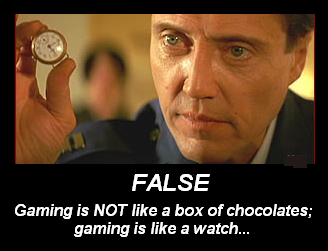
Gaming is like a box of chocolates – you never know what you’re gonna get (but it is gonna be good).
What other things do some gamers do differently than others? How did it work out?
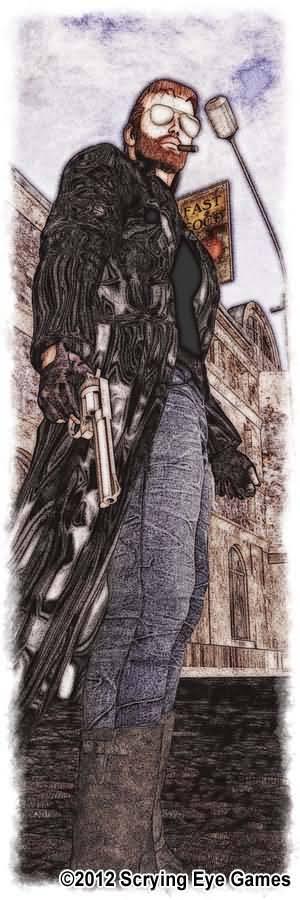
I love RPG’s and I especially love playing zombie games. And… I have played quite a few of them. One of the problems that I have come across with zombies is that there is often nothing cool to do with a PC’s critical hit. I mean, if hitting the zombie in the head means it dies, then a critical hit just does it better, right? Where’s the reward? I wanted my reward for critting on that zombie and I figured others might too. So I made this cute little table. It’s not much, but hopefully someone out there can get some fun out of it. My group really seems to like it.
Zombie Critical Hit Table for Guns
A bullet hammers into the left side of the target’s head. Blood, gore and ichor spray out the other side of the head as the rotter is thrown violently to the side and then drops like a sack of potatoes. Death is instantaneous.
A ricochet finds the right temple of the target. The deadhead freezes in place for a moment and then falls like a tree to the left. Death is instantaneous.
The bullet splits open the left trapezium muscle near the base of the neck. The head lolls unnaturally to the right, but the zed is still functional.
The bullet slams into the right side of the target’s forehead. The zombie continues forward for another moment and then suddenly drops to the ground, like a marionette with cut strings. Death is nearly instantaneous.
A bullet pierces the forehead in a perfect drill hole wound and ricochets off the back of the skull playing lethal pinball inside the cranial cavity. Death is instantaneous.
The shot tears through the zombie’s nose and straight into its brain. There is a momentary look of surprise on its dead face as the zombie is carried over backwards from the force of the shot. Death is instantaneous.
The bullet smashes into the jaw leaving it a mess of splintered bone and mangled flesh that hangs useless and disturbing from the target’s face.
The bullet embeds itself deeply into the head of the target, dropping it suddenly like a stone.
A pinpoint shot to the head bursts it like a balloon. Blood, brains and ichor shower all within five feet. The zombie drops to the ground like a wet towel. Death is immediate.
The bullet (having hit the head) expends all its energy piercing the skull and comes to a stop deformed but intact on the surface of the brain. It’s really ugly, but zombies don’t care about beauty.
I also wrote a zombie apocalypse campaign setting book, Welcome to Mortiston, USA. It was published by means of a successful Kickstarter campaign and was released at Origins 2012. Everyone involved with the project has been very excited by its success thus far. If you like zombies, or need a post-apocalypse American city for some other reason, you might like Mortiston. Come check it out at www.mortiston.com.
I had the opportunity to interview a member of the D&D Brand Team while at GenCon, which was something I couldn’t pass up…
I had the opportunity to interview a member of the D&D Brand Team while at GenCon, which was something I couldn’t pass up. Regular readers of StufferShack.com know I love D&D and have been a very active DM of both 3.X and 4th Edition. The people at the Wizards of the Coast booth were very cool and accommodating. It was my pleasure to sit down with Shelly Mazzanoble and chat her up about their Rise of the Underdark Campaign.
If you don’t know, Rise of the Underdark is a current theme running through all of D&D’s line for 2012. The drow have the spot light, even more than usual, and they’re popping up in rulebooks, novels, board games and even in Dungeons & Dragons online:
“ In this year’s Rise of the Underdark campaign, Dungeons & Dragons® invites players to explore the notorious drow race and venture into a world of darkness and danger. Mystra, the goddess of arcane magic, is dead and Lolth, Demon Queen of Spiders, is making her bid to seize control. The drow invasion has begun, and adventurers are needed to help stop Lolth from bringing about everlasting darkness to the surface world. With a robust suite of offerings focused on the drow race, D&D® players get a deep-dive into the events surrounding the Rise of the Underdark and gain access into the minds and lives of the popular race like never before. “
Shelly Mazzanoble is a writer, cat whisperer, former Player in Chief and Associate Brand Manager at Wizards of the Coast. With all those roles, I figured I could get some really juicy details out of her.
Everything seems to be drow themed right now, which is cool, everyone seems to be digging it. One of our reader’s wanted to know. . . there’s a rumor that the upcoming Encounters season is going to be a follow up of sorts to a previous season, and people are going to be able to play their character’s past 3rd level. Can you confirm or deny that rumor at all? (Thanks Alton!)
Hmm. . . I wonder where they got that rumor from. Well I think the best way to confirm that would be to go play at Encounters. Yes, to see if that is actually true. Encounters has a lot in store for people who Play D&D. The season that’s coming up on August 22nd, the Council of Spiders, is allowing players to play as Drow, which is different for many people. How much to the Drow nature you choose to play your character is up to you and probably up to your Dungeon Master but we’re giving people a lot of campaign hooks through Menzoberranzan: City of Intrigue source book and also with Drow Treachery™ Fortune Cards there’s a lot of ways to enhance your Drow centric campaign. It’s going to be hard to not to want to play them.
Sure. It’s very much designed so that they have a lot of benefits with this.
Yeah, exactly. Especially with those Fortune Cards. I don’t know if you’ve played with Fortune Cards before (I have.) but you that if you use them you get a benefit that’s actually a benefit for you and/or you’re party. With the Drow Treachery cards that is true you get a benefit but usually at the expense of someone or your entire party. It’s going to be hard not to just embrace that.
It’s going to be cool. I like that. How far are you planning things like Encounters ahead? I mean you know the next season, but do you know the season after that?
There are people in the building who do. I’m not one of those people. . . I actually do know, of course I can’t tell you. *Laughing*
She won’t tell me though. *Laughing*
That’s right. I could tell you but I won’t. I choose not to, especially if you’re recording this. *More laughing* (Sorry folks. I’ll bring paper and pencil next time.)
Well that’s interesting. That’s good to know.
Yes, they’ll be good though. There will be more fun things in store.
As far as this particular theme is concerned, it seems like we know all the tie-in products already. The WotC calendar isn’t as full of game books as it has been in the past years. After this next couple, we know there’s a Forgotten Realms book coming up, but that doesn’t sound like it’s going to have mechanics in it or very little.
It’s flavor. The Ed Greenwood Forgotten Realms. Very, very, very flavorful. It’s all of his notes from when he first started creating the Forgotten Realms. It’s how he sees the Forgotten Realms.
Is that probably going to be the end of this particular theme or is there going to be a little bit more but isn’t on the calendar yet?
So the Rise of the Underdark campaign, the story concludes at the end of this year, but they’re continuing in 2013. D&D doesn’t hibernate for two or three years until we’re ready for the next iteration. I don’t want people to think that. I know that during the keynote Mike had mentioned that the playtest was an ongoing process. It could go on for the next two years. I think people were thinking ‘Oh my god! No D&D for two years!’
But it’s a big fear because they see how thin the calendar is and it feels like, with so many articles on the playtest right now being D&D Next related, or at least the regular ones.
Yeah there is a lot of call and setup dedicated to D&D Next. We’ll definitely have products and programs that support 4th edition all the way throughout. You’ll get a lot of that on Dragon and Dungeon magazine. You’ll get a lot of that in store play programs and through the Sundering novels that are coming out next year. Were you at the keynote?
We have some adventures that are going to be written by Ed Greenwood and R.A. Salvatore that connect to how you play those games and happens in those games in your home campaign is actually going to help shape the Forgotten Realms.
That’s great. That’s very exciting. **At this point in the interview we start talking about Dunkin Donuts and we really break down into silly nonsense. I’ll skip ahead.** I’d really like to see some of the contests that were happening last year. You had that hybrid contest that was really cool, and there were a couple of other ones where readers can participate.
Well, we just had a contest. A fan video contest. Have you seen any of those videos?
I haven’t seen that yet, no.
They’re on Facebook and you can vote on them too, so you should. We want to hear what the fans have to say. That was probably our big contest for the year, but there will be other ones throughout. Anything in particular you would like to see?
I like the ones where players in a sense can shape content. The videos are fun, don’t get me wrong, but they’re sort of About D&D instead of . . . Are D&D. **I then suck up to Shelly for a moment and we descend back into silliness**
We’ll see if my suggestions help shape things. Look for more GenCon reports as I catch up on sleep!





 Part of the
  Thanks to the fabulous
  Now this might not seem like a new game. Anyone who reads Stuffer Shack knows I’ve played D&D 4e a fair amount. However, I did get to do something new with it at GenCon. I ran a game for one of the patrons of the Midgard Bestiary, which is
  I was very fortunate to meet the very nice Jennifer Steen at GenCon this year. You probably know her as the host of
 I got to run two of the new scenarios: Guardians of the Galaxy and New Mutants: Siege! The Guardians of the Galaxy will be coming in the Annihilation line when it drops from MWP later this year. I was very excited about running this gem, as I really loved the team as they were re-introduced in the Annihilation comics. You see familiar faces like Star Lord, Mantis, Rocket Raccoon, Quasar and a few others, facing one of the biggest challenges in the known universe. Not bad for a three-hour session. Cam Banks once joked on Twitter that when Annihilation hits we’re all going to need more d12s, and he wasn’t lying. If running this event taught me anything, it’s that you can really do epic things in a short amount of time without being bogged down by mechanics. The School of Hard Knocks rule (where the PCs get 1 XP for every d12 the Watcher rolls) came up way more than I’ve ever seen and some of the “weakest” characters on the field wracked up the most milestone XP the quickest. Your crazy friend, who loves playing the Punisher, (you have this friend right?) is going to love it when they get their hands on Rocket Raccoon.
 My Marvel experience didn’t end with official slots, mind you. I brought the characters from my House of M Event (I actually brought all my characters) for some quick pick-up games. Gaming Conventions can be great places to learn a new game just from stumbling into somebody who wants to play. It also helps to hold up hand-made signs that ask “Do you want to play the Marvel RPG?” I filled hotel lobbies with the sound of Deadpool and Wolverine taking down Apocalypse and airport terminals with the exploits of the