Adding substance to your game: Foreshadowing

ForeshadowingTelling stories is an art that has been with us as far back as cavemen drawing on cavern walls with mud and blood. Since that time, the art has expanded through different mediums – from cave paintings to verbal orations, ballads, poems, sculptures and hieroglyphs, plays, books, movies and yes, role-playing games. It has also evolved through the use of several different literary tools – alliteration, back-story, cliffhangers, first person narrative, flashbacks, red herrings, and foreshadowing (to name just a few). This article aims to help you improve the story of your adventure or campaign by effective use of foreshadowing.

First, what is foreshadowing, really?

  • The short version: To represent, indicate, or typify beforehand.
  • The long version: “Anything that links to, or reveals a glimpse of, or a hint about, a forthcoming story point or issue of characterization, but without yet being a salient story point itself in the moment it is revealed.”

Huh?!

When an element is introduced that doesn’t appear to be the focus of the story, it has the potential to be a foreshadowed event, or realization of things to come later on.

In your role-playing game, foreshadowing can be utilized in two ways. The first is to plan for major events, plots, or people that will have a significant impact on the story later on, and hint or briefly show those things earlier in the story. These are elements that are placed deliberately and with purpose. You’re hoping that the players, at some point, make the connection between the foreshadowed event and the actual event.

  • The NPC brother of a PC (coming to save the PCs in the beginning of the adventure) can be foreshadowing the reveal of the main enemy as the same NPC later in the adventure or campaign.
  • Detailing the baron’s beautiful dagger as he uses it to unseal a scroll’s wax seal can be a foreshadowing of how the young maiden is ritually sacrificed later (with the same knife).
  • The son of a slain bounty hunter mourning the loss of his father by embracing his father’s helmet – is a foreshadowed event of the boy eclipsing his father’s greatness.

The other way we can utilize foreshadowing is by way of the “loose noose” (that’s my term, I made it). What I mean is when you introduce, or your players discover a (usually random) story element, and then you zero-in on that element as an opportunity to enhance the story – that’s the loose noose technique. The unplanned (better-than-I-had-planned) events that pop up can make you a star in the eyes of your players, and they actually require less work.

  • Mid-adventure, the PCs come across an abandoned village. Inside the first home that they search is a painting of a woman. This woman is missing an arm as if from an injury or birth defect, and the players end up being really concerned about the painting. Because of this, you (as the GM) have decided that the PCs will eventually face this woman as a major adversary. You didn’t really plan it that way, but the players think you did and revere you as a talented game master.
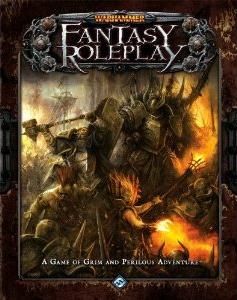
  • In the Warhammer Fantasy RPG, insanity is a definite possibility for player characters. At the beginning of the adventure using this game, the PCs have to visit an insane asylum. By the end of the adventure (in which was filled with many fear, terror, and insanity checks), the PCs all eventually fall insane, ending up imprisoned at the original asylum. Sure, you probably didn’t plan for that to happen, but because of all the harrowing encounters the PCs had to endure, the PCs were almost fated to end up there, making it as though you may have planned for the possibility of it playing out that way.

Stale stories are a dime-a-dozen. That’s why we have dozens and dozens of literary techniques to make stories more and more fulfilling and rewarding. Don’t think of a role-playing game’s adventure as a series of events; think of it as a fantastic and compelling story waiting to be told, and the use of foreshadowing is a great way to help make that happen.

“Read This or Die!” Immersing Your Players in a Rich Campaign Setting

You’re getting ready to run a game for your favorite gaming group. The setting you want to use is one of the richest published settings you’ve ever used (Star Wars, Eberron, Dresden Files, Warhammer 40k, etc.). You’ve got an idea for an epic story that is going to touch on many themes of the setting, and hopefully culminate into an “Oh, wow… that was incredible!!” moment for those that are familiar with the setting. You want to reward your long-time friends and fellow gamers, some of whom are also fans of this setting.

But what of your friends who have never read, seen or heard of any aspect of this setting? You know that until they have a much deeper understanding of this setting, they might not fully understand or appreciate the elements you’re using, and thus may respond inappropriately to the situations you’re roleplaying. At best, this may cause a disconnect between them and the story that your group is crafting, keeping players (who have much to contribute) from contributing as constructively as you know they can. At worst, this may cause irritation or a disruption of enjoyment for those at the table who are such fans of the setting.

In my experience there are several ways of tackling this bugbear (for me and some in my current DM’s group, it’s a bugbear; your group might only consider it a gnat, in which case this article should not apply – cheerfully ignore the rest!!). Choosing the method will depend heavily on the player(s) involved, how important the sanctity of the setting is to your group, and the level of immersion and verisimilitude your group is looking for. I’ve listed them in order from my least favorite to most favorite:

Exclude the player from this particular game. “If I don’t have to teach this setting from scratch, I can wrap it in 10 weeks or less.” You may justify this harsh choice with thoughts along these lines, and this may even be a valid choice depending on your group’s schedule, membership and other factors. We’ve made this choice in the past. Some players may even excuse themselves if they don’t like or want to learn this new setting. However, if you do exclude the player(s), you may be hurting feelings (duh), but as importantly, you are costing a friend the opportunity to become familiar with a setting that you love. This can also be a tough, if not impossible, choice for smaller groups to make.

Change your campaign approach to slowly familiarize the players with the important elements that you want to cover. This method seems to me to work the best for introducing players to the game from your point-of-view. The reason it ranks lower for me is because there is still a large lag time for players to get up to speed with understanding the setting well enough to make logical contributions that are consistent with the norms of the setting. Also, you are limiting them to your point of view, disallowing them the opportunity to make contrasting contributions that are still in keeping with the greater setting, enriching everyone’s experience. Finally, you are compromising the game and experience you want to deliver. You might be forced to expand the length of your campaign to the point where you or the players burn out before getting to the big finish.

Teach the setting beforehand. This method definitely has its pros and cons. Learning a bit about the setting beforehand allows players to decide if the setting is right for them. Spending too much time on this approach wastes the time of those who are ready (or think they’re ready) to dive in (which is usually everybody!!). Every minute at the table lecturing or seminaring is a minute that is not being spent gaming! Some groups may like this approach, but we tend to limit it to nights where we wrap earlier than expected, times when too many players can’t make it so we can start prepping for the next campaign.

Have the player manage this from his character’s point of view. You could suggest the player have some reason for his character not understanding the norms of the setting (amnesia, being a foreigner, being a man out of his era and unfamiliar with this new world, etc.). The understanding between you and the player might be that they become more familiar with the setting as their character becomes more familiar with the setting, or something similar. However, be wary that the player is not just being lazy to use this as an excuse for not learning the setting/system or worse, for justifying disruptive roleplaying choices and then whining about the consequences (“Why are you having my god take away my powers??” “What do you mean that’s against the law in this setting, that makes no sense?!?!”). This has had huge, game-disrupting ramifications for our group in the past that ultimately showcased how disruptive one player was, and resulted in him being ejected by our DM.

Task the player with familiarizing himself with the setting. This is my ideal choice and works best the more motivated the player is to learn the setting anyway. The player spends his time away from the table learning about the setting, giving him the frame of reference to minimize distractions at the table. However, not everyone has the same amount of free time. Family, school, work and hobbies all differ in importance from player to player. You can ease the burden on your players by preparing players’ aids emphasizing the aspects that will be important to this particular campaign. This can be especially helpful during character/party creation, especially if you are limiting the scope to certain elements of the game. For players who can’t or won’t use personal time to expand their knowledge away from the table, ask them to be mindful of the group’s experience, efforts, and desires, and endeavor to allocate a minimum amount of effort to identify with at least some small part of the setting. This can increase their understanding and everyone’s enjoyment.

Well, that’s my two cents. Just remember that this article does not apply to everyone. It does apply to the immersive roleplayer who wants to see everyone’s character come to life for a very memorable campaign. It applies to the player who wants to make meaningful choices that have impact that resonates because of a setting, not just in spite of it. It applies to those players who constantly bring their A-game and want the same consideration from their fellow players. In short, it applies to those seeking the experience we at the Shack refer to as Next Level Gaming.

My secret weapon to getting that action movie feel

I like the hobby of RP gaming, partly because I get to hang out with friends, but mostly because I get to experience what it’s like to be in an action movie, fighting ‘real’ bad guys (and sometimes good guys). However…

In the beginning, my combat turn went something like this:

  1. I attack the orc.
  2. I rolled a 19. Does that hit?
  3. I rolled 12 damage.

Later, I moved on to games that added cool combat options and maneuvers – games that painted a more defined visual of what happens in the combat round. They added a tactical element to the game that was exciting and rewarding. But, I was looking for something a bit different, something that really helped tell the story in the combat round.

I love action movies, especially those movies with dynamic combat sequences (watch Equilibrium, Ultraviolet, Bloodsport, or Gladiator). I want my combat rounds to look like that. Well, after going through several different types of games, I’ve found that the game or system is not really going to deliver that (not to my satisfaction, anyway). So, why not create that experience on our own?

Two examples…

I was running a game in which orcs were fighting the PCs in cramped conditions. Everyone was adjacent to two or three others, and the fight was pretty hectic. One orc in particular tried to hit a PC three times, and failed each of those times. On his fourth attack, I opened up by saying, “The orc is freaking pissed off because he hasn’t been able to hit you, and you keep jabbing him for little bits of damage. He’s clearly enraged, howls an awfully angry growl, and swings at you with his axe – which you block. He then immediately follows up with an elbow across your face, busting your nose and spraying some blood on the cleric. You reel back, and the orc plants his foot into your chest, sending you back into the wall, to which you fall to one knee and drop your sword. As you look up, you see the blood-angry orc towering over you, overhanding his battle-axe downward toward your head with reckless force. Let’s see how well he attacks…”

That painted a fantastic picture, adding so much grit and realism to the combat. The player knew that regardless of what I said happened, nothing mechanical happened until I actually rolled to hit (and in fact, the orc missed for a fourth time). The player totally got into it at that point, getting angry over his busted nose and dropped sword. He said, “He missed? Ok, that’s because as his battle axe is coming down for my head, I grab his legs. He falls on his back and I end up on top of his chest. I swiftly pull out my dagger and go for the throat. I rolled a…”

Another cool visual, right? What really happened: The player simply made a normal attack using his sword, but his dynamic role-playing was so much better. Remember, nothing mechanical changes. Sure, I said that the PC dropped his sword, and the PC said he then pulled out his dagger. At no point would I allow anyone else access to his sword, unless the player wanted it that way. At any point the PC would be able to pick up his sword, even if he were a few squares away, because nothing mechanical has changed. And the orc, fallen on his back? He can get up without spending any actions, even free actions. He’s not even technically prone (unless I, as the GM, feel the player deserves this).

* * *

My Shadar-kai swordmage was able to teleport occasionally as a reaction. In combat, he liked to make charge attacks. So, whenever he did make a charge attack, I might say, “I disappear for a moment, then reappear suddenly right in front of his face. As the soldier flinches back from the surprise (giving me a +1 bonus to hit), I swing my two-handed sword up his chin with only one hand.”

Sometimes I would fluff it up by saying that I actually teleported above the target, hitting him on the way down. Of course, this is all simply a charge attack, which normally gives me a +1 bonus. The GM could veto my rendition of my PC’s attack, especially if he had something that could interrupt my charge, but that almost never happened. In the end, what matters is that we don’t skirt the system; simply follow the rules, but with your own fluff explanation. Also, I don’t do this with every action of every round of every character, but just enough to make the scene memorable, tense, and exciting.

* * *

I’ve been gaming for awhile now, and I think we (as gamers) will eventually either evolve, or simply change. Well, I’ve changed, and it’s definitely been for the better. I wanted to punch up my experience at the table, and one way I’ve done that is by transitioning into a dynamic roleplayer. I roleplay events and actions; not just my characters. And that is my secret weapon to getting that action movie feel.

Thanks for reading.

Watch what you promise

You hear it all the time: “Don’t make promises you can’t keep.” You know it’s good advice; what you may not realize is that it applies to your GMing, as well as to your life.

“But I haven’t promised anything!” you protest.

Think again. We make promises to our players all the time without realizing it. Do you ask your players to provide a character background? Your players are going to expect you to use things from their background in the game. Do you provide your players with detailed information about weapons? They’re going to expect a lot of combat. Do you ask them to provide a miniature of their character? They’re going to expect the use of a battlemat (at the least) and a more tactical approach to combat.

In his information to the Game Lifestyle Program, Johnn Four of Campaign Mastery and Roleplaying Tips recommends that designers notice whenever they use the word “will” — there’s usually a promise attached to that. The same goes for you and your players. Johnn’s suggestion–and it’s a good one–is to write down every time you say “will” as a to-do item. For example, if you say “I’ll look up that rule after the game session,” write down “look up rule about [situation here].” Then review these items regularly and do them.

It’s helpful to put a list of game-related “to-dos” in the front of your campaign notebook. Then scan your to-do list at the beginning of each preparation session; find the things that are important to complete to be ready (including all those rules lookups) for your next session and do those first. Then find one or two other “to dos” and do them, as well. That will help keep them from piling up until your back’s agains the wall and you suddenly need that stuff right now.

You’ll need to break larger items into a series of smaller “to-dos”. Write down each of these steps on your list as separate items. For example, if you’ve said you’ll provide painted minis for your game, don’t write “Make minis” on your list. Instead, write “order minis,” “clean minis,” “prime minis,” etc. That helps keep you from becoming overwhelmed by the enormity of a task. Make steady progress on the small items and, before you know it, you’ll have the whole project completed.

Mostly, it’s a matter of paying attention to what you say. Try not to say you’ll do something, if you’re not absolutely sure you can carry through on it. And watch what you ask of your players–they may see a promise you don’t know you’ve made.

Playing with FATE: Conversions

As a generic rule-set, Strands of FATE is a fully functioning game system lacking only two ingredients: (1) a creative gaming group, and (2) a setting in which to play. I can’t help much with the former ingredient, that’s up to you, but I can assist with the latter.

Many of you out there who’ve picked up Strands of FATE (or any of the other FATE-based games) have already discovered how flexible, complete, and stream-lined the system is. Hopefully you’ve had a chance to see the system in action and thought to yourself that this may help you get the RPG experience you’re looking for (at least that’s what it did for my group!). So really there is just one thing remaining, either creating your own setting for SoF, or converting your favorite game and setting. For those of you looking to convert your favorite game, setting, or campaign to Strands of FATE, this article is for you.

My gaming group has already done a couple of conversions to FATE, and over the years I’ve converted several other settings and systems (Savage Worlds, Modern d20, and Cortex to name a few). With each of these projects, I’ve learned a lot about how to execute a good conversion. The most important thing I’ve discovered is that we GM’s tend to make conversion projects infinitely more complex then they need to be. Like my high school English teacher always said, “Unless your name starts with Shake and ends with Spear, keep it simple!” On that note, here’s my advice for pain-free conversions:

Define the “Feel” of the Source Material

Before undertaking a conversion, sit back and really think about what elements of the source material are the key components for the “feel” of the setting. Ask yourself what makes this setting exciting: is it genre, theme, scale, or the nature of the heroes or villains? What makes this setting conversion-worthy? Make a list of these elements.

For example: our list for a recent Eberron (D&D 4E) conversion looked something like this:

  • Swashbuckling high adventure in a fantasy setting.
  • Numerous power-brokers (governments, noble families, guilds, Dragonmarked houses, religions, secret societies, etc.) all
    vying for increased power.
  • “Interesting” heroes (more so than “powerful” ones) with a “pulp” feel. More Indiana Jones than Drizzt do’Urden. Larger-than-life maybe, but not epic “super-heroes”.

Take a good look at your finished list. If you notice that your list focuses on “hard” gaming elements, such as rules or mechanics, I’d suggest not doing the conversion. Maybe you need to tweak the source material a bit for the game you want, but in my experience you’ll only get frustrated trying to make all of the mechanics “fit” into a different rule-paradigm, so you’re probably better off just using the existing materials as written for your game.

However, if your list tends to focus on “soft” gaming elements, such as genre, theme, style, and other non-mechanical elements, then a FATE conversion may be exactly what your game needs.

Separate Rules from Setting

With a few exceptions, most rules don’t necessarily do anything to convey the feel of the setting, they simply provide a working framework for the game. As you look through your source material, note if there are any rules that specifically address elements that are important to experiencing the setting. These are usually genre-specific and fulfill a specific function within the context of the setting. Here are some examples:

  • Call of Cthulhu: Rules for fear and insanity
  • Star Wars: Dark side and light side Force powers
  • Shadowrun: Hacking, AR, and VR.

If your source material has rules like these, take a look at how SoF handles the issue and go with it. Stands of FATE is an amazingly complete set of rules, and nearly anything you need can be found within. Other rules, such as for two-weapon fighting, reloading, or lockpicking, really don’t do anything for the setting so don’t worry about converting them. SoF has rules covering these things already so avoid the temptation to convert mechanical minutia just because it exists in the source material. It doesn’t add anything to your game, and just tends to overly “complexify” your FATE game.

Understand the FATE Paradigm and Embrace It Fully

I can’t stress this enough: let FATE work the way it is designed. Don’t try to make FATE fit your source material; make your source material fit FATE. This is the most critical element of a conversion, and once you understand it, the process will be pain-free and virtually effortless.

My current conversion project is the Warhammer 40K RPGs from Fantasy Flight Games (Black Crusade, Dark Heresy Deathwatch, and Rogue Trader). The setting is incredible, but the rules have a great deal more complexity than I want to deal with. The most important thing for me and my players is to truly capture the dark, bleak, hopeless feel of the 41st millennia.

When I first began the conversion I was quickly overwhelmed by all of the elements I “had” to convert. But after a while I realized that 90% of the rules were only relevant in context with other rules and didn’t really do anything to bring the setting to life. Once I had that realization, the conversion was a breeze. For each game, I selected one or two elements and then converted them. The rest is pretty much just “standard” Strands of FATE.

In Conclusion

Hopefully this will help you on your path to that FATE game you really want to run. I’ve been extremely impressed at how well this system works and how easy conversions are. Just remember the most important thing: don’t over think it, it’s easier than you think.

Playing with FATE: “Is it right for me?”

By John Lewis
– Fate is a great game, but it requires an unorthodox way of thinking…

This past year a lot of interest has been generated for RPG’s that utilize the FATE system.  Our Playing with FATE series of articles, focusing on the generic Strands of FATE (SoF) rule-set, has been well-received by many readers and even attracted the attention of SoF designer Mike McConnell.  I’ve had the chance to use the system for a couple of different convention games as well as in my home gaming group, and I’ve learned some important lessons.

When we first looked at SoF, most of our gaming group liked what they saw, but like any change, we’ve struggled through some growing pains.  Don’t get me wrong, I really like the system presented in SoF, but it may not be for everyone.  Even for those of you who would like to give it a go may find it a difficult adjustment for your group.  I’m not criticizing the game design in any way (it’s easy to learn and very well-constructed), but FATE does have a very different paradigm than most RPG’s.  And therein lays potential pitfalls.

To give FATE the opportunity to really shine and show you what it can do, you need to be aware of three elements to the game that may be very different from the way you’re used to playing.

  1. Increased Player Control
  2. Aspects: The FATE Point Economy
  3. Abstraction

Increased Player Control

This will most likely be the biggest adjustment for groups to face when switching to FATE. In most other games the GM controls virtually everything; setting details, NPC personalities, plot elements, etc.  Players, on the other hand, control relatively little.  They are responsible for their characters’ decisions and individual actions, but not much else.  FATE is a very different beast.

In SoF the primary element that shifts control is the Declaration.  With a roll of the dice, or the simple expenditure of a FATE point, players can “declare” something about the game.  These Declarations could range from colorful background details, plot hooks, and NPC relationships, to potential bonuses and penalties for both players and NPC’s.

  • “We’re docking at Stormhaven?  My cousin Bertrim lives here.”
  • “Don’t worry, caprimundas are nocturnal.  We’ll be safe during the day.”
  • “I have to be careful in this town; I have a warrant for arrest for a little misunderstanding with the magistrate.”
  • “I’m approaching from downwind, that should give me an advantage.”

This puts tremendous power in the players’ hands and forces the GM to be more flexible and adaptive.  Both of which take a little getting used to, but I think are good things for the game.  In my experience, players tend to be a bit reluctant making “campaign decisions,” and GM’s sometimes have a hard time letting the players manipulate the stories and campaigns they worked so hard on.  But don’t worry, as a player, you’ll love impacting stories in whole new ways, and as a GM you’ll be amazed at how much less prep work you’ll find yourself doing.

If you really want to see and experience the power of FATE, you owe it to yourself to embrace the idea of the Declaration.  In my experience, the end result is a game with much greater emphasis on collaborative group storytelling and campaigns that players really connect with.

Aspects: The FATE Point Economy

Understanding and utilizing Aspects and the FATE point mechanic are absolutely essential to the FATE experience.  In SoF, Aspects are EVERYTHING and FATE points make them work.  Anything in the game can, and should, have Aspects: characters, equipment, the setting, vehicles, creatures, locations, etc.  As a GM, your descriptive notes are probably perfect Aspects, so use them.  The only thing to decide is whether or not the Aspect is relevant right now, on this dice roll.  And here’s the simple little secret – any Aspect is relevant so long as someone is either spending or earning a FATE point, if not, it doesn’t matter right now.

The concept of the Aspect is simple and eliminates the need for dozens of different rules, mechanics, and sub-systems found in other games.  This is what makes SoF so easy to play.  You don’t need to remember what the cover bonus for a wooden crate is.  Just ask yourself, “Does Pile of Crates seem like an appropriate scene Aspect?” If so, you’re done.  Whether or not the crates will impact the game is up to the character that is willing to spend a FATE point to Invoke the Aspect for cover and gain the +2 bonus (it’s always a +2 bonus by the way).  Or maybe the GM will Compel the Aspect against the player, forcing him to take a -2 penalty to his shot because the crates are in his way, but earning the player a FATE point for the trouble.

Aspects and FATE points (Invoking for +2 / Compelling for -2) are 95% of the rules.  Instead of slowing the game down looking for a specific rule or chart, the GM merely has to decide if something is potentially relevant enough to be an Aspect.  We’ve found that this becomes pretty organic after a while.  The GM usually has a couple of Aspects in mind for any given encounter, a few more are usually self-evident (the spilled oil on the floor makes it Slippery), and the players will make Declarations or simply ask questions (“How’s the lighting in here?  It’s Dark and Shadowy).  It’s really very simple, just ask yourself “Does this (thing) seem like it might be relevant to the encounter?”  If the answer is yes, it’s an Aspect.  No? Forget about it.

Abstraction

The term “abstraction” tends to generate strong feelings amongst gamers these days.  Some people prefer a more simulation-like experience in their game while others don’t care.  SoF embraces a fairly abstract set of assumptions.  There are no 5-foot grid squares or 50 meter ranges.  Space and distance are determined by Zones which are defined by the need of the scene.  Most of the game elements are fairly open and tend to be varying depending on the scene and situation.  If you’re looking for exactly how many yards your .38 pistol can shoot and still be lethal, you might want to look at other games.  Whether or not this may be appealing to you and your group really depends on personal preferences and group desires.

– – –

Strands of FATE is an excellent fit for my style of gaming. But much like jalapenos, line-dancing, or S&M, self-awareness of your own preferences, and understanding how things work together, goes a long way toward potentially enjoying the experience.

Skill Checks that Slow the Game Down…

By Peter Simpson
– How many times has your game slowed down because of a skill check?

How many times has your game slowed down because of a failed skill check?  Heck, how many times has your game slowed down because of a successful skill check?

To be fair, I have never GMed a game before, so I can’t really know for sure all the gears that keep the game running.  I can, however, hear the grinding when certain skills are used.  I’m not talking about when certain skills are used occasionally, more like when certain skills are over-used.  Sure, you could say that because it’s a skill, is on your character sheet, and has a modifier, that it should be rolled.  But does it have to be?

“Ok Shadowrunners, you only have to climb two stories high to get on top of the office building.  Roll your Climbing.  Oops!  Looks like the street samurai failed.  He ends up taking longer to get up there than the rest of you.”

Really?  Was that at all necessary?

“Alright guys, roll initiative.  This should be a really easy encounter, as your enemies are several levels lower.”

Then why go through with all the rolls (and the time that goes with it), if you’re sure we’re going to win?  Isn’t it enough just to say that we take out a bunch of mooks, and save an hour of game time?

“Alright guys, roll Perception…  Ok Mike, you see… Ok Dan, you see what Mike saw and… Ok, Sarah, you see what both Mike and Dan saw and…”

I have to tell you, as a player, I hate this.  Rolling for Perception is pointless most of the time, not counting just before an ambush.  GM, just tell us what we see.  I never invest in the Perception skill, because I know that with all the Perception rolls being made around the table, we’re going to make it anyway.  Making so many Perception rolls, and then telling each player what they see is usually just a pointless mechanic.  It gets used so much simply because it happens to be in the game.  This is one aspect of the game that I say needs to be removed.  It slows the game down!

I know what you’re saying: “Ah, but your players could then miss an important clue that helps you in the adventure.”

If the GM puts a clue in the game, and we don’t find it because we failed a Perception roll, that’s a failure – Not on the players, but the GM.  It’s an even bigger failure if the PCs fail to complete the adventure.  How many movies or TV shows have you watched where the main character’s fail to find a clue?  None, because that would stop the movie right there.

  • “Well, uh, you guys ended up in the Pit of Despair and died because you failed to notice the hidden amulet.”
  • “Well, uh, you guys completely bypassed the adventure because you failed to notice the assassin creeping away.”
  • “Well, uh, your TPK was a result of your failure in the Perception check.”
  • “Well, uh, you guys failed…”

No, GM, you failed. Not only have you slowed the game down, but you made it come to a screeching halt.

Ok… if we have to roll for Perception, then just make the person with the highest modifier roll, and give him a +1 bonus for each of the other PCs in the group.  That’s what everyone sees, because you know that (normally) the person with the highest check is going to tell everyone else what he saw anyway.

I could go on and on about several skills, but my point is that, as a player, I would have more fun if my GM would not have us roll so many skill checks.  Not every skill check is going to have an impact on the story, while many simply end up slowing the game down.  I know that I seem to have it out for Perception, but I’m talking about most skills.

Sheesh!  After reading what I just wrote, I can see that it might seem a little harsh, and even written with a bit of arrogance.  Sorry about that.  It’s just that in our last session the game took forever because of so many unnecessary rolls, and really wasn’t a fun night.  If the GM had just exercised a bit of the tactic I’ve talked about here, we would have accomplished so much more (and we only meet twice a month).  I think that on some level, a lot of your players might feel the same as I do, so I can only ask that you keep this in mind

Managing Party Tension: Sometimes More is Better

By Tourq Stevens
– Improving the game – Know the difference between player tension and party tension, and which one is allowed…

A while back, Charisma posted about Players vs. Players, and how that generally isn’t a good idea.  Her article got some good comments, and several gamers mentioned how it can be good for a bit of tension in the group.  For the most part, I agree, but there needs to be a clear distinction between party tension and player tension.

The basic idea is for a group of gamers to get together to enjoy a game.  Since the game is a community effort, our enjoyment isn’t simply dependent on the game being good.  To have a truly fun experience, we need to have a good game and have that game with people we enjoy sitting at the table with.  Ergo, not getting along with the other players can ruin even the absolute best of games.

Lots of things can contribute to players not getting along at the table.  This can sometimes include player characters not getting along.  I think for this reason many gamers shy away from inter-group conflict, or simply “party tension.”  These PCs may choose to ignore or allow certain behaviors in other PCs, many times in direct contradiction with their own beliefs (the good paladin deciding to “scout the perimeter” so as to not see his friends torture the enemy for info, comes to mind).

Sure, maybe the good paladin’s player likes to play this way.  That’s awesome, but that’s not the situation I’m talking about.  I’m talking about the good paladin who has vowed to NOT allow the use of torture, and then the player looking the other way to avoid conflict among the characters, because he feels it would create conflict among the players.  In essence, the player is “settling” for lesser game and character immersion, when they would rather play the character that they’ve envisioned to his or her fullest.

That was me for a long time.  I settled plenty of times to avoid character conflict, thus avoiding party tension, and thus avoiding player conflict, because I thought that it would be better for the game that way.  I mean, party tension leads to player conflict, which leads to anger, which leads to the dark… you get what I mean? I didn’t play the characters honestly, but that was ok, because I was making sure we were getting along at the table.  Well no more!

Please indulge me for two examples…

Because of how I’ve played my current character, and because of certain factors affecting Samuel Van Der Wall’s character, a little rift has grown between our two heroes.  This culminated into my character challenging his character’s devotion, to which Sam pretty much shot straight back at me.  For a moment, we were borderline yelling at each other.  I honestly felt anger, and I was sure I could feel the same from Sam.

It was weird for me because in all my gaming with Sam, this is the closest our character’s have come to fighting.  It felt like I was really yelling at Sam, and for a moment I felt like Sam I and weren’t getting along.  However, just as fast as that anger started, it ended, because I realized we had very distinct idiosyncrasies for our characters, and we were in-character the whole time.  I immediately realized how much fun I was having.

That moment in our game is what I’m going to remember vividly for a while, instead of many other encounters, NPCs, and monsters.  It was simply eye-opening that I could have that much fun with a little player character tension in the game.  The conflict only made for a much better memory of the game, because I find myself getting more and more enjoyment from the role-playing aspect of gaming.

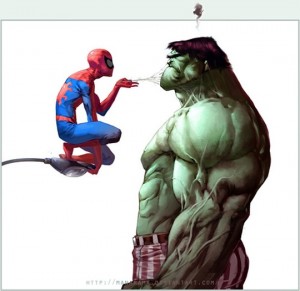
What I’m getting at is that, for a moment, our characters weren’t getting along, but we managed to continue the game knowing that.  What didn’t happen is that our characters didn’t start throwing insults, they didn’t take actions to hinder or oppose each other, and they certainly didn’t come to blows.  Warhammer Fantasy utilizes a “Party Tension Meter,” and our meter went sky-high.  It was awesome, not because the conflict created penalties for us, but because it made the story of our campaign that much better.

And a completely flip-flop example…

A few months ago, we were all playing Deathwatch. There were seven of us, including me, John Lewis, and John’s son, Ian (father + son gaming, FTW BTW).  John was playing a marine that used magic – magic that if used irresponsibly, could endanger the group.   My character didn’t like the fact that John’s character was part of our team, and Ian’s character downright despised it.  This created some tension in the party, but it was fun.

Well, after John repeatedly abused his power over magic, he accidentally summoned a dangerously huge freaking chaos demon, which almost resulted in a TPK.  As the fight was winding down, I was seriously considering killing John’s character, when out of nowhere, Ian’s character unloaded his machine gun into John’s character’s back, splitting him in two.  Best kill e-v-e-r.  The fact that it was John’s son who killed his character, made it all the better.

At first you may call me a hypocrite, but I’m not, really.  In both instances, the only actions taken, whether they resulted in PC vs. PC combat or not, happened in-character.  Sure, you could say

  • that acting in-character is no excuse for pick-pocketing your fellow adventurer,
  • that acting in-character is no excuse for plotting against the party,
  • or that acting in-character is no excuse for attacking another PC.

You could say all of those things (and they might be true), but not if everyone knows the expectations of the game and the characters in it.  John knew what he was getting into when he (1) chose that character, and (2) continued to act recklessly with two PCs already not liking him.   He knew what he was getting into, and he loved every minute of it.  To be honest, we all did.

My character and Sam’s character may one day come to blows.  It might happen, and one of us might end up killing the other.  That will most likely not happen, though, because our characters have similar goals, and a general desire to work together.  Only if our conflict progresses because it seems to improve the campaign’s story will a battle like that ever happen.  Ultimately, that would be up to Sam and me, and only if it seemed like it would be the most fun.

* * *

The real problem happens when players take in-character conflicts personally.  A lot of times this happens when a player feels his character is getting mistreated by the other player characters.  I think this manifests most often when one PC makes demands of another – trying to take control away from another player.  This could happen by way of the Intimidate skill, lying to the character, withholding information, hiding money or treasure, or even physical restraint of a PC.  These aren’t inherently bad things, as they could make for some great role-playing, but it can just as easily create problems at the table…

Many players are not interested in taking part in this type of character interaction.  A group of players may either recognize this and adjust, or not.  Sometimes the reasons behind these aggressive in-character actions are for the sake of role-playing, and sometimes those reasons are due to immaturity, selfishness, greed, and/or a need for dominance.  It doesn’t take much to see that a player isn’t very receptive to certain kinds of character conflict, and isn’t interested in developing that story.   If that’s the case, then players need to back off, because (at that point) party tension and character conflict are only going to cause player conflict, making the game worse.

Of course, player conflict can happen when certain players simply don’t get along, don’t appreciate each others’ play styles, manipulate the group against a certain player, or even simply belittle or insult each other.  This most certainly makes it’s way from the table to the game.  And sure, some instances of player conflict are more extreme than others, but at some point you just have to ask, “Is this something we can fix, or do I need to change groups?”

* * *

To wrap this up, there is a huge difference between party tension and player tension, but there is often only a thin line separating the two.  Player tension is a huge beast that isn’t really the focus of this article.  Party tension, on the other hand, can be a great tool to enhance your role-playing, your story, and your game.  All it takes is a little maturity, and a desire to share a cooperative, fun experience.  Add a little party tension to your game, and you just might end up shooting your dad in the back – and it’s all in the name of fun.

Image from Manarama
Role-Playing by the Numbers: The Easy Way

There are hundreds, if not thousands of role-playing games out there – maybe even tens of thousands.  They all look and act differently, but at their core they are all about gamers sitting around a table, taking on the roles of larger-than-life characters.  Dice and character statistics are involved to mitigate actions fairly, while the act of role-playing is largely left ungoverned.  When I say ungoverned, I’m referring to the game system’s rules – individual gaming groups (and GMs in particular) often step in to referee the act of role-playing, based on personal preferences.

In this article, I’m going to suggest a way to role-play your character, based on his inherent abilities, stats, or attributes.  If you refer to the article’s title, it says “The Easy Way.”  Nowhere today will I say what is the best, or the correct way, only what I feel to be the easiest.

I’ve been gaming for two decades, and I’ve run the gamut of play-styles from fast and loose to strict and straight.  In some games, the GM (myself included) has said that players need to play their characters according to their stat ratings, while others have said that it doesn’t matter what the numbers are – just play how you play.

You know what I’m talking about: the character with a low Intelligence or Charisma (perhaps a dump stat), played by a gamer who portrays them with exceptional Intelligence or Charisma.

“That’s a great plan, but according to your sheet, your character is dumber than stupid.”

“That’s a smooth way to convince the duke to help you, but your Charisma stat says otherwise.”

I know you’ve come across this, because I’ve seen it over and over again.  Well, I gotta say that I’ve grown pretty tired of it.  After talking with a buddy the other day, I’ve decided that from now on I’m going to handle “playing by the numbers” the easy way.

There are rules in place to show how well your character swings his sword, scales the wall, or pilots his ship.  You simply roll the dice, add your modifiers, and your numerical result determines your level of success.  Well, what about trying to convince the duke to help your cause?  Roll the dice, add your modifiers, and your numerical result determines your level of success.

Now, since this is a role-paying game, you’re going to need to actually speak (otherwise, you’re not playing a role).  Where it gets muddy is in your oration – how much and how well you actually role-play it out can (in some groups) modify your roll.  Oftentimes, a player is penalized (via house-rule) for not putting much effort into his oration, even if he has built his character to be the grandmaster bard.  Other times, the player gains a bonus to Persuasion or Diplomacy if he spits out some great soliloquy, even if he’s playing the social moronic barbarian.

When your bulky, super-strong warrior bashes through a door, all that is required is a stat roll.  By that token, the same simple process should be required to solve a puzzle, or intimidate a group of NPCs.  But it isn’t.  This is a role-playing game, and most of us want to see at least some effort of role-playing when it comes to our mental stats.  The problem is that everyone has different views on how the role-playing aspect of the game should be played.

Your version of “below average Intelligence” may be different from mine, and you simply may wish to portray that differently than I.  I may not wish to portray that at all.  Intelligence can be described many ways.  I may have sky-high SAT scores, but in actuality, be dumber than a stone.  There are simply too many character characteristics and player opinions to dictate how a stat should be played.

And that is why this part of the game is not covered in the rules.  It simply can’t be governed universally from player to player, group to group.

“So, how do you solve the puzzle so everyone is happy?”

Well, first of all, if this is not causing any kind of problem in your group, and isn’t a puzzle, then it doesn’t need to be solved.  Take the rest of this article as a flavor tool to spice up your character, and that’s it.  If this does need to be addressed in your game, then take the following idea to heart.

Some players like to role-play their stats religiously (to a scale that they feel is appropriate), while others don’t care what the number is – they’re going to play how they’re going to play, and the numbers are simply there to modify die rolls.  Neither way is right or wrong; it’s just preference.

So, here’s a compromise.  Players, pick one or more of the following aspects for your character for any mental stat that you feel is below average.  It’s completely up to you to decide on how many, as well as what stat they fall under.  Instead of playing a not-so-smart character “like an idiot,” or an uncharismatic character “like a social dipstick,” apply one or more of the following:

  1. The character has trouble with memory.  The player never writes down any game notes, so the character is forced to work off of his player’s memory.
  2. The character has trouble with math.
  3. The character has trouble with reading.
  4. The character has a twitch in his eye, one that the player shows at the table, often.
  5. The character simply dresses like he’s definitely not a local, perhaps even from another continent.
  6. The character spits in the face of authority at the slightest provocation.
  7. The character has a weak spot for beautiful women (or men!).
  8. The character is very gullible.
  9. The character sees conflict in only black and white.
  10. The character is too stubborn for his own good.
  11. The character has an irrational fear of something common.
  12. The character simply does not think in terms of strategy.  Simple and direct is the way to go.
  13. The character is rude and crass.  Good manners are beyond him (or it’s simply easier to not care).
  14. The character periodically has conversations with his invisible friend.
  15. The character is a bit snobbish, especially around “common folk.”
  16. The character is well-balanced – he has a chip on both shoulders.

I like using quirks and traits (like those above) because they’re a good compromise in how I role-play my character’s mental stats.  Also, as an added bonus, they add to my character’s character in fun and creative ways.

Wrapping it up…

If a player has the most fun role-playing his stats one way, and another player has the most fun role-playing  his stats the complete opposite way, who am I to say either is right or wrong?  For me, the stat + modifiers + die roll determines the outcome.  Let the player add whatever roleplaying correlation that he’s comfortable with.

If a player character has a low Intelligence, I don’t cry foul when his player comes up with a great idea or solution in-game – if it’s a good idea that should work, then it works.  But, for something that requires a die roll, I simply let the stats and dice figure out the results.  His low Intelligence modifier will affect what it needs to, which is the die roll.  Role-playing can certainly affect any given situation, but it’s the final number that settles any unresolved issues.

I have completely obliterated one part of gaming that has been stressful, because I no longer feel it is my job to police how others play their characters.  Understand that everyone gets enjoyment out of the game in different ways, which is why the rules really never try to govern role-playing.

What other ways can you suggest that gamers might portray their attributes?

Warhammer Fantasy Initiative – Why it Sucks Awesome

I’ve been playing a new game recently, and I’m loving it. In this article, I’m going to talk about why you might consider tweaking one little part of your game for the better…

I’ve been playing a new game recently, and I’m loving it.  It has several little (and not so little) differences that make me appreciate diversity in gaming rules.  In this article, I’m going to talk about why you might consider tweaking one little part of your game for the better…

Almost all table-top role playing games utilize the function of “Initiative” to dictate the order in which characters (players and non) take their actions.  If you’re familiar with RPGs, then I’m sure I don’t need to explain the general concept any further.  However, where it gets interesting is in the various ways this function is implemented among the different games.

Some gamers like a more realistic feel of Initiative for their combat rounds, while others prefer an easier-to-manage method, foregoing realism for ease-of-play.  Very few gamers won’t play a game because of its Initiative mechanic (a bad Initiative design is not that much of a fun killer), while most others accept the mechanic as is, or will create house-rules to change the method to their liking.

Too often when house-rules are implemented, a ripple effect begins – change one thing, it affects another, change that thing to compensate, it affects two other things, and so on.  In my opinion, Initiative is one of those parts of the system that can be tweaked without game-breaking repercussions.   I know, I know… I’m breaking my creedo of “never again making house-rules,” but in this case, tweaking Initiative rarely has game-breaking consequences.

Enter Warhammer Fantasy

This isn’t necessarily an article to get you to play Warhammer Fantasy, but a vehicle to show you a great concept that can be applied to the game that you’re already playing.

If you’ve never played Warhammer Fantasy, you should.  It’s quite a game, and definitely set apart from other fantasy RPGs.  It has several innovative or revamped ideas – ideas that help make your table time more interesting, fun, and challenging.  One of those novelties is its implementation of Initiative:

  1. Everyone rolls for Initiative (players and NPCs).  NPC ‘groups’ are counted as a single unit.
  2. If the GM and the players end up with tied scores, the players go first.
  3. Initiative results for your side of the conflict apply to all characters on that side.  This means that if the PCs got scores of 4, 2, and 1, it is up to the players to decide who goes on Initiative counts 4, 2, and 1, regardless of who actually rolled those scores.
  4. Even if a character drops out of the fight, the Initiative scores remain.
  5. Initiative scores can change as the fight goes on, depending on certain combat factors.  Otherwise, the numbers stay the same from round to round.

Rule #3 is what I want to talk about, so stay with me…

In general, Warhammer Fantasy utilizes a “Party Concept” for the player characters.  It is assumed that the PCs work together for their common benefit, and have come to know each others’ strengths and weaknesses.

The concept and benefit of the group working together is seen throughout the game in several ways, including Initiative (rule #3, above).  The PCs are a cohesive group of characters that have to work together in order to survive.  The players get to choose, as a group, who goes on which Initiative count in any given round.  This reinforces the concept of team tactics, because it helps the players think tactically.  This naturally helps the players act as a team, because they’re working together to decide what’s best for the group.

Perhaps, in the fight, your character went last in the last round, and he ends up in an advantageous position – if only he could go before his partners in the next round.  In most games, you can only do this by making your partners delay their actions.  In Warhammer Fantasy, that is not the case.  Once you roll Initiative and get a score, that score belongs to the party; not you.

Most of the time, everyone can see that it makes sense for the Priest of Sigmar to go first, so he can charge out front to block for the archer.  Other times we can easily see that the archer needs to go first, because it makes sense that ranged attacks are faster.   It all depends on the given situation, the characters, the terrain, the enemies, and even how you are currently role playing your character.

Sure, if your character rolled a high score, he might actually end up going last – that’s for you and your group to decide.  What’s important is that you look past your character’s needs, and consider what is best for your group.

“That sounds cool, but how do you handle two players who want to go on the same Initiative count?”

Inevitably, this is going to happen, perhaps in some groups more than others.  All I can say is that my gaming group has been playing Warhammer Fantasy for three months, and it has never come up.   Have faith, though, because that problem ends up being its own solution!

The game (as a whole) embraces the Party Concept.  The characters are encouraged to work together in a variety of ways, and that includes the players by default.  My group has never once fought over who goes when in a fight.  Sometimes it makes sense that someone in particular goes at a certain time, sometimes it doesn’t matter.  What’s important is that we all work together to figure that out.  In deciding (as a group) who goes on which count, communication is automatically fostering cooperation, making the game that much more enjoyable.

Putting it into your game…

Ok, I realize that Warhammer Fantasy isn’t your typical RPG (action cards, stance meter, party tension, refresh tokens, original dice, etc.), but at its core it still showcases a great concept – the concept of a group of player characters coming together to accomplish similar goals, all without killing each other.  The game really encourages working as a team, and (sneakily) uses the Initiative mechanic to help make that happen.  So, there’s no reason that this can’t be house-ruled into most other RPGs!

As I stated before, I don’t normally advocate house-rules (not anymore), but Initiative is usually one of those aspects of a game that can take the abuse without serious repercussions.  Most games have an Initiative method, and most times that method is not entirely dependent on the overall system mechanic, so a little tweak shouldn’t harm your game.

I say to all of you reading this, tweak your Initiative rules for a few sessions to allow for a house-ruled Party Initiative, especially if you have a group of players that don’t always see eye-to-eye.  Sure, in some instances this might give the players a mechanical edge that they otherwise wouldn’t get, but it adds a strategic flavor to the game that is fun to explore, and individual players (who don’t always work well with others) just may start to work as a team.

And that is why Warhammer Fantasy Initiative sucks awesome.