A Sense of Agency

Do you want to know what one of the key differences is between a bad campaign and a good one? It’s not a particularly well-kept secret, mind you. In fact, there are dozens of gaming blogs that will tell you about it in a dozen of different ways. In technical terms though, the difference between a good campaign and a bad one, is that in a good campaign the players will feel that they have a sense of agency. This ‘sense of agency’ makes the players feel more important, and allows them to have fun. So, just what is it? Well, I’m glad you asked.

What is Agency?

A person’s sense of agency is essentially how much control they feel they have over their lives. Do you feel that you are able to decide your own path in life? Or do you feel that you aren’t allowed to decide anything, or that nothing you do actually matters? In a lot of ways, growing up and assuming responsibility is the act of taking more and more agency on oneself, and several studies have shown that students with a greater sense of agency in high school make the transition to college a lot better than those who don’t. Not surprising, when you consider the fact that those without a sense of agency aren’t used to the level of freedom that colleges give to their students.

How is that Important in my Game?

So, how is that important in your game? Well, think about it for a second. If your players feel like they have agency in your game, then that means that they feel that their decisions matter. It means that the story is as much theirs as it is yours. They can do things, they can change things, and their fate is ultimately in their hands.

This is the core principle behind most GMing advice for interacting with players. Make them matter, make their decisions matter, and let them do things. Say “Yes” when a character asks if they can do something and run with it. Say “yes, but”, “Yes, if”, “yes, when”, but say “yes!” Or, in other words, “Don’t say no, assign a difficulty.” If your players don’t feel like they matter in the game, then they’re probably not going to stick around. If they don’t stick around, then you don’t have a game, now do you?

But…my plot!

What about your plot? Yes, I get it, you probably worked really hard on it. However, if you didn’t work in ways for your players to toy with it, then you probably should have written a novel; not a campaign for an RPG. A story where the characters can’t change anything, and have to follow a prescribed path is not a game, it is a sequence of cut scenes and battles.

If you want your players to go left at the next junction, then give them a reason to. However, if they choose to go straight, then let them. Run with it, assign consequences, but let them be the master of their own domain. Give them that sense of agency, and show that you will react accordingly to their actions. You’ll be surprised how quickly they start to gel with it, especially once they realize that their decisions hold weight and can shape the game around them.

What Kind of Game Are You Running?

This is the big question to ask yourself with your campaign. Are you trying to tell a story, or are you running a game? Neither is a wrong answer. I’ve run a lot of RPGs that were telling a story.  The trick is to tell the players ahead of time so they know what they’re getting into, and then still working to preserve their sense of agency. Still, if you want to tell a plot, then you need to tell your players. You want them going in knowing what is trying to be accomplished.  How else can they help you out with it?

If, on the other hand, you are just running a big campaign for the adventures your players are making, then a lot of your work is already done for you. After all, the game is focused on those adventurers, where they go, and what they do. Give them that sense of agency and let them weave their own legends. If you’re running a story, you need to work it a bit more, but you can still do it.

But They Keep Burning The Bar Down!

If all your players do with their agency is to sit around town, or destroy public property, then you have two choices. One, point it out to them, and if you’re not having fun, call the game. Find out why they are doing that, and if that is what they really want to do. Who knows, you may be able to find a way to make it more fun. The other way, is to run with it. Make things happen in the bar, have people come to them for help, engage them individually, or have the guard come to arrest the arsonists. A big part about giving a sense of agency, is letting the consequences of actions hit the person. The good ones, and the bad ones.

So, try to have fun with it. Let them have fun with it. And for the gods’ sake, lay off on the reigns a bit. You’ll thank me for it later.

Warhammer 40K – Making Combats Fast and Furious

“In the grim darkness of the far future, there is only war.”

This quote paints the far-future setting of Warhammer 40k as a bleak and dismal world.  The fate of mankind is a constant struggle for survival in a perilous universe that only cares to see you killed. Combats are fast and furious, and those who do not act, die.

It is with this humbling and gothic sentiment that we present:

THE NEW WARHAMMER 40K COMBAT ROUND 

Phase 1:  Declare Actions

In initiative order, players and GM declare what actions their characters will take.  You will get to see other PCs (and opponents) intentions before making your choice.  However, you will not know how successful their actions will be until later…

Phase 2:  Resolve Actions – Success or Failure

After declaring your action, the GM will give you any relevant information for your action (modifiers, armor, toughness, wounds, etc.).  The GM will then move on to the next person.  You will make any required rolls and determine the initial outcome of your action while the GM is talking with the other players about their intended actions (determining degrees of Success or Failure, determining hit locations, etc.).  Put out markers indicating success + extra degrees (or failure + extra degrees) to facilitate the next phase.

Phase 3: Declare Initial Results

The GM will then receive everyone’s results in initiative order, and make any responses (dodge, parry, forgotten modifiers, etc) to the actions.

Phase 4: Finalize Results

After the GM has responded to your action, make any last rolls (damage, etc.) and give the GM your final results.

This may seem clunky at first, but after an initial learning curve, it will expedite your combats, making them fast and furious!

How to Handle Touchy Subjects in Your Game

There are plenty of issues out there that divide people – be it race, religion, politics or sexuality. We all have our own beliefs and experiences with these subjects. They have shaped our ideals and are part of our identity. It is only natural that something so intrinsically personal has been the cause of wars throughout history. We want to defend what is important to us. But, we want to keep our wars strictly In-Game. So, how do you introduce such elements without starting a conflict of ideology? Honesty, sensitivity and maturity are your main ingredients in the recipe. And like any recipe, if you leave one of them out, you are going to have a mess.

To successfully incorporate such elements in your game, the key to avoiding unnecessary discomfort to your players is, first and foremost, being completely open with them. If you know in advance that you are going to present such elements into your game, you owe it to your players to tell them so they can decide for themselves if they wish to delve into those themes.

If you know your game is going to regularly be touching on such subjects, one thing you can do is to create a player comfort survey. Write up a number of elements you are planning to bring up in the game and ask the players to rate on a scale from 1-5 how comfortable they are with it. As an example of this, my husband and I had planned to run a psychological horror game that was going to involve themes involving extreme violence, torture, abuse and rape. Obviously these are “hot button” issues that not everyone is going to be comfortable with. We made sure to include questions distinguishing comfort of one’s character witnessing the experience vs. being involved in the experience. It’s important to include both, because while players may be okay with the themes being presented in the game, they may not feel comfortable with those themes being personally directed at their character.

Another useful aspect of using a survey in this way is that it offers your players a non-confrontational way for them to give feedback on issues they may not wish to discuss or go into detail about. Only ask them to assign numbers. You are not asking them to elaborate on why they are uncomfortable about the issue, which should hopefully alleviate some of their anxiety and help give your players a sense of security.

Something to keep in mind is that the more you load your game with these subjects, the less players you may be able to draw in. You have to be aware from the start that people have their own sensitivities, and so pressuring them to play in something they are not comfortable with is simply not a way to conduct yourself. If a player loses interest in the game based on these subjects, try to be understanding and supportive, and either alter the game to take out these elements, or allow them to quietly bow out. Understand that certain themes are not for everyone. That’s just the way things are.

For the players who do stick through the game, be sure to continue to proceed with some level of caution. They may be up for exploring these themes, but that doesn’t mean they will necessarily continue to feel comfortable about its presence in the game if they feel you are being too gratuitous or otherwise insensitive about the issue. To stay on track, you may wish to ask for feedback from your players after sessions. Encourage them to contact you if they start to become uncomfortable with the game’s content. Maintaining this open line of communication from start to finish shows your players that you care and will hopefully help reduce unnecessary discomfort.

Playing with FATE: Creating a Huge-Ass-Snake Monster

Giant Snake

Welcome back to our Playing with FATE series.

Being the GM of any game definitely has it’s rewards, but it also has it’s challenges.  A big part of those challenges includes working those creative muscles – specifically envisioning, designing, and implementing adversaries for your group.  Sure, this can also be a reward, which is why I’m enjoying writing this particular post.  Today, I’m going to show you how easy it is to create a giant snake monster for the fantastic game, Strands of FATE.

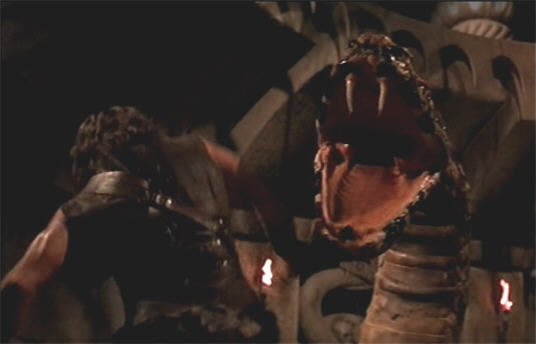
So, I have an idea of what I want the players to face: a giant snake monster of some kind.  This idea was inspired by watching Conan the Barbarian, and then Anaconda.  If you’ve seen these two movies, then you know that both snake monsters are quite different.  Granted, that might be due to the age difference between special and visual effects, computer animation, and animatronics, but if you simply watch both movies, we see those two snake monsters act differently, and instill different emotions.

In Conan the Barbarian, the giant snake monster is this huge, hulking, brutish-yet-sly creature of patience and stealth.  In Anaconda, we see a much more agile and evil monster, one that apparently delights in the hunt.  I think I’d like to combine the two creatures to create a monster that is animal-like, though evil, agile enough to chase after an adventuring party, and tough enough to stand toe to tail with multiple threats.  I want it to have decidedly snake-like features and tendencies, but monsterish enough to act like an evil monster.

So, where to start?  Well, in the back of the Strands of FATE book are several entries for a variety of NPC, enemy, and monster stats.  It only seems natural that we start with a normal snake, and also take a look at some other entries, like crocodile, bear, bull, and dragon.  This will give us an idea of the power ‘level’ for our monster, to make sure we create an encounter worth it’s weight in ferocity.  Since this is going to be a major enemy, or monster, I could make it exactly as a player character, giving it experience as I see fit, but I think we’ll keep it a bit more free-form.

CHARACTER ASPECTS

Most animal creatures in the Stands of FATE book have a single Character Aspect.  Major antagonists understandably have more (as I feel this creature also deserves).  I think an obvious first character aspect for this monster would simply be Huge-Ass-Snake.  You think of a snake, and then see a 50+ foot monstrosity, and it can be pretty clear how to use this character aspect.  Fear, attacking reach, possibly a bonus to hide (or a penalty), and so on.

Borrowing from the Dragon entry, I’ll include the character aspect, Apex Predator. This creature is definitely at or near the top of the food chain, and the aspect will very easily apply in combat when fighting humanoids.

One more character aspect that will work for us is “I’ll eat anything.” Snakes will often attack prey several times larger in circumference than the snake, simply because it’s jaws and digestive tract can take it.  This can be useful when stalking prey, facing a larger enemy, resisting fear, etc.

SIZE

Ok, right off the bat I know that I want the snake monster to be big.  Humans are generally a size 0, and if I wanted this snake monster to be able to swallow a human mid combat, it would have to be at least 3 sizes bigger.  However, I only want this monster to swallow a motionless human, so I’m going to knock its size down to a 2.  By comparison, a goblin is a size -1, a troll is a size 1, bull is a size 1, an elephant is a size 2, and a dragon is a size 3.  So, in-game I can tell the players that this thing is big enough to crush the life out of them, and then swallow them later.  In real life there are currently no snakes measuring 30 feet, or capable of swallowing an adult human.  For this creature, I think we could describe him as being over 50 feet long, and fully capable.

ABILITIES

For its abilities, I’m going to take a look at the entry for snake, bear, bull, and dragon.  This will easily tell me where to place what numbers where.  Since this creature is a monster, I want it to have some non-physical stats that are improved over a normal animal’s.  In the end, I end up with:

  • Agility: 5
  • Endurance: 7
  • Perception: 4
  • Strength: 6
  • Craft: n/a
  • Knowledge: -2
  • Reasoning: -2
  • Willpower: 2
  • Deception: 0
  • Empathy: 0
  • Persuasion: n/a
  • Resources: n/a

SPECIALTY ASPECTS

This monster is pretty deadly, so he’ll be getting a few specialty aspects as well.  Just like from the Snake entry, we’ll give him Slithers (Agility) – hey, they’re naturally sneaky, and the sight alone of a slithering snake can cause fear.  Deadly, Pinpoint Strike (Strength) is a good one, because it’s hard to see an attack when it comes at you in a direct, straight line.  For a snake, I think that At Home in Cover (Agility) works great for sneaking, and striking from hiding.

NOTABLE ADVANTAGES

  • Keen Smell: +2 on rolls to smell
  • Stealthy: +2 on rolls to hide and sneak
  • Natural Climber: +2 on rolls to climb trees, ledges, and landings (not little nooks)
  • Poison: Subtly: 3, Potency: 3, Delivery: Bite
  • Heat Sensitive: +2 on Perception rolls to detect heat
  • Crushing Grapple: every round that the target is grappled, they take net damage from that attack

PHYSICAL ATTACK

Bite

  • Attack modifier: +6(+2 WR) – Strength & Fangs
  • Def. Ability: Agility
  • Range: 0
  • Poor Defense, bite delivers poison

TOTAL PHYSICAL DEFENSE MODIFIER

  • +5(+7) – Agility and leather skin

This snake monster is fast, tough, and deadly.  It has beefy stats akin to what I imagine a giant snake might have, and aspects that will easily help it defeat its foe.  With only a little bit of work, its aspects can be used against it by the PCs.  Its fangs and leathery skin give it decent rating bonuses (+2), and its advantages give him a lot of that extra “oh crap” factor.

All that’s left is for me to test him out against the doomed PCs… I mean, uh…

Cheating Behavior and Prevention: Drive Out the Snakes From Your Game

The Id DM examines the “snake-like” behavior of players that cheat in roleplaying games, and provides suggestions for preventing cheating at the table.

“I rolled… umm…”

Since there are other great articles detailing snake-like characters or monsters to inhabit or terrorize your campaign, I figured it would be interesting to discuss a different type of behavior that may slither about your table – cheating. When you are busy running a game there are a great many things to monitor, and it is entirely possible that your players may on occasion be tempted to cheat in some way to get an advantage. They may lie about a die roll or conceptualize and execute their stats and abilities in “creative” ways to deceive you. Hopefully, cheating behavior is non-existent at your table or perhaps only happens when players feel they are in dire straits and need to cut some corners. Below, I talk about the motivations for cheating and some methods you can use to minimize the likelihood that it will appear at your table.

Acknowledge Cheating

Understand that cheating is a possibility at your table. Do not assume that just because you are playing with (a) adults, (b) friends or (c) family that cheating will not occur. Numerous studies have demonstrated more than 50% (sometimes as much as 80%) of college students self-report cheating, although there is certainly variation by situational and personal variables.  Collective cheating, which is lying in the name of the collective good, occurs commonly in the adult world. These lies can range in severity, and the situational factors at the gaming table can influence their presence.

For example, a five-player group of players is in the midst of a battle with several monsters. The group has dealt with a combination of poor rolls and questionable tactics that has led them to the brink of serious consequences, including possible player character death. One player, Jack, utilizes an important resource or power and all players at the table realize a good roll can change the tide of battle. In this situation, not only the player rolling the die, but all players are invested in the roll of the die. Perhaps Jack rolls a 10 on a d20, which is an average roll and gives him approximately a 50% chance of hitting. Jack may increase the result and call out “12” instead to give him a better chance of success. The players to Jack’s right or left, Tom and Jill may allow the lying to pass since their fates are also tied to the outcome. This is just one example of how collective cheating can play out at the table.

The gaming environment, which can result in player death or other negative consequences, provides pressures to cheat, rewards cheating, and may only institute a small risk for adverse outcomes for cheating. In the example above, imagine you viewed Jack’s die roll of 10 and are well aware that he is lying by saying 12. How would you react? What are the consequences for cheating at your table? You could penalize Jack by enforcing penalties to future rolls or some other type of in-game mechanic to discourage cheating. However, if you ignore the cheating or just give out a friendly warning, it may not be enough of a deterrent to prevent future cheating. Finally, even with clearly-outlined consequences for cheating, impulsive cheating, which refer to the tendency to act without considering the logical consequences of one’s cheating actions, can also appear at your table.

Purposeful Planning

If the first step is to acknowledge that cheating can occur, then the second step is to plan to prevent cheating from affecting your game. There are a variety of factors you and your game may contribute to cheating behavior. Simple matters such as seating arrangement can have a big impact on whether or not a player cheats. If the most competitive and impulsive player is the furthest from you at the table, then perhaps change the seating order to keep that player closer to your location. If you are concerned about players fudging die rolls, then encourage players to roll out in the open for all to see. There can be no question on a roll if you are able to view the player’s actions. It can also be helpful to model this behavior by rolling in the open so players know you are also not cheating them.

There are differing opinions about whether the Game Master should roll out in the open or not, but rolling in the open is one method to reduce the likelihood of your players cheating in your game. Rolling in the open will increase your level of credibility at the table. Your credibility is defined by your players’ perceptions of your competence, trustworthiness and caring. It is likely that players who perceive you as being highly credible will be less likely to engage in cheating behaviors. But the opposite is also true, if your ability to run a game is questioned by your group, then cheating is more likely. Think about your style in terms of how you organize the game. Are you late to sessions? Do you cancel sessions often or at the last minute? Do you get distracted and involved in side conversations that take away from the flow of the game? Do you not pay attention to your players when they are acting in the game?

If you answered “yes” to any of these questions, then you may be conveying a level of disrespect to your players. As a result, they may not view your level of credibility as high, and may be more likely to cheat in your game. Be mindful of how you are treating your players; if you are heavy-handed or unfair, then your players may respond by cheating.

It is also helpful to know the traits, abilities and characteristics of the player characters in the game, but this can be incredibly difficult in some game systems. For example, Dungeons & Dragons 4th Edition offers players the option of 40 races, 64 classes, 3,066 feats, 7,791 powers, 9,014 items, 547 Paragon Paths and 107 Epic Destinies. I’m not a math wizard, but I believe a 30th Level character could be any one of over a quintillion combinations.  I once joked that my players could create various powers or abilities on the fly at my table because there are so many options available and I do not have the time to ensure all of them are legal.

The good news is that you will likely play with less than 10 players, so keeping track of each character’s information is less daunting. If your game system has character sheets, request a copy of them so you can be familiar with the player’s options in and out of combat. This does not mean you should always second guess your players, but it can help you run a smoother game and it is likely to speed up play as you will have less need to check applicable rules for characters’ powers. In closing, if you are familiar with each character’s strengths and weaknesses, then you will have a better indication if any shenanigans are attempted by your players!

Summary

  • Acknowledge that players – even adults, including close family and long-time friends – may attempt to cut corners and cheat during a roleplaying game. Various situational factors can lead to collective and impulsive cheating. Be aware that it can take place at your table.
  • Actively plan to prevent cheating at your table. First, set a positive example for your players by not cheating yourself. Do not skew the results to allow yourself to get “one last cool attack” with your monster if it should already be dead. One possible solution is to make all rolls at the table in the open, including your rolls as the Game Master.
  • Second, respect your players and their time. If you are scheduling the games, be prepared to start on time. Arriving late and showing up for the session unprepared communicates to players that you may not care about the group or take the game seriously. Take steps to increase your credibility with the group of players.
  • Third, be knowledgeable of the abilities of the player characters in the game. There is no need to memorize all of the statistics for each player character at your table, but a general understanding of each character will likely speed up the action, limit potential rule discussions and prevent cheating.
  • Finally, speak openly to your group if you are worried that cheating could be taking place in your game. Ensure that all players are aware of the consequences of cheating, which can range from something light-hearted (“Your treachery has angered the gods, and you suffer -1 to all future rolls for the rest of the night”) to something more serious (“Cheating will result in a warning with the second occurrence resulting in being asked to leave the gaming group”).
  • Remind everyone that you are playing a game to have fun. If an ultra-competitive vibe develops in the group, ask yourself how you are contributing to that environment. Work to ensure that players are primarily concerned about hanging out and enjoying a good time; not solely on “winning” the game.

Dungeons and Doctor Who

I love Doctor Who quite a bit. It provides elements of fantasy, science fiction, adventure, humor and historical fiction in an almost hap-hazardously creative fashion. I also like to blend many of these genres into my Dungeons and Dragons home campaign. When one of my players approached me, saying that he wanted his new character in the campaign to be The Doctor, I assumed he meant that the character would be like The Doctor. I was wrong.

I said yes almost instantly. I should have thought about it more perhaps, but I like Doctor who, and trust this player to look for fun characters more than characters with odd or broken builds.

I wasn’t worried about breaking the game world. I have a bit of a history of tongue-in-cheek reference in my game. Over the last few years my players have broken into a school for gifted youngsters that secretly housed a training facility for mutated warriors, brought down the gladiator champion and master artificer Antonius Sparks, and still occasionally call on an eccentric wizard whom they saved from the mysterious Grey Gale. I think I can allow my players a bit of blatant fan service.

When I started thinking about this new character, I became more concerned about how this would affect gameplay and plot. The player built the character as a deva invoker. I didn’t grant any ability bonuses or give him any unique abilities. Looking over the sheet, the character wasn’t particularly powerful. In fact, he was more invested in social abilities, including several instances of the Linguist feat. Nothing world-shattering or overwhelming here, though certainly strong in niche situations.

Secretly, I’ve always considered my world part of a Spelljammer setting. If you travel far enough in my Astral Plane, you don’t hit the Far Realm, but Phlogiston, and beyond that more worlds. It should be very possible for players to travel to other worlds, including official and unofficial settings. It’s just a coincidence that this has never been explored by the players in the eight or so years they’ve been campaigning in this world.

With the inclusion of The Doctor into my campaign, it confirms that the Whoniverse (or a variant of it) is part of my multi-verse. This opens up a number of possibilities. So, how is my campaign world changed, now that it’s been touched by another world, that so directly involves the players?

Technology

 The Doctor has seen technology far beyond the level of my world. What’s stopping him from building a combustion engine, or even a time machine? The short answer is time and resources. I can always make sure, using my DM World-controlling powers that the player never has enough time to do so, or just can’t get his hands on the material. This type of forced restriction can get old fast, if the player realizes effects are happening not for naturally occurring story reasons, but because I’m trying to stop him from doing something he wants to do.

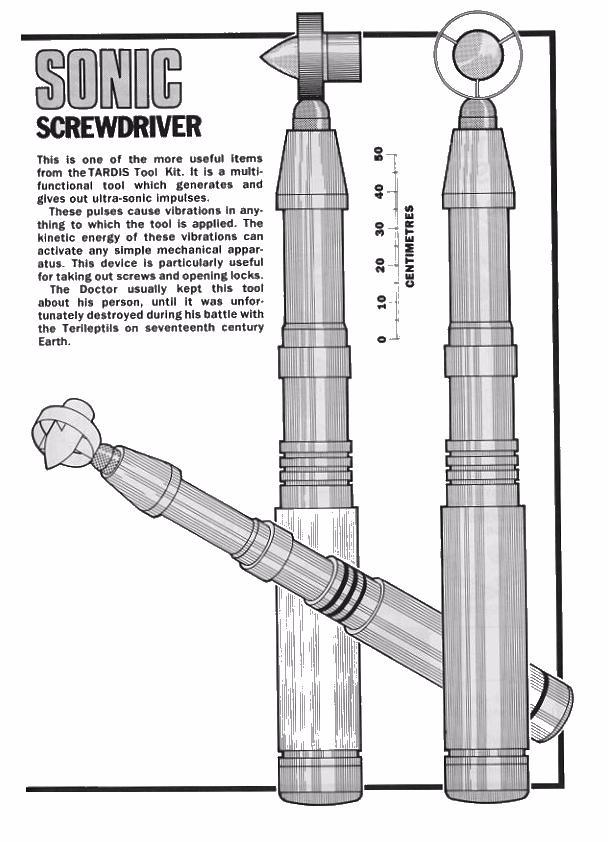
So far, my player has not attempted to add technology to the world, besides snazzy clothing choices. His sonic screwdriver is just a rod, mechanically, and as far as anyone else is concerned, it is. We established at the beginning that the TARDIS was lost and possibly broken. Recovering his mystical blue box has been one of the driving motivations of the character.

In the end, I think that’s really what keeps the character from completely changing or overwhelming the world. The fact that I spoke to him and came to an understanding about what the character was about, and how we can work toward larger-than-life goals. You have to trust your players, and if you can collaborate on motivations, then no one will be disappointed later when expectations are entirely trounced upon.

Spotlight Stealing

I mentioned this character was in my campaign on twitter, which led to some interesting questions. One of the questions was basically, “How are the other players taking the change in situation? Do they feel overwhelmed or minor compared to this character?”  I had not really considered this. I felt confident that the party (as a whole) was still the star of my campaign, but I didn’t know for sure how they felt. So I asked a couple of other players privately. They seemed quite flabbergasted by the notion as well. It was a resounding “No. The Doctor’s fun, but he’s just another character.”  They did not feel reduced to Companion status.

With such a big character, how did this not happen? Well, for one, The Doctor was not created as a powerhouse of pain in combat. Our play sessions are about 50% combat, 50% role-play, planning and discussion. In addition, the players all treated this new character as just another ally. The character could claim to be a Timelord till the cows come home, but the truth of the matter is that they had stuff to do before he arrived, and weren’t about to ignore it because some crazy person in odd clothing showed up, even if he was useful at times.

The character also showed up around mid-paragon tier. At this point in the players’ career they’re not run-of-the-mill soldiers, scientists and citizens. They’re some of the most powerful and well-travelled people in the area, if not the material plane. A couple levels later and they’re all prepping for epic destinies. In comparison to demi-gods, archmages and primal avatars, The Doctor is cool, but it’s easy to get distracted by those around him.

New Options

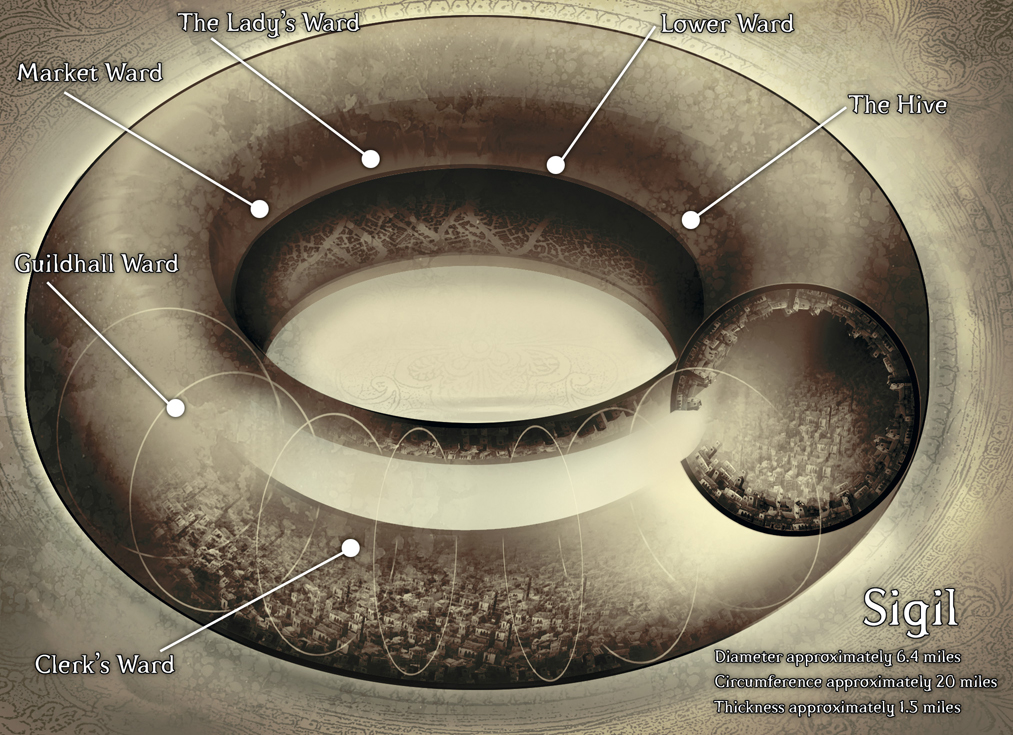
What The Doctor’s presence in the game really adds is more options for players and the DM. I already mentioned that his presence provides real physical proof that other worlds can be accessed. So, players know that this is an option. They may seek out a Spelljammer or be more inclined to travel to Sigil. They might do this as a way to increase their powers, find new allies, buy new items, or even just to seek out trouble.

In the same vein, I can drop more fantastic plots and elements that would have been less believable before. Instead of taking the idea of the Fantastic Four and making a D&D version of them, I really could use the Fantastic Four. After all, the heroes are part of an active multiverse. I could even bring the heroes to the Marvel Universe.

The option of Time Travel is probably what The Doctor is most known for. Once the players have the TARDIS, what’s stopping them from going back in time and killing the Lich before he becomes a lich?

My answer, “Nothing but fear.” I’ve made it quite clear that they could really ruin the world by playing with Time Travel, but I’m prepared to make those consequences fun. Doctor Who is full of these examples. The Doctor himself was responsible for the destruction Pompeii, and knows well that sometimes sticking your nose in places has less than good results. To quote another universe slogan, “With Great Power, Comes Great Responsibility.” I’ve made it clear to my players that if they go this route, they will have to make very careful choices. Epic Failure may be almost assuredly a result.

The final option in my lap is using The Doctor myself. Once a character enters play, I reserve the right to control them should they retire. Former PCs now occupy such awesome slots as upcoming villain, god of life, and lord of the 5th layer of hell. Once the Doctor enters that box and flies off alone, he’s mine. I already have plans…

 This post is dedicated to Elisabeth Sladen.

Themes taking on New Roles

You may have read some recent talk about using themes to fill some gaps in 4e. If you haven’t, head over to Loremaster.org to read Matt James’ take on Themes as a way to multi-class and make valuable race options. Then check out Robert Schwalb’s Response. [Edit: It seems Ryven Cedrylle started talking about this as early as 2/18/11. I missed those articles, but they’re worth looking into. – BAL 4/9/2011]

This is actually a concept that I’ve been playing with for a couple of weeks now. Since everyone else is talking about it, let me get my ideas out now.

What are themes?

Themes, for those who don’t know (and didn’t follow those links), were introduced to 4e in Dark Sun. The idea is that they represent a sort of background or training, not covered by your race and class, which helps identify you and provides new choices for early powers. Dark Sun gave us themes like Dune Trader, Gladiator and Noble. Those who read my review of Soldiers of Fortune know there was a Mercenary theme there as well.

Mechanically, they give you a power source, which may not match that of your class. Power sources can open up access to feats, items, Paths and the like. They give you a power at 1st level for free. You don’t get a choice as to what the power is, as there’s only one per theme. These tend to be either a utility-like power, or a weaker-than-normal encounter attack power. After that, you get one power to choose from for each normal level that you would choose a power, between levels two and ten. If you select the power from your theme, you do not get your class power for that level.

Themes for Multi-Classing

There are primarily two ways to multi-class. The feat system has been part of 4e since its release. Its main drawback is that its cost (multiple feats, and then loss of powers) arguably does not equal the small amount of the second class that you gain. The Players Handbook 3 introduced the hybrid system. Its main drawback is that you gain severely reduced class features, making it difficult to create a character on par with others in the party.

Themes could represent another third option. With a theme, you could drop the free 1st level unique power for a class feature of the additional class. This may be reduced slightly in power, like in hybrid system. However, characters shouldn’t feel weakened by this because it is purely additional. They would still have full features from their base class.

They could then choose from a second list of powers for the first ten levels, without having to spend feats. They wouldn’t be overpowered in this regard, as long as all other players also choose themes, multi-class or otherwise.

Themes for Racial Bloodlines

The current racial system treats half-races as their own race, mechanically. You can choose half-orc or half-elf, and it’s assumed your other half is human, because the half race is a full race mechanically. There’s no mechanic to have two halves!

Themes could be used in this way, but to represent any sort of addition to the main bloodline. You could have human as your main race and then take the half-elf theme or you could have githzerai as your main race and take half-giant! Alternately you could now have themes that harken back to 3.5 templates, like half-dragon, or themes that represent new conditions, like lycanthropy.

Instead of a power source, these characters would gain a new racial keyword, so they could qualify for new feats, paragon paths (and the like), that has their added race as a prerequisite.

Themes for Modern Play

Here’s the main reason I started to play with what themes can be used for. I have a secret desire to play D20 Modern. However, I don’t want to DM any more d20 games. It’s not that I don’t think running this system, or something like Pathfinder, wouldn’t be fun, it’s just that 4th edition has spoiled me horribly. I’ve been working on some Pathfinder creations recently and there is distinct increase in time resources there, compared to creating something for 4th edition.

My regular players all prefer 4th edition now as well. So convincing them to play a new type of story and go back to a less preferable system would be hard.

So I want to have Modern 4e. I started playing around with conversions of the basic classes and advanced classes, but it seemed silly to build 6-20 classes if my players wanted to play D&D 4e. Especially since the kind of game I was going for was halfway between Modern and Fantasy. I wanted a Buffy the Vampire Slayer, a Thor, or even a King Arthur & the Knights of Justice style campaign. There should be guns and swords and the possibility of drow casting out of the back of a jeep.

Why not keep the classes we have and just add a little modern? Themes can do just that. Now if I need a Buffy for my group I can take Ranger or Monk as a class and add a Student or Slayer theme. My boardroom exec with secret ties is a Warlord with a Personality or Genius theme.

If we keep things using the same rules, it becomes much easier to use all the books I own in some way as well. I like my books. After all, I bought them for reason.

What themes don’t give me, in this regard, is way to add new skill and weapon proficiencies that would come with a modern class. However, if everyone had a modern theme, then getting a little something extra for your theme wouldn’t be unbalancing. Another solution, so you could have modern themes and current themes in play at once, is to slide this mechanic into other areas. A modern background could provide you with the ability to swap a certain number of current class skills (say two) with modern ones.

Weapons could also be added to the current categories. Instead of a Modern classification, guns, baseball bats and flamethrowers are all either simple military or exotic. That means a fighter/gladiator that gets dropped into a modern setting can potentially pick up a Desert Eagle and not take a penalty. Considering the mind flayer mobsters showing up next, I don’t think this is to far fetched for a fantasy game.

Playing with FATE: Skills – Who Needs ‘em?!

As you’ve probably noticed, our gaming group’s preferred incarnation of the FATE system is Strands of Fate. SoF resembles other Fate games in many respects, but differs in its approach in a couple of ways, ways that I feel improve the Fate experience.

Author’s Note: For a comparison of differences, click here.

For me, the difference that really sets SoF apart from it’s contemporaries is the lack of a traditional Skill System.  I know what you’re thinking – I myself can’t believe that my favorite RPG doesn’t have a defined, specific skill system clearly showing what my character can do and what he’s good at.  For the past 20 years or so I wouldn’t even consider playing a game without skills.  But, when I looked at how SoF handles skills, I instantly recognized genius.

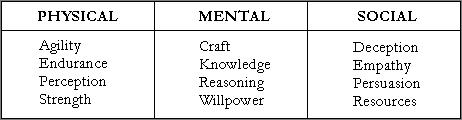
Instead of traditional skills or attributes, SoF uses twelve Abilities:

In general, these Abilities will be rated between -1 and 5.  In my experience so far, as both a player and a GM, these twelve Abilities cover everything I could possibly do with my character as well as helping me define a great deal about him.

However, with SoF this is only the beginning.  To really see what a character is good at, or really bad at, we need to take a look at his Aspects (Specialty Aspects in particular).  Aspects tell you so much more about a character’s strengths and weaknesses than a skill with a number ever could.  For example, in most Fate games someone good with a gun may have something listed like this:

  • Firearms: +4

Ok, that’s nice.  I guess the character is better than a guy with +3, but worse than the one with +5.  And I guess he’s the same with any type of gun.  In Strands of Fate that character might have an Aspect or two looking like this:

  • Fastest six-gun in the west.
  • Born with a rifle in his hand. (Agility)
  • One shot, one kill. (Perception)
  • “It’s time to rock and roll!” (Agility)

This tells me a lot more than “Firearms: +4” ever could.  This was illustrated for me during the game I recently ran at DunDraCon.  Four of the players at the game were new to Fate.  One guy, after glancing at his character sheet said, “What does my guy do?  What’s he good at?”  Before I responded, another player told him to read his character’s Aspects (SoF characters have at least ten).  After reading the Aspects, the first guy nodded and said, “I’ve never had such a clear idea about who my character is, and what my character does.  I even know what he doesn’t do. Cool.”  That’s one of those great “ah-ha” moments.  In SoF, a quick look at well-written Aspects and you usually know more about a character than two pages of background and notes.

Eliminating a traditional skill system has two additional benefits.  First off, players have the ability to focus on roleplaying Aspects, instead of number-crunching.  They look at their characters from a more story-focused and narrative viewpoint than a simple collection of stats and modifiers.  The second benefit, and the one I really appreciate as a GM, is having a very brief list of Abilities to remember instead of a chart of 30 skills.

I play in a Deathwatch game a couple of times a month.  It’s a fun game, but there are more than 40 different skills.  As a GM, I want to be familiar with all the skills so that I can ensure they each see a little “screen time” and that the players who’ve invested in certain skills feel rewarded by seeing them come into play.  In SoF, I only need to remember the twelve Abilities.  If a character has a relevant “skill” (Aspect), it’s up to them to remember to Invoke it.

For me, this not only makes adventure design easier, it also really streamlines on-the-fly decisions.  So far, in the SoF games I’m playing in, it’s always been very clear what the appropriate Ability to use is, and each of the players know their character well enough to decide if any of their Aspects should come into play.

This is yet another reason why Strands of Fate has become my roleplaying system of choice – a simple but comprehensive mechanic combined with a rock-solid focus on story-telling.

GMing 101, Remedial Kickass: OR, How the OSR can Make You a Better GM

I’ve never thought of myself as an “Old School” gamer. I’m not nearly old enough to qualify. What I have been doing is following their blogs, puzzling out for myself what it is about the new-school that seems to offend. . . and why so much of what they have to say makes an odd kind of sense.

It wasn’t until recently, however, that I was directed to Matthew Finch’s excellent primer on Old School gaming, and to the (free!) Swords and Wizardry 0e Retro Clone. While I can’t pretend that I’m ready to abandon my newer games, I do have something to say about this.

There are things we can learn from the OSR. (As soon as they agree on what OSR stands for, I’ll be sure to let you know.) Reading Matthew Finch’s primer made quite a number of things clear to me; something just clicked, and I want that bit of something in all my games.

Welcome, GMs, to GMing 101: Remedial Kickass.

Ok, so not quite like this.

Lesson 1: There Are No Rules: There Is Only The GM.

This is obviously an exaggeration, but hear me out. Older games had fewer “rules,” so more was left to the GM. Players could try anything, and it was up to the GM to make a ruling, ask for a die roll, and arbitrate the results. If a player wanted to leap down from the high ground and stab the goblin in the back on the way down, he didn’t get asked questions like “what feats do you have that make that different from a regular attack?” The GM just had him roll and told him what happened afterward. There was no need to consult the rule-book, because the GM was not meant to be a repository of rules written by other people – he was the judge, the Dungeon Master, and what the Dungeon Master says IS the rule. If he’s making it up as he goes, fine, as long as the game keeps moving.

This is definitely something that can be applied to ANY game – and indeed, most games include Rule 0 for exactly this reason – but it’s still something I need to internalize and apply. I don’t have to memorize 600,000 rules for every single thing that could happen in the game, I just need to learn the core mechanic and figure out how to think on my feet.

Put another way: Rules matter less than Rulings.

Lesson 2: Exploration is as Important as Combat…

… and as such should not be reduced to a series of die-rolls so that you can get to a fight faster. The old-school primer speaks of a time when characters didn’t have stats for things like Investigation or Spot or Listen. A time when players had to spell out what they were looking for and where they were looking for it. When Trapfinding was something that you didn’t see listed as a feat on a charactersheet, but something that everyone took responsibility for – heck, what did you THINK that 10 foot pole you’ve been carrying around was for? This can be applied to newer games as well, but it’s something that GMs have to learn to think about. And it doesn’t help that newer editions of The Worlds Oldest Role-playing Game have emphasized combat rules above almost everything else, to the point where some people get the mistaken idea that it’s about combat…

… Instead of being about exploring a fantasy world and finding out what’s around the corner – and surviving whatever it is. Players should be solving puzzles, not dice. Within reason, of course …

In the old days, (if what I’m reading makes sense) you spent as much time figuring out whether there were traps or secret passages in a dungeon as you did fighting, and because fighting was more narrative and less rule-intensive, you STILL may have had had time for more combats in a session than in some modern games. Speaking of which:

Lesson 3: Learn and Master the Art of Narrative Combat and Apply it Broadly.

Mutants and Masterminds 3e and the FATE system both put a greater emphasis on the narrative side of combat than the “tactical miniatures” side of things, and having done at least one of them, I can tell you from experience that it kicks ass. It’s nice to have mechanics to back it up, but they shouldn’t be necessary. Unless tactical miniatures is what you want, and what your players are thrilled about, learning the methods of narrative combat and the improvisation and description involved should be very important. Once you’ve learned, you’ll be glad you did – even mingling the two approaches can have positive results. As far as I’m concerned, these combat systems are “The New Old-School,” and as I set out to find the proper balance between the games I know and love and that old-school sense of wonder, they’ll be part of where I begin.

Lesson 4: If You Want Balance, Play a Video Game.

Old-school games don’t seem terribly worried about notions like game balance or powergaming. Granted, it’s hard to powergame when you roll 3d6, in order, for all your stats, and only THEN do you pick a class… but the fact seems to be that this just wasn’t a concern. Old-school gaming is about a world of fantasy, not a simulation. This can be broadly applied to newer games as well. Players have no right to expect that every encounter will be neatly balanced for their level, or that they’ll be able to beat everything they meet – or that everything they meet will be “just challenging enough to be interesting but not challenging enough to kill you.” Sometimes it’ll be easy. Sometimes they’ll have to run like a frightened rabbit. This is a world, after all, and the real world doesn’t work that way. Why should the game?

Similarly, there is no reason to assume that “everyone on one side dies” is the optimal end for every combat. Maybe some of them retreat. Maybe the players retreat instead. On the other hand, maybe a creative solution can let the players beat something they never would have beaten in raw, “slug-it-out” tactical combat.

Maybe this means worrying less about whether a class is “overpowered” or “underpowered.”

Lesson 5: Random Is Fair.

See my point about rolling your stats old-school style – before picking your class. I’d be oddly comfortable doing that with something like D&D 4th edition, which is weird; I’ve always preferred point-buy given a choice. But for some reason, in a game that HAS classes, this sounds strangely appealing… and it would nullify a lot of problems with power-gaming.

I’ve tried to play Pathfinder and been told that I needed X in a given stat in order to be “adequate,” and that I only had a 15 point array to work with. For some reason, that infuriates me, but I’d be totally cool with rolling my stats. Weird? Yeah, probably. Or maybe I’m just sick of the attitude of, “Let’s tie one hand behind our backs and THEN see how well we can powergame.”

Lesson 6: Be Flexible.

This goes back to my gripe about that particular Pathfinder DM who turned me off the game entirely – and a few 4th Edition DMs who have tried to do the same with that one. If a player says, I want to play this because it looks like fun, FOR ZOD’S SAKE, LET HIM. “Company Y didn’t update it, and there’s a reason” is a TERRIBLE attitude for a DM/GM to have; you don’t sell people on your favorite RPG company that way, and it’s an easy way to drive players away entirely. I almost gave up D&D entirely that night, not just Pathfinder. I was ready to toss my 4th Edition books out the window just so I’d never have to listen to that kind of garbage again.

Ahem. Luckily I decided to pursue the more productive reaction of, “I WILL be a better DM than this guy,” or we might not be taking part in this conversation.

On the other hand, I understand if you don’t want ninjas or samurai or warlocks or whatever and you’re going for a particular feel in your fantasy world … but reskinning a class to fit a particular setting is bloody simple, so that excuse still doesn’t work. Stop worrying about balance and let your player have fun, especially if you already know he’s not a powergamer and even MORE especially if he’s not playing that often. Don’t abandon common sense, but don’t work to destroy your player’s fun, either. Please. PLEASE.

Lesson 7: There Are no Bad Systems, Only Bad GMs.

Unless you’re playing FATAL. Then it’s probably both.

In all seriousness, though, I’m not advocating abandoning your system of choice and reverting to 0e; I consider that position untenable. But reading it over, trying it out (or one of the retro-clones of 0e or any number of other games), and learning something from it – that, I’m down with. And I highly recommend Finch’s free primer for Old School Gaming. It’s well worth a download and a read, and who can argue with the price?

Lesson 7.1: This is a Game; For Zod’s Sake, Have Fun.

See Rule 0 of practically every game system ever, and remember; if your players aren’t having fun, or you’re not having fun, or any combination of the above – somebody is doing something wrong. And as they say in poker, if you can’t tell who the sucker is, it’s probably you.

Thanks for reading. Now get out there and game! Excelsior!

How to Improvise Your Game

Step 1 – Don’t Prepare

Now, I know you’re busy with work or school or kids, so you don’t always have time to prepare for your sessions. That’s okay because it’s your first step to running a great improv session. Remember, the less you actually prepare, the better off you will be. Now, I’m not saying don’t prepare anything; create monsters or NPCs or dungeons as appropriate to your gaming style. Just don’t make too many, or you’ll ruin it.

Step 2 – Reveal Nothing

Players are a funny kind of animal. They like to believe that they’ve figured you out and know what’s coming up next – use this to your advantage. If your players think you’ve planned everything, they’ll try to predict you. This will be useful to you in later steps. Remember to take advantage of the players making things up. Take more credit than you deserve. Let the story create itself as you go. If you have  no secrets to keep, there are no secrets that they can expose.

Step 3 – Maps Are Easy

Maps are easy to make, if you use them. They are nothing more than shapes within shapes, usually boxes. Just make sure you put the shapes in place so that you create some obstacles for the PCs to maneuver around, and enough room for all the PCs to fit.

Step 4 – Steal from Your Players

Steal from your players.  This is probably the most important thing to remember. Whenever your player says,

“They’ve probably got an alarm system in place.”

They have an alarm system in place whether you thought of it or not! Whenever your player says,

“He’s probably running to get back-up.”

Guess what? He’s totally coming back with back-up even if he was just running away. Your players will never know you stole from them, they’ll just think they were smart enough to predict something that happened. This relates back to Step 2 – Reveal Nothing; don’t say why somebody is suspicious or running, and don’t give more than the essential details – let your players fill in the rest.

Step 5 – Continuity is for Pansies

Don’t worry about continuity. If your players catch you messing up, use your awesome brain skills to work your way around it. This is probably the hardest thing to learn, but practice makes perfect.

GM – “The ogre knows your plans.”

Player – “The ogre doesn’t know our plans to infiltrate their tribe and mess up their rituals – we whispered that part.”

GM – “Aha! He knows your plan to booby trap the bridge because you didn’t whisper that part!”

Make sure that when you do this you do not look surprised or the players will realize what you’re doing.

Step 6 – Let the Players Create the World

When the players look for something specific, let them find it, or at least let it be around. Don’t hesitate to add things to the world that your players have made up. If your rogue thinks there must be a hidden compartment full of treasure in the large featureless hallway – there is now! Let him look for it, and if he’s successful, let him find it (just don’t be afraid to set some booby traps in the way).

This step is designed to make your improv session so much easier. The less you have to make up, the less you have to worry. This will also keep your players engaged. If they feel like they’re smart enough to figure out some secret you placed in the King’s bedroom, they’ll feel better about themselves and their characters.

Step 7 – Let the Players Create Their Own Plot Points

Plot points are the point of most Role-Playing Games and, let’s face it, sometimes they’re just so darn hard to come up with. Then, once you’ve created this awesome plot point, your players will ignore it. We’ve all been there. That’s why you should let the players create the plot points.  These plot points can come from background stories or from role-playing; don’t be afraid to steal anything the players throw at you. If a player decides that some random NPC that has no point to anything is a jerk, give the player a reason to hate him.

Player – “That guy makes me feel uncomfortable and he’s kind of a jerk.”

GM – “Well, he is known for killing puppies.”

Player – “That explains it.”

If your players decide that they don’t care that the king was murdered, and that they just want to get out of the city, give them a way out of the city and drop any plot you may have started working out. Let them find a smuggling ring in the outskirts of the city, or a secret tunnel out. If it’s what the players want, let them have it.

Step 8 – Don’t Be Afraid to Say Yes

I lied. Step 4 is not the most important thing to remember – this is. Don’t be afraid to say yes. Say yes to most everything the players want to do. If they want to one-shot the dragon, you’re allowed to say no. If they want to run on the wall and flip onto the dragon’s back to stab it in the neck, say yes. Let them pull that off and they’ll love you forever.  Besides, the more you let the players make up, the less you have to make up. The coolest things you can do with a game are the things that are not in the rules; remember that.

I’m not saying you should neglect all mechanics to let the players do whatever they want all the time. I’m saying that you should adopt the players’ ideas into the mechanics. If your player wants to flip off the chandelier, land on the giant’s shoulder and hit the robot with his boomerang, just make that player roll the appropriate skills and see if it’s successful. Letting the players know that there is a chance of success – even if there isn’t – will make them happy.