Warriors and Warlocks, a New Fantasy

We’ve talked a lot on this site about adapting D&D 4th Edition to a more “Classic” feel, but if you’re burned out on D&D’s method of, “kill monsters, take/sell their stuff, and then go shopping,” re-skinning the game isn’t your only option. If you’re not particularly attached to a particular set of rulebooks, it may be more viable to look for something that was designed with your idea of “Classic Fantasy” in mind.

So let’s take another look at Mutants & Masterminds.

Clearly, He’s Lost It

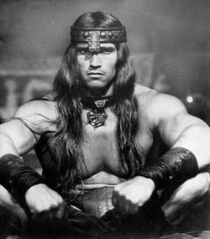
No, really, I’m not joking. Follow my train of logic, here. If, A) Mutants and Masterminds is designed to do anything that is done in a comic book, then B) Anything that has appeared in a comic book is fair game. Anyone else familiar with the comics featuring Red Sonja and Conan the Barbarian, respectively?

Now, it’s true that DC Adventures/M&M 3E has yet to publish a single splatbook (though I’ve no doubt that they’re coming) and the core super’s setting is the only one provided by default. But let’s take a look at the game’s history and see what we find. . .

Oh, that’s right. Warriors and Warlocks. An M&M 2E supplement designed to adapt the game to a Swords and Sorcery setting. . . which is basically half a step from Classic Fantasy. Convenient.

I could just point you in that direction, but unless you’re playing M&M 2E (which really is a perfectly letigimate option) that would be irresponsible. What I’ll do instead is talk a bit about what’s applicable to using Mutants and Masterminds for a fantasy game.

Heroic, Paragon, and Epic: Tiers in M&M

Rather than having levels in classes, or dividing things into tiers the way D&D 4th Edition does, M&M is a point-buy system that uses something called Power Level (PL) to determine the focal point of the campaign – this sets a cap on pretty much all the important numbers in the game. Power level ranges from 0 (okay, 1, normally) for the incredibly weak, and upward to a soft limit of 20 for your omnipotent deities. Here are some rough ideas and benchmarks to give you an idea of how the system works – I’m going to try to use as many recognizable examples as possible to help establish the range I discuss.

PL 0-1: Mostly non-combat characters. May be highly skilled in certain areas – the skill caps are high enough that professionalism and skill mastery is perfectly possible, even at this low level of power. Aunt May, your housecat, and the vast majority of innocent bystanders and villagers fall under this category. Civilians.

PL 2-3: Gangsters, thugs, rogues, thieves, brutes with guns and a little of that dangerous knowledge. Goblins, perhaps. Maybe some orcs, even.

PL 3-5: Town guards, Police officers, SWAT Officers on the high end; by this point we’re looking at some serious combat training.

PL 5-7: Soldiers, mercenaries, and “street level” super-heroes. Think middle Heroic Tier and you’re not too far off. PL 5 is the minimum level assigned to “Trained Combatants,” which most police forces technically aren’t. Think the 1st few levels of D&D and you’ll have a fair idea.

PL 7-9: “Pulp” heroes, more experienced “street level,” superheroic side-kicks, the vast majority of characters from action movies, and most of the characters from Watchmen (with the probable exception of Dr. Manhattan) would probably fall in here. Robin is a good comic-book example at PL 8. Most of the characters from Lord of the Rings probably fit in here, too. Think somewhere between Heroic Tier and the first half of Paragon – that’s about where the focus of the game is going to be. Funny how that much range fits into so small a space, isn’t it? I’d also fit Conan the Barbarian and Red Sonja right in the middle of this range, along with (probably) Drizz’t. Oh, and most characters from Star Wars. Indiana Jones.

PL 10-12: One character of this level is likely responsible for the safety of a city, and may occasionally get into teamups for “the fate of the world.” In a fantasy game, you’re determining the course of the world on a regular basis, even when you don’t realize it. Catwoman, Green Arrow and Black Canary fall in PL 10 (and probably, so does Robin Hood). So does Nightwing. Batman, Aquaman and The Flash, are all officially rated at PL 12; I’d estimate Spider-man at around the same point. Zatanna is an 11 (though only offensively). Hercules and similar mythological figures (before they became comicbook characters) probably would fall in this range, too. I’d also estimate this range for the X-men and the Fantastic Four… Er, I mean, Future Foundation. (Blast you, Marvel, and your current continuity.)

PL 13-15: The heavy hitters of the Justice League and the Avengers, demigods, dragons, and Kryptonians: by this point, you’re occasionally dealing with the fate of the world without backup. Iron Man, Superman, Wonder Woman, Martian Manhunter, Captain Marvel, Thor, Loki, Green Lantern, The Silver Surfer, Hercules (post-comicbook incarnation), full-grown dragons, mad wizards, Elminster, the most powerful demons… And of course, D&D characters who are nearing (or have reached) their Epic Destiny.

PL 16: Black Adam, Darkseid, Thanos. Mad “gods” or beings powerful enough that they might as well be gods. Asmodeus, maybe.

PL 18: The Tarrasque, Galactus.

Okay, so by PL 18 I’m just guessing. It’s fun to think about, though.

A Question of Scale

Most superheroic-type games have movement speeds in the 1000’s of miles per hour. Fantasy tends to be a bit lower key with respect to movement rates, because traveling is part of the genre. Speed, Flight, and Teleport should be limited in their use – anything over 1 rank should have a flaw attached of some kind.

Speed may actually be an exception for some characters – it has been pointed out that about 2-4 ranks of speed can represent Olympic level running prowess. So consider that a legitimate option for Monks and the like.

Basically, though, the idea is to limit things down to the point where you could conceivably use a battle mat if you really wanted to. Not that you need one. If you’re looking for superheroes with swords, feel free to toss this out the window, but you’re losing out on the chance for “random encounters,” right?

I’d also highly recommend the optional rule from Warriors and Warlocks about not charging power-points for equipment that’s native to the setting, unless it’s really integral to the character concept.

What about magic items?

Powers with the Removable flaw – they cost you less points that way. Otherwise, they’re exactly the same as any other element of your character. You want them, you pay points for them – but in no way are they mandatory.

Where does class fit into all this?

Well, it doesn’t. Unless you want it to.

See, M&M doesn’t have classes. Warriors and Warlocks offered templates for fantasy archetypes, which worked beautifully – just pay the point cost for the template and you’re gold, with points left over for customization. Add some templates for fantasy races and you’ve got your D&D equivalent all set.

Here’s a sample template for M&M 3rd edition, assuming a PL 8 game – took me about 30 seconds:

Wizard: 30 points total.

  • Magic: Base effect, Magic Missile: Bolt of arcane force, Ranged Damage 8: 16 points
    • Choice of 5 other spells: 5 points
  • Skills: 8 points
    • Expertise (Magic) 8, Choice of one other
  • Advantages: 1 point
    • Extraordinary Effort
  • Complications: Power Loss (Magic: must be able to speak and gesture in order to cast spells.)

It gets pretty easy with practice. And in a PL 8 game, you’d still have 90 points left to finish defining the character. Take care of his attack skills in whatever way you want, boost magic’s rank if your trade-offs allow it, whatever.

“But wait,” you say, “what about my favorite prestige class?”

Well, in terms of flavor, here’s mine:

Arcane Archer: 26 points total.

  • Arcane Bowmanship: Base effect, Mystic Arrow: Bolt of arcane force, Ranged Damage 8, Removable (requires bow): 16 points – 6 points = 10 points
    • Choice of 5 other spells: 5 points
  • Skills: 8 points
    • Expertise (Magic) 8, Acrobatics 8,
  • Advantages: 3 points
    • Extraordinary Effort, Equipment 2 (Longbow)

Yep. It’s that simple. Though in the archer’s case, I might drop the rank of Magic by 2 and increase his accuracy instead – it all depends on what combat style I think he’d favor.

Which reminds me.

How does advancement work?

1-3 Power Points earned in a session, spent on whatever the player wants. It’s a little slower than D&D in the sense that you don’t have big, sweeping changes happening every few sessions, but the gradual flow of Power Points is generally nicer – want a new “Feat/Advantage”? Pick it up after the session. Need another magic item? Save your points, or get it as an alternate effect of one you already have. Feel like you’ve exercised a particular skill? Boost it a little with the points you earned from the session and become even better at it. Used a particular power stunt a lot and you really liked it? Get it as an alternate effect so you can use it even more often (Power Stunts often wind up being a way of trying out new things before you spend points on them).

What about combat?

Fast and brutal. Especially if you run out of Hero Points – all the more reason to let those complications trigger! But on the plus side, healing is usually pretty fast between combats (like a comicbook) (unless it’s a lasting injury complication) – so you can play without a cleric if you want to.

Okay, so the mechanics are good, but why should I switch?

Here’s my top 11 reasons. Why top 11? Ask the Nostalgia Critic.

  1. You want something that melds the benefits of rules-lite gaming with the best elements of d20.
  2. You’ve ever forgotten what character you created and started playing the same guy you always play at the table.
  3. You want a game that features fast-paced, somewhat brutal combat over the slow dungeon crawls you’ve been doing.
  4. You hate the rigid nature of classes and multiclassing; you came to build a character, not a collection of stats.
  5. You want something flexible enough that when you decide next month that you’d really rather play Cyberpunk, you don’t have to learn an entire new system in order to do it.
  6. You don’t like spending your time between sessions “shopping” and trying to guess which spells will be useful next time.
  7. You like a game that emphasizes the genre you’re playing in and the world around you over the rules they’ve devised to simulate it.
  8. You like a game that has a strong community of helpful people, like the one at Atomic Think Tank.
  9. You like the idea of a game that simulates a genre, not reality.
  10. You’re sick of “Spells per day.”
  11. You want a game that puts the role back in role-playing.

Welcome to Warriors & Warlocks
How FATE Relates to Other Games

I’ll admit, I’m a slow convert and I love my d20, but the more I read about FATE, the more tempted I am by it (I love universal systems. I don’t know why. It’s an illness). But since the game isn’t my primary area of expertise, I thought I would offer some counterpoint to the current direction of The Shack – specifically, how FATE relates to some of the other systems I play with regularly, and maybe, just maybe, some ideas on how to get a little of that FATE magic in your other games.

Aspects, Complications, And Extra Effort: FATE in DC Adventures

I remember reading somewhere that Steve Kenson was inspired by systems like FATE, Fudge, and so on, and that they were what drove him to write ICONS. But the other system he designed already has a lot of that magic back-doored in. Here’s a quick primer.

Complications are like the negative side of Aspects; in the same way that an Aspect can be compelled by the GM (earning you a Fate point in exchange for a penalty), Complications can be invoked (by either the player OR the GM!). There are are probably as many kinds of complications as there are Aspects.

The most basic kind of complications are Complications as Character: every character has a list of complications that make it easier to get into their head and into their world. Here’s a list from the book:

  • Flashbacks: Batman is sometimes stunned by traumatic flashbacks to the night his parents were murdered, especially in connection to Crime Alley, where the killings took place.
  • Nemesis: The Joker
  • Obsession: Crime fighting
  • Relationships: For a loner, Batman has a number of important people in his life, including Nightwing, Robin, Oracle, Alfred Pennyworth (the faithful Wayne family butler) and Police Commissioner James Gordon.
  • Responsibility: Batman considers Gotham “his” city, and his responsibility.
  • Secret Identity: Bruce Wayne

And here’s one I wrote awhile ago for a Marvel character writeup I did on Atomic Think Tank:

  • Guilt: Deaths of loved ones; Uncle Ben, Gwen Stacy
  • Significant Other: Super-model Mary Jane Watson
  • Relationships: Harry Osborn, Aunt May, Black Cat, Flash Thompson, Betty Brant, much of the Superhuman community
  • Low Finances: Peter is almost always strapped for cash.
  • Nemesis: J. Jonah Jameson
  • Enemy (Peter has tons of them): Norman Osborn, Eddie Brock, and the rest of a sizable rogues gallery.
  • “With Great Power, Comes Great Responsibility“: That’s the catchphrase of old Uncle Ben.  If you missed it don’t worry they’ll say the line again and again and again.
  • Reputation: J. Jonah Jameson makes sure that this is as bad as it can get.
  • Secret Identity: Peter Parker
  • Radioactive Blood: This can make transfusions difficult, to say the least…

(And before you ask, One More Day never happened. It NEVER HAPPENED. Ahem.)

And of course, Superman’s list wouldn’t be complete without Vulnerability to Kryptonite, right?

As a GM, seeing a list like this is great. Instantly, it gives you a feel for what kind of game the player is actually looking for, and gives you a whole HOST of ideas for how you can mess with him. And that’s just awesome, isn’t it? If you use something on the list against the player, give ’em a hero point. Isn’t bribery FUN??

There are also temporary complications, like Running out of Ammo, or Still having trouble seeing straight from that last attack. The former one is something that a GM might “Compel” on a player who’s been using that gun too much – effectively, “take a hero point and think of a new way to solve your problem.” The second one is even more entertaining; players are allowed to use complications to explain a failure, gaining a hero point and accepting an appropriate penalty – but only if they describe it narratively.

“But wait,” you’re saying, “that’s only half of what Aspects do. Where does the other half come in?”

I’m glad you asked. This is where I talk about Descriptors.

Descriptors, simply put, describe things. Yeah, I know, revelatory. They describe powers; they describe the environment; they describe origins, heroes, villains, purses and guns, space ships and laser beams. A descriptor is the difference between, say, burning hands and cone of cold.

Why do they matter? Well, I’ll tell you one good reason: Extra Effort.

Like Fate Points, the Hero Point economy in DCA/M&M is meant to be rapid. You need something to spend them on, right? This is where Extra Effort comes in.

Extra Effort can be used to gain:

  • Extra actions
  • Gain a bonus (+2, or increase an existing bonus to +5) on a single check, or negate a -2 penalty. (Which reminds me: the “GM’s Best Friend” is actually pretty much the core mechanic (or at least the core modifier) of most of the game. +2/-2/+5/-5, depending on how good or bad something is for you, and you’re good to go. SO much simpler than all those weird inconsistent rules from D&D, like “50% miss chance.” This is something that I seriously consider importing to every other d20 game I play as a house rule.)
  • Boost the rank of pretty much any one thing by +1 for a turn
  • Perform a Power Stunt, letting you temporarily gain a new effect for a power based on its descriptors.
  • Etc.

Normally, Extra Effort causes Fatigue; if you’re already fatigued then it causes Exhaustion. If you’re already exhausted, then it’ll incapacitate you. Hero Points? They change all that. Hero Points let you Edit the Scene: they give you re-rolls if you want them, but most importantly they let you shake off fatigue and other conditions like it (or move from Exhausted to Fatigued). There are a whole host of other uses, but I’ll shorten the explanation and just say that they’re kind of like FATE points. Oh, and of course they can be used to avoid a complication, (“No! I still have bullets! Keep your hero point, and here’s another!”) But honestly, why would you want to?

In Other Games…

So, we’ve seen how something like Aspects can look in another game system. How well would this translate to another game, like, say, D&D 4th Edition? Or Pathfinder?

Honestly, I think it’d work pretty darn well, though the list of things that you can do with them would have to change a bit. 4th Edition already has Action Points – pull that system, remove the spending, and plug in a modified version of Extra Effort (complete with “Awesome Points” or whatever you want to call them) and you’re good to go. With the lack of Power Stunts as an option (though you could add them, in theory) I’d go with Aspects over Complications, but either should work well – and make picking them a mandatory part of character creation. Ideally fairly early on in the process. Every character should have at least 2 – better characters have more.

Proposed House Rules for D&D Variants:

Author’s note: these rules are un-playtested; while they should, in theory, work excellently, there is always the possibility that I have missed something critical. Still, I’d love the chance to try them out.

  • Make ammo a complication. We all know that you’re not tracking ammo right now, anyway; this way, you have the ability to make the players run out of it at dramatic moments. Toss ’em a hero/fate/awesome point for their trouble.
  • Material Components are a potential complication. Just try not to be too mean about it. Seriously, though, this is another thing that gets cut in about the first five minutes with every D&D group I’ve ever met.
  • Establish a list of things that you can do with your point economy that is more impressive than just “take an extra Standard Action.” Truth be told, there are moments when I consider switching to Fate’s action system – you get one action, period, and if you want a move action, too, it’ll cost you a -1 on your die roll. Speed the turns along! But that’s an aside for another time. Most of the Extra Effort list could probably be used as is, really.
  • Not having enough rope is a complication. Having an extra 50ft coil on hand might cost you a hero point.
  • Not having enough money to pay the innkeeper is a complication. Let’s be honest; I hate the amount of time spent shopping for things in D&D, and a more abstract wealth system combined with the Dark Sun rules for Boons (or the Classic Fantasy variation found on this site!) goes a long way toward easing my pain. Make money a Complication/Aspect on top of that, and you’ve taken another step toward a more narratively focused game (and drastically reduced your bookkeeping).
  • Flat modifiers that make sense. Anything that calls for a 50% miss chance becomes a -5 penalty (or a -4, if you want to be consistent with 4th Editions “DM’s Best Friend.”) Anything that calls for a 20% miss chance becomes a -2. The next time you fight a ghost (or from behind cover), you’ll thank me (one less die roll! Hallelujah!)

Or, on the other hand, if that sounds unappealing:

  • Convert your D&D game to another system, like FATE, or Mutants and Masterminds. Either one could serve your needs well, honestly (M&M 2nd Edition even had a source-book for playing Swords and Sorcery style gaming, called Warriors and Warlocks). I may offer my own notes on how to do fantasy with M&M in a future series.

Anyone out there who’s used Aspects in D&D/Pathfinder/Insert System of Your Choice Here, please feel free to chime in with suggestions or experience. How did it work? What needed to be changed?

Happy gaming!

Re-Reading the News

The big game is coming up and you need a different adventure for your group of experienced players.  Everyone has played through the usual stuff millions of times and it’s time for something fresh and new. You sit down to write… and nothing comes to mind.  You’re drawing a blank, unable to even come up with a  basic plot line to build upon.  Don’t worry, there is an under-exploited technique at your fingertips!  The news!  Yes, regardless of the style or genre of roleplaying you’re doing, a local newspaper or news website can readily furnish you with a near-infinite variety of unique plotlines, story ideas and surprising twists on common stories.  Providing you know how to utilize this resource effectively.

Gathering Raw Resources
Collect some news stories that interest you, regardless of whether or not you feel they can be used directly. The intent is to simply collect ideas – don’t be too selective and don’t try to rewrite any of them at this stage. Make sure to grab more stories than you intend to use so that you will have a variety of plot elements to draw from.

Refining And Distilling
Now you need to extract the essence of these stories, to distill them into their pure form as a usable raw resource, if you will.  To achieve this, simply write a 2-3 sentence description for each news story, stripping out as much setting specific information as possible.  This is important as it will force you to distill the story down to it’s essential concepts without any extraneous details.

Blending The Elements
Now review everything and look for ways to reinterpret these purified story elements so they better suit the genre and setting of your campaign.  You can combine elements from multiple stories to build your adventure.  Also, don’t hesitate to add setting-relevant elements to the mix so as to more strongly tie everything into your campaign cultures or any previous plots from earlier adventures.  Use these raw story elements to tell a bigger story for your players.  Your story should create a conflict that could either endanger or entangle your players’ characters so that they are drawn into your adventure.

Walk The Talk
To illustrate this technique, I created an original plot for a fantasy adventure based on real-world current events.  I gathered seven news stories from local newspapers.  After writing them down as short descriptions, I picked these three to combine into a single adventure:

  1. Popular night-time Burlesque performers are at risk of being deported to their country of origin due to their immigration application being called into question.  Local supporters rally in protest and support of the performers’ desire to stay.
  2. An immigration consultant is charged with seven offenses of misrepresentation and one count of forgery of false school documents provided to clients to permit them to stay in the country under student visas. The consultant was also using an alias. If found guilty, he will spend ten years in prison.
  3. Another human foot washes ashore, making it the seventh such find in the past four years, all of which remain unsolved cases with no known accidents, attacks or murders involving severed feet and no identities for any of the found feet. The investigators are asking the public to help by coming forward with any info they may have.

The Plot Thickens
The players come upon an angry mob of people in a town square, gathered around a billboard. The locals are angered over an announcement posted on the board canceling all future performances by a popular pair of bards. Further investigation will reveal that the performing pair were jailed as spies from a neighboring kingdom. The general consensus is that they are being falsely accused. If the players go to the board to read the notice themselves, it will say the bards’ names and where they are being held. Next to this posting is another one about the jailing of a government official suspected of concealing spies using forged documents, his name is also given and he is being held at the same location as the bards.

Just as the players finish reading the billboard, a man dressed in wealthy clothing declares that he doesn’t believe these scandalous claims against the bards and that he is willing to pay anyone who can clear their names. This will likely gain the attention of the players who should be given the opportunity to offer to help. The wealthy man will tell them that the two bards have been performing in the town for the past four years since they came here from the neighboring kingdom. He will go on to provide the name of an official who can help as he was the man who assisted them in becoming citizens so that they could stay here.  Of course, this official is the same man mentioned in the second posting on the billboard.  The PCs will need to visit him in prison to gain more info.

Now you as the GM need to make some decisions. Who is the “bad guy” here? Are the bards really spies? Did the official betray his king by assisting their entry? Is the official working for the enemy, or falsely accused? Are there actually any spies involved at all or is it just a big misunderstanding? Whichever way you decide will determine how to attach the final piece of the plot – the severed feet. I decided that the bards were innocent, that their citizenship documents had been forged by the official, but only because they couldn’t afford legitimate ones. The official was indeed a bad guy who had been aiding spies in gaining entry, with the two bards simply getting caught in the middle.

The severed feet?  The players will come across this grisly detail if they talk to any of the guards at the prison.  They believe it to be unrelated, but in truth the real spies have been killing important local officials and dumping the bodies at sea.  The feet washing ashore are the proof needed to capture the real spies who are Doppelgangers pretending to be the officials they killed and replaced.  In fact, they are the ones who charged the official of forgery and the bards of spying to both keep their secret safe and to provide some convenient scapegoats to prevent anyone one from suspecting them as being spies.

The Doppelganger and the double-cross aspects are my own devising, but as I said above, you’re allowed to add elements to help ties things together.  Now, to clear the names of the bards, they will need to determine the identity of the spies.  There are numerous ways one can do this – a Scry spell on the feet may help, interviewing the imprisoned official before he is killed (the doppelgangers won’t allow him to survive to go to trial), the 8th level Clone spell will recreate the deceased individuals body from their feet, as would the Resurrection spell.  Of coure, good old fashioned investigation could work too.  Perhaps the jailed official knows who has been replaced by Doppelgangers, perhaps one of the Doppelgangers keeps a secret journal, etc.  The rest of the details, stats, and specific challenges can be custom-created by you. The news stories have fulfilled their purpose in providing you with a distinctive jumping off point for crafting your adventure, the rest of the technical details can be filled in just as one would do normally.

As you become more practiced with this method you might be tempted to cut corners to save time.  The one step to not omit is the paraphrasing of the original news stories, this step really is integral to the process and you would be cheating yourself of the full strength of this story-crafting method if you omit it.

Houseruling Aspects Into Your Game

Hello, Wrath of Zombie here!

Tourq emailed me and asked if I would do a guest article for the Stuffer Shack about incorporating Aspects from FATE into other games, and I have to say I’m very excited about the opportunity.

What Are Aspects?

Aspects are an amazing mechanic used in the FATE system to help players and GM’s develop the characters and story.  The truly unique thing about Aspects is that they are not chosen from a list like Edges and Hindrances (as Savage Worlds) or Feats (DnD/Pathinder), but made up solely by the player.  The mechanic really puts the whole character into the hands of the player.

Aspects can really be anything: A motto or saying, an item, an idea, etc.  The point of this is that players can “invoke” an Aspect to give them a +2 bonus to their roll, or allow them to completely re-roll a bad result.  Both instances require you burning a FATE Point.

The other point is for the players or GM to “compel” a player’s Aspects.  The best kind of Aspect will be a double edged sword, something that can give a character strength, yet come back to bite them in the butt in certain situations.  When an Aspect is compelled and the player goes along with it, they are rewarded, not only by the possibility of some awesome role-playing situations, but with a FATE Point.

A good example would be: Anger is My Security Blanket.  This phrase can be used in certain situations to give the player power over the scene, or it can be used by the GM to get the player into some interesting situations that might not have otherwise happened.

This brings me to my next point:

Why Are Aspects Important (in Any Game)?

In my experience players tend to forget all that there is on their character sheet.  Who can blame them when you look at a game like DnD or Pathfinder that have TONS of things to keep track of over 2-4 pages (depending on which character sheet you use).  Not only do players tend to forget some feat abilities, items, and the like, but I’ve seen players also forget goals and parts of their character’s personality.

Prior to discovering the awesomeness of Aspects, I would ask my players to make a few bulleted notes of key points of their character’s personality in a few words.  This allowed them to remember and keep focus on who they wanted their character to be, and keep track of a few key goals.

Aspects do this as well, and the mechanic offers rewards for characters who put themselves in unpleasant and possibly hazardous situations.  I would like to point out that this is something that people new to Aspects have a hard time wrapping their brains around – especially for those who have really only played DnD/Pathfinder in the past.

While I love DnD/Pathfinder, there really isn’t any mechanic that rewards role-playing, and it punishes you for taking risks or playing “against” your character archetype.  Many games other that have embraced a newer school of thinking reward this kind of action (Savage Worlds and Mouse Guard come to mind).

When you put Aspects in a game and get a group together to discuss them, you will see some awesome creativity come into play and some truly amazing Aspects be created.  Here’s a shameless plug, but informative- I did a post about communication and Aspects, which you may find interesting.

Putting Aspects in Other Systems

 Every system has some form of mechanical bonus that can be applied to Aspects.  DnD 4e, and 3.5 (after the introduction of Eberron) has Action Points.  Action Points have some sort of function that can be used in conjunction with Aspects.  In the Pathfinder game that I am currently running, I wanted to make sure that I incorporated Aspects into my house rules so all would harmonize and feed off the other.

Savage Worlds uses Bennies to reward players for doing something cool in-game, helping the GM, maybe telling a funny joke, or whatever.  The player can use Bennies to soak damage, or re-roll a failed traits or skills roll.  This mechanic can easily be modified to work with Aspects.

I discovered a really good post on Savage Worlds and Aspects not too long ago.  What the author suggests is pretty much right down the line of what I have done to my Savage Worlds game.

I like Aspects as an option rather than Edges and Hindrances, because, as I mentioned earlier, in previous SW games I have ran the players forget to play their characters as vengeful, or forgot the mechanics of Hard to Kill (or some other Edge).  With Aspects, if you forget, you forget.. no harm no foul, except that you really aren’t getting full use and development of your character.  However, in Savage Worlds, when you forget to play up your vengeful manner, yet you DO remember all the bonuses of your edges, is that really fair?  You’ve taken a Hindrance and aren’t using it, but using the Edge.  Another issue is that Aspects are able to be rewritten and are usually pretty clever, where I’ve seen many Hindrances just go to the wayside because they really don’t fit into the campaign, or it is too much of an issue to try to incorporate them.

A recent post I did for Aspects is for incorporating the mechanic into Dragon Age RPG.  That one is also simple to incorporate, and it really is a simple and wonderful system.  As I say in that post, it’s really easy to do:

Give each character 3 Dragon Points and have them create X number of Aspects (to be determined by the GM).  When a player invokes an Aspect it works exactly as with FATE.  The player gets +2 to an ability test or a complete re-roll.  Compels would work the same way as in FATE as well.

By and large, incorporating Aspects into a game is easy.  In most cases you can honestly just use the same mechanics from FATE to whatever system.  Look at the mechanics of the system you like and see what needs to be tweaked.

I will use the three games I mentioned above as examples:  Pathfinder/3.5, Savage Worlds, and Dragon Age.

To start, at the beginning of every session (regardless of system), each player starts with 3 Fate Points, Bennies, Action Points, Dragon Points, or whatever you want to call them.

Pathfinder: If you just wanted to be simple, the standard FATE rules will work.  Burn a point to invoke an Aspect to add +2 to a roll or completely re-roll.  However, I feel that +2 is honestly not a huge number in Pathfinder/3.5 and would recommend making that number +4.  That +4 makes it more heroic and garners the likelihood for success.

The important thing to remember is that when a player is using an Aspect they are saying they want to do something cool and they want to succeed.  Also keep in mind that they will generally be excited that their Aspect, which they created themselves, is able to fit the scenario and come into play.

Savage Worlds and Dragon Age: I’m lumping these two together, because honestly, their mechanics (while different) operate closely in numerical value and difficulty classes.  For these games, the normal Fate Rules work perfectly fine (see the above example from Dragon Age again).  The +2 is a huge boon in both Savage Worlds and Dragon Age, and would operate in the same way as +4 in Pathfinder/3.5.

I would like to give further examples of how to incorporate your own house rules into facilitating Aspects, but I don’t know your house rules so it would all be supposition at this point and moot.  Again, feel free to look at a post of mine where I show how I linked my house rules to Aspects.  I’m more than willing to give my opinions on other people’s mechanics and thoughts on the subject, just leave a comment here or on my blog!

I Have to Have the Last Word

Good Aspect right there.  I hope I have conveyed how awesome this simple mechanic is.  Players really get excited about creating Aspects because it really and truly is theirs.  It is exciting (as a GM) when players really want compel their own Aspects to see where the story will go and what will happen.  This is very motivating since the players are engaged and helping share in the story that the GM has crafted.

Aspects are simple, elegant, and easily incorporated into pretty much any system.  It is something that I really recommend any group try, it’s something I really compel you to do.

Embrace Your FATE

Although the FATE system has been around for a few years now, 2010 really shaped up as the year of FATE.  Last year we saw the release of The Dresden Files (urban fantasy), Diaspora (hard sci-fi), Legends of Anglerre (fantasy), and Strands of FATE (universal).  All of these games have added to the critical acclaim of Spirit of the Century (pulp action) and Starblazer Adventures (space opera).   These games have been very well-received by the ever-expanding FATE fan base, and I’m among the converts.  We like FATE so much here at Stuffer Shack that we’ve even dedicated this new column to getting the most out of the system.

For me, my favorite version of FATE thus far is Strands of FATE (SoF).  As a universal set of rules, it is among the very best I’ve ever seen.  For the past few months, my gaming group and I have used these rules for fantasy adventures set in Eberron, pulp action set in the 30’s, and in a couple of days I’ll be starting a campaign based on the world presented in the Malifaux skirmish game (sort of a Rippers meets Deadlands meets Dark Matter).  Long story short, it’s been a long time since a rule-set has inspired me this much.

Since embracing FATE, my gaming experience has improved greatly.  It’s been years since I’ve felt this inspired and creative at the gaming table.  Usually, the mechanics of a game are the thing that I just have to sort of deal with and work my campaign around, hoping that the rules assist the telling of a good story,  instead of detracting from it.  With SoF, rules and story-telling come together into one element – you can’t really do one without the other.  The rules for FATE are very simple, some might even say “rules-light.”  However, many rules-light games tend to feel “rules-incomplete.”  I’ve found that you can’t really use terms like this with FATE.  In essence, the rules are very light – a simple note card can cover most of the basics.  In execution, however, the rules are extremely comprehensive and easily handle whatever you throw at it.

For those of you interested in what FATE has to offer, go for it.  You won’t regret it.  However, I do have to add a cautionary note to my praise.  The game represents a significant paradigm shift over most of the main-stream and indie RPG’s out there.  Additionally, the longer you’ve been gaming the more difficult this shift may be to overcome.  My advice: forget the things you’ve grown comfortable with.  Forget about tables, fixed modifiers, and move rates.  Stop thinking in terms of min/maxing numeric scores, optimizing abilities, and choosing the best equipment.  Forget about abstraction vs. realism.

FATE is a story-telling game engine, but it’s far from free-form.  The power behind the system is the Aspect.  In a nutshell, Aspects are descriptive phrases that speak to a quality of a thing.  For example:

A person might have Aspects like:

  • Fastest gun in the west.
  • Initiate in the Order of Seven Dragons.
  • “You killed my father, prepare to die!”

Vehicles and equipment have Aspects:

  • Fastest ship in the galaxy.
  • Slowest ship in the galaxy.
  • Unsinkable

Locations can have Aspects too:

  • Haunted by echoes of the past.
  • Floor covered in debris.
  • Deep shadows.

An Aspect’s primary purpose is as a game mechanic.  A player can Invoke one of his Aspects by spending a FATE point and gain a bonus, or have one of his Aspects Compelled against him for a penalty (but earning him a FATE point in the process).  This “FATE Point Economy” and Aspects are the real motivating force behind the game and replace most of the conventions we gamers are used to seeing.  Two things the aspiring FATE player must remember:

  1. Anything potentially relevant is probably an Aspect.
  2. If it is relevant right now, a FATE point is going to be involved.

Keeping these two things in mind allows you to know virtually all of the rules for the game.  In FATE, you don’t need to know the bonus for being in cover.  If cover is available it’s probably an Aspect (Crates and pallets everywhere.)  If you spend a FATE point to Invoke the Aspect, you get a bonus – if not, you don’t.  The FATE point is saying that this quality (the Aspect) is relevant right now.  If you don’t spend the FATE point, the crates and pallets aren’t a factor (at least not now).  Of course, next turn when you’re trying to spot someone in the room, the GM may Compel the very same Aspect – giving you a penalty (the crates and pallets make it difficult to see), and a FATE point for your trouble.

What makes FATE the story-telling powerhouse is that Invoking and Compelling take much more than simply tossing a FATE point and saying, “I’m invoking Crates and pallets everywhere.”  In order to Invoke and Compel you must provide narrative context as to how the Aspect is relevant to the situation.  “I dive over the rail and into the crates as he shoots at me!” Stating something along those lines and tossing out the FATE point not only answers the mechanical needs of the situation, but also gives great narrative roleplaying flavor.

Additionally, I love Aspects simply because they convey so much with so little.  When I look at a character sheet I can instantly tell about the character’s personality, history, and motivation without having to read a separate background page.  As a GM, this really saves me some time.  A few Aspects on an NPC sheet and I know everything I need to know – same goes for an encounter area, village, or evil organization.  In fact, the old bullet-point style notes I used to use have simply become Aspects without any additional work.

This is just a quick glimpse at the power of the Aspect.  Expect to see more in the coming weeks and months.  Stuffer Shack already has several articles ready and more on the way (as well as insight from Strands of Fate creator, Mike McConnell).  In the mean time, feel free to comment and ask questions – we’ll do what we can to help you embrace your FATE…

One last thing: Even though we’ll be talking about the FATE system, many of its concepts will apply to any game you’re playing. So stick around!

For more articles on Playing with Fate, go here.

PVP is cool. …I mean, NOT cool.

When I sit down at a gaming table, I want to crush your enemies, see them driven before you, and to hear the lamentation of their women… err I mean, I just watched Conan the Barbarian and felt tingles in my wingles.  What a great movie, right?  And the music, inspiring.

Anyway, as I was saying, when I sit down at the gaming table, I want to have a good time.  I want to play a character that is independent, charismatic, strong, fun, and allllll mine.  I want to pick up those pretty polyhedrals, toss them on the table, and hope they obliterate whatever challenge the GM throws at me.

…whatever challenge the GM throws at me…

In my old (first) group, player characters would occasionally try to force other player characters into taking certain actions (or inactions).  They’d try to use Diplomacy-type skills sometimes, but more often than not, they’d try to use Intimidate.  Then there were those times that one player character would physically try to stop another player character from doing something, or even outright attack another player character.  This is all called PVP, or Player vs. Player.

  • Player 1: “I take the +1 sword.”
  • Player 2: “No, I said that I wanted the sword.  I take it from his hand.”
  • GM: “Ok, roll to hit.”
  • Player 1: “My character has a 20 Charisma.  You can’t help but be attracted to me.”
  • Player 2: “Just because I play a female character and your character has a Charisma of 20, doesn’t mean shit.”
  • GM: “Make a Diplomacy/Seduction roll.”
  • Player 1: “We need to handle this diplomatically.  I ask the Baron for his h…”
  • Player 2: “No you don’t! We need to keep our mouths shut.  I make an Intimidate roll against Mike’s character to keep him from speaking.”
  • Player 1: “You almost got us killed.  I slap your character across the face.”
  • GM: “Ok, give me an attack roll.”

And on, and on, and on…

Anyone been there?  This was a staple in my first gaming group.  I didn’t know any better, so I didn’t say anything.  I didn’t like it (of course), but I was the new girl in the group.  So I had no real say in the matter.

Well, I guess I do have a say in the matter, because I got up and left the group.

Fast forward to my current group.  I’ve learned a lot from this group, and then learned a lot more.  They play more my style, and I feel more at home.  So, I’m no longer the new girl in the group.  I can shout out my opinions and expect for them to carry at least some weight.

“No, you can’t make an attack roll against another player character.  We’re fighting monsters; not players.  The moment we start rolling against each other, the fun ends and the unfun competition begins.  There is no PVP at this table.”

Because here’s the thing: I want to play a character that is all mine.  I want to face challenges brought on by the GM, not my fellow players.  Because if someone wants to try to take my control of my character away (other than the GM), I might as well simply hand over my character sheet to them and say, “Here you go.  Have fun playing my character.”

I am woman, hear me roar, if you try to bully me, I’m out the door.

What about you?  Show me a time when PVP is a good thing.  Perhaps it can be (I just haven’t seen it).

The Best of Mutants and Masterminds

To finish off our Supers week at the Shack, we have Jonathan Baldwin’s take on the game – Mutants & Masterminds.

I love comic books. I always have (it’s not exactly a secret). I love everything about them; the over-the-top story-lines, the colors, the grand and exciting battles, the ridiculous speeches and origin stories, rings of power, radioactive spiders, last survivors of a dying world… okay, everything except the nineties with its excess of guns and shoulder pads, but I missed most of that at the time in my attempts to recapture the Silver Age. Lucky me.

Consequently, I love Mutants and Masterminds/DC Adventures. It’s the most natural thing in the world for me. It plays like a dream and turns on a dime; it offers all that comic-book craziness as well as the finely-tuned character creation engine that lets me create a reasonable set of stats for just about any character in fiction. Unfortunately, it’s ruined film for me; I can’t watch an action movie without thinking in terms of Minions, Complications, Hero Points and Extra Effort. It’s easy; it’s like the language of fiction.

And I’m here to tell you a few of the tricks I’ve worked out from my experiences with the system. Interested? Let’s go.

Note: For the purposes of this article, I will be treating “DC Adventures/DCA” and “Mutants & Masterminds/M&M” as synonymous with each other and using them interchangeably.

DC Adventures is a role-players dream.

If you like Fate’s Aspects, you probably have some idea of how Complications work already. Complications give your GM ideas for things to throw at you, they capture your nemesis and major relationships, your responsibilities, your Codes of Honor, your critical overwhelming Kryptonite-like weaknesses, or, say, DareDevil’s blindness. Invoking a complication – regardless of whether the GM or player invokes it – gives you a shot at earning a Hero Point. Thus, you get incentive to play your character well (even if it might otherwise be a disadvantage) and give the players more control over the game and the story, which can only be good.

Complications give you a way to define a character beyond mere numbers. Not that the numbers aren’t good… in fact, I’d go so far as to say that they’re very good. But this was the first system I’d encountered that let me play the character I wanted, both mechanically and in terms of their personality.

DC Adventures Can Stat Anything.

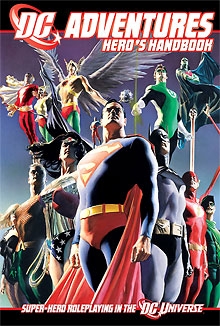
Batman, Superman, The Flash, Captain Marvel, Green Lantern, Zatanna, Robin and Nightwing, Plastic Man, Green Arrow, Black Canary, Aquaman – all find a place in the DC Adventures Hero’s Handbook. The included Archetypes (prebuilt characters representing the most common character types in comics) include the Battlesuit (Iron Man lite), and the villains in the back cover a wide range between The Joker, Darkseid, and Gorilla Grodd.

The game system called Power Level governs the highest stats characters can have, and allows for certain trade-offs between accuracy and damage, as well as between avoiding hits and toughing them out. It’s very intuitive, and once you get a handle on it, the hows and whys of what makes a character tick start coming together pretty quickly – as well as how someone like Batman could measure up so nearly to Superman (Batman’s 12, Superman weighs in at 15). Using Power Level and a few decent rules of thumb, balancing encounters is perfectly possible (if a little unnecessary at times).

Comic books are well-known for having differently powered foes square off and use each other’s Complications (and weaknesses) to gain the victory. While the game normally recommends having everyone play the same PL, there’s no reason why you couldn’t just have everyone play members of the Justice League – or toss the recommended PL of 10 out the window the other direction and do a medieval fantasy/swords and sorcery game set around PL 6 or 8.

It’s a bit more scientific than D&D’s “Challenge Rating,” but there’s a lot of art to it, too – a little practice and you’ll get the hang of it in no time. I’ll talk specifics later, right now I’m just giving you the big picture view.

Mutants and Masterminds Does Spellcasting Right.

Okay, so this is more from the player’s side of the screen, but so what?

Extra Effort is how characters do the exceptional things that heroes are known for; pushing beyond their limits for brief periods, or using powers/effects in creative and unexpected ways – the “Power Stunts” mechanic. It gets tiring under normal circumstances (for the character, not the player!), but one of the things Hero Points are used for is negating that fatiguing effect – encouraging creativity.

So, a M&M/DCA spellcaster will have a short list of effects – “Spells” – that they use all the time, but be able to stunt others in battle if they’re needed at the cost of fatigue. Or Hero Points. None of this “Once per day” stuff written on their sheet – anything that’s used that seldom is just a power stunt. Or possibly a Ritual. Did I mention that this game gets rituals right the first time, too?

For the first time, I can play a magic user and actually LIKE it without ever feeling limited by what my class does and doesn’t offer – regardless of the GM’s setting of choice. Heck, I could probably do a game set in Golarion, and like it.

DC Adventures is a GM’s Best Friend.

Let me let you in on a little secret. The last game I ran using the DC Adventures system had almost no prep time, and the villain that my buddy’s PC fought didn’t even have a proper statblock. He hardly noticed.

I sketched out a rough idea of the plot, gave my bad guy a Power Level and a few trade-offs, noted about 3 powers, and called him good. He was, after all, a one-shot villain who was basically a one-trick pony – more effort than that really didn’t make sense. Anything I needed him to have, I just noted down in my notes and added it to my rough sketch of him while I kept up projecting the baddie’s character.

From the GM’s side of the screen, M&M gives you all the tools you need to be as detailed or abstract as you want about the baddies you throw at your players. Some sample bad guys are included (as well they should be), but you can get a LOT done just using the Power Level charts and some imagination.

I’m a proponent of the “Lazy” style of GMing, so the less thinking I have to do in order to get the game happening and moving – the better off everyone is going to be. On the other hand, if you poke around Atomic Think Tank for awhile, chances are good that SOMEONE will have made stats for something similar to what you want already, which makes it easy to just borrow, plug, and play. Call it an online monster manual, if you will – or just run with the sample statblocks that are provided in the core book. A little imagination combined with those will give you plenty to play with, and customizing an opponent is easy – just add whatever effects/powers, Advantages, or whatever else you need to and make note of any changes to the Power Level.

DC Adventures Can Handle A Fight Scene.

Quite a few of them, actually. Including everything from a nice one-on-one type brawl to a simple mugging to a boss fight with dozens of minions.

Yes, minions. Minions work better here than they do in 4th Edition D&D, thanks in part to the damage system abandoning Hit Points in favor of a Toughness Save – minions go down on their first failed save, and players get to make Routine Attack Checks against them – taking a 10. They go down fast, which is what they’re meant to do, but a little blind luck could still keep them on their feet for an extra round.

My rule of thumb? Any NPC who isn’t marked “Important” is by default a minion. It simplifies thing quite a bit for me as a GM, and simulates the genre fairly well. After all, minions exist to make the PC’s look good.

Mutants & Masterminds Can Do Anything.

It’s a universal game system …

… cleverly disguised as a superheroes game. No, really. I’d use it for fantasy, I’d use it for anime, comic books (anything from Silver to Modern to Iron Age), games set in the Star Wars universe, or some video game world (Assassin’s Creed: The RPG, anyone? Anyone?), I’d use it for grim and gritty detective stories, or even lighthearted school stories. And all that using only the core book.

Yes, it’s that awesome. One book, infinite possibilities. One might even say it’s . . . magical.

Okay, there’s one little caveat to that statement – tactically oriented, squad/grid-based combat. But if you want something that feels like you’re part of a book or a movie (or anything with battlefields that aren’t measured in 100’s of feet), yeah. I’d use this one.

In closing: Make Mine Mutants & Masterminds!

A Beginner’s Guide to Superhero Gaming, Part Two

Last time we looked at what makes superhero gaming different (some would say superior, but that’s fightin’ talk) to other genres of role-playing. This turn around, it’s time to get down & dirty and take a close look at how Mutants & Masterminds Third Edition might just be the ideal system for your first foray into the world of the spandex’d hero.

For those of you that have played previous editions of M&M, I suggest you stick around, too. You’ll learn a little of what makes this edition even better than what came before. Steve Kenson has achieved the impossible, improving an already fantastic (nay, perfect) game. I’ll show you how, and what to look out for, as you turn the page.

In order to play M&M3e (an unwieldy acronym, but less tiring than typing Mutants & Masterminds Third Edition repeatedly) you need just one book: the core rules. This comes in a choice of two flavours – DC Adventures, which contains the entire rules system coated in wonderful DC Comics campaign setting fluff and artwork, or the vanilla all-you-can-eat Mutants & Masterminds Hero’s Handbook, which doesn’t. Both are available as either print (DC Adventures is hardcover, the Hero’s Handbook is softcover, and coming soon) or pdf. Of the two, DC Adventures is better value overall. The pdf is $20 (just $2.50 more than the Hero’s Handbook) and the Hardcover $40 ($7 more than the softcover Hero’s Handbook), but has better artwork (which is to be expected) as well as full stats for Batman, Superman & co. What’s not to love?

Compared to the World’s Most (or Least, depending on who you ask) Popular Role-Playing Game, M&M3e is an absolute bargain. There are other, simpler, cheaper superhero systems out there (ICONS is a terrific game, and at only $2 should be on every gamer’s hard drive) but M&M3e, like D&D, is The Daddy. It is the game to which all others aspire, the one which has (in our group, at least) overtaken all of the other superhero systems out there (and there’s no shortage of great ones right now) and we turn to time and again.

Where M&M3e differs from Second Edition is that it has taken a step away from the core d20 system as laid down by the D&D System Reference Document, and become more of a unique game in its own right. This is a Good Thing as it means the emphasis is placed more on elements that need pushing to the fore in the superhero genre.

For example, instead of just a single Dexterity stat, there are three: Agility (speed, grace and overall body control), Dexterity (manual dexterity and fine motor skills) and Fighting (the raw ability to hit or avoid a blow). This lets you create a character who is highly dextrous, but lacks combat talent (a Stage Magician, for example), a clumsy pugilist or acrobat (who lacks both fighting and manual dexterity skills). In previous editions, as with D&D itself, you would either have to create a character with high DEX and hand-wave their shortcomings, or use Feats and Skill Training to represent what should be natural talent (ie, Attribute-based).

The other changes to the system are likewise evolutionally rather than revolutionary in nature, and each one is an improvement over what has gone before. Feats are renamed Advantages and cover much the same ground, the Skills list is more tightly focused toward modern-day gaming and terminology, many of the Powers have reworked costs and mechanics, and all characters gain two Complications during character generation (which can act as plot-fodder for the GM). None of these are particularly earth-shaking, unless you’ve got Earth-Shaking as a Power, of course.

The biggest conceptual change is back with the attributes. In D&D terms, M&M3e just uses the Attribute Bonus as the stat. For example, STR 4 in M&M3e terms is the same as STR 18 (a +4 bonus) in D&D and previous editions of M&M. This change works especially well in the superhero genre where heroes (and villains) can have attributes far beyond human limitations.

This is the edition of Mutants & Masterminds where it grew up and learned to stand on its own two feet. Bless.

Enough of the mini-review. This is meant to be a beginner’s guide, so let’s start at the beginning. Again.

As with every RPG under the sun, your M&M3e experience is likely to begin with character generation. Mutants & Masterminds contains no classes, no races and none of the coat-hooks your typical D&D gamer will expect to be able to hang his hat on. That blank character sheet and pool of Points you spend to create your character from scratch can look awfully intimidating, so that’s why M&M offers up Archetypes. These are entirely optional pre-built character templates that the player can use as-is, adapt or draw from as inspiration. There’s no mechanical benefit to using an archetype (their points cost is calculated the same), but they do provide a quick and simple way of getting into the game. Imagine if the D&D Player’s Handbook included pre-generated character stats for an Elf Ranger, Human Wizard, Dwarf Fighter and Halfling Rogue, all ready to add a name to and play. That’s what Archetypes are in M&M. The ones provided are:

  • Battlesuit – Because everyone wants to play Iron Man, right?
  • Construct – You were made, not born. That means no birthday presents. Boo you.
  • Crime Fighter – You are a member of Batman Incorporated and want to be Nightwing or Batgirl when you grow up
  • Energy Controller – Covers everything from the Human Torch to Cloak & Dagger or Lightning from the JSA
  • Gadgeteer – I got your steampunk mixed in my superheroes
  • Martial Artist – I got your Bruce Lee mixed in my superheroes
  • Mimic – Anything they can do you can do, too
  • Mystic – Doctor StrangeFate!
  • Paragon – The iconic Superman who can fly faster than a speeding ticket and punch through walls
  • Powerhouse – Big, strong and ugly
  • Psionic – I know what you’re thinking. Stop that
  • Speedster – Can run at 64,000mph, thus making battlemat-using GMs cry
  • Shapeshifter – Proving that one size doesn’t fit all
  • Warrior – You are Aquaman, Ravager, or Conan

Phew! The Archetypes cover a huge number of superhero types and there’s bound to be at least one that appeals. As this is a Beginner’s Guide, I recommend picking an Archetype, then (if you’re feeling brave) customizing it a touch. Juggle the skill points around, switch out a Power or two, or change the Advantages. Add your own personal Complications, and you’re done.

Full blown start-with-a-blank-character-sheet generation is beyond the scope of this post, but it’s great fun to craft your own unique one-of-a-kind superhero. If you prefer pixels over pencil and paper, I heartily recommend Hero Lab. It is one of the best (if not the best) character generation applications around, and will create characters for M&M2e, M&M3e, Savage Worlds, Pathfinder and more. Well worth a look.

The most important part of character generation (whether you go the Archetype route or no) is to consider the team. Superhero gaming is, more than any other genre, about being a member of a group. You are a vital member of a superhero team who relies on each other to save lives, protect the innocent, and mash nasty villains into pulp. Think about how your powers and personality contribute to the team as a whole. Every one wants to be Batman, but no one wants to be the rest of the team that Batman is on. It might be cool to play the moody solo hero stuck in a team situation, but don’t be That Guy. At least, not for the first few sessions where you are all learning the game, ‘kay?

I’ll end with a quick example of character generation at work.

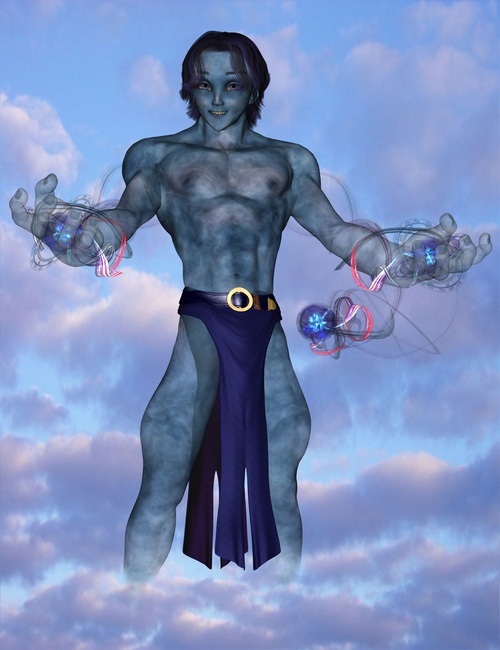
Meet Imagenie, a genuine honest-to-goodness Genie exiled from the Djinn City of Brass for questioning the authority of the High Council. In human terms, he is a teenager (albeit a 200 year old one) and would fit right in to a group such as the Teen Titans.

His main strength is his keen insight into other people – he has a high Awareness and terrific Deception and Insight skills that mean it’s almost impossible to pull the wool over his eyes. In a team, he is the guy in whom all the others confide – even when he is secretly pulling the strings behind their backs.

His powers are all wind-based. He can create tornadoes that he can fix in place or move around, let loose blasts of air, have it swirl around him or create “platforms” of air to carry himself and others. The wind-creations all seem to shimmer like half-created illusions, often of desert scenes and minarets. As he advances, he will gradually gain Illusion-based powers and truly come into his own as an adult Genie.

= Imagenie, PL8 120pp =
Str 2, Sta 3, Agl 4, Dex 6, Fgt 4, Int 4, Awe 8, Pre 6
Dodge 5, Parry 5, Fort 4, Tough 3, Will 12, Init +4

Close Combat 6, Deception 14, Insight 12, Persuasion 8, Ranged Combat 8, Sleight of Hand 8

Create 8 (200′, 250cu’, DC 18, Innate, Mobile, Stationary)
– AP: Blast 8 (200′ DC23, Area 60′)
– AP: Protection 8
– AP: Flight 8 (500mph, Platform, Affects Others)

Complications: Questions authority, Motivation: Find a way to return home

Using Henchmen to Help PCs in a Fight

So, I was reading a great article over at Dungeon’s Master about adding Henchmen to your 4E game, and I was reminded of a game I played in a while back… Our PCs had gathered henchmen followers and used them to help us in a large battle – not a “thousands of soldiers endlessly hacking away at each other,” but a “these prisoners are asking for our help to escape, but we’re going to need them to fight alongside us” kind of fight.

It was great!  Each of the PCs had about eight or nine NPCs, so the DM made up some quick and dirty rules.

  • All attacks and maneuvers were done on the PC’s turn, and in fact none of the NPCs got any actions or had any turns; they simply enhanced the PC and his actions.
  • A PC that had NPCs assisting him got a combat bonus.  This bonus was added to a PC’s:
    • attacks
    • damage
    • defenses (not applicable to area and burst attacks)
  • In order for a PC to gain this combat bonus, his NPC group had to stay in a collective group (two NPCs to a square, adjacent to the PC).
  • The combat bonus was determined by the number of NPCs in the PC’s group:
    • 1-2 NPCs = +1 combat bonus
    • 3-5 NPCs = +2 combat bonus
    • 6-8 NPCs = +3 combat bonus
    • 9+ NPCs = +4 combat bonus
  • When a PC was successfull attacked, the attacked player had the option to apply the effect/damage to his character directly, OR he could eliminate one NPC from his group.
  • NPCs could be targeted by enemies, they simply got the PC’s defense bonus.  On a hit, they were liminated (though they wre rarely targeted).
  • We didn’t worry about what NPC’s could actually do to help the PCs (such as a group of non-magic users helping a wizard); we just assumed that the NPCs were doing what they could – hitting, distracting, etc.

Combat flowed very well because none of the NPCs got actions of their own; they simply augmented the player characters.  It was pretty cool, and worked out well.  The main focus was that this system needed to be functional and VERY easy to implement.  Also, you don’t even need to make any changes because of who the henchmen are (sure, you could increase the combat bonus by +1 if the henchmen were highly-trained soldiers, but that should be it).

One thing to note: some players tried to apply most of the damage to their characters, thus “saving” the NPCs from getting killed (our Paladin made a valiant effort at this), whereas our rogue arbitrarily used NPCs as meat-shields.  It was both dynamic and pretty awesome.

For some quick down-and-dirty henchmen combat rules, these just work great.

You Wrote the Plot, Let the Players Write the Story

You’ve written your adventure and double-checked everything. You carefully planned the traps, lovingly made certain that the monster challenge ratings corresponded with the party’s level. You’ve created encounters tailor-made for each of your PCs and their players. You’ve got fiendish traps, challenging but not overpowering monsters, engaging roleplaying encounters — everything is perfect. Now you’re ready for the moment of truth: actually running it.

You’ve put weeks (or at least days) of work into creating this perfect adventure; will your players see this as the labor of love you know it to be?

No. They don’t care that it took you a week to balance the challenge rating of all the monsters. They don’t care that you spent hours constructing traps or researching the effects of cold on the human body for the climatic encounter with the ice wizard. They generally don’t even care if the name under “written by” is yours or Monte Cook’s. They only care about one thing: was it fun?

And in the name of fun, your players will take your finely crafted work and turn it inside out and upside down. They’ll shred your carefully laid-out sequence of events and turn it into a plate of tangled spaghetti.  They’ll insist on exploring unmapped areas. They’ll ascribe motives to your NPCs that never remotely crossed your mind, make major conflicts out of minor encounters you intended to be “local color,” and occasionally come to the right conclusions for all the wrong reasons.

What can you do to prevent this? Nothing.

That’s right: you can’t. You can’t stop players from running roughshod over your adventure. Nor should you try. Let them make a hash of your carefully planned time-line, and follow their lead. You wrote the plot: let the PCs write the story. They’re the stars of the show, after all. They’re the reason the show exists in the first place.

Granted, this is a lot easier said than done, especially if you have problems “winging” it. But no matter how carefully you planned your adventure, there’s going to be some point during it when you’ll have to improvise. This is one of the advantages of writing your own adventure: you know it inside and out, which will make it easier for you to adjust on the fly. You know what needs to happen and why it needs to happen. You can try to gently steer the PCs back on course, if that’s really necessary. You can drop hints, move important clues to where the PCs will find them, create an NPC on the spot who will send the characters back to the main storyline, if you need to.

If you’re feeling really confident, you can simply follow your players’ collective lead. When the PCs are way off, this is the time to step back to the core of the adventure. What is the basic conflict the PCs have to resolve? How can they accomplish that goal from where they are now? You may be able to shuffle around some events in your adventure or re-organize the time-line. You may find yourself creating encounters on the spot. The important thing here: let the players think they’re still on your time-line.

Pretend you planned all of this, that you foresaw the PCs’ actions and planned for them. The players will think you’re a genius. More importantly, the players will feel like they’re geniuses for having correctly “guessed” your intentions. And that’s the feeling that will keep them coming back to your table for more. The more you can give your players a sense of ownership of the adventure, the more you let their actions influence the course of the adventure, the more fun they’ll have. Let them surprise you. You may find that what they create will be even better than what you planned in the first place.

This is an excerpt from The Adventure Creation Handbook, due to go on sale at the end of February 2011.  From RPGGM.com