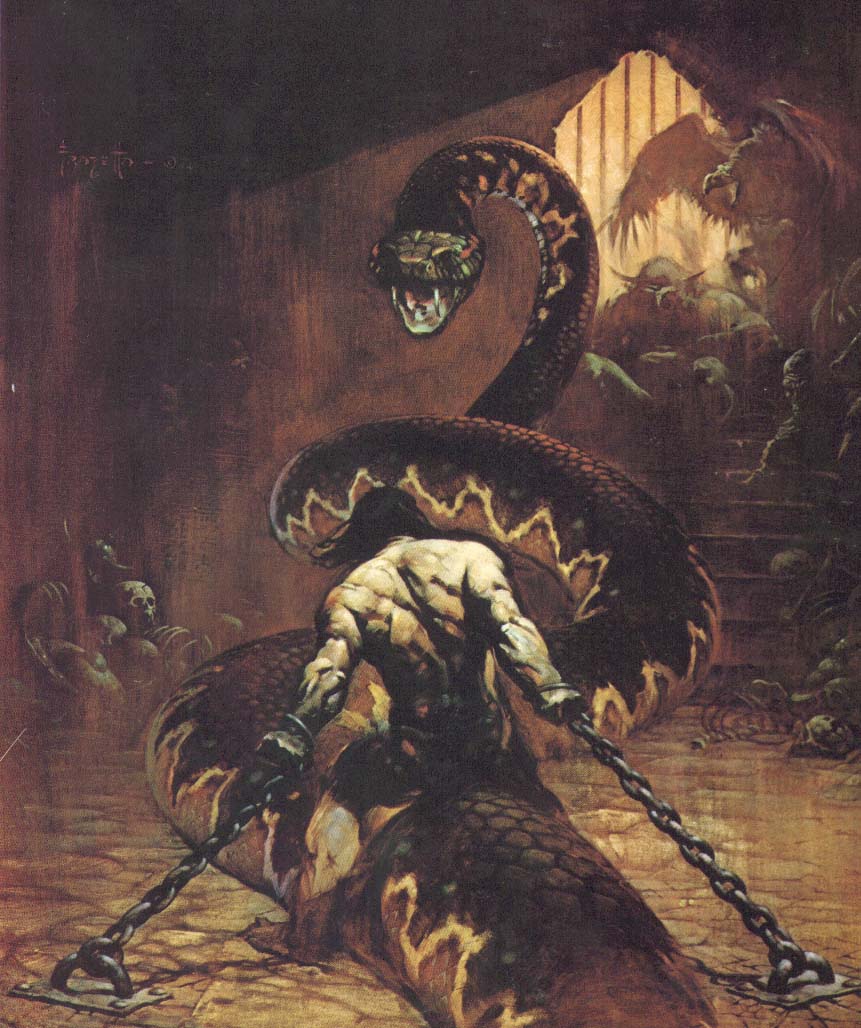
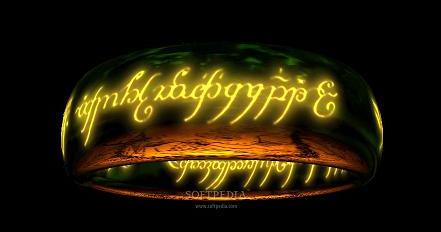
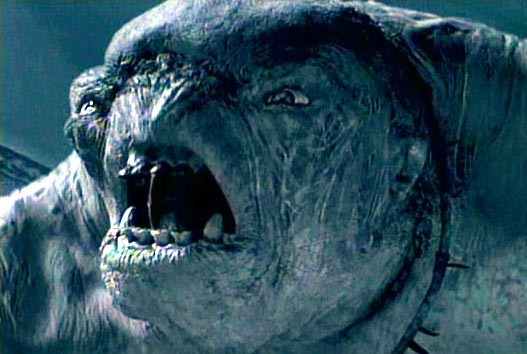
The One Real Problem With Magic Items (And How To Fix It)

We (and by “we,” I mean, “overly critical D&D players such as myself”) like to refer to problems we have with the game and pretend that they’re someone else’s fault. The truth is we probably just know too many people with bad attitudes.

My point: there IS a problem with magic items. That problem is D&D players. Not ALL D&D players, mind you. Maybe your group doesn’t have problems with magic items. But I know the guys I hang out with do, and I’ve heard about more than a few groups who do as well. The problem, however, isn’t what they think it is.

Let me illustrate my point with a story. And possibly another story, afterward, if I remember to include it.

Story Time

The first story: I have a friend who, in the course of his regular game, witnessed the death of another character in the party. Now, rather than anything that would make sense in character, rather than mourning the loss of a dear friend and comrade in arms, the first words out of his mouth were, “dibs on his magic items.” An attitude that not only screws up the expected loot/level and makes things unfair for the old player’s new character, but that also makes no sense in a culture that probably would bury a warrior with his sword so he’d have it in the afterlife. Assuming he has no family to inherit it.

The second story: (I’m sure this story is out there somewhere under the title of, “The Worst D&D Players EVER. Of All Time,” or something similar. It is not MY story; I do not own it, nor do I make any claims of originality. It was related to me by my cousin.)

I am told a tale of a group of players who, on learning that the sword on the wall of the town sweetheart (seriously, nice girl, everyone in town loved her like a daughter) belonged to her father who was an adventurer “back in the day,” the GOOD aligned players went off the rails and immediately began plotting how their characters would steal it from her.

They came back to the shop in the dead of night, and started moving furniture. Not terribly stealthily, I might add. They got the sword off the wall, but by the time they did they had woken the poor girl up and she was blearily coming down stairs (it took forever for her to succeed on her listen check, what with the penalties from being asleep). Now, rather than do the smart thing and pull a Grinch on her (“Why, little Cindy-Lou Who, I’m just sending this tree back to the North pole so I can fix the lights and bring it back.” EPIC BLUFF CHECK), they panicked. And they killed her.

Then they panicked some more.

Then they decided to clumsily hide the body under the floor boards.

And leave.

(It’s a sign of how terrible I am that my first thought wasn’t even, “well, that’s cold,” it was, “they should have IMMEDIATELY gone out of their way to get her res’ed.”)

Next morning, naturally, the town is freaking out over the horrible horrible murder. So one of the characters (with the distinctive white sword now buckled on his belt) decides to go investigate and see what he can find out, and is promptly arrested and scheduled for hanging by an angry town (justly so,) while the other players scream, “you took it WITH YOU?!?”

So the rest of the party decides that they’re going to rescue their companion. They wait until just before the hanging, and, in the middle of the angry crowd they draw their weapons and prepare to fight.

The DM facepalms for about the millionth time that evening, and the characters are all subdued and hung along with the first one.

Now, I have a number of points that I’m probably trying to make on some level (several of which can be better expressed by reading this slightly related piece from Cracked) but the main one isn’t that these were just terrible, terrible players. It’s that this shouldn’t have even been a thing.

Magic items aren’t too common. They’re too easy. They’ll put out their magic for just anyone. It’s a terrible, terrible truth. They should be a little more challenging if they want adventurers to respect them. How can we respect them if they don’t respect themselves? Okay, that’s enough of that terrible metaphor – I hope you take my meaning.

What can be done about this problem?

I’m glad you asked.

A Better Way

Here’s an idea. Wondrous items and such remain basically unchanged – let’s face it, that’s what happens when a wizard has a bit of fun. Magic weapons and armor and the like are the actual difficulty, and they’re the easiest part to fix, too.

The solution is surprisingly simple, but it comes in a few parts. The first: magic items are only magical because of the deeds of heroes and villains.

In other words, that magic sword started out as a perfectly ordinary sword (or maybe a family heirloom), but became magic when a brave adventurer took it with him and accomplished something heroic. The more heroic the deed, the greater the power. Villains can do the same thing – it’s about the STRENGTH of the deed, not necessarily morality. Unless we’re talking about holy relics.

That flaming sword? Someone used it to kill a flame-drake, or a fire elemental, and in that burst of heroic effort it was changed.

Mostly, this means that the power to make magic items is in the hands of the players by virtue of their being heroes. It’s up the the DM to hand out things that make thematic sense based on the challenges they have overcome. Essentially, don’t give “items” so much as “boons with the item descriptor.”

Part 2 is the rough one: magic items are attuned to the spirit of their creator, and unless re-attuned through new great deeds, their power fades with time until they are no longer magic. A magic item will seldom behave the same for two different heroes.

As a result, there are no stores that sell magic swords; there is little point in stealing the magic sword from a dying hero because its power will fade with time. A sword (or armor or whatever) should be passed on to a warrior’s family if s(he) has one, or buried with them if they do not.

Now, there’s a minor exception here – a blood relative or someone the hero named can access at least part of an inherited weapon’s power. But only if it was the hero’s (or villain’s) will that they hold it. Through their own heroic (or villainous) deeds, they can then restore the weapon’s power.

Last point: a magic item’s power is touched by all who have wielded it, if their deeds are sufficient.

It might not be identical, but there should be some notion of history if a hero claims a sword of prophecy from an ancient tomb.

Mechanics

Basically, this should work fairly similarly to the way Tourq presented magic items at the beginning of Classic Fantasy, or the way I’ve talked about them on several occasions since: multiple benefits stemming from one “source;” separation of crunch from fluff. Crunch-wise, the only requirement is giving items (or boons) that have something to do with what’s actually happened in the game, and rendering any stolen items useless on the grounds that the way they were taken wasn’t heroic enough. The fluff is what makes it interesting.

Devon Surtova, Vampiric Nobleman – Steal this Background

By Jonathan Baldwin
– The struggle by the damned to retain his humanity may be a neverending, lifelong battle…

Devon Alexander Hildebrand Surtova (just Devon to his friends, of course) was a member of the nobility, one of the younger sons of his house, and as such had no real chance of political power in his own land of Brevoy.

Not that he’d take it, simply offered it out of mere respect for his name. His ties to Surtova were the sort of resource that he didn’t put much stock in.

Early on, his strong independent spirit asserted itself, along with an overwhelming desire to prove himself on his own merits. After a brief attempt by the family to teach him spell-craft, he joined the military using a false name (his third name, actually: Hildebrand) and pushed himself harder than anyone expected. It wasn’t until reaching the rank of captain that he revealed the nature of his deception, feeling that he’d genuine earned it. Remarkably enough, he wasn’t thrown out of the service for it. Instead, his promotion was confirmed under his real name.

He was a skilled leader of men on the battlefield, instinctual and fast, leading from the front with tactics that always kept the enemy guessing. He had a knack for distracting the foe and exploiting their weak points; whether it was a family trait or not, it served him well. They put him in charge of a small elite unit, and they handled themselves admirably, completing missions that no one else would take.

He was respected, he had friends, he had a position, he even had the respect of his family — until…

…that fateful night.

Five of his close friends (the better part of his team) were returning with him from a party. All of them had had a bit too much to drink, the night was young, there was laughter and song… Until the vampire came. It attacked without warning, and though Devon fought well (even stabbing the assailant with what ought to have been a fatal blow) he was struck down, suffering a vicious bite, losing a lot of blood to the creature before his friends realized what was happening.

Only one of them survived the ensuing fight, and brought Devon to his family home. The change was inevitable.  Though he retained his own will and mind, he was obviously changed by the experience. The creature had taken his humanity, destroyed his friends, and as if to add insult to injury, it had broken his sword off at the hilt and stolen away with the blade.

Though his control of the vampire nature was exceptional, he now saw himself as a danger. And while his family would not kill him, they encouraged him not-so-gently to leave. They could not risk having him nearby, and the potential damage to their reputation was even worse (in their minds).

So he took to the call for adventurers who would go and deal with a bandit problem, in search of a place where he would be accepted for his skills and merits, and where his new-found condition might not matter so very much. He took with him only the clothes on his back (sturdy garments that would block the sun) and the hilt to his broken sword. He no longer needed it for fighting, but it helps keep him grounded against the beast… The little magic he once knew is long gone, and he has abandoned any attempt at his once prized swordsmanship – he fights better barehanded, now, and it’s better if he accepts it. If anyone asks about the hilt, he tells them, simply, “I am the blade, now.”

To his shock and pleasure, the adventurers he travels with have accepted him, fangs and all. They even respect his leadership ability. Devon now dares hope that with their help he might create a place where this kind of acceptance is the rule and not the exception.

Minori, Mistress of the Unseen Serpent – Steal this Background

Minori was originally an NPC who appeared in a short lived Anime-style martial arts game. Her chi-based powers were designed around concepts like deception and poison. I wanted to create a character who, under the right circumstances, could end a fight without her opponent even realizing what had been done to them.

That’s where the modifiers came in. I made her main attack both subtle – meaning, difficult to notice the attack itself – and insidious – making the EFFECTS of the attack equally hard to detect. Further, on inspiration from the old Monk ability, “Quivering Palm,” I added the triggered modifier.

I now had a character who could attack without being noticed, and who could delay that attack several times to activate at a later point. She was the perfect enforcer and assassin, and her enemies wouldn’t always realize that they’d been singled out until after she walked away.

Conceptually, Minori was always tied closely to the snake. In addition to her poisonous chi, her more mundane skills and martial arts training were patterned after the snake as well. She studied snakes to get more ideas, too. Some would have called her cold-blooded. Her friends, though, knew her better.

I now present to you, “Minori, Mistress of the Unseen Serpent,” as a proper Power Level 10 PC. All she needs is a pair of complications suited to your game, and she can drop right in.

Enjoy!

Download the Mutants & Masterminds PDF Character Sheet: Minori, Mistress of the Unseen Serpent

Image from Greywulf.

GMing 101, Remedial Kickass: OR, How the OSR can Make You a Better GM

I’ve never thought of myself as an “Old School” gamer. I’m not nearly old enough to qualify. What I have been doing is following their blogs, puzzling out for myself what it is about the new-school that seems to offend. . . and why so much of what they have to say makes an odd kind of sense.

It wasn’t until recently, however, that I was directed to Matthew Finch’s excellent primer on Old School gaming, and to the (free!) Swords and Wizardry 0e Retro Clone. While I can’t pretend that I’m ready to abandon my newer games, I do have something to say about this.

There are things we can learn from the OSR. (As soon as they agree on what OSR stands for, I’ll be sure to let you know.) Reading Matthew Finch’s primer made quite a number of things clear to me; something just clicked, and I want that bit of something in all my games.

Welcome, GMs, to GMing 101: Remedial Kickass.

Ok, so not quite like this.

Lesson 1: There Are No Rules: There Is Only The GM.

This is obviously an exaggeration, but hear me out. Older games had fewer “rules,” so more was left to the GM. Players could try anything, and it was up to the GM to make a ruling, ask for a die roll, and arbitrate the results. If a player wanted to leap down from the high ground and stab the goblin in the back on the way down, he didn’t get asked questions like “what feats do you have that make that different from a regular attack?” The GM just had him roll and told him what happened afterward. There was no need to consult the rule-book, because the GM was not meant to be a repository of rules written by other people – he was the judge, the Dungeon Master, and what the Dungeon Master says IS the rule. If he’s making it up as he goes, fine, as long as the game keeps moving.

This is definitely something that can be applied to ANY game – and indeed, most games include Rule 0 for exactly this reason – but it’s still something I need to internalize and apply. I don’t have to memorize 600,000 rules for every single thing that could happen in the game, I just need to learn the core mechanic and figure out how to think on my feet.

Put another way: Rules matter less than Rulings.

Lesson 2: Exploration is as Important as Combat…

… and as such should not be reduced to a series of die-rolls so that you can get to a fight faster. The old-school primer speaks of a time when characters didn’t have stats for things like Investigation or Spot or Listen. A time when players had to spell out what they were looking for and where they were looking for it. When Trapfinding was something that you didn’t see listed as a feat on a charactersheet, but something that everyone took responsibility for – heck, what did you THINK that 10 foot pole you’ve been carrying around was for? This can be applied to newer games as well, but it’s something that GMs have to learn to think about. And it doesn’t help that newer editions of The Worlds Oldest Role-playing Game have emphasized combat rules above almost everything else, to the point where some people get the mistaken idea that it’s about combat…

… Instead of being about exploring a fantasy world and finding out what’s around the corner – and surviving whatever it is. Players should be solving puzzles, not dice. Within reason, of course …

In the old days, (if what I’m reading makes sense) you spent as much time figuring out whether there were traps or secret passages in a dungeon as you did fighting, and because fighting was more narrative and less rule-intensive, you STILL may have had had time for more combats in a session than in some modern games. Speaking of which:

Lesson 3: Learn and Master the Art of Narrative Combat and Apply it Broadly.

Mutants and Masterminds 3e and the FATE system both put a greater emphasis on the narrative side of combat than the “tactical miniatures” side of things, and having done at least one of them, I can tell you from experience that it kicks ass. It’s nice to have mechanics to back it up, but they shouldn’t be necessary. Unless tactical miniatures is what you want, and what your players are thrilled about, learning the methods of narrative combat and the improvisation and description involved should be very important. Once you’ve learned, you’ll be glad you did – even mingling the two approaches can have positive results. As far as I’m concerned, these combat systems are “The New Old-School,” and as I set out to find the proper balance between the games I know and love and that old-school sense of wonder, they’ll be part of where I begin.

Lesson 4: If You Want Balance, Play a Video Game.

Old-school games don’t seem terribly worried about notions like game balance or powergaming. Granted, it’s hard to powergame when you roll 3d6, in order, for all your stats, and only THEN do you pick a class… but the fact seems to be that this just wasn’t a concern. Old-school gaming is about a world of fantasy, not a simulation. This can be broadly applied to newer games as well. Players have no right to expect that every encounter will be neatly balanced for their level, or that they’ll be able to beat everything they meet – or that everything they meet will be “just challenging enough to be interesting but not challenging enough to kill you.” Sometimes it’ll be easy. Sometimes they’ll have to run like a frightened rabbit. This is a world, after all, and the real world doesn’t work that way. Why should the game?

Similarly, there is no reason to assume that “everyone on one side dies” is the optimal end for every combat. Maybe some of them retreat. Maybe the players retreat instead. On the other hand, maybe a creative solution can let the players beat something they never would have beaten in raw, “slug-it-out” tactical combat.

Maybe this means worrying less about whether a class is “overpowered” or “underpowered.”

Lesson 5: Random Is Fair.

See my point about rolling your stats old-school style – before picking your class. I’d be oddly comfortable doing that with something like D&D 4th edition, which is weird; I’ve always preferred point-buy given a choice. But for some reason, in a game that HAS classes, this sounds strangely appealing… and it would nullify a lot of problems with power-gaming.

I’ve tried to play Pathfinder and been told that I needed X in a given stat in order to be “adequate,” and that I only had a 15 point array to work with. For some reason, that infuriates me, but I’d be totally cool with rolling my stats. Weird? Yeah, probably. Or maybe I’m just sick of the attitude of, “Let’s tie one hand behind our backs and THEN see how well we can powergame.”

Lesson 6: Be Flexible.

This goes back to my gripe about that particular Pathfinder DM who turned me off the game entirely – and a few 4th Edition DMs who have tried to do the same with that one. If a player says, I want to play this because it looks like fun, FOR ZOD’S SAKE, LET HIM. “Company Y didn’t update it, and there’s a reason” is a TERRIBLE attitude for a DM/GM to have; you don’t sell people on your favorite RPG company that way, and it’s an easy way to drive players away entirely. I almost gave up D&D entirely that night, not just Pathfinder. I was ready to toss my 4th Edition books out the window just so I’d never have to listen to that kind of garbage again.

Ahem. Luckily I decided to pursue the more productive reaction of, “I WILL be a better DM than this guy,” or we might not be taking part in this conversation.

On the other hand, I understand if you don’t want ninjas or samurai or warlocks or whatever and you’re going for a particular feel in your fantasy world … but reskinning a class to fit a particular setting is bloody simple, so that excuse still doesn’t work. Stop worrying about balance and let your player have fun, especially if you already know he’s not a powergamer and even MORE especially if he’s not playing that often. Don’t abandon common sense, but don’t work to destroy your player’s fun, either. Please. PLEASE.

Lesson 7: There Are no Bad Systems, Only Bad GMs.

Unless you’re playing FATAL. Then it’s probably both.

In all seriousness, though, I’m not advocating abandoning your system of choice and reverting to 0e; I consider that position untenable. But reading it over, trying it out (or one of the retro-clones of 0e or any number of other games), and learning something from it – that, I’m down with. And I highly recommend Finch’s free primer for Old School Gaming. It’s well worth a download and a read, and who can argue with the price?

Lesson 7.1: This is a Game; For Zod’s Sake, Have Fun.

See Rule 0 of practically every game system ever, and remember; if your players aren’t having fun, or you’re not having fun, or any combination of the above – somebody is doing something wrong. And as they say in poker, if you can’t tell who the sucker is, it’s probably you.

Thanks for reading. Now get out there and game! Excelsior!

Warriors and Warlocks, a New Fantasy

We’ve talked a lot on this site about adapting D&D 4th Edition to a more “Classic” feel, but if you’re burned out on D&D’s method of, “kill monsters, take/sell their stuff, and then go shopping,” re-skinning the game isn’t your only option. If you’re not particularly attached to a particular set of rulebooks, it may be more viable to look for something that was designed with your idea of “Classic Fantasy” in mind.

So let’s take another look at Mutants & Masterminds.

Clearly, He’s Lost It

No, really, I’m not joking. Follow my train of logic, here. If, A) Mutants and Masterminds is designed to do anything that is done in a comic book, then B) Anything that has appeared in a comic book is fair game. Anyone else familiar with the comics featuring Red Sonja and Conan the Barbarian, respectively?

Now, it’s true that DC Adventures/M&M 3E has yet to publish a single splatbook (though I’ve no doubt that they’re coming) and the core super’s setting is the only one provided by default. But let’s take a look at the game’s history and see what we find. . .

Oh, that’s right. Warriors and Warlocks. An M&M 2E supplement designed to adapt the game to a Swords and Sorcery setting. . . which is basically half a step from Classic Fantasy. Convenient.

I could just point you in that direction, but unless you’re playing M&M 2E (which really is a perfectly letigimate option) that would be irresponsible. What I’ll do instead is talk a bit about what’s applicable to using Mutants and Masterminds for a fantasy game.

Heroic, Paragon, and Epic: Tiers in M&M

Rather than having levels in classes, or dividing things into tiers the way D&D 4th Edition does, M&M is a point-buy system that uses something called Power Level (PL) to determine the focal point of the campaign – this sets a cap on pretty much all the important numbers in the game. Power level ranges from 0 (okay, 1, normally) for the incredibly weak, and upward to a soft limit of 20 for your omnipotent deities. Here are some rough ideas and benchmarks to give you an idea of how the system works – I’m going to try to use as many recognizable examples as possible to help establish the range I discuss.

PL 0-1: Mostly non-combat characters. May be highly skilled in certain areas – the skill caps are high enough that professionalism and skill mastery is perfectly possible, even at this low level of power. Aunt May, your housecat, and the vast majority of innocent bystanders and villagers fall under this category. Civilians.

PL 2-3: Gangsters, thugs, rogues, thieves, brutes with guns and a little of that dangerous knowledge. Goblins, perhaps. Maybe some orcs, even.

PL 3-5: Town guards, Police officers, SWAT Officers on the high end; by this point we’re looking at some serious combat training.

PL 5-7: Soldiers, mercenaries, and “street level” super-heroes. Think middle Heroic Tier and you’re not too far off. PL 5 is the minimum level assigned to “Trained Combatants,” which most police forces technically aren’t. Think the 1st few levels of D&D and you’ll have a fair idea.

PL 7-9: “Pulp” heroes, more experienced “street level,” superheroic side-kicks, the vast majority of characters from action movies, and most of the characters from Watchmen (with the probable exception of Dr. Manhattan) would probably fall in here. Robin is a good comic-book example at PL 8. Most of the characters from Lord of the Rings probably fit in here, too. Think somewhere between Heroic Tier and the first half of Paragon – that’s about where the focus of the game is going to be. Funny how that much range fits into so small a space, isn’t it? I’d also fit Conan the Barbarian and Red Sonja right in the middle of this range, along with (probably) Drizz’t. Oh, and most characters from Star Wars. Indiana Jones.

PL 10-12: One character of this level is likely responsible for the safety of a city, and may occasionally get into teamups for “the fate of the world.” In a fantasy game, you’re determining the course of the world on a regular basis, even when you don’t realize it. Catwoman, Green Arrow and Black Canary fall in PL 10 (and probably, so does Robin Hood). So does Nightwing. Batman, Aquaman and The Flash, are all officially rated at PL 12; I’d estimate Spider-man at around the same point. Zatanna is an 11 (though only offensively). Hercules and similar mythological figures (before they became comicbook characters) probably would fall in this range, too. I’d also estimate this range for the X-men and the Fantastic Four… Er, I mean, Future Foundation. (Blast you, Marvel, and your current continuity.)

PL 13-15: The heavy hitters of the Justice League and the Avengers, demigods, dragons, and Kryptonians: by this point, you’re occasionally dealing with the fate of the world without backup. Iron Man, Superman, Wonder Woman, Martian Manhunter, Captain Marvel, Thor, Loki, Green Lantern, The Silver Surfer, Hercules (post-comicbook incarnation), full-grown dragons, mad wizards, Elminster, the most powerful demons… And of course, D&D characters who are nearing (or have reached) their Epic Destiny.

PL 16: Black Adam, Darkseid, Thanos. Mad “gods” or beings powerful enough that they might as well be gods. Asmodeus, maybe.

PL 18: The Tarrasque, Galactus.

Okay, so by PL 18 I’m just guessing. It’s fun to think about, though.

A Question of Scale

Most superheroic-type games have movement speeds in the 1000’s of miles per hour. Fantasy tends to be a bit lower key with respect to movement rates, because traveling is part of the genre. Speed, Flight, and Teleport should be limited in their use – anything over 1 rank should have a flaw attached of some kind.

Speed may actually be an exception for some characters – it has been pointed out that about 2-4 ranks of speed can represent Olympic level running prowess. So consider that a legitimate option for Monks and the like.

Basically, though, the idea is to limit things down to the point where you could conceivably use a battle mat if you really wanted to. Not that you need one. If you’re looking for superheroes with swords, feel free to toss this out the window, but you’re losing out on the chance for “random encounters,” right?

I’d also highly recommend the optional rule from Warriors and Warlocks about not charging power-points for equipment that’s native to the setting, unless it’s really integral to the character concept.

What about magic items?

Powers with the Removable flaw – they cost you less points that way. Otherwise, they’re exactly the same as any other element of your character. You want them, you pay points for them – but in no way are they mandatory.

Where does class fit into all this?

Well, it doesn’t. Unless you want it to.

See, M&M doesn’t have classes. Warriors and Warlocks offered templates for fantasy archetypes, which worked beautifully – just pay the point cost for the template and you’re gold, with points left over for customization. Add some templates for fantasy races and you’ve got your D&D equivalent all set.

Here’s a sample template for M&M 3rd edition, assuming a PL 8 game – took me about 30 seconds:

Wizard: 30 points total.

  • Magic: Base effect, Magic Missile: Bolt of arcane force, Ranged Damage 8: 16 points
    • Choice of 5 other spells: 5 points
  • Skills: 8 points
    • Expertise (Magic) 8, Choice of one other
  • Advantages: 1 point
    • Extraordinary Effort
  • Complications: Power Loss (Magic: must be able to speak and gesture in order to cast spells.)

It gets pretty easy with practice. And in a PL 8 game, you’d still have 90 points left to finish defining the character. Take care of his attack skills in whatever way you want, boost magic’s rank if your trade-offs allow it, whatever.

“But wait,” you say, “what about my favorite prestige class?”

Well, in terms of flavor, here’s mine:

Arcane Archer: 26 points total.

  • Arcane Bowmanship: Base effect, Mystic Arrow: Bolt of arcane force, Ranged Damage 8, Removable (requires bow): 16 points – 6 points = 10 points
    • Choice of 5 other spells: 5 points
  • Skills: 8 points
    • Expertise (Magic) 8, Acrobatics 8,
  • Advantages: 3 points
    • Extraordinary Effort, Equipment 2 (Longbow)

Yep. It’s that simple. Though in the archer’s case, I might drop the rank of Magic by 2 and increase his accuracy instead – it all depends on what combat style I think he’d favor.

Which reminds me.

How does advancement work?

1-3 Power Points earned in a session, spent on whatever the player wants. It’s a little slower than D&D in the sense that you don’t have big, sweeping changes happening every few sessions, but the gradual flow of Power Points is generally nicer – want a new “Feat/Advantage”? Pick it up after the session. Need another magic item? Save your points, or get it as an alternate effect of one you already have. Feel like you’ve exercised a particular skill? Boost it a little with the points you earned from the session and become even better at it. Used a particular power stunt a lot and you really liked it? Get it as an alternate effect so you can use it even more often (Power Stunts often wind up being a way of trying out new things before you spend points on them).

What about combat?

Fast and brutal. Especially if you run out of Hero Points – all the more reason to let those complications trigger! But on the plus side, healing is usually pretty fast between combats (like a comicbook) (unless it’s a lasting injury complication) – so you can play without a cleric if you want to.

Okay, so the mechanics are good, but why should I switch?

Here’s my top 11 reasons. Why top 11? Ask the Nostalgia Critic.

  1. You want something that melds the benefits of rules-lite gaming with the best elements of d20.
  2. You’ve ever forgotten what character you created and started playing the same guy you always play at the table.
  3. You want a game that features fast-paced, somewhat brutal combat over the slow dungeon crawls you’ve been doing.
  4. You hate the rigid nature of classes and multiclassing; you came to build a character, not a collection of stats.
  5. You want something flexible enough that when you decide next month that you’d really rather play Cyberpunk, you don’t have to learn an entire new system in order to do it.
  6. You don’t like spending your time between sessions “shopping” and trying to guess which spells will be useful next time.
  7. You like a game that emphasizes the genre you’re playing in and the world around you over the rules they’ve devised to simulate it.
  8. You like a game that has a strong community of helpful people, like the one at Atomic Think Tank.
  9. You like the idea of a game that simulates a genre, not reality.
  10. You’re sick of “Spells per day.”
  11. You want a game that puts the role back in role-playing.

Welcome to Warriors & Warlocks

How FATE Relates to Other Games

I’ll admit, I’m a slow convert and I love my d20, but the more I read about FATE, the more tempted I am by it (I love universal systems. I don’t know why. It’s an illness). But since the game isn’t my primary area of expertise, I thought I would offer some counterpoint to the current direction of The Shack – specifically, how FATE relates to some of the other systems I play with regularly, and maybe, just maybe, some ideas on how to get a little of that FATE magic in your other games.

Aspects, Complications, And Extra Effort: FATE in DC Adventures

I remember reading somewhere that Steve Kenson was inspired by systems like FATE, Fudge, and so on, and that they were what drove him to write ICONS. But the other system he designed already has a lot of that magic back-doored in. Here’s a quick primer.

Complications are like the negative side of Aspects; in the same way that an Aspect can be compelled by the GM (earning you a Fate point in exchange for a penalty), Complications can be invoked (by either the player OR the GM!). There are are probably as many kinds of complications as there are Aspects.

The most basic kind of complications are Complications as Character: every character has a list of complications that make it easier to get into their head and into their world. Here’s a list from the book:

  • Flashbacks: Batman is sometimes stunned by traumatic flashbacks to the night his parents were murdered, especially in connection to Crime Alley, where the killings took place.
  • Nemesis: The Joker
  • Obsession: Crime fighting
  • Relationships: For a loner, Batman has a number of important people in his life, including Nightwing, Robin, Oracle, Alfred Pennyworth (the faithful Wayne family butler) and Police Commissioner James Gordon.
  • Responsibility: Batman considers Gotham “his” city, and his responsibility.
  • Secret Identity: Bruce Wayne

And here’s one I wrote awhile ago for a Marvel character writeup I did on Atomic Think Tank:

  • Guilt: Deaths of loved ones; Uncle Ben, Gwen Stacy
  • Significant Other: Super-model Mary Jane Watson
  • Relationships: Harry Osborn, Aunt May, Black Cat, Flash Thompson, Betty Brant, much of the Superhuman community
  • Low Finances: Peter is almost always strapped for cash.
  • Nemesis: J. Jonah Jameson
  • Enemy (Peter has tons of them): Norman Osborn, Eddie Brock, and the rest of a sizable rogues gallery.
  • “With Great Power, Comes Great Responsibility“: That’s the catchphrase of old Uncle Ben.  If you missed it don’t worry they’ll say the line again and again and again.
  • Reputation: J. Jonah Jameson makes sure that this is as bad as it can get.
  • Secret Identity: Peter Parker
  • Radioactive Blood: This can make transfusions difficult, to say the least…

(And before you ask, One More Day never happened. It NEVER HAPPENED. Ahem.)

And of course, Superman’s list wouldn’t be complete without Vulnerability to Kryptonite, right?

As a GM, seeing a list like this is great. Instantly, it gives you a feel for what kind of game the player is actually looking for, and gives you a whole HOST of ideas for how you can mess with him. And that’s just awesome, isn’t it? If you use something on the list against the player, give ’em a hero point. Isn’t bribery FUN??

There are also temporary complications, like Running out of Ammo, or Still having trouble seeing straight from that last attack. The former one is something that a GM might “Compel” on a player who’s been using that gun too much – effectively, “take a hero point and think of a new way to solve your problem.” The second one is even more entertaining; players are allowed to use complications to explain a failure, gaining a hero point and accepting an appropriate penalty – but only if they describe it narratively.

“But wait,” you’re saying, “that’s only half of what Aspects do. Where does the other half come in?”

I’m glad you asked. This is where I talk about Descriptors.

Descriptors, simply put, describe things. Yeah, I know, revelatory. They describe powers; they describe the environment; they describe origins, heroes, villains, purses and guns, space ships and laser beams. A descriptor is the difference between, say, burning hands and cone of cold.

Why do they matter? Well, I’ll tell you one good reason: Extra Effort.

Like Fate Points, the Hero Point economy in DCA/M&M is meant to be rapid. You need something to spend them on, right? This is where Extra Effort comes in.

Extra Effort can be used to gain:

  • Extra actions
  • Gain a bonus (+2, or increase an existing bonus to +5) on a single check, or negate a -2 penalty. (Which reminds me: the “GM’s Best Friend” is actually pretty much the core mechanic (or at least the core modifier) of most of the game. +2/-2/+5/-5, depending on how good or bad something is for you, and you’re good to go. SO much simpler than all those weird inconsistent rules from D&D, like “50% miss chance.” This is something that I seriously consider importing to every other d20 game I play as a house rule.)
  • Boost the rank of pretty much any one thing by +1 for a turn
  • Perform a Power Stunt, letting you temporarily gain a new effect for a power based on its descriptors.
  • Etc.

Normally, Extra Effort causes Fatigue; if you’re already fatigued then it causes Exhaustion. If you’re already exhausted, then it’ll incapacitate you. Hero Points? They change all that. Hero Points let you Edit the Scene: they give you re-rolls if you want them, but most importantly they let you shake off fatigue and other conditions like it (or move from Exhausted to Fatigued). There are a whole host of other uses, but I’ll shorten the explanation and just say that they’re kind of like FATE points. Oh, and of course they can be used to avoid a complication, (“No! I still have bullets! Keep your hero point, and here’s another!”) But honestly, why would you want to?

In Other Games…

So, we’ve seen how something like Aspects can look in another game system. How well would this translate to another game, like, say, D&D 4th Edition? Or Pathfinder?

Honestly, I think it’d work pretty darn well, though the list of things that you can do with them would have to change a bit. 4th Edition already has Action Points – pull that system, remove the spending, and plug in a modified version of Extra Effort (complete with “Awesome Points” or whatever you want to call them) and you’re good to go. With the lack of Power Stunts as an option (though you could add them, in theory) I’d go with Aspects over Complications, but either should work well – and make picking them a mandatory part of character creation. Ideally fairly early on in the process. Every character should have at least 2 – better characters have more.

Proposed House Rules for D&D Variants:

Author’s note: these rules are un-playtested; while they should, in theory, work excellently, there is always the possibility that I have missed something critical. Still, I’d love the chance to try them out.

  • Make ammo a complication. We all know that you’re not tracking ammo right now, anyway; this way, you have the ability to make the players run out of it at dramatic moments. Toss ’em a hero/fate/awesome point for their trouble.
  • Material Components are a potential complication. Just try not to be too mean about it. Seriously, though, this is another thing that gets cut in about the first five minutes with every D&D group I’ve ever met.
  • Establish a list of things that you can do with your point economy that is more impressive than just “take an extra Standard Action.” Truth be told, there are moments when I consider switching to Fate’s action system – you get one action, period, and if you want a move action, too, it’ll cost you a -1 on your die roll. Speed the turns along! But that’s an aside for another time. Most of the Extra Effort list could probably be used as is, really.
  • Not having enough rope is a complication. Having an extra 50ft coil on hand might cost you a hero point.
  • Not having enough money to pay the innkeeper is a complication. Let’s be honest; I hate the amount of time spent shopping for things in D&D, and a more abstract wealth system combined with the Dark Sun rules for Boons (or the Classic Fantasy variation found on this site!) goes a long way toward easing my pain. Make money a Complication/Aspect on top of that, and you’ve taken another step toward a more narratively focused game (and drastically reduced your bookkeeping).
  • Flat modifiers that make sense. Anything that calls for a 50% miss chance becomes a -5 penalty (or a -4, if you want to be consistent with 4th Editions “DM’s Best Friend.”) Anything that calls for a 20% miss chance becomes a -2. The next time you fight a ghost (or from behind cover), you’ll thank me (one less die roll! Hallelujah!)

Or, on the other hand, if that sounds unappealing:

  • Convert your D&D game to another system, like FATE, or Mutants and Masterminds. Either one could serve your needs well, honestly (M&M 2nd Edition even had a source-book for playing Swords and Sorcery style gaming, called Warriors and Warlocks). I may offer my own notes on how to do fantasy with M&M in a future series.

Anyone out there who’s used Aspects in D&D/Pathfinder/Insert System of Your Choice Here, please feel free to chime in with suggestions or experience. How did it work? What needed to be changed?

Happy gaming!

The Best of Mutants and Masterminds

To finish off our Supers week at the Shack, we have Jonathan Baldwin’s take on the game – Mutants & Masterminds.

I love comic books. I always have (it’s not exactly a secret). I love everything about them; the over-the-top story-lines, the colors, the grand and exciting battles, the ridiculous speeches and origin stories, rings of power, radioactive spiders, last survivors of a dying world… okay, everything except the nineties with its excess of guns and shoulder pads, but I missed most of that at the time in my attempts to recapture the Silver Age. Lucky me.

Consequently, I love Mutants and Masterminds/DC Adventures. It’s the most natural thing in the world for me. It plays like a dream and turns on a dime; it offers all that comic-book craziness as well as the finely-tuned character creation engine that lets me create a reasonable set of stats for just about any character in fiction. Unfortunately, it’s ruined film for me; I can’t watch an action movie without thinking in terms of Minions, Complications, Hero Points and Extra Effort. It’s easy; it’s like the language of fiction.

And I’m here to tell you a few of the tricks I’ve worked out from my experiences with the system. Interested? Let’s go.

Note: For the purposes of this article, I will be treating “DC Adventures/DCA” and “Mutants & Masterminds/M&M” as synonymous with each other and using them interchangeably.

DC Adventures is a role-players dream.

If you like Fate’s Aspects, you probably have some idea of how Complications work already. Complications give your GM ideas for things to throw at you, they capture your nemesis and major relationships, your responsibilities, your Codes of Honor, your critical overwhelming Kryptonite-like weaknesses, or, say, DareDevil’s blindness. Invoking a complication – regardless of whether the GM or player invokes it – gives you a shot at earning a Hero Point. Thus, you get incentive to play your character well (even if it might otherwise be a disadvantage) and give the players more control over the game and the story, which can only be good.

Complications give you a way to define a character beyond mere numbers. Not that the numbers aren’t good… in fact, I’d go so far as to say that they’re very good. But this was the first system I’d encountered that let me play the character I wanted, both mechanically and in terms of their personality.

DC Adventures Can Stat Anything.

Batman, Superman, The Flash, Captain Marvel, Green Lantern, Zatanna, Robin and Nightwing, Plastic Man, Green Arrow, Black Canary, Aquaman – all find a place in the DC Adventures Hero’s Handbook. The included Archetypes (prebuilt characters representing the most common character types in comics) include the Battlesuit (Iron Man lite), and the villains in the back cover a wide range between The Joker, Darkseid, and Gorilla Grodd.

The game system called Power Level governs the highest stats characters can have, and allows for certain trade-offs between accuracy and damage, as well as between avoiding hits and toughing them out. It’s very intuitive, and once you get a handle on it, the hows and whys of what makes a character tick start coming together pretty quickly – as well as how someone like Batman could measure up so nearly to Superman (Batman’s 12, Superman weighs in at 15). Using Power Level and a few decent rules of thumb, balancing encounters is perfectly possible (if a little unnecessary at times).

Comic books are well-known for having differently powered foes square off and use each other’s Complications (and weaknesses) to gain the victory. While the game normally recommends having everyone play the same PL, there’s no reason why you couldn’t just have everyone play members of the Justice League – or toss the recommended PL of 10 out the window the other direction and do a medieval fantasy/swords and sorcery game set around PL 6 or 8.

It’s a bit more scientific than D&D’s “Challenge Rating,” but there’s a lot of art to it, too – a little practice and you’ll get the hang of it in no time. I’ll talk specifics later, right now I’m just giving you the big picture view.

Mutants and Masterminds Does Spellcasting Right.

Okay, so this is more from the player’s side of the screen, but so what?

Extra Effort is how characters do the exceptional things that heroes are known for; pushing beyond their limits for brief periods, or using powers/effects in creative and unexpected ways – the “Power Stunts” mechanic. It gets tiring under normal circumstances (for the character, not the player!), but one of the things Hero Points are used for is negating that fatiguing effect – encouraging creativity.

So, a M&M/DCA spellcaster will have a short list of effects – “Spells” – that they use all the time, but be able to stunt others in battle if they’re needed at the cost of fatigue. Or Hero Points. None of this “Once per day” stuff written on their sheet – anything that’s used that seldom is just a power stunt. Or possibly a Ritual. Did I mention that this game gets rituals right the first time, too?

For the first time, I can play a magic user and actually LIKE it without ever feeling limited by what my class does and doesn’t offer – regardless of the GM’s setting of choice. Heck, I could probably do a game set in Golarion, and like it.

DC Adventures is a GM’s Best Friend.

Let me let you in on a little secret. The last game I ran using the DC Adventures system had almost no prep time, and the villain that my buddy’s PC fought didn’t even have a proper statblock. He hardly noticed.

I sketched out a rough idea of the plot, gave my bad guy a Power Level and a few trade-offs, noted about 3 powers, and called him good. He was, after all, a one-shot villain who was basically a one-trick pony – more effort than that really didn’t make sense. Anything I needed him to have, I just noted down in my notes and added it to my rough sketch of him while I kept up projecting the baddie’s character.

From the GM’s side of the screen, M&M gives you all the tools you need to be as detailed or abstract as you want about the baddies you throw at your players. Some sample bad guys are included (as well they should be), but you can get a LOT done just using the Power Level charts and some imagination.

I’m a proponent of the “Lazy” style of GMing, so the less thinking I have to do in order to get the game happening and moving – the better off everyone is going to be. On the other hand, if you poke around Atomic Think Tank for awhile, chances are good that SOMEONE will have made stats for something similar to what you want already, which makes it easy to just borrow, plug, and play. Call it an online monster manual, if you will – or just run with the sample statblocks that are provided in the core book. A little imagination combined with those will give you plenty to play with, and customizing an opponent is easy – just add whatever effects/powers, Advantages, or whatever else you need to and make note of any changes to the Power Level.

DC Adventures Can Handle A Fight Scene.

Quite a few of them, actually. Including everything from a nice one-on-one type brawl to a simple mugging to a boss fight with dozens of minions.

Yes, minions. Minions work better here than they do in 4th Edition D&D, thanks in part to the damage system abandoning Hit Points in favor of a Toughness Save – minions go down on their first failed save, and players get to make Routine Attack Checks against them – taking a 10. They go down fast, which is what they’re meant to do, but a little blind luck could still keep them on their feet for an extra round.

My rule of thumb? Any NPC who isn’t marked “Important” is by default a minion. It simplifies thing quite a bit for me as a GM, and simulates the genre fairly well. After all, minions exist to make the PC’s look good.

Mutants & Masterminds Can Do Anything.

It’s a universal game system …

… cleverly disguised as a superheroes game. No, really. I’d use it for fantasy, I’d use it for anime, comic books (anything from Silver to Modern to Iron Age), games set in the Star Wars universe, or some video game world (Assassin’s Creed: The RPG, anyone? Anyone?), I’d use it for grim and gritty detective stories, or even lighthearted school stories. And all that using only the core book.

Yes, it’s that awesome. One book, infinite possibilities. One might even say it’s . . . magical.

Okay, there’s one little caveat to that statement – tactically oriented, squad/grid-based combat. But if you want something that feels like you’re part of a book or a movie (or anything with battlefields that aren’t measured in 100’s of feet), yeah. I’d use this one.

In closing: Make Mine Mutants & Masterminds!

A little less Drizz’t and a lot more Conan

So, we’ve discussed the reskinning of the many races of 4th Edition D&D. We’ve talked about making monsters unique and monstrous, and we’ve talked about ways to alter the way Magic Items are used in the game. What’s left? The fun part. Actually writing a setting – thinking about what makes up “Classic Fantasy” as a genre, and extrapolating outward from there.

Let’s start with a run-through of the assumptions on which our new fantasy world will be based, using a process similar to that which D&D’s existing settings are based on. We’ll examine the assumptions used to construct “Points of Light,” and see what needs to be changed.

A Dark World

This assumption can be toyed with. D&D’s “Points of Light” setting assumes that there are no great empires left in the world; Tolkien’s “Middle Earth,” has at least one, the land of Mordor. Minor realms (like Gondor and Rohan) certainly qualify for this, and the idea that no settlement is exactly “safe,” is certainly a valid assumption. The world of Classic Fantasy, then, is A Dark World. It is Fantastic – magic is very real, monsters are very real (if sometimes rarer than other settings), and most decent fantasy settings have plenty of Ancient Mysteries lurking in the background, just waiting to be explored.

Monsters are Rare

This is the first point on which we begin our departure from the Points of Light setting. Monsters are scarce, but terrifying. They are alien, powerful, and deadly. The briefest encounter with a monster like a Dragon (Mog), a Minotaur (Jason and the Argonauts) or even a Troll (Grendel of Beowulf fame) is enough to spawn legends. Proper nomenclature for monsters might not even exist; each monster may well have its own name, and the locals might be unaware that it’s part of an entire race (the, “Grendel’s Mother” phenomenon).

The exception are the monstrous races, like Dark Elves, Orcs, Ogres, Goblinoids, and so on – pick out a selection of them and populate a few barbaric tribes or wicked civilizations beneath the earth. There are enough of these to offer a decent selection of cannon fodder, but there will typically be only be one monstrous race in a given campaign. They might use larger monsters in place of siege engines or tanks (Tolkien’s Oelephants and Cave Trolls).

A really great Classic Fantasy style setting should probably be run as a Sandbox game – the players are free to explore, and free to run away from a fight. Not everything the players will meet in this type of game will be weak enough to beat the first time.

Adventurers are Exceptional

This one stands pretty well as is, but it can be easily varied. I’d say the default assumption – that Adventurers are a hardy stock, a cut above average, and with an unfortunate tendency to have bards writing songs about them – holds up well under pressure. On the other hand, some of the defaults of the game can be adjusted for a grittier feel.

The Civilized Races Band Together

This one also survives largely unchanged; the civilized races being Dwarves, Elves, Humans, and Hobb– I mean, Halflings. While there may be some distrust between them (Humans cannot be trusted! They’re greedy and weak!), they still know who to call to get things done; each other.

Magic is Not Every Day, But …

Here’s another one that may get played with. There are two possibilities here. …

  1. But it IS Natural: People generally don’t have a problem with magic. They aren’t superstitious about it, but it’s still rare enough that it doesn’t often impact the lives of the everyday person in any but the smallest ways. Tolkien’s Middle Earth is a fair example of this kind of world, as is – in theory – the Points of Light setting. …
  2. But it ISN’T Natural, Either: If you look at most of the original Conan the Barbarian stories as written by Howard, you’ll find that magic is most often in the hands of the antagonist. Magic might corrupt the land around the caster the way it does in Dark Sun, or worse, it might corrupt the mind or body of the caster. This is “Swords and Sorcery,” and I would say that it’s important to consider as part of the Classic Fantasy genre – they’re closely related. Arcanist PCs in a world like this might have to hide their nature from townsfolk, and carefully control the way they cast their spells to avoid corrupting the land around them.

For ideas on how to treat magic, or attitudes toward casters, read Howard’s original Conan works, some of the newer Red Sonja comics, and the Dark Sun Campaign Setting – only without Psionics as a side-step of the issue. In fact, Dark Sun’s combination of boons and inherent bonuses provide a decent alternative to the magic item rules as well, so read them over if you’re looking for more options.

It should be noted that divine casters won’t have the same problems – miracles, while less common than in a more typical fantasy setting, don’t tend to carry the same kind of stigma as arcane magic. Party conflicts could provide excellent role-playing fodder! Of course, religious conflicts might be more pronounced, as well – people may not wish for healing from the cleric of a rival deity.

The rest of the standard assumptions (Gods vs. Primordials, and so on) vary wildly from setting to setting. Classic Fantasy worlds will often have their own very unique cosmology that isn’t necessarily related to the D&D standard at all – see Tolkien’s The Silmarillon. It might use real-world mythologies, or none at all. Or, it might use the standard set of ideas that accompanies D&D 4th Edition – it’s all up to you, the world builder.

High Fantasy vs. Heroic Fantasy

Fantasy, as a genre, is defined pretty loosely as, “stuff with magic in it,” so really, there’s a LOT of wiggle room for how you might tell stories within the boundaries of Classic Fantasy. I split Classic Fantasy into “High” and “Heroic,” but there’s plenty of room to quibble about these labels. The chief difference is what kind of stories might be told. Since High Fantasy is the most different from how D&D is normally played, I’ll talk about that first.

High Fantasy usually centers on a major struggle between Good and Evil (as absolutes, and as real-world forces); between Light and Darkness. Between Mordor, and … everyone else.

A High Fantasy Villain will probably be the closest thing to the embodiment of evil available, but usually NOT an actual devil. Sauron. The Lich King. Voldemort. Darth Vader (okay, not really, but picture a medieval fantasy version of Darth Vader and ignore everything that isn’t Star Wars: A New Hope, and you’re close to what I’m talking about). That kind of thing. They will typically have titles, like, “The Dark Lord,” or “Queen of Evil.” He will be seemingly unbeatable. Possibly even actually unbeatable.

His undoing? The One Ring. The Sword of Truth. The Hammer of Morradin; The Deathly Hallows. A Horcrux to destroy. The MacGuffin, or possibly even a proper Artifact of Doom.

The vast majority of High Fantasy villains either:

  1. Can’t be defeated without a specific weapon,
  2. Can only be killed by the subject of the prophecy (or even obvious loopholes like, “No Man can Kill Me!”), or
  3. Can be disposed of via some seemingly easy method like, “destroy the phylactory!” or, “Take the Ring to the Fires of Mount Doom, where it was Forged; only there may it be destroyed.” That kind of thing. Something that sounds easy until you remember that Mount Doom is in the heart of Mordor, and surrounded by armies of orcs and goblinoids, and that you have to get through an entirely different army of orcs and goblinoids in order to get there – oh, and did I mention that it’s going to try to turn you into a villain on the way?

Yeah. It’s kind of like that.

High Fantasy is very “Big Picture,” with lots of “End of the World as We Know It,” plots.  That sort of focus lends itself well to Paragon tier play (under normal circumstances). But this is a Classic Fantasy game. You’ll likely be focussed on the main goal from the moment you set out on your first adventure – you’ll just have to be more careful about getting there (unless the player’s do something stupid and get themselves killed right away).

Also? You’ll want a map. Your best bet is to leave large portions of it blank and let the players fill in new details as you, “discover” them – or as you, the DM, make them up.

By contrast, Heroic Fantasy is more about the struggle of the heroes as individuals toward whatever their particular goals are – revenge, power, overthrowing an evil dictator of a more mundane stripe, that sort of thing. It’s less about absolute good against evil, and more about the personal problems of the people in the party and those they encounter. Politics may be a feature, and of course Evil Wizards are stock-and-trade. You may spend a lot of time in a tavern…

Let’s be real, here: Heroic Fantasy, as a genre, was codified by quite a few things: Conan was one. Dungeons and Dragons was another. Yes, that’s right. Heroic Fantasy is basically just saying, “Hey, let’s just play some D&D – and maybe in about 10 levels, when we find out what was driving all those seemingly unrelated plot elements, we can save the world.”

Of course, there are still good sources of inspiration if you want a more heroic-fantasy feel to your Classic Fantasy setting. See Conan, Xena: Warrior Princess (and to a lesser extent, Hercules: The Legendary Journeys) the previously mentioned Red Sonja, and many others – I highly recommend The Crimson Shadow and The Highwayman, both series by R.A. Salvatore, as excellent variations on the Heroic Fantasy ideal.

Getting Things Started.  What Happens BEFORE We Get to the Tavern?

Let’s take another look at Lord of the Rings for a moment. The Fellowship of the Ring is made up of:

  • Aragorn, Ranger, master swordsman, descendant of kings and bearer of destiny
  • Boramir, another great warrior
  • Legolas, Expert archer and twin-sword style master; all around elf
  • Gimli, Axe wielding gruff dwarf
  • Gandalf the Grey/White, master of magic
  • and Mary, Pippin, Frodo and Sam, four basically ordinary hobbits fresh out of the shire.

One of these things is not like the others… but in all seriousness, which are more likely to be starting characters in a Classic Fantasy game? That’s right: all of them. It just depends.

Luke Skywalker provides a similar example: naive farm-boy fresh off the farm strikes fierce blow against Evil Empire! Put him next to Han Solo, who’s been adventuring for years, Leia, Obi-Wan . . . yeah, I know, the Five Man Band is rarely balanced in film, but there’s something odd going on here.

This is about 2 parts hand waving (except in the case of the fairly incompetent hobbits) and 1 part investment into the world. Here’s a Classic Fantasy opening:

Start the heroes out in their home town, where everything is great, peaceful, idyllic. At like, level 0. Bad things happen, an artifact is discovered, or destiny revealed, and next thing you know the villains have shown up and the place is burning down around their ears.

This is also kind of how Star Wars opens, lending credence to my personal theory that the original Star Wars trilogy wasn’t actually a Science Fiction story, but rather a Fantasy story set against a Science Fiction backdrop. But that’s a discussion for another time.

On the flip side, we have the opening of every Conan the Barbarian story ever, which basically features an extremely competent adventurer who’s happened to have a run of bad luck. Again. I have yet to read a story that doesn’t start out with something like this: Conan was on top of the world, and then bad things happened and now we have something dramatic to tell a story about!

This illustrates another style of play: give your players everything (king of the castle, lords and ladies of the realm, start them at a higher level, the works). Then take it all away from them and make them fight to get it back.

We’ve all seen Classic Fantasy done. All you really need is inspiration and players who want to make it work. The very best advice I can give you is to immerse yourself in the literature that inspires you, become familiar with the tropes, and use it all to your advantage. If you love it, your players will probably love it, too.

Happy gaming!

Reflavoring the Races for Classic Fantasy – Halflings

In the final of 4 articles that deal with races in the Classic Fantasy setting, we look at taking certain D&D 4e races and reflavoring them into halflings. We’ve already talked about making monsters more memorable and monstrous, and up next we’ll give some ideas on the setting itself.

For each of the following racial or subracial choices, all of the actual mechanical stats, powers, and traits are unchanged. It’s the flavor and descriptions that have been altered to describe a halfling. Some of the traits or powers might need to be interpreted… creatively, but for the most part, mechanics are not affected. Again, take any of the following descriptions as a subrace, or rewrite one of your own design.

HALFLINGS

  • COMMON HALFLING (Halfling): The common halfling uses the entry for Halfling. He or she can be found in any settlement or region, living among any of the halfling subraces.
  • NIGHT HALFLING (Gnome): Quick-witted and stealthier than even the typical halfling, these halflings are most often found living near elves, from whom they “borrow” magical secrets. Some go on to become true arcanists, if they can find proper instruction in what they’ve learned; others use the small bits of trickery they’ve mastered to indulge more stealth focused careers.
  • LIGHTFOOT HALFLING (Goblin): The nimble Lightfoot Halflings hail from the southern planes. They have a natural knack for slipping out of reach in the most annoying manner possible, and they find battle to be almost a joy, laughing as they fight and delivering clever quips to their opponent. Replace Goblin with a single language of your choice.
  • TALLFELLOW HALFLING (Kenku): Like many halflings, those born and raised within the boundaries of cities are often predisposed to a life of trickery, but some quickly learn tricks best suited for teaming up, surrounding, and taking down larger foes. They are also skilled vocal mimics.
  • BITTERLEAF TRIBE (Kobold): Born and raised in the barbaric reaches of the world, these quick, tough, and savage halflings embrace the primal spirits with an enthusiasm unmatched by their more civilized kin. Replace draconic with one language of your choice.

Making Monsters Monstrous

Monster Truisms

In classic fantasy, the following holds true almost universally: monsters are rare, monsters are either evil or instinctual (that is, operating on instincts humans cannot understand), and monsters are dangerous. Monsters do not think like humans. They have their own, alien kind of logic, or worse, no logic at all beyond the question of where their next meal is coming from. In short, monsters follow the kill or be killed (and possibly eaten) paradigm. Put simply – they should be scarce, but terrifying.

The reason for this is simple: monsters suffer from a severe case of Conservation of Ninjitsu. ONE monster is a terrifying and deadly threat; an army of them are cannon fodder. Extend this slightly, remember that familiarity breeds contempt, and the more monsters your PCs see, the more likely they are to see them as mere cannon fodder, regardless of their “phenomenal cosmic power.”

Familiarity Breeds Contempt

Monsters in classic fantasy should be rarer than monsters in other settings, depending on whether you’re leaning more toward Tolkien or Howard in your interpretation of the world. If not especially rarer, there should be fewer types with greater variation among them. See Tolkien’s army of orcs. In fact, let’s go ahead and count the number of ‘monsters’ in the Lord of the Rings. A few trolls and a dragon in The Hobbit; Hordes of Orcs and Uruk-Hai, and the Cave Trolls; a Balrog (which is basically a plot device, since only Gandalf is suited to fight it), the giant spiders, the Nazgul (Wyverns?), the Ring-Wraiths, Treents (albeit not evil, so these fall under NPCs), the ghosts from the mountain – okay, there are a few, but the point here is that while a given campaign might cover some ground, it will certainly not cover the entire Monster Manual.

More importantly, still speaking of LoTR, how many of these monsters do the PCs–I mean, Frodo and Company–even fight? They wind up running away from most of them, suggesting a more Sandbox-like feel to the game – players should be aware that not every encounter is going to be perfectly balanced to their level, and that running away is not only an option, but at times a very, very good idea.

Cherry-pick the monsters you’ll need for the world you’re creating, and spend the time necessary to polish them out to more than a stat block. If you have a horde, use them for what they’re meant to be – cannon fodder. Everything else, keep rare so that the PCs don’t get used to it. Remember the following formula: Perceived Threat = 1/F, where F is the frequency a given monster has been encountered in the current campaign or story.

In a more Conan-like setting, you might well be fighting humans for most of the game, with genuine ‘monsters’ being a truly rare event. Conveniently, this isn’t any more complicated mechanically in 4th Edition – just use anything from the monster manual that has tactics similar to those you want from your human NPCs, and refluff them accordingly. For that matter, there are entries for the human in the monster manual, so one way or another you should be able to find what you need.

The Devil in the Details

If there are fewer types of monsters, then varying their tactics and other details becomes more important. This is especially true for the rarer monsters (solos and elites), but even the more common monstrous races (if any) should receive some customization as well.  Your horde of orcs, for instance, might include goblinoids to mix things up a little, perhaps even refluffed to blend into the larger horde in some way, and different groups might develop different tactics.

While there’s only so much you can do to describe the variation in individual members of a “horde,” solo monsters and elites should be individualized as much as is sensible. A good touch of melodrama never hurts, either.

Part of this should include monstrous description as well as detail – having read a White Wolf product or two I’d suggest that there are things to learn from the way they do things. Monsters should be scary, right? And I don’t mean the way White Wolf characters are; I mean the way that the monsters are scarier than the main characters. If you haven’t picked one up, read some of the flavor text sometime (I highly recommend the OWoD book Demon: The Fallen). Remember, the players can’t read your mind, and they can’t see anything that you don’t describe to them. You’re the DM – you have an infinite special effects budget, so use it.

If you feature something really big in a classic fantasy game, like say, a demon, or a proper dragon, or a devil, then that should be a huge event. Something that malevolent cannot / should not / must not be trivialized in a classic fantasy setting.

Show, don’t tell.

I don’t mean show them a picture; that’s too easy. I mean show them with your words, like you would in a book. You’re the storyteller, the dungeon master, the whatever-your-favorite-label-is,  showing is a major part of your job.

This becomes even more important when your players have read the monster manual. Never, ever, ever – unless it’s blatantly obvious or absolutely necessary – refer to the monster by its name. Describe it instead, in as much detail as you can. Describe how the dragon’s wings blot out the sun as it rears backward, claws outstretched, white-hot flame sending ripples of heat through the surrounding air. Describe the slime that coats the many-eyed creature with the massive toothy grin. Give them legends, hints, and clues before you put them anywhere near anything that epic – if monsters are rare, then the existence of one should be a big thing worth writing about. Make it so!

A little bit makes a big difference. Examine the difference between these two scenarios:

DM: “You are attacked by a troll. Roll initiative.” Players: “Oh, gee, another troll. Cut it apart and burn the pieces.”

DM: “You find yourself confronted by a massive humanoid with pockmarked green skin, a wide, toothy grin revealing sharp and yellowed fangs. Acidic drool leaks from its mouth, the ground smoking where it falls, and it lurches toward you, its massive dirt-covered claws outstretched. The stench of swamp gas and mold assails your senses, and a hideous shriek issues forth from deep within the creature.” Players: “What the freak?!”

Now, obviously, this isn’t something you want to do over and over again for the same monster every time it shows up… so you don’t. This creature, whatever it happens to be, never shows up again. It gives the party a challenge, dies off, and the party probably doesn’t see another one. Unless of course it’s a named creature, then you might have to deal with its mother (See Beowulf for details. Actually, read the description of Grendel and his mother in just about any version of Beowulf – and please don’t settle for the Hollywood version. Read well, it’s an excellent piece of source material).

But this rolls into the previous point, monster rarity – you only have to describe a monster like this once, because the players probably won’t encounter another one ever again. Save your energy for describing a new creature, which will be much less ridiculous than trying to repeat the same flavor text and expecting your players to have forgotten. Unless your PCs are something like Vampire Hunters, you don’t really want them fighting the same thing often enough to learn tactics for fighting it.

There is one critical exception, and that is when the monster is something like the Ring-Wraiths – a recurring villain, or group of them. But in that case, by the second time the party meets the monster, they will have learned its name (hopefully several legends will exist and they’ll have done their research) and be able to recognize it on sight, which in this case is a good thing. Of course, its abilities may well have changed somewhat… or not. If you remember the Ring-Wraiths, the first time they were encountered was singularly bad for the heroes, and only Aragorn’s quick thinking and remembering that they were scared of fire saved the hobbits from a TPK.

Mechanical changes are far, far less important than sensory details. Sensory words, descriptors, adjectives – those are what make the game here. Mixing up your tactics a little doesn’t hurt, either – use the monster role templates to your advantage, if you need mechanical customization to back it up.

In summary:

Threat = 1/N, where N = the number of monsters in a group. This is why armies of orcs are used as cannon fodder when a single orc champion can be strong.

Perceived Threat = 1/F, where F = the frequency that the given creature is encountered. The more often the PCs have seen a creature, the less frightening it will be to them.

Describe, show – don’t tell – and use vivid language to introduce a monster. Then make sure that it doesn’t show up often enough to become old hat, unless it’s part of an army. Tolkien gets away with a lot by setting his story in a war.