Men in dresses, at the gaming table…

Let’s face it, men dressing as women is darned funny. But why? It’s because men are so very much not women, and it’s uproarious to see their absurd and overwrought parody of an impression.

However…

Jerry: I have a suspicion that he’s converted to Judaism just for the jokes.
Father Curtis: And this offends you as a Jewish person?
Jerry: No, it offends me as a comedian!

Let’s face it, men dressing as women is darned funny. From Shakespeare to Milton Berle to Flip Wilson to Barry Humphries to Martin Laurence to Tyler Perry, from Monty Python to Saturday Night Live to The Kids in the Hall, from Tootie to Mrs. Doubtfire, there have been men willing, even enthusiastic, to pull on dresses and pitch their voices into the exosphere of falsetto, and we have laughed and laughed and laughed.

But why is this funny? It’s because men are so very much not women, and it’s uproarious to see their absurd and overwrought parody of an impression. Look at me, I’m both touchy and feely. Get a load of this, I’m proper and rigid. Uh oh, that man finds me irresistible, what do I do now? And to cap it all off, here’s a lot of screechy screaming. What fun.

I’m pleased to report that this sidesplitting trope has sashayed its way into roleplaying games as well, with exactly the same level of hilarity. Occasionally this is because a Game Master seeks diversity in his sausage party, or a player’s interested in running something a little different, but more often it’s part of some dreary practical joke (“Ha ha, you’re a girl!”). As in the various media, the roleplaying game affords us firework bursts of austerity or over-emotion or (fingers crossed) high cracking voices, but it also introduces a new and delightful characteristic: hypersexuality.

Given the range and maturity of the typical male gamer, it’s not uncommon that a female (male) character will sleep with absolutely everybody, from the lordliest king to the lowliest stable boy (and maybe one or two horses in the stable), all in the interest of manipulation, negotiation, or plain old copulation. Of course, this trait stems from the conviction that, “If I had one of THESE, I would own everything,” which is usually because the enlightened player has no familiarity with one of THOSE beyond the internet.

I have encountered these girly imitations in every Fiasco game I’ve played, and afterward, during one game’s post-mortem, I expressed my frustration about it, and only managed to come off as a psychotic, closeted homophobe. “Sure,” one of the other players said carefully, “you’re uncomfortable with two men at the table pretending to be intimate.” No, no, no, that’s not my point or my problem at all, but the more I tried to clarify, the more it seemed like I was protesting too much.

My issue was and always has been that the joke here, a man pretending to be a woman, is too easy and too obvious, quite literally low-hanging fruit. “You’re never home for dinner!” the shrew shrieks. Or, “Now that my husband’s gone, it’s me, you, and the whole hockey team,” the kitten purrs. Or, “For a cultured woman, it’s pinky out and knees together,” the nun nasals. These aren’t characters, they’re caricatures, and even worse, they’re not terribly funny.

In two different Dungeons & Dragons games, I watched a Girdle of Femininity, mistaken for a Girdle of Giant Strength, dropped onto an unsuspecting male PC, and we all hooted with joy as this paragon of masculinity suddenly developed manga breasts and an overwhelming appreciation for shoes. In the interest of full disclosure, I must admit that I was one of the highbrow Dungeon Masters that did the dropping, but it’s nothing I’m proud of now.

I’m not proposing some kind of draconian moratorium on players having characters of the opposite sex. How boring would that be? What I am asking for–pleading really, for the sake of my sense of humor–is that the opposite sex be treated in the same way as all the parts of the character. I have seen male players wrestle with, “What would my dwarf paladin do in this situation?” or, “What would my cyborg zombie say?” And yet, those same male players never even pause to consider, “How would my female character react?”, unless it’s to follow that up with, “Slutty or shrill?”

With these sorts of characters, we male gamers have an opportunity to see through the eyes of that alien and mystical species, THE FEMALE, and genuinely act and react as we believe a real woman would. And don’t hide behind the excuse of excessive masculinity (“How could my muscles and body hair know the first thing about what a chick is thinking?”), not when many of us have mothers and sisters and girlfriends and wives as a touchstone. If you want to imagine a real reaction to a circumstance, try to imagine a real woman reacting.

Plus, it might offer a painful dose of reality when the male gamer realizes his female character’s defenses are considerably lower than the other party members. You know, because of the bikini armor.

Arnold

I want more stuff

When is too much of a good thing too much?

Picard FacepalmOn the road to see a flick in Nashville, my non-gamer friend, Trey, was asking about how RPGs worked. Having never played an RPG before and probably having never had much interest in the hobby in the first place, this was all new territory for him. I gave the usual pitch—you create or choose a character and then make decisions for that character, blah, blah, blah. You know what an RPG is, so I’ll move on.

In the thick of the discussion, my sobriety-afflicted little attic wiggled and seized on an idea, one that crystallized why and how the experience one has playing the game has evolved to the point that the way we play “mainstream” RPGs would be unrecognizable to our older selves. I think it all comes down to the problem of increasing complexity.

The big coup that made 3rd Edition such an innovative game was that it took all the little independent systems lurking in D&D’s dark and scary corners, brought them into the light, and pounded on them until they all used the core task resolution mechanic. Old D&D felt like it was cobbled together from a variety of resolution systems made ad hoc to resolve situations that cropped in play. Attacks with melee weapons and ranged weapons both rolled a d20, but they took place at different points in the round and each had special rules. Dodging a fireball, resisting a spell, or withstanding poison all used saving throws, but the numbers varied by class and level. And don’t get me started on psionics or unarmed combat.

Distilling everything down to a common mechanic obviously made the game easier to learn. After all, once you figure out how to add a number to a random number, you can play D&D. Sort of. Initiative, attack rolls, saving throws, and everything else you would do that had an uncertain outcome relied on the common mechanical procedure for determining success and failure. Slick, sexy, and fun to play, and which is why the game is still being played in one version or another almost 15 years after it first appeared on the shelves.

As awesome and as powerful as the 3rd Edition rules were for D&D, I think it came with a deeper and far more insidious transformation. And that transformation finds its roots in character customization outside of class and race. Introducing rules exceptions by methods outside of the big choices made the game fuzzier and, in my opinion, harder to master. Non-weapon proficiencies may have been the initial culprit, but I would argue that it was the line of complete books in 2nd Edition that gave the final push that would drag the game down the rabbit hole into the murky and strange world in which we now live.

The difference between now and then is that though game-complexity started higher (the learning curve for AD&D was pretty damned steep), it stayed relatively flat once you figured out how it worked. You could create a dozen fighters, with different races, alignments, personalities, weapon assortments, but they all played more or less the same. The more you played a fighter, the more second nature it became until you could always play your fighter effectively. Your big contribution to game-play was high accuracy and consistent damage output most of the time. That might not seem like much fun, but given the necessary abstractions to make combat simulation manageable, the mechanics did the job.

Obviously, spellcasters were complicated. Keeping track of all the spells is tough and so players who chose to play magic-using characters had their work cut out for them. But, again, once you get over the hump, does complexity really ramp up? I’d say no. Even if you’re preparing 35 spells each day, you eventually settle into a pattern after you figure out what spells work well and what spells don’t. There’s not a lot of mystery to magic missile after the first time you cast it.

At the time, 2nd Edition felt like a radical change from 1st Edition and, in hindsight, the nerd rage I felt then is kind of amusing when I look at the rulebooks today. The guts of that system are basically the same and, I would even say, better. We lost a lot of the really arcane mechanics and the system made great strides toward normalizing how you did things in the game. And, best of all, you could still enjoy the same experience of system mastery you had with 1E in that a fighter was pretty much a fighter every time you played. But the Complete books changed that. Not only did they help push the non-weapon proficiency system away from being an optional set of rules, they made class functionality and definition fuzzy. You might play a myrmidon in one campaign and a gladiator in the next. Both are fighters, yes, but the fighter identity—what I do in the game—changed by allowing players to select a kit. More options are good, yes? Maybe? Maybe not.

Kits just kicked open the door for more customization. Since there aren’t moving parts in classes aside from spells, the game needed other elements for players to choose, elements that would become skills and feats. Kits from 2nd Edition didn’t really have mechanical weight. They just added flavor. Since people gravitate toward those things that make their characters more powerful, skills and feats needed and got mechanical weight, which, in turn, raised their importance for making an effective character. And, since the game needs to reflect growth, the system had to parcel them out over time. The net result is great texture and mechanical weight attached to things that used to just be how you described or roleplayed your character. But it had a huge price tag.

From 3rd Edition on, your character, regardless of whether you chose a fighter or a wizard, always becomes harder to play as you gain levels. A character is a veritable catalog of permissions (I can attack with this weapon, I know this thing) and exceptions to the rules (I can sacrifice accuracy to boost damage, I can maximize my spell damage). By the time you reach the top of the ladder, you have so many things to track and remember, so many widgets, what should be simple—I attack with my sword, is a veritable labyrinth of yes and nos. The result is a slower, clunky game that more often than not comes screeching to a halt as everyone gathers around to sort out just what widget Q from sourcebook 76 actually does.

I know, I sound like a cantankerous old man and I’m really just whining about bygone days. But seriously, the prevailing opinion that greater complexity over time terrifies me. When did it become good to make a game harder to play the longer you play it? And I’m not talking about harder challenges; I’m talking about making basic decisions and resolving them as you take on those harder challenges. Why would we ever build-in a disincentive to play the game more if the goal, as producers of product, is to encourage customers to use our form of entertainment instead of something else?

The genie is undoubtedly out of the bottle. The existing audience demands cool and interesting rewards to act as carrots for continuous play. However, the methods we use to deliver these rewards and to determine what awards ought to be is critical for controlling complexity bloat.

One of the things I liked a lot about 4E was the attempt to control complexity by having higher-level powers replace lower level powers. Of course, the game shot itself in the junk by piling on extra powers that were additions rather than replacements, but the core idea is sound. Widgets that retain their core functionality and just improve at later points would be an easier way to deliver these extras. Maybe instead of getting 7 feats, you gain 3. And at the points when you would normally gain a feat, you upgrade the effects of the feat(s) you already have. Power Attack, in this model, might be a flat penalty to the attack roll to get a flat boost to damage. Let’s say –2 for +4 damage. At level 6, the penalty might stay at –2 and the damage would jump to +6 or +8. Just a vague idea, but I think something like this would demonstrate improvement, preserve character customization, and control the excess of complexity by piling more stuff on top of the stuff you already have.

So, what do you think? How often does increasing play complexity end your campaigns compared to finishing the campaign’s story? Is complexity a problem in your games or is it something you work around?

Diss Organized Play

When I review the event listings at the conventions, there are always games that catch my attention, sometimes by the title, sometimes by the blurb, and sometimes by the level (when I foolishly decide I’d really like to play in a 27th level game). Then I realize this game that caused a lovely tingle in my lobes is all kinds of RPGA (Living Forgotten Realms, Living Divine, Ashes of Athas), and I do my best impression of Eeyore: “Looks like a good game. Guess I can’t play in it…”

eyeoreAs D&D 4th Edition reluctantly shuffles towards the wings and this brash new D&D NEXT with its fancy sunglasses and latest smartphone comes striding onto the stage, we can expect a new iteration of the RPGA organized play to rise up at home and convention tables alike. Depending on whom you ask, this definitely will be or definitely won’t be set in that classic world of Greyhawk, with Iuz and Furyondy and the Grand Duchy of Geoff and the monk-infested Scarlet Brotherhood, among much, much else. After years of Living Forgotten Realms, the prospect of a new gaming world (hey, what about Eberron!?!) probably excites the organized play devotees, but frankly, it leaves me a little cold.

Since you follow my every move with your high-tech spy satellites, you already know that I fulfill most of my gaming needs at regional conventions, previously in the Northern Virginia / DC area and currently in New England, which, despite being saddled with several seasons (most of them winter) and several unfortunate accents (most of them H-less), has a thriving gaming community. All of these enthusiastic gamers crammed into one location means lots of conventions, ranging from the tiny (“Just sit there on the couch, my Mom will get you something to drink”) to the cataclysmically gigantic (“Sir, it appears we’ve lost Hartford to the cosplayers”). And at every one of these conventions, the roleplaying schedules are always loaded, packed, fairly clogged with Living This or RPGA That.

And I hate it.

Now look, I get the appeal of organized play. You, the organized player, want to live with the same character over the course of many actual years, building a history, developing a background, weaving your story into a grand tapestry so much bigger than you. There are events unfolding, world-shaking, government-changing, god-killing events. And there you are, right in the middle of them all, despite having started life as an anonymous sheepherder from the little hamlet of Bumrump. When you raised your father’s rusty sword against the wolf attacking your flock, you had no idea that you were taking your first step into an epic tale that would culminate, game decades later, on the deck of a githyanki void cruiser, speeding backwards through time as you battled the Nameless Horror from Beyond.

It’s great fun to live and grow with the same character, to wield a weapon that would shame Stormbringer, to accumulate treasure that would stun a dragon, to develop stories that would silence a bard. I feel nothing but blinding envy listening to RPGA members telling stories about previous experiences:

“Were you able to save the paladin?”
“No, we didn’t get there in time, but we did still get credit for trying. Did your party trigger that necrotic wall?”
“Oh, that wall, I hated that wall! Every round we took damage, and the enemies were those stupid invisible teleporters!”
“I forgot about them, that was so awful.”

These are players who are participating in genuine long-running campaigns, when I’m lucky to shoehorn my deva psion into a handful of one-shots, and maybe even get to see a single level rise.

However, there is a dark side to the RPGA, and that dark side is that it’s a closed society, written by and for people on the inside, as exclusive as a yacht club but with fewer ascots. Obviously, this isn’t the intention, since you can’t exactly grow a community by locking the doors and surrounding the compound with landmines. You want a stream of new people (“fresh blood”) coming in every year, spreading your brand and, subsequently, buying your products.

When I review the event listings at the conventions, there are always games that catch my attention, sometimes by the title, sometimes by the blurb, and sometimes by the level (when I foolishly decide I’d really like to play in a 27th level game). Then I realize this game that caused a lovely tingle in my lobes is all kinds of RPGA (Living Forgotten Realms, Living Divine, Ashes of Athas), and I do my best impression of Eeyore: “Looks like a good game. Guess I can’t play in it.”

You see, I am very much a “go by the rules” kind of person and player, and I know that I don’t have an RPGA-approved character that has fought and bled through all the previous RPGA-approved adventures. This means I’ll have to either skip the game (which I don’t like) or fudge up a character (which I also don’t like). If I decide to scrap my paladin-like ethics and fudge a character, that’s when I find the character creation rules to be hopelessly complex and opaque, like an instruction manual to build a quantum computer written by an insane alien. Essentially, though not explicitly, they say this: “You really should create a 1st level character, play through a string of RPGA-approved games, until you are at the desired level.”

So I scrap my ethics and I fudge my character, because I really want to play in this game. When I arrive at the table, I’m inevitably authenticated by the RPGA-approved Dungeon Master, forcing me to lie to this kind and generous stranger, saying, “Yes, absolutely, I’ve played this character before, through every one of the previous adventures.” And I hate doing that. For one thing, it would really bug me if I were ever caught in my grotesque lie, but for another, I don’t want to feel like I’m cheating. All I want to do is play a character, roll some dice, kill some monsters, and have some fun.

I understand the reason for all the rules. In this carefully constructed adventure series, I’m playing a fudged shifter seeker that I’ll never play again, so who really cares if he dies horribly? Meanwhile, there you are, across the table, playing your half-elf warlock (actually a tiefling in disguise), who you’ve brought up from 1st level, who has a rich and involved storyline, complete with allies and enemies spread across the lands. And because I don’t care, maybe I set off deadly trap or insult the exposition wizard, just to see what’ll happen. Or even worse, maybe when I fudged my character, I ignored or shattered several character creation rules, and now you and I are no longer on the same power plane. How is any of this fair to you?

When the RPGA network decides on a new Living world for D&D NEXT, I can only hope that they will incorporate a set of equitable rules for the one-shot characters that I personally want to play. I’m not interested in committing years of my real life to a single character over multiple sessions, but I really would like to occasionally dip into a few of those good adventures, and not feel like I’m gaming the system to do it. This doesn’t seem unreasonable to me.

23 Ranks of Use Rope

I’ve not made a secret my disdain for skills in d20-based games. They always feel tacked on, a sop offered to players who need more numbers to truly realize the character they want to play. Rather than just say, “My dude spent a lot of time in the king’s court” and let the GM interpret what this means, most players feel it’s important to have mechanics that represent capabilities beyond the core task resolution system. Today, I want to talk about why I feel this approach is bad for d20 games and probably make you super upset as a result. But I have a solution and it comes at the end…

String trickI’ve not made a secret my disdain for skills in d20-based games. They always feel tacked on, a sop offered to players who need more numbers to truly realize the character they want to play. Rather than just say, “My dude spent a lot of time in the king’s court” and let the GM interpret what this means, most players feel it’s important to have mechanics that represent capabilities beyond the core task resolution system. Today, I want to talk about why I feel this approach is bad for d20 games and probably make you super upset as a result. But I have a solution and it comes at the end.

Where to begin? Every RPG needs a clear and easy way to interpret whether what a player describes happens or doesn’t happen. Every description can be distilled down to a yes or no. While some games explore ideas of “yes, but” and “no, but,” the “but” only slaps on a consequence for not quite getting to the positive outcome or dipping into the negative and provides a bit more nuance and story fodder for folks who want it. It’s still a binary outcome though. Ultimately it happens or it doesn’t.

In old editions of D&D, the game had individual mechanics for tasks and sometimes those mechanics employed completely different systems based on whether or not you were a member of a particular class. Cast a spell? The target might make a saving throw against spells. Swing a sword, roll the die, add your modifier, and tell the DM who then checks the table. Want to pummel a dude, try something else that’s not quite so arcane or involved please. Proficiencies, introduced in 1st and spread to 2nd as an optional rule, provided yet another method for resolving tasks. It was a great, big complicated mess. When 3rd Edition showed up, all slick and sexy with a unified task resolution mechanic, it was a revelation to me and it’s still remarkable how much the game changed when the edition meter rolled over to 3.

As awesome and as powerful as a core mechanic was for the game, it fundamentally altered the role ability scores played in the game and in a manner that reduced abilities to nothing more than descriptors. In the older editions, the six abilities pretty much told you everything you needed to know about your character and the game system told you how those abilities plugged into specific tasks. I know when I ran 2nd Edition, whenever someone described an action that wasn’t an attack or a spell, there were three possible outcomes: yes, no, and roll a d20 to see what happens. If the player rolled under his or her score, the action happened. Otherwise it didn’t. This technique comes straight out of the game’s proficiency system, so I wasn’t doing anything revolutionary. But the main thing is that the abilities were always where the player looked to determine whether a described action happened when the outcome was not certain.

From 3rd Edition on, ability scores primarily served as the method to derive another number, the modifier that plugged into the core task resolution system. Aside from a few weird corner case rules, the scores only functioned as another kind of hit point pool. A special attack could damage or drain a character’s score, and thus reduce the modifier. And 4th Edition didn’t even have that.

So what’s the problem? If the modifiers were the only thing a character added to his or her task resolution roll, I probably wouldn’t have much of a problem aside from the fact that the score itself is just character sheet clutter for much of the game (True20 solves this problem by just jettisoning the score). But the modifier is not the only thing you add to your task resolution roll and skills bloat the numbers until they are the only thing that matters.

Both 3rd Edition and 4th Edition effectively abandoned abilities as the primary method for task resolution by attaching numbers to ability modifiers that were larger than the numbers themselves. If you can have 23 ranks in Use Rope, the +3 bonus from Dexterity seems paltry. The most important component of the calculation to determine if you manage to tie the knot properly is the bonus from the skill. And if the skill ranks are the thing that matters most, why bother having the ability modifier at all? Wouldn’t it be simpler to just use a range of skills and have a character choose a couple of descriptors (Strong, Smart, Alert) that plug into the skills and increase the skill bonus? For example, you might have the Athletics skill and it might start with a modifier of 0 to 4 that can grow as you gain levels. If you have the Strong tag, you might get a +1 bonus to Athletics checks. While similar to what 4E did with skills (granting a big, heavy flat bonus instead of mucking about with ranks), it dispels the illusion that abilities matter.

But, carving up the corpses of abilities into smaller pieces encourages specialization and, when those pieces directly interact with the game’s predominant play-style (combat, intrigue, exploration, whatever), survival impels players to focus develop those pieces. We see this all over the place in 3rd and 4th. Choosing the History skill in 4th Edition over Perception is a stupid decision unless the game is focused on dredging up dusty bits of trivia instead of finding treasure and butchering monsters. Similarly, putting ranks in Knowledge (Architecture and Engineering) is foolish if you take those points away from Listen/Search/Tumble. Such focus undermines the whole point in having skills in the first place. To realize that wonderful character you’ve imagined in your head, you have to make bad build decisions about your character. Efforts to mitigate this problem by making flavor-skills more mechanically useful only managed to create weird narrative problems. If having History gives your dude a big fat bonus to attack rolls every now and then, your game is likely to be filled with historian-fighters. That seems weird.

Let’s wrap this up. D&D is chock full of big abstractions and the biggest is in how the big six abilities claim all the character’s descriptive real estate. The game, at various points, tells us that ability scores are a combination of natural talent and formal training. Intelligence isn’t just your character’s IQ, but it’s also your character’s education, wits, and recall.

The non-weapon proficiency system is a long way from perfect, but what it did was plug into the existing system architecture without diluting the importance of ability scores. Simply, you roll a die and if you equaled or got under the score (+ or – the check modifier), you succeed. Boom. Dead simple. And if you want to improve your proficiency, you can just take it again, gaining a +1 bonus to the check for each time you took it after the first.

Adopting a system like this for your d20 game isn’t that hard, but it would mean stripping a fairly big chunk of the task resolution system out of the game. The big thing is to flip the chance for success. You’d need to double the modifier for all checks (not attack rolls or saving throws) and make the baseline DC 10. Drop the DC to 5 for easy tasks and jack it up to 15 for hard tasks.

Rather than have a slew of combat skills like Spot, Athletics, and so on, you just lean on the abilities. If you want to get better at climbing, make darn sure you put your ability score increases in Strength. Skills would become things you have to have special training to pull off: Animal Handling, Picking Locks, and so on. And those skills would modify the DC based on their complexity. Feats would just cover everything else.

Well that took a while to get to, but I think this is pretty cool. What about you?

Seven Habits of Highly Effective Video Game Tutorials

Have you ever played a game that felt like it was drawing you in from the very beginning? One that presented you with the things you needed to know in order to play without making you sit through dreary pauses, cut-scenes, and simple tasks?

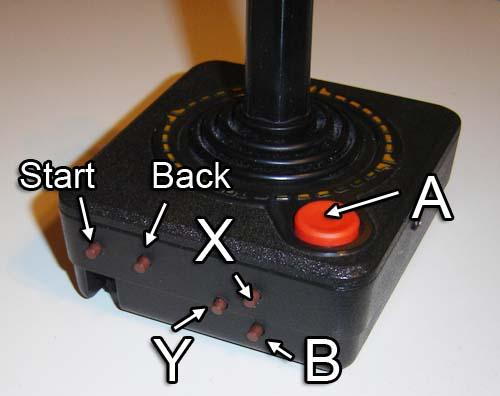
atari game controllerHave you ever played a game that felt like it was drawing you in from the very beginning? One that presented you with the things you needed to know in order to play without making you sit through dreary pauses, cut-scenes, and simple tasks? Very effective video game tutorials tend to be a rarity rather than the commonplace. A major factor that contributes to this is the fact that so many tutorials are just designed however the developer thinks they should be, without really caring to get a feel for their audience or for the skills they should be teaching. Unfortunately, this often leaves a lot to be desired, and a high-quality tutorial has to use solid principles of design rather than merely “guesswork” or a “gut feeling”.

Assessment is the first stage of any tutorial. Sadly, these days it’s often lacking or severely underdeveloped. A lot of games just drop the players into a level and tell every player the same thing, slowing down the players who know what they’re doing and offering too few opportunities to practice if a player is confused or uncertain. Tutorials that excel at assessment either react to player performance, telling them their perceived aptitude and encouraging them to continue with their learning or move on to the game, or come in many optional segments so that players can self-assess and look at only the things they need to know and skip those they don’t.

Accessibility is another major part of tutorials. They must be visibly available to the player, and must not be capable of being easily accidentally skipped or overlooked. Most games do this well, but games that follow the increasingly popular tutorial pop-ups system run the risk of having players click through something they meant to read (or later wish they had). In addition, tutorials must account for the control scheme being used; I’ve seen several PC games that run fine with a mouse-and-keyboard despite the fact that the developers only thought to include guides for 360 controllers, and this is one of those things that really will turn off an audience as they frantically search for keys to do what they need to do.

Clarity is also important. Tutorials should make it clear what skill they’re focusing on well and provide performance driven feedback. For instance, nobody would expect a military shooting range to be the locus of movement practice, and the obstacle course that precedes it to actually be the place to practice one’s aim. Yet tutorials often make it unclear what players are supposed to do and learn; frequent reminders and hints will remind players about what they’re supposed to be learning, and allow them to focus on the skills they are acquiring.

Multi-aspect tutorials include a variety of means of giving players advice and feedback. For instance, having a voice actor read commands while a text prompt comes up on the screen is great, as is demoing the appropriate controls on-screen. This means that the player has visual, written, and audio instructions to better help them figure out what they’re doing. If possible, try to include mathematics driven feedback as well-players should know roughly how well they did on the tutorial, and should be presented with this information in as many ways as possible so they can better understand how well they did. “Excellent” is a very vague term if you have eight higher ratings, and 80/250 can be the mean score on certain tests.

Scaffolding works on building up skills. Most games do this pretty well already, but I’ve seen some, especially games that assume unlikely amounts of prior player knowledge, that skip steps. It’s a term from pedagogy that involves the building of skills by adjusting content slightly above what is known. Tutorials’ learned content shouldn’t be easy, and should remain just beyond what the mainline incoming player should know at any given point; if you make the experience of your tutorial just a little challenging but not overwhelming it will encourage players to become better at the game and retain what they have learned, rather than skipping it out of boredom or frustration.

Review is a simple concept. At the end of the tutorial, you should have an assessment or practice of the skills contained within. Sometimes this doesn’t even look like a tutorial; you can move into a form of your normal gameplay and even start the narrative, but be sure to go through the steps you started in your tutorial. The exact execution of this is rather flexible; you can go through steps in order again, skip overly simple ones like “WASD” movement in most PC games, and/or rearrange the order entirely to create a more engaging experience. Just be sure that you have an idea of where players will be at the end of the tutorial, and make the review appropriate-it’s their chance to either practice their skills or build their self-competence regarding them, and if you have people who know what they’re doing but are forced to “do this three times” they’ll get frustrated and disengaged, while if you have people who pulled the move off once but are still shaky you should probably give them a couple more opportunities to study.

Finally, tutorials should be able to be returned to. Not many players will, but you should be sure that the information is available again in a simple and direct package. Sometimes you can just go through the tutorial again, or you could have a separate stripped-down version of the tutorial that skips any fluff in-between sections. If your tutorial is broken down into chunks it makes returning easier, so long as players can find the part that they feel like practicing again. Ideally, you’d also include a written help guide, for those who just need to review controls or gameplay principles they haven’t used in a while, and allow for a more rapid and direct access of concepts rather than forcing players to repeat the original learning process.

In short, good tutorials assess the player as they go through it, are accessible to beginners, are clear, provide various means of learning as well as feedback for players, teach more advanced concepts after training the skills necessary to carry them out, return to previously taught knowledge in a way that won’t frustrate players, and allow players to come back and rediscover skills they missed out on or need more practice in.

The Oldest Gamer in the Room

Despite my best efforts to remain immature, I have not been able to stop the ravages of time…

“… but when I became a man, I put away childish things.” (1 Corinthians 13:11)
“I get older, they stay the same age.” – David Wooderson, Dazed and Confused

Gamer ShirtDespite my best efforts to remain immature, I have not been able to stop the ravages of time. The lines on my face, the pronounced swell to my belly, the unmistakable salt in all my pepper, this is the evidence that I cannot deny. They are the result of a life hard lived, and I don’t mean because of drugs and alcohol and a steady parade of women with poor vision and worse judgment. No, by any reasonable estimation, I’ve had a fairly dull life: married early, a few kids, steady work, a regular roof overhead, an occasional functioning car. But even a life that dull comes at a cost, and I’ve been paying it for long enough that I saw the original versions of all these reboots that Hollywood is burying us under.

Of course, because I’m old and irritable, I can’t help but glance around at all these little bitty toddlers running around at any of the gaming mixers (the conventions, the Game Days, the Encounter Nights), and wonder if maybe I should just grow up and hang it up. I’m just filling a seat that would be better used by someone many decades my junior, or more often, I’m off taking a nap somewhere because I was up until an unthinkable 2 AM the previous night, rolling dice and playing at childhood.

I should be doing adult things, like playing bridge or attending silent auctions or getting my prostate examined. What I shouldn’t be doing is pretending I’m a troll named Brutus with a laser-axe and an impulse control problem, or a weretiger archer who can shoot the wings off a fly using his spirit beholder, or silver-shiny Colossus being thrown in a modified “fastball special” by the Blob at an attacking Sentinel, or a cyborg rocker who jacks his B.C. Rich Warlock directly into his brain using the same port where his Glock 9000 connects.

This is kid stuff, and I have rent and bills and taxes to worry about, and a house to clean and laundry to wash and snow to shovel, and kids to protect and food to buy and meals to prepare, and middle-of-the-night trips to the emergency room, and chronic illnesses, and a car that won’t start and a bank account that is perpetually empty and too many days of unsatisfying work and too many nights of lousy sleep.

But could I stop? Could I really turn my back on my one healthy obsession? Roleplaying games kept me clean all through high school, though it did help that I was a massive nerd who never got invited to parties where my peers would routinely “get obliviated.” Roleplaying games also helped me forge some of the best friendships I’ll ever have, considering everyday real-life provides me with very few opportunities to slay a dragon and sacrifice my life to save a friend. Finally, roleplaying games allow me to live in the novels I’m reading and the movies I’m watching, and become the hero I so desperately want to be, even if it’s only for a few hours.

I’d like to think that I could bring some gravitas to the gaming stage, that I could translate all of my true life struggles into the weight of my character’s experience and reality, that I might be able to draw an emotional response from the other players around that table… but that’s just a lie I tell myself. In fact, I’m just there to roll some dice and tell some jokes and have some fun, to make some temporary acquaintances and forget about the world outside those doors. At the end of this game or at the end of this weekend, I have to go back to all that real reality, but while I’m here, I’m a child again. And there’s nothing wrong with that.

Google Glass and the Future of Tabletop RPGs

First, I should state that I believe that RPGs reach their greatest potential in a social setting…

Google-GlassDisclaimer: This article references Google Glass specifically, but it should be noted that there are other products out there that may arrive at RPG friendly AR more quickly. Like this one. Or this one. It seems to me that the “winner” of this race will not be the most awesome AR system, but the one that becomes ubiquitous within gaming circles first. Things like price point and marketing become big variables in this equation, more so than actual technology and features. This assumes, of course, that all players at the table need to be on the same “system” for everything to work in concert. That may not be the case.

Assumptions

First, I should state that I believe that RPGs reach their greatest potential in a social setting. In other words, RPGs are best when you and a group of friends are physically in the same place playing the game together. “Internet Games,” while a decent substitute for gamers with no time or access to a “Physical Game,” only approximate the experience of an RPG played in a social setting. As a result, I see Google Glass’ greatest potential for RPGs in enhancing the social RPG experience, not eliminating it. I do not deny that Google Glass (or other Augmented Reality [AR], or even Virtual Reality [VR] devices) will be able to greatly enhance the gameplay experience of an RPG played at a distance, but those potentialities are not the purpose of this article. In short, I’m not going to talk about how AR devices’ will make “Distance Gaming” better. I will leave that to one of my colleagues here at Stuffer Shack.

Technology tends to develop in increments. First we had giant cell phones, then we had small cell phones, and now we have small(ish) cell phones that are also miniature computers. I would expect a similar evolution of technology in AR devices. Because of this, I have divided up the article into three “evolutions” or stages within three categories; each stage represents a greater capability of the technology, and therefore greater potential for enhancing a tabletop RPG. So, as we go through my “AR RPG wish list,” you will see the enhancements get more complex (and awesome).

Your Character Sheet

Stage 1
Your AR device would interface with your phone or other mobile device, where a character sheet app resides. Most of your “Heads Up Display” (HUD) would be dedicated to tracking current hit points, current “to hit” bonus, and current AC. An initiative indicator reminds you when you’re on deck, and again when it’s your turn. When you look at the other players, an indicator appears over the player whose turn it is currently.

Stage 2
Your AR device will interface directly with the cloud, where your character sheet resides. Other players will be able to send bonuses to your character, and the program will automatically add those bonuses to your display. When it’s your turn, your HUD will display available options from your character sheet.

Stage 3
At this point, your AR device is floating a character sheet in front of you upon request, and you can “gesture” to the things you want to do or use. When you roll your dice (because that should *never* go away), the AR device reads them, adds them up with any bonuses, and displays the result. The guy who takes forever to add up his dice every turn is super happy. So is everyone else.

The Battle Mat

Stage 1
A unique QR code is printed or placed at the top left corner of the battle mat. This QR code helps your AR device orient your location at the table. It also lets your AR device directly access the campaign documents from Obsidian Portal or similar website. (Yes! I know! An actual good use for QR codes!!) The AR will be able to do certain things if you have the right tools – you can “draw” persistent areas of effect with a special pen-like device, and you can track the position of miniatures with RFID tags. These tools will be expensive, and soon be obsolete.

Stage 2
The AR device will recognize your miniature without any help from RFID tagging, and you can simply use your finger to draw things on the mat. If you point to a miniature, your HUD will display that character’s name, current hit points, AC, and other status information. If a player points to a monster mini, the program auto-rolls a knowledge check, and only displays information that the character would know.

Stage 3
The DM will be able to project fully realized digital terrain onto the table, and all miniatures will also be digital. The miniatures will be fully customizable, right down to the attack animations.

Digital Props

Stage 1
The DM can send images to players from the campaign documents stored at Obsidian Portal or a similar website. Maps, pictures of magic items, pictures of NPCs, videos of NPCs, letters, and monster images are all possibilities. A niche industry pops up to serve DMs with all sorts of digital props.

Stage 3
Players will be able to use gestures to “interact” with items projected to their AR. Solving puzzles is the major advantage to this advance. The thief PC can actually interact with an image of a door locked with runes to solve the puzzle of opening it. No one sighs and rolls their eyes when an adventure includes a puzzle anymore.

Your Turn

I’m excited by the possibilities of AR at the RPG gametable. If even a few of the wishes I’ve listed above come true, I will be a happy gamer. So, now I turn the list over to you – what would you add? How can AR make our RPGs more awesome?

Choice in Games: Does It Require Nonlinearity?

Choice. It’s something that nobody really considers to be a “bad” thing in gaming. However, it is also something that is fundamentally misunderstood by a lot of people in gaming…

Choice. It’s something that nobody really considers to be a “bad” thing in gaming. However, it is also something that is fundamentally misunderstood by a lot of people in gaming. I’ve seen people complain about how “linear” a game is, despite the fact that they would then comment on it being engaging and feeling well-written, while other times I’ve heard people lament that they just couldn’t get into an open world experience. In fact, when we intentionally implement choice into games it’s often a fallacious exercise, actually forcing players to conform to standards they don’t accept.

One of the things I’ve noticed as a critic and as I’ve gone through training in order to become an English teacher is that the narratives of games are often simple to an extreme. Here’s the big bad guy, and here’s what he does. The modern reboot of Syndicate, for example, was considered a huge failure with a lot of people complaining about the game’s break from its strategy roots. I hated it for the exact opposite reason-I loved Starbreeze’s interpretation of the gameplay concepts, and I actually felt it was one of the best designed games of the year, with a stunningly cool AR overlay and a satisfying cyberpunk shooter experience. However, I found myself enjoying the cooperative play more than the single player, even though it was the single-player experience that had some of the most awesome action scenes. This was a simple consequence of one thing: I hated every NPC through the story. Every. Last. One. Not because they were necessarily “bad guys”, but because they had lied to, deceived, and generally been mean to my character.

The issue was one of choice. Highly linear games have succeeded in the past. Nobody fried DOOM for being linear, because DOOM was a self-driven experience; you clear one level of hellspawn and you move on to the next. I grew up playing roguelikes and JRPG’s, and while they certainly offer a fair degree of exploration they are all for the most part linear and allow very little player input on the actual game. However, the important thing to note is that I chose how to drive the game forward. However, in Syndicate I was a supersoldier with the safety on, and it just felt wrong.

A rather startling examination of gamers showed that about 10% of people who played Red Dead Redemption finished it. I haven’t played it, in part because it hasn’t come to PC and my consoles see about as much use as my gym membership, but it’s well-received. This is not a game that people hated. However, what we see is that they didn’t finish it. In Skyrim, as of the time of writing, 90% of people have completed the achievement for “Unbound”, the introductory quest, on Steam, while 35% of people have finished the one for “Dragonslayer”, the final main storyline quest. The reason for this is simple; I’m willing to bet that 35% of Skyrim players actually felt like playing through the main storyline. That’s not a game designer’s fault, especially with the massive amount of content in Skyrim and the fact that there’s probably a portion of gamers out there, even a good chunk of time later, who are still going to complete the main story but just haven’t gotten around to it yet.

Hitman-Minion

However, we don’t see people hating on Skyrim or Red Dead Redemption because they haven’t beaten them. The matter is one of choice, and this is where massively unpopular linear experiences come up. If a game has only one path, whether there’s multiple orders to complete it or you always go through the same way, it will fail. Hitman: Absolution had a rather weak storyline, but it wasn’t too bad because at least it felt like 47’s motives should be aligned to the story. Everyone else, on the other hand, made some really poor decisions. 47 was handled well – while in Syndicate everyone in the narrative made the decisions they should have made, and they felt realistic, but Miles Kilo, the player avatar, was forced to do things that were dubiously aligned to his interests. Nonlinear and sandbox style games don’t have to worry about this nearly as much, because if the player doesn’t want to do something they don’t have to, and they have more chances to reach a satisfying conclusion.

I’ve been playing through the Game of Thrones game recently for a review, and one of the most interesting things that I noticed is that for all its lack of polish it actually does a really good job of making me feel like my decisions are the ones I’d choose to make. Some of this is accomplished by providing good dialogue cues, but for the most part it’s the fact that the game doesn’t judge an appropriate path through every situation, providing alternatives for consideration that have meaning but don’t massively impact the plot. Sure, it was harsh to have the peasants call me a butcher for failing to peacefully resolve rioting, but I deserved it. When I showed mercy it was a choice I made, and when I enacted bloody vengeance it was also my call. It had no impact, at least as far as I could tell, other than a few throw-away lines down the road, but it was something that helped me define my vision of the characters I controlled, rather than forcing me to portray them in a way I didn’t want to.

So what’s the takeaway? We don’t need to have nonlinearity or a sandbox to have choice in games, but we do need the opportunity to make a meaningful decision with our characters, even if that decision is to follow the linear plot of the game.

—

If you’re interested, you could check out the cross-application of this to the tabletop in an article I wrote on indecision in tabletop gaming and how to address it as a GM:

http://blog.homoeoteleuton.com/?p=1325

The History of Star Wars RPGs Part 2: Star Wars d20

This is the second in a three part series on the history of Star Wars tabletop RPGs. In each post, I’ll be exploring each of the major Star Wars RPGs and discuss how they worked and how they affected both the roleplaying game industry and the Star Wars universe…

This is the second in a three part series on the history of Star Wars tabletop RPGs. In each post, I’ll be exploring each of the major Star Wars RPGs and discuss how they worked and how they affected both the roleplaying game industry and the Star Wars universe.

Star Wars

In the last article, we talked about West End Games’ Star Wars: The Roleplaying Game, a.k.a. Star Wars d6. After thirteen years of publishing, West End Games went bankrupt and had to give up the license to create Star Wars RPGs just as it was being revitalized with the prequel trilogy. Wizards of the Coast had just purchased Dungeons & Dragons and bought the license to Pokémon (resulting in a wildly successful trading card game) and parent company Hasbro already had the license to produce Star Wars toys. Purchasing the license to make a Star Wars tabletop roleplaying game was a natural next step.

System Mechanics

Sometimes people nickname the Star Wars Roleplaying Game “D&D…in Space!” (not to be confused with the actual D&D…in Space!) because it uses essentially the same rules system as Dungeons & Dragons 3e. Characters have the standard six ability scores, a class, a few feats, and a bunch of skills. Most every roll is done with a d20 and naturally this incarnation is often referred to as Star Was d20.

The major change from Dungeons & Dragons in the first two editions was that characters have “Vitality” and “Wounds”. Vitality works exactly like Hit Points in D&D. They are easily recoverable and represent the characters’ ability to shrug off superficial harm (or more abstractly, their ability to dodge lethal blasts). Wounds are equal to the characters’ Constitution score and represent severe injuries (like getting mauled by a Wampa) that require extensive treatment to heal. The later Saga Edition simplified this by reverting to Hit Points.

It is worth noting that Star Wars d20 was largely a testing ground for new mechanics to be included in Dungeons & Dragons. This was especially true with the Star Wars Saga Edition which introduced many new elements that were later introduced in Dungeons & Dragons 4e. For instance, the long list of skills were reduced to a little over a dozen. Skill points were eliminated in favor of marking a skill as “Trained” for a +5 bonus and every skill could be used untrained, except for the Use the Force skill which required the Force Sensitive feat. Saving throws are replaced by static defenses for Reflex, Fortitude, and Will. Later supplements added more test features, such as Threats of the Galaxy adding the Skill Challenge system that later became an integral part of 4e.

Force Powers and Jedi

While the Jedi in Star Wars d6 were designed to reflect Luke Skywalker’s limited abilities, Jedi in Star Wars d20 were based on the more powerful Jedi found in the New Jedi Order books and the prequel trilogy. As such, they were a bit more showy, especially in terms of combat powers.

Force powers were granted based on the characters’ wisdom modifier and functioned more or less like a D&D wizard’s spells. However, the idea of memorizing spells doesn’t make sense in Star Wars, so the limiting factor for the first two editions was that it took out some of your Vitality. The idea was that Vitality represented abstract things like energy, focus, and resolve, not necessarily your ability to take damage, but since we don’t really see movie Jedi get exhausted from using Force powers, it’s kind of an odd mechanic. Saga Edition changed it so that each power could only be used once until there was a short rest of one minute, but powers could be purchased multiple times to allow for multiple uses in combat. In a sense, this mechanic is the precursor to “Encounter” powers in D&D 4e.

Dark Side Points are awarded for evil acts. If you have a number equal to or greater than your Wisdom score, you’ve fallen to the Dark Side and typically become an NPC villain under the GM’s control (although as in Star Wars d6, there is the possibility of redemption). In the first two versions, calling on the Dark Side of the Force while spending a Force Point (i.e. using the Force out of anger) grants you an extra die to a bonus roll (“the quick and easy path to power”) while at higher levels calling on the Light Side of the Force while spending a Force Point (i.e. using the Force in a compassionate or humane way) grants you an extra die to a bonus roll. While earning Dark Side Points for committing evil acts were retained in Saga Edition, “calling on the Dark Side” was not.

Publication History

Picking up the Star Wars RPG during the time of the prequel trilogy was a double-edged sword. On one hand, Star Wars received a resurgence in popularity which no doubt spurred on sales and brought new gamers in. On the other hand, not everyone liked the prequel trilogy meaning that they had to also produce supplements to appeal to fans of other parts of the Star Wars universe. Plus a rapidly changing canon meant that there were some things that were sensible at the time, but made little sense later on. The early depictions of Senator Palpatine and his history, for instance, don’t exactly match up with later revelations of his character.

The Original Edition had sourcebooks for Naboo and Tatooine—both of which were featured in The Phantom Menace—and for the two major eras at the time: the Original Trilogy era that most people are most familiar with and the New Jedi Order era where the novels being published at the time were set (Lucasfilm vetoed any novels set pre-Return of the Jedi until the Clone Wars multimedia project commenced following Attack of the Clones). They also released several broad concept sourcebooks covering aliens, starships, and the Dark Side.

The Revised Edition came out just after Episodes II was released and I suspect that with the Clone Wars causing sweeping changes to the canon, Wizards was reluctant to write era-based sourcebooks that might become totally wrong in a year or two. Almost all of the books released for this edition are splat books providing things like force powers and gear. The only setting-based sourcebooks that were released were Coruscant and the Core Worlds and Geonosis and the Outer Rim Worlds, both of which were more stable canon-wise.

The Saga Edition came out after the Prequel Trilogy was complete and Wizards’ main focus was on era sourcebooks (called “Campaign Guides”). This time, they included not only the Rebellion era, but also the Clone Wars era, The Force Unleashed era, the Knights of the Old Republic era, and my personal favorite, the Legacy era (detailing the amazing Legacy comic line, not the mediocre Legacy of the Force novels, thank you very much). This is one of the greatest strengths of the Star Wars d20 line in that it gave you the tools to play in whatever era of Star Wars you wanted to, rather than confining you to the Rebellion era.

Interspersed amongst these is a book each for starships and droids and several designed to provide splat for one of of the five core classes while still providing resources useful to everyone else (although there isn’t much for anybody else from the Jedi Academy Training Manual except some New Jedi Order setting info).

In 2007, Wizards of the Coast sent out a press release saying that they had decided to drop the license for creating a Star Wars RPG. Most of the RPG sites at the time speculated that it was a monetary decision. After all, the license was no doubt expensive and there wasn’t anything new on the horizon except for the Star Wars: The Clone Wars TV series. For a long time the license went unclaimed until rumors arose that another company had picked it up, which was eventually revealed to be Fantasy Flight Games.

Impact on the Expanded Universe

The major impact of Star Wars d20 was that it was the first to fill in gaps in Star Wars canon that were left by the Prequel trilogy. For instance, it was the first source of further information about planets like Geonosis and Kamino which were introduced in the Attack of the Clones. It also filled in the gaps for several other maturing eras, such as the The Knights of the Old Republic era, merging the successful video games of the same name with the earlier Tales of the Jedi comic line upon which the games were based.

Several adventures were also set during the gaps of other Expanded Universe content, such as an Old Republic adventure where the players assault Revan’s starship during the battle that the Sith Lord was first captured (although naturally they are forced to let Bastila Shan actually confront him). The related Star Wars Miniatures Game similarly revisited events such as Kyle Katarn stealing the original Death Star plans from the Imperial base on Danuta.

Some original content was created as well. The very last book, The Unknown Regions, is notable in that it expanded on several alien races that were from obscure sources, including the old Marvel comic series. (There’s an interesting article about the development of these alien species).

Availability and Gaming Legacy

Getting a copy of the Star Wars d20 core books can be a bit tricky. As of this writing, Amazon has one copy of the Original edition and it’s going for $50. Fortunately, the Revised Edition is more reasonably priced at $12. Demand for the Saga Edition, since it was the last version, puts it at $48.

The general consensus I gather about Star Wars d20 is that the Saga Edition is considered the best version, as it streamlined the system from its Dungeons & Dragons in order to better capture the feel of the setting and it had some of the best supplements. However, I still see a game of d20 Revised every once in a while at a convention, so there is still a following for that, I imagine because of the system similarity to Dungeons & Dragons 3.x and Pathfinder.

Some gamers argue that Saga Edition is what Dungeons & Dragons 4e should have been because it introduced many well-received changes, such as a simpler skill system, without creating radically different concepts, like combat powers. Indeed, several of the changes from D&D 4e that continue on in D&D Next originally appeared in Saga Edition.

I think that because Star Wars d20 was derived from Dungeons & Dragons, it works best if you’re looking for a combat heavy Star Wars game where you’re fighting Storm Troopers or Battle Droid or whatnot. If you can get a copy for a good price and that’s the sort of Star Wars game you want to play, it’s certainly worth picking up either the Revised Edition or the Saga Edition.

Next time: Our history of Star Wars RPGs concludes as we talk about Fantasy Flight Games taking a different approach to the Star Wars RPG license by splitting it into multiple games, which are occasionally referred to collectively as Star Wars FFG.
Why “Bad” Games Are So Successful, And Why It Doesn’t Matter

One thing that a lot of people who describe themselves as “hardcore” gamers lament is how the highest profile games always are the ones that are the least like what they want to see in the market. For instance, every Call of Duty release cycle, there will be a fairly large crowd posting vitriolic comments stating hat “Call of Duty is the cancer in gaming” or “not the same game again”. And every few years or so, the concept that this will come to some sort of apocalyptic climax for gaming comes up. It’s entirely false, however, for a number of reasons…

GamingOne thing that a lot of people who describe themselves as “hardcore” gamers lament is how the highest profile games always are the ones that are the least like what they want to see in the market. For instance, every Call of Duty release cycle, there will be a fairly large crowd posting vitriolic comments stating hat “Call of Duty is the cancer in gaming” or “not the same game again”. And every few years or so, the concept that this will come to some sort of apocalyptic climax for gaming comes up. It’s entirely false, however, for a number of reasons.

First, gaming is a widespread genre. It’s not even fair to say “I enjoy video games” anymore, because that’s such a broad distinction that it’s rarely true. We wouldn’t lump chess, checkers, and backgammon into a single game for the purposes of discussing their play. It’s like saying “I enjoy movies”; it’s not a wrong statement, but it’s lacking in detail. The genre is so widespread that of course there will be games for all people; there are even multiple types of games that focus on the same thing, such as competitive play (shooter, MOBA, fighting, and strategy games to name a few), and even these have distinctions between them.

Second, even though we see large corporations making games based on poorly-derived marketing decisions, their impacts are lessening. Companies like EA have begun to realize that it’s not possible to give every game a brown-and-bloom reboot as a shooter. The concept that every game can succeed if it’s given an AAA treatment is somewhat absurd, and stemmed from the fact that game companies spent a long time in monopoly deals with sports leagues and misinterpreted the fact that football fans want to play a football game with a recent roster. However, other genres have shown that players expect a new and novel experience from different games if they appreciate games as a medium for entertainment independent of other things. Even though some series see huge chains of releases with similar gameplay precepts, like Final Fantasy, they’d never dare to include even near 80% of the same content in each subsequent game like sports games and Call of Duty do.

Of course, the thought that all games have to be created by huge corporations is just as incorrect. The indie market, for all its pretentious side, is actually a very good source for unique and innovative experiences, or expanding things that weren’t looked at correctly. Roguelikes have had some of the highly celebrated features of recent AAA titles for years. Family operations have produced the like of Dwarf Fortress and other such incredibly complex and revolutionary games, and the idea that game development has some mystical “break-in” barrier that other industries don’t is a myth.

However, most importantly, it’s not possible that all games will appeal to all people as soon as they enter the market for them. Some people will never move past games that are their entry-level experience, be it a casual puzzle game or a Call of Duty styled mainstream shooter. However, there’s a reason why these experiences make such a good entry-level; they’re the equivalent of a book written for a third grader to read. They don’t require a lot of thought, investment, or interest. Their complexity is limited to an easily comprehensible set of rules. They don’t have huge skill gaps, with the ways that players prove skills being more complex than just winning or losing; anyone can expect to win fairly often, but the ways to score well require more nuanced approaches.

James Paul Gee, a researcher in educational video games at Arizona State University’s Mary Lou Fulton Teacher’s College, describes video games as learning machines. While the pedagogical potential of digital entertainment experiences falls outside the scope of this article, it’s worth noting that video games are engaging enough to teach us skills. Following traditional pedagogical advice and applying it to the field of gaming, then it also makes sense that there is a zone of proximal development in which players will begin to be capable of dealing with a more complex experience.

So, in short, when we hear that games are being ruined because another piece of low-grade shovelware is being pushed out, or because the new Call of Duty doesn’t introduce a meaningfully complex update to the franchise, it’s not a sign that video gaming as a hobby and industry is dying, it’s a sign that we’re actually beginning to diversify our interests in the field of gaming, we are now offering a coherent blend of “low grade level” and “high grade level” experiences fit for people of various degrees of gaming competency.

At the same time, it’s also important to note that it’s important to suspend the notion of a lack of innovation or complexity being bad. It’s likely natural to dislike a less stimulating game, and many gamers use gaming to fill a cognitive stimulation void from their daily activities, but other games attempt to meet other needs, providing emotion-or adrenaline-based stimulation for a gamer who is looking for a different experience.

So what’s the takeaway? In short, “bad” simple games aren’t going to drown out more complex and demanding games any time soon, and they serve a crucial role in the market.