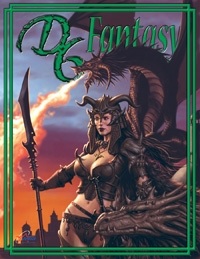
 I have a special place in my heart for the D6 system…
To give a very brief summary, the D6 system measures attributes, skills, and equipment modifiers in a number of d6 dice. All of these dice are combined into a “Dice Pool” that is rolled for a total added value – against a set difficulty number. That’s it.
This simple system has been repeatedly modified, revised and expanded over the years. The biggest change to the basic system occurred with the second edition, and the introduction of “pips”. This allowed one to have Dice Pools with values such as 1D+1 or one 1D+2, where you roll one die and add 1 or 2 to the result. There was not a “1D+3”, however; instead, you would go up to 2D and roll two dice.
This second edition of the rules has not only been my favorite version of D6, but my favorite set of Tabletop RPG rules, period. I’m sure that part of the reason is because it was the first game that let me play Star Wars. Another reason is the many support products West End Games was able to publish before losing the license in 1998, and the influence of the game on the Expanded Universe of novels, video games, and comics. But in the interests of objectivity, I present five examples of the genius of the D6 system.
1. It uses the D6
Honestly, I may never have developed a love of the D6 system if it used a different die. The D6 is the most common die in existence. Every toy department in America sells them. So, while the copies of Monopoly and other board games in my house gradually lost their dice under mysterious circumstances, I always had a steady supply of dice for gaming (seriously, I don’t think a single board game at my parent’s house has a die left in it).
2. The Wild Die
The Wild Die is a single die from your Dice Pool that by color, size or some other way is special. When you make a roll and the Wild Die reads between 2-5, you add that value normally. If you get a 1 on the Wild Die, you lose that die and the highest valued die from your Dice Pool. If you roll a 6 on the Wild die, you count it normally, and then you get to roll it again and add the result. If you roll a 6 on the Wild die a second time, you get to roll it again, etc. As long as the Wild Die comes up 6, you can continue to roll and add it to your total result. Theoretically, a hot streak on the Wild Die could allow a starting character in their first game session to take out Vader, or even the Emperor himself.
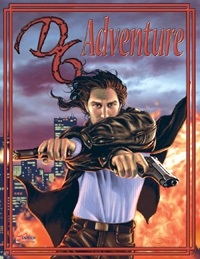 I have no problem with that.
This is is the genius of the Wild Die. While I was not above railroading my players in my early days of gamemastering, the Wild Die mechanic puts all plots in danger of derailment by virtue of giving even the greenest of PCs the ability to roll huge numbers. It encourages the GM to design more open games that rely less on following plots and more on the actions of the players. And that is always a good thing.
3. Character Templates
Somewhat unconventionally, the D6 system does not use a class/level progression to measure character ability or progress. What D6 has is a loose collection of “templates” that give a vague character concept, such as “Cynical Smuggler” or “Quixotic Jedi”. The templates have the starting Dice Pool for the character’s abilities filled, a handful of skills which are not, and starting money and equipment. That’s it. Each book WEG put out had a handful of templates included. Players were under no obligation to use these templates, however. One could easily make up their own – and my players took perverse pride in doing so. I’ve run games with Failed Jedi/Smugglers, Gambler/ConMan/Reverends, and nearly every variation of Force-Ability-as-Mutant-Super-Power that a rabid X-Men fan could think up.
Joking aside, the Template system gave the game a set of powerful freedoms that I was thankful for when running adventures. The most important thing is that our players could play anyone they wanted. The freedom intrinsic to the Template system is one of the reasons that D6 was the most successful of the Star Wars licensed games. Characters from movies and books rarely, if ever, fit into the narrow confines of a class-based character system. The frustration that kind of character straitjacket can cause in a Star Wars game, which is (by definition) cinematic, makes the Template system much more attractive.
4. Incremental Advancement
Part and parcel with the lack of class/level advancement in the D6 System is incremental advancement. The PCs earn a number of Experience Points at the end of each game session based on reaching specific goals, success in combat, survival, social conflicts, and role-playing. The number ranged from three to seven with an average of five per session. I usually gave out twice as much, because I instituted a tradition of “Cool Points” to reward awesomeness. The experience points were then applied directly to character advancement, in the form of x-number of points to raise a skill one pip, more points to raise an attribute by a pip, and so on. There were also rules about training time and mentors, which were mostly ignored in favor of assuming that training in your skills was what you did in Hyperspace. It worked for Luke, after all.
 The incremental advancement system offers a lot of advantages. For Players, there’s the virtue of instant gratification. You can tangibly improve your stats on a game-by-game basis. While improving attributes involved an exponential increase in points, the number of points to raise a skill stayed the same. No matter how powerful your character became, you could still raise a skill by a pip every session, if you wanted to.
For GMs, not having to track the XP value of every adversary your PCs mow down is a definite plus. But there is a more subtle, and advantageous benefit to incremental advancement. When combined with the template system’s lack of concrete organization, it is nearly impossible for power gamers to create game-breaking characters. Because there is a cap on the number of dice you can put in any one skill at Character Creation, it is difficult to min/max a starting PC.
Add to this the difficulty in increasing attributes as opposed to skills, and the fragility of munchkin-designed characters become more clear. There are no automatic increases in hit points or attributes as you gain level. If you put all your XP into raising your Blaster skill, for example, skills like Dodge and Stamina will stay as low as they were at character creation. By combining the combat skills with the regular skill list and making all skills and attributes use the same incremental advancement, min/max characters are less able to survive combat than balanced ones. This means we can all concentrate on actually playing the game, instead of beating the system.
5. The Universe Standard Skill Chart
For all of the innovations mentioned above, none are more useful than a rather obscure chart found on page 47 of the Gamemaster’s Handbook for Second Edition.
It’s the Universe Standard Chart, a comparison of skill levels from 1D (below average in a skill) to 14D+ (among the best in the galaxy). Why do I love this one chart, over all the charts in all the books published by West End Games? With this one chart, you don’t need any of those other books.
As long as you remember the basic difficulty numbers, this chart will allow you to run a game indefinitely without any other resources. Need a bad guy? How good are they? Best on a world? Check the chart. Best in a sector? Check the chart. Maybe they’re only the best in a city. It doesn’t matter – check the chart.
This level of simplicity is of incalculable value to GMs who like to run games “on the fly”. The D6 System has one metric, the Dice Pool, and the Universe Standard Chart is all you need to use it.
 Of all of the games I’ve played or run, I consider my years playing D6 Star Wars among the most memorable. In all honesty, I really wasn’t all that great of a GM – I favored my plots over my players, shamelessly used my encyclopedic knowledge of the franchise against them, and was not above accepting bribes of cigarettes and beer. But that’s my point – the system allows for the foibles of green GMs and players, of munchkins and railroaders, and (by virtue of the rules) moderates the worst excesses of whomever is at the table.
All without cracking a book.
P.S. You can find many West End Games books here for free.